
Is the Dead Sea Drying Up? What the Jordanian Shore Shows
Is the Dead Sea drying up? Why the level falls more than a metre a year, the sinkholes, and the terraces you see on the Jordanian shore.
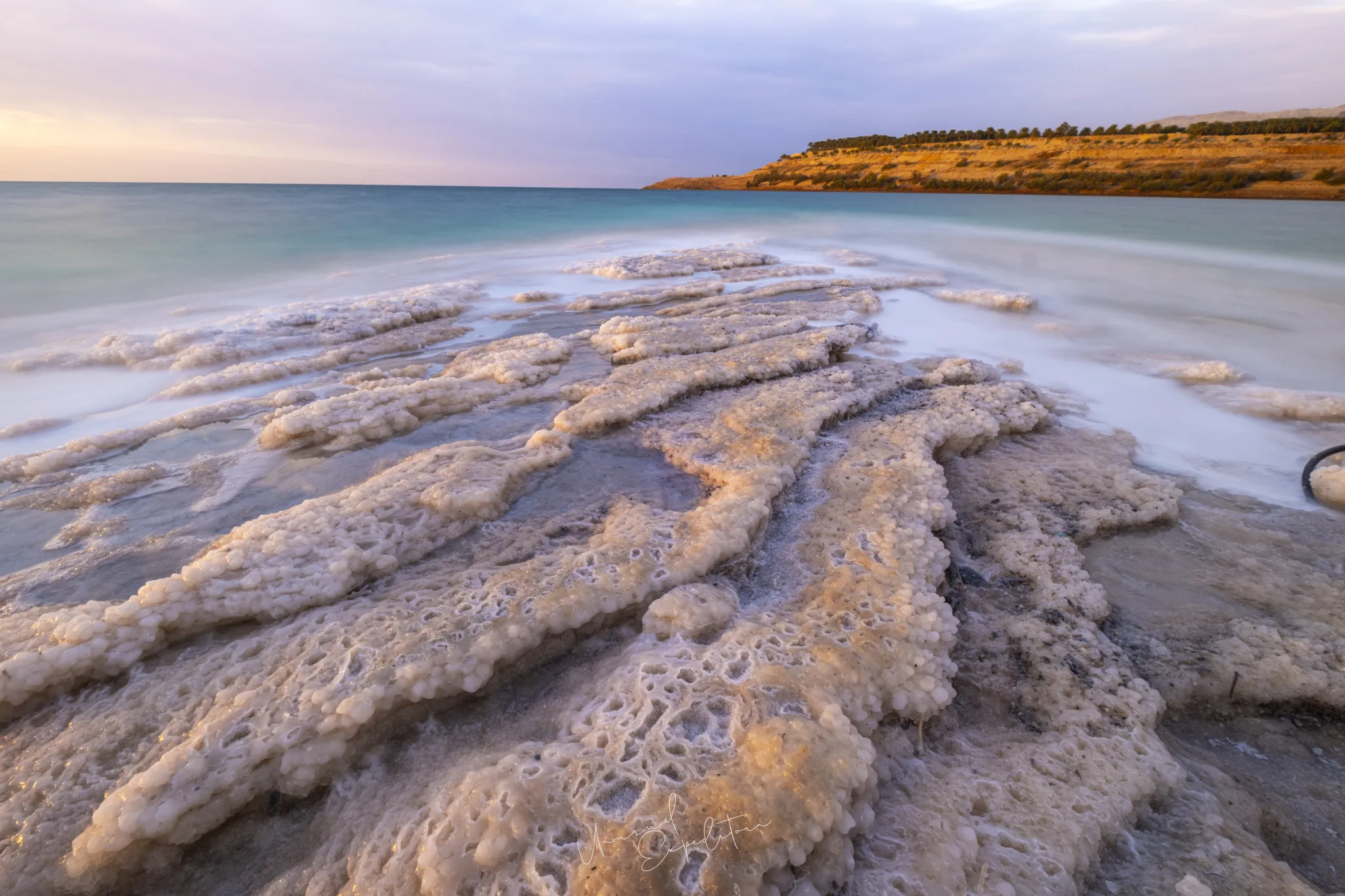
Is the Dead Sea drying up? It is shrinking fast, though it is not expected to disappear completely. Its surface has fallen by more than a metre a year for decades, and a Xinhua report in mid 2026 put it at about 440 metres below sea level, compared with about 430 metres in the mid 2010s according to Britannica. The causes are the diversion of the Jordan River and mineral extraction. On the Jordanian shore you can see it in the stepped salt terraces left above the water.
This article belongs to our Dead Sea photography tour guide, which covers the shore for photographers.
Is the Dead Sea drying up, and why?
Is the Dead Sea drying up because of climate alone? No. Britannica explains that the main cause is human: for decades the water of the Jordan River and its tributaries, which used to feed the lake, has been diverted for farming and drinking water upstream, so far less fresh water reaches it. At the same time, mineral companies at the southern end evaporate lake water in large ponds to extract potash and other minerals. The lake loses much more to evaporation than it receives, and the level falls. Estimates of the rate vary, from about one metre to over one metre a year, but every source agrees on the direction.
Is the Dead Sea shrinking? What you see on the shore
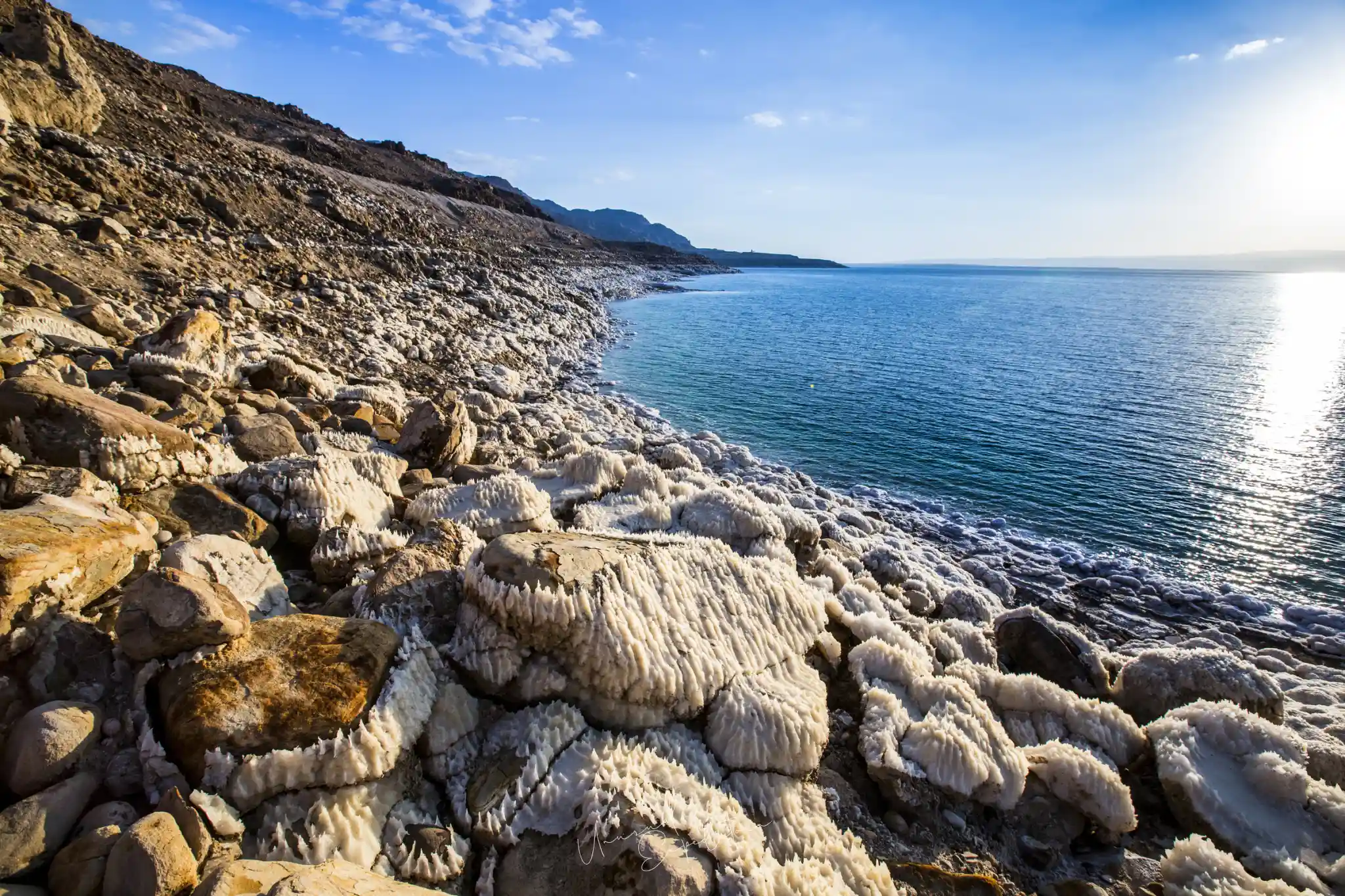
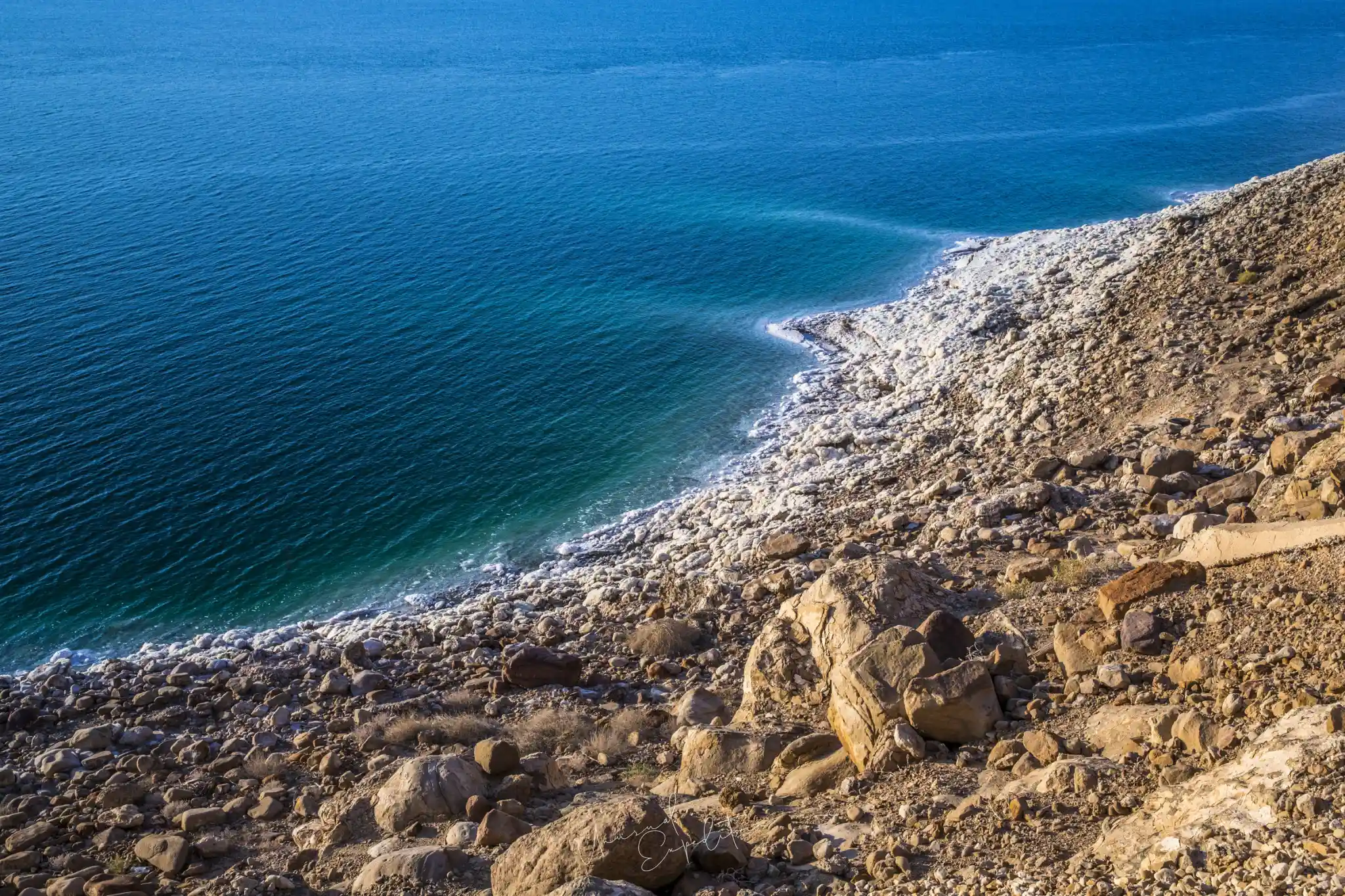
Is the Dead Sea shrinking in a way a visitor can see? Very clearly. Along the Jordanian shore the land below the road steps down in a series of terraces, each one an old beach left behind as the water retreated; from higher ground in the late afternoon, the low sun picks out every step in lines of shadow and white salt. At some beaches, steps, ramps and showers built at the waterline now stop well above it, and visitors walk down a long slope to reach the sea. The water's edge itself is a band of fresh salt crust, building and dissolving as the level moves.
Dead Sea sinkholes
Dead Sea sinkholes are the most dangerous result of the falling level. As fresh groundwater moves towards the lowered lake, it dissolves layers of salt buried under the old shore, leaving cavities that suddenly collapse into holes. NPR's picture report on the shrinking Dead Sea shows sinkholes opening along the shore, some swallowing roads and buildings. On the Jordanian side, keep to established paths and beaches, never walk across soft, cracked mud near the shore, and follow your driver's advice about where to stop. This is one reason we photograph the salt only at places we know.
How much has it fallen?
| Source | Level below sea level | Rate of fall |
|---|---|---|
| Scientific American (older report) | About 424 metres | About a metre a year |
| Britannica (mid 2010s) | About 430 metres | About a metre a year |
| Xinhua via Global Times (July 2026) | About 440 metres | More than a metre a year on average |
The figures come from different years and methods, but together they show a lake losing roughly a metre of depth every year.
"You can read the history of the lake in the terraces below the road. Each step was a beach once, and the salt keeps building a new edge further down."
Joseph Mak, tour leader, Unusual Expedition
Is the Dead Sea dying?
Is the Dead Sea dying? It was never alive in the usual sense: its water is too salty for fish or plants, though bacteria and other microbes live in it, according to Wikipedia. What is dying is its size. Wikipedia's article on the lake warns that as the level falls, the character of the sea and the region around it may change substantially. A plan to pipe water from the Red Sea, the Red Sea to Dead Sea Water Conveyance, has been scrapped, and reports by CNN and the Jordan Times in recent years note that nothing has yet reversed the decline.
What the falling level means for photographers
For photographers the falling level is a paradox. It is an environmental loss, and it is also what creates the subjects: the terraces, the exposed salt ridges running into turquoise shallows, and the ever-changing band of crystal at the water's edge. The cover picture of this article shows those ridges in the shallows at sunset. We think it is worth photographing as a record of a place that changes visibly from one visit to the next. Our Dead Sea salt formations article covers the salt itself, and is the Dead Sea worth visiting covers the visit.
Can you still float in the Dead Sea?
Yes. The falling level changes the shore, not the experience in the water. The lake is still far saltier than the ocean, so you float as easily as ever, and the resort beaches and Amman Beach remain open. What has changed is the walk to the water: at some beaches the path down is longer than it was, and the steps and showers have been moved several times as the edge retreated. Follow the marked paths and the lifeguards, and do not wander off along the shore looking for a quieter spot to go in. For floating, safety and what else to do, see is the Dead Sea worth visiting.
Where the change is easiest to see
The change is easiest to see from higher ground. Along the shore road south of the resorts, pull-offs above the water look down on terraces of salt and mud that step towards the lake like contour lines; in the late afternoon each step throws a shadow and the pattern becomes clear. From the cliffs of the Dead Sea Panoramic Complex the whole northern basin is visible, and the pale band of exposed seabed around it shows how far the water has gone. Closer to the water, look for old jetties, ramps or posts left high and dry. A 24-70mm and a 70-200mm from above make the strongest record pictures.
See the Dead Sea while it is still here
We run the Dead Sea as part of a private Jordan trip on request. See private tours and the Jordan photography tours page.
Dead Sea photography tours
The next Dead Sea departure is announced on the Dead Sea photography tours page, with previous expeditions and all the planning guides.
Explore Dead Sea in depth
- Dead Sea Photography Tour Guide: Salt, Sunsets and the Lowest Shore on EarthJordan
- Is the Dead Sea Worth Visiting? Floating, Safety and the SunsetJordan
- How to Get to the Dead Sea from Amman, via Madaba and Mount NeboJordan
- Dead Sea Salt Formations: How They Form and How to Photograph ThemJordan
- Best Time to Visit the Dead Sea: Seasons, Weather and LightJordan
Upcoming Photo Tours
- Egypt Photo Tour – EgyptEgypt 12 Dec 2026 To 20 Dec 2026
- Inner Mongolia Winter Owl Photo Tour – ChinaChina 01 Jan 2027 To 04 Jan 2027
- Inner Mongolia Winter Photo Tour – ChinaChina 05 Jan 2027 To 11 Jan 2027
- Mekong And Central Highland Vietnam Photo Tour - VietnamVietnam 16 Jan 2027 To 24 Jan 2027