
Jokulsarlon Ice Cave Photography: Season, Safety and Blue Ice Settings
Jokulsarlon ice cave photography: the winter season, why you need a licensed guide, how the blue light works, settings.
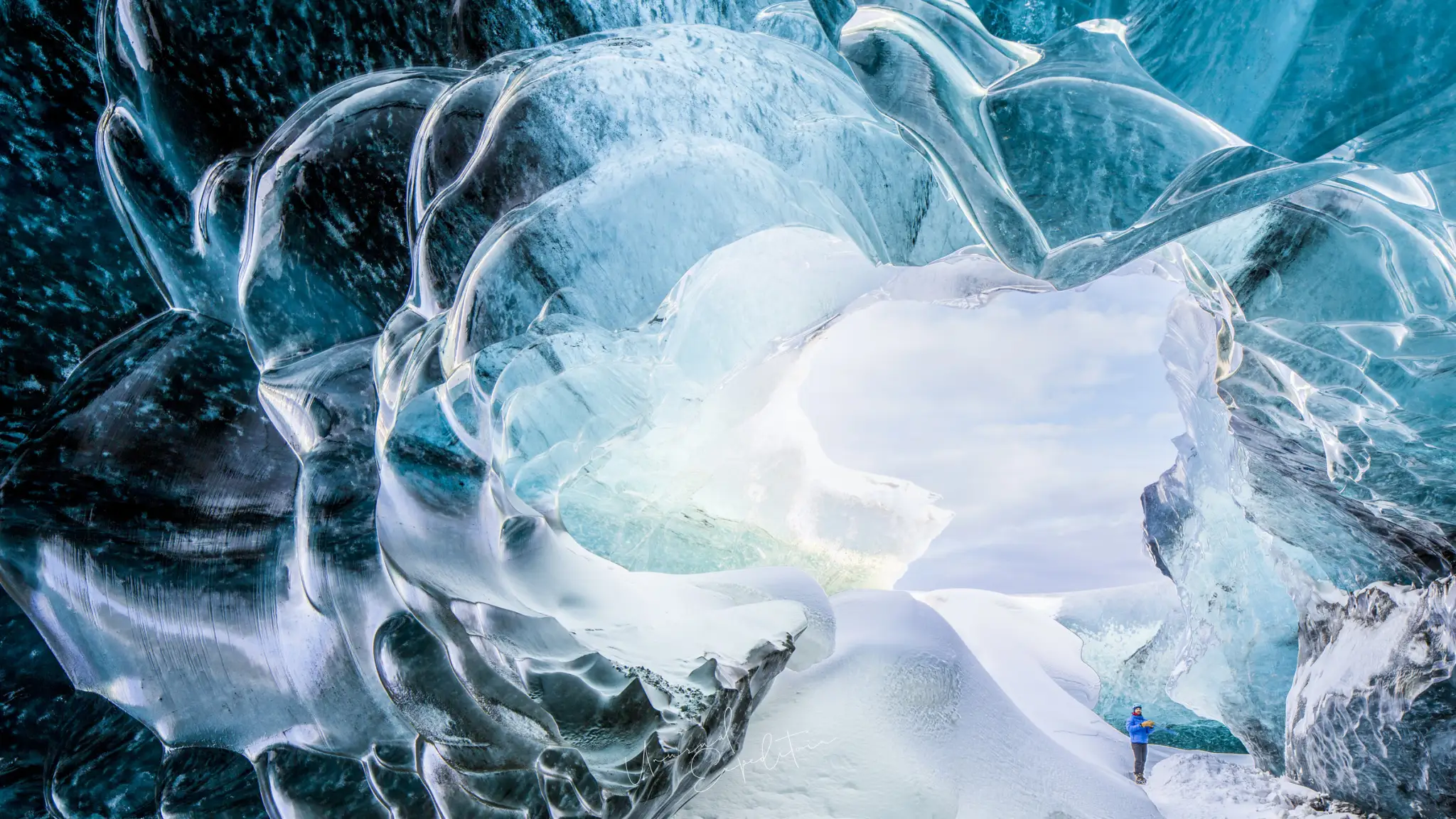
A Jokulsarlon ice cave is a natural tunnel of blue and black ice inside Breidamerkurjokull, the glacier that feeds the lagoon, formed by meltwater in summer and safe enough to enter only in the cold months, roughly November to March. You can visit only with a licensed guide from an operator contracted by Vatnajokull National Park; tours start from the Jokulsarlon area. For photographers the caves are some of the strangest light in Iceland: daylight filtered through ancient compressed ice.
The ice caves are one chapter of our Jokulsarlon photography tour guide. We have been inside several of these caves on our winter trips, and every photograph here is from those visits.
What is a Jokulsarlon ice cave?
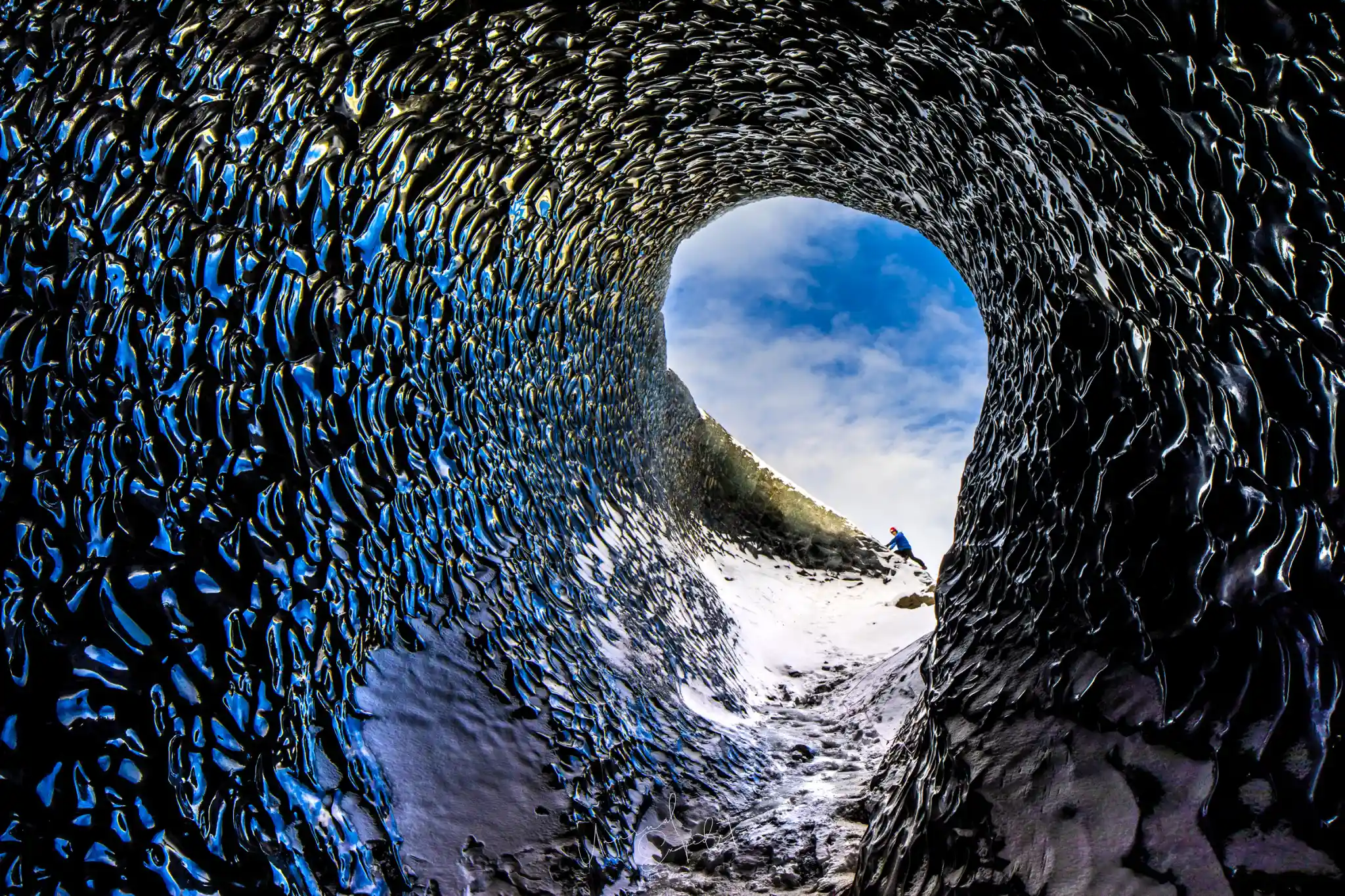
Each summer, meltwater runs through and under the Breidamerkurjokull glacier and carves channels in the ice. When the cold returns, the water stops and the channels are left empty: tunnels, chambers and arches in ice that can be a deep, clear blue where it is dense and free of air, or black and striped where the glacier has carried ash and gravel. The caves change every year. Some collapse, new ones open, and the cave you saw in pictures last winter has probably gone. Operators scout the glacier each autumn and decide which caves are safe to use for the season. That is why tour names change too, and why no one can promise you a particular cave.
Ice cave Iceland season: when to visit
The ice cave Iceland season in the Jokulsarlon area runs roughly from November to March, with some operators starting earlier or finishing later when conditions allow. Arctic Adventures and other operators publish their own season for each cave, and every trip depends on the day's weather and the guide's check of the ice. Cold, dry spells are best; a sudden thaw or heavy rain can close a cave at short notice. Late winter tends to be the most reliable time, which also matches the best season for frozen lagoon scenes and aurora. Our best time to visit Jokulsarlon guide puts the caves in the context of the whole year.
| Cave type | When | What you photograph | Lens |
|---|---|---|---|
| Natural ice cave in Breidamerkurjokull | Winter, roughly November to March | Blue ice, black banded walls, arches | 14-24mm, 16-35mm |
| Glacier walk on the surface | Most of the year with a guide | Ridges, crevasses, ash bands | 24-70mm |
| Caves elsewhere in Iceland | Some open longer, operator dependent | Different glaciers, different ice | Wide angle |
Only the first row is what people mean by a Jokulsarlon ice cave.
Can you visit ice caves in Iceland on your own?
No. Can you visit ice caves in Iceland on your own is one of the most common questions, and the answer for the Jokulsarlon area is clear: Vatnajokull National Park allows only contracted operators to take visitors into the caves on Breidamerkurjokull, with guides who meet the park's training and equipment rules, and park rangers on Breidamerkursandur oversee the caves. The ice can collapse, the meltwater can rise, and the glacier surface around the entrances hides crevasses. After a fatal ice collapse at a summer ice cave on Breidamerkurjokull in 2024, the park tightened its rules on visiting ice under a roof in the warm months. Book with a licensed operator and follow the guide.
Blue ice cave Iceland photos: how the light works
Blue ice cave Iceland photos get their colour from the ice itself. Dense glacier ice absorbs red light and passes blue, so the thicker and clearer the ice above you, the deeper the blue. Where the roof is thin, the light is bright and pale; where ash is frozen into the ice, the walls turn dark and striped. The brightest part of any cave is the entrance, so the classic picture looks out from the dark interior to the daylight. Bracket your exposures for that contrast, and keep the white balance close to daylight: the blue is real, and correcting it away makes the ice look grey.
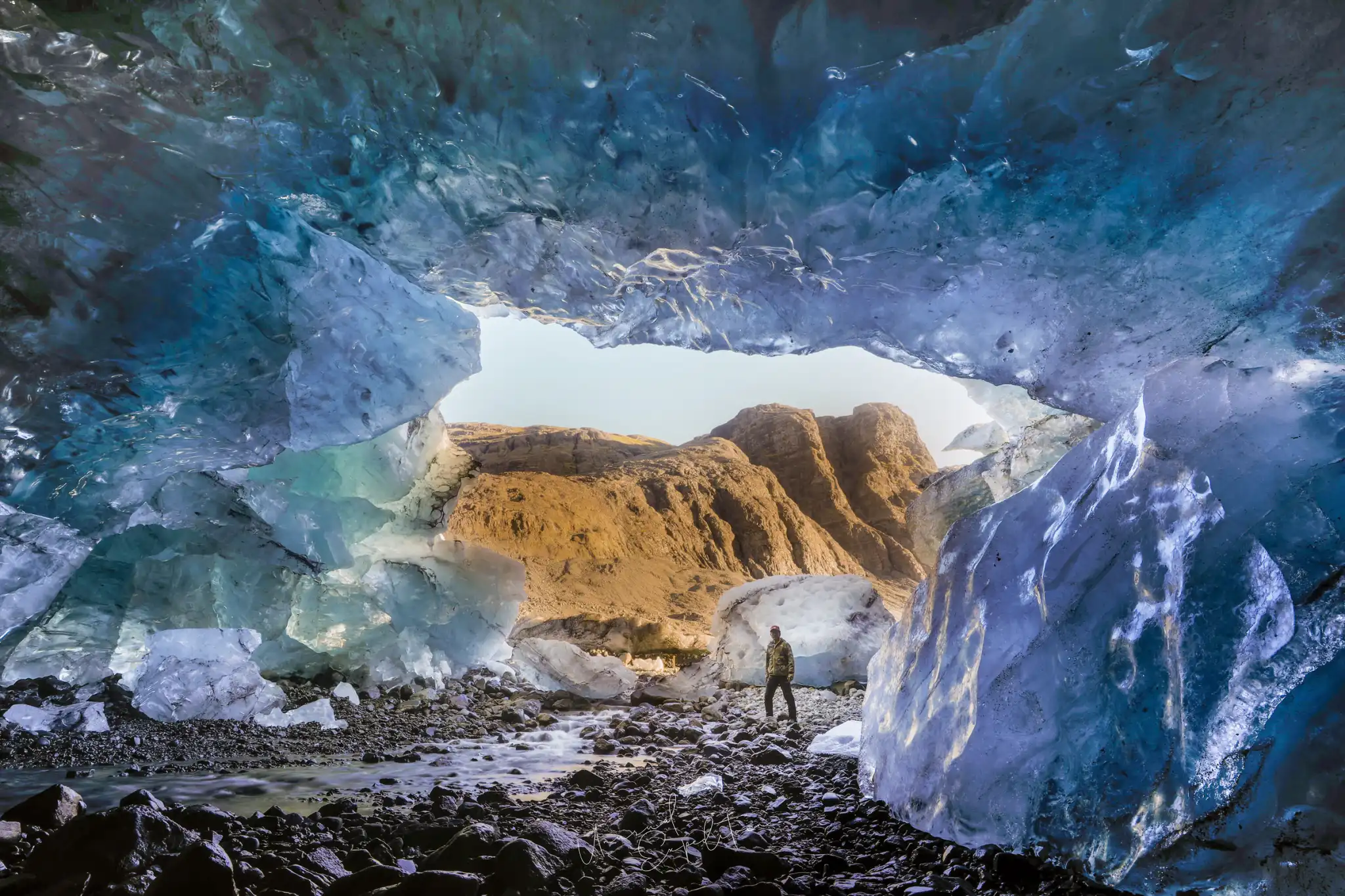
Inside the cave the first thing everyone does is shoot the ceiling. Look at the walls near the floor too, and at the entrance from deep inside. And put a person in the frame, or nobody believes the size.
Joseph Mak, tour leader, Unusual Expedition
Crystal ice cave Iceland Jokulsarlon: camera settings and gear
For a crystal ice cave in Iceland near Jokulsarlon, the light is lower than it looks, and groups move on. A wide lens such as a 14-24mm or 16-35mm takes in the curve of the walls. Space is tight and the group keeps moving, so plan to shoot handheld at ISO 800 to 3200 with a stabilised lens, and ask the operator in advance whether a tripod is practical. Keep the lens clean: drips from the roof land on the front element. The operator provides a helmet and crampons; you bring warm, waterproof layers, gloves you can work the camera in, and spare batteries in an inside pocket.
Ice cave Iceland in summer
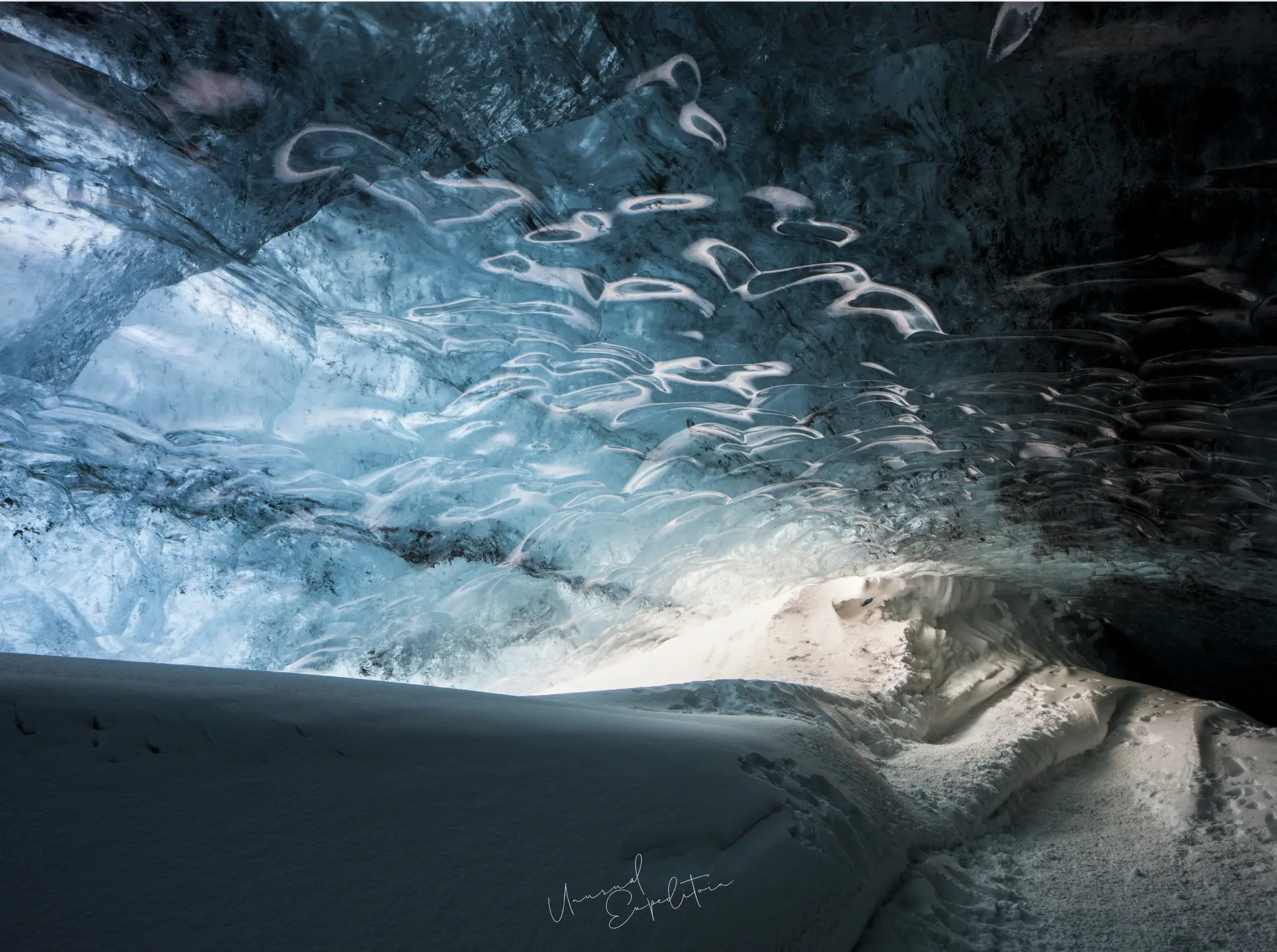
Ice cave Iceland in summer is a different product. Natural caves in Breidamerkurjokull are closed in the warm months, when meltwater and falling ice make them dangerous. Some operators elsewhere in Iceland offer caves in other glaciers or man-made tunnels in summer; they can be good experiences, but they are not the Jokulsarlon ice caves. Our summer departure visits the lagoon and the beach, and we keep the caves for winter.
Is a Jokulsarlon ice cave worth it?
For photographers, a Jokulsarlon ice cave is worth it if you go in the right frame of mind: a guided group, limited time, a place you cannot choose, and pictures you cannot take anywhere else. Pair it with sunrise on the beach and the northern lights over the lagoon and you have most of what this corner of Iceland offers in winter. Our Jokulsarlon northern lights guide covers the nights.
Photograph the ice caves with us
We arrange winter trips to Jokulsarlon, ice caves included, as private tours, planned around your dates and booked with licensed cave operators. Our scheduled departure is the summer Iceland Midnight Sun Photo Tour, listed on our Iceland photography tours page.
Join the Jokulsarlon photography tour
Iceland Midnight Sun Photo Tour departs 05 Jul 2027 To 18 Jul 2027, led by Joseph Mak. Small group, photography first. All Jokulsarlon photography tours.
Explore Jokulsarlon in depth
- Jokulsarlon Photography Tour Guide: Glacier Lagoon, Diamond Beach, Ice Caves and AuroraIceland
- Is Jokulsarlon Worth It? Getting There, Boat Tours, Seals and FeesIceland
- Jokulsarlon Northern Lights: Aurora Over the Glacier Lagoon and Diamond BeachIceland
- Jokulsarlon Sunrise and Sunset: Lagoon or Diamond Beach, Season by SeasonIceland
- Best Time to Visit Jokulsarlon for Photography: Winter, Summer or AutumnIceland
- Jokulsarlon Photo Spots: Lagoon Shore, Glacier Ridge, River Mouth and FjallsarlonIceland
- Diamond Beach Iceland Photos: Ice on Black Sand, Light and SettingsIceland
Upcoming Photo Tours
- Egypt Photo Tour – EgyptEgypt 12 Dec 2026 To 20 Dec 2026
- Inner Mongolia Winter Owl Photo Tour – ChinaChina 01 Jan 2027 To 04 Jan 2027
- Inner Mongolia Winter Photo Tour – ChinaChina 05 Jan 2027 To 11 Jan 2027
- Mekong And Central Highland Vietnam Photo Tour - VietnamVietnam 16 Jan 2027 To 24 Jan 2027