
Jokulsarlon Photography Tour Guide: Glacier Lagoon, Diamond Beach, Ice Caves and Aurora
Jokulsarlon glacier lagoon for photographers: icebergs, Diamond Beach, ice caves, northern lights, seasons and safety.
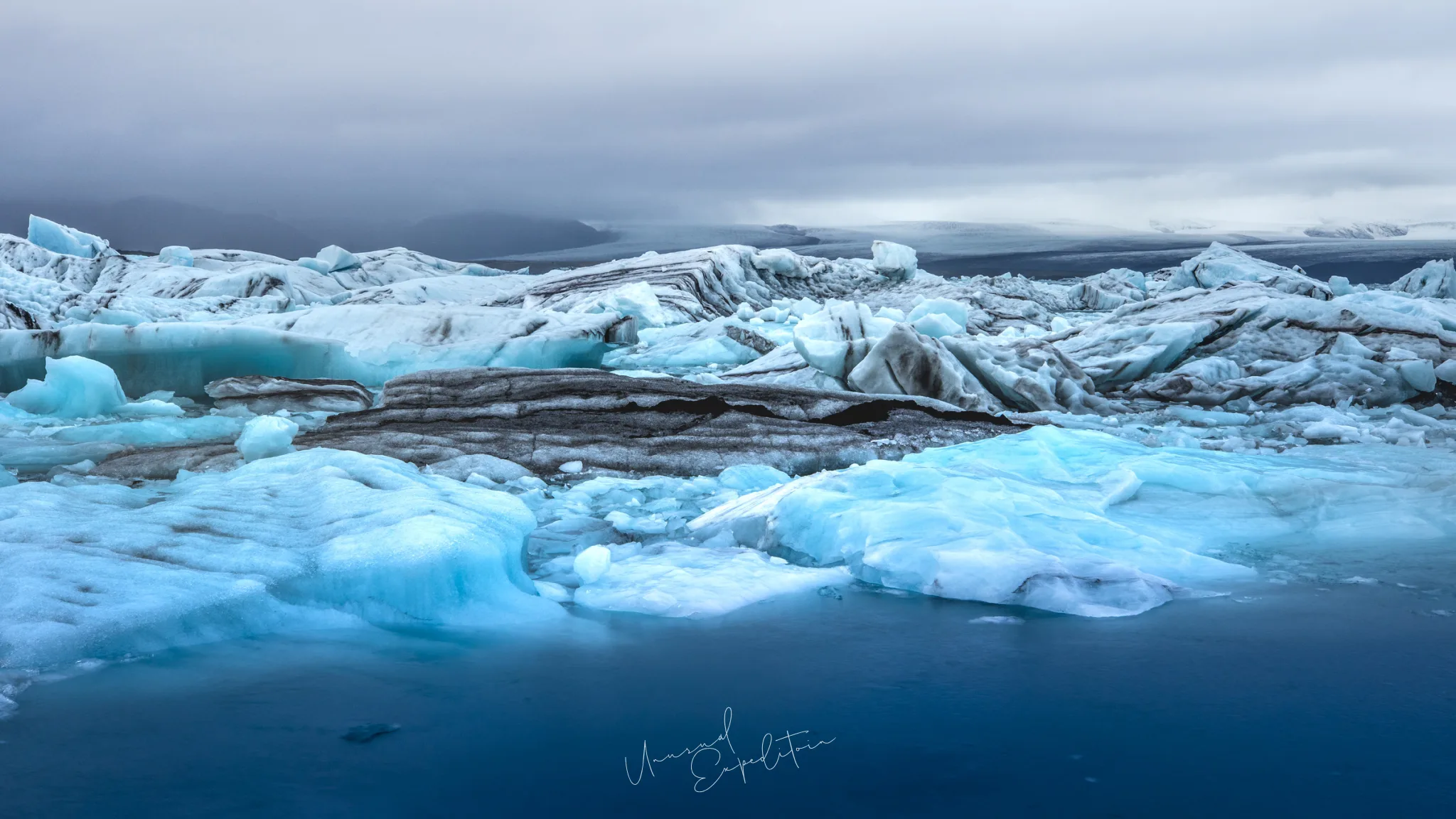
The Jokulsarlon glacier lagoon is the place in Iceland where ice meets light most directly: icebergs calved from the Breidamerkurjokull glacier drift across a deep lagoon, slip under the Route 1 bridge and wash up on the black sand of Diamond Beach. For a photographer it holds four subjects in one small corner of the south-east, the lagoon, the beach, the ice caves in the glacier and the northern lights over all of it, and each one changes with the season.
Jokulsarlon is one area in our Iceland photography tour guide, which covers entry, money and flights from Singapore once for the whole country. The photographs in this guide are our own, taken on our trips here in autumn and in winter; we hold the rights to them, and the notes come from knowing the lagoon first hand.
Jokulsarlon glacier lagoon: what you are photographing
Jokulsarlon sits at the foot of Breidamerkurjokull, one of the outlet glaciers that flow down from the Vatnajokull ice cap. NASA's Earth Observatory describes the lagoon as the deepest lake in Iceland and notes that it has grown several times over since the 1970s as the glacier retreats. Ice breaks off the glacier front, drifts for months and grinds down until it is small enough to leave through the short river channel to the sea. The colours run from milky white to a hard, clear blue where old compressed ice has turned over, and some bergs carry black bands of volcanic ash. The whole area, lagoon, beach and glacier, lies inside Vatnajokull National Park, a UNESCO World Heritage Site, and the park runs the car parks and the rangers on the sand plain of Breidamerkursandur.
Jokulsarlon and Diamond Beach
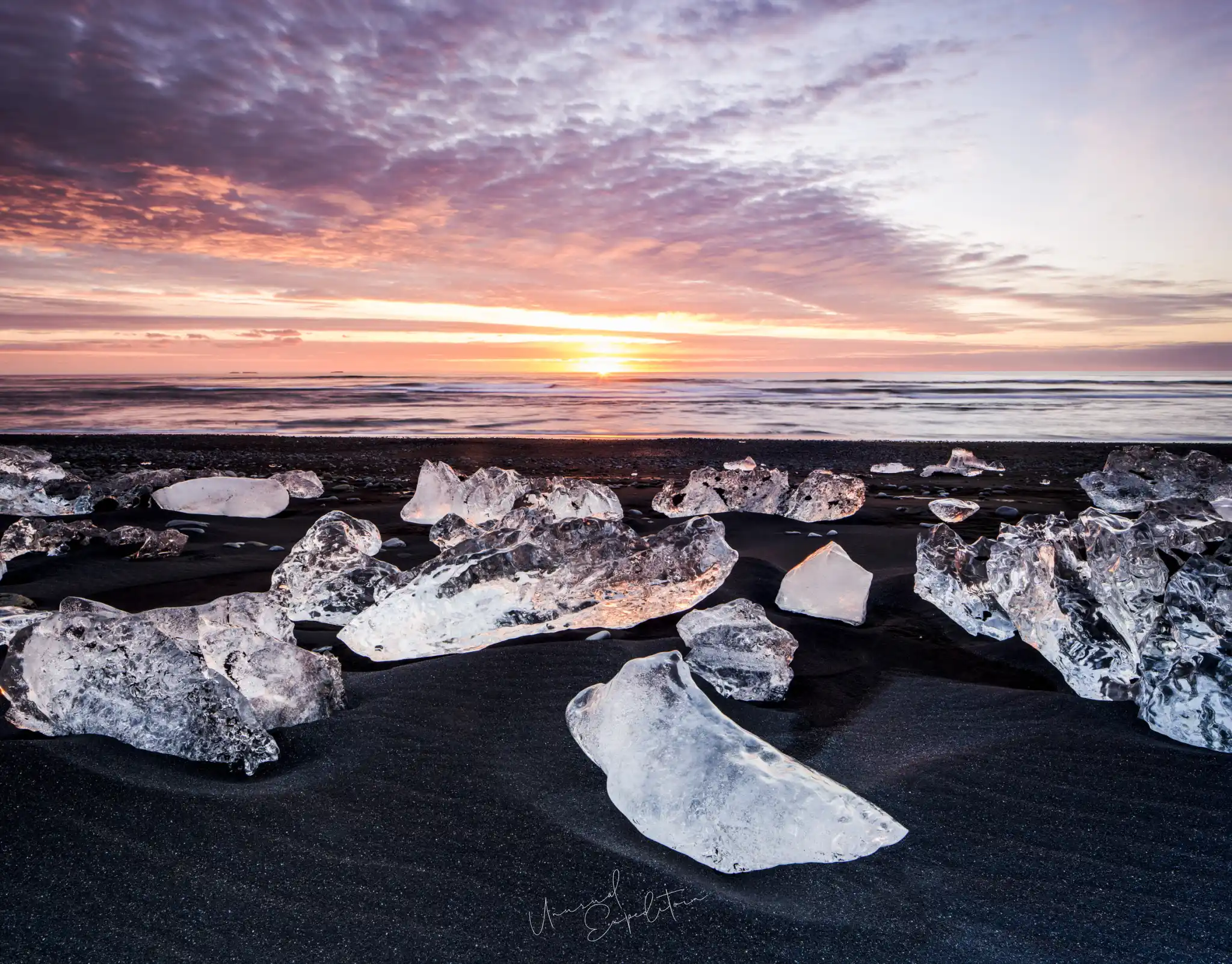
Most visitors treat Jokulsarlon and Diamond Beach as one stop, and for photography they work as a pair. The lagoon gives you calm water, reflections and the glacier in the background; Diamond Beach, on the sea side of the bridge, gives you ice on black sand with the Atlantic surf moving around it. On a still morning you shoot the lagoon first while the water is flat, then cross to the beach when the light comes low across the sand. Our Diamond Beach Iceland photos guide goes through the beach in detail, and the Jokulsarlon photo spots guide covers where to stand along the lagoon shore, by the river mouth and up on the moraine.
Jokulsarlon glacier lagoon photos: the light through the year
Jokulsarlon looks different in every season. Summer brings the midnight sun, so the low gold light lasts for hours late into the evening and the bergs glow against a pale sky. Autumn adds the first dark nights and the first auroras while the lagoon is still open water. Winter is short days, low sun all day long, a lagoon that can freeze at the edges or right across, and the ice cave season in the glacier. Spring brings back the long days and the boat tours. Our page on the best time to visit Jokulsarlon sets the seasons side by side.
| Subject | Best season | Best light | Lens |
|---|---|---|---|
| Icebergs on the lagoon | All year, calm days | Dawn, dusk, overcast | 24-70mm, 70-200mm |
| Ice on Diamond Beach | All year, depends on the ice | Sunrise, sunset | 16-35mm, 24-70mm |
| Natural ice caves | Winter, roughly November to March | Daylight through the ice | 14-24mm, 16-35mm |
| Northern lights over the lagoon | September to April | Dark, clear, moonlit nights | Fast wide lens |
| Midnight sun on the ice | June and July | Late evening gold | 24-70mm |
The table is why we return in more than one season: no single visit gives you all five.
Sunrise, sunset and the hours in between
At Jokulsarlon the sun rises and sets over the sea or over the glacier, depending on the month, and the ice picks up whatever colour is in the sky. In winter the sun barely clears the horizon, so you get sunrise light for much of the morning. In summer the sun dips only briefly and the soft light runs late into the evening. Our Jokulsarlon sunrise and sunset guide explains which side to shoot from and when the beach beats the lagoon.
Ice caves in the glacier
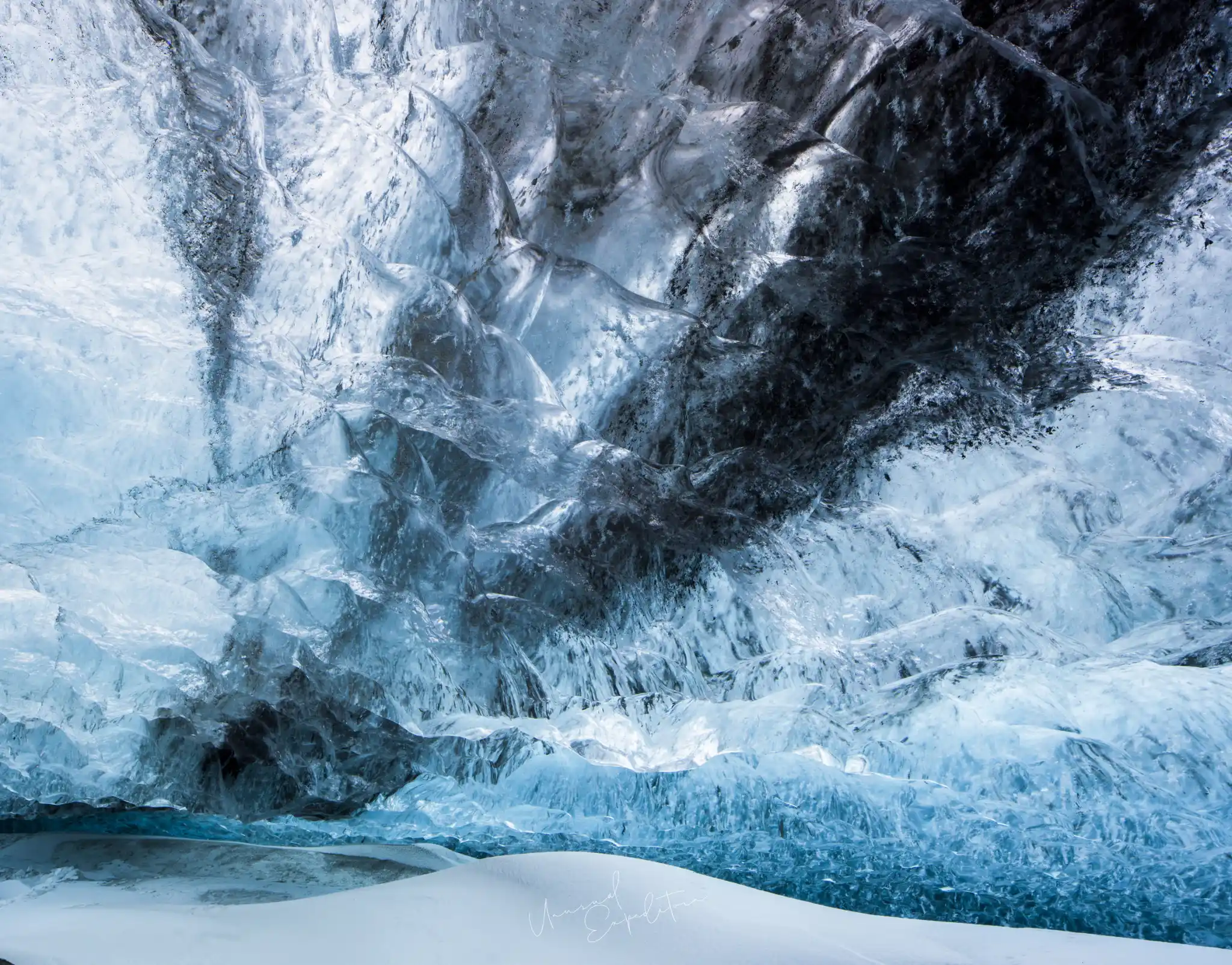
In winter, meltwater channels inside Breidamerkurjokull freeze and leave tunnels of blue and black ice that you can walk into with a licensed guide. Vatnajokull National Park only lets contracted operators take visitors in, and the guides decide each day whether a cave is safe. The light inside comes through the ice itself, which is where the famous blue comes from. See our Jokulsarlon ice cave photography guide for the season, the gear and what to expect underground.
Northern lights over Jokulsarlon
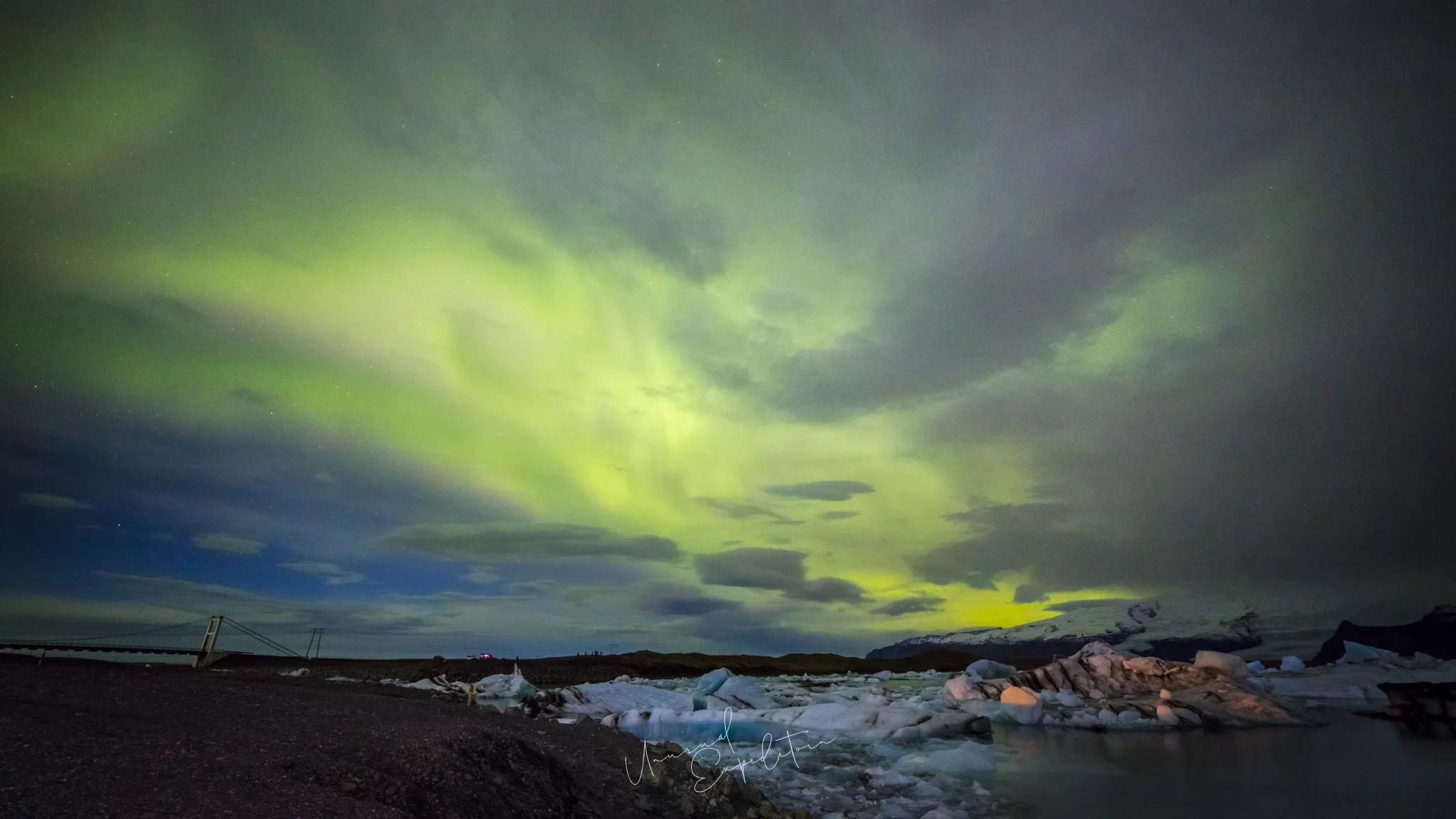
From September to April the lagoon is one of the best aurora foregrounds in Iceland: there is almost no artificial light, the water reflects the sky on calm nights, and the icebergs give you shapes in the dark. We watch the Icelandic Met Office cloud and aurora forecast through the afternoon and move along the shore to wherever the gap in the cloud is. The Jokulsarlon northern lights guide covers settings, moonlight and where to stand.
People come to Jokulsarlon for one picture of blue ice. Stay a full day and you get five different places: the still lagoon at dawn, the surf on the beach, the glacier, the cave, and the sky at night.
Joseph Mak, tour leader, Unusual Expedition
Is Jokulsarlon worth it for a photographer?
Jokulsarlon is a long way along the south coast from Reykjavik, and many visitors ask whether it is worth the drive. For a photographer it is one of the two or three places in Iceland that justify building a trip around them, because the ice is never the same twice. The car parks are busy by day, so the reward goes to people who stay nearby and come back at the edges of the day. Our is Jokulsarlon worth it guide covers getting there, the boat tours, the seals and the park fees.
Safety at the lagoon and on the beach
The ice at Jokulsarlon looks solid and is not. Bergs roll over without warning, the lagoon is tidal near the outlet, and the surf at Diamond Beach throws sneaker waves far up the sand. Stay off the icebergs, keep the sea in view while you work, and never walk onto lagoon ice in winter. Check road and weather conditions on Safetravel.is before you set out, especially in winter when the south coast road can close in a storm.
Explore Jokulsarlon in depth
- Diamond Beach Iceland photos: ice on black sand
- Jokulsarlon photo spots: lagoon, river mouth and moraine
- Best time to visit Jokulsarlon
- Jokulsarlon sunrise and sunset
- Jokulsarlon northern lights
- Jokulsarlon ice cave photography
- Is Jokulsarlon worth it? Getting there, boats and fees
Photograph Jokulsarlon with us
Our Iceland Midnight Sun Photo Tour gives Jokulsarlon and Diamond Beach a full evening in the long summer light, with the session timed for when the crowds have gone and the ice turns gold. The fare is indicatively S$15,500 to S$19,250 per person depending on the room; the current departure and rate are on our Iceland photography tours page. For ice caves and the northern lights we arrange winter trips as private tours, planned around your dates and pace.
Join the Jokulsarlon photography tour
Iceland Midnight Sun Photo Tour departs 05 Jul 2027 To 18 Jul 2027, led by Joseph Mak. Small group, photography first. All Jokulsarlon photography tours.
Explore Jokulsarlon in depth
- Is Jokulsarlon Worth It? Getting There, Boat Tours, Seals and FeesIceland
- Jokulsarlon Ice Cave Photography: Season, Safety and Blue Ice SettingsIceland
- Jokulsarlon Northern Lights: Aurora Over the Glacier Lagoon and Diamond BeachIceland
- Jokulsarlon Sunrise and Sunset: Lagoon or Diamond Beach, Season by SeasonIceland
- Best Time to Visit Jokulsarlon for Photography: Winter, Summer or AutumnIceland
- Jokulsarlon Photo Spots: Lagoon Shore, Glacier Ridge, River Mouth and FjallsarlonIceland
- Diamond Beach Iceland Photos: Ice on Black Sand, Light and SettingsIceland
Upcoming Photo Tours
- Egypt Photo Tour – EgyptEgypt 12 Dec 2026 To 20 Dec 2026
- Inner Mongolia Winter Owl Photo Tour – ChinaChina 01 Jan 2027 To 04 Jan 2027
- Inner Mongolia Winter Photo Tour – ChinaChina 05 Jan 2027 To 11 Jan 2027
- Mekong And Central Highland Vietnam Photo Tour - VietnamVietnam 16 Jan 2027 To 24 Jan 2027