
Maramures Photography Tour Guide: What to See in Northern Romania
Maramures, Romania: what to see on a photography tour. Wooden churches, haystacks, crafts, Sunday dress and the Mocanita.
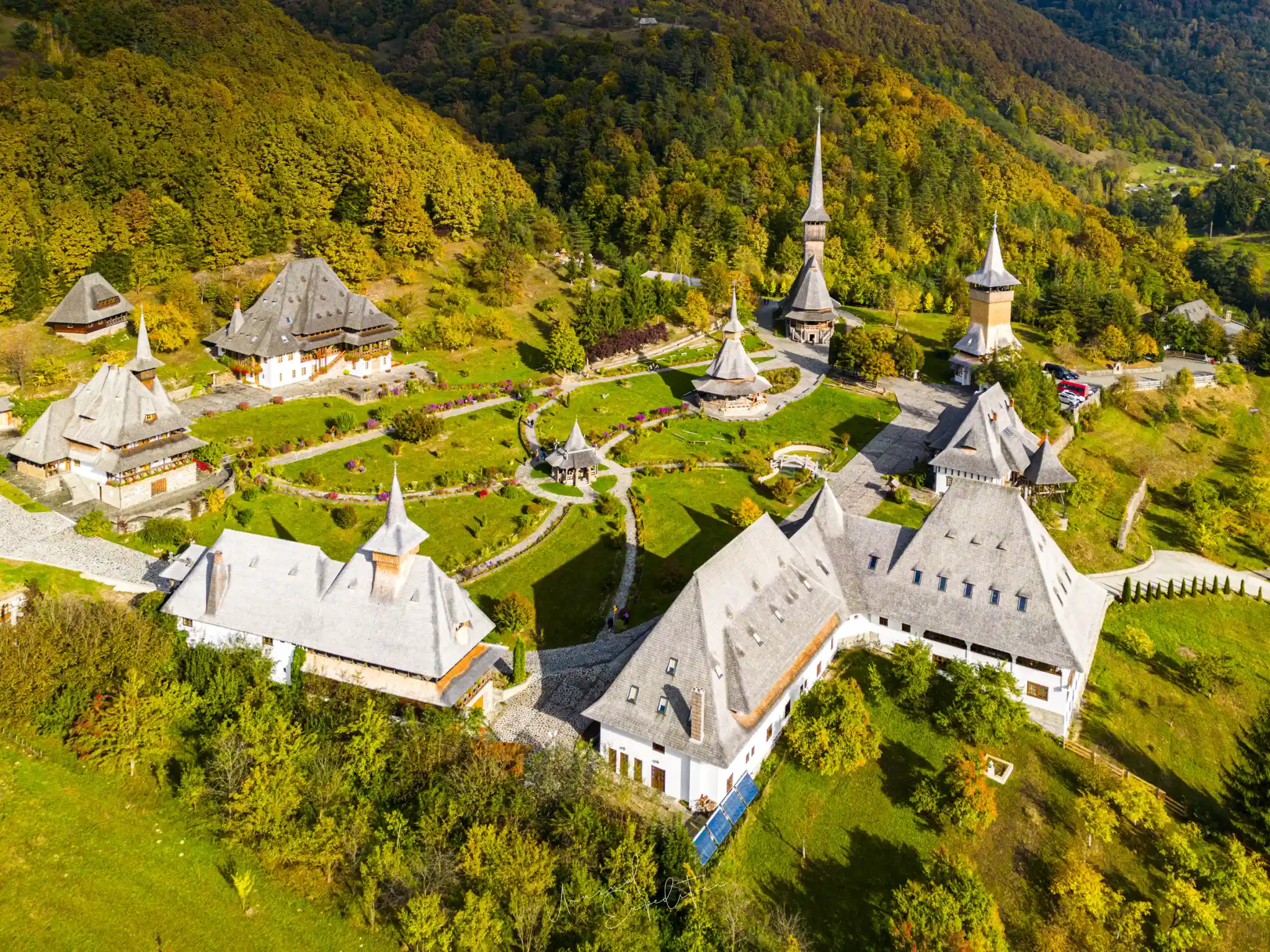
Maramures, Romania: what to see with a camera comes down to five things. The wooden churches with their tall shingled spires, eight of them on the UNESCO list; the haystacks and hay carts of an autumn still farmed by hand; wool spun, woven and washed in wooden whirlpools; Sunday dress on the walk to church; and the Mocanita, a wood-fired steam train in the forest above Viseu de Sus. Go in September or October, stay several nights, and take time to ask before every portrait.
Maramures is one of two regions in our Romania photography tour guide, which covers entry, money and flights from Singapore for the whole country; the other is Transylvania. The photographs in this guide are our own, taken on our trips here; we hold the rights to them, and the notes come from knowing these places first hand.
Where is Maramures? The Maramures region in Romania
Maramures is a historic region in the far north of Romania, on the border with Ukraine, ringed by the Gutai, Tibles and Rodna mountains. The Romanian part lies around the valleys of the Iza, the Mara, the Cosau and the Viseu, with the old market town of Sighetu Marmatiei on the Tisa river at the border. Baia Mare, the county seat, lies outside the historic region to the south-west. Because the valleys were hard to reach, village life here kept its timber churches, carved gates, costumes and farming year longer than almost anywhere else in Europe. It is not a museum: people drive cars, build new houses and use phones. But on a Sunday morning, or in a meadow at harvest, Maramures looks the way rural Europe looked a long time ago.
Maramures Romania: what to see
| Subject | Where | Best light | Our guide |
|---|---|---|---|
| Wooden churches and Barsana Monastery | Iza valley, Ieud, Poienile Izei, Desesti, Barsana | Morning sun on the spires; interiors any time | Wooden churches |
| Merry Cemetery | Sapanta, near the Tisa | Soft light or blue sky | Wooden churches |
| Mocanita steam train | Viseu de Sus and the Vaser valley | Morning at the depot | Mocanita |
| Haystacks and hay carts | Meadows across the region | Sunset and dawn | Romanian haystacks |
| Crafts and customs | Village homes and streams | Window light indoors | Traditions |
| Sunday dress | Village churches | Before and after the service | Traditional costume |
A week in one valley gives you all six, which is better than a day in each corner of the region.
Wooden churches, Barsana and the Merry Cemetery
The wooden churches are the first reason to come. UNESCO lists eight of them, at Barsana, Budesti, Desesti, Ieud, Plopis, Poienile Izei, Rogoz and Surdesti, as outstanding examples of timber religious building, and close to a hundred stand across the region. Inside, the walls are painted with saints, Last Judgements and village-style angels, darkened by candle smoke. Barsana Monastery, a new complex begun in 1993 above the Iza, is the most photographed: steep shingled roofs and a spire on a green hill, best from the air or from the garden in morning light. At Sapanta, the Merry Cemetery has carved and painted blue oak crosses with verses about the lives of the dead. All of this is in our guide to the wooden churches of Maramures.
Village life: hay, wool and the roads
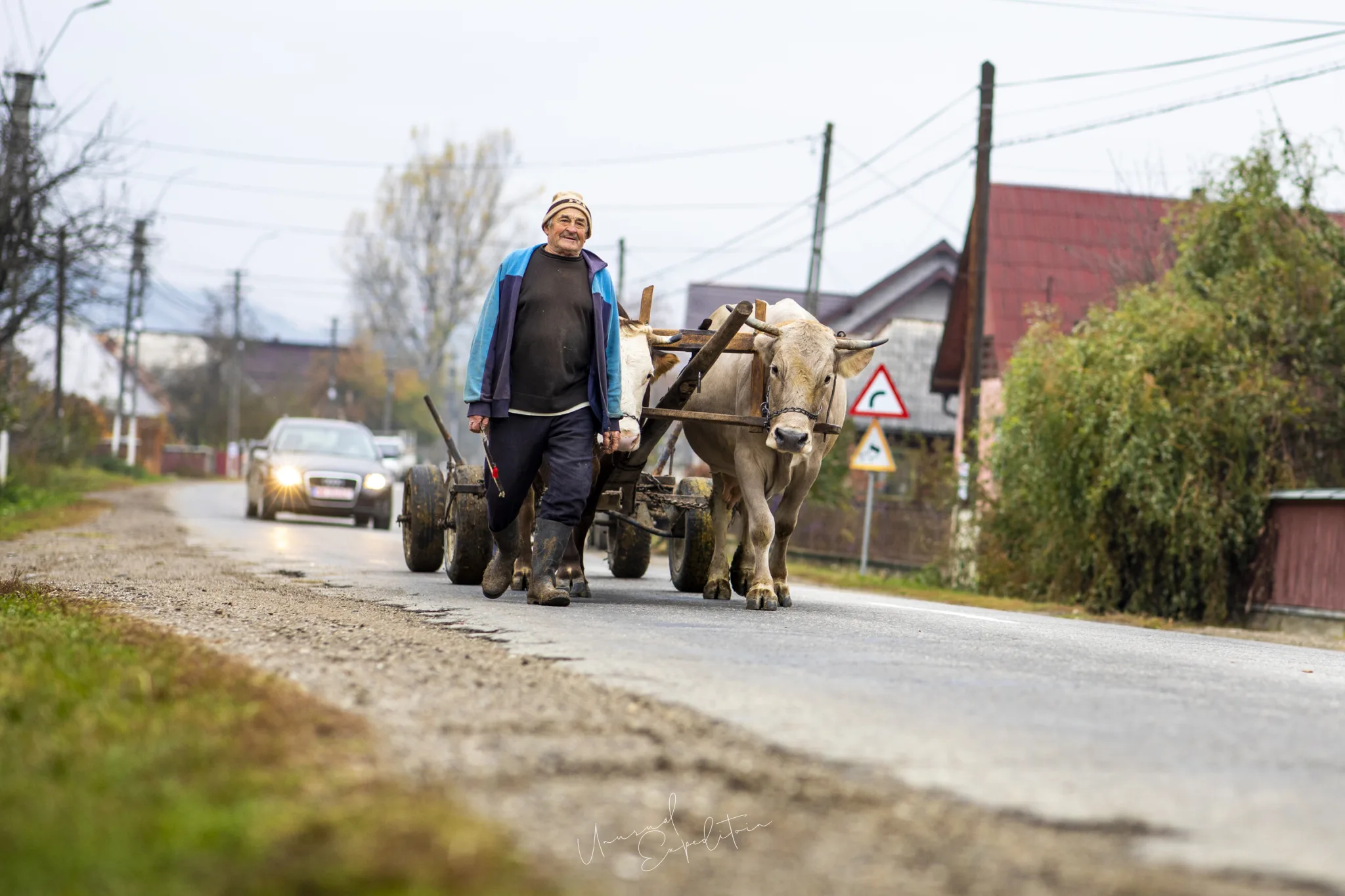
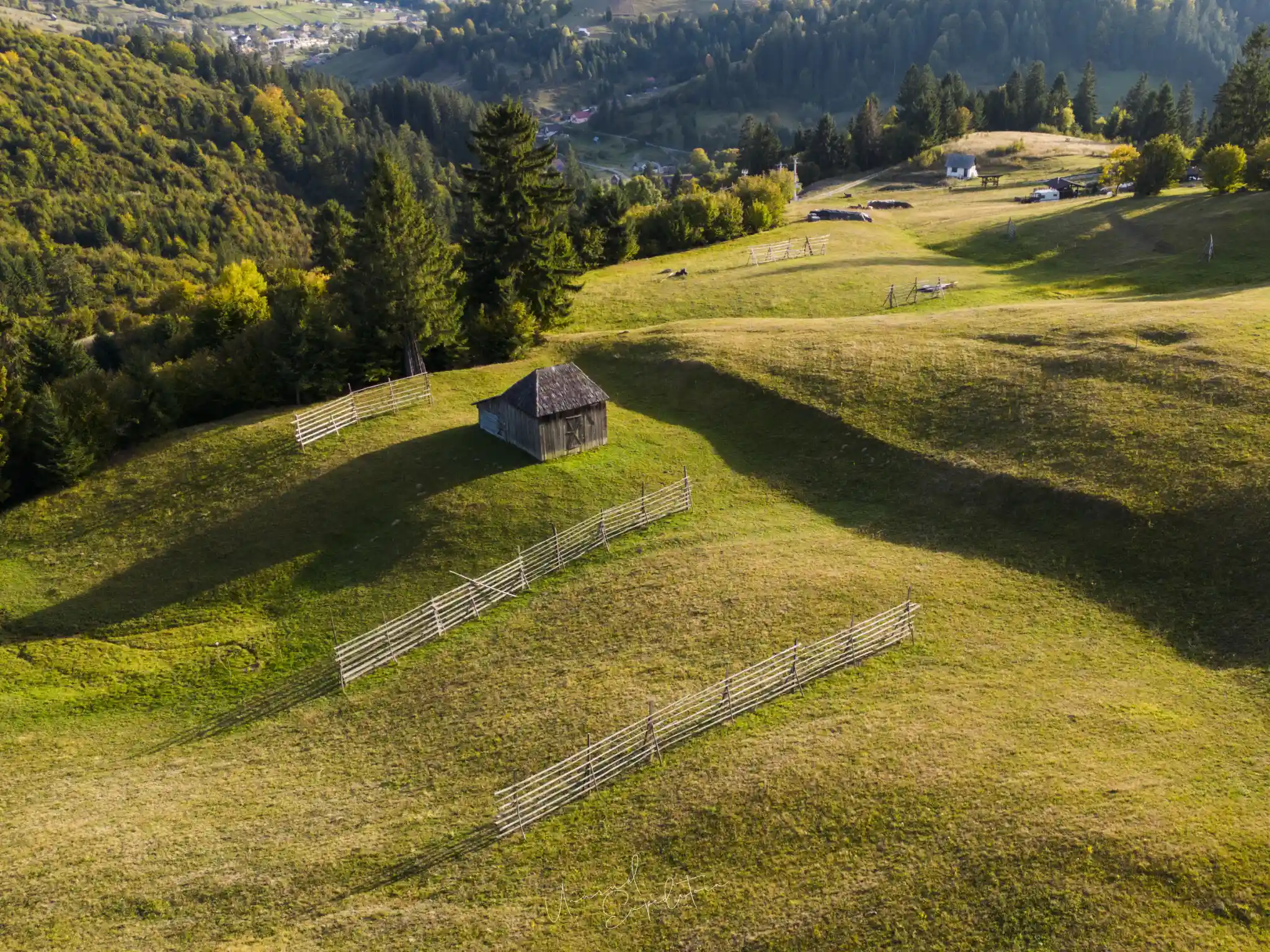
The roads of Maramures are a subject in themselves. Horse carts piled with hay share the asphalt with cars, a farmer walks beside his oxen, old men cycle to market with onions on the handlebars. In the meadows, hay is stacked around a central pole into tall stacks that stand through the winter; we cover them in Romanian haystacks. Indoors, women still spin wool with a distaff, weave rugs on wooden looms, and take blankets to the stream to wash in a wooden whirlpool. Our guide to Romanian traditions and customs in Maramures shows how to photograph that work with respect, and pictures of Maramures collects the markets and village scenes.
Sunday in Maramures
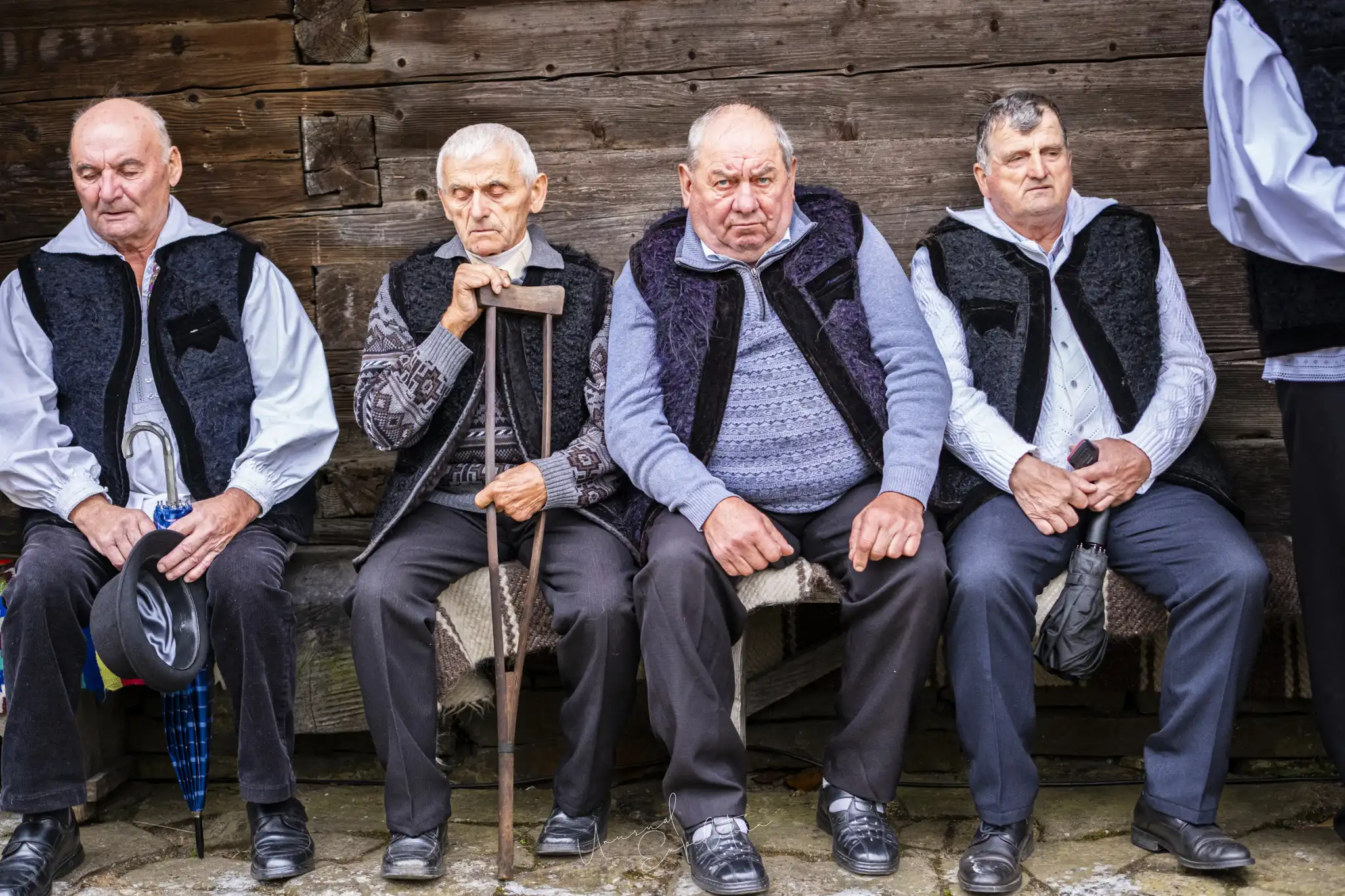
Sunday is the day to be in a village. Before the service, families walk to church in costume: men in white shirts and black wool waistcoats, women in white blouses with full sleeves, pleated skirts and headscarves, the older women in black. Afterwards people stand and talk in the churchyard, and the elders sit on benches against the timber walls. Photograph from the edge, ask before you come close, and never during the liturgy without a nod from the priest. The costumes and how to photograph them are in our Romanian traditional costume guide.
"In Maramures I put the camera down for the first hour in every village. We say good morning, admire the gate, buy something at the market. After that people stop looking at the lens, and the photographs come by themselves."
Joseph Mak, tour leader, Unusual Expedition
The Mocanita steam train
At Viseu de Sus, a narrow-gauge forestry railway still hauls timber out of the Vaser valley, and its operator describes it as the last forestry narrow-gauge steam railway in Europe. Tourist trains run on it too, pulled by small black locomotives that burn wood. The depot in the morning, with crews stoking fireboxes, loading logs and building steam, is the best part for photographers. Our Mocanita guide explains where to stand.
Best time for Maramures tours
September and October are the months we choose for Maramures tours: the hay is stacked, apples are picked, mornings are misty and the forests above the villages turn. May and June give green meadows and the first hay cut; winter brings snow and the Christmas customs the region is known for. Rough Guides gives Romania's October range as roughly 8 to 17 degrees Celsius, colder at dawn in the valleys. Weather, the nearest airports and how to get there are in the Maramures photography FAQ.
Camera gear for Maramures
A 24-70mm does most of the work, from village lanes to portraits on a doorstep. A 70-200mm picks out haystacks on far slopes and the steam train in the valley. Church interiors and homes are dark, so bring a fast prime or a lens that opens to f/2.8 and be ready to raise the ISO. Rain covers and warm layers matter more here than another lens.
Explore Maramures in depth
- Wooden churches of Maramures: Barsana and the Merry Cemetery
- Mocanita Viseu de Sus: photographing the steam train
- Romanian haystacks: the hay of Maramures
- Romanian traditions and customs in Maramures
- Romanian traditional costume: Sunday dress in Maramures
- Pictures of Maramures, Romania
- Maramures photography FAQ
Photograph Maramures with us
We run Maramures as a private trip on request, often together with Transylvania, for individuals, families, couples and photographers who want their own pace. We arrange all the logistics and the local contacts that open village doors; with no tour leader travelling, a private trip can cost less than our group tours, and a photographer or photography coaching can be added at extra cost. Ask at least two months ahead. See the Romania photography tours page and our private tours.
Maramures photography tours
The next Maramures departure is announced on the Maramures photography tours page, with previous expeditions and all the planning guides.
Explore Maramures in depth
- Mocanita Viseu de Sus: Photographing Romania's Steam TrainRomania
- Wooden Churches of Maramures: Barsana, Painted Interiors and the Merry CemeteryRomania
- Romanian Traditions and Customs in Maramures: Wool, Looms and WhirlpoolsRomania
- Romanian Traditional Costume: Sunday Dress in MaramuresRomania
- Pictures of Maramures, Romania: Villages, Markets and PeopleRomania
- Maramures Photography FAQ: Weather, Airport and Getting ThereRomania
- Romanian Haystacks: Photographing the Hay of MaramuresRomania
Upcoming Photo Tours
- Egypt Photo Tour – EgyptEgypt 12 Dec 2026 To 20 Dec 2026
- Inner Mongolia Winter Owl Photo Tour – ChinaChina 01 Jan 2027 To 04 Jan 2027
- Inner Mongolia Winter Photo Tour – ChinaChina 05 Jan 2027 To 11 Jan 2027
- Mekong And Central Highland Vietnam Photo Tour - VietnamVietnam 16 Jan 2027 To 24 Jan 2027