
Wooden Churches of Maramures: Barsana, Painted Interiors and the Merry Cemetery
Wooden churches of Maramures: the UNESCO eight, Barsana Monastery, painted interiors and the Merry Cemetery at Sapanta.
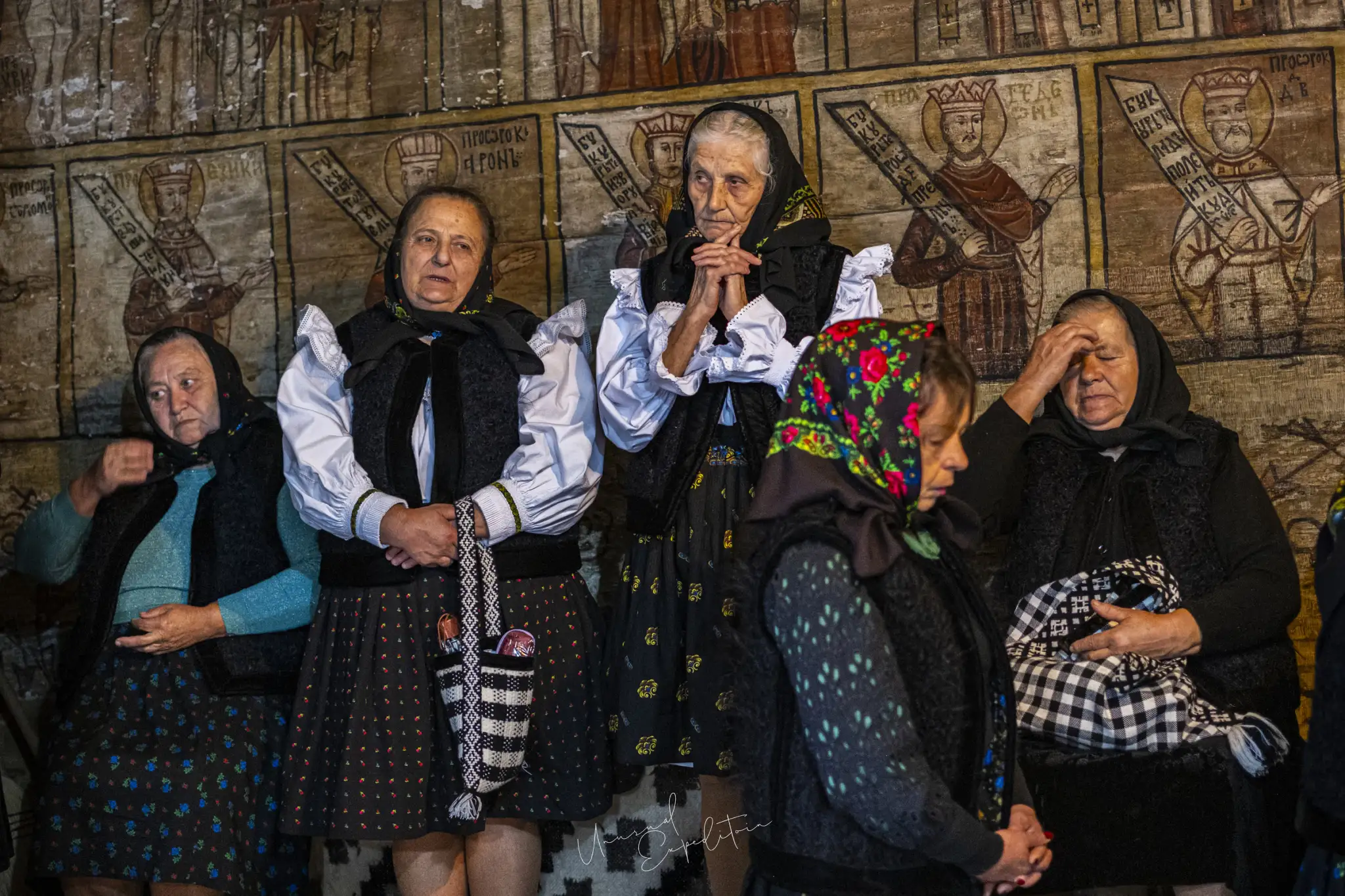
The wooden churches of Maramures are timber Orthodox and Greek Catholic churches with steep shingled roofs and needle spires, built or rebuilt in the eighteenth and nineteenth centuries, and painted inside with saints and village-style scenes. UNESCO lists eight of them as a World Heritage site, and close to a hundred stand across the region. Photograph the outside in morning light, the inside with a fast lens and permission, and add Barsana Monastery and the Merry Cemetery at Sapanta.
This guide is part of our Maramures photography tour guide. It covers the churches, the monastery at Barsana and the cemetery at Sapanta; the village life around them is in Sunday dress in Maramures and pictures of Maramures.
Wooden churches of Maramures: what they are
The wooden churches of Maramures grew out of a long tradition of building in timber in the northern Carpathians. According to UNESCO, which inscribed eight of them in 1999, they are outstanding examples of a range of architectural solutions from different periods and areas. Most were built or rebuilt after the last Tatar raids of the early eighteenth century, from oak and fir, on stone footings, with a tall roof that comes down low over the walls and a single slender tower over the entrance. The eight on the list are at Barsana, Budesti, Desesti, Ieud, Plopis, Poienile Izei, Rogoz and Surdesti. Many more, not listed, are just as photogenic, and some are still the parish church of their village.
Wooden church in Romania: how to photograph the outside
A wooden church in Romania sits in its churchyard among old graves and fruit trees, often on a slight rise. That makes the classic picture a three-quarter view from below, with the spire against the sky and a carved cross or a gate in the foreground. Shingles read best in low side light, so go in the morning or late afternoon; in flat light the roofs turn grey. A 24-70mm covers most churches; a 16-35mm helps in tight churchyards, and a 70-200mm from the road or the hill opposite shows the church above its village. Walk round before you shoot: the side with the porch is usually the more interesting one, and the cemetery gives you depth.
Barsana Monastery, Romania
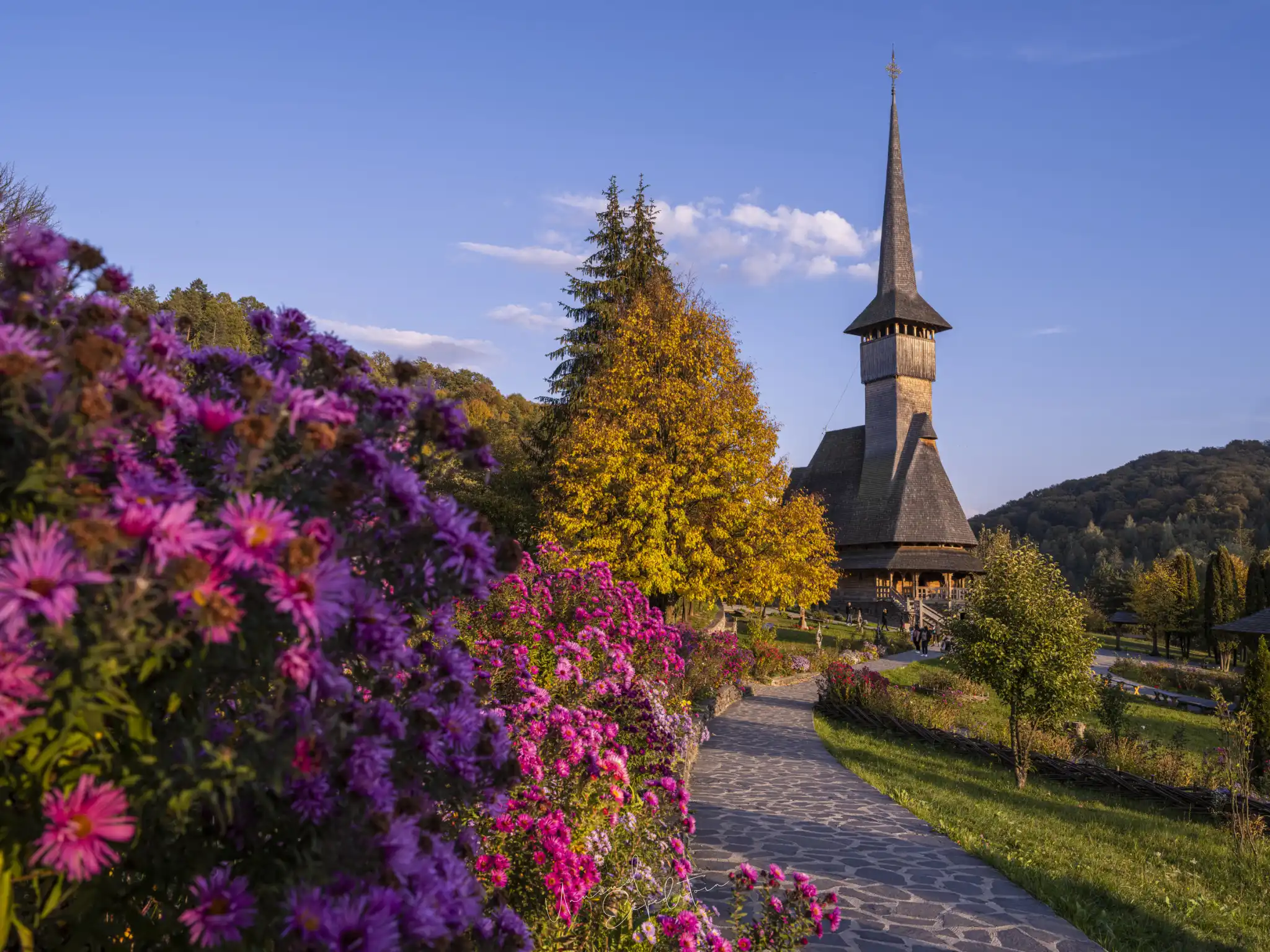
Barsana Monastery is not one of the UNESCO eight; the listed Barsana church is an older one in the village. The monastery is a new complex, begun in 1993, according to Rough Guides, on the site of a monastery closed in the late eighteenth century, and it stands on a plateau above the Iza valley. Its church has one of the tallest timber spires in the region, which Rough Guides puts at 57 metres, and around it are wooden gates, a bell tower, cloisters and gardens kept by the nuns. It is the easiest place in Maramures to photograph the architecture in perfect order. Arrive early, before the coaches, for clean grounds and side light on the shingles, and in autumn use the flowerbeds and the yellow trees as foreground. From the air, with permission and within the drone rules, the whole complex reads as a small timber town on a green hill.
Inside the painted churches
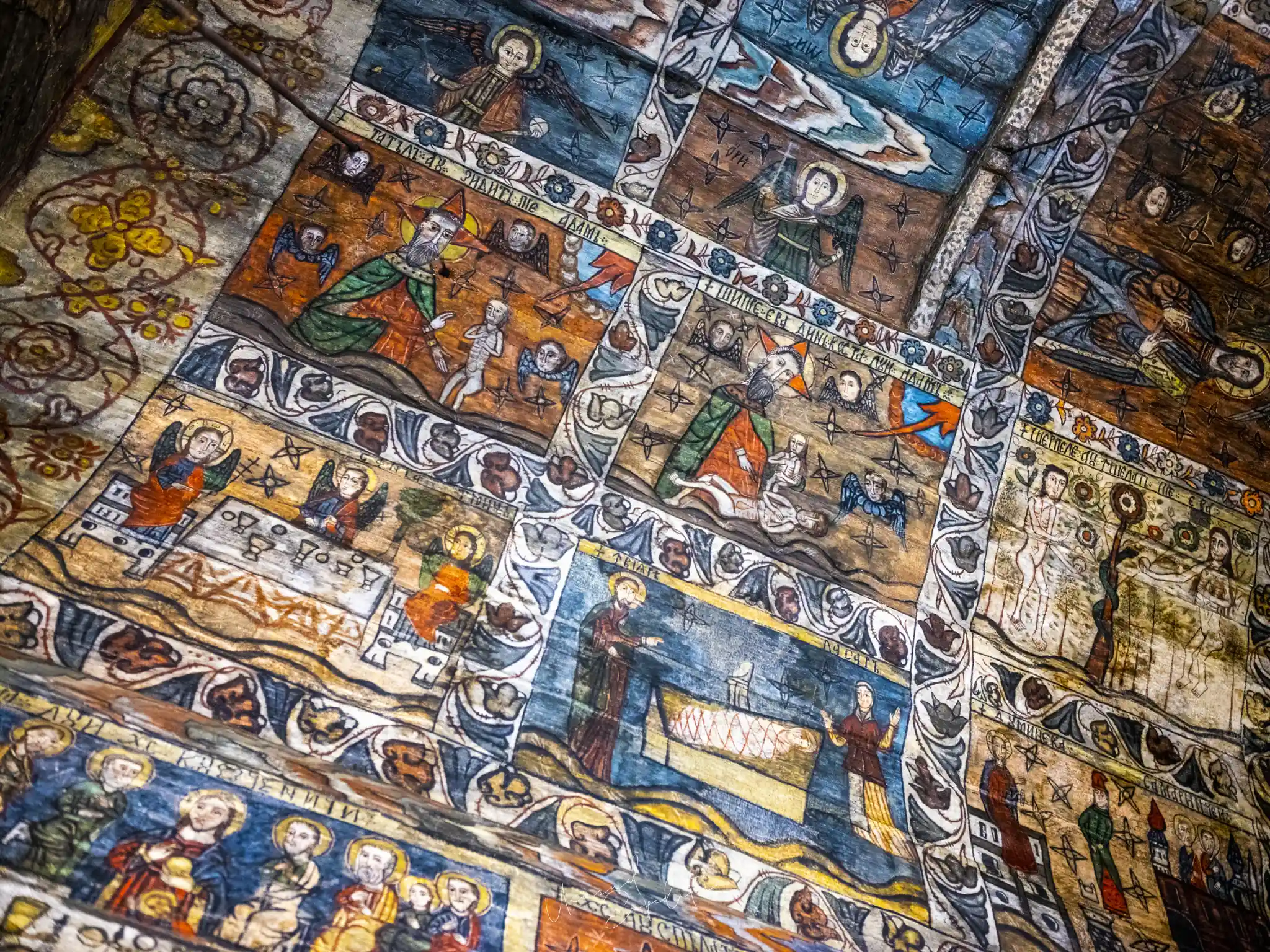
Inside, the older churches are dark, low and covered in paint. The walls and vaulted ceilings carry rows of saints and prophets, the Last Judgement with its devils, and Biblical scenes painted in a direct village style, often by itinerant painters, in red, ochre and blue that candle smoke has softened. Many are kept locked outside services; someone in the village, often the priest's family or a neighbour, holds the key, and a donation is expected. Ask before you photograph, use no flash, and work with a fast lens at a high ISO. Point up: the painted ceiling is often the strongest frame, and a 16-35mm takes it in whole. During a Sunday service the people make the picture, but stay at the back and ask the priest first.
"The first time an old lady opened a church for us, she stood at the door and told us who had painted every saint. You cannot rush those places. Sit on the bench for a while before you lift the camera, and let your eyes get used to the dark."
Joseph Mak, tour leader, Unusual Expedition
Merry Cemetery, Sapanta, Romania
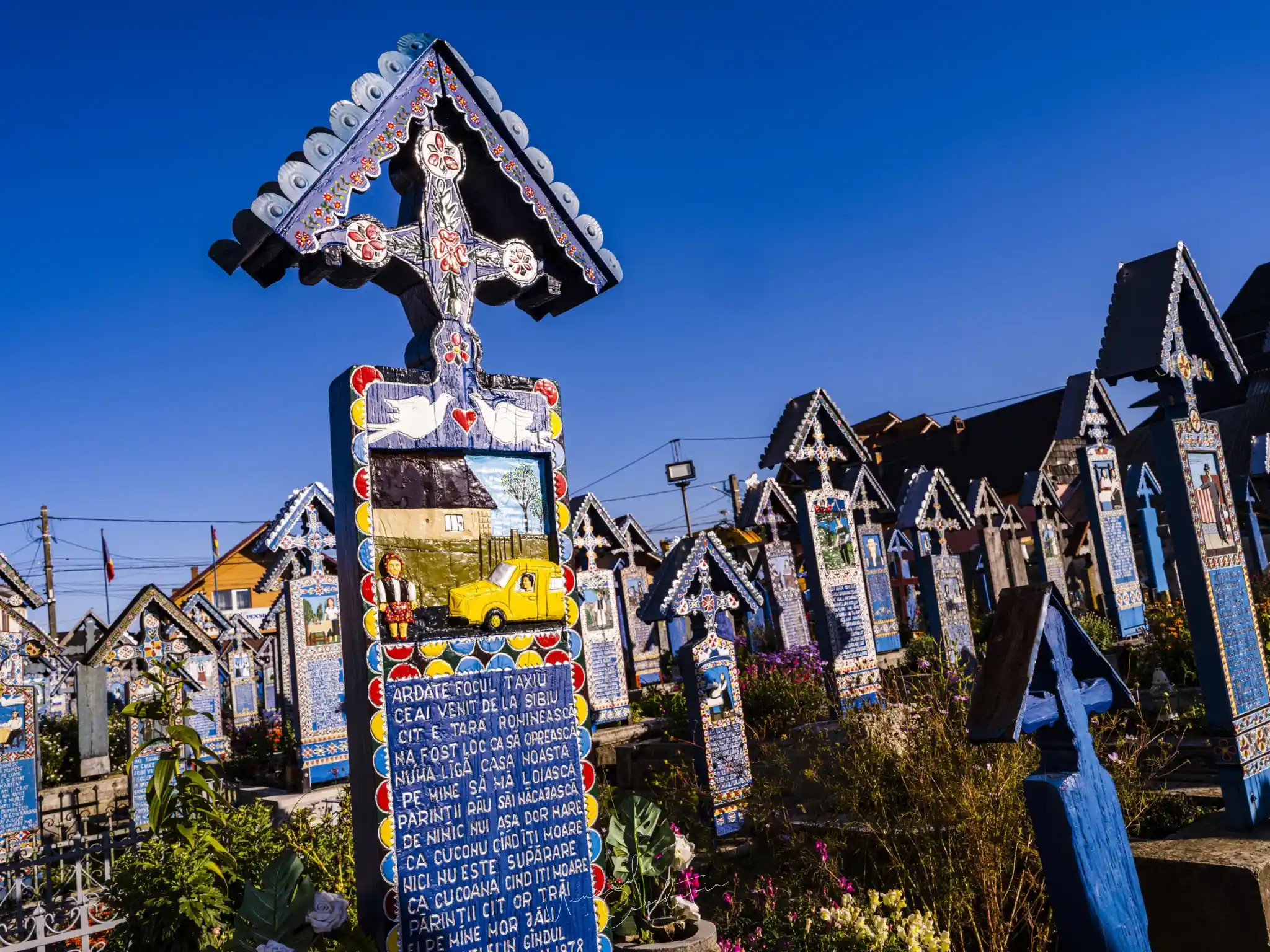
The Merry Cemetery in Sapanta, near the Tisa and the Ukrainian border, is the most unusual graveyard in Romania. From the mid-1930s a local carver, Stan Ioan Patras, made oak crosses for the village dead, painted in a bright blue now known as Sapanta blue, with a carved scene of the person's life and a verse, often funny and sometimes blunt, about how they lived and died. His apprentice, Dumitru Pop Tincu, continued the work, and the cemetery has hundreds of crosses. Photograph it in soft light or under a blue sky, with the crosses in rows and the church behind, and come close for the painted panels. The verses are in Romanian, so ask someone to translate a few; it changes how you see the place.
Wooden churches of Maramures at a glance
| Place | What it is | What to photograph | Lens |
|---|---|---|---|
| UNESCO wooden churches | Eighteenth and nineteenth century parish churches | Spires, shingles, painted interiors | 16-35mm, 24-70mm |
| Barsana Monastery | Timber monastery begun in 1993 | Spire, gates, gardens, aerial view | 24-70mm, drone with permission |
| Merry Cemetery, Sapanta | Painted oak crosses with verses | Rows of crosses, painted panels | 24-70mm |
| Village churches on Sunday | Working parish churches | People in costume, benches, gates | 24-70mm, 70-200mm |
For a first visit, one listed church, Barsana and Sapanta give you the range without driving all day.
Church etiquette for photographers
These are places of worship before they are monuments. Cover shoulders and knees, keep your voice down, and leave the tripod outside unless you have asked. In monasteries women may be asked to wear a skirt or a headscarf, and wraps are often provided at the gate. Some churches charge a small photo fee; pay it. Do not photograph funerals, and at a memorial service in the churchyard keep your distance. If someone opened the church for you, thank them, and leave a donation in the box.
Photograph the wooden churches with us
We run Maramures as a private trip on request, with local contacts who hold the keys and know which churches are open. We arrange all the logistics, at your pace; with no tour leader travelling, a private trip can cost less than our group tours, and a photographer or photography coaching can be added at extra cost. Ask at least two months ahead. See the Romania photography tours page and our private tours, and read the Maramures photography FAQ for getting there.
Ask us about the wooden churches of Maramures
Maramures photography tours
The next Maramures departure is announced on the Maramures photography tours page, with previous expeditions and all the planning guides.
Explore Maramures in depth
- Maramures Photography Tour Guide: What to See in Northern RomaniaRomania
- Mocanita Viseu de Sus: Photographing Romania's Steam TrainRomania
- Romanian Traditions and Customs in Maramures: Wool, Looms and WhirlpoolsRomania
- Romanian Traditional Costume: Sunday Dress in MaramuresRomania
- Pictures of Maramures, Romania: Villages, Markets and PeopleRomania
- Maramures Photography FAQ: Weather, Airport and Getting ThereRomania
- Romanian Haystacks: Photographing the Hay of MaramuresRomania
Upcoming Photo Tours
- Egypt Photo Tour – EgyptEgypt 12 Dec 2026 To 20 Dec 2026
- Inner Mongolia Winter Owl Photo Tour – ChinaChina 01 Jan 2027 To 04 Jan 2027
- Inner Mongolia Winter Photo Tour – ChinaChina 05 Jan 2027 To 11 Jan 2027
- Mekong And Central Highland Vietnam Photo Tour - VietnamVietnam 16 Jan 2027 To 24 Jan 2027