
Romanian Traditions and Customs in Maramures: Wool, Looms and Whirlpools
Romanian traditions and customs in Maramures: spinning, weaving, the whirlpool, the smithy and horinca, and how to photograph them.
Romanian traditions and customs are most alive in Maramures, where village households still spin wool with a distaff, weave rugs on wooden looms, wash and felt blankets in wooden whirlpools fed by mountain streams, forge iron in small smithies and distil horinca, the region's twice-distilled plum brandy. Photograph them at home, in window light, with the family's permission, and let the work, not the pose, make the picture.
This guide is part of our Maramures photography tour guide. The clothes these crafts produce are in Romanian traditional costume, and the hay that fills the autumn in Romanian haystacks.
Romanian traditions and customs: what survives in Maramures
Most of Romania has modernised fast, and Maramures has too. But the region's small farms, its long winters and its distance from the cities kept many household crafts going into this century. Older women spin and weave because their mothers did and because the blankets and rugs are still used. Water from the streams still drives whirlpools, mills and sawmills in a few valleys. Smiths still shoe horses and mend tools, because horses still pull carts. And in autumn, plums become horinca in copper stills in back sheds. These are not shows for visitors. They are part of the year, and you see them by spending time in one place and being invited in.
Wool: spinning and weaving at home
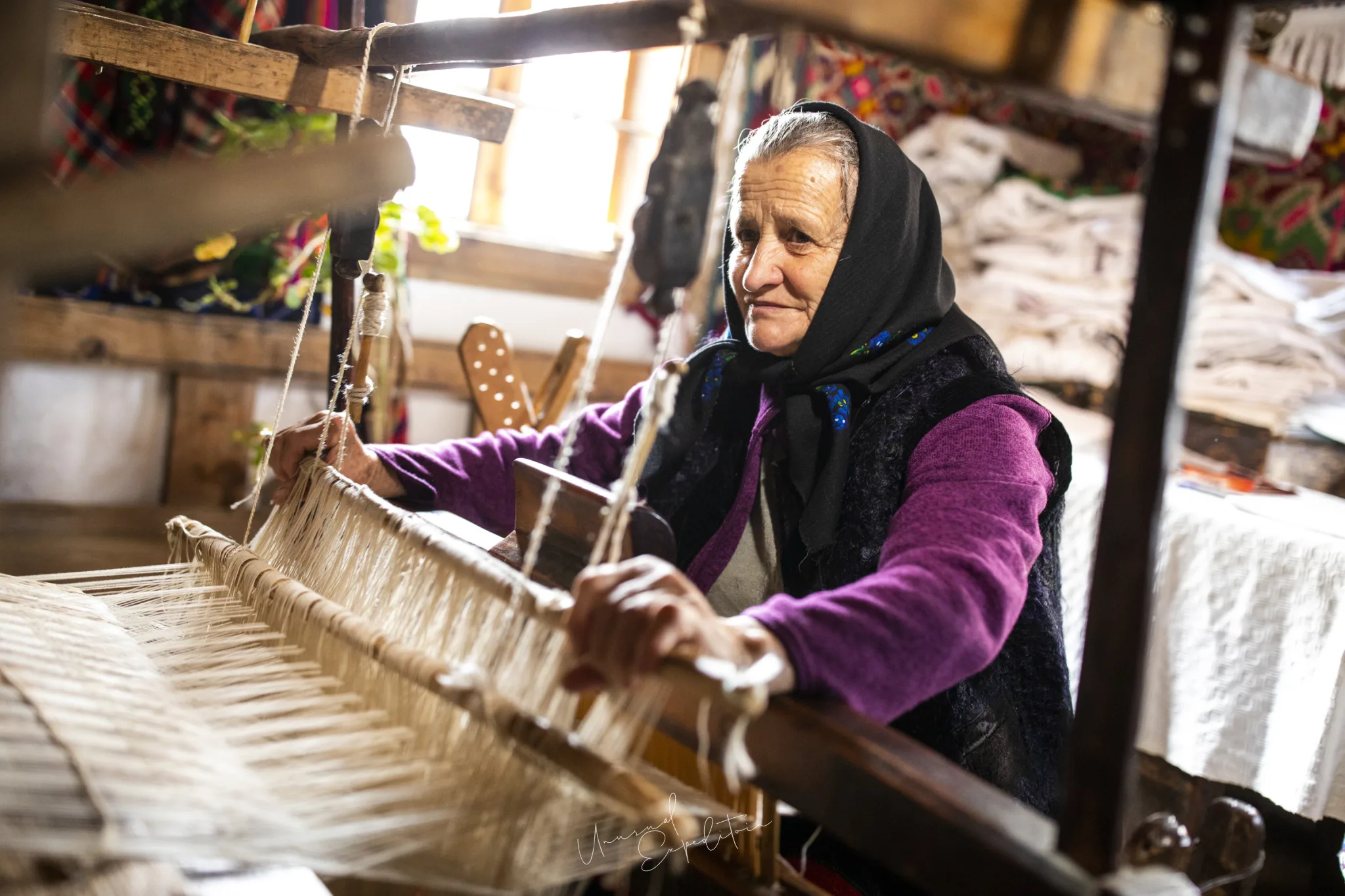
Wool runs through Maramures life. Sheep are sheared in spring, the wool is washed, carded and spun by hand with a distaff and spindle, and then woven into rugs, blankets and the striped aprons of women's dress. Many older women still spin while they sit on the bench outside the house, and some keep a wooden loom in the best room, among piles of woven blankets and embroidered pillows. Those rooms are a gift for a photographer: dense colour, soft light from a small window, and hands at work. Shoot with a 24-70mm or a fast prime, open the aperture, keep the window to one side, and ask if you may move a lamp rather than doing it yourself.
The whirlpool: washing blankets in the stream
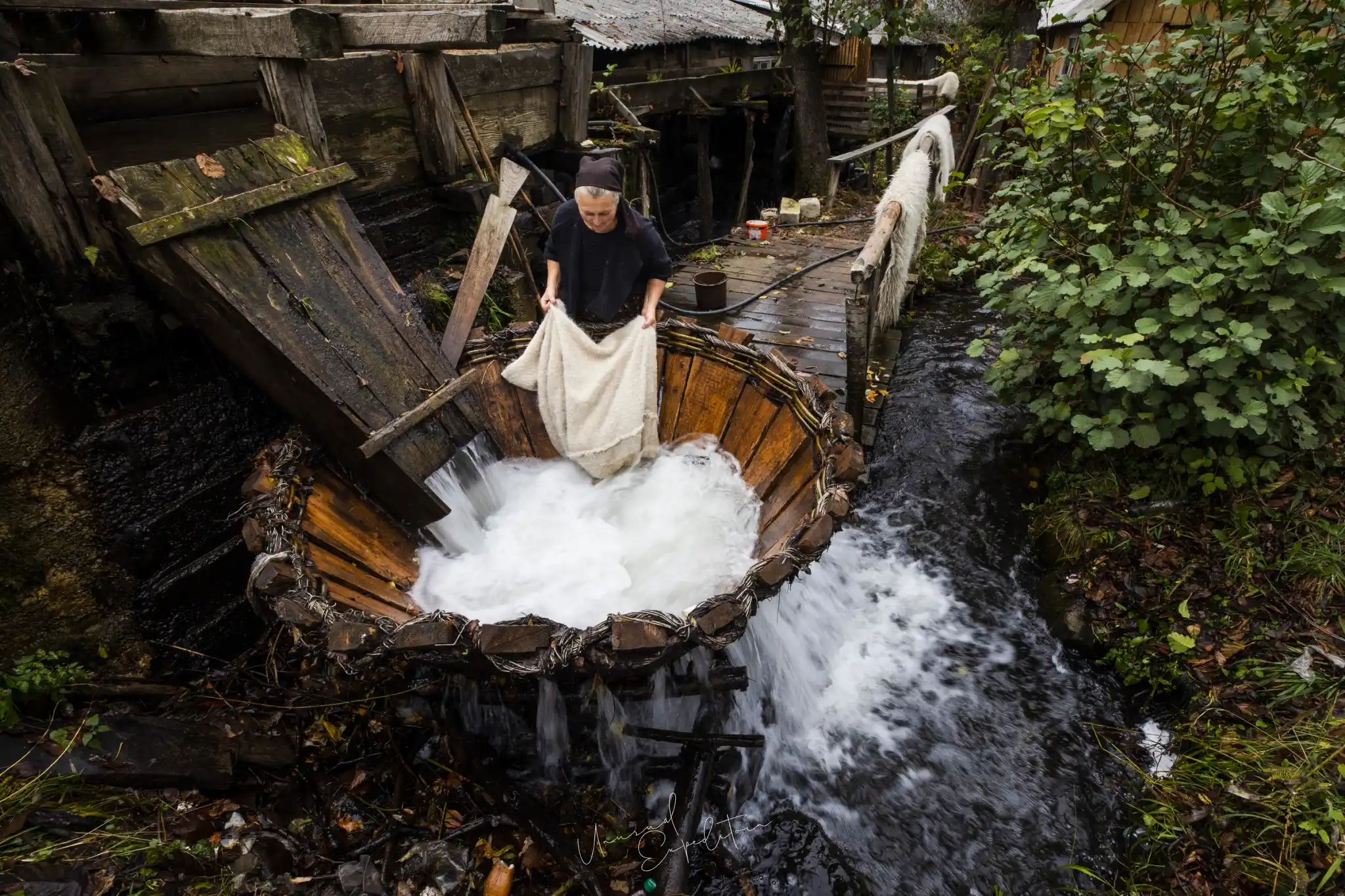
The most unusual craft in Maramures is the valtoare, a wooden whirlpool. A channel brings fast water from a mountain stream down into a large wooden tub shaped like a funnel, where it spins hard enough to wash and felt heavy woollen blankets, rugs and cergi, the thick shaggy covers used on beds and benches. Radio Romania International and the design magazine Core77 have both described it as a natural washing machine. For a photographer it is wonderful: white water churning round a wooden tub, a woman lifting a dripping blanket, wet timbers and moss. Use a shutter speed around 1/15 second to show the water's motion while keeping the person sharp, or freeze it at 1/1000 second for the spray. Ask the owner first; a whirlpool is private and the family may charge a small fee to use it.
Iron and fire: the village smith
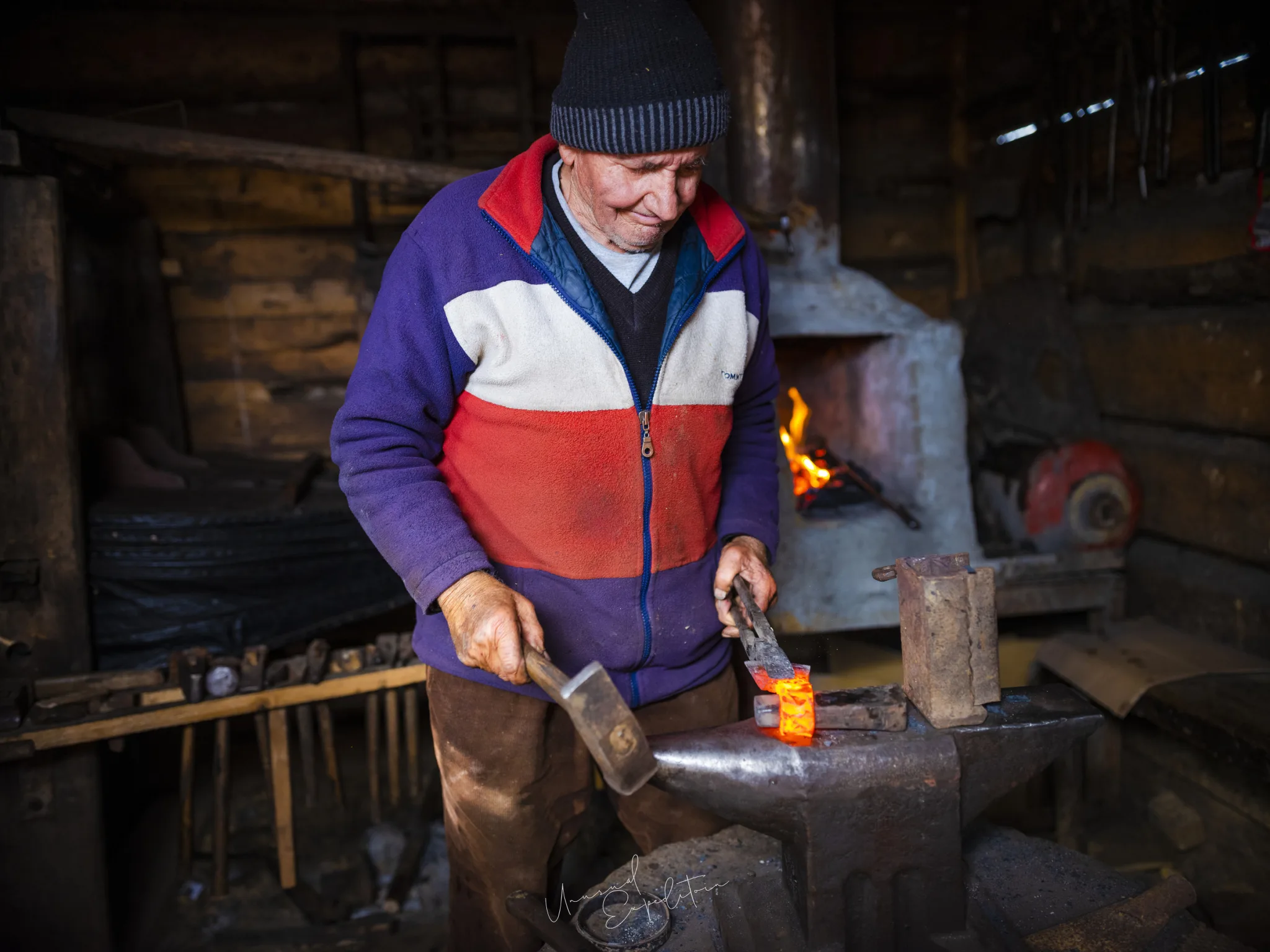
Horses and carts need iron, so many villages still have a smith. A smithy is a dark wooden shed with a forge, an anvil and walls of hanging tools, and when the iron is hot the whole scene lights up orange. Expose for the glowing metal and the face, let the background fall into shadow, and keep a safe distance from the hammer and the sparks. Smiths are usually happy to show their work if you ask, especially when you come back with a print or buy a horseshoe.
"The whirlpool is the place everyone remembers. The water is freezing and loud, the old lady pushes a blanket in with a stick, and it spins like a washing machine. She has done it all her life, and she laughs at us for getting so excited."
Joseph Mak, tour leader, Unusual Expedition
Horinca: plum brandy in the back shed
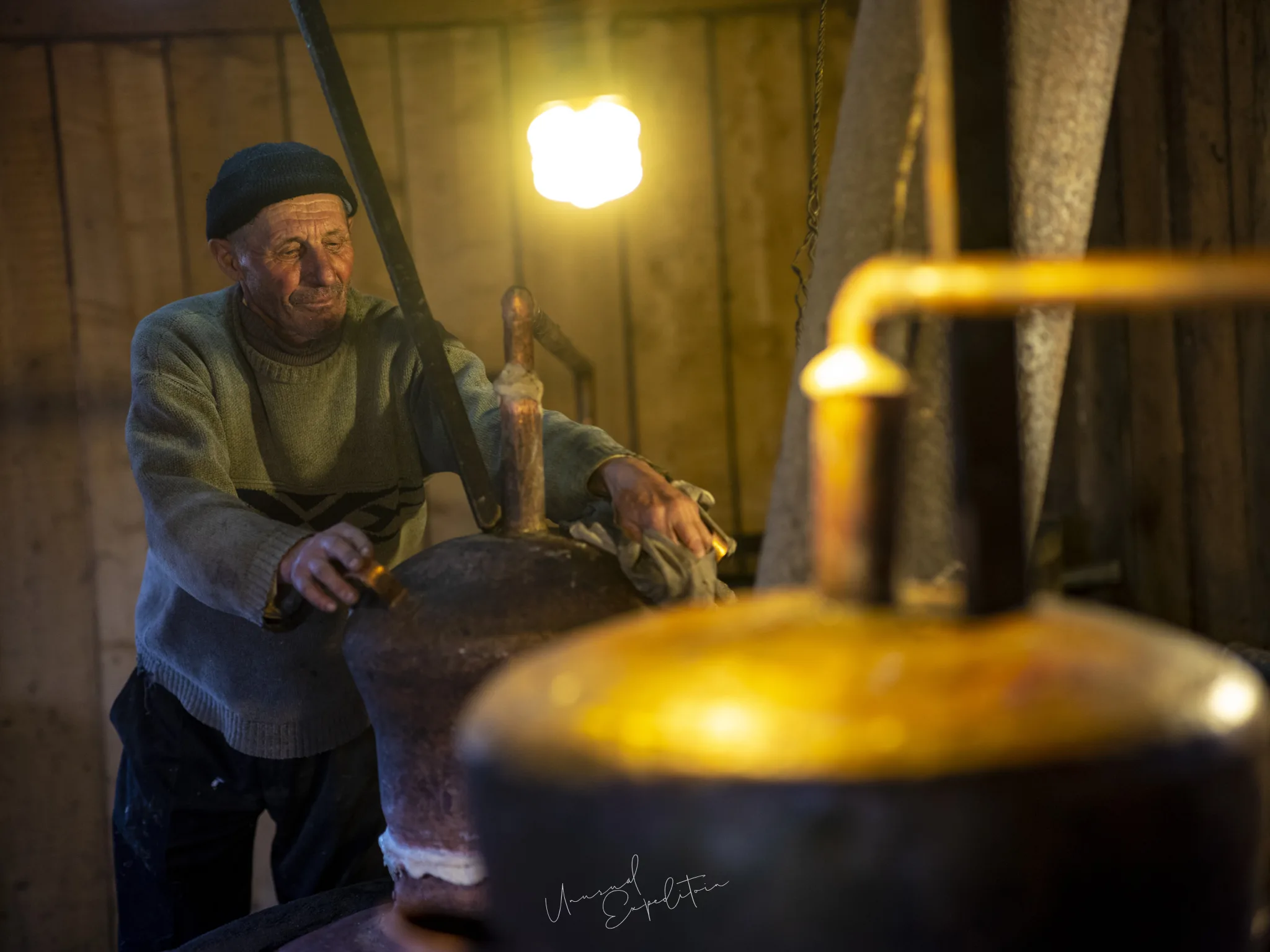
Horinca, the plum brandy of Maramures, is distilled twice, unlike the tuica of southern Romania, and it is strong. In autumn, once the plums are in, copper stills are fired up in sheds and yards across the region, often by an older man who has done it for decades. The scene is dark, steamy and warm: a cauldron over a fire, a copper pipe, a bare bulb, and a glass to taste. It is one of the best interior subjects in Maramures, and you will be offered a glass. Accept a small one, and remember that Romania has zero tolerance for alcohol at the wheel.
Romanian traditions: what to photograph and how
| Tradition | Where you see it | Season | How to shoot it |
|---|---|---|---|
| Spinning wool | Benches outside houses, living rooms | All year, most in autumn and winter | Window light, fast prime |
| Weaving | Looms in the best room | All year | 24-70mm, wide aperture |
| Whirlpool washing | Streams in a few valleys | Spring to autumn | Slow shutter for water |
| Smithing | Village smithies | All year | Expose for the hot iron |
| Horinca distilling | Sheds and yards | Autumn, after the plum harvest | High ISO, warm light |
None of these runs to a timetable, which is why a few nights in one valley beat a quick tour.
Photographing crafts with respect
These are people's homes and livelihoods. Greet first, admire the work, and ask before you raise the camera; a local guide makes the first visit much easier. Do not move objects in the room, and do not ask anyone to repeat a task for you more than once. Buy something if it is for sale: a woven rug, a pair of socks, a bottle of horinca. Show people their photographs on the screen, and if you promise prints, send them. We never photograph children for these guides, and we leave out family members who do not want to be in the frame.
Photograph Maramures traditions with us
We run Maramures as a private trip on request, with local contacts who introduce you to the spinners, weavers, smiths and distillers. We arrange the logistics at your pace; with no tour leader travelling, a private trip can cost less than our group tours, and a photographer or photography coaching can be added at extra cost. Ask at least two months ahead. See the Romania photography tours page and our private tours.
Ask us about Maramures traditions
Maramures photography tours
The next Maramures departure is announced on the Maramures photography tours page, with previous expeditions and all the planning guides.
Explore Maramures in depth
- Maramures Photography Tour Guide: What to See in Northern RomaniaRomania
- Mocanita Viseu de Sus: Photographing Romania's Steam TrainRomania
- Wooden Churches of Maramures: Barsana, Painted Interiors and the Merry CemeteryRomania
- Romanian Traditional Costume: Sunday Dress in MaramuresRomania
- Pictures of Maramures, Romania: Villages, Markets and PeopleRomania
- Maramures Photography FAQ: Weather, Airport and Getting ThereRomania
- Romanian Haystacks: Photographing the Hay of MaramuresRomania
Upcoming Photo Tours
- Egypt Photo Tour – EgyptEgypt 12 Dec 2026 To 20 Dec 2026
- Inner Mongolia Winter Owl Photo Tour – ChinaChina 01 Jan 2027 To 04 Jan 2027
- Inner Mongolia Winter Photo Tour – ChinaChina 05 Jan 2027 To 11 Jan 2027
- Mekong And Central Highland Vietnam Photo Tour - VietnamVietnam 16 Jan 2027 To 24 Jan 2027