
Mocanita Viseu de Sus: Photographing Romania's Steam Train
Mocanita Viseu de Sus: how to photograph Romania's wood-fired forestry steam train, from the depot to the Vaser valley.
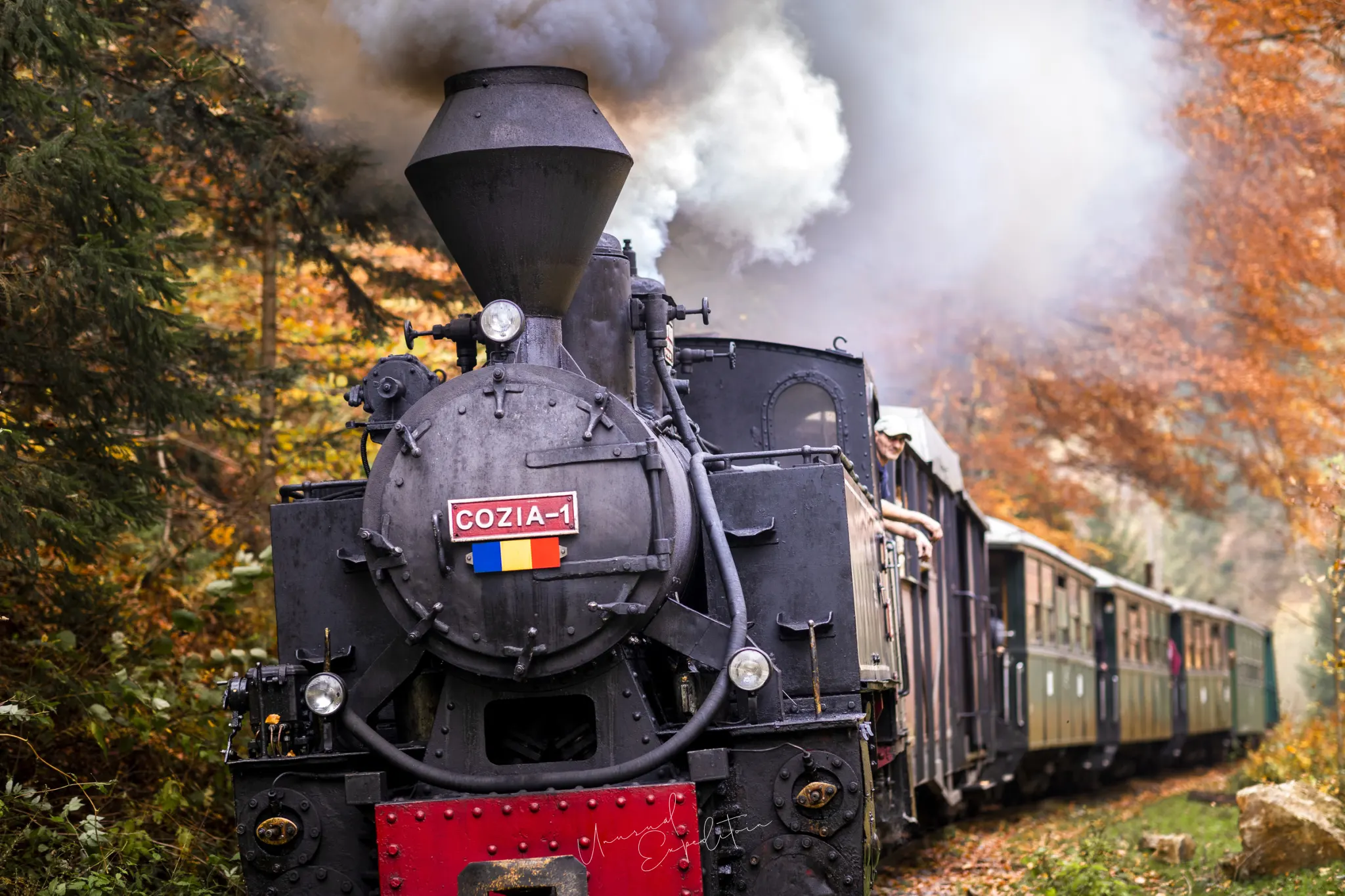
The Mocanita at Viseu de Sus is a narrow-gauge forestry railway in Maramures whose small black locomotives still burn wood and still haul timber out of the Vaser valley. Its operator calls it the last forestry narrow-gauge steam railway in Europe. Tourist trains run up the valley into the Carpathian forest, but for photographers the best of it is the depot in the morning, when the crews stoke the fireboxes, load logs and build steam.
The Mocanita is one of the places in our Maramures photography tour guide. Combine it with the villages and churches in the wooden churches of Maramures and the autumn hay in Romanian haystacks.
Mocanita Viseu de Sus: what it is
The forestry railway starts at the CFF station in Viseu de Sus, a small town on the Viseu river in eastern Maramures, and runs up the valley of the Vaser for almost 40 kilometres into the forest, according to the operator. It was built to a gauge of 760 millimetres, narrow enough to follow the twisting river, and the Google Arts and Culture exhibit on the line records that tourist trains began in 2005 and that a flood in 2008 destroyed much of the track, which was rebuilt. The name Mocanita is the Romanian nickname for this kind of little mountain train. What makes it unusual is that it never became only a heritage line: the operator says timber is still needed every day by the sawmills of Viseu de Sus, so the railway is a working one.
Maramures Mocanita: the depot in the morning
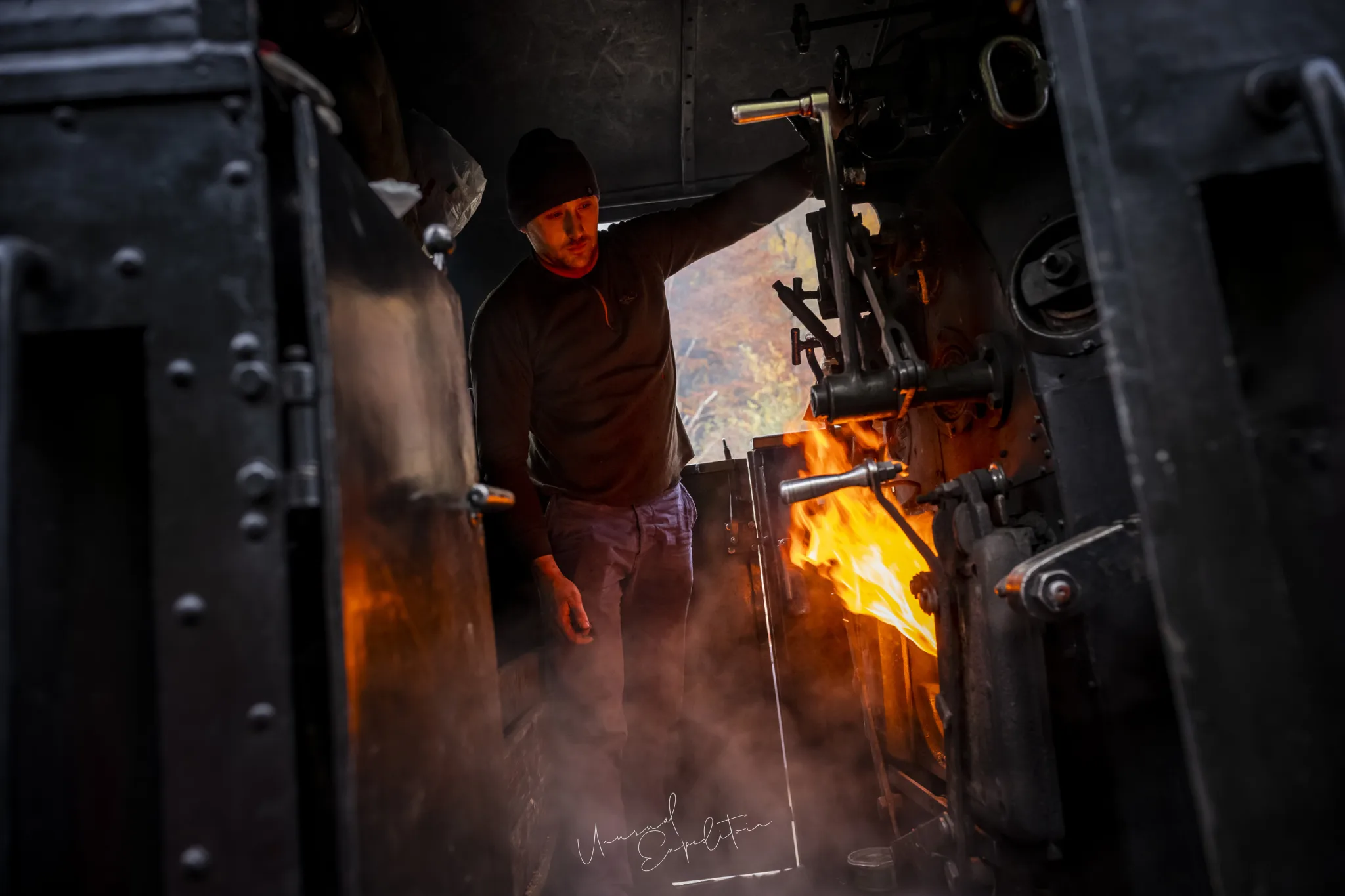
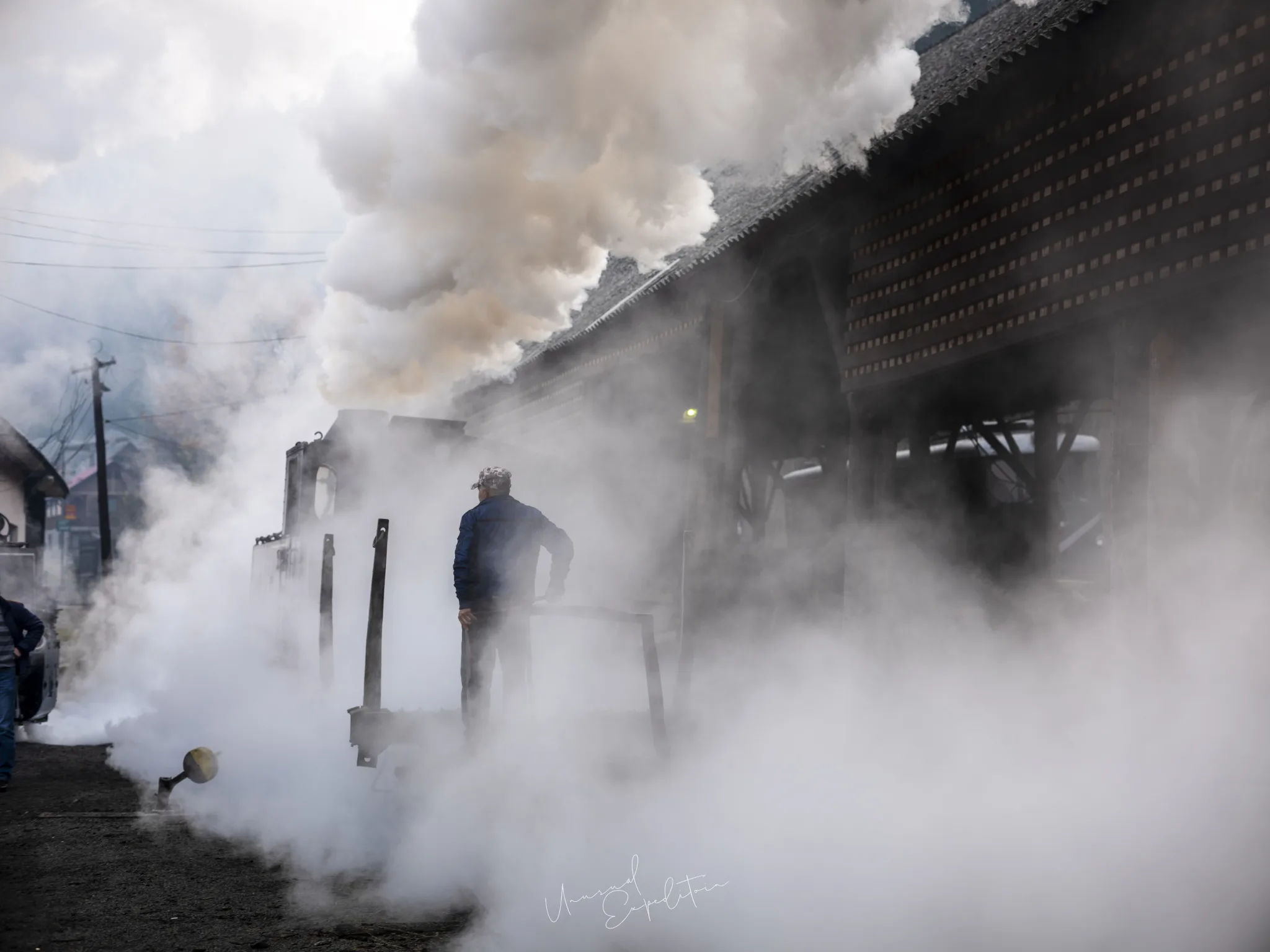
The depot is where the pictures are. Before the first tourist train, the locomotives stand in the yard among stacks of split logs, and the crews work in steam and smoke: raking the firebox, throwing in wood, oiling the motion, filling water. Light comes in low through the steam, and a 24-70mm lets you work close without getting in the way. Ask the crew before you step near a locomotive, keep off the tracks unless someone waves you over, and expect to be asked to move when an engine shunts. The cab doors are open, and the drivers are used to cameras; a greeting and a thank you go a long way.
Romania steam train: photographing the locomotives
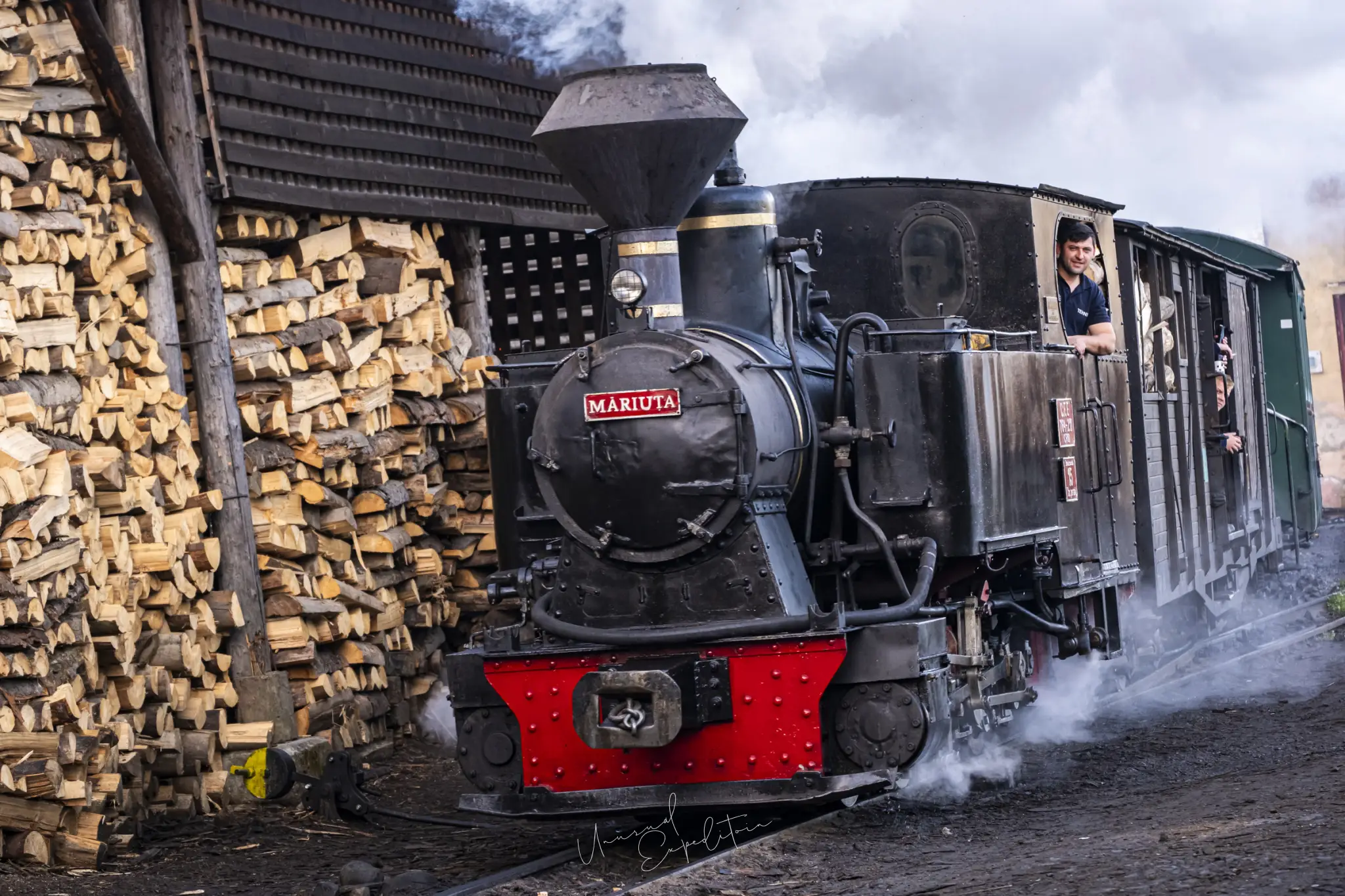
The locomotives are small, black and red, with tall chimneys and names on their boilers. Frame them low from the front for the classic steam portrait, with the woodpiles behind for context, or side-on from the platform as they pull out in a cloud of steam. Expose for the highlights in the steam and let the black boilers fall dark; the detail is in the brass and the red buffer beams. A polariser does nothing useful here, but a lens hood and a cloth do, because steam and drizzle settle on the front element. If the morning is cold, the steam hangs longer and the scene gets better.
"Get to the depot before the passengers. For half an hour it belongs to the men who work the engines, and the yard is full of steam, wood smoke and noise. That half hour is worth more than the whole ride."
Joseph Mak, tour leader, Unusual Expedition
Riding the Mocanita up the Vaser valley
The tourist train climbs slowly along the river through beech and spruce forest and small clearings, and stops at a halt in the valley before it returns. From the carriages you can photograph the engine on the curves ahead, smoke drifting through the trees, and the river below. In autumn the beech turns gold and the smoke catches the light. The ride itself is relaxed and social rather than a photography session, so treat it as the second half of a morning that started at the depot. Timetables, the season and fares change, so check the operator's site before you plan around a departure.
Where to photograph the train from outside
A train moving through autumn forest is the picture many people want, and it needs planning. The line follows the river and the forest road, so there are places along the lower valley where you can stand by the track and photograph the train coming towards you. Stand well back, never on the track, and ask locally where it is allowed. A 70-200mm compresses the engine and the trees; a 24-70mm shows it in the valley. You will usually get one pass up and one down, so decide your framing before you hear the whistle.
Mocanita photography at a glance
| Scene | Where | When | Lens |
|---|---|---|---|
| Crews stoking and loading wood | Depot yard, Viseu de Sus | Early morning before departure | 24-70mm |
| Locomotive portraits in steam | Depot and platform | Morning, cold days best | 24-70mm, 16-35mm |
| Train in the forest | Lower Vaser valley | On the train's passing | 70-200mm |
| Views from the carriage | On board | During the ride | 24-70mm |
If you can only do one thing, be at the depot early; the forest shots depend on timing you cannot control.
Is the Mocanita worth it?
For anyone who likes working machines, smoke and people at work, yes. It is one of the few places in Europe where you can photograph wood-fired steam in daily use, not in a museum, and it sits in the middle of a region you will be visiting for the villages anyway. Families enjoy the ride, and photographers get the depot. If you do not care for trains, give it the morning only and spend the afternoon in the villages of the Viseu valley.
Photograph the Mocanita with us
We run Maramures, including the Mocanita, as a private trip on request, for individuals, families, couples and photographers at their own pace. We arrange the logistics around the depot and the season; a photographer or photography coaching can be added at extra cost, and with no tour leader travelling, a private trip can cost less than our group tours. Ask at least two months ahead. See the Romania photography tours page, our private tours and the Maramures photography FAQ.
Maramures photography tours
The next Maramures departure is announced on the Maramures photography tours page, with previous expeditions and all the planning guides.
Explore Maramures in depth
- Maramures Photography Tour Guide: What to See in Northern RomaniaRomania
- Wooden Churches of Maramures: Barsana, Painted Interiors and the Merry CemeteryRomania
- Romanian Traditions and Customs in Maramures: Wool, Looms and WhirlpoolsRomania
- Romanian Traditional Costume: Sunday Dress in MaramuresRomania
- Pictures of Maramures, Romania: Villages, Markets and PeopleRomania
- Maramures Photography FAQ: Weather, Airport and Getting ThereRomania
- Romanian Haystacks: Photographing the Hay of MaramuresRomania
Upcoming Photo Tours
- Egypt Photo Tour – EgyptEgypt 12 Dec 2026 To 20 Dec 2026
- Inner Mongolia Winter Owl Photo Tour – ChinaChina 01 Jan 2027 To 04 Jan 2027
- Inner Mongolia Winter Photo Tour – ChinaChina 05 Jan 2027 To 11 Jan 2027
- Mekong And Central Highland Vietnam Photo Tour - VietnamVietnam 16 Jan 2027 To 24 Jan 2027