
Inside a Nenets Chum: Camp Life, Clothing and Food
Inside a Nenets chum: camp life, Nenets people clothing, what Nenet people eat, and how to photograph by lamplight in the tent.
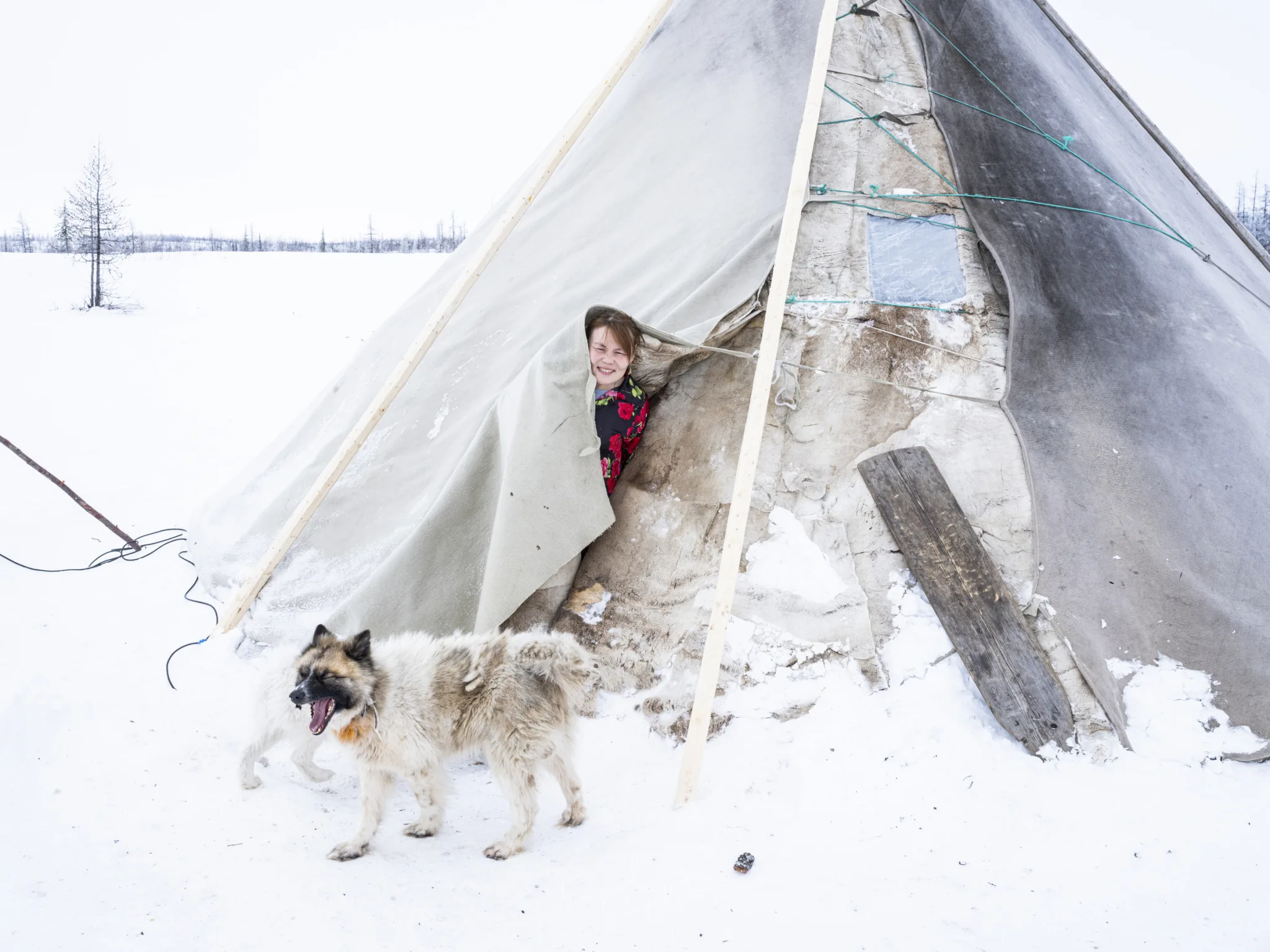
A Nenets chum is a cone tent of wooden poles covered in reindeer skins, with a stove at the centre, and it is where a herding family cooks, sews, eats and sleeps. Life in camp moves between the warm, dim interior and the work outside: firewood, snow and ice for water, mending sledges. Here is what camp life, Nenets clothing and Nenets food are like, and how to photograph them, from our winter visit, part of our Nenets photography tour guide.
Inside a Nenets chum
The chum goes up and comes down with every move, and the women of the family do most of that work. Inside, a stove stands in the middle under the smoke hole, the floor is boards and skins, and the sleeping places run around the walls behind the stove. There is a clear order to the space, including a sacred side opposite the door that guests should not step across. Ask where to sit and stay there.
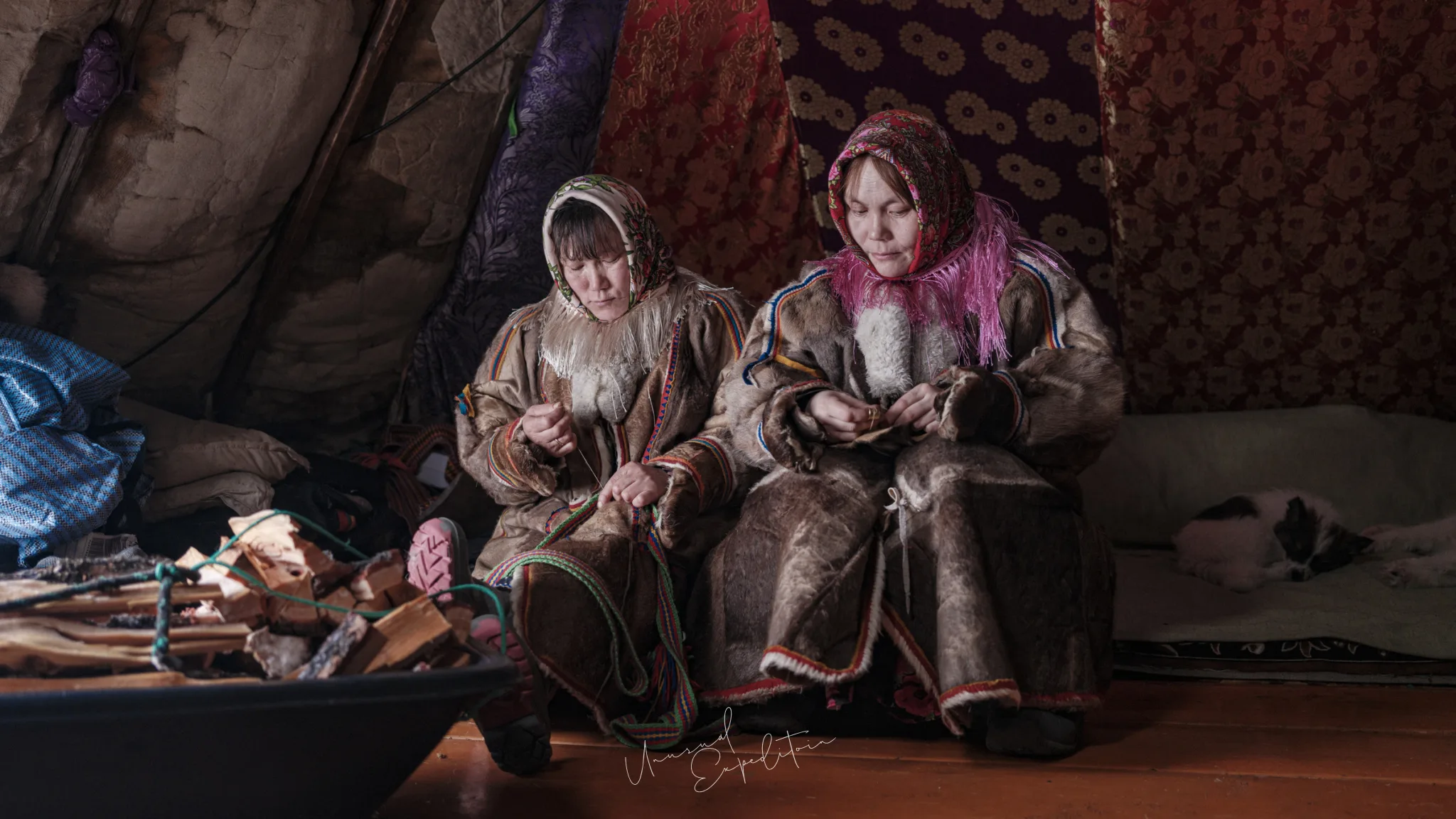
Photographing in the dim light of the chum
The light is a lamp, the stove door and whatever comes through the smoke hole. That is the point: faces glow, fur and fabric hold colour, and the dark skins behind fall away to black. Use a fast lens, ISO 3200 or more, and expose for the faces. Keep the flash off; it flattens everything and disturbs the family. Brace against a pole for slow shutter speeds, and keep your elbows in, because there is not much room.
Nenets people clothing
Nenets clothing is made from reindeer skin and sewn by the women of the family. Men wear the malitsa, a hooded coat with the fur inside, and over it in deep cold a second coat with the fur outside. Women wear the yagushka, a long fur coat trimmed with patterns and often worn with a bright headscarf. Boots are reindeer skin, high and soft. Sewing goes on all winter, traditionally with reindeer sinew for thread.
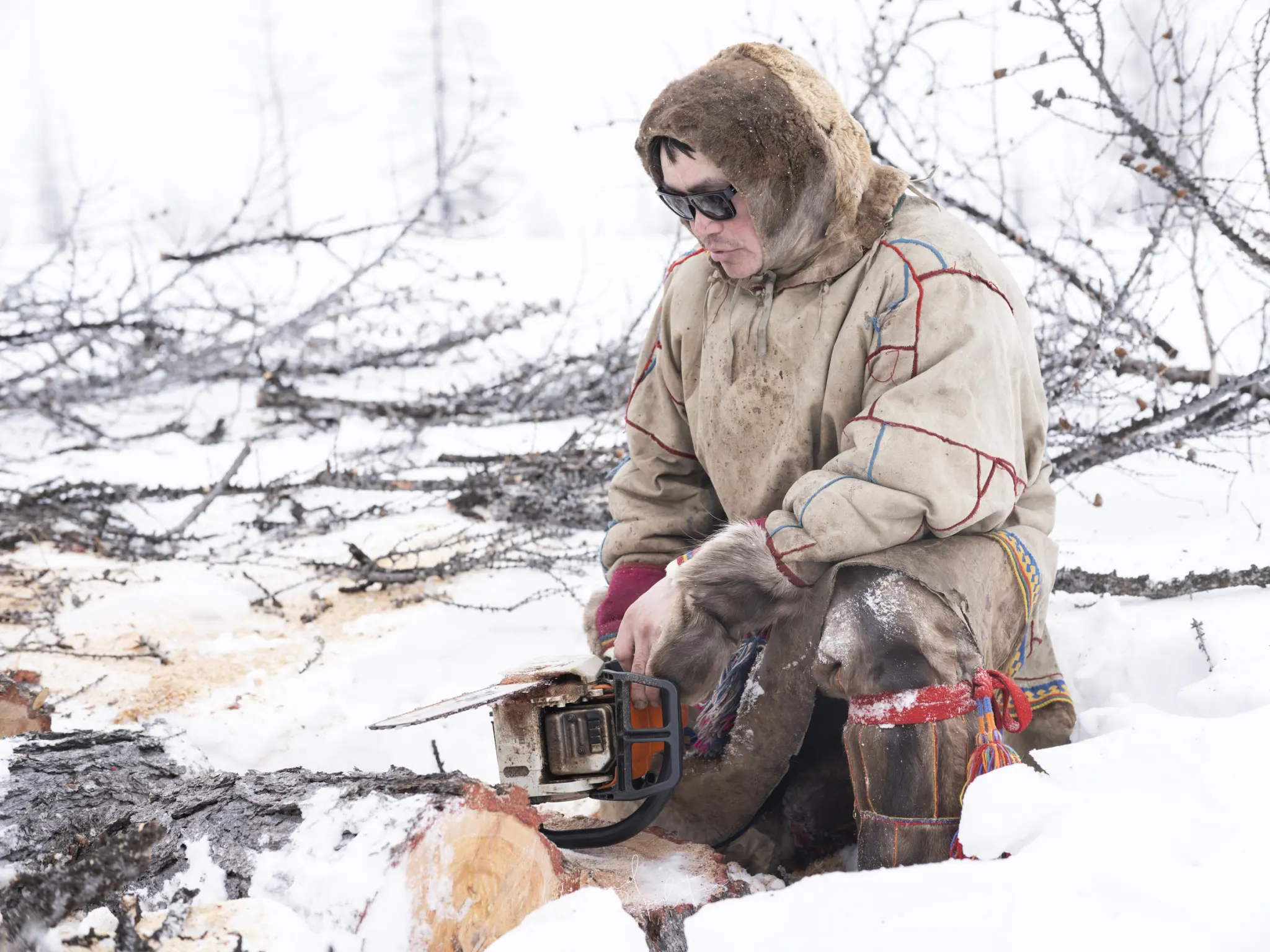
Siberian reindeer coat and boots for visitors
Your operator may lend you a reindeer coat or fur boots, and you will understand why at once: nothing synthetic is as warm in a wind on open snow. If they do, wear them. Otherwise bring a down parka to the knee, insulated boots rated well below minus thirty, a face mask, and layers you can strip off inside the chum, which is much warmer than outside.
What do Nenet people eat?
The Nenets diet is built on reindeer and fish. Meat is eaten boiled, frozen or raw, often sliced thin from a frozen joint; fish is eaten the same ways. Bread, tea with sugar and condensed milk, and boiled meat broth fill the rest. Guests are fed generously. Try what you are offered, eat with your host, and leave your camera down during meals unless the family invites a picture.
"The chum is warm, smoky and dark, and you will be offered tea every hour. Say yes. The best portraits came after the third cup."
Joseph Mak, tour leader, Unusual Expedition
Work around the camp
| Task | Who usually does it | Photograph from |
|---|---|---|
| Cutting and splitting firewood | Men and women | Open snow beside the trees |
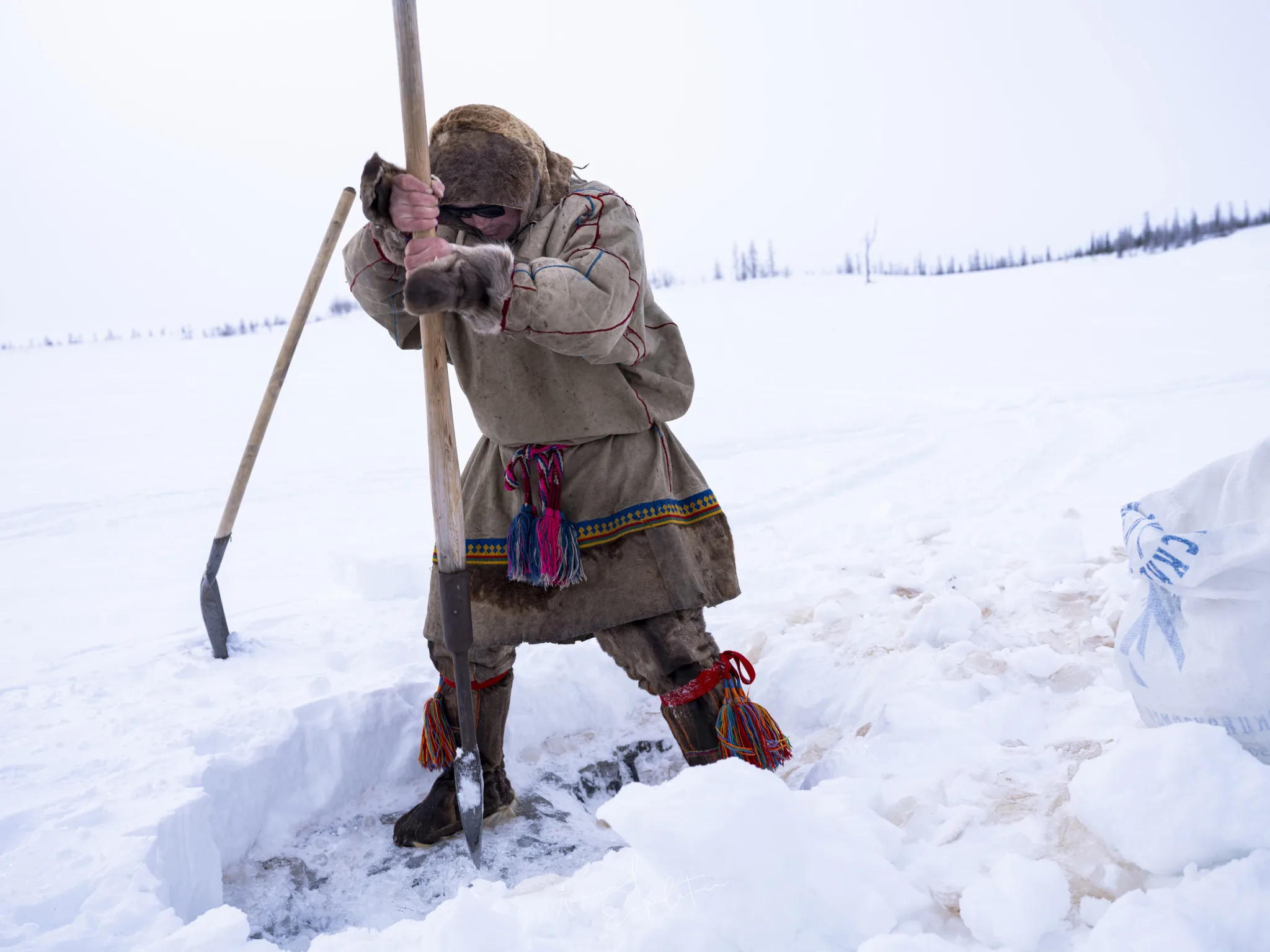
| Digging snow and ice blocks for water | Men | Low, with the sledge in frame |
| Sewing clothing and chum covers | Women | Inside, by the lamp |
| Loading sledges | Whole family | From the trees, long lens |
Offer to help with the heavy work before you photograph it; it is welcome and it changes how the family sees you.
The laika in camp
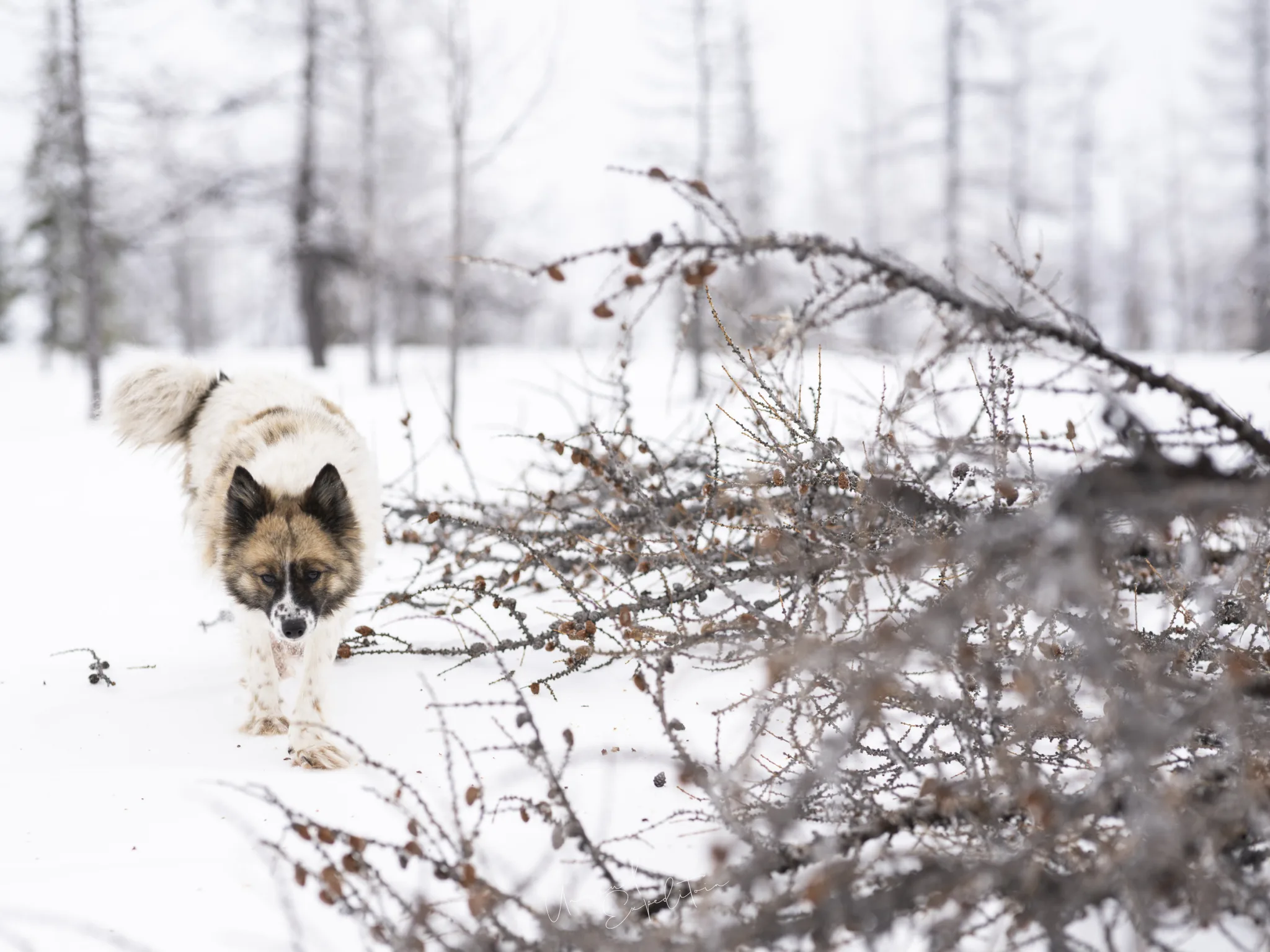
The dogs live outside and are part of every frame whether you want them or not. They are friendly enough with guests once they know you, but they are working animals, so let the family decide whether you feed or touch them. More on their work with the herd is in Nenets reindeer herding photography.
Putting up and moving the chum
A chum is a cone of long wooden poles, tied at the top, with a cover of reindeer skins sewn into panels in winter and lighter covers in summer. Putting it up is quick work for the family and a good sequence to photograph if your visit coincides with a move: poles raised, skins pulled round, the stove carried in. In a winter camp that stays put for a while, the chum is banked with snow at the base to keep the wind out.
Water, fire and light in camp
There is no running water. Snow and blocks of ice are dug or chipped from a clean patch near camp, carried in on a sledge and melted on the stove. Firewood is larch, felled and split every day or two. Light inside comes from a lamp, the stove and, in many camps now, a small generator or solar panel that charges phones and runs a bulb in the evening. All of it is good material and none of it needs staging; ask to come along when someone goes for ice.
Siberian reindeer boots
Nenets boots are tall, soft and made of reindeer leg skin with the fur outside, worn over fur stockings. They grip on packed snow, stay flexible in deep cold and are light to walk in. Visitors are sometimes lent a pair; if not, look for boots with a removable felt liner and a thick sole, and size them big enough for two pairs of socks. Cold feet will end your day sooner than anything else in camp.
Visiting the chum with us
For the people side of camp life see photographing Nenets people with respect and for the background who are the Nenets people. We arrange these visits as small private trips; see our Russia photography tours page and write to us.
Nenets photography tours
The next Nenets departure is announced on the Nenets photography tours page, with previous expeditions and all the planning guides.
Explore Nenets in depth
- Nenets Photography Tour: Visiting the Reindeer Herders of SiberiaRussia
- Yamal Peninsula Weather: Winter Light and Cold for PhotographersRussia
- Who Are the Nenets People? The Reindeer Herders of SiberiaRussia
- Photographing Nenets People: Portraits, Consent and RespectRussia
- Nenets Reindeer Herding: Photographing the Herd, the Lasso and the SledgesRussia
Upcoming Photo Tours
- Egypt Photo Tour – EgyptEgypt 12 Dec 2026 To 20 Dec 2026
- Inner Mongolia Winter Owl Photo Tour – ChinaChina 01 Jan 2027 To 04 Jan 2027
- Inner Mongolia Winter Photo Tour – ChinaChina 05 Jan 2027 To 11 Jan 2027
- Mekong And Central Highland Vietnam Photo Tour - VietnamVietnam 16 Jan 2027 To 24 Jan 2027