
Who Are the Nenets People? The Reindeer Herders of Siberia
Who are the Nenets people: where Nenets people live, Tundra and Forest Nenets, language, religion and herding life today.
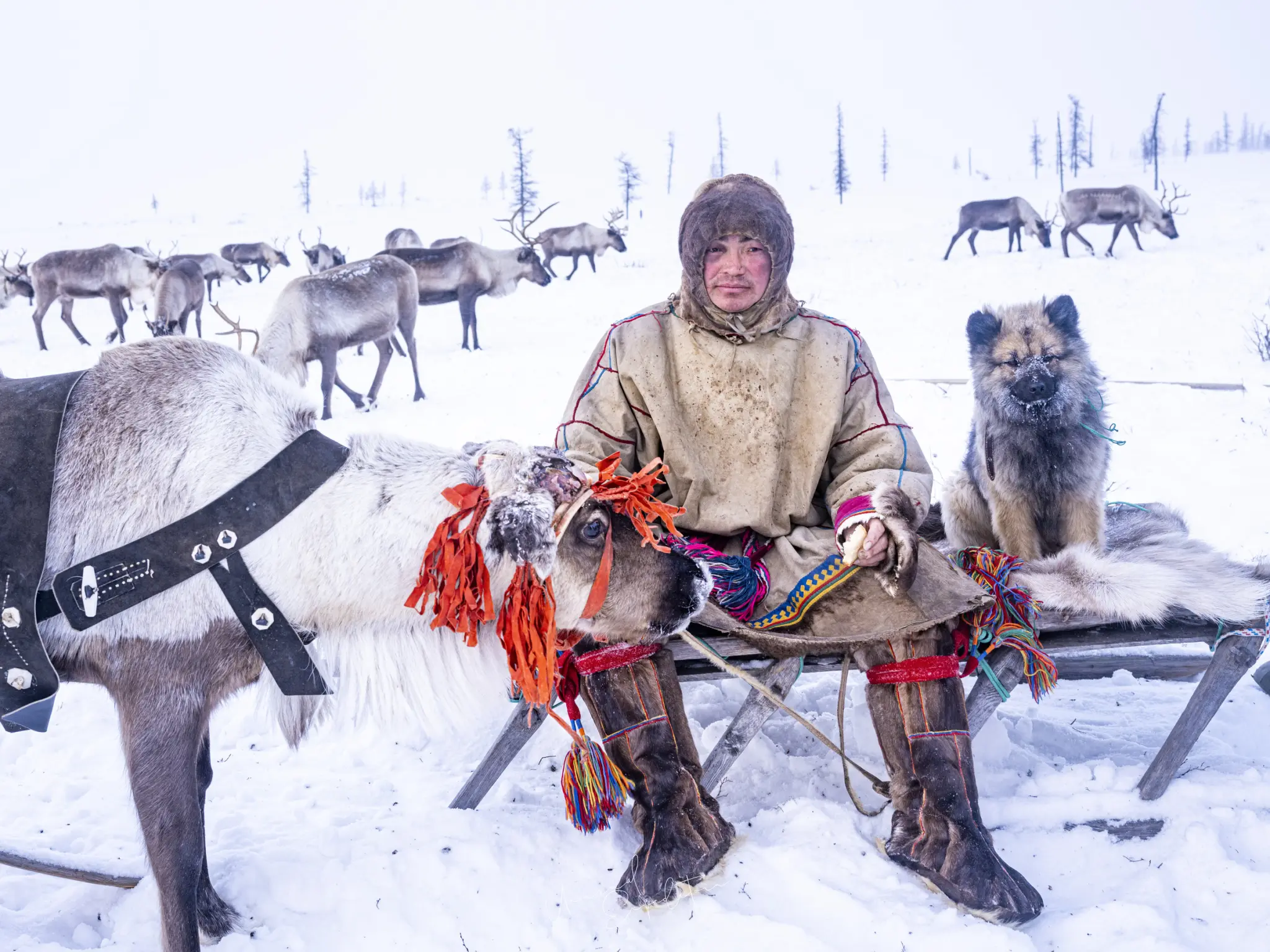
The Nenets people are an indigenous Samoyedic people of the Russian Arctic, just under fifty thousand strong, best known as the reindeer herders of northwest Siberia. Most live in the Yamalo-Nenets Autonomous Okrug, and many Yamal families still move with their herds between winter pastures in the southern forest and summer pastures on the tundra toward the Kara Sea. Here is who the Nenets are, where they live, what they speak and believe, as context for our Nenets photography tour guide.
Who are the Nenets people?
The Nenets belong to the Samoyedic peoples, a group of Arctic and sub-Arctic peoples whose languages form one branch of the Uralic family, distantly related to Finnish and Hungarian. Their own name means simply "person". For centuries their economy has rested on the reindeer, which gives food, clothing, the skins for the chum and transport. Britannica and Minority Rights Group International both describe them as the largest of the indigenous peoples of the Russian North, and among the few whose large-scale nomadic herding survived the Soviet period.
Where do Nenets people live?
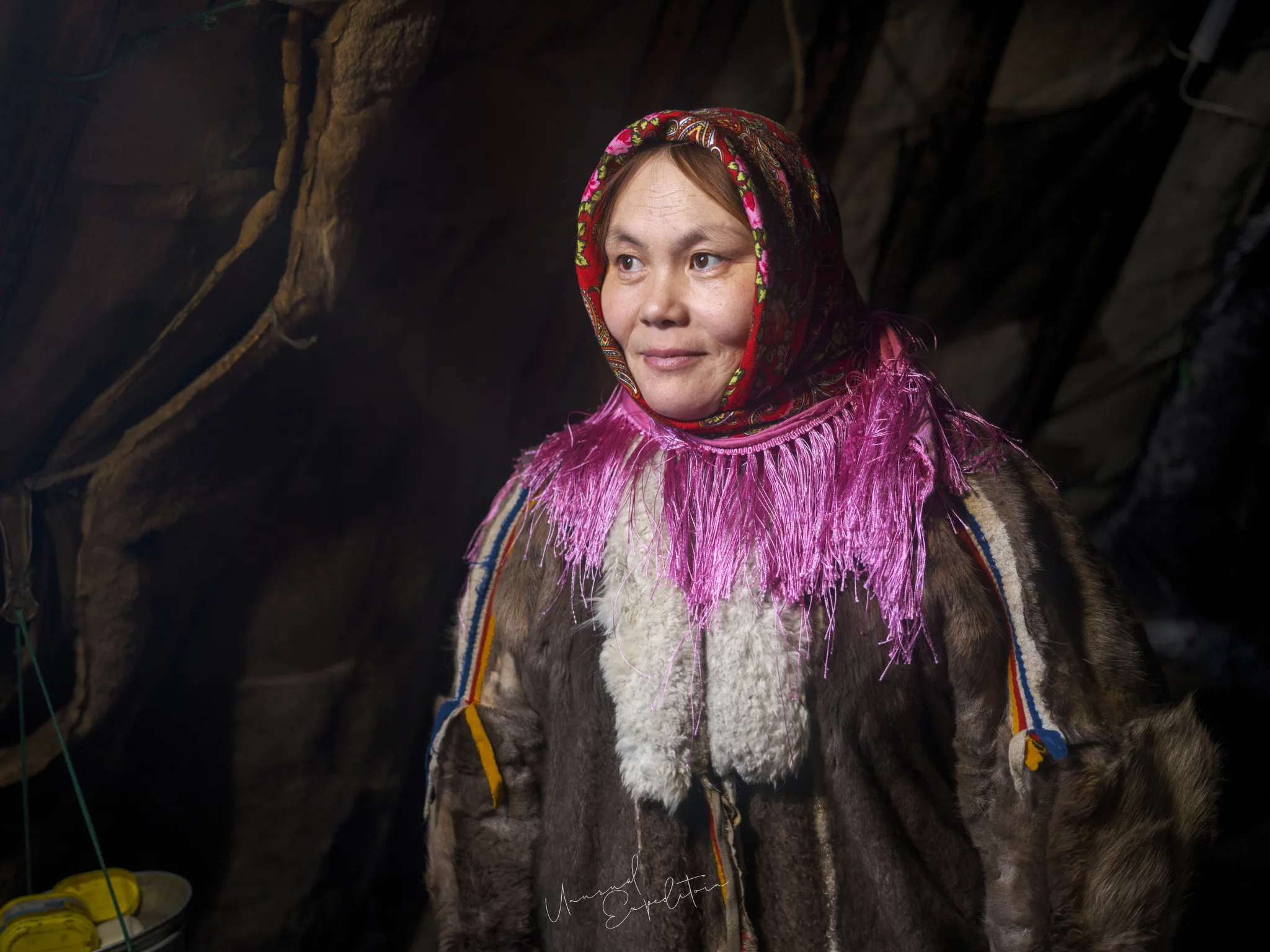
The Nenets homeland runs along the Arctic coast of Russia from the White Sea to the Taymyr Peninsula. Most live in the Yamalo-Nenets Autonomous Okrug, whose capital Salekhard sits on the Arctic Circle, with smaller communities in the Nenets Autonomous Okrug in the west and on the Taymyr coast in the east. Some live in towns and villages; a large share of the Yamal Nenets remain nomadic, moving camp every few days in the migration season and less often in deep winter.
Tundra Nenets and Forest Nenets
There are two main groups. The Tundra Nenets are the larger, the herders of the open tundra and the Yamal Peninsula. The Forest Nenets live further south in the taiga, keep smaller herds and combine herding with fishing and hunting. The two speak different varieties of the language, different enough that speakers do not always follow each other easily. The families we visited were herders wintering at the forest edge, a meeting of the two landscapes rather than of the two groups.
Nenets people language
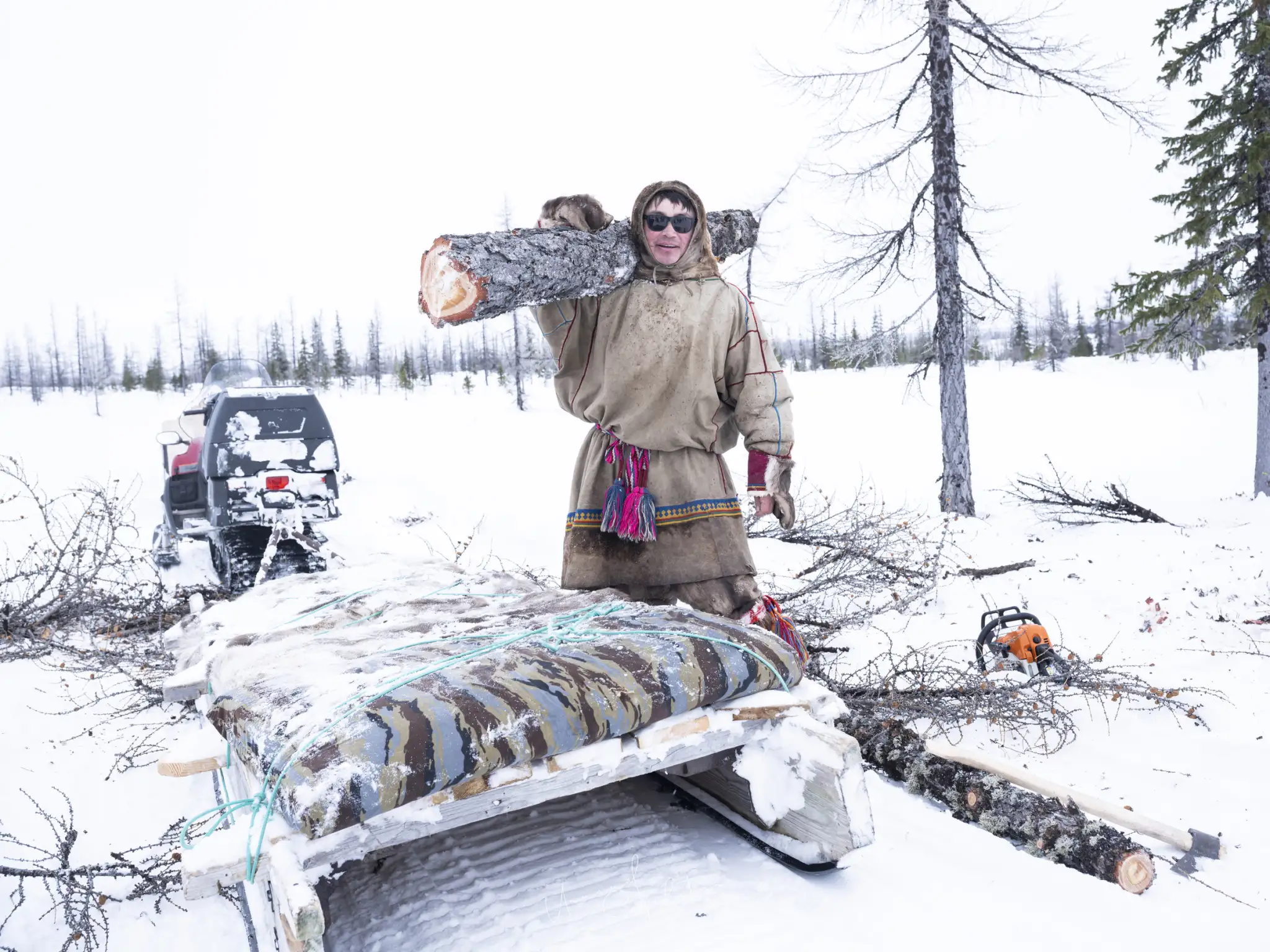
Nenets is a Samoyedic language of the Uralic family, written in Cyrillic since the Soviet period. Tundra Nenets is still spoken in herding families and taught in some schools; Forest Nenets has far fewer speakers and is considered seriously endangered. In camp you will hear Nenets among the family and Russian with guests. A few words of greeting go a long way, and your operator's guide will translate.
Nenets people religion
Traditional Nenets belief is animist: the land, the water and the animals have spirits, and sacred sites on the tundra are treated with care. Shamanic practice was suppressed in the Soviet era and has partly revived. Many Nenets are also baptised Orthodox Christians, and the two traditions often sit side by side in one family. As a guest, ask before photographing anything that looks like an offering or a sacred object, and never move or touch it.
"They asked us not to photograph a small sledge kept apart from the others. We did not ask why. That is the right answer to most of these questions."
Joseph Mak, tour leader, Unusual Expedition
How Nenets herders live through the year
| Season | Where the herd is | What the family does |
|---|---|---|
| Winter | Forest pastures in the south | Stays longer in one camp, cuts firewood, sews |
| Spring | Moving north, crossing the frozen Ob | Long daily moves with the whole camp |
| Summer | Yamal tundra toward the Kara Sea | Herding against insects, fishing |
| Autumn | Moving south again | Slaughter for meat and skins, preparing for winter |
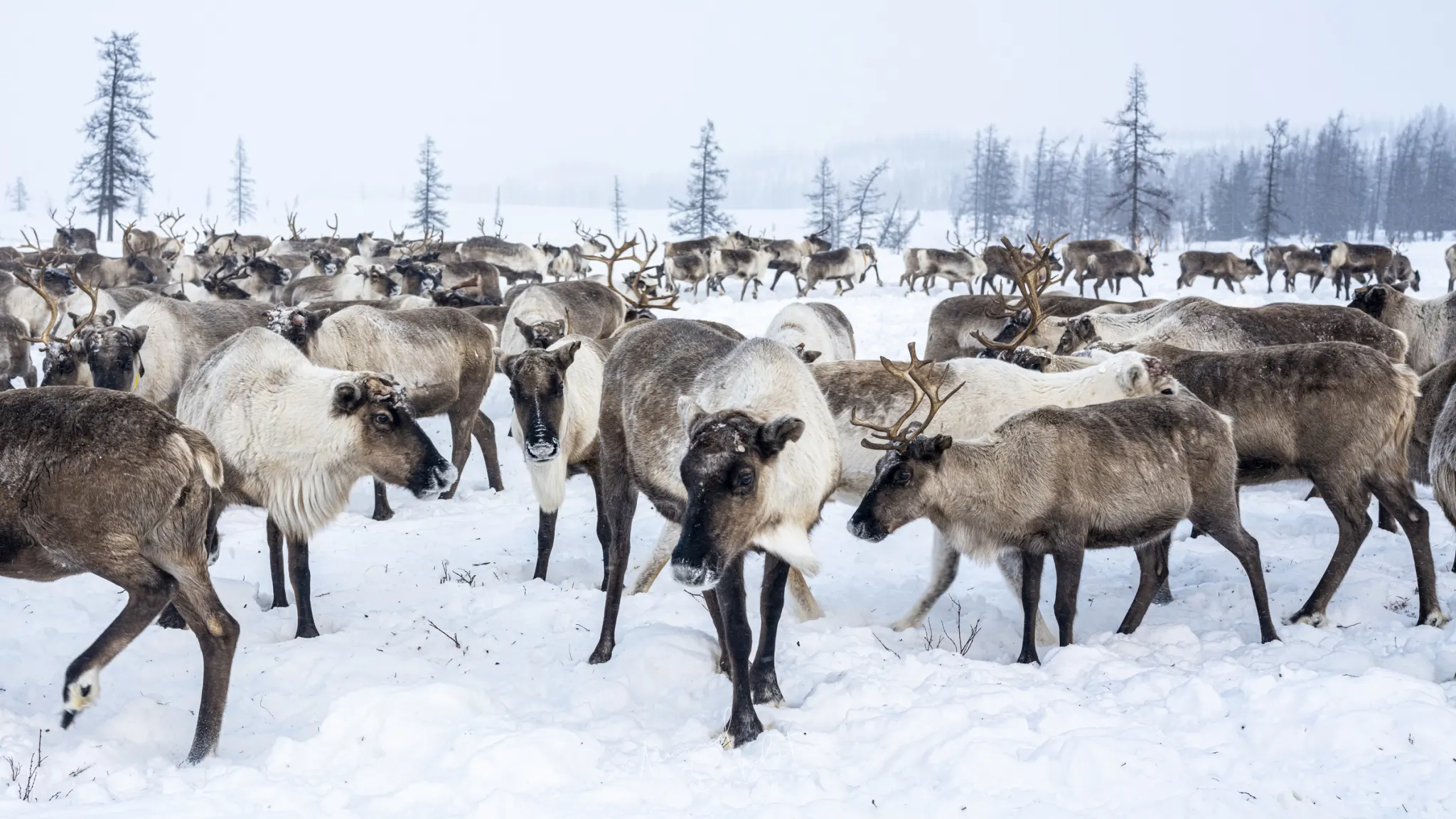
The longest Yamal routes run to over a thousand kilometres in a year, according to published studies of the migration and a National Geographic account; a winter visit finds the family at its most settled.
Nenets people today
Modern life is present in every camp: snowmobiles next to sledges, a chainsaw beside the axe, a mobile phone charged from a small generator, children at boarding school in town for part of the year. Gas fields and pipelines on the Yamal Peninsula have cut into pastures, and climate shifts bring icing events that lock lichen under ice. None of this makes the herders less Nenets. Photograph it as it is; a frame with a snowmobile in it is as true to camp life as one without.
Meeting the Nenets on a photography trip
The practical side of a visit, the camp, the cold and the work, is in our guide to life inside a Nenets chum, and how we approach portraits is in photographing Nenets people with consent and respect.
Nenets people population
The 2021 Russian census counted just under fifty thousand Nenets; published tables differ slightly in the last digits, so treat any exact figure with care. That makes them the largest of the small indigenous peoples of the Russian North. The Yamalo-Nenets Autonomous Okrug holds the largest share, and within it the official count of nomadic people, most of them Nenets herding families, runs into the tens of thousands. The rest live in settlements and towns, many with relatives still on the tundra, and families move between the two worlds through the year.
Nenets autonomous okrug people and the Yamal Nenets
The name causes confusion. The Nenets Autonomous Okrug is a separate region in the European far north, around Naryan-Mar, where Nenets are a minority of a small population. The Yamalo-Nenets Autonomous Okrug, east of the Urals, is a much larger region and home to most Nenets herders. When people talk about the Yamal Nenets, they mean the families who take their herds onto the Yamal Peninsula in summer. That is the herding culture photographers usually mean, and the one our winter visit met.
Respectful words to use
Use "Nenets" for the people and the language; older books use "Samoyed", which the Nenets themselves do not use and which now reads as dated. "Herders" or "reindeer herders" is accurate; "tribe" is common in travel writing but "people" or "community" is closer to how Nenets describe themselves. Small choices like these show in captions, and families do sometimes read what is written about them.
Visit the Nenets with us
We arrange Nenets visits as small private trips through an operator who works with the families. See our Russia photography tours page for departures and write to us about yours.
Nenets photography tours
The next Nenets departure is announced on the Nenets photography tours page, with previous expeditions and all the planning guides.
Explore Nenets in depth
- Nenets Photography Tour: Visiting the Reindeer Herders of SiberiaRussia
- Yamal Peninsula Weather: Winter Light and Cold for PhotographersRussia
- Photographing Nenets People: Portraits, Consent and RespectRussia
- Nenets Reindeer Herding: Photographing the Herd, the Lasso and the SledgesRussia
- Inside a Nenets Chum: Camp Life, Clothing and FoodRussia
Upcoming Photo Tours
- Egypt Photo Tour – EgyptEgypt 12 Dec 2026 To 20 Dec 2026
- Inner Mongolia Winter Owl Photo Tour – ChinaChina 01 Jan 2027 To 04 Jan 2027
- Inner Mongolia Winter Photo Tour – ChinaChina 05 Jan 2027 To 11 Jan 2027
- Mekong And Central Highland Vietnam Photo Tour - VietnamVietnam 16 Jan 2027 To 24 Jan 2027