
Nenets Reindeer Herding: Photographing the Herd, the Lasso and the Sledges
Nenets reindeer herding for photographers: the herd at the corral, the lasso, harnessing sledges, the laika, settings and respect.
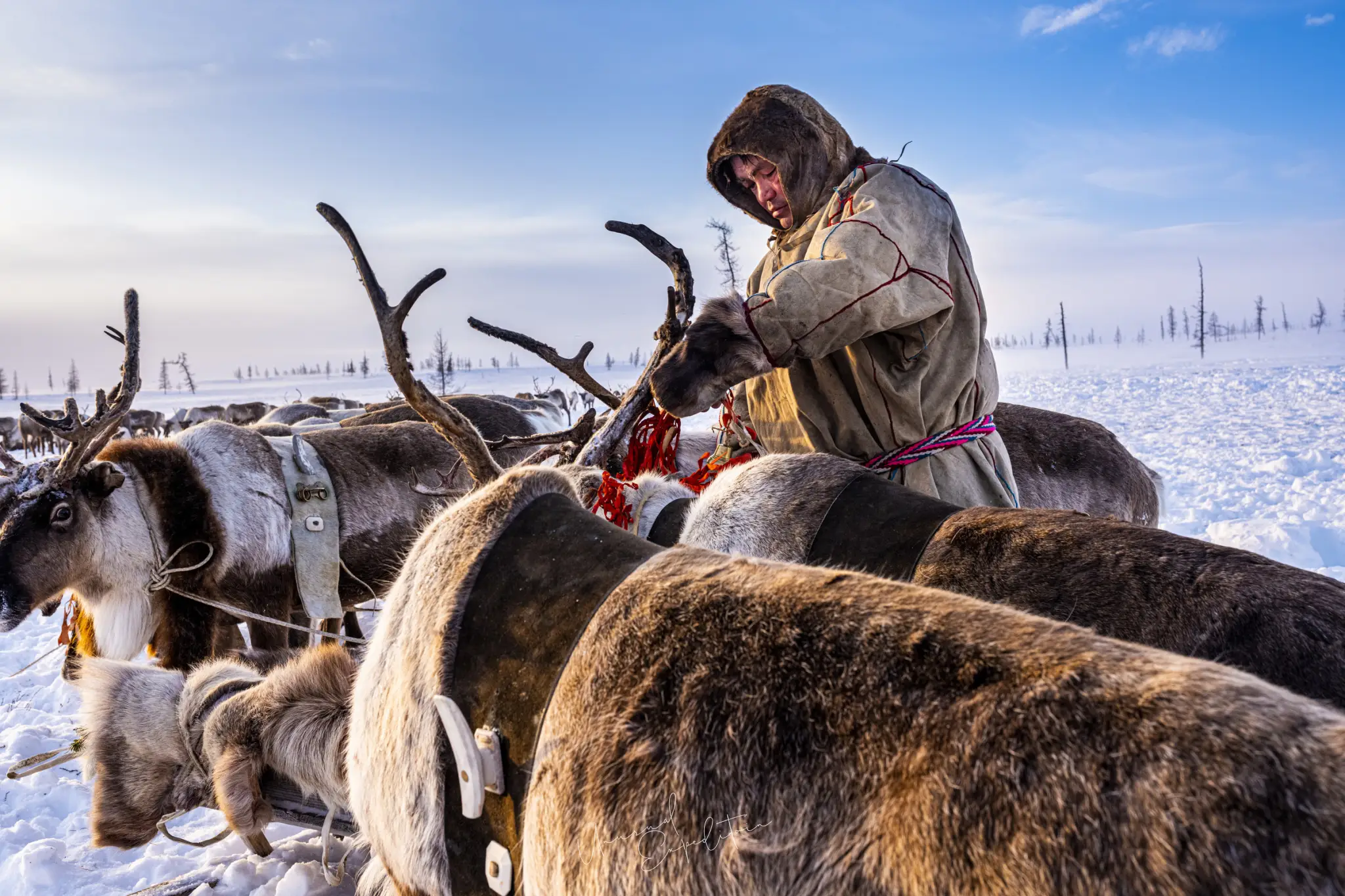
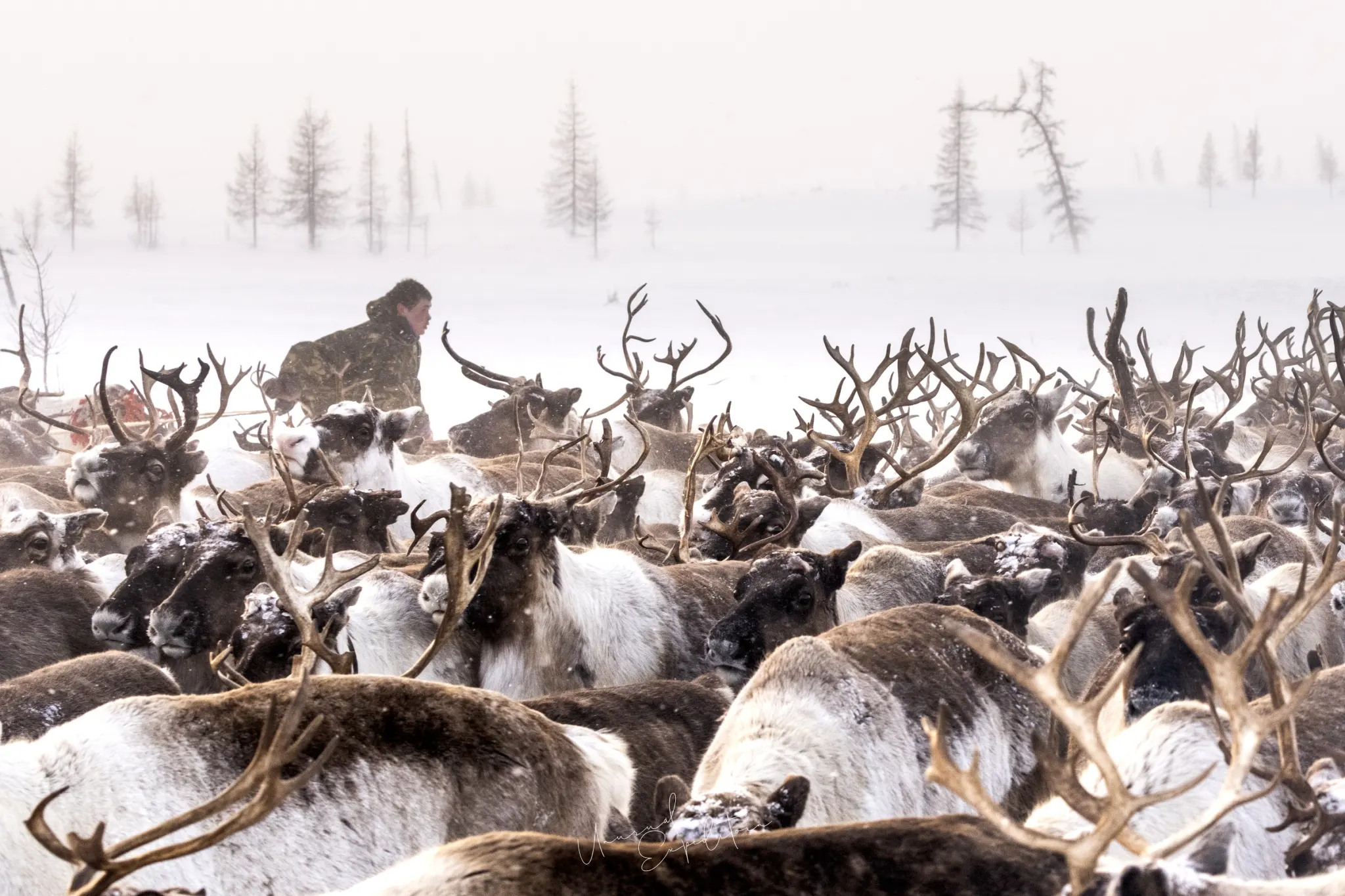
Nenets reindeer herding is photographed best on the mornings the herd is driven in: hundreds of reindeer milling in haze and low sun, herders working the lasso, and draught animals harnessed to wooden sledges. You need a fast shutter, a medium zoom, and patience at the edge before you move in. Here is how reindeer herding in Siberia works and how we photograph it, from our winter visit to a herding camp, part of our Nenets photography tour guide.
Nenets reindeer herding: how the herd works
A herding family keeps a large herd that grazes freely on lichen, digging through the snow with its hooves, and a smaller set of trained draught reindeer that pull the sledges. Every so often the herd is gathered near camp and held in a loose corral of sledges and rope so the herders can catch the animals they need, check the herd and choose reindeer for meat. That gathering is the morning to be up early for.
Reindeer herding in Siberia: the lasso
The herders catch reindeer with a long lasso thrown into the moving herd, aiming for the antlers. It takes years to learn, and the moment it lands is fast. Stand a little outside the herd with the light behind you or to one side, pick one herder and follow him, not the whole scene, and shoot short bursts at 1/1000 second or faster. A 70-200mm lets you stay back and still fill the frame; a 24-70mm works once you are accepted inside the herd.
Siberian reindeer herders up close
Once the herders know you, you can work among the animals. This is where the strongest frames come from: an antler across the foreground, a herder's face behind it, frost on the fur. Keep your movements slow, never get between a herder and the animal he is after, and watch the antlers, which swing without warning.
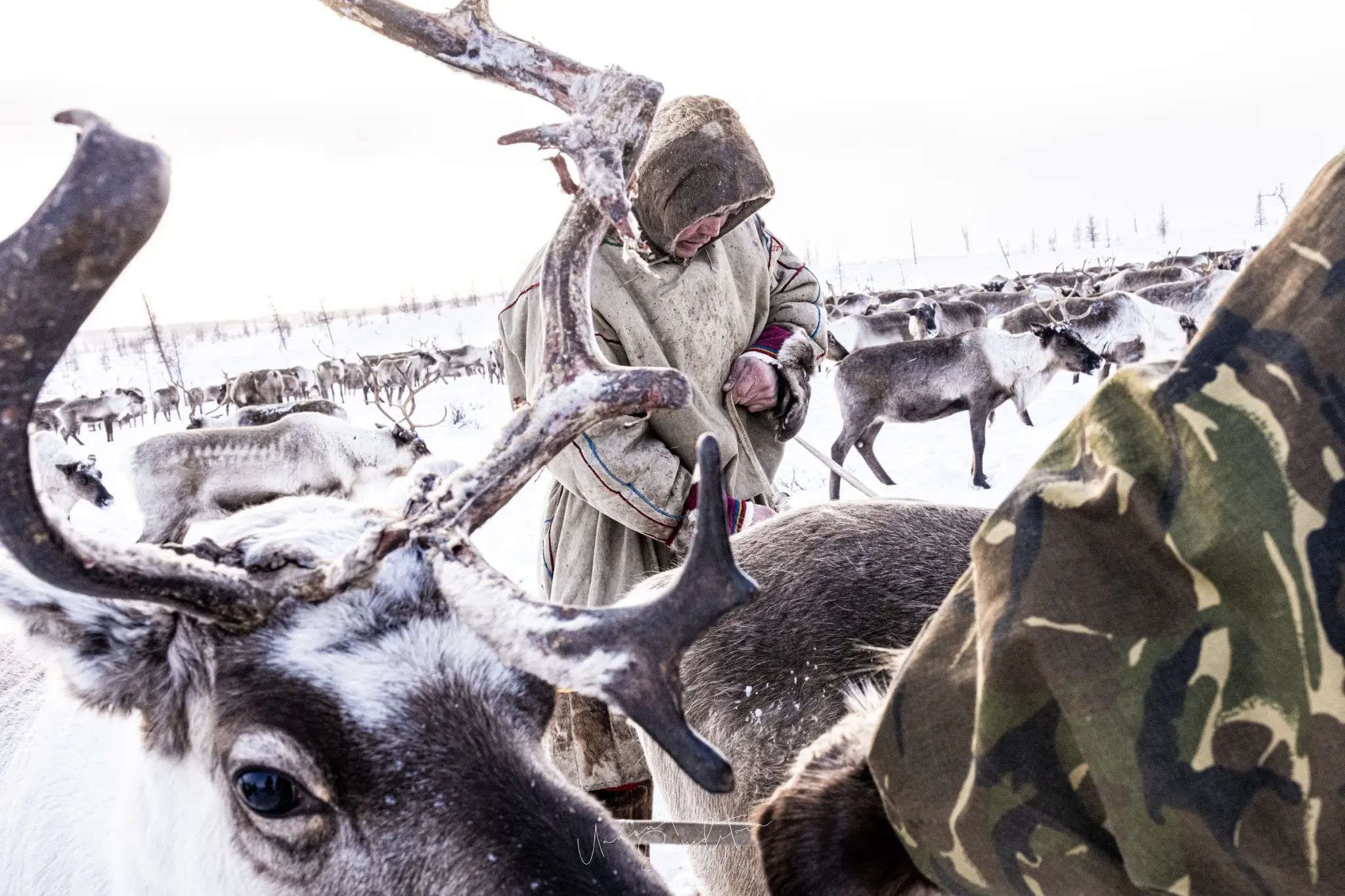
"Stay on the outside until a herder waves you in. After that, keep the lens low and let the antlers frame the man."
Joseph Mak, tour leader, Unusual Expedition
Harnessing the sledge teams
The draught reindeer are harnessed side by side, usually three to five to a light wooden sledge, with bright woollen trimmings on the harness. Harnessing is slower than catching and gives you time for considered frames: hands on straps, the lead animal's head, the sledge runners in the snow. When the team leaves camp, step out onto open snow with a long lens and let them cross the frame.
Nenets reindeer herding laika
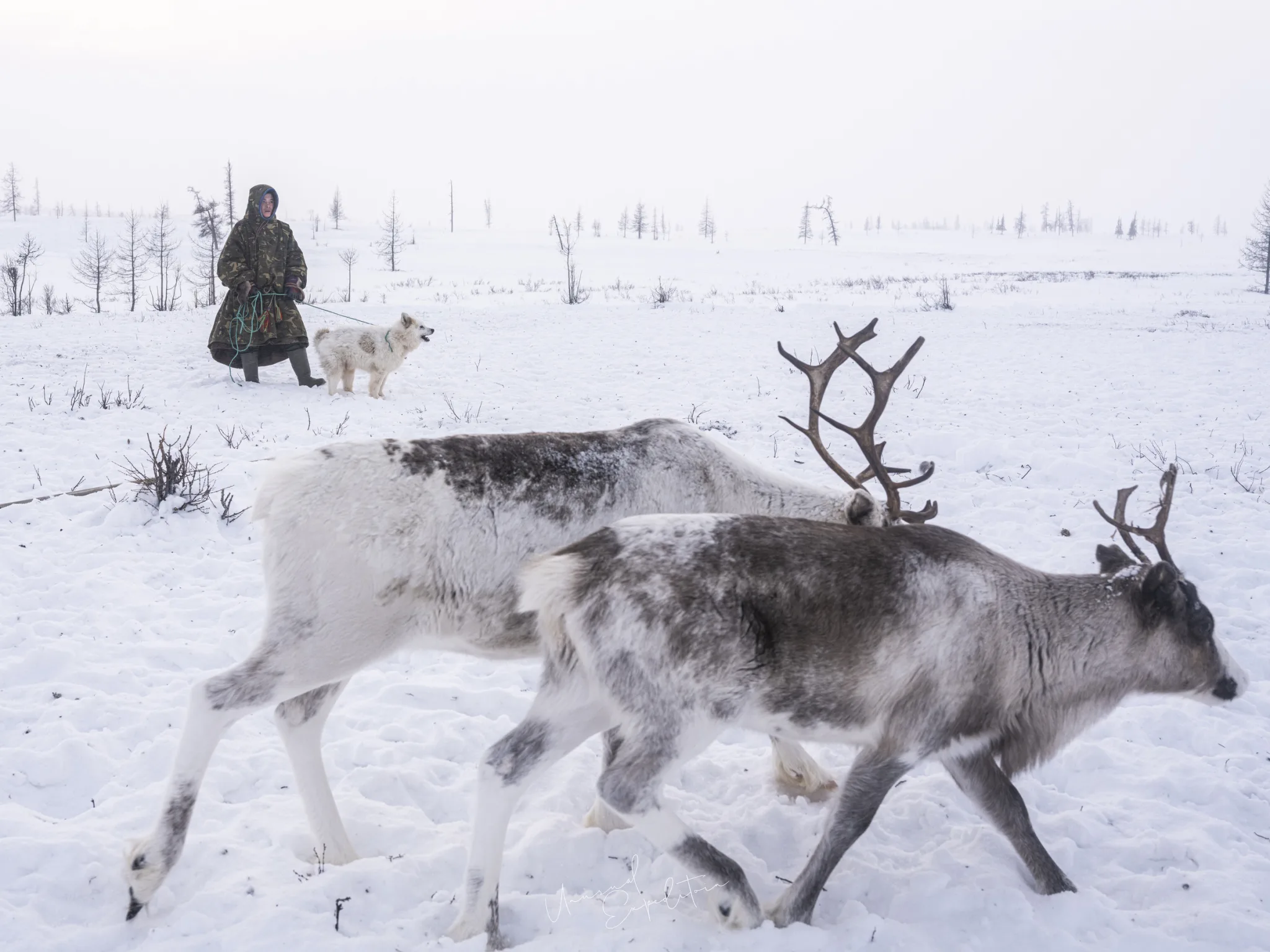
The herding dogs are Nenets laikas, small, quick and tireless, and the herders could not manage the herd without them. They circle the animals, turn strays and bark the herd toward camp. They are working dogs, not pets, so ask before you call or feed one. A low angle on a laika with the herd behind it is one of the most characteristic frames of a herding camp.
How do reindeer herders make money?
Meat is the main income. Families sell reindeer meat, antlers and skins, often through cooperatives or buyers who come to the trading posts, and use the rest themselves for food, clothing and the chum. Some families also host visitors, and the fee your operator pays to the family is a fair part of that. It is worth knowing, because it explains why the herd's health and the size of the herd matter so much to everyone in camp.
Camera settings for reindeer herding
| Situation | Shutter | Lens | Note |
|---|---|---|---|
| Lasso throw | 1/1000 s or faster | 70-200mm | Burst, follow one herder |
| Inside the herd | 1/500 s | 24-70mm | Low angle, antlers as frame |
| Sledge team leaving | 1/1000 s | 70-200mm | Pan or freeze on open snow |
| Herd in haze | 1/250 s | 24-70mm | Add one stop for the snow |
Snow fools the meter: add one to two stops of exposure and check the histogram, or the white turns grey.
Respect around the herd
The herd is the family's livelihood. Do not chase animals for a picture, do not walk through the corral when the herders are working a group, and keep the drone in the bag unless the family agrees and the operator confirms it is allowed. The people side of this is in photographing Nenets people, and the cold that comes with it in Yamal Peninsula weather for photographers.
Where to stand when the herd comes in
When the herd is driven toward camp, it moves as one body and turns fast. Stand on the side the herders are not working, with a sledge or tree beside you, and let the herd pass you; do not walk into it. Low sun behind the herd lights the breath and the snow kicked up by hooves; with the sun behind you the animals read cleanly against the trees. Keep an eye on the herders' signals. A raised hand usually means stay where you are.
The sledges
Nenets sledges, narty, are light wooden frames lashed together without nails, made to flex over rough snow. Cargo sledges carry the chum poles, skins, food and everything the family owns, covered and tied down for the next move; lighter sledges are for riding and herding. A line of loaded cargo sledges at the edge of camp is a quiet, graphic subject on an overcast day, and the riding sledges give you the action when a team leaves.
Reindeer herding in Siberia through the year
In winter the herd grazes in the forest-tundra and stays near camp, so the work is regular and the corral mornings come every few days. In spring the families start the long move north across the frozen Ob toward the Yamal tundra, the most dramatic time but the hardest to join. Summer brings calves, mosquitoes and the open tundra by the Kara Sea; autumn brings the slaughter and the return south. For a first visit, late winter gives you the herd, the camp and the light together, as set out in Yamal Peninsula weather for photographers.
Photograph the herders with us
We arrange herding camp visits as small private trips; see our Russia photography tours page and ask us about dates in late winter.
Nenets photography tours
The next Nenets departure is announced on the Nenets photography tours page, with previous expeditions and all the planning guides.
Explore Nenets in depth
- Nenets Photography Tour: Visiting the Reindeer Herders of SiberiaRussia
- Yamal Peninsula Weather: Winter Light and Cold for PhotographersRussia
- Who Are the Nenets People? The Reindeer Herders of SiberiaRussia
- Photographing Nenets People: Portraits, Consent and RespectRussia
- Inside a Nenets Chum: Camp Life, Clothing and FoodRussia
Upcoming Photo Tours
- Egypt Photo Tour – EgyptEgypt 12 Dec 2026 To 20 Dec 2026
- Inner Mongolia Winter Owl Photo Tour – ChinaChina 01 Jan 2027 To 04 Jan 2027
- Inner Mongolia Winter Photo Tour – ChinaChina 05 Jan 2027 To 11 Jan 2027
- Mekong And Central Highland Vietnam Photo Tour - VietnamVietnam 16 Jan 2027 To 24 Jan 2027