
Ny-Alesund, Svalbard: The Research Town at 79 Degrees North
Ny-Alesund, Svalbard: the coal town turned research station, Amundsen's airship mast, radio silence and the photo spots.
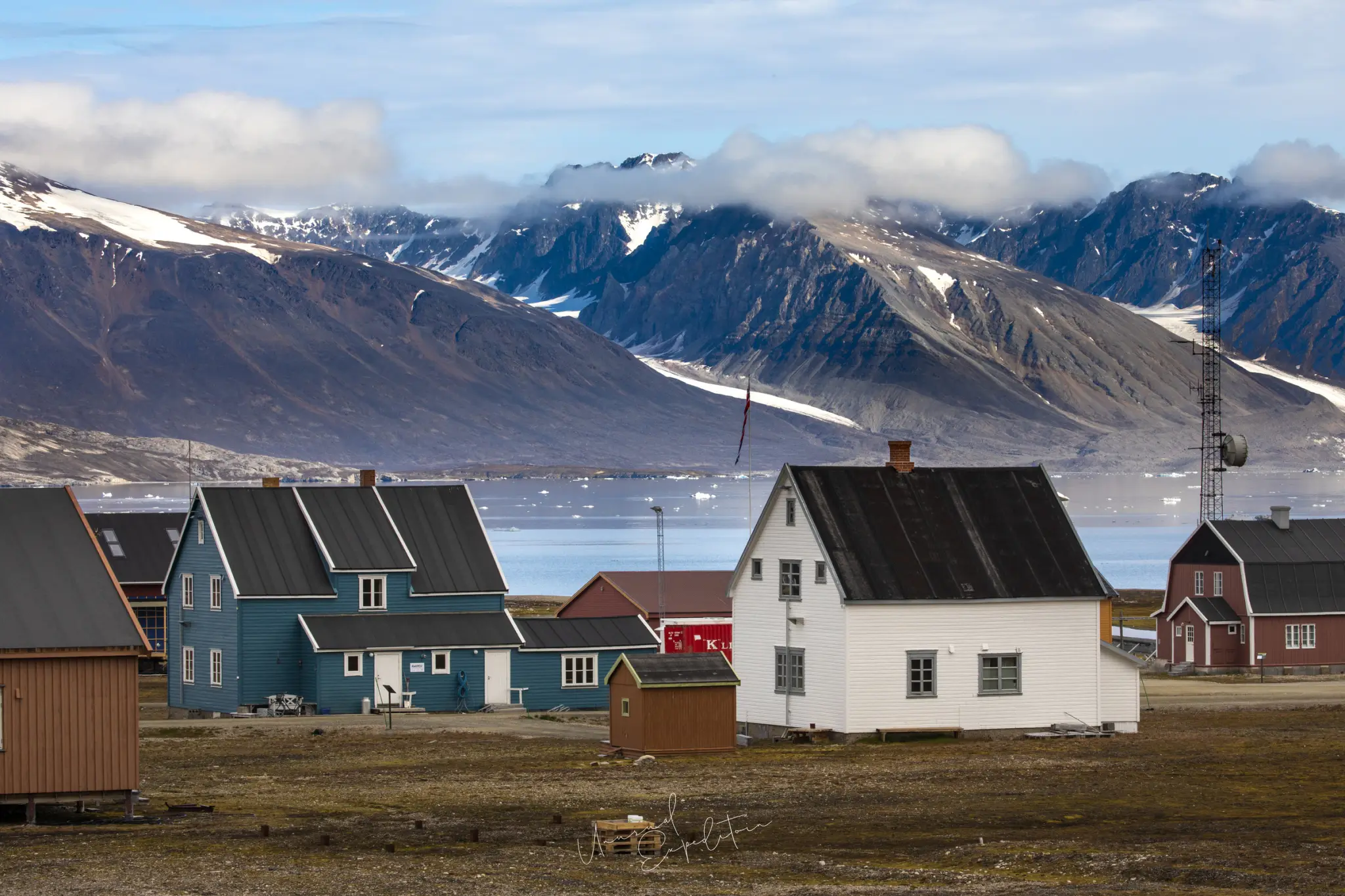
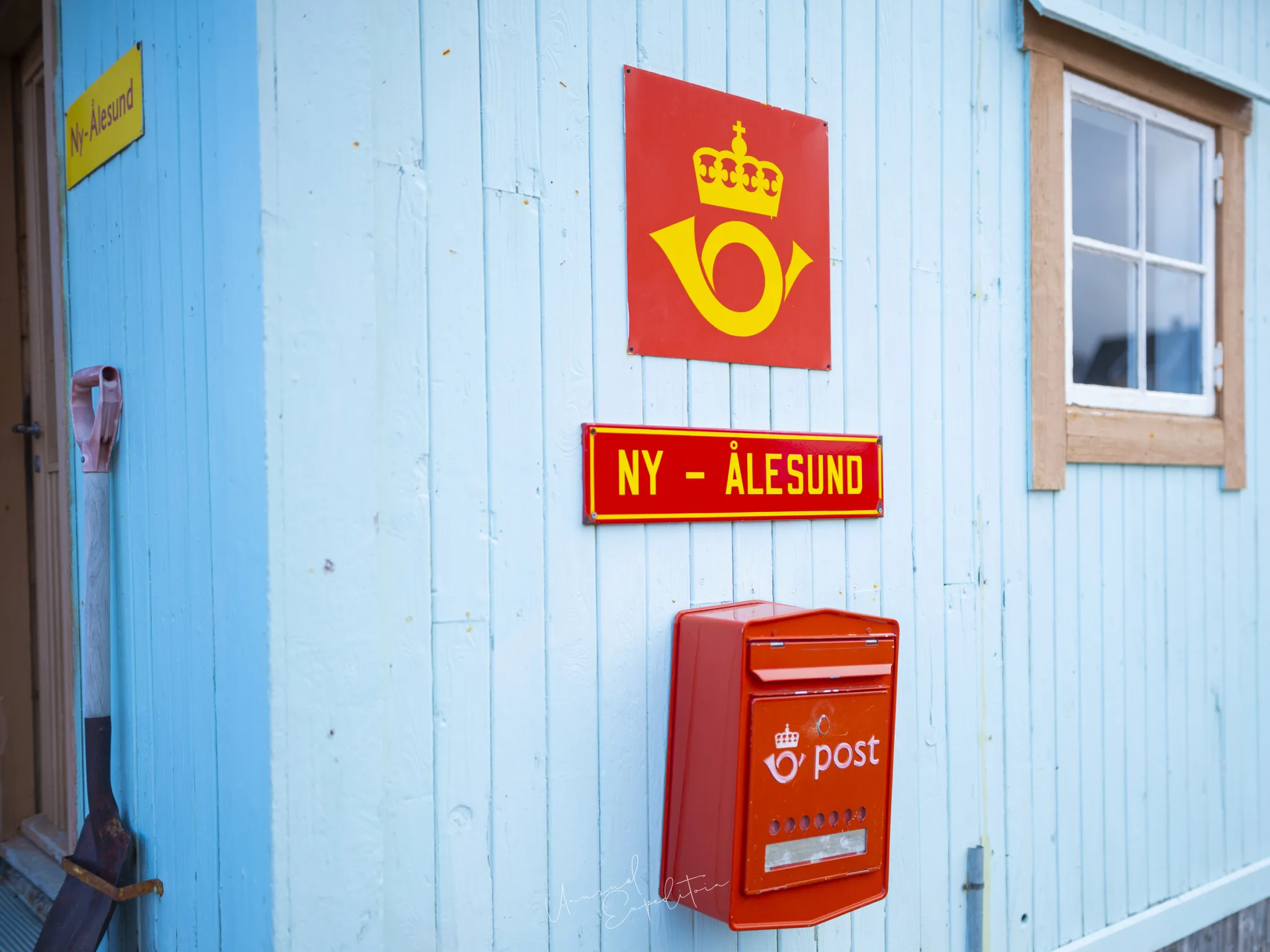
Ny-Alesund is a small international research town on Kongsfjorden, on the north-west coast of Spitsbergen in Svalbard, at almost 79 degrees north. It began as a coal-mining settlement, and since mining ended in the 1960s it has been home to research stations from several countries. Visitors arrive mostly by ship, walk the gravel streets between painted wooden houses, the bust of Roald Amundsen, the airship mast and what the Norwegian Polar Institute calls the world's northernmost post office. We landed here on both of our Svalbard voyages.
Ny-Alesund is one stop on a voyage that the Svalbard photography tour guide describes in full. Its opposite is Pyramiden, the abandoned Soviet town, and the reindeer and birds around the houses are part of the Svalbard wildlife you photograph here.
Ny-Alesund, Svalbard: from coal town to research station
Coal mining at Ny-Alesund started in 1917, according to the Norwegian Polar Institute's Cruise Handbook for Svalbard, and continued with breaks until an explosion on 5 November 1962 killed 21 miners. The disaster ended mining here and brought down the Norwegian government of the day. Research took over: the Norwegian Polar Institute has worked here permanently since 1968, and today research stations from a number of countries in Europe and Asia share the town. In summer it fills with scientists; in winter only a small crew stays. Many of the old miners' houses are now offices and accommodation, painted red, blue, yellow and white against the grey mountains.
Kings Bay Ny-Alesund: who runs the town
The whole settlement is owned and run by Kings Bay AS, the state-owned company that once ran the mine and now runs the town as a base for science. That is why Ny-Alesund feels different from Longyearbyen: almost everyone in town works for a research station or for Kings Bay, there is little beyond a small shop and the post office, and the rules are written around the research. The company takes its name from Kongsfjorden, the fjord in front of the town, which is Kings Bay in English. Ships call at the quay, and the town's harbour has its own regulations for visiting vessels.
Radio silence and other rules for visitors
Ny-Alesund and a zone of about 20 kilometres around it are radio silent, to protect sensitive instruments. Kings Bay and the Ny-Alesund research station ask visitors to put phones in flight mode and switch off Wi-Fi and Bluetooth on cameras and watches, and recreational drones are banned. Check your camera's wireless settings before you land. The Norwegian Polar Institute's handbook also asks visitors to stay on roads and marked tracks, keep away from nesting birds and Arctic foxes, and never enter houses without permission. Polar bears can come into town, so outside the settlement you only walk with the guides.
Amundsen, the airships and the race to the North Pole
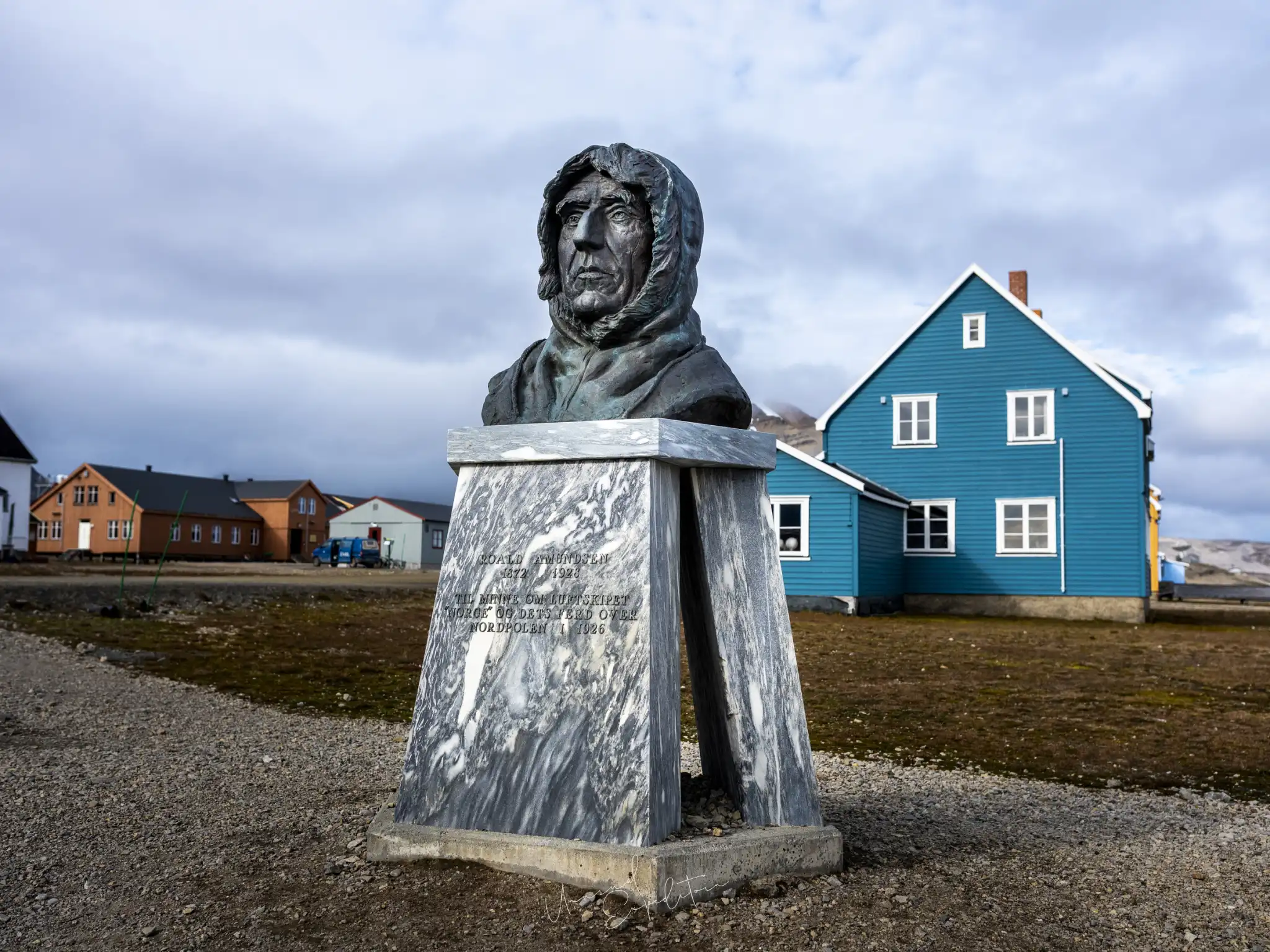
Ny-Alesund was the starting point for some of the most famous polar flights. Roald Amundsen and his partners flew from here towards the North Pole, and in 1926 the airship Norge left from the mooring mast that still stands at the edge of town, crossing the pole on the way to Alaska. Two years later the airship Italia crashed on the ice on its return from the pole, and Amundsen died searching for its crew. A bust of Amundsen stands in the centre of town, and the mast is a short walk away. Both make strong pictures with the mountains behind, especially in clear evening light.
Ny-Alesund photo spots
| Spot | What it shows | Lens |
|---|---|---|
| Main street of wooden houses | Coloured houses against the peaks of Kongsfjorden | 24-70mm |
| Amundsen bust and the airship mast | Polar history, with mountains behind | 16-35mm, 24-70mm |
| Post office | Red post box and post horn sign | 24-70mm |
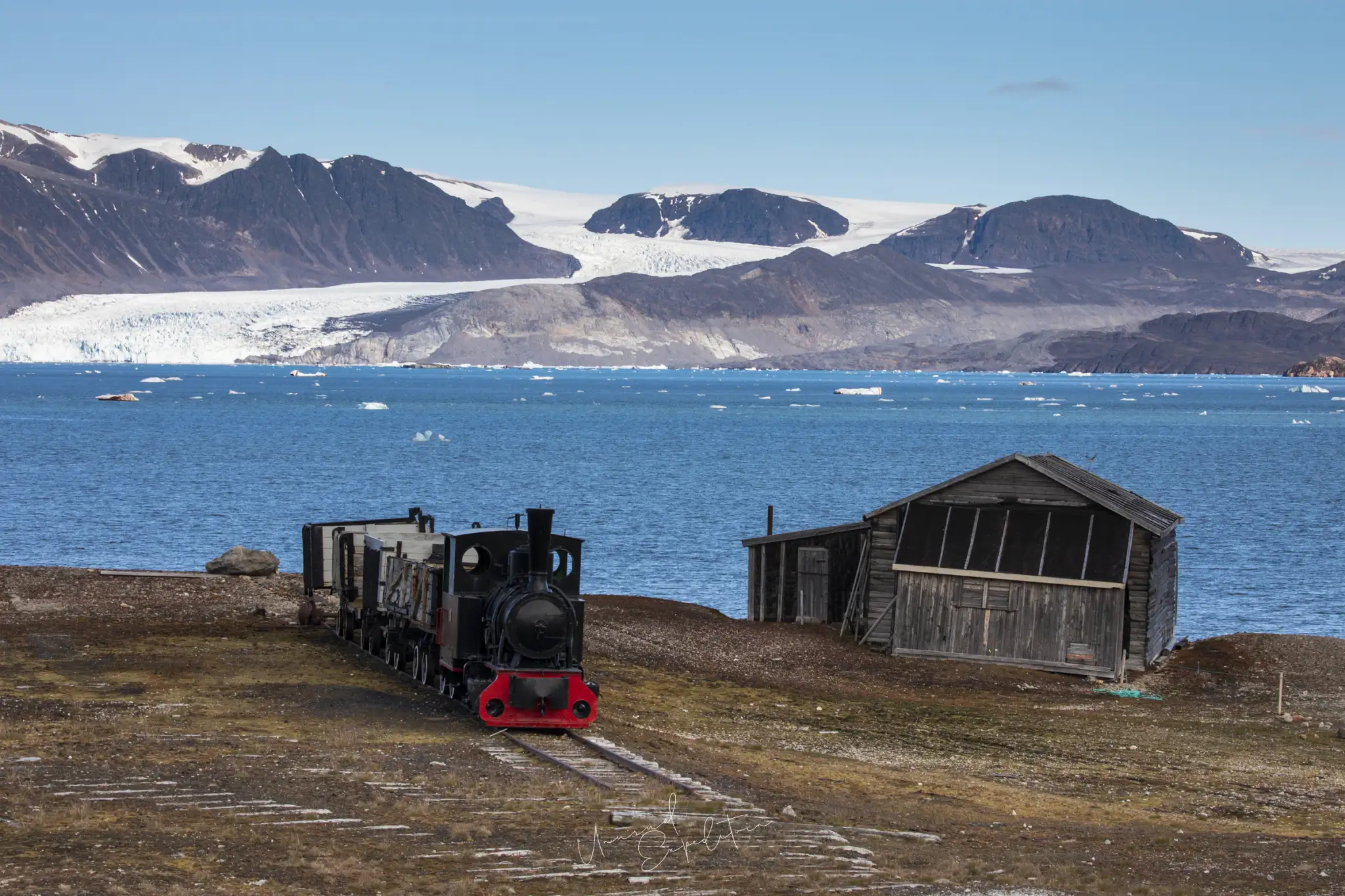
| Old mining locomotive | Steam engine and coal wagons on the tundra | 24-70mm, 70-200mm |
| Shore and antenna field | Research dishes, tundra and the fjord | 70-200mm |
Everything is within a short walk of the quay, so the limit is the time the ship allows ashore.
The old locomotive and the mining past
A small steam locomotive with a line of coal wagons stands on a short length of track near the shore, a reminder of the railway that once carried coal from the mine to the quay. With the fjord and glaciers behind it, it is one of the most photographed objects in Ny-Alesund. Nearby, old wooden huts and the remains of the mining works sit on the tundra. Walk round the engine for a low angle that puts the mountains behind the boiler, and keep to the tracks: the ground here is fragile, and terns nest close by in summer.
Ny-Alesund as a research town today
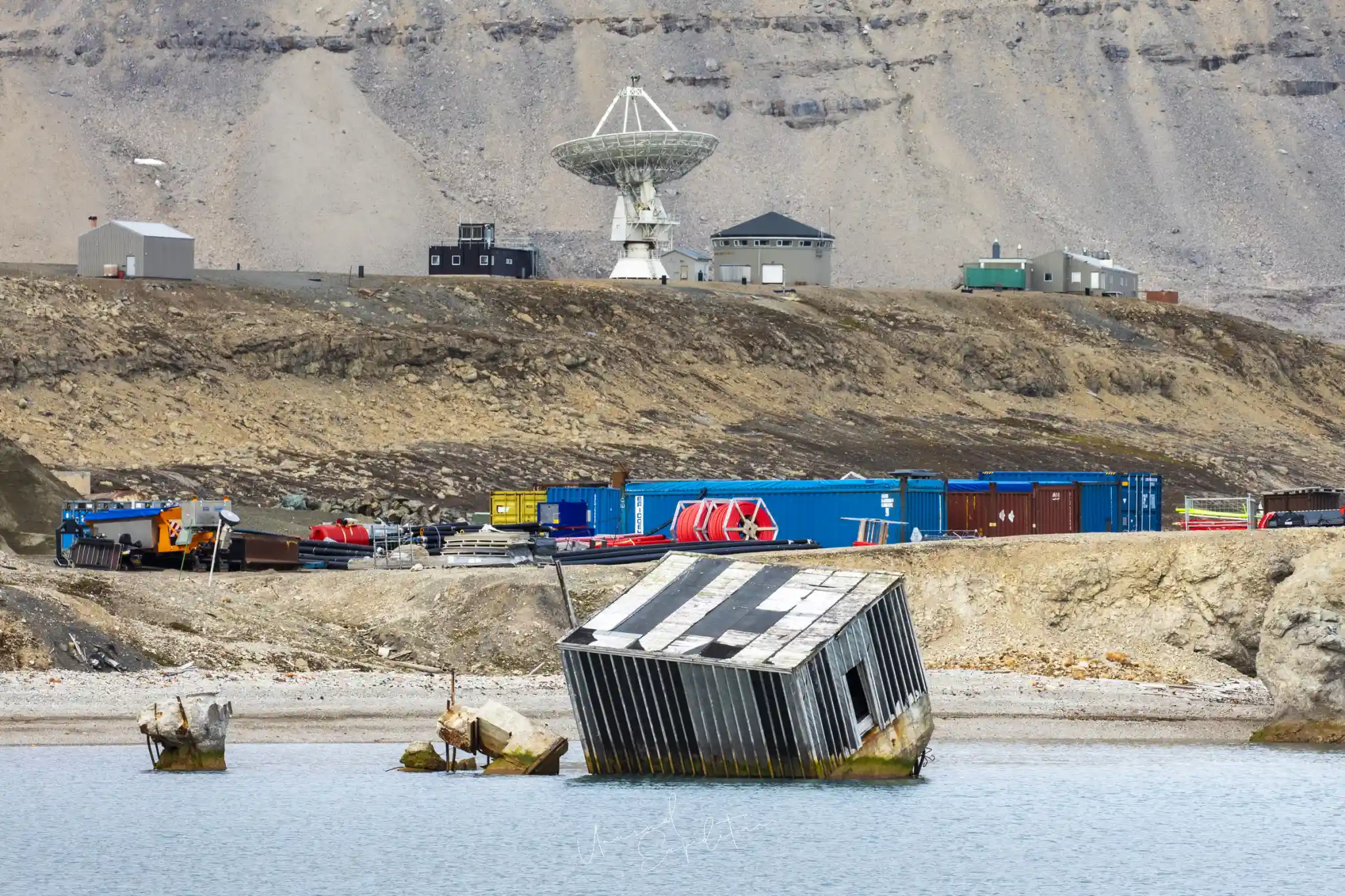
The research is visible everywhere. Large dish antennas of the geodetic observatory stand on the flat ground near the shore, instruments sit on masts and roofs, and the national stations have their own buildings, including China's Yellow River Station with two stone lions at the door. Look for the contrast between science and setting: a dish against a mountain face, a field container beside the fjord, a cyclist passing the instruments.
Photographing Ny-Alesund in the midnight sun
Ships usually stay a few hours, and the light you get is the light of the moment. On a clear evening the low sun comes from the north across Kongsfjorden and lights the fronts of the houses, which is the time for the coloured wooden buildings with the snow peaks behind. Under cloud, look for details instead: the post horn sign, painted doors, old mining relics, the stone lion outside the Chinese station. A 24-70mm covers most of the town, and a 70-200mm pulls the mountains closer behind the roofs. Keep people out of the frame or small in it; this is where scientists live and work, and most of them would rather not be in your pictures.
Ny-Alesund is the quietest town I know. You switch your phone off before you land, the only sounds are the terns and the wind, and you can stand in the main street and photograph the houses with nobody walking through the frame.
Joseph Mak, tour leader, Unusual Expedition
Visit Ny-Alesund with us
We include Ny-Alesund in Svalbard trips that we run privately on request, arranged around your dates and pace, with a photographer or coaching available at extra cost. Give us at least two months if you can. See private tours and the Norway photography tours page.
Svalbard photography tours
The next Svalbard departure is announced on the Svalbard photography tours page, with previous expeditions and all the planning guides.
Explore Svalbard in depth
- Svalbard Photography Tour: Polar Bears, Walrus, Ice and the Midnight SunNorway
- Walrus in Svalbard: Haul-Outs, Tusks and the 150-Metre RuleNorway
- Svalbard Wildlife: Reindeer, Belugas, Seals and SeabirdsNorway
- How to Get to Svalbard: Flights, Entry and What to PackNorway
- Pyramiden, Svalbard: Photographing the Soviet Ghost TownNorway
- Polar Bears in Svalbard: When and Where to See ThemNorway
- Best Time to Visit Svalbard: Midnight Sun, Ice and Light by SeasonNorway
Upcoming Photo Tours
- Egypt Photo Tour – EgyptEgypt 12 Dec 2026 To 20 Dec 2026
- Inner Mongolia Winter Owl Photo Tour – ChinaChina 01 Jan 2027 To 04 Jan 2027
- Inner Mongolia Winter Photo Tour – ChinaChina 05 Jan 2027 To 11 Jan 2027
- Mekong And Central Highland Vietnam Photo Tour - VietnamVietnam 16 Jan 2027 To 24 Jan 2027