
Svalbard Photography Tour: Polar Bears, Walrus, Ice and the Midnight Sun
Svalbard photography tours by small ship: polar bears, walrus, glaciers, Ny-Alesund, Pyramiden and the midnight sun.
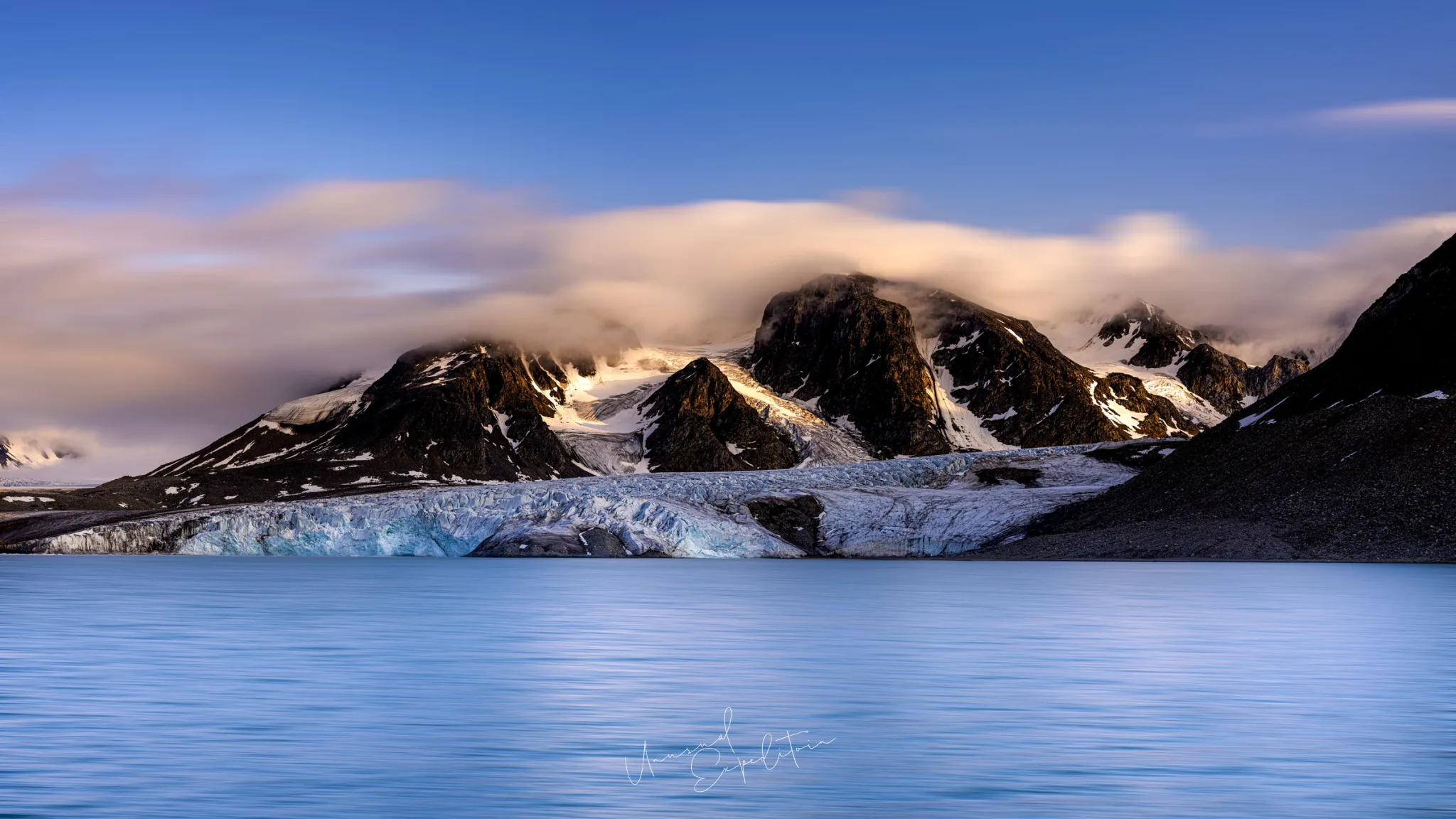
Svalbard photography tours are small-ship voyages around the Norwegian Arctic archipelago between mainland Norway and the North Pole, made for polar bears, walrus, glaciers and the midnight sun. In summer the sea ice pulls back far enough for a ship to sail the fjords of Spitsbergen, land by Zodiac on beaches where walrus haul out, and spend long hours with bears on the shore or the floes. Light never quite ends, so the shooting day is as long as you can stay awake.
This destination guide is the starting point for everything we have written on Svalbard. It sits under our Norway photography tours page, because Svalbard is Norwegian territory, and it links each of the detailed guides below: polar bears in Svalbard, walrus in Svalbard, the rest of the Svalbard wildlife, and the best time to visit Svalbard.
Where is Svalbard, and what is there to photograph?
Svalbard is a group of islands high in the Arctic, between the Barents Sea and the Greenland Sea, under Norwegian sovereignty since the Svalbard Treaty of 1920 and run day to day by the Governor of Svalbard (Sysselmesteren). Spitsbergen is the largest island and the one most voyages follow. Longyearbyen, the main town, has the airport. Beyond it there are only a few settlements: the research town of Ny-Alesund, the Russian mining town of Barentsburg and the abandoned Soviet town of Pyramiden. Everything else is mountains, ice caps, glaciers that end in the sea, tundra and fjords. For a photographer that means three kinds of subject on one trip: big Arctic animals, ice and mountain landscape, and a handful of strange human outposts that stand out precisely because so little else is built.
Svalbard photography tours: what a summer voyage gives you
Svalbard is photographed from the water. On both of our August trips we sailed a small sailing expedition vessel, which means a low deck close to the sea, Zodiac cruises along glacier fronts and bird cliffs, and landings only where the guides judge it safe. On the north-west coast of Spitsbergen our chart plotter read more than 79 degrees north. A small ship can wait: an hour with a bear asleep on a slope, a second pass along a walrus beach once the light has swung round. That patience is what separates a Svalbard photography trip from a cruise that passes the same coast. The trade-off is space and comfort, and a small vessel feels the sea more, so think about that before you choose.
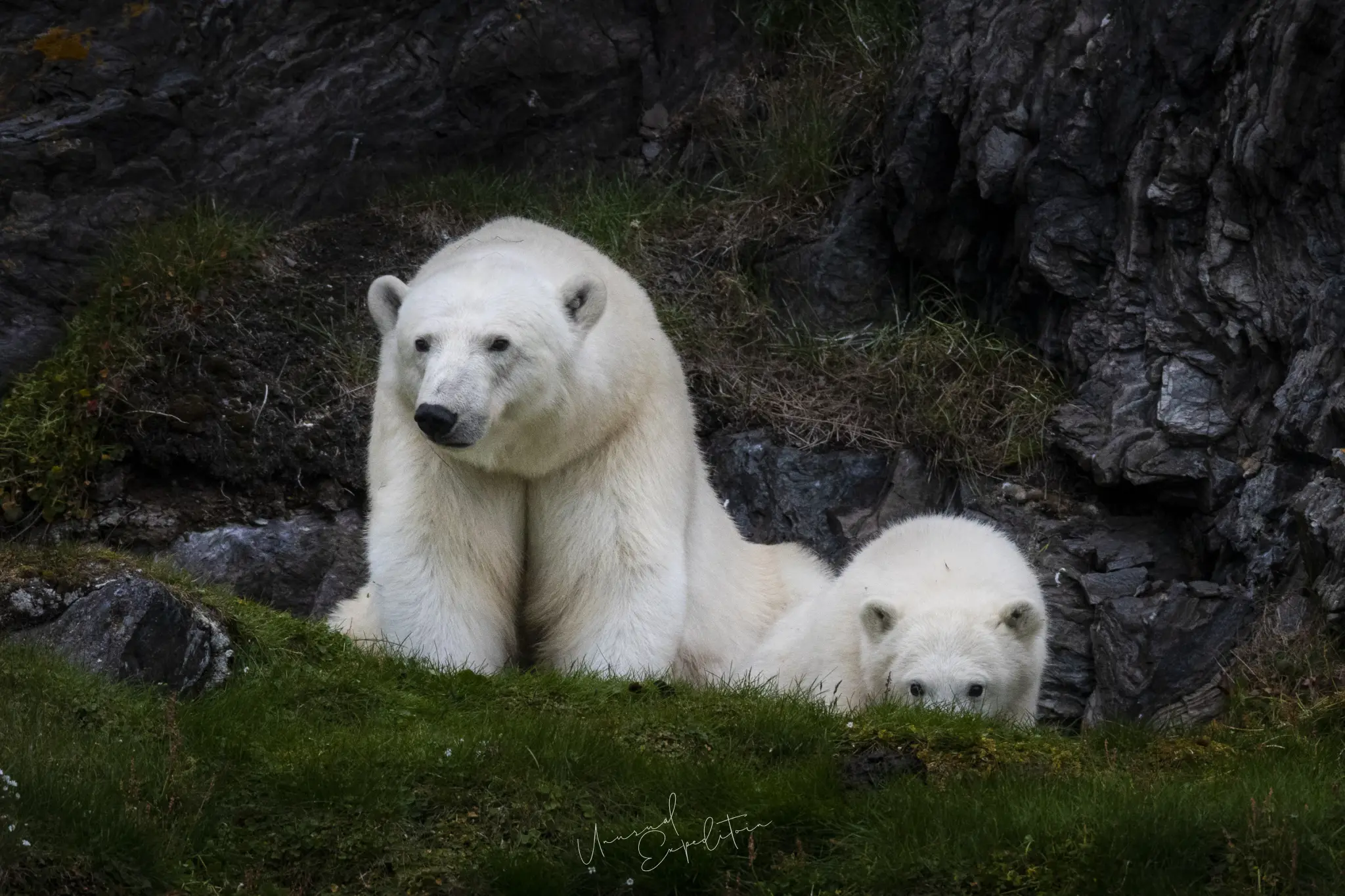
Polar bears and walrus: the two reasons most people come
Polar bears are the reason most people book. In summer, with the pack ice far to the north, bears in Svalbard live along the coast and on the remaining floes, and from a ship you see them asleep on moss, swimming between floes or feeding on a seal. Sightings are never guaranteed, and the rules on distance have tightened since 2025: the polar bears in Svalbard guide explains when to look and what is allowed. Walrus are the surer subject. Protected since 1952, they haul out on gravel beaches in heaps, and on a calm day they swim right off the shore with their tusks above the water. The walrus in Svalbard guide covers how to photograph them from a legal distance.
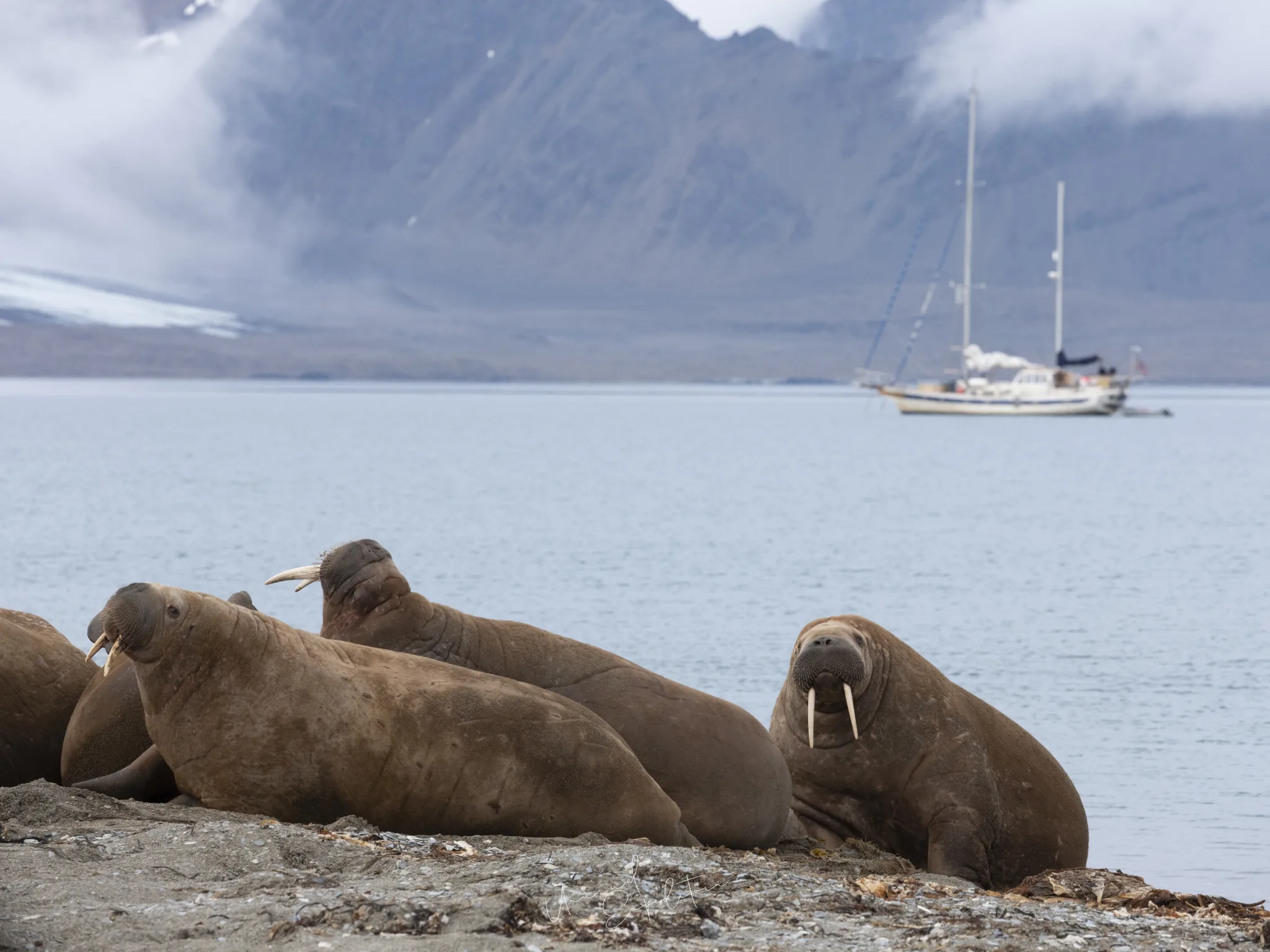
Svalbard glaciers and ice
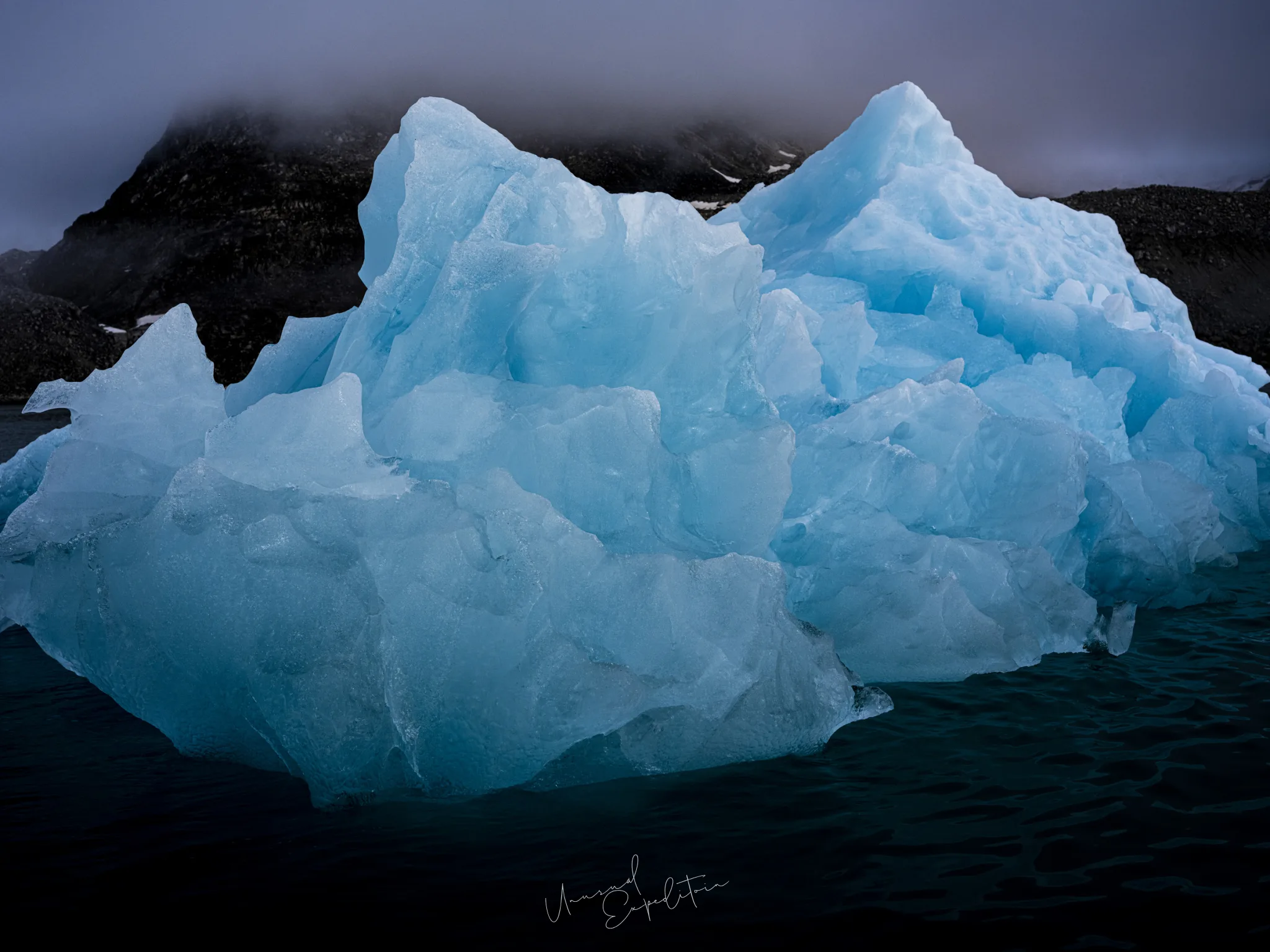
Much of Svalbard lies under ice caps, and the glaciers you photograph mostly end in the sea as a wall of blue and white. A Zodiac cruise along a glacier front gives you texture and colour at close range; the ship gives you the whole face with the peaks above it. Calved ice drifts in the bays, and on a dull, low-cloud day those bergs turn a deeper blue than they do in sunshine. Svalbard reindeer graze the tundra below the mountains, belugas pass along the shore, and the bird cliffs are loud with kittiwakes and guillemots: the Svalbard wildlife guide covers them.
Svalbard at a glance
| Subject | Where in Svalbard | Best light | Lens |
|---|---|---|---|
| Polar bears | Coast and floes, mostly in the north and north-west | Any; low sun late in the evening is the best | 100-400mm, longer if you have it |
| Walrus | Gravel beaches and shallow water | Soft light, side light late in the day | 70-200mm, 100-400mm |
| Glacier fronts and icebergs | Fjords of west and north-west Spitsbergen | Overcast for colour, low sun for shape | 24-70mm, 70-200mm |
| Reindeer and birds | Tundra below the mountains, bird cliffs | Late evening sun | 100-400mm |
| Settlements | Ny-Alesund, Pyramiden, Longyearbyen | Clear days, any time | 16-35mm, 24-70mm |
A long zoom earns its weight on every outing; the wide lens is for the settlements and the glacier faces.
Ny-Alesund and Pyramiden
Two places on land give a Svalbard voyage its human side. Ny-Alesund is a former coal town turned international research station, with painted wooden houses, a bust of Roald Amundsen, the mast his airship left from and, by the Norwegian Polar Institute's account, the world's northernmost post office. Pyramiden is a Soviet mining town abandoned in 1998, its brick blocks, emblems and coal works left standing under a pyramid-shaped mountain, with kittiwakes nesting in the windows. Both are quick to walk and rewarding to photograph, and each has its own rules.
Is Svalbard worth visiting?
For a wildlife or landscape photographer, yes, if you accept two conditions. The first is cost: Svalbard is expensive because almost everything happens by ship. The second is uncertainty: weather, fog and ice decide where you can go, and the expedition team changes the plan daily. In return you get polar bears in a setting where seeing one is a realistic hope, walrus at close range, and ice landscapes with almost no one else in them. Compared with East Greenland, where a bear is a rare bonus, Svalbard is the Arctic for animals.
Our photographs of Svalbard
The photographs in this guide are our own, taken on our two August voyages here; we hold the rights to them, and the notes come from knowing these places first hand. Everything in this cluster was shot under the midnight sun, from the deck, from a Zodiac or ashore with armed guides.
The first time a polar bear lifts its head from the moss and looks straight at the boat, everyone goes quiet. You have waited days for it, and in that moment all you have to do is keep your hands steady and let the bear decide what happens next.
Joseph Mak, tour leader, Unusual Expedition
Rules that shape every Svalbard trip
Since 1 January 2025 the Governor of Svalbard requires everyone to keep at least 300 metres from polar bears, and 500 metres from 1 March to 30 June, and to retreat if they find themselves closer. Walrus haul-outs have a 150-metre limit from the sea. Tourist landings must be guided and are limited to mapped sites, and drones are banned in protected areas and near bird cliffs in summer. Outside the settlements you go with guides who carry polar bear protection. Expect these rules to shape where a ship stops and how close the pictures are.
Getting to Svalbard from Singapore
You fly to Oslo with one connection, then on to Longyearbyen, where voyages start. Svalbard sits outside the Schengen area, so there is a passport check on the way in and out. The guide to getting to Svalbard covers entry for Singapore passports, flights and what to pack.
Explore Svalbard in depth
- Polar bears in Svalbard: when and where to see them
- Walrus in Svalbard: haul-outs, tusks and the 150-metre rule
- Svalbard wildlife: reindeer, belugas, seals and seabirds
- Best time to visit Svalbard: midnight sun, ice and light
- Ny-Alesund, Svalbard: the research town at 79 degrees north
- Pyramiden, Svalbard: photographing the Soviet ghost town
- How to get to Svalbard: flights, entry and what to pack
Sail Svalbard with us
We have no scheduled Svalbard departure at the moment, so we run it as a private trip on request, for individuals, couples, families or photographers who want their own pace, with every piece of logistics arranged around you. A private trip can cost less than a group tour because no tour leader travels, and a photographer or photography coaching can be added at extra cost. Ask at least two months ahead; last-minute requests can often still be arranged. See private tours, and the Norway photography tours page for any future departure.
Svalbard photography tours
The next Svalbard departure is announced on the Svalbard photography tours page, with previous expeditions and all the planning guides.
Explore Svalbard in depth
- Walrus in Svalbard: Haul-Outs, Tusks and the 150-Metre RuleNorway
- Svalbard Wildlife: Reindeer, Belugas, Seals and SeabirdsNorway
- How to Get to Svalbard: Flights, Entry and What to PackNorway
- Pyramiden, Svalbard: Photographing the Soviet Ghost TownNorway
- Polar Bears in Svalbard: When and Where to See ThemNorway
- Ny-Alesund, Svalbard: The Research Town at 79 Degrees NorthNorway
- Best Time to Visit Svalbard: Midnight Sun, Ice and Light by SeasonNorway
Upcoming Photo Tours
- Egypt Photo Tour – EgyptEgypt 12 Dec 2026 To 20 Dec 2026
- Inner Mongolia Winter Owl Photo Tour – ChinaChina 01 Jan 2027 To 04 Jan 2027
- Inner Mongolia Winter Photo Tour – ChinaChina 05 Jan 2027 To 11 Jan 2027
- Mekong And Central Highland Vietnam Photo Tour - VietnamVietnam 16 Jan 2027 To 24 Jan 2027