
Svalbard Wildlife: Reindeer, Belugas, Seals and Seabirds
What wildlife lives in Svalbard: Svalbard reindeer, beluga whales, seals, Arctic foxes and seabirds, and how to photograph them.
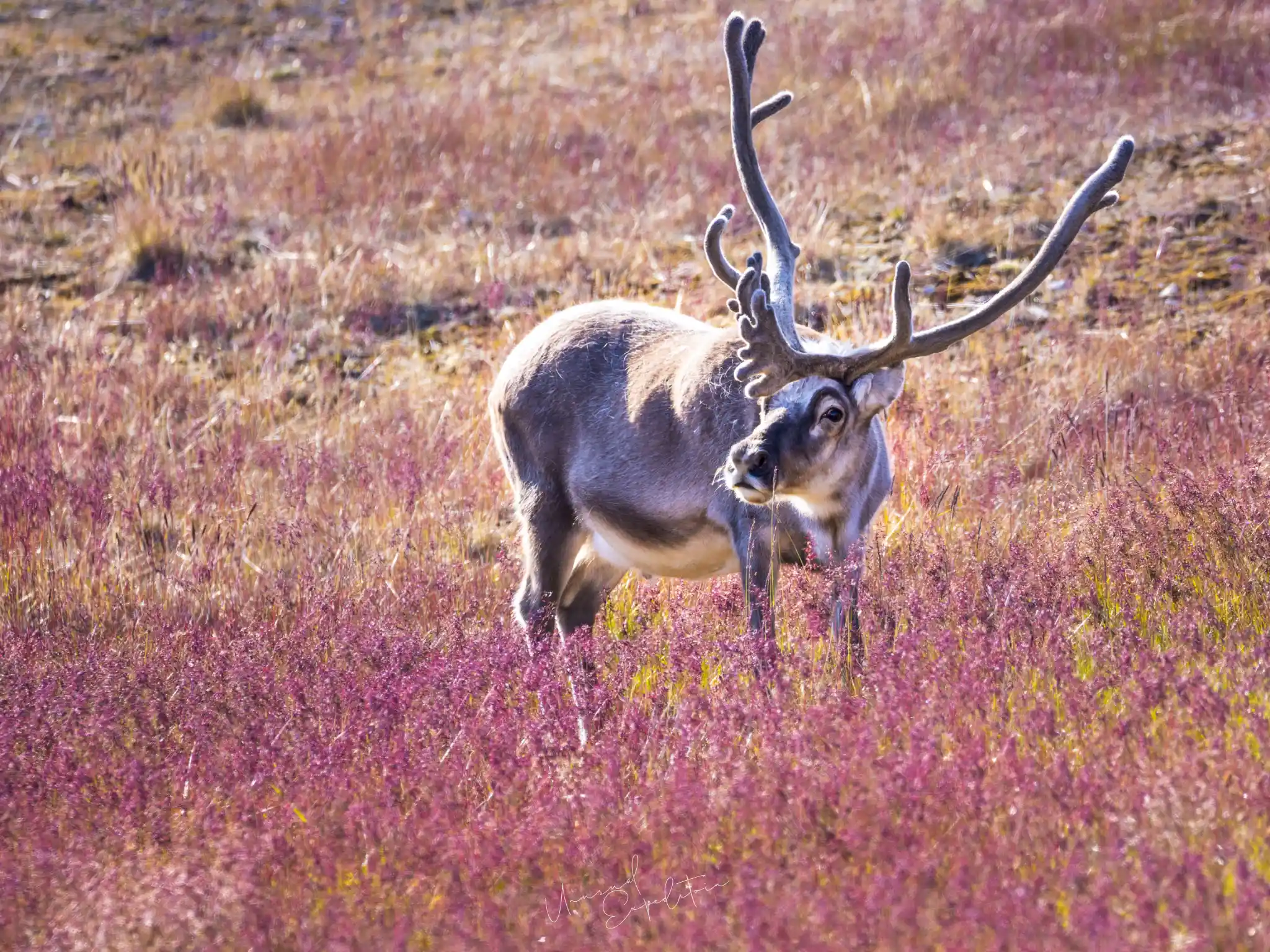
Svalbard wildlife is a short list of animals that you see well: polar bears and walrus first, then Svalbard reindeer on the tundra, belugas and other whales along the coast, several kinds of seal, Arctic foxes and huge seabird colonies in summer. Nothing here is hidden in forest, so what lives in Svalbard is mostly out in the open on bare rock, moss, ice and water. A summer voyage, roughly June to August, puts all of it within reach of a long lens.
Bears and walrus have their own destination guides, polar bears in Svalbard and walrus in Svalbard. This one covers everything else we photographed, and the Svalbard photography tour guide shows how it fits into a voyage.
What wildlife lives in Svalbard?
On land, Svalbard has very few mammals: the Svalbard reindeer and the Arctic fox, plus the polar bear, which MOSJ, the environmental monitoring programme for Svalbard, lists as marine fauna because it lives mostly on the sea ice. Everything else lives at sea or arrives with the summer. Walrus and seals use the coasts and the ice; belugas, and further out the larger whales, feed in the surrounding seas; and seabirds nest on the cliffs in huge colonies from spring to late summer. Because the land is so open, sightings tend to be clear and unhurried. The challenge is less finding animals than getting the light, the distance and the background right.
Svalbard reindeer
The Svalbard reindeer is a small, short-legged reindeer found nowhere else, fully protected since 1925 and now grazing across almost all of the ice-free land, according to the Norwegian Polar Institute and researchers at NTNU. In summer they wander the tundra close to the settlements and along the shore, often alone or in small groups, and they are surprisingly calm if you approach slowly and stay low. In August the bulls carry big antlers in velvet and the tundra turns pink and rust with flowering plants, which gives the most colourful pictures of the whole trip. Kneel, use a long lens, and keep the background clean of buildings and pipes.
Beluga whale Svalbard: white whales along the shore
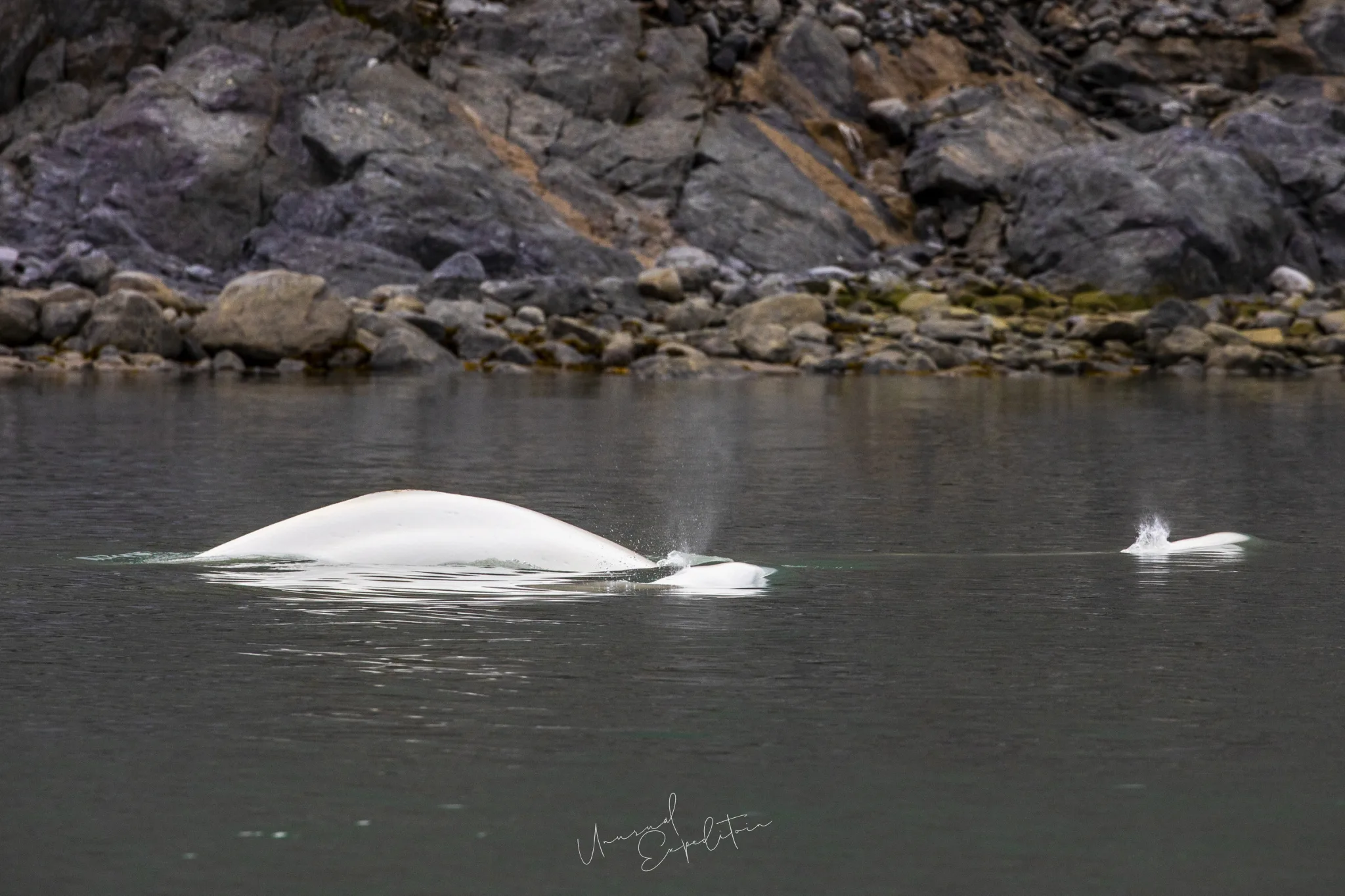
Belugas are the whales you are most likely to photograph close to land in Svalbard. They travel in groups along the coast and into the fjords, often in shallow water near glacier fronts and river mouths, and from a ship they look like smooth white backs rising and sinking in a line. You rarely see more than the back and the blow, so a good beluga frame is about the shape of the animal against dark water. Shoot fast and wait for the moment the whole back clears the surface.
Seals in Svalbard
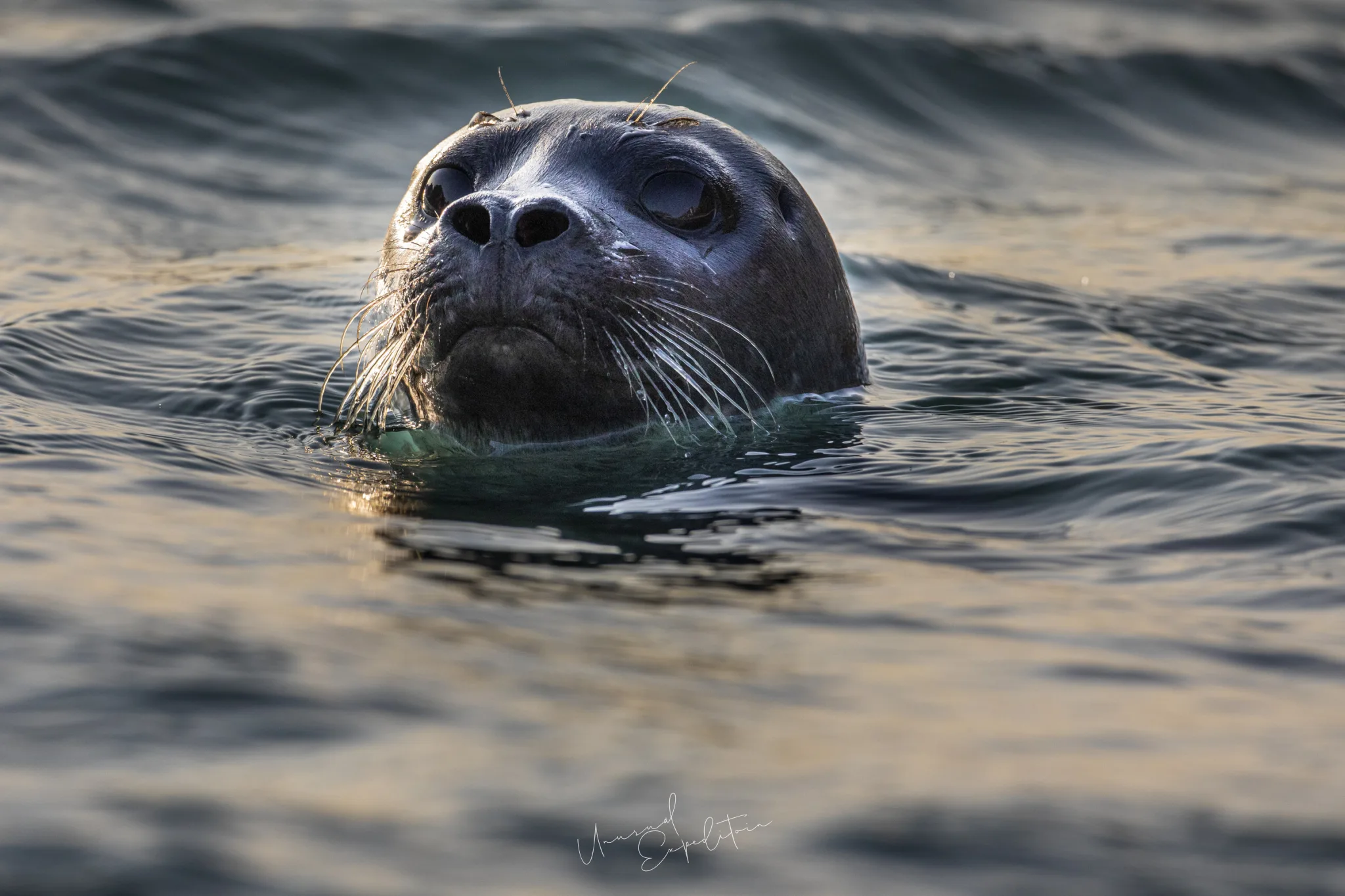
Several kinds of seal live around Svalbard, and you meet them in two ways: hauled out on floes, or as a head watching you from the water. The second is the more photogenic. A seal will often follow a Zodiac, sink, and come up again a little closer, and with the light behind you the whiskers and the wet fur show every detail. Keep the waterline low in the frame and leave space in front of the face. Seals are also what the bears hunt, and a bear on a floe usually means seals are near.
Arctic fox
The Arctic fox is Svalbard's only native land predator besides the bear. Foxes patrol the foot of the bird cliffs in summer, picking up eggs and fallen chicks, and they wander through the settlements. In summer most are in their brown and grey coat, which makes them hard to see against rock; in winter they turn white, though some stay dark all year. We did not get a good fox frame on our August trips, which is typical: they move fast and rarely stop. If you meet one, stay still and let it pass, and never feed it. The Norwegian Polar Institute asks visitors to keep their distance because foxes can carry rabies.
Seabirds of the summer coast
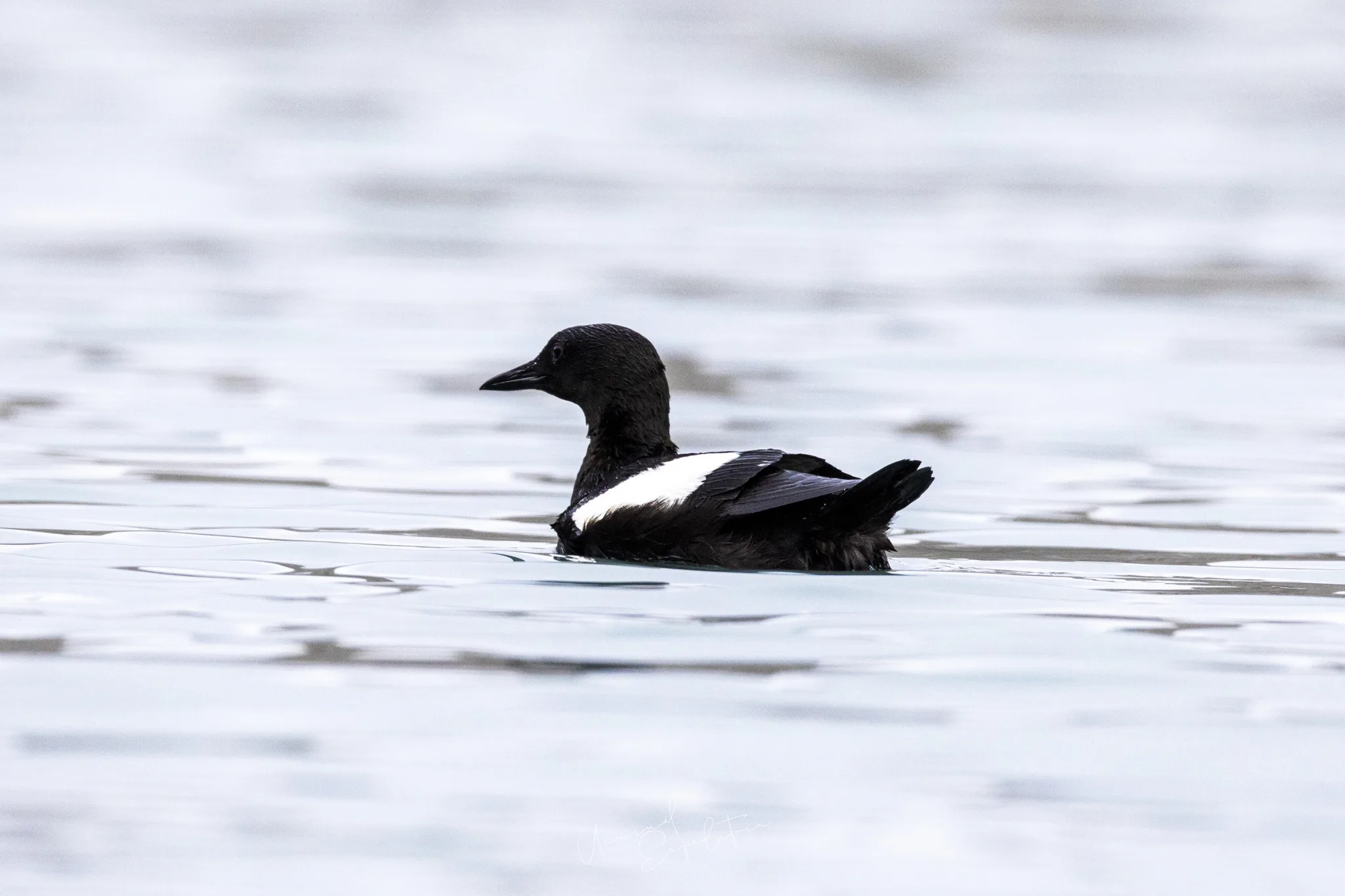
From spring to late summer the bird cliffs of Svalbard are full and loud. Kittiwakes, Brunnich's guillemots, little auks, fulmars and puffins nest in colonies, and the black guillemot, black with a white wing patch and bright red feet, swims in the quiet bays. In Pyramiden kittiwakes even nest on the window sills of the abandoned buildings, as the Pyramiden guide shows. Since 2025 boats must slow to 5 knots within 500 metres of the mapped bird cliffs from 1 April to 31 August, and drones may not fly closer than 500 metres in that period.
Svalbard in summer: tundra, whales and wildlife at a glance
| Animal | Where | When | Lens |
|---|---|---|---|
| Svalbard reindeer | Tundra near the coast and settlements | All year; antlers in velvet in summer | 100-400mm |
| Arctic fox | Below bird cliffs, around settlements | All year | 100-400mm |
| Belugas | Shallow coast, fjords, glacier fronts | Summer | 70-200mm, 100-400mm |
| Seals | Floes and open water | All year | 100-400mm |
| Seabirds | Bird cliffs, bays, abandoned buildings | Spring to late summer | 100-400mm |
One long zoom covers all of it; what changes is how low and how still you can get.
How to photograph Svalbard wildlife
Svalbard wildlife photography is mostly done from a moving platform: a ship's deck or a Zodiac. Use fast shutter speeds, keep both eyes open to follow the animal, and brace against the boat, not the rail. Ashore, the rule is the opposite: move slowly, sit down early and let animals come to you. Reindeer and birds are often best in the long, low light late in the evening, when the midnight sun skims the tundra. The best time to visit Svalbard guide explains how that light changes through the season.
The reindeer surprised everyone. After days of bears and walrus, people knelt in that pink tundra and photographed one bull for half an hour, and it just kept grazing a few steps in front of them.
Joseph Mak, tour leader, Unusual Expedition
Photograph Svalbard wildlife with us
We run Svalbard privately, on request: individuals, couples, families or a small group of photographers, travelling at their own pace with all the planning done for them. Without a tour leader travelling it can cost less than a group tour, and a photographer or coaching can be added. Ask at least two months ahead, though shorter notice can sometimes work. See private tours and the Norway photography tours page.
Ask us about Svalbard wildlife
Svalbard photography tours
The next Svalbard departure is announced on the Svalbard photography tours page, with previous expeditions and all the planning guides.
Explore Svalbard in depth
- Svalbard Photography Tour: Polar Bears, Walrus, Ice and the Midnight SunNorway
- Walrus in Svalbard: Haul-Outs, Tusks and the 150-Metre RuleNorway
- How to Get to Svalbard: Flights, Entry and What to PackNorway
- Pyramiden, Svalbard: Photographing the Soviet Ghost TownNorway
- Polar Bears in Svalbard: When and Where to See ThemNorway
- Ny-Alesund, Svalbard: The Research Town at 79 Degrees NorthNorway
- Best Time to Visit Svalbard: Midnight Sun, Ice and Light by SeasonNorway
Upcoming Photo Tours
- Egypt Photo Tour – EgyptEgypt 12 Dec 2026 To 20 Dec 2026
- Inner Mongolia Winter Owl Photo Tour – ChinaChina 01 Jan 2027 To 04 Jan 2027
- Inner Mongolia Winter Photo Tour – ChinaChina 05 Jan 2027 To 11 Jan 2027
- Mekong And Central Highland Vietnam Photo Tour - VietnamVietnam 16 Jan 2027 To 24 Jan 2027