
Walrus in Svalbard: Haul-Outs, Tusks and the 150-Metre Rule
Walrus in Svalbard: where they haul out, what a walrus safari is, the 150-metre rule and how to photograph them.
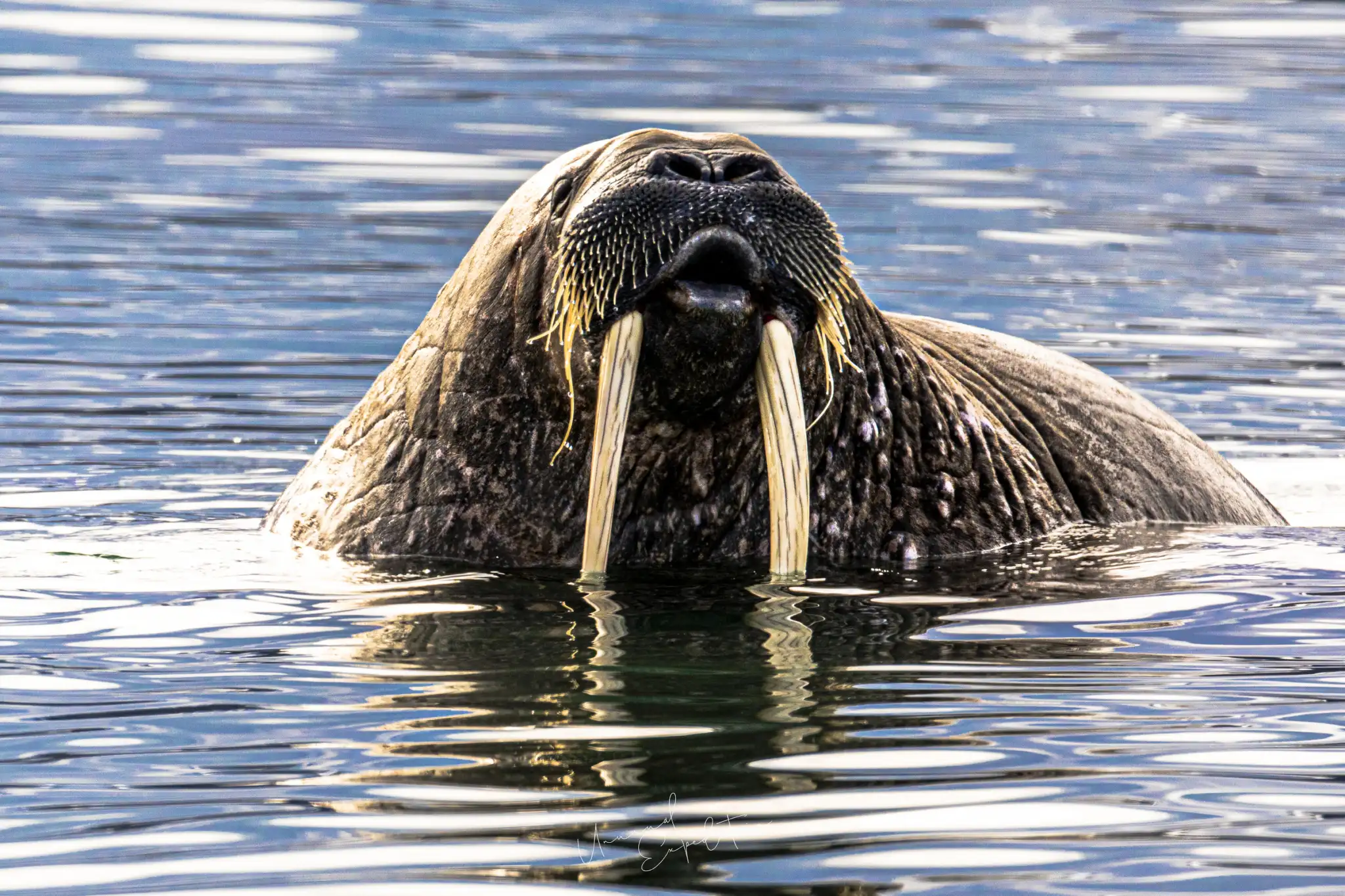
Walrus in Svalbard haul out on gravel beaches and low points along the coast in summer, often dozens together, and feed in the shallow water just offshore. They were hunted almost to nothing and have been protected since 1952, and their numbers have been recovering ever since. On a summer voyage they are the most reliable large animal you will photograph: on both of our August trips we spent long sessions at walrus beaches, with the animals sleeping in heaps and others swimming close to the shore.
The Svalbard photography tour guide explains how a voyage works. Walrus share the coast with the bears in polar bears in Svalbard and with the seals, reindeer and birds in Svalbard wildlife.
Where to see walrus in Svalbard
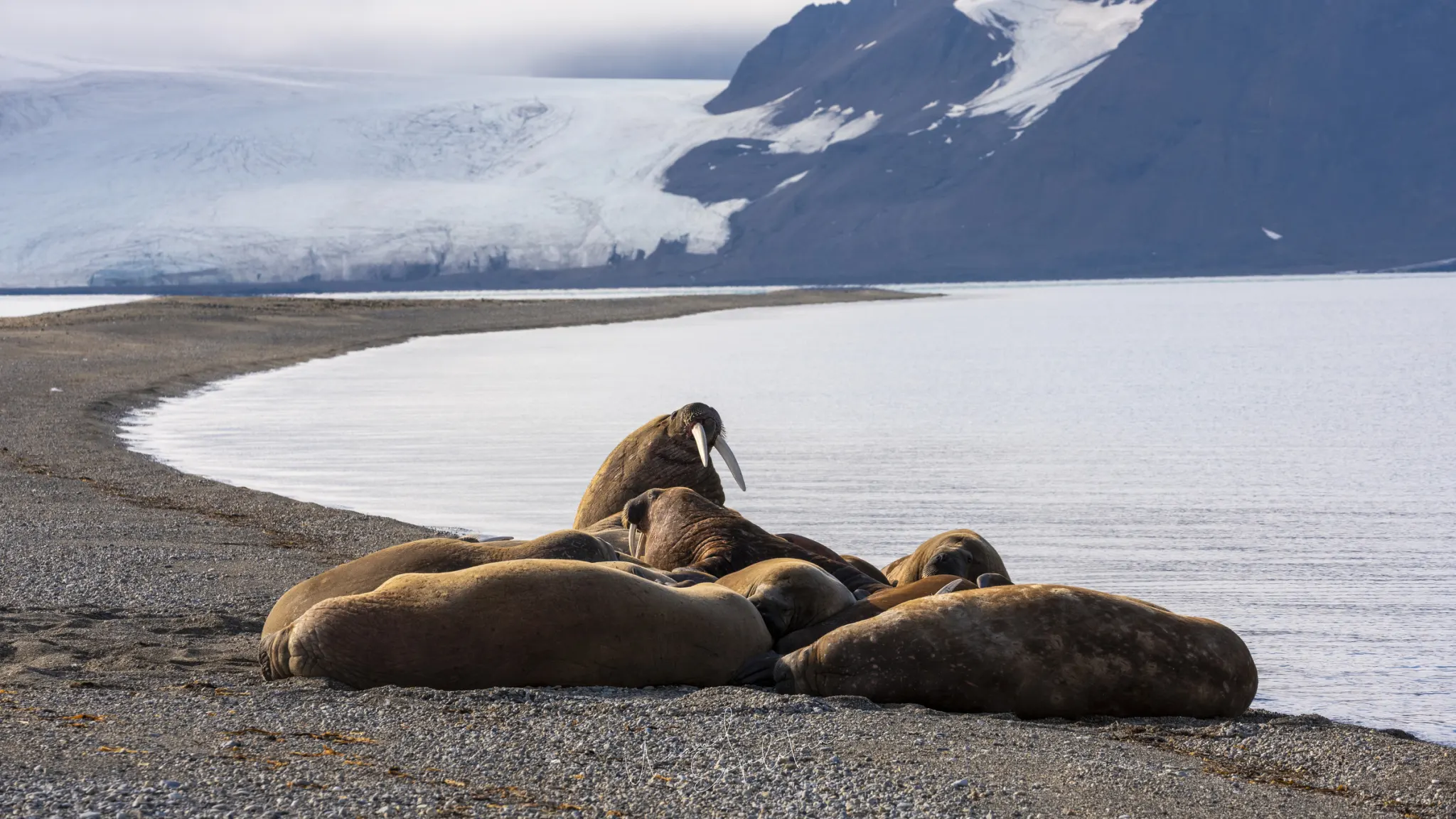
Walrus in Svalbard use dozens of regular haul-out sites, mostly flat gravel spits, beaches and low islands with shallow, food-rich water nearby. The Norwegian Polar Institute's monitoring programme keeps a register of them, and the number of sites in use has grown as the population has recovered. Expedition ships know the regular beaches in the west and north-west of Spitsbergen and plan landings around them, though a beach that was full last week can be empty today. When it is, there is usually another one along the coast. Walrus spend long periods ashore digesting and resting, so once you find a group it rarely leaves in a hurry.
Walrus safari Svalbard: from a ship, a Zodiac or on foot
A walrus safari in Svalbard is either a day trip out of Longyearbyen or part of an expedition voyage that lands on the beaches by Zodiac. Ours were voyages: the ship anchors off, the guides check the beach for bears, and the group walks in slowly and settles down on the gravel at a distance. Walrus are calm on land if people stay low, quiet and together, and a group that sits still for an hour often finds a curious animal coming closer on its own, either on the beach or in the water. Never walk between the walrus and the sea; that is the direction they will run if they are frightened.
The 150-metre rule and other walrus rules
Since 1 January 2025 the Governor of Svalbard requires boats to keep at least 150 metres from walrus haul-out sites at sea and to slow to 5 knots within 300 metres. Landings for tourists are limited to mapped sites and must be guided. In practice this means a Zodiac cannot nose in to a beach full of walrus for a close-up any more, and the pictures have to come from ashore, from a legal landing site, or from animals that choose to swim past. The walrus is still red-listed as vulnerable in Norway, which is a good reason to keep to the rules even when the animals seem relaxed.
What walrus look like up close
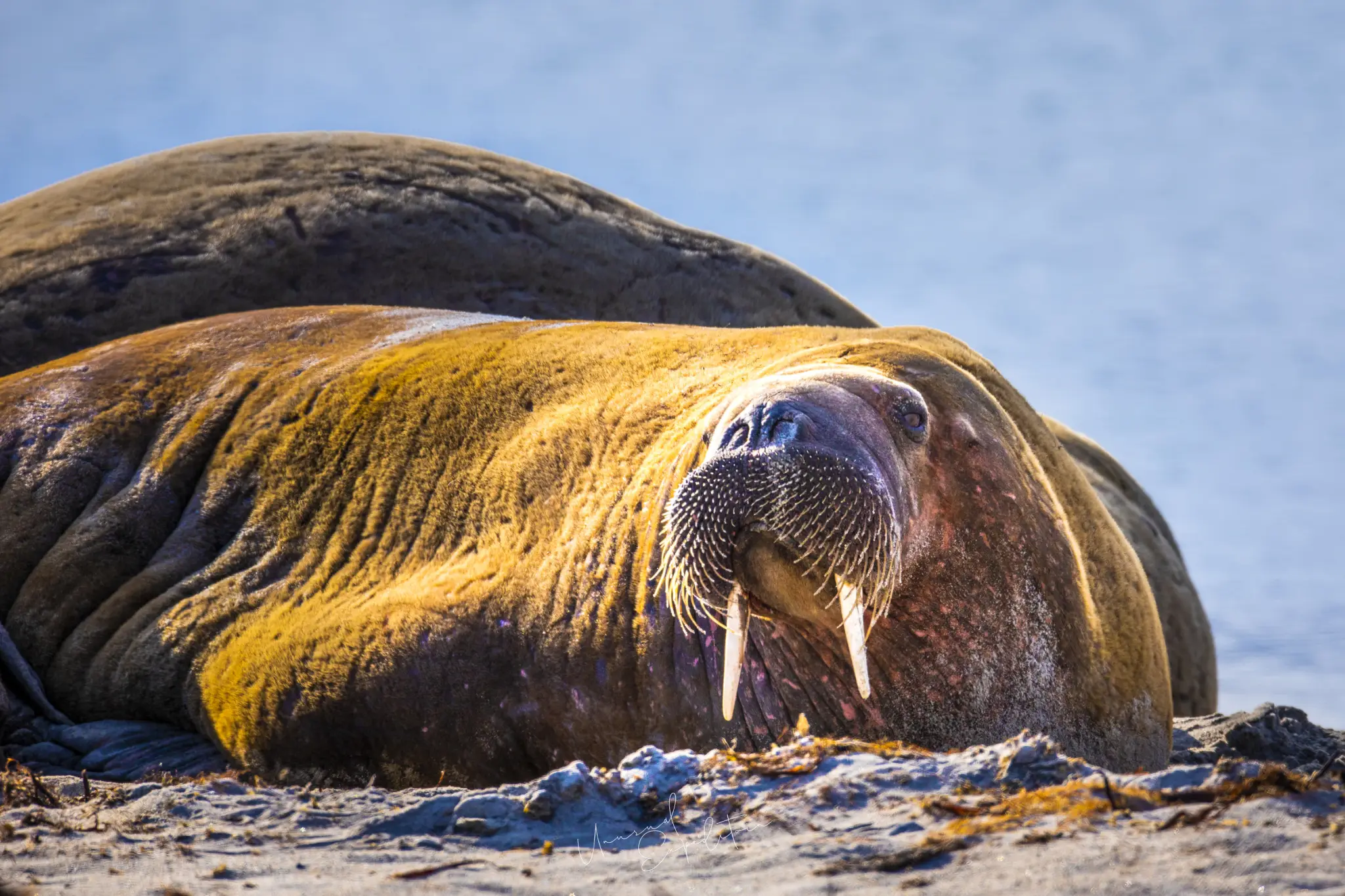
Walrus are bigger and stranger than most people expect. The skin is creased, scarred and in places almost pink; older animals carry pale patches and long, sometimes broken tusks, and the stiff whiskers are thick enough to see from a distance. In a haul-out they lie on top of each other, grunt, and lift their heads to jab a neighbour with a tusk before falling asleep again. All of that gives you portrait material: a single face, a tangle of tusks, a head resting on another animal's back.
Walrus in the water
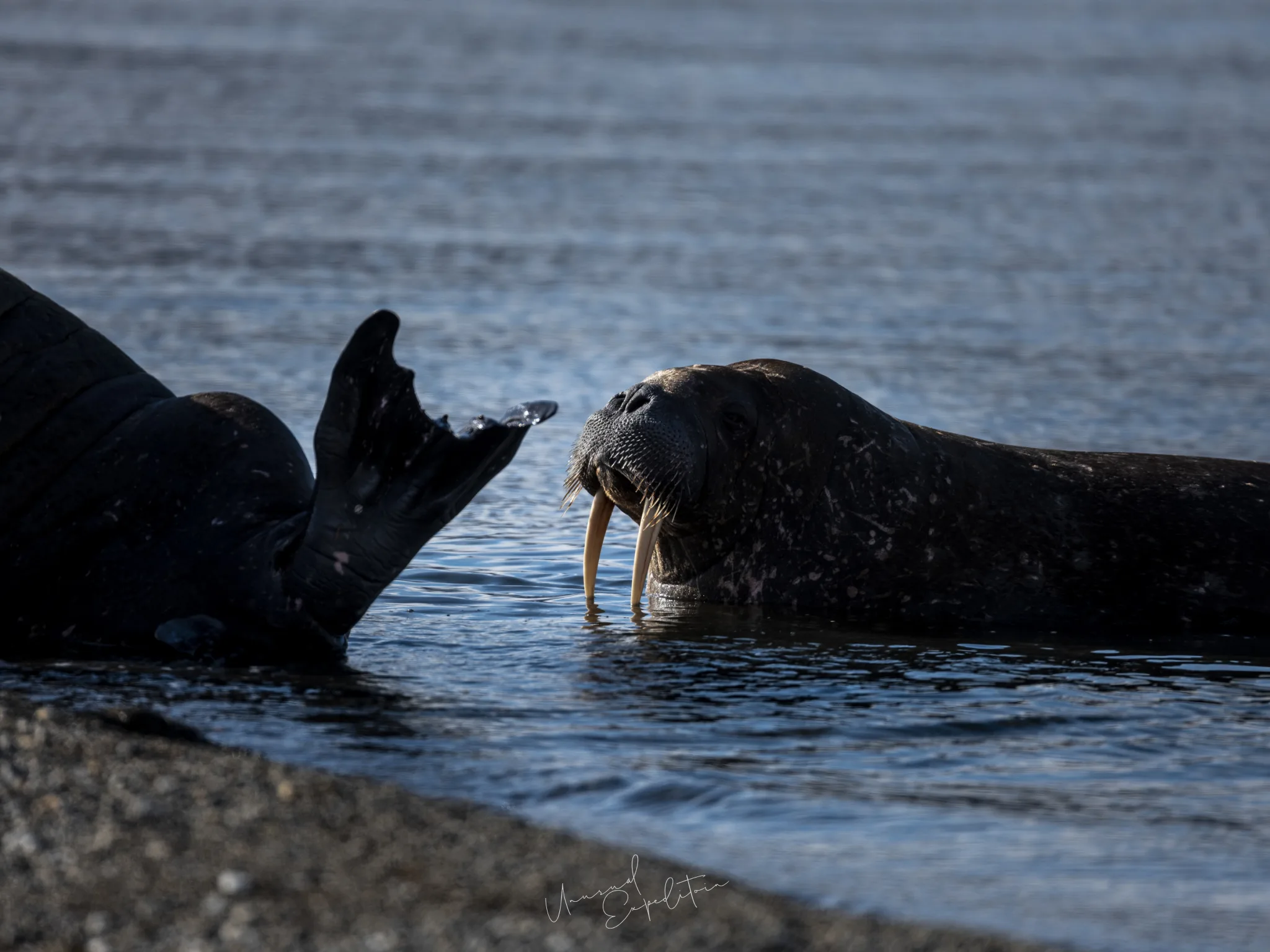
The best walrus pictures are often in the shallows. Animals coming back from feeding swim along the shore, raise their heads to look at the people on the beach, then sink and reappear a few metres further on. Get low, so the lens is close to the waterline, and the tusks and the reflection both fill the frame. A calm sea gives you a clean reflection; a slight ripple gives patterns of light around the head. The best time to visit Svalbard guide explains why summer evenings give the softest light for this.
How to photograph walrus
| Scene | Lens | Light | What to look for |
|---|---|---|---|
| Whole haul-out with the landscape | 24-70mm, 70-200mm | Overcast or low sun | Glacier or mountains behind the group |
| Single portrait on the beach | 100-400mm | Side light late in the evening | Tusks, whiskers, eyes |
| Walrus in the shallows | 100-400mm | Calm water, low angle | Head and tusks with a reflection |
| Interaction | 70-200mm | Any | Tusk jabs, two heads together |
The middle zoom is the lens you will use most, because a haul-out is wider than it looks once you sit down.
Walrus are brown on grey, so a little warmth in the light changes everything. Under a flat sky expose for the skin and add contrast later. In low sun the oils on their skin turn gold. Keep your shutter fast for the head movements, and take a wide frame early in the session before you start on portraits; once you are deep into close-ups it is easy to leave without the picture that shows where you were.
Walrus and the history of Svalbard
For centuries Svalbard was a hunting ground for walrus as well as whales, for ivory, hide and oil. By the time the animals were protected in 1952 only a small remnant was left, and recovery was slow for decades, partly through animals arriving from Franz Josef Land, according to a study by Kovacs, Aars and Lydersen of the Norwegian Polar Institute in Polar Research. Surveys since then show a population growing again and returning to old haul-outs. Sitting on a beach among them, it is easy to forget how close they came to disappearing from these islands.
On a walrus beach the best thing you can do is sit down and stop moving. After a while one of them always gets curious, swims along the shore and lifts its head out of the water right in front of you, tusks dripping. Then you hardly need the long lens at all.
Joseph Mak, tour leader, Unusual Expedition
Come and photograph walrus with us
Svalbard is a private trip on request with us, planned around your dates and pace; we arrange all the logistics, and a photographer or coaching can come along at extra cost. Ask two months ahead if you can. Start with private tours, or see the Norway photography tours page.
Ask us about walrus in Svalbard
Svalbard photography tours
The next Svalbard departure is announced on the Svalbard photography tours page, with previous expeditions and all the planning guides.
Explore Svalbard in depth
- Svalbard Photography Tour: Polar Bears, Walrus, Ice and the Midnight SunNorway
- Svalbard Wildlife: Reindeer, Belugas, Seals and SeabirdsNorway
- How to Get to Svalbard: Flights, Entry and What to PackNorway
- Pyramiden, Svalbard: Photographing the Soviet Ghost TownNorway
- Polar Bears in Svalbard: When and Where to See ThemNorway
- Ny-Alesund, Svalbard: The Research Town at 79 Degrees NorthNorway
- Best Time to Visit Svalbard: Midnight Sun, Ice and Light by SeasonNorway
Upcoming Photo Tours
- Egypt Photo Tour – EgyptEgypt 12 Dec 2026 To 20 Dec 2026
- Inner Mongolia Winter Owl Photo Tour – ChinaChina 01 Jan 2027 To 04 Jan 2027
- Inner Mongolia Winter Photo Tour – ChinaChina 05 Jan 2027 To 11 Jan 2027
- Mekong And Central Highland Vietnam Photo Tour - VietnamVietnam 16 Jan 2027 To 24 Jan 2027