
Peru Photography Trip FAQ: Altitude, Tickets, Safety and People
Things to know before going to Peru: altitude, Machu Picchu tickets, safety, photographing people, money and what to pack.
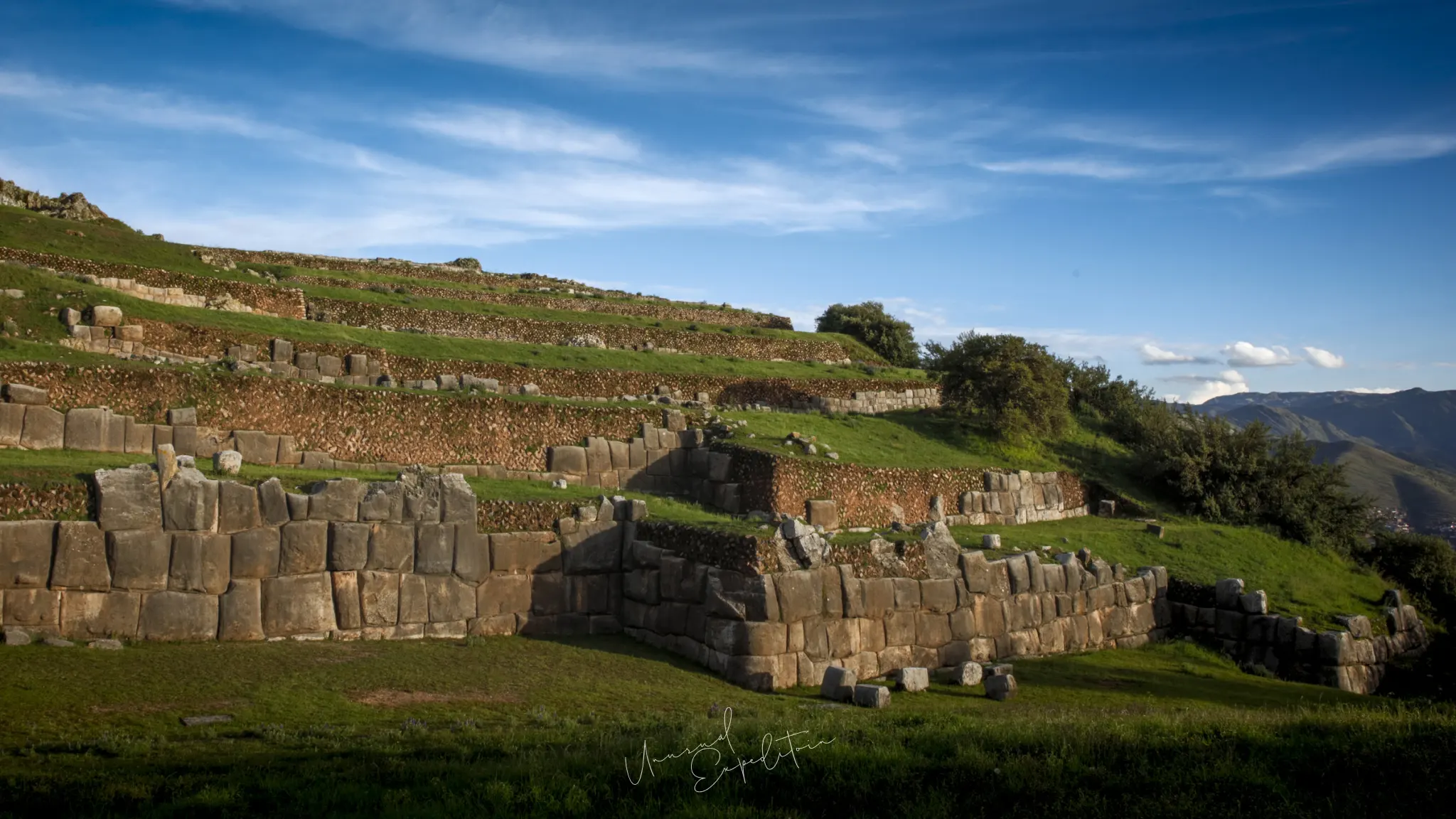
The things to know before going to Peru as a photographer come down to five: altitude in Cusco and at Lake Titicaca, timed tickets at Machu Picchu, weather that changes within minutes, respect and a small tip when you photograph people, and normal city caution in Lima and Cusco. None of them should stop you going. Each one simply changes how you plan, and the answers below are the questions we are asked most often before a Peru trip.
For the big picture of each area, start with our Peru photography tour guide. This FAQ is the practical layer under it.
Things to know before going to Peru
Peru is a long country, and most photography trips concentrate on the southern Andes, where the main subjects are Machu Picchu, Cusco, the Sacred Valley and Lake Titicaca. Lima is the international gateway on the coast, but the pictures are in the highlands. Three things shape every plan there. Altitude decides the pace of the first days. Machu Picchu is ticketed by date, circuit and entry hour, so it fixes one part of the trip early. The weather decides the rest, especially in the rainy season, when a clear hour may come at any time. Spanish is the main language in towns and Quechua is spoken widely in the highlands, with Aymara around Lake Titicaca; a few words of greeting go a long way in villages. Tipping is normal for guides, drivers and anyone who poses for a portrait.
Is Peru safe for tourists?
Is Peru safe for tourists? For a photography trip in the southern highlands, generally yes, with the same care you would take in any large Latin American city. The UK Foreign, Commonwealth and Development Office and Canada's travel advice both describe states of emergency declared over crime in parts of Lima and Callao, and both advise avoiding protests, which can also block roads and railways in the south. The Singapore Ministry of Foreign Affairs asks travellers to eRegister before they go. In practice: keep cameras out of sight in busy streets and markets when you are not shooting, use registered taxis or arranged transport, and do not walk empty streets late at night with a full kit. Read the current advice from these sources shortly before you travel, because it changes.
How bad is Peru altitude sickness in Cusco?
Peru altitude sickness is the most common problem on a Cusco trip, because the city sits at about 3,400 metres and most visitors fly straight in from sea level. Headache, breathlessness on stairs and poor sleep in the first nights are normal; the risk comes from pushing on regardless. Lake Titicaca is higher still, at about 3,800 metres. We plan the first days gently, often starting lower in the Sacred Valley, carry little and walk slowly, and keep the demanding shooting for later. Coca tea is offered everywhere and is a local tradition. Ask your doctor or a travel clinic about altitude medication before you leave, especially if you have a heart or lung condition, and drink plenty of water.
Do I need a ticket to photograph Machu Picchu?
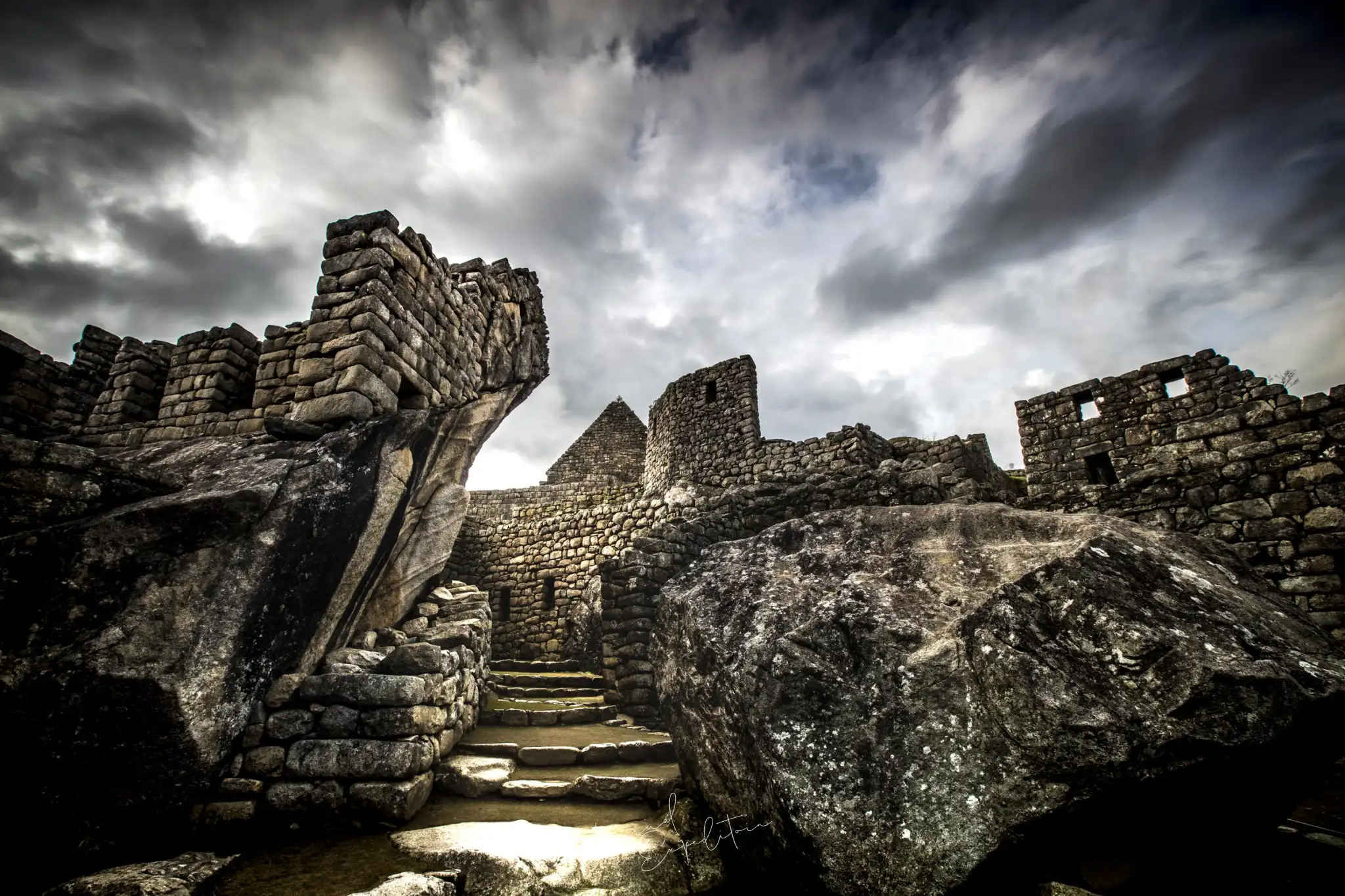
Yes. Machu Picchu entry is by a timed ticket for a set circuit and entry hour, sold through Peru's Ministry of Culture on tuboleto.cultura.pe and issued in your name; the name and passport number on the ticket must match the passport you carry. Daily visitor numbers are capped, with a higher limit in the high season, according to Andina, so popular dates sell out well ahead. Drones are not allowed without Ministry of Culture authorisation, and large tripods are restricted, so plan on handheld shooting and check the current visitor rules before you go. The circuit matters for photographers: not every route passes the classic viewpoint. The details are in our Machu Picchu photography guide.
Can I photograph people in Cusco?
You can, with permission. In Cusco, women and girls in traditional dress often wait around the Plaza de Armas and the San Blas streets with a lamb, a llama or a basket of flowers, and posing for visitors is how they earn a living, so a small tip is expected for each portrait. Ask first, agree, then take your time and show the person the picture. In the Sacred Valley weaving centres and on the islands of Lake Titicaca, people are used to visitors, but the same courtesy applies, and some will say no. We avoid photographing children without a parent's clear agreement, and we never treat a market as a backdrop for strangers who have not been asked.
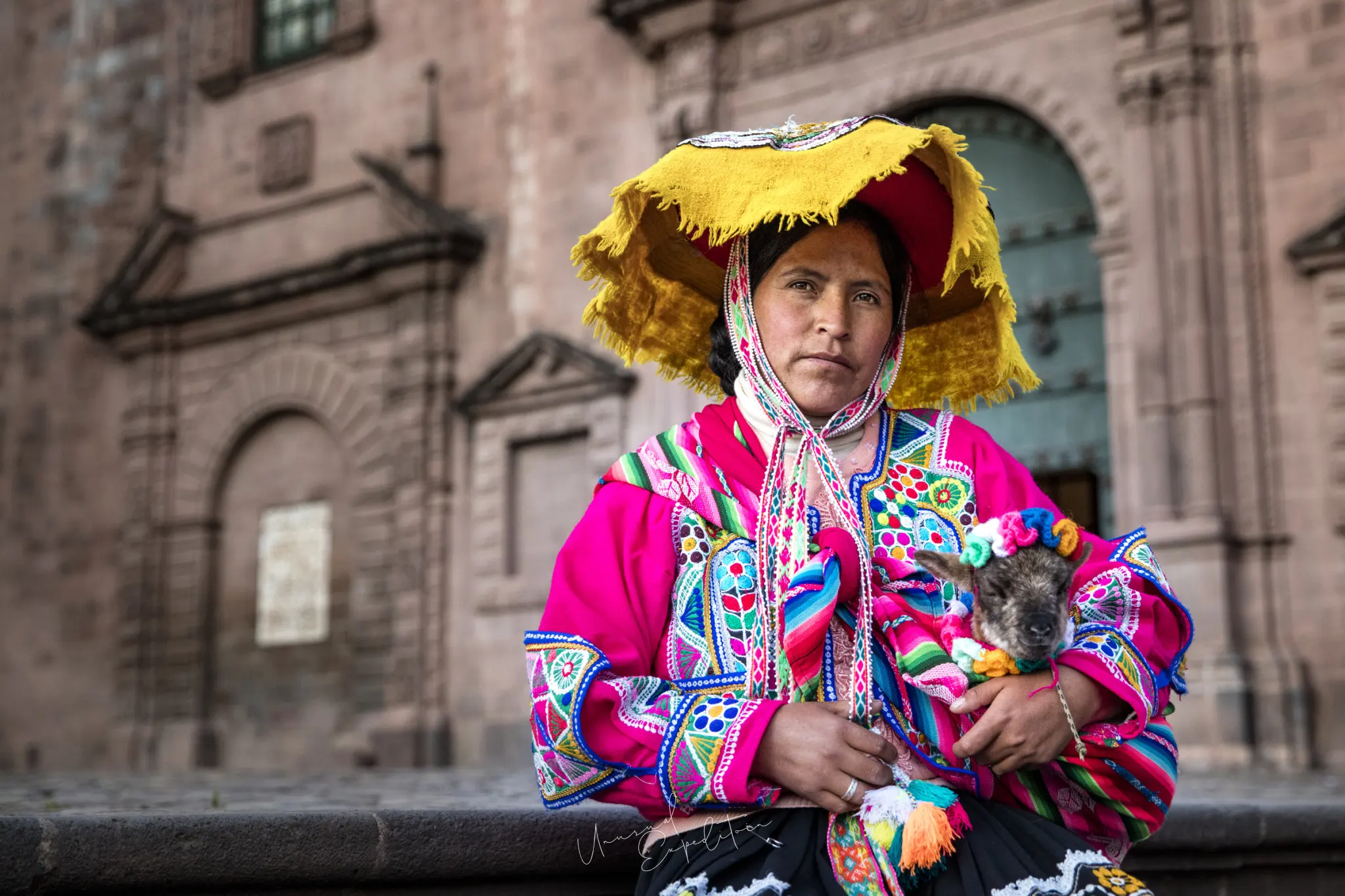
"In Cusco the portraits that work are the ones where you have spent a few minutes talking before you lift the camera. People here are photographed every day. Treat it as an exchange and you get a different face."
Joseph Mak, tour leader, Unusual Expedition
Is Lake Titicaca worth visiting?
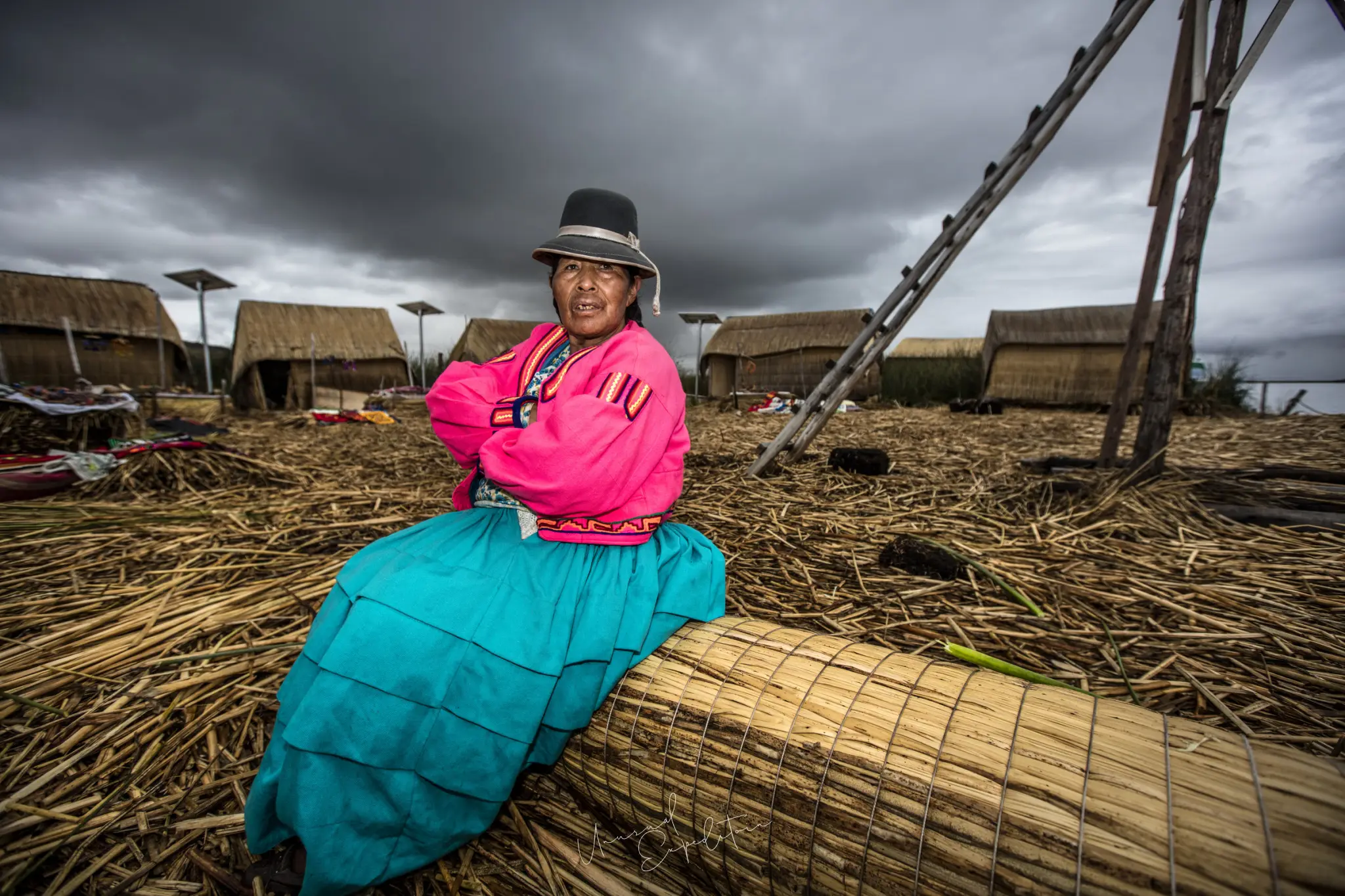
Lake Titicaca is worth visiting if you photograph people and sky. From Puno, boats reach the floating Uros islands, built and rebuilt from totora reed, and further out the island of Taquile, whose weaving UNESCO recognises as intangible cultural heritage. The islands are touristy in places, but families on the Uros islands show how the reed is cut, layered and turned into boats, and the island weavers sell the work they make. The light is the other reason: at about 3,800 metres, clouds over the lake are enormous and the evenings can be extraordinary. Bring warm layers; the lake is the coldest part of most Peru trips.
Peru currency: cash or cards?
The Peru currency is the sol. In Cusco and Lima, cards are accepted in hotels, restaurants and larger shops, and cash machines are easy to find. Keep small notes in soles for markets, portrait tips, toilets and the islands of Lake Titicaca, where cards are rarely taken. US dollars in good condition are widely exchanged, but soles are simpler for small payments. Keep your money split between pockets and bags rather than in one wallet.
What to pack for Peru
What to pack for Peru depends less on the month than on the altitude. Bring layers: a warm fleece or down jacket for Cusco and Lake Titicaca nights, a light rain shell for every season, a sun hat, sunscreen and sunglasses, because the sun is strong at height. Walking shoes with grip matter on Machu Picchu's steps and Cusco's polished stone streets. For cameras, a 24-70mm covers most of the trip, a 16-35mm earns its place at Machu Picchu and in the plaza at night, and a 70-200mm helps on the lake. Pack a rain cover and several lens cloths. The best time to visit Peru article explains what each season brings.
Do I need a visa for Peru from Singapore?
No visa is needed for a tourist visit on a Singapore passport, according to the Embassy of Peru in Singapore, which gives the stay as up to 90 days. Flights, the time difference and how to get to Cusco are in our guide to flying to Peru.
Plan Peru with people who have been
We run Peru as a private trip on request, at your own pace, with all the logistics arranged around what you want to photograph; a photographer or coaching can be added at extra cost. Read about it on our private tours page, and browse every Peru destination guide on our Peru photography tours page.
Peru photography tours
The next Peru departure is announced on the Peru photography tours page, with previous expeditions and all the planning guides.
Explore Peru in depth
- Peru Photography Tour: The Complete GuidePeru
- How to Fly to Peru: Visa, Time Zone, Money and AltitudePeru
- Best Time to Visit Peru for Photography, Month by MonthPeru
Upcoming Photo Tours
- Egypt Photo Tour – EgyptEgypt 12 Dec 2026 To 20 Dec 2026
- Inner Mongolia Winter Owl Photo Tour – ChinaChina 01 Jan 2027 To 04 Jan 2027
- Inner Mongolia Winter Photo Tour – ChinaChina 05 Jan 2027 To 11 Jan 2027
- Mekong And Central Highland Vietnam Photo Tour - VietnamVietnam 16 Jan 2027 To 24 Jan 2027