
Machu Picchu Photography Tour Guide: the Citadel, Cusco and the Sacred Valley
Machu Picchu photography tour guide: the citadel, Cusco and the Sacred Valley, tickets and rules, seasons, kit and portraits.
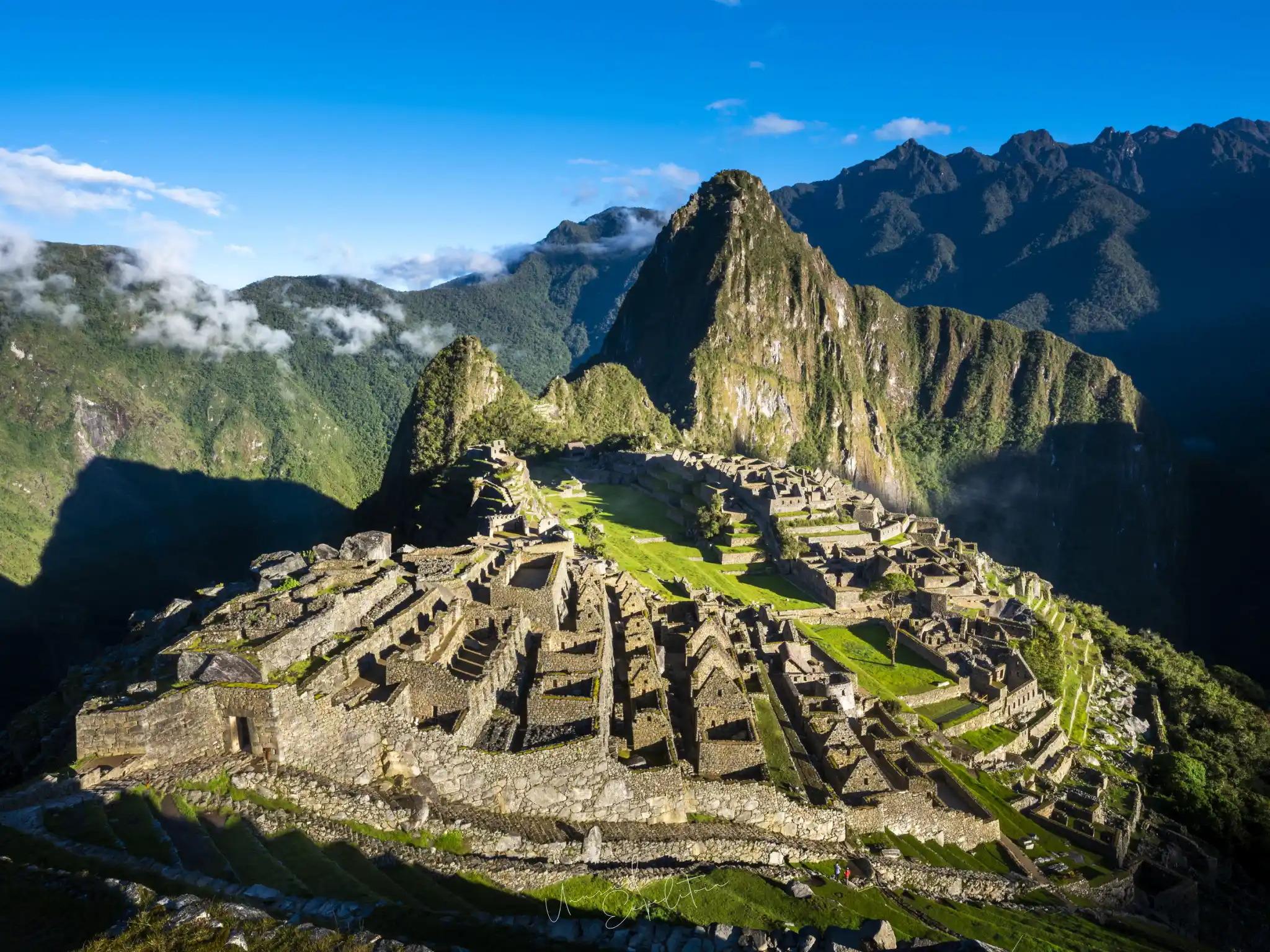
A Machu Picchu photography tour is really three subjects in one trip: the Inca citadel on its ridge above the Urubamba River, with Huayna Picchu standing behind the terraces; Cusco, the old Inca capital with its cathedral square, steep lanes and markets; and the Sacred Valley between them, where Moray's circular terraces and the highland villages sit under big Andean skies. Plan for all three, give the citadel more than one entry if you can, and let the weather decide the order.
Machu Picchu is one region of Peru, and our Peru photography tour guide covers the country as a whole: entry for Singapore passports, money, flights and the other regions. The photographs in this guide are our own, taken on our trip to Cusco and Machu Picchu; we hold the rights to them, and the notes come from knowing these places first hand.
Machu Picchu photography: what the citadel looks like in a camera
Machu Picchu sits at about 2,430 metres according to UNESCO, which lists the Historic Sanctuary of Machu Picchu as a World Heritage Site, on a saddle between two peaks with the river far below on three sides. The famous frame is the view from the upper terraces near the guardhouse: the whole stone town laid out on the saddle, green terraces dropping away, and the sugarloaf of Huayna Picchu behind. That view is only the start. Inside the citadel there are rows of gabled stone houses, stairways, fine Inca walls, and the llamas that graze the terraces. Cloud moves through all day, so the same spot gives you a different picture every few minutes. Our Machu Picchu photo spots guide goes through each viewpoint and the lens it needs.
Machu Picchu photography rules and tickets
Peru's Ministry of Culture sells Machu Picchu tickets on its own platform, tuboleto.cultura.pe. Each ticket is for one date, one circuit and one hourly entry slot, it carries the visitor's name and passport number, and there is no re-entry once you leave. The circuits send visitors one way through the ruins, and the classic upper viewpoint is on some circuits and not others, so read the circuit map before you pay. The official code of conduct on machupicchu.gob.pe bans tripods, drones, selfie sticks and professional filming gear without prior authorisation, and large bags go into lockers at the gate. In practice that means a 24-70mm zoom, a small bag and a steady hand. Caps and prices change; check them when you book.
Cusco photography tour: the city before the citadel
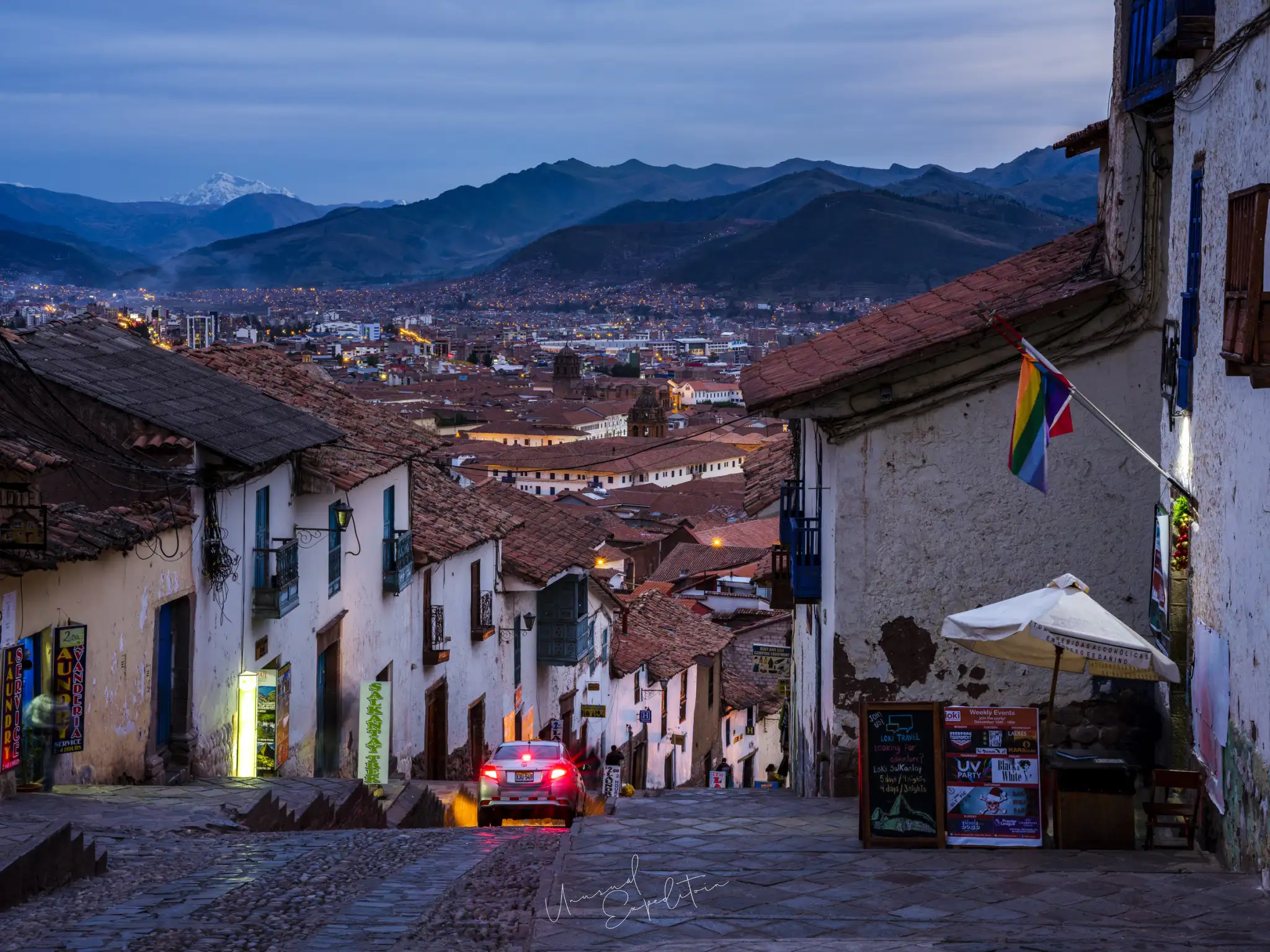
Almost every trip to Machu Picchu starts in Cusco, and the city deserves its own days with a camera. Cusco sits at about 3,400 metres according to the Peruvian government's traveller guide to the city, so the first days are slow by necessity, and slow suits it. The Plaza de Armas, with the cathedral on one side and arcades on the others, works in soft morning light and again at blue hour. Above it, the steep Cuesta de Santa Ana climbs to an arch that frames the whole city, and the lanes of San Blas and the market streets give you portraits and street scenes. Our Cusco photo spots guide covers the daytime city, and Cusco at night covers the lit square, the fountain and the arch after dark.
The Sacred Valley: Moray and the highland villages
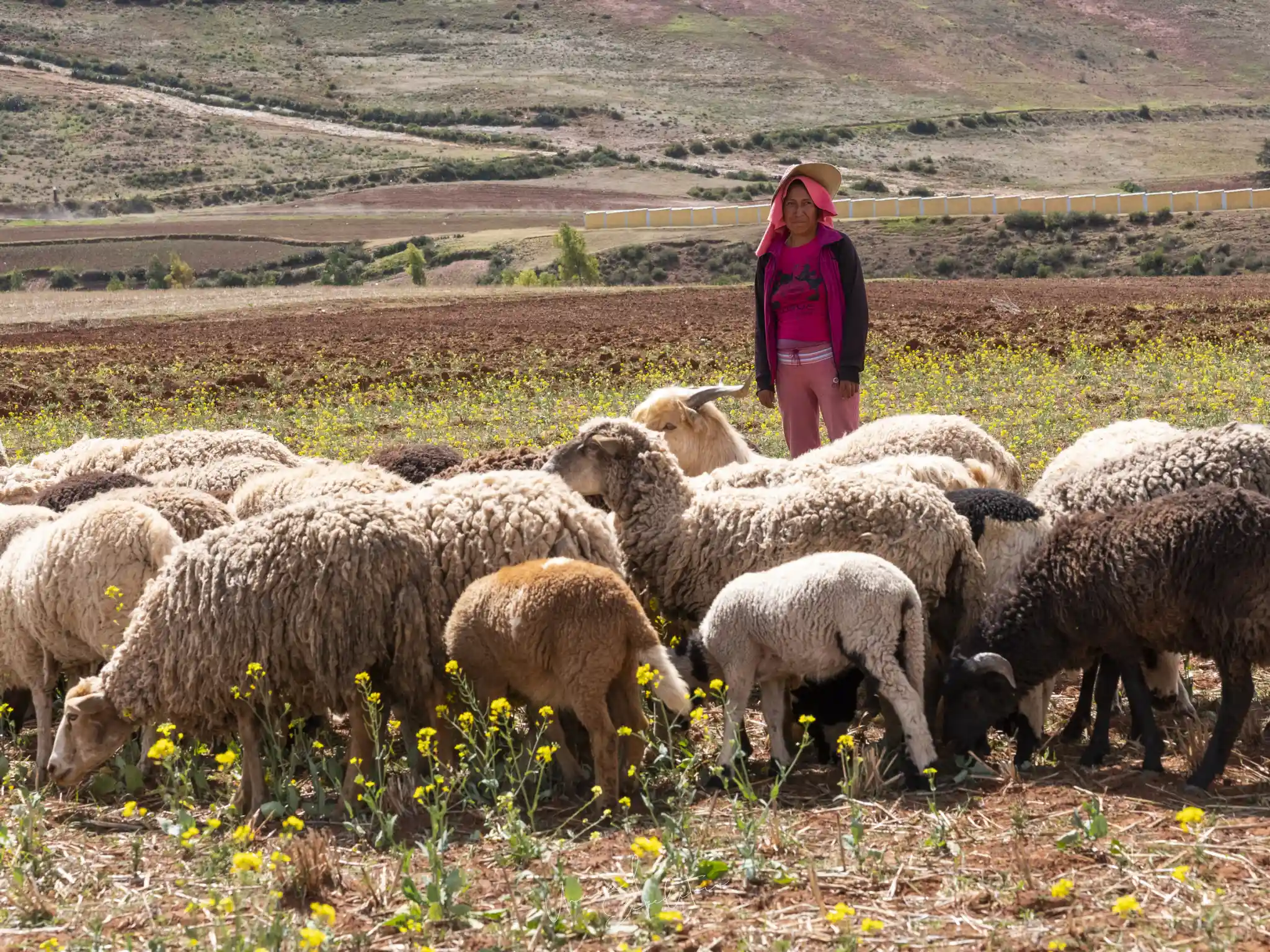
Between Cusco and Machu Picchu, the Sacred Valley of the Incas is the part of the trip people rush, and photographers should not. Moray, a set of circular Inca terraces stepped down into a natural bowl, is one of the most graphic places in Peru, best from the rim with a wide lens. Around Chinchero and the high plateau, fields of yellow wildflowers, flocks of sheep and the snow peaks of the Cordillera Urubamba make landscapes with people in them, and the weaving traditions of the area give you colour close up. Most of these sites are covered by Cusco's tourist ticket rather than sold one by one. Our Sacred Valley photos article shows what each looks like.
People of Cusco: portraits with permission
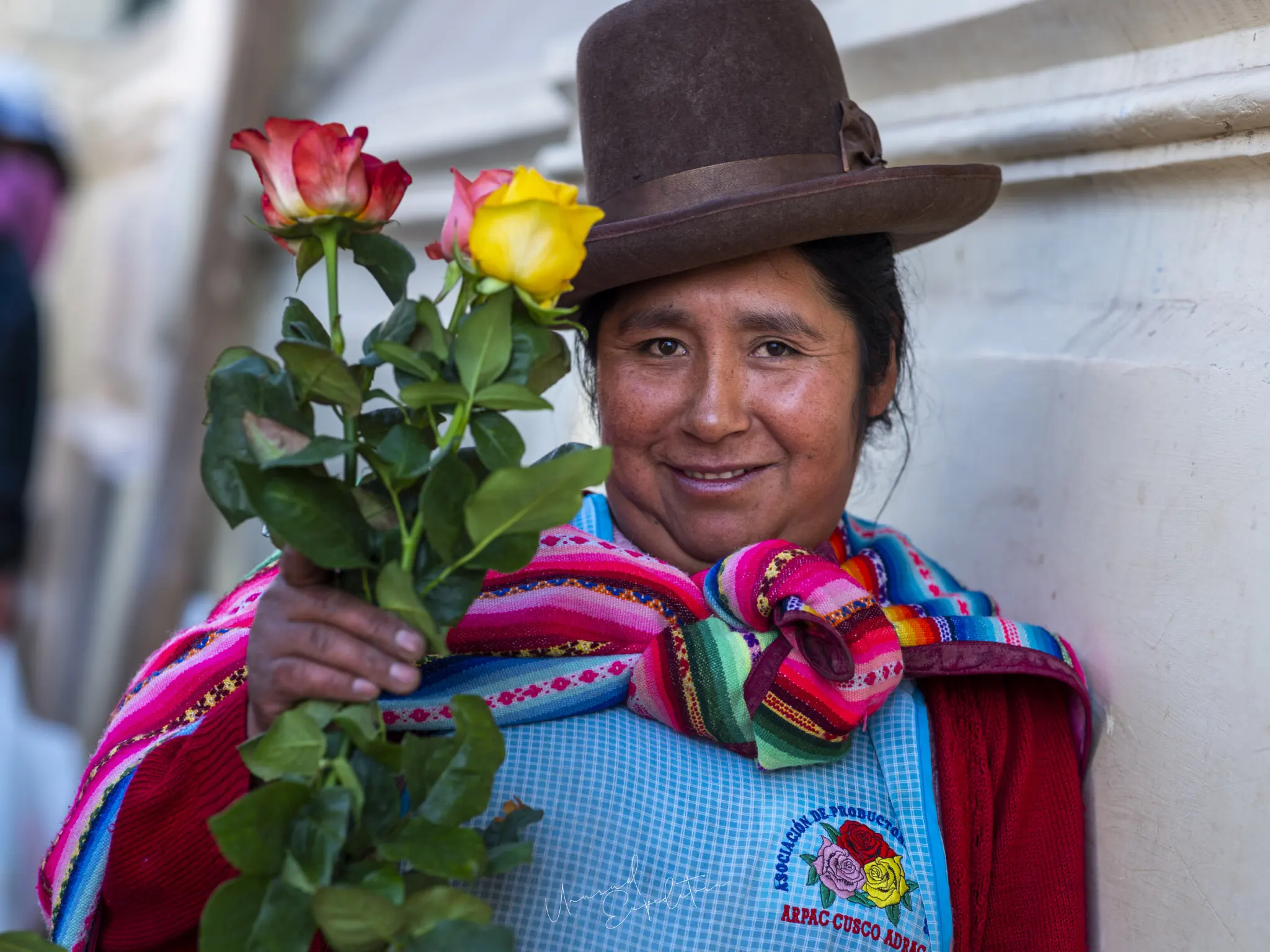
Cusco and the villages around it are among the best places in South America for portraits. Quechua women in the montera hats of their own communities, carrying bundles in woven cloth, sell flowers and herbs in the street and weave in the markets. Some pose for visitors in the main squares and expect a tip; others simply go about their day and would rather not be photographed. Ask first, accept a no, and buy something or offer a tip when someone gives you their time. A short conversation, even with a few words of Spanish, changes the picture more than any lens. Our Cusco people photos guide covers how we approach it and where the markets are.
Machu Picchu gives you one famous view and a hundred quieter ones. I tell people to take the postcard early, put it away, and then spend the rest of their time on the walls, the stairs and the cloud moving through.
Joseph Mak, tour leader, Unusual Expedition
Best time for a Machu Picchu photography trip
Machu Picchu has a drier season, roughly from April or May to October, and a rainy season, roughly from November to March, though rain can fall in any month. The dry months give clear views and the busiest circuits. The rainy months bring cloud that hides the citadel, then tears open and pours over the ridge, which is when the most dramatic frames happen. We photographed Machu Picchu in the wet season, and the cloud was the subject. The Inca Trail closes every February for maintenance, according to Peru's state news agency Andina, while the citadel itself stays open. Our best time to visit Machu Picchu guide sets out the seasons and the light by time of day.
| Place | Main subject | Best light | Lens |
|---|---|---|---|
| Machu Picchu citadel | Classic view, stone houses, llamas | Morning, and whenever cloud breaks | 24-70mm, 16-35mm |
| Cusco Plaza de Armas | Cathedral, arcades, fountain | Morning and blue hour | 16-35mm, 24-70mm |
| Santa Ana arch, Cusco | City framed by the arch | Late afternoon into dusk | 24-70mm |
| Moray | Circular terraces | Soft side light, broken cloud | 16-35mm |
| Highland villages and markets | Portraits, weaving, street life | Open shade, morning | 35mm, 85mm |
The citadel is the one place where you cannot choose your hour freely, so build the rest of the trip around your entry slots.
Is Machu Picchu worth it for photographers?
Machu Picchu is crowded, controlled and photographed by everyone, and it is still worth it. The setting is better than any picture of it, the stonework rewards close attention, and the weather makes each visit different. What you need is realistic expectations: you walk a set circuit, you share the classic view, and you cannot set up a tripod. Two entries on different circuits, or on different days, give you far more than one. Our is Machu Picchu worth it guide covers how to get there from Cusco, the train and bus, and what the visit is like on the ground.
Camera kit for Machu Picchu and Cusco
For Machu Picchu and Cusco, one body with a 24-70mm covers most of the trip. Add a 16-35mm for Moray, the plaza and the interiors, and a 70-200mm or a short prime such as an 85mm for portraits and for picking out Huayna Picchu above the cloud. A rain cover and a cloth matter more than another lens in the wet season. Because tripods are banned inside the citadel, practise steady handheld technique and use image stabilisation; in Cusco a small travel tripod is useful for blue hour where it does not block anyone.
Explore Machu Picchu in depth
- Machu Picchu photo spots: the classic view, the houses and the terraces
- Best time to visit Machu Picchu for photography
- Is Machu Picchu worth it, and how to get there from Cusco
- Cusco photo spots: the Plaza de Armas, the Santa Ana arch and the lanes
- Cusco at night: the lit square, the fountain and blue hour
- Sacred Valley photos: Moray, the high plain and the weavers
- Cusco people photos: markets, portraits and street life
Photograph Machu Picchu with us
We run Machu Picchu, Cusco and the Sacred Valley as a private trip on request, for individuals, families, couples and photographers who want their own pace. We arrange all the logistics, from tickets and circuits to transport, and the cost can be lower than a group tour because no tour leader travels with you; a photographer or photography coaching can be added at extra cost. Ask at least two months ahead if you can; last-minute trips can be arranged too. Read how private tours work, or see every Peru destination guide on our Peru photography tours page.
Machu Picchu photography tours
The next Machu Picchu departure is announced on the Machu Picchu photography tours page, with previous expeditions and all the planning guides.
Explore Machu Picchu in depth
- Cusco People Photos: Portraits, Markets and Street Life in the AndesPeru
- Sacred Valley Photos: Moray, the High Plain and the Weavers of ChincheroPeru
- Cusco at Night: the Plaza de Armas, the Pachacuti Fountain and the Santa Ana ArchPeru
- Cusco Photo Spots: the Plaza de Armas, the Santa Ana Arch and the Market StreetsPeru
- Is Machu Picchu Worth It? How to Get There from Cusco and What to ExpectPeru
- Machu Picchu Best Time to Visit: Dry Season, Rainy Season and the Best Time of DayPeru
- Machu Picchu Photo Spots: the Classic View, the Terraces and the Stone HousesPeru
Upcoming Photo Tours
- Egypt Photo Tour – EgyptEgypt 12 Dec 2026 To 20 Dec 2026
- Inner Mongolia Winter Owl Photo Tour – ChinaChina 01 Jan 2027 To 04 Jan 2027
- Inner Mongolia Winter Photo Tour – ChinaChina 05 Jan 2027 To 11 Jan 2027
- Mekong And Central Highland Vietnam Photo Tour - VietnamVietnam 16 Jan 2027 To 24 Jan 2027