
Popular Spots in Rio de Janeiro for Photos: Where to Stand and When
Popular spots in Rio de Janeiro for photos: Copacabana, Ipanema, the blocos, Santa Teresa, the Sambadrome, Sugar Loaf and Corcovado.

The popular spots in Rio de Janeiro for photographs are the Copacabana seafront with Sugar Loaf Mountain on the horizon, the south zone beaches of Ipanema and Leblon, the street blocos at carnival, the hillside lanes of Santa Teresa, the Sambadrome, the summit of Sugar Loaf, Christ the Redeemer on Corcovado and the tiled Selarón steps. Rio is a city of views and of people, and the best photo spots give you one in front of the other.
We photographed Rio de Janeiro at carnival, so our own frames lead with the beaches, the blocos and the Sambadrome; the classic viewpoints are described from standard public information. For the whole city start with our Rio de Janeiro photography tour guide, and for the beaches in more depth see Rio de Janeiro beach photos.
Popular spots in Rio de Janeiro at a glance
Rio sits between mountains and sea, which means two things for a photographer: the light changes quickly as cloud forms on the peaks, and every beach faces a different way. The table gives a starting point for each spot.
| Spot | Best light | Lens | Our frames |
|---|---|---|---|
| Copacabana seafront | Morning | 24-70mm | Yes |
| Ipanema and Leblon beaches | Late afternoon, sunset | 24-70mm, 70-200mm | Yes |
| Street blocos | Any, best in open shade | 24-70mm | Yes |
| Santa Teresa | Morning and late afternoon | 24-70mm | Yes |
| Sambadrome | Night, stadium lights | 70-200mm, 24-70mm | Yes |
| Sugar Loaf summit | Sunset and blue hour | 24-70mm | No |
| Christ the Redeemer | Early, before cloud | 16-35mm | No |
| Selarón steps | Early morning | 24-70mm | No |
Build the day around the beaches early and late, and keep the middle hours for the shaded streets.
Copacabana seafront and the view to Sugar Loaf
Copacabana's long curve of sand and its wave-patterned promenade run towards Leme, and from much of the seafront Sugar Loaf Mountain rises on the horizon beyond the hills. That makes the promenade itself a photo spot: put people in the foreground and the mountain behind. At carnival the seafront fills with blocos, and we photographed a gospel bloco here, hundreds of members in matching shirts with drums, tambourines and flags. Morning gives the clearest air and the softest light on faces. A 24-70mm at the long end pulls the mountain closer behind the crowd.
Photos of Rio de Janeiro beaches: Ipanema and Leblon
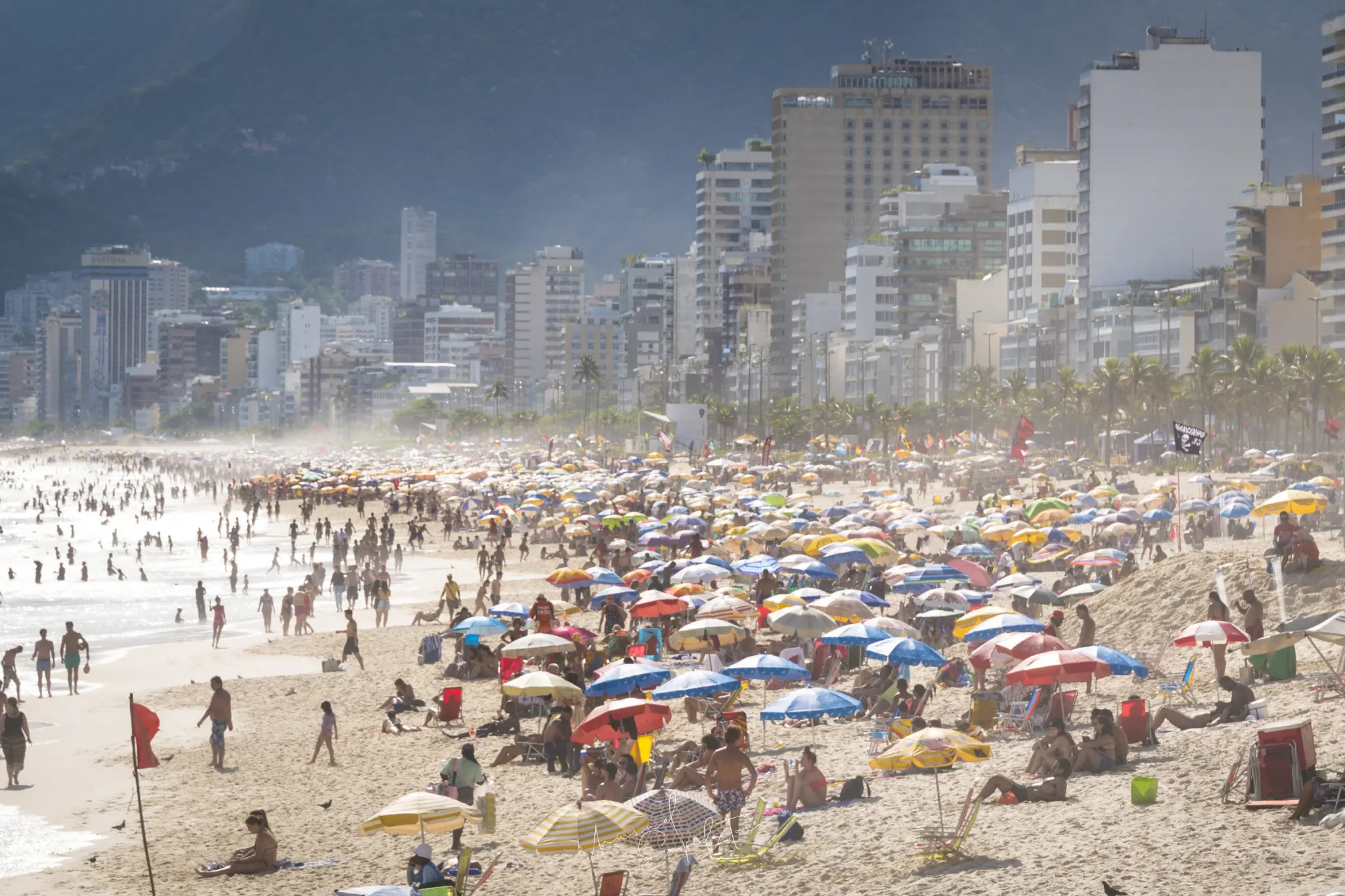
Ipanema and Leblon share one long beach, divided into sections by the lifeguard posts, with the twin peaks of Dois Irmãos at the western end. The classic beach picture is a crowded afternoon: umbrellas in every colour, vendors, footballers and swimmers below the apartment towers, with the mountains half in haze. In the late afternoon the sun drops towards the western end and the surf turns to backlit spray, and on clear evenings the crowd on the Arpoador rocks applauds the sunset. A 70-200mm compresses the umbrellas into one dense pattern. Keep valuables to a minimum: the UK FCDO lists the beaches among the places where thefts are common.
The street blocos at carnival
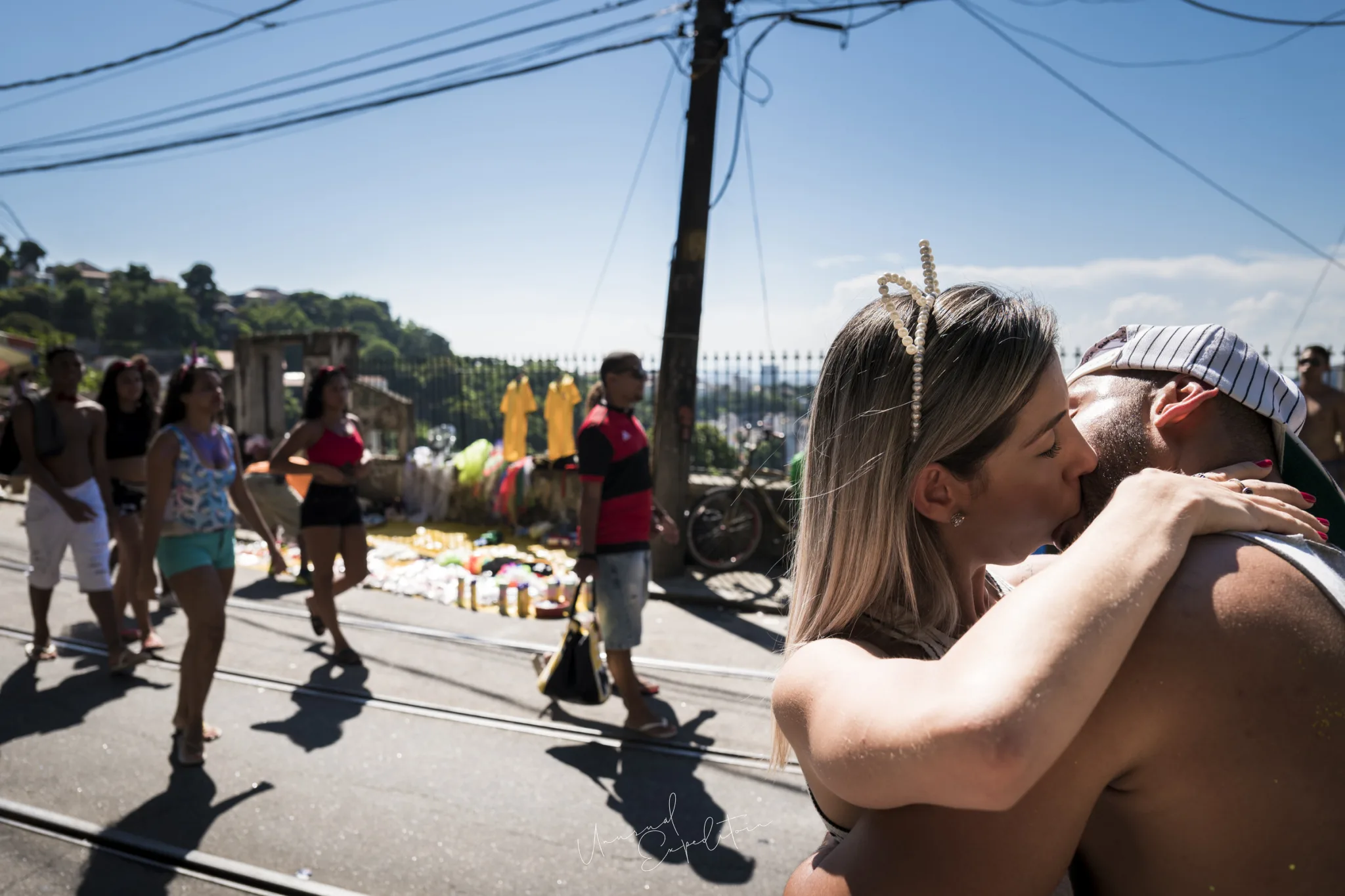
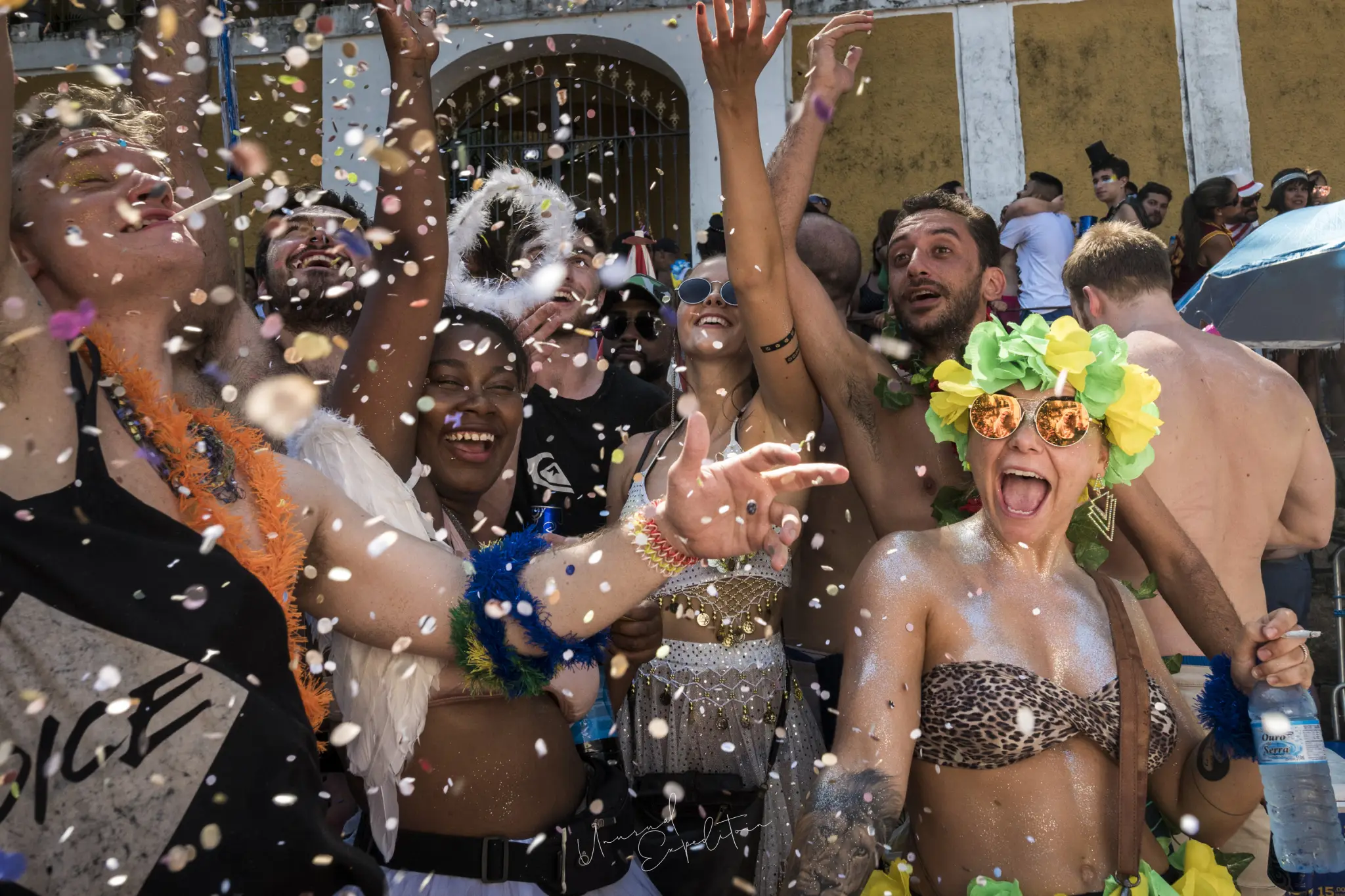
The blocos are Rio's street parties at carnival, from a few dozen neighbours with a brass band to crowds that fill an avenue; Agência Brasil reported that Riotur authorised more than 460 bloco parades for the 2026 carnival. For a photographer they are the most generous spot in the city, because everyone is in costume and most people are glad to be photographed. Work at the edges of the crowd, where you can move, and look for moments rather than costumes: a kiss, a laugh, a dance. Open shade between buildings is kinder than full sun. Carry one camera and one lens, a 24-70mm, and nothing you would mind losing. More in our Rio carnival blocos guide.
Santa Teresa
Santa Teresa is the hillside neighbourhood above the city centre, reached by the old tram that climbs from the centre over the Carioca Aqueduct. Its lanes are steep and winding, with old mansions, murals and views down over the city. At carnival its blocos are among the most colourful in Rio. Morning and late afternoon light runs along the lanes; midday is flat. A 24-70mm is all you need, and the FCDO names Santa Teresa among the areas where thefts happen, so keep the camera close. Read our Santa Teresa guide for the tram and the street art.
The Sambadrome
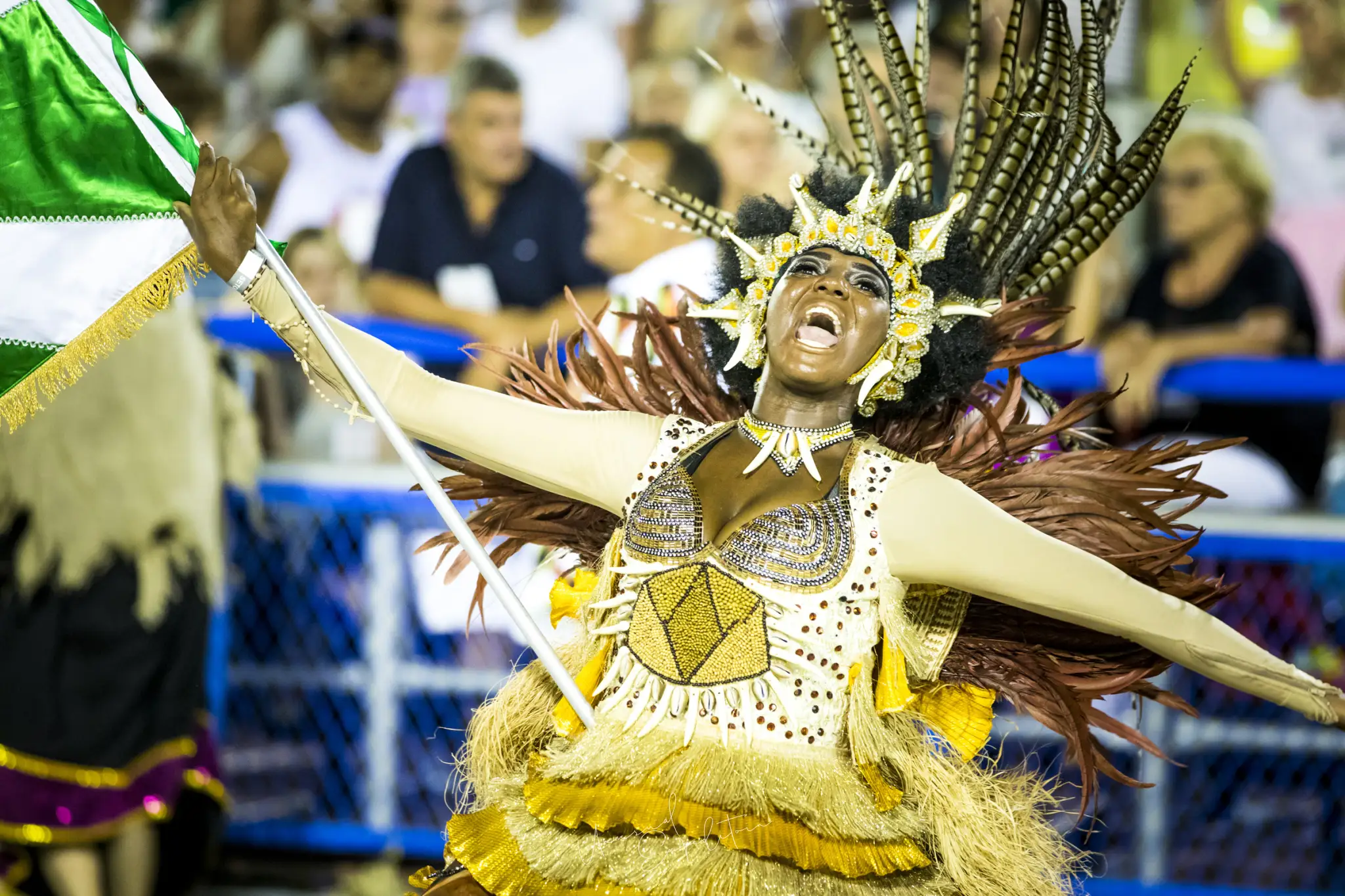
The Sambadrome, the Passarela Professor Darcy Ribeiro designed by Oscar Niemeyer and opened in 1984, is the avenue where the samba schools parade at carnival, between grandstands on both sides. The parades run through the night under stadium lights, so this is the one spot where you need a fast lens and a high ISO rather than good weather. A 70-200mm from the lower grandstand picks out dancers and float figures; a 24-70mm takes in the scale. See the Sambadrome parade for the parade itself.
Sugar Loaf, Christ the Redeemer and the Selarón steps
Three of the most famous viewpoints in Rio are not in our own frames yet, so these notes are standard public information. Sugar Loaf Mountain is reached by two cable cars, with a stop on Morro da Urca, and from the top you look over Copacabana, the bay and the city; stay for sunset and blue hour, when the lights come on along the beaches. Christ the Redeemer stands on Corcovado above the city, completed in 1931 and named one of the New Seven Wonders of the World in 2007; go on the first train or van of the day, before the crowds and before cloud gathers on the peak, and use a 16-35mm for the statue and the view together. The Selarón steps, which climb from Lapa towards Santa Teresa, were covered in tiles from around the world by the artist Jorge Selarón; early morning is the only time they are close to empty.
"In Rio the mountains are always there. What changes is the crowd in front of them, so give each spot time and let the people decide the picture."
Joseph Mak, tour leader, Unusual Expedition
Safety and courtesy at Rio's photo spots
The UK FCDO's advice for Brazil is plain: pickpocketing is common, thefts are particularly common on beaches, and visitors should avoid using a phone openly in the street and avoid favelas, including favela tours. Carry one body and one lens, keep the strap on, and leave the rest at the hotel. Ask before photographing people up close, outside carnival especially.
Photograph Rio de Janeiro with us
We run Rio de Janeiro as a private trip on request, with carnival or without it; read how it works on our private tours page, and see the Brazil photography tours page for every Brazil destination guide.
Rio de Janeiro photography tours
The next Rio de Janeiro departure is announced on the Rio de Janeiro photography tours page, with previous expeditions and all the planning guides.
Explore Rio de Janeiro in depth
- Rio de Janeiro Photography Tour Guide: Carnival, Blocos and BeachesBrazil
- Santa Teresa, Rio de Janeiro: Street Art, Tram Tracks and BlocosBrazil
- Sambadrome Parade: How to Photograph Rio Carnival's Samba SchoolsBrazil
- Rio de Janeiro Beach Photos: Copacabana, Ipanema and the SurfBrazil
- Carnival in Rio Travel Guide: Flights, Visa, Tickets and SafetyBrazil
- Rio Carnival Photos: Pictures from the Sambadrome and the StreetsBrazil
- Rio Carnival Blocos: Photographing Rio's Street PartiesBrazil
- Best Time to Visit Rio de Janeiro: Carnival, Seasons and LightBrazil
Upcoming Photo Tours
- Egypt Photo Tour – EgyptEgypt 12 Dec 2026 To 20 Dec 2026
- Inner Mongolia Winter Owl Photo Tour – ChinaChina 01 Jan 2027 To 04 Jan 2027
- Inner Mongolia Winter Photo Tour – ChinaChina 05 Jan 2027 To 11 Jan 2027
- Mekong And Central Highland Vietnam Photo Tour - VietnamVietnam 16 Jan 2027 To 24 Jan 2027