
Best Photo Spots on the Snaefellsnes Peninsula: Where to Stand and When
Snaefellsnes peninsula photo spots: Kirkjufell, Budir church, Arnarstapi, Londrangar, Svortuloft. Where to stand, light, lens, access.
The best photo spots on the snaefellsnes peninsula are Kirkjufell above its waterfall, Budir black church on the lava field, the arch and cliffs at Arnarstapi, the Londrangar sea stacks, Svortuloft lighthouse at the western tip, and the working harbours of the north coast. Most sit on one loop road around the peninsula, yet each wants its own light. Here is where to stand at each, which part of the day suits it, the lens we use and the access rules.
This destination guide belongs to our Snaefellsnes photography tour guide, which covers seasons and planning. The pictures are our own, from our autumn and winter trips to the peninsula, so every frame here was shot from a spot we describe.
Kirkjufell and the waterfalls in Snaefellsnes peninsula
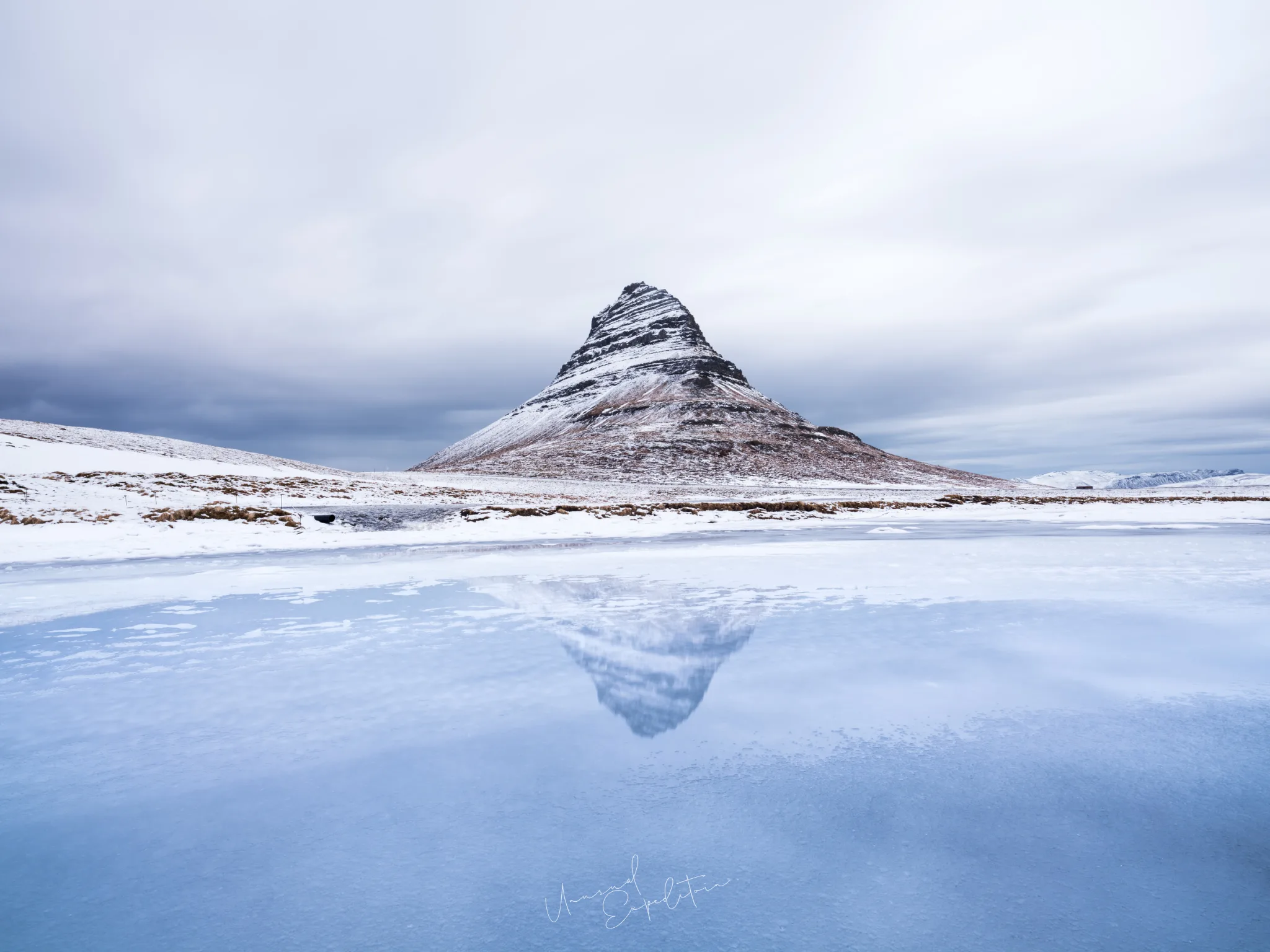
Kirkjufell, 463 metres high, stands across the bay from Grundarfjordur, and the classic picture puts it behind the small cascades of Kirkjufellsfoss. That view, from the path above the falls, faces roughly west, so the mountain is front-lit by early light and backlit, often with a coloured sky, late in the day. It is the most crowded tripod line on the peninsula. Walk past it: the lagoon and the flats below the mountain give reflections and far fewer people, and in winter meltwater on the ice can double the peak, as in the frame below.
A 16-35mm fits the falls and the mountain together; a 24-70mm suits the reflection views. Parking at the falls is paid through an app on arrival. West Iceland's tourism office warns that the mountain is steep and slippery, and it is closed to climbers for much of the year; people have died on it, so photograph it from below. Our Kirkjufell photography guide has more viewpoints.
Budir black church on the lava field
Budakirkja, the black church at Budir, is a small timber church completed in 1848 and rebuilt close to that form in 1987, painted black with pitch against the weather, according to Perlan. It stands alone on the Budahraun lava field with mountains behind and the sea in front, which is why it photographs so well. The church is a working parish church with a historic churchyard, so stay on the paths and outside the wall.
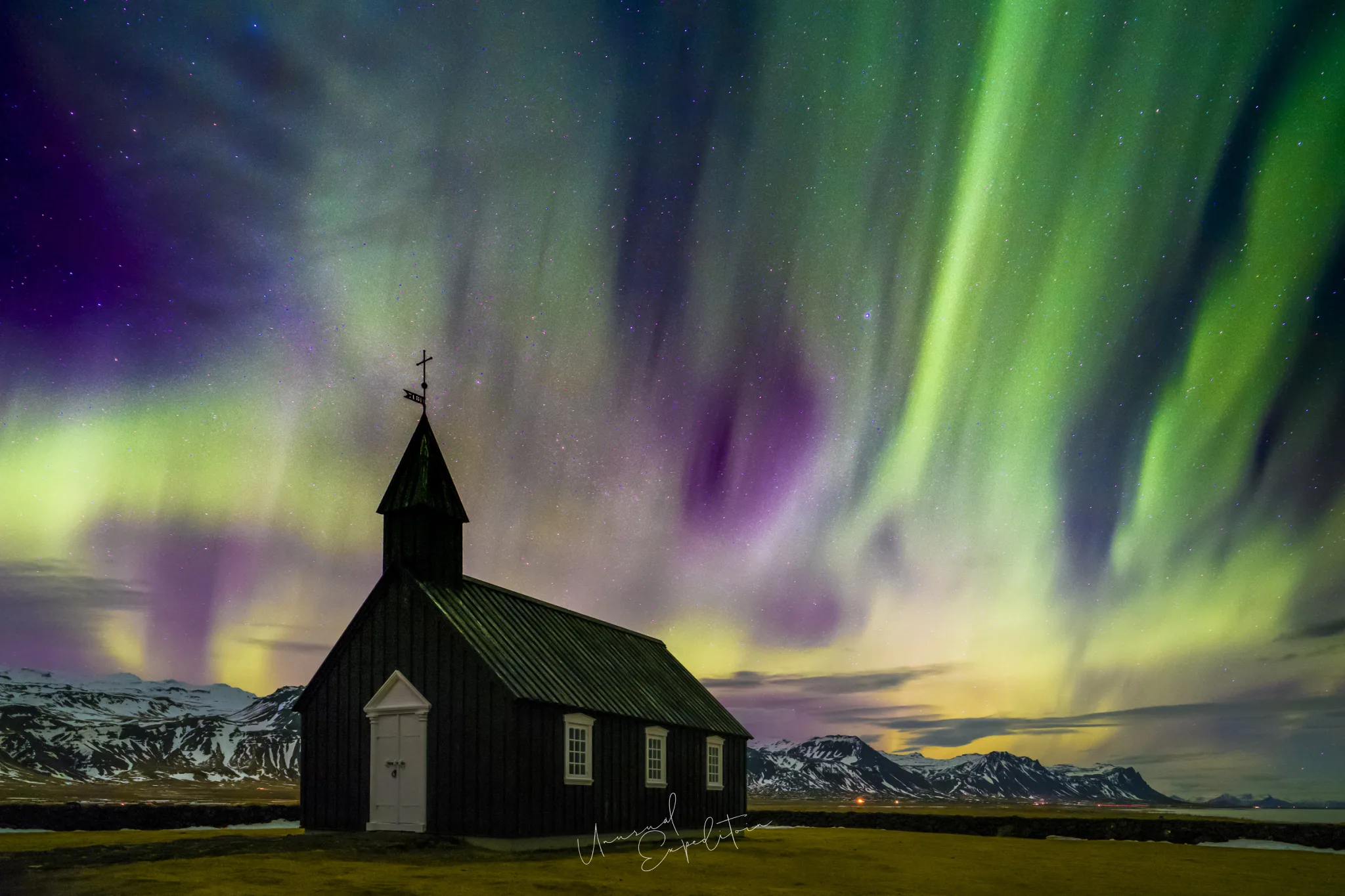
Overcast days suit the black wood, and snow turns it into a graphic shape. At night the church becomes a silhouette under the stars or the aurora; walk around the wall until the sky you want sits behind the bell tower, and keep the church low in the frame. A 16-35mm is the usual lens, with a fast aperture for night work. See our Budir black church guide for the history and the night set-up.
Arnarstapi and the Gatklettur arch
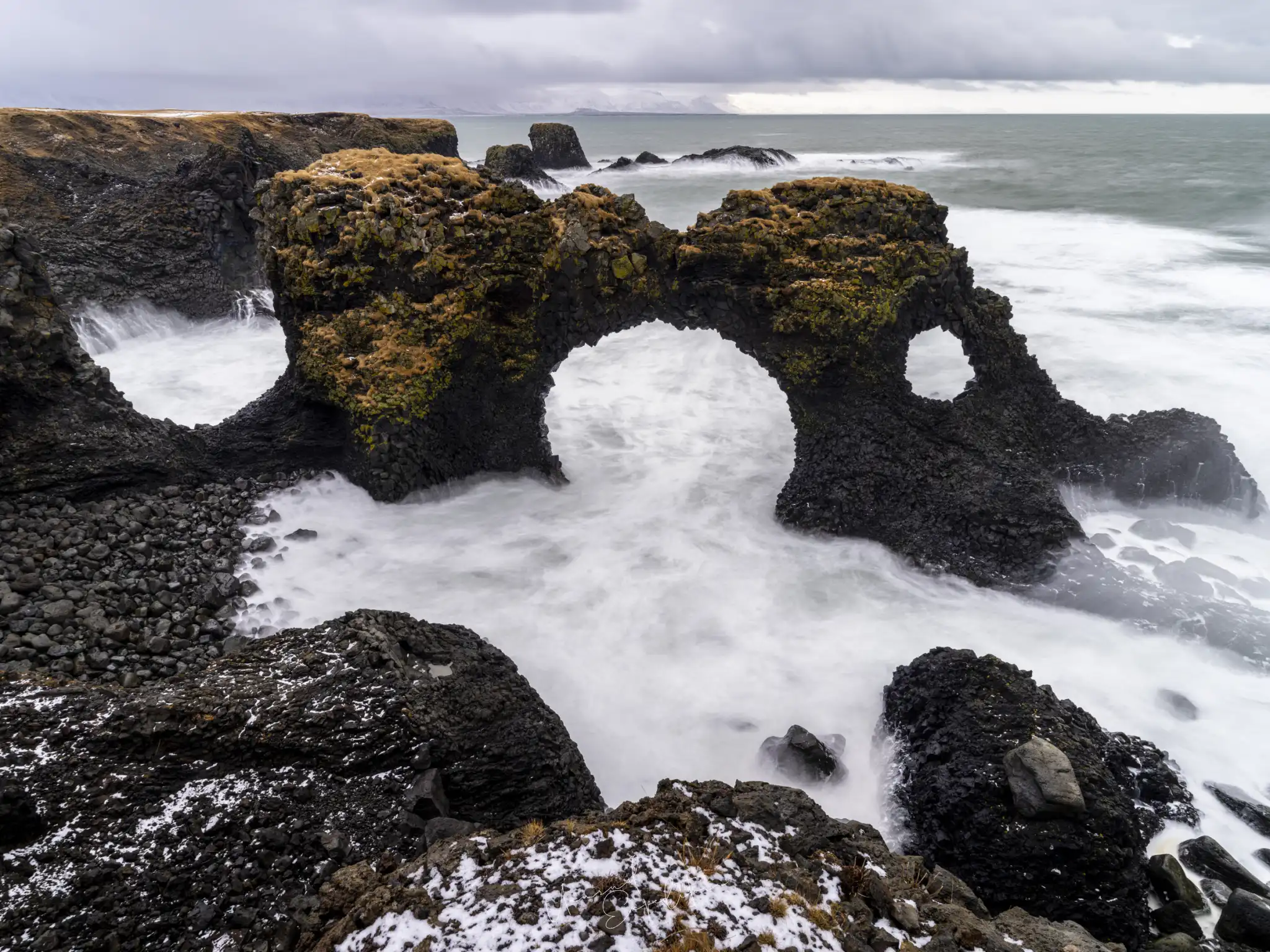
Arnarstapi is a small fishing hamlet on the south coast, set on basalt cliffs full of caves, pillars and arches. Gatklettur, the stone arch just off the cliff path, is the picture most people come for: frame the sea through the opening and wait for a wave to fill it. A coastal path runs along the cliff edge between Arnarstapi and Hellnar, according to Guide to Iceland, and every bay along it has columns and nesting ledges in season.
This coast faces the open Atlantic, so a grey, windy day with big surf is often better than calm sun. Use a 24-70mm for the arch and a 16-35mm close to the columns, and try a shutter speed slow enough to blur the water without losing the shape of the wave. The cliff edges are unfenced and undercut; keep well back, especially on snow.
Londrangar and Malarrif
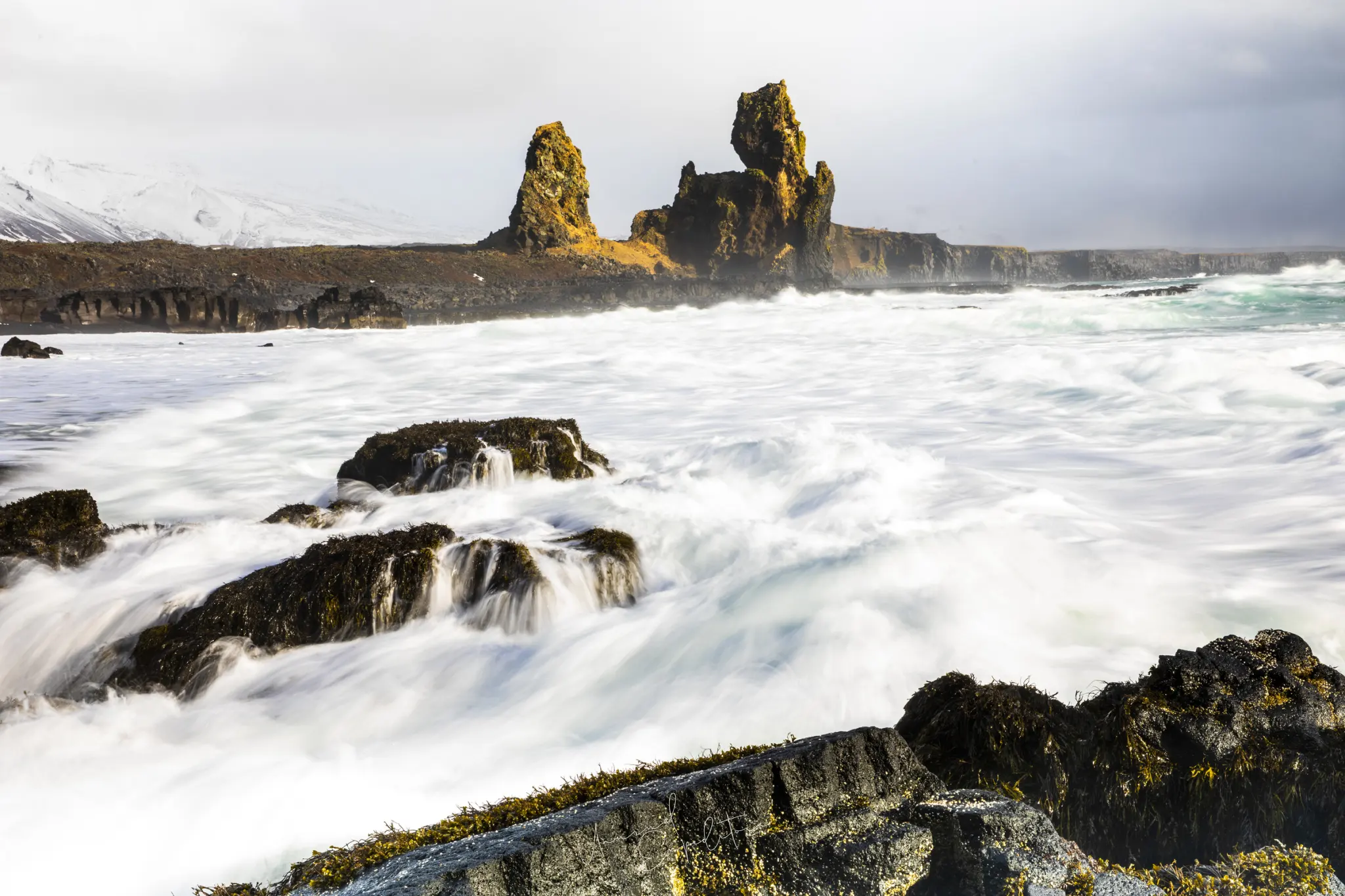
Londrangar are two basalt sea stacks, about 75 and 61 metres tall, volcanic plugs left standing when the softer rock around them wore away, inside Snaefellsjokull National Park (Guide to Iceland). A short walk from the Malarrif lighthouse and the park visitor centre leads to the cliff-top view, which shows both stacks against the coast. For a lower, wilder picture, go down towards the shore rocks and use the surf as the foreground.
A 24-70mm frames both stacks from the cliff; a 70-200mm pulls them in against the mountains. Long exposures on a stormy day turn the water to mist, which is the scene we came away with in winter. Our Londrangar and Arnarstapi cliffs guide goes into both places in detail.
Svortuloft lighthouse and Djupalonssandur
At the western tip of the peninsula, the bright orange Svortuloft lighthouse has stood on black lava cliffs since 1931; it is not open to visitors, but the cliffs around it give strong views of the tower against a blue sea. Further south, Djupalonssandur is a black pebble beach inside the national park, shaped by wind and waves. We have no frame of Djupalonssandur, so we describe it only in general terms: it is a quiet stop for close-up pictures of the smooth dark stones and the surf.
Snaefellsnes photo spots at a glance
| Spot | Coast | Best light | Main lens |
|---|---|---|---|
| Kirkjufell and Kirkjufellsfoss | North | Early light, late-day backlight, aurora | 16-35mm, 24-70mm |
| Budir black church | South | Overcast, snow, night sky | 16-35mm |
| Arnarstapi and Gatklettur | South | Storm and surf | 24-70mm |
| Londrangar and Malarrif | South-west | Overcast, long exposure | 24-70mm, 70-200mm |
| Svortuloft lighthouse | West tip | Clear day, blue sea | 16-35mm, 24-70mm |
When cloud hides Kirkjufell, the south coast spots are usually the better use of the day.
Snaefellsnes is small enough that you can follow the weather. If the north side is in cloud, drive to the south coast and photograph the surf, then come back for Kirkjufell when the sky opens.
Joseph Mak, tour leader, Unusual Expedition
Harbours and fish racks on the north coast
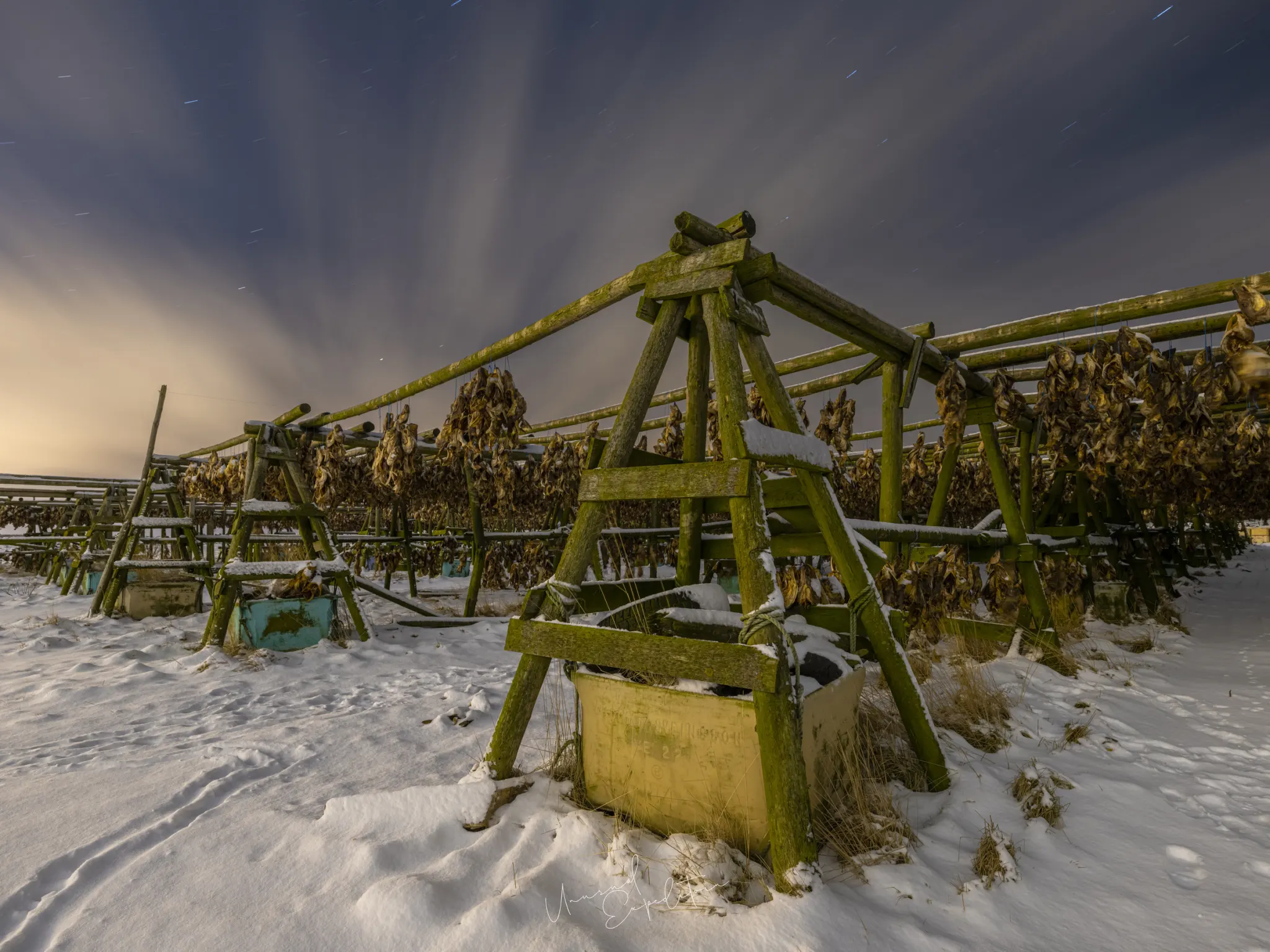
Not every good picture here is at a named stop. The fishing towns of the north coast have harbours, old boats hauled out on the snow and wooden racks where fish are still hung to dry, and the card picture for this guide is one of those racks under a night sky. Ask before you walk onto a working quay, and keep out of the way of the boats. For a wider list of sights, see what to see in Snaefellsnes peninsula.
Crowds, access and safety
Kirkjufellsfoss and Budir fill up in the middle of the day with day tours from Reykjavik; early and late, and in winter, they are quieter. Snaefellsjokull National Park covers the western end, including Londrangar and Djupalonssandur: keep to marked paths and leave stones where they lie. Road conditions change quickly in winter, so read road.is and safetravel.is each morning. Snaefellsjokull itself, the glacier-capped volcano of Jules Verne's novel, is in view from much of the loop on a clear day and makes a backdrop for several of these spots.
Photograph Snaefellsnes with us
Our Iceland Midnight Sun Photo Tour includes Kirkjufell under the midnight sun, Budir, Arnarstapi and Londrangar; the current departure is on our Iceland photography tours page. For the aurora at Kirkjufell or the church in snow, we can plan autumn and winter trips as private tours.
Ask us about photographing Snaefellsnes
Join the Snaefellsnes photography tour
Iceland Midnight Sun Photo Tour departs 05 Jul 2027 To 18 Jul 2027, led by Joseph Mak. Small group, photography first. All Snaefellsnes photography tours.
Explore Snaefellsnes in depth
- Snaefellsnes Peninsula Photography Tour Guide: Kirkjufell, Budir, Londrangar and the AuroraIceland
- What to See in Snaefellsnes Peninsula: Photo Spots from Kirkjufell to BudirIceland
- Snaefellsnes Peninsula in Winter: Snow, Aurora and the Best Time to VisitIceland
- Snaefellsnes Day Trip from Reykjavik: Is One Day Enough for Photographers?Iceland
- Londrangar Sea Stacks and Arnarstapi Cliffs: Viewpoints, Gatklettur and the Hellnar PathIceland
- Kirkjufell Photography: Viewpoints, Light, Parking and the WaterfallIceland
- Kirkjufell Northern Lights: When to Go, Where to Stand and SettingsIceland
- Budir Black Church: History, Angles and the Aurora at BudakirkjaIceland
Upcoming Photo Tours
- Egypt Photo Tour – EgyptEgypt 12 Dec 2026 To 20 Dec 2026
- Inner Mongolia Winter Owl Photo Tour – ChinaChina 01 Jan 2027 To 04 Jan 2027
- Inner Mongolia Winter Photo Tour – ChinaChina 05 Jan 2027 To 11 Jan 2027
- Mekong And Central Highland Vietnam Photo Tour - VietnamVietnam 16 Jan 2027 To 24 Jan 2027