
Weather in South Iceland by Season: Winter Snow, Summer Light and Autumn in Skaftafell
South Iceland weather for photographers: winter snow and aurora, summer midnight sun, autumn in Skaftafell, and what each season risks.
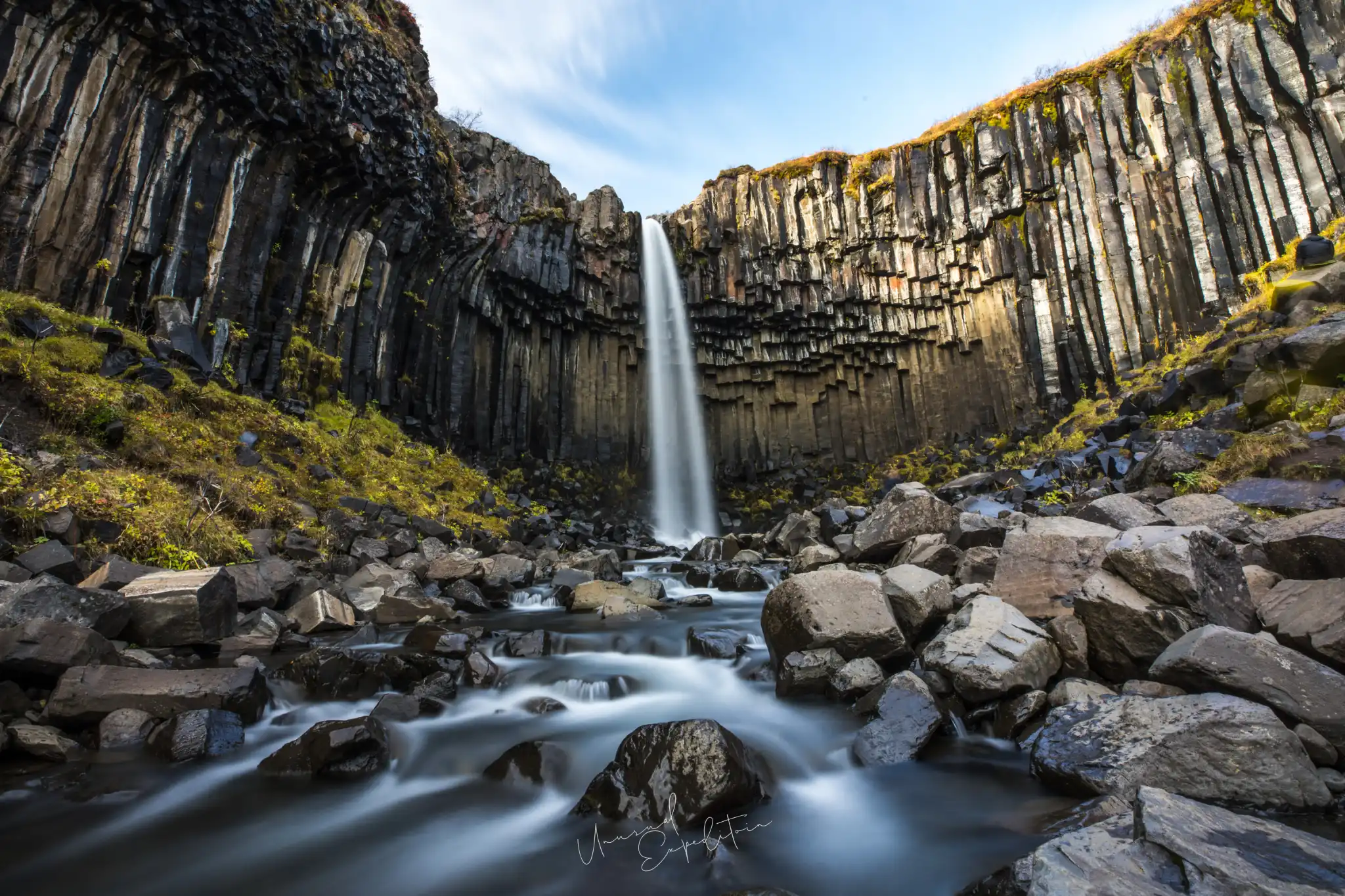
South Iceland weather changes the photographs more than any other factor: summer brings green slopes and the midnight sun, autumn brings yellow birch and the first dark nights, and winter brings snow on the waterfalls, a low sun all day and the chance of aurora, along with storms that can close the ring road. There is no bad season for the south coast and the Golden Circle, only different pictures and different risks.
This guide sits under our South Iceland photography tour guide; the country-wide month by month view is in the best time to photograph Iceland guide. Our own South Iceland frames span one autumn and several winters, so the cold half of the year is where our notes are thickest.
South Iceland weather through the year
| Season | Light | What changes on the coast | Main risk |
|---|---|---|---|
| Winter, roughly November to February | Short days, low sun all day, dark nights | Snow and ice on the falls, aurora on clear nights | Storms, road closures, icy paths |
| Late winter and spring, March to May | Days lengthen fast, nights still dark early on | Snow lingers on the cliffs, aurora into early spring | Wind, changeable weather |
| Summer, June to August | Midnight sun, soft light through the night | Green slopes, puffins on the cliffs, busy car parks | Crowds, no darkness for aurora |
| Autumn, September and October | Golden evenings, nights darken again | Yellow birch, red moss, first aurora | Rain and early storms |
Read the table by subject: if you want snow and aurora go cold, if you want light that never ends go in midsummer.
Weather in South Iceland in winter
Winter weather in South Iceland is milder than the latitude suggests, because the coast faces the North Atlantic, but it is wet, windy and fast-changing. Snow comes and goes, rain can follow it the same day, and a deep low can bring gales strong enough to close the ring road along the sand plains. Daylight is short: Perlan notes four or five hours in Reykjavik at midwinter, and the sun never climbs far above the horizon. For photographers that means sunrise light for much of the morning and soft light all day. Check road.is and the Icelandic Met Office forecast on vedur.is every morning, and keep a spare day in any winter plan.
Iceland south coast winter: snow on the waterfalls
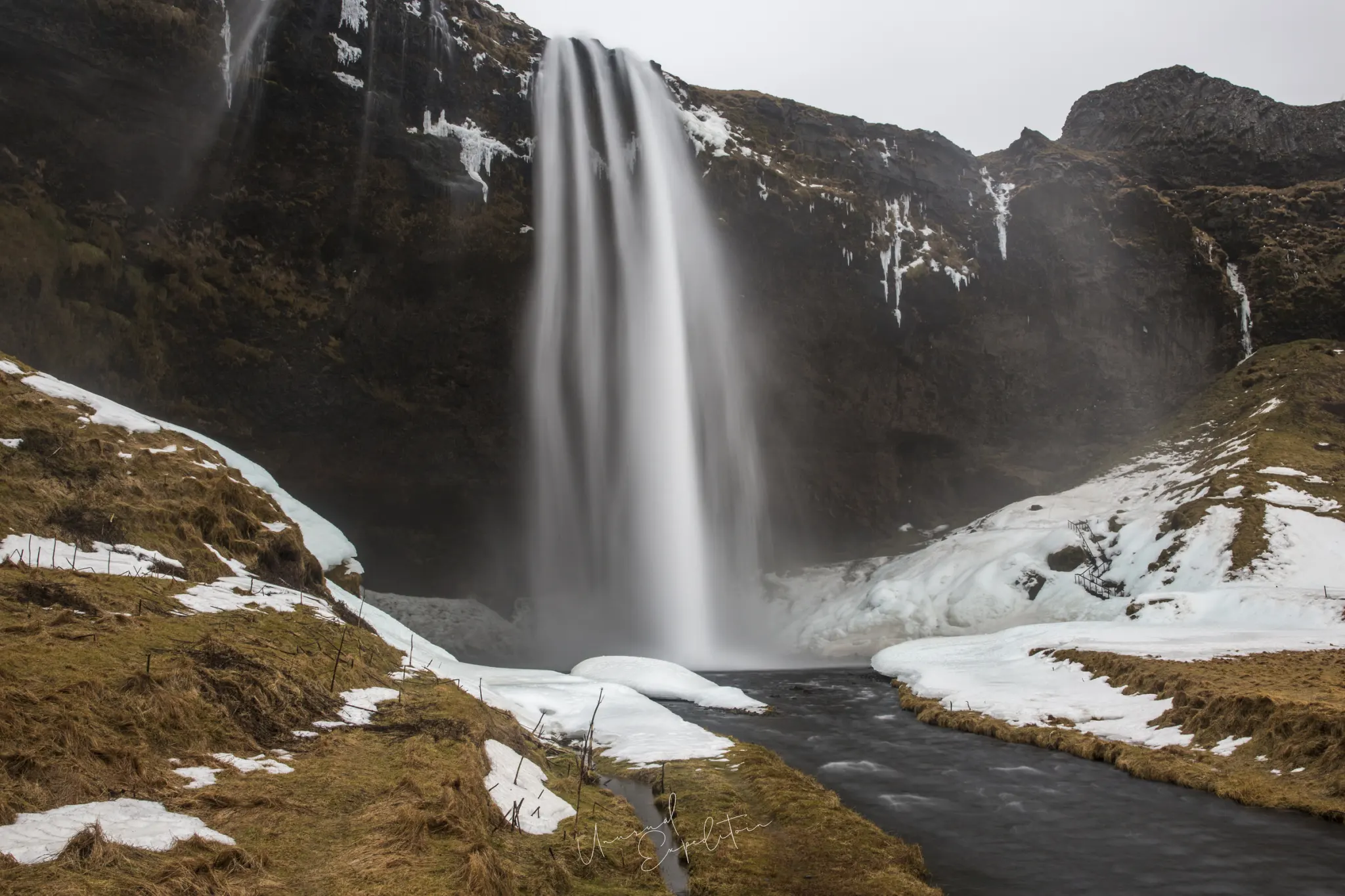
On the Iceland south coast in winter, the waterfalls are the subjects that change most. Seljalandsfoss gathers ice around its pool and snow on the ledges, Skogafoss builds up frozen spray on its banks, and Gullfoss on the Golden Circle can freeze into blue ledges. The walk behind Seljalandsfoss is often closed in freezing weather, and paths at every stop can be sheet ice, so microspikes are the most useful thing in the bag. Our Seljalandsfoss waterfall guide covers the winter view in detail.
Can you see northern lights in Vik, Iceland?
You can see the northern lights in Vik and anywhere along the south coast from roughly September to mid April, whenever the sky is dark and clear and the aurora is active. The village is small, so a short way out of it, away from the street lights, you have dark beaches and fields with the cliffs and stacks as foreground. Cloud is the real obstacle: the Icelandic Met Office aurora forecast combines activity with cloud cover, and we use it to decide where along the coast to wait. Summer nights are too bright for aurora anywhere in Iceland.
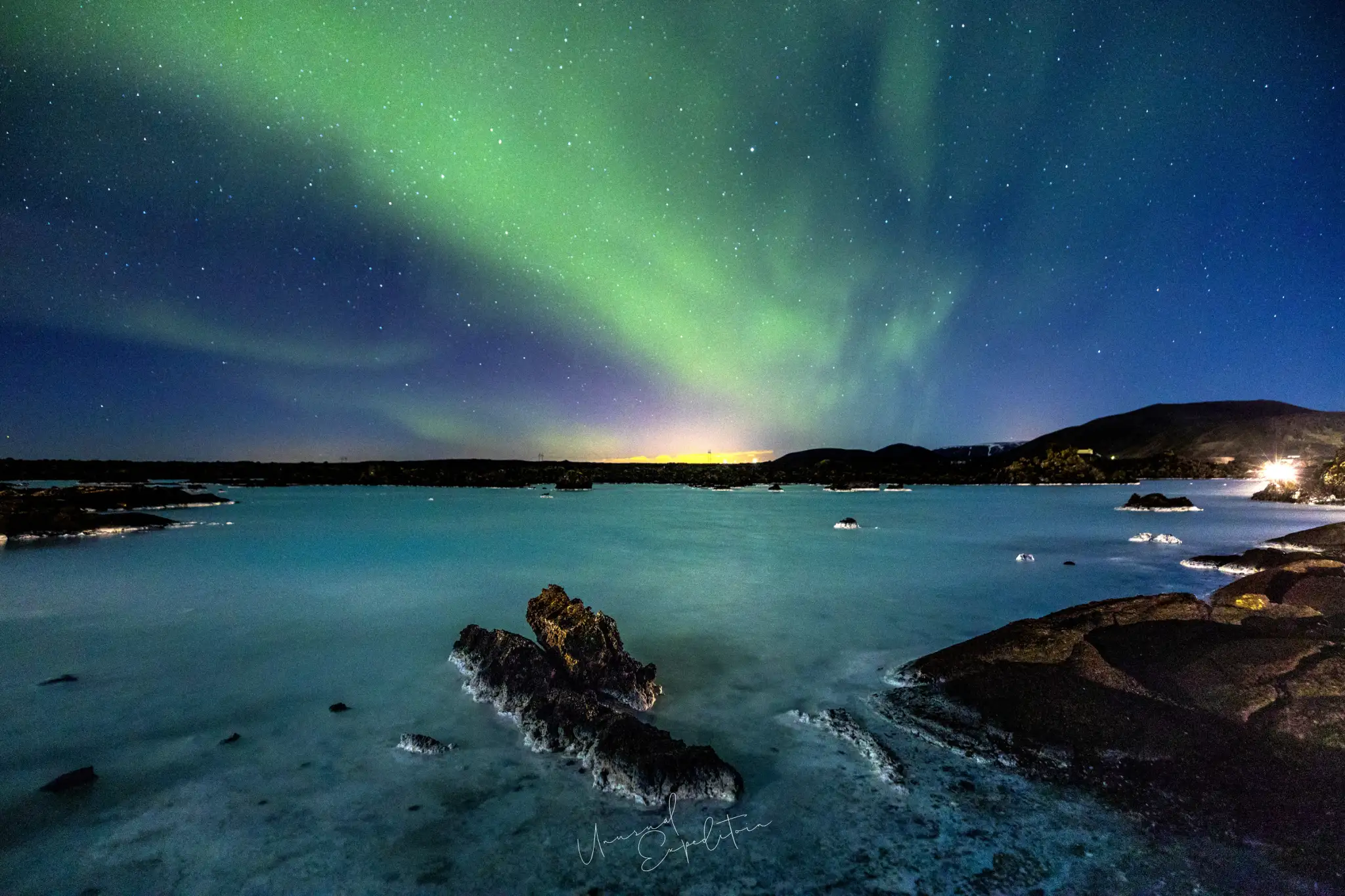
The frame above is from the Reykjanes peninsula, close to Keflavik airport, where the milky blue geothermal water in the lava gives the aurora a foreground on a first or last night. Volcanic activity there has come and gone in recent years, so check vedur.is and Safetravel.is before you go.
Skaftafell National Park in autumn
Autumn is the season we would pick for Skaftafell, the part of Vatnajokull National Park at the eastern end of South Iceland. In September and October the birch on the slopes turns yellow and orange, the moss reddens, and the walk uphill to Svartifoss passes smaller falls in gorges full of colour. Svartifoss itself, falling about 20 metres over dark basalt columns, looks best in soft light, when the columns keep their detail and the water does not burn out. The park's own website has the current trail conditions.
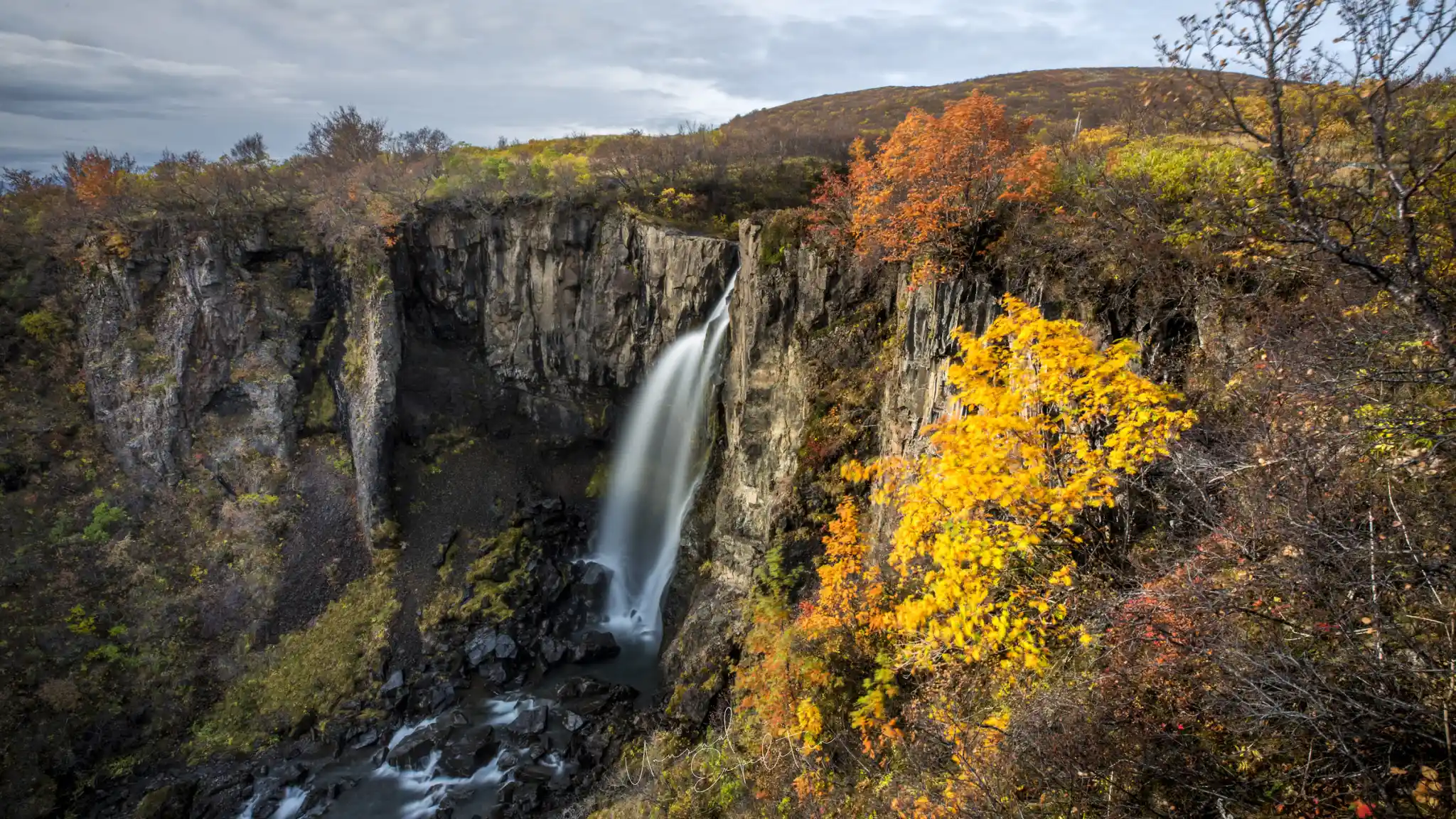
In Skaftafell in autumn I slow everyone down on the way up to Svartifoss. The famous waterfall is at the top, but the colour is in the gorges along the path, and it only lasts a few weeks.
Joseph Mak, tour leader, Unusual Expedition
Iceland in summer or winter?
Summer in South Iceland is about light and access: the midnight sun gives hours of soft, low light late into the night, roads and paths are open, and the puffins are back on the cliffs. The price is crowds by day and no aurora. Winter is about atmosphere: snow, ice, low sun and dark skies, with fewer people but real weather risk. Dyrholaey has its own rhythm, with access restricted for nesting birds in late spring and early summer, so check the official notice before you plan a dawn there. The sunrise and sunset in South Iceland guide covers how the light moves through the year, and the Reynisfjara black sand beach guide explains why winter storms matter on that beach.
What to pack for South Iceland weather
Whatever the season, South Iceland weather calls for a waterproof shell and trousers, warm layers, waterproof boots and gloves you can work a camera in. For the camera: a rain cover, several lens cloths for the spray at the waterfalls, spare batteries kept warm in winter, and a heavy tripod or none at all in the wind. Microspikes in winter, a headlamp from autumn to spring.
Choose your season with us
For the long light of summer, our Iceland Midnight Sun Photo Tour covers the south coast; dates and the current rate are on our Iceland photography tours page. For autumn colour in Skaftafell or snow and aurora in winter, we arrange the trip as a private tour, planned around your dates.
Ask us about South Iceland by season
Join the South Iceland photography tour
Iceland Midnight Sun Photo Tour departs 05 Jul 2027 To 18 Jul 2027, led by Joseph Mak. Small group, photography first. All South Iceland photography tours.
Explore South Iceland in depth
- South Iceland Photography Tour Guide: South Coast Waterfalls, Black Sand Beaches and the Golden CircleIceland
- Sunrise and Sunset in South Iceland: Vik, Seljalandsfoss, the Plane Wreck and HaukadalurIceland
- Golden Circle Iceland: Photographing Gullfoss, Strokkur and ThingvellirIceland
- Solheimasandur Plane Wreck: The Walk, the Angles and the LightIceland
- Reynisfjara Black Sand Beach: Basalt Columns, Sea Stacks and Sneaker WavesIceland
- Seljalandsfoss Waterfall: Behind the Fall, in Winter and at SunsetIceland
- Iceland South Coast Highlights: Photo Spots from Seljalandsfoss to VikIceland
Upcoming Photo Tours
- Egypt Photo Tour – EgyptEgypt 12 Dec 2026 To 20 Dec 2026
- Inner Mongolia Winter Owl Photo Tour – ChinaChina 01 Jan 2027 To 04 Jan 2027
- Inner Mongolia Winter Photo Tour – ChinaChina 05 Jan 2027 To 11 Jan 2027
- Mekong And Central Highland Vietnam Photo Tour - VietnamVietnam 16 Jan 2027 To 24 Jan 2027