
Kyoto and Osaka Photography Tour Guide: Temples, Torii, Deer and Neon
Kyoto photography and Osaka photography in one guide: Fushimi Inari, Arashiyama, Nara's deer, Dotonbori neon and when to shoot.
Kyoto photography and Osaka photography are two halves of one trip. Kyoto gives the old Japan: vermilion torii at Fushimi Inari, the Arashiyama bamboo, moss gardens and wooden lanes below the Yasaka pagoda, best photographed early before the crowds. Osaka gives the loud, modern Japan: the neon of Dotonbori and Shinsekai, the crossings of Umeda and a castle above its moat. Nara, between them, adds free-roaming deer and the Great Buddha. Together they fill a week of very different pictures.
This is the Kyoto and Osaka area guide within our Japan photography tour guide, which covers entry from Singapore, money and the other regions. The photographs here are our own, taken on our trip to Kyoto, Osaka and Nara in the early summer rains; we hold the rights to them, and the notes come from knowing these places first hand.
Kyoto photography: what to shoot in the old capital
Kyoto was Japan's capital for more than a thousand years, and seventeen of its temples, shrines and a castle are listed together by UNESCO as the Historic Monuments of Ancient Kyoto. For a photographer the city divides into a few districts. In the south, Fushimi Inari Taisha climbs its mountain through tunnels of vermilion torii, open at every hour and free to enter; our Fushimi Inari photography guide covers where to stand and when. In the east, Higashiyama has the stone lanes, wooden houses and the Yasaka pagoda that appear on every Kyoto postcard. In the west, Arashiyama has the bamboo grove and the river. Spread across the city are moss gardens and Zen temples, quiet subjects that suit a slow lens and an overcast sky.
Popular places in Kyoto for photography
| Place | Subject | Best light | Lens |
|---|---|---|---|
| Fushimi Inari Taisha | Torii tunnels, inscriptions, fox statues | Dawn, or after dark | 24-70mm |
| Higashiyama and the Yasaka pagoda | Old lanes, the pagoda above wooden houses | Dawn, blue hour | 24-70mm, 70-200mm |
| Arashiyama | Bamboo grove, river, temples | Early morning, soft overcast | 16-35mm, 24-70mm |
| Moss gardens and Zen temples | Moss, maples, raked gravel | Overcast or after rain | 24-70mm |
| Gion | Teahouse facades, Hanamikoji street | Blue hour | 35mm or 24-70mm |
Kyoto is a morning city: by mid morning the famous places fill with visitors, so the first hours of light are worth more than the rest of the day.
Osaka photography: neon, crowds and a castle
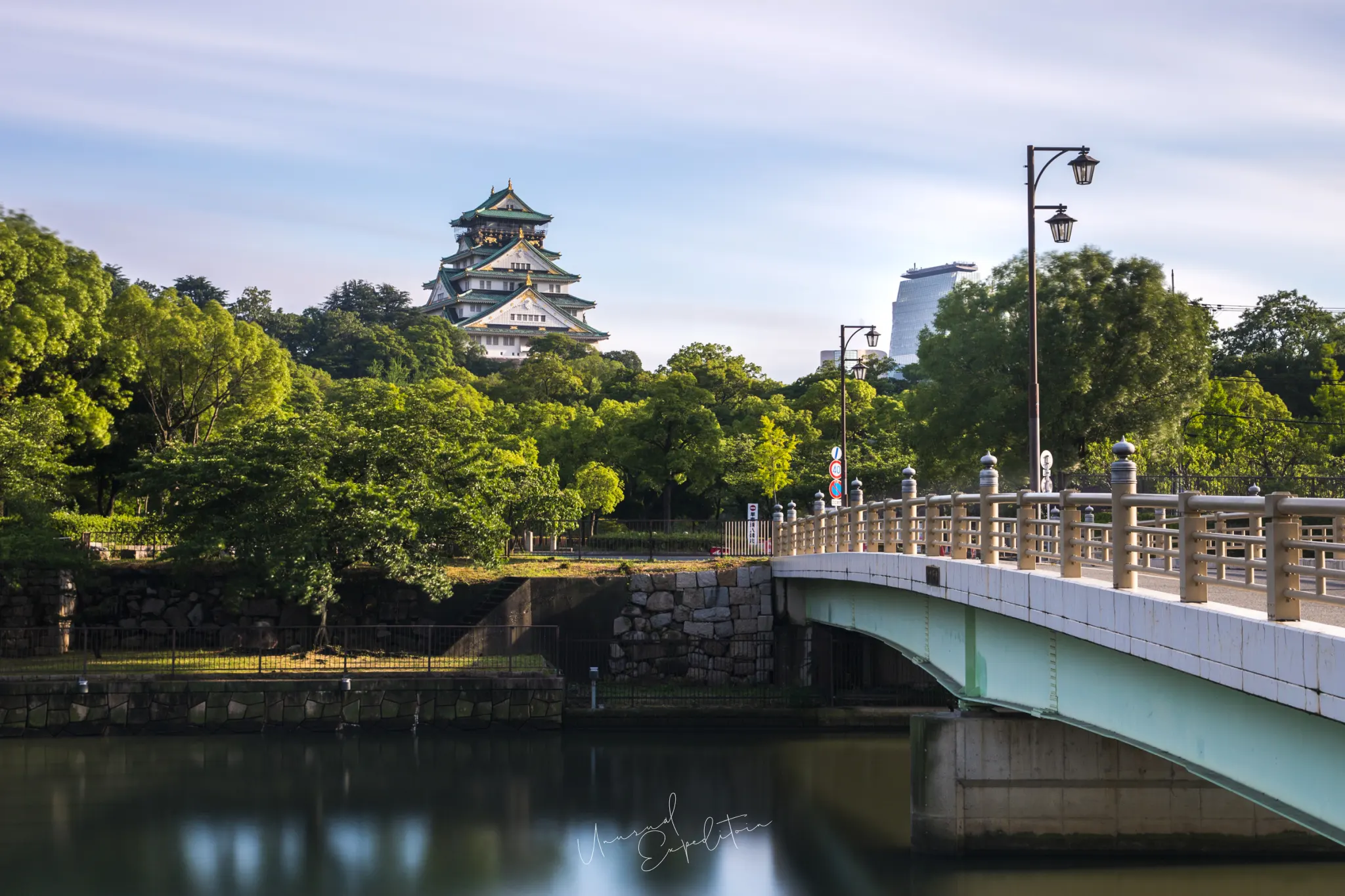
Osaka photography is the opposite of Kyoto. The city is commercial, noisy and proud of it, and its best pictures come after sunset. Dotonbori, along its canal, is a wall of giant signs, with the Glico running man by Ebisu Bridge; Shinsekai, older and scruffier, is a grid of lanterns and painted signs under Tsutenkaku tower. By day, Umeda and Osaka Station offer the crowds, crossings and rain-slick pavements that street photographers come for, and Osaka Castle, a 1931 reconstruction of the keep on its great stone walls, sits above a moat in a wide park. Our Osaka photo spots article maps them, Dotonbori and Shinsekai at night covers the neon, and is Osaka worth visiting covers the crowds and the case for the city.
Arashiyama bamboo grove photos
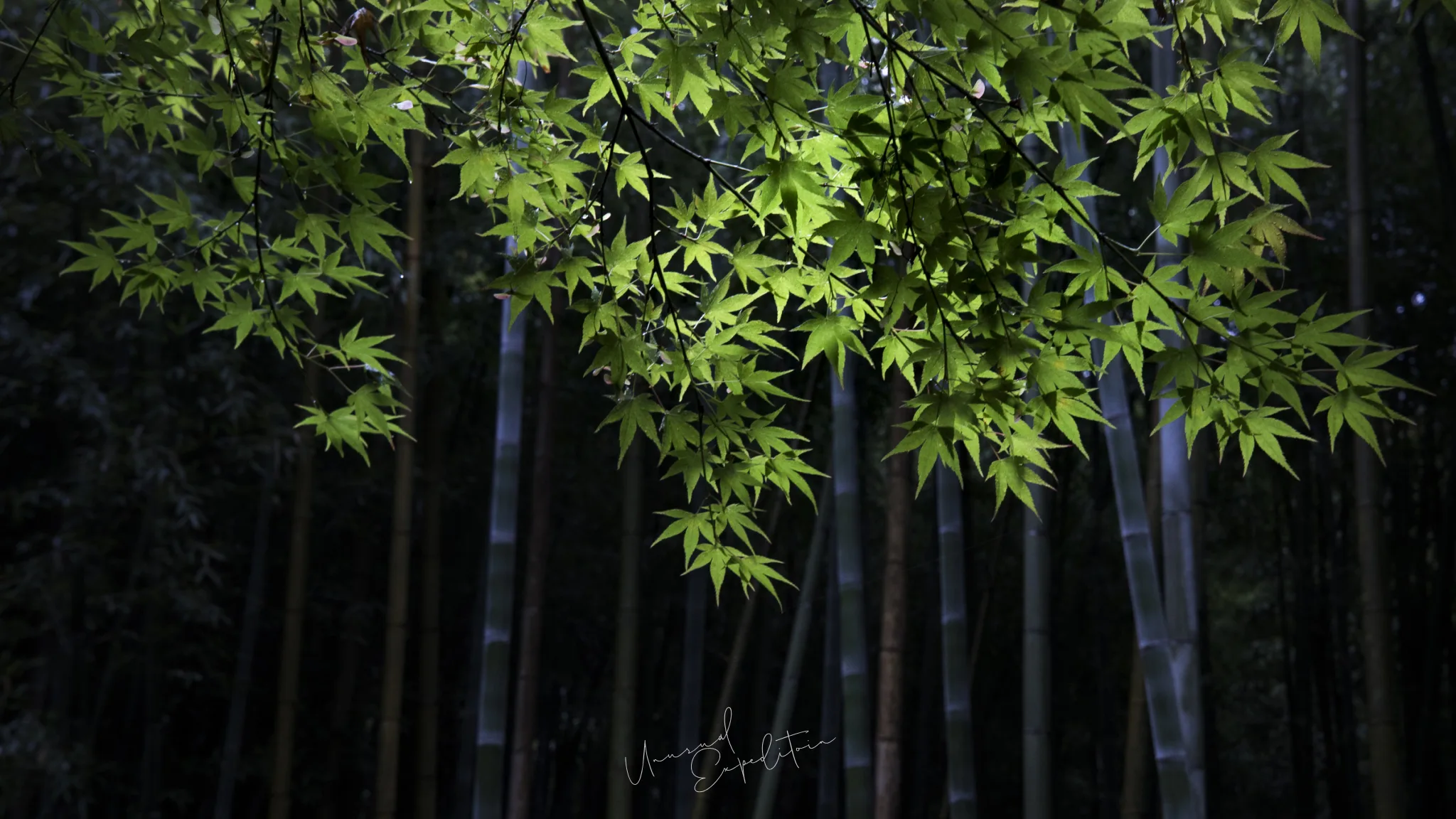
The bamboo grove in Arashiyama, on Kyoto's western edge, is the other picture everyone wants, and the hardest to take well. The path is narrow and short, the stems rise high on either side, and by mid morning it is packed from end to end. Arrive at first light, shoot upward or along the path with a 16-35mm while it is empty, and look for the places where the bamboo mixes with maples, whose leaves glow green in early summer and red in late autumn. Overcast light suits it best: in sun the grove fills with hard stripes. The temples and the river nearby are quieter and make a good second subject once the grove fills.
Nara: the deer and the Great Buddha
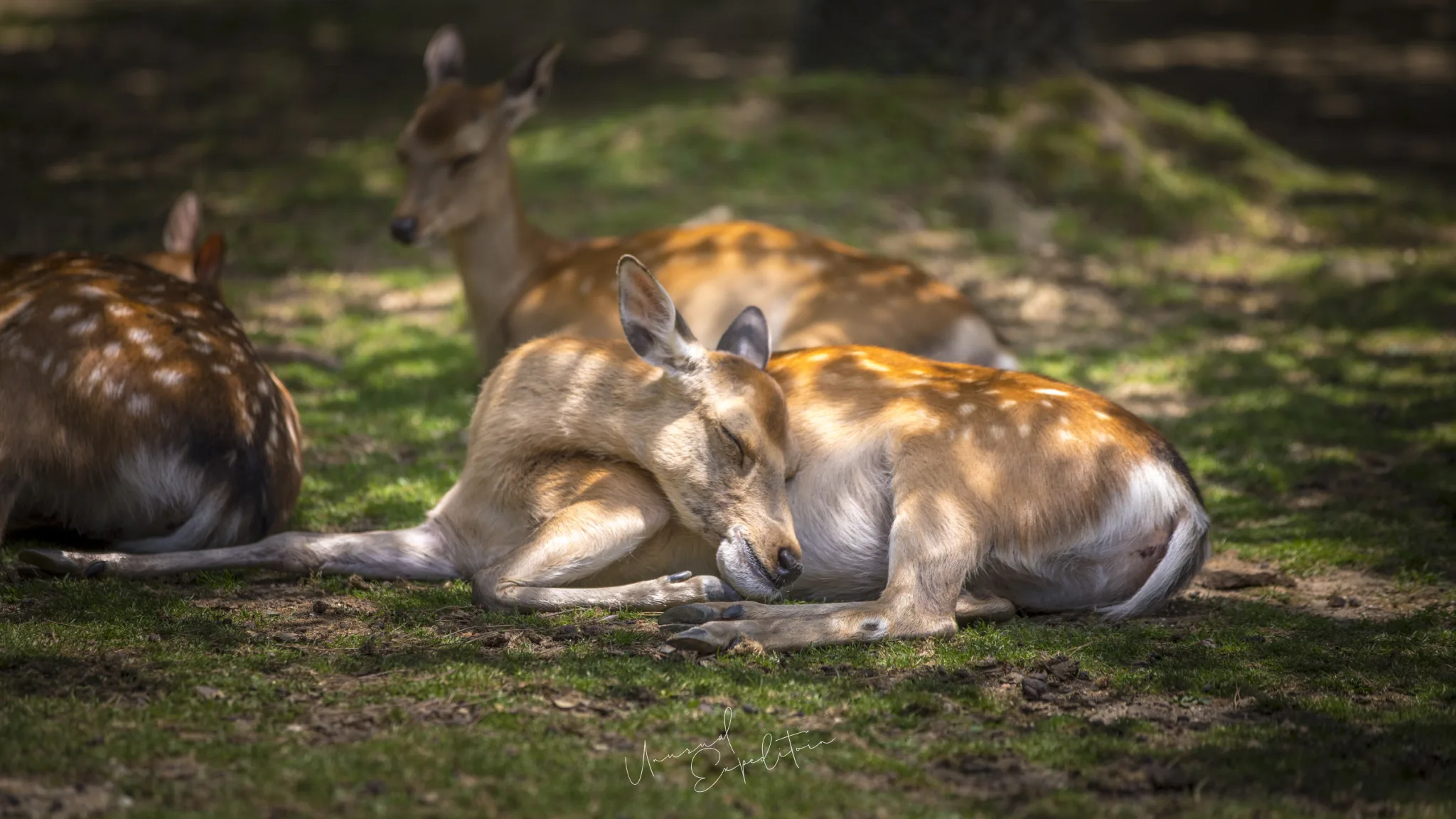
Nara was the capital before Kyoto, and its temples, shrines and primeval forest are listed by UNESCO as the Historic Monuments of Ancient Nara. Most visitors come for the sika deer of Nara Park, which wander freely between the temples; the Nara Deer Preservation Foundation's latest count found more than 1,400 of them. They bow for crackers, rest in the shade of the old trees and walk through the gates of Todai-ji, whose hall holds the bronze Great Buddha. Nara sits between Kyoto and Osaka and is easy to visit from either. Our Nara deer park guide covers photographing the deer, and the Nara day trip from Kyoto and Osaka covers Todai-ji and the temples.
Is Kyoto and Osaka close? Osaka or Kyoto as a base
Kyoto and Osaka are close neighbours, linked by several railway lines with frequent trains, so either city works as a base for the other and for Nara. The question is less where to sleep than how to spend the light. On a photography tour of Osaka and Kyoto we give Kyoto the mornings, when the temples are quiet, and Osaka the evenings, when the signs come on; sleeping in Kyoto makes the dawn starts easier, sleeping in Osaka makes the late nights easier. Nara fits on a day with soft light. Midday is for the indoor subjects: temple halls where photography is allowed, markets, the Great Buddha. Leave slack in the plan, because Kyoto rewards going back to a place on a second morning when the first was crowded or the sky was flat.
"In Kyoto I set the alarm before dawn and I never regret it. By the time the cafes open, Fushimi Inari and the pagoda lanes belong to everyone. In Osaka it is the reverse: wait for the blue hour, when the sky is still deep blue and the signs are already on."
Joseph Mak, tour leader, Unusual Expedition
Best time for Kyoto and Osaka photography
Spring and autumn are the famous seasons. Kyoto's cherry blossom usually opens in late March and is at its best in early April, and the maples colour from mid November into early December, according to japan-guide.com's seasonal reports. Both seasons are also the most crowded of the year. The rainy season, which the Japan Meteorological Agency dates in this region from around early June to around mid July, is underrated: moss and maples are at their greenest, crowds are lighter and wet streets reflect the neon. That is when we photographed most of this guide. The best time to visit Kyoto and Osaka article goes season by season.
Etiquette and rules for photographers
Kyoto has had enough of careless photographers, and a few rules matter. Residents in Gion have put up signs banning photography on the district's private lanes; Hanamikoji, the main street, is public, but nobody should be followed or blocked for a picture. Many temples forbid photography inside halls and gardens or ban tripods, so read the sign at the gate. In Nara, the deer are wild animals and park signs warn that they bite and butt when teased. Drones over either city need permission, covered in the Japan photography trip FAQ.
Explore Kyoto and Osaka in depth
- Fushimi Inari photography: the torii gates at dawn and dusk
- Best time to visit Kyoto and Osaka for photography
- Osaka photo spots: Dotonbori, Shinsekai and Osaka Castle
- Dotonbori night and Shinsekai at night: Osaka after dark
- Is Osaka worth visiting? Street photography in Umeda and the station
- Nara deer park: photographing the deer of Nara
- Nara day trip from Kyoto and Osaka: Todai-ji and the park
Photograph Kyoto and Osaka with us
We run Kyoto, Osaka and Nara as a private trip on request, for individuals, families, couples and photographers who want their own pace, with every arrangement made for you; a photographer or photography coaching can be added at extra cost. See private tours and our Japan photography tours page.
Join the Kyoto and Osaka photography tour
Kyushu, Shikoku And Setouchi Photography Journey departs 25 Sep 2027 To 05 Oct 2027, led by Joseph Mak. Small group, photography first. All Kyoto and Osaka photography tours.
Explore Kyoto and Osaka in depth
- Osaka Photo Spots: Dotonbori, Shinsekai, Osaka Castle and UmedaJapan
- Nara Deer Park: Photographing the Deer of NaraJapan
- Nara Day Trip from Kyoto and Osaka: Todai-ji, the Deer and Kasuga TaishaJapan
- Is Osaka Worth Visiting? A Photographer's Case for the CityJapan
- Fushimi Inari Photography: The Torii Gates at Dawn, Dusk and After DarkJapan
- Dotonbori Night and Shinsekai at Night: Photographing Osaka's NeonJapan
- Best Time to Visit Kyoto and Osaka for Photography: Blossom, Maples and RainJapan
Upcoming Photo Tours
- Egypt Photo Tour – EgyptEgypt 12 Dec 2026 To 20 Dec 2026
- Inner Mongolia Winter Owl Photo Tour – ChinaChina 01 Jan 2027 To 04 Jan 2027
- Inner Mongolia Winter Photo Tour – ChinaChina 05 Jan 2027 To 11 Jan 2027
- Mekong And Central Highland Vietnam Photo Tour - VietnamVietnam 16 Jan 2027 To 24 Jan 2027