
Takayama Inari Shrine, Aomori: Photographing the Winding Torii of Tsugaru
Takayama Inari Shrine in Aomori: the winding vermilion torii, viewpoints, light, winter snow and how to get there by bus or car.
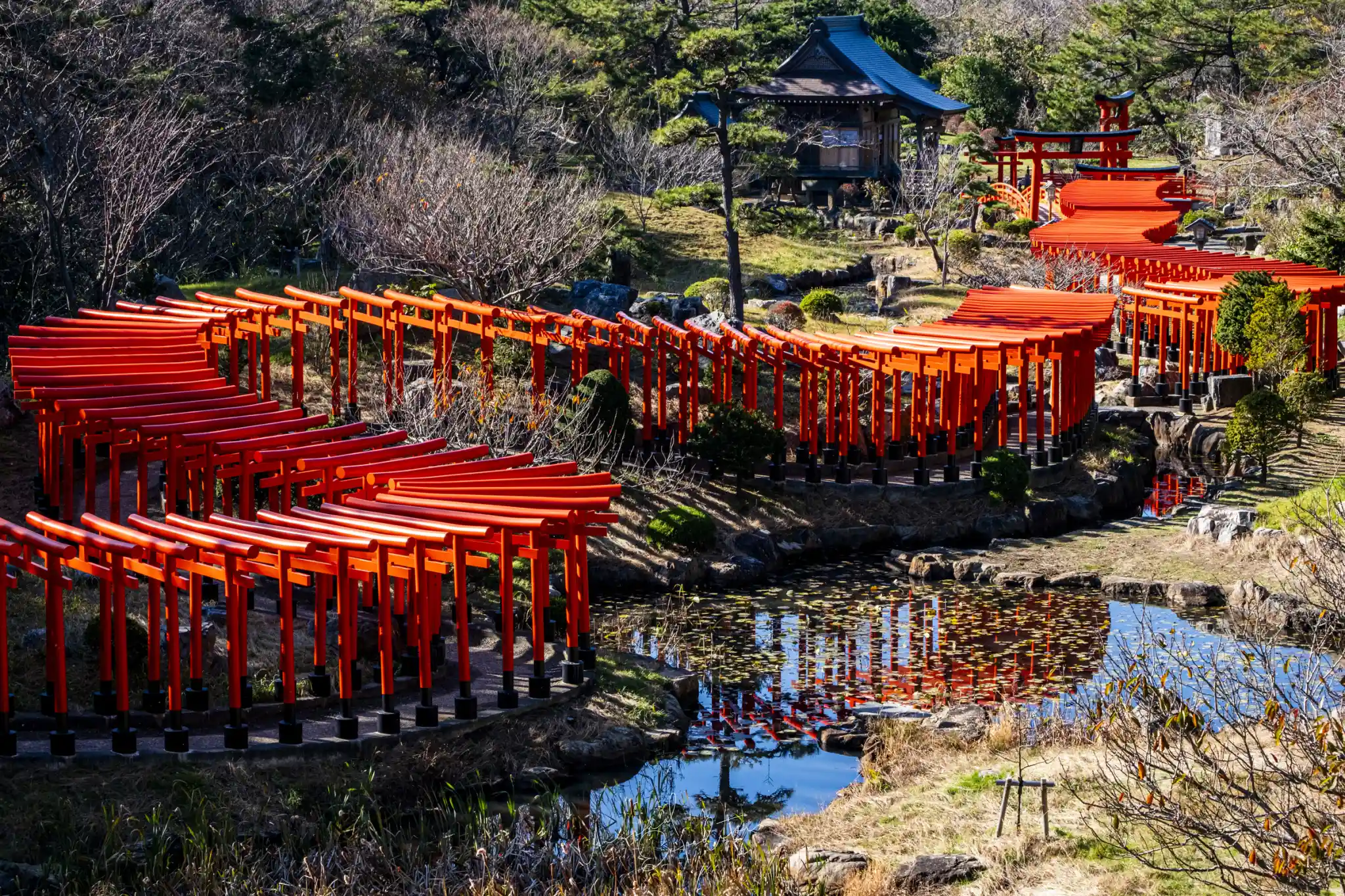
Takayama Inari Shrine is a Shinto shrine in Tsugaru City, Aomori, famous for a line of just over two hundred vermilion torii gates that winds like a dragon through a Japanese garden of ponds and pine trees near the Sea of Japan coast. It is one of the most striking torii scenes in Japan, far quieter than Fushimi Inari in Kyoto, and it photographs well in clear autumn light, in spring green and under winter snow.
The shrine is one of the highlights of the Tsugaru region in our Aomori photography tour guide. These photographs are our own, from our autumn trip to Tsugaru; we hold the rights to them, and the notes come from visiting the shrine ourselves. Getting there takes some planning, and the reward is a torii scene you may have almost to yourself.
Takayama Inari Shrine, Aomori: the winding torii
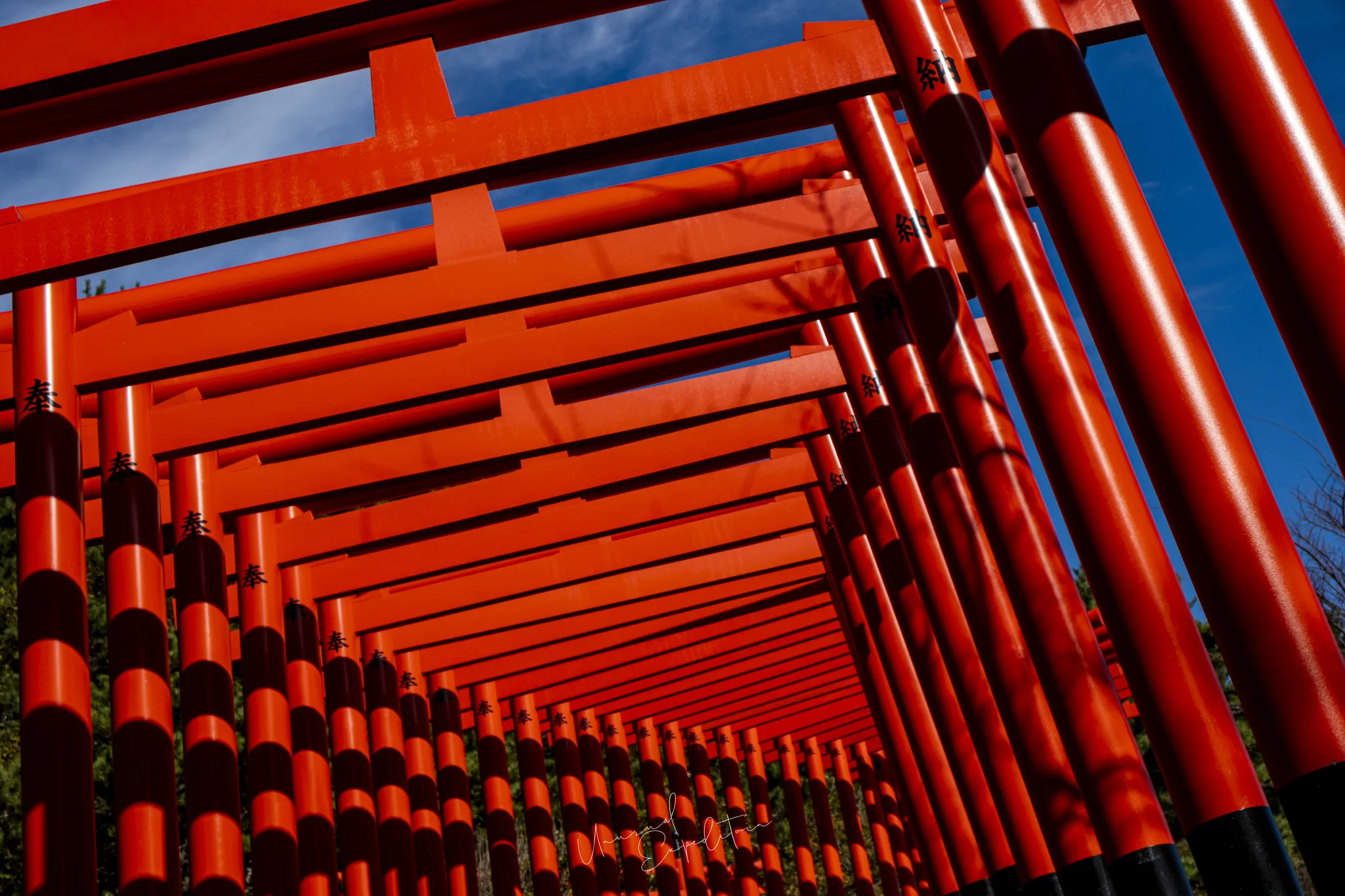
Takayama Inari Shrine, Aomori, is dedicated to Inari, the deity of rice, fertility and business, like the thousands of other Inari shrines across Japan, and its guardians are foxes. Behind the main hall, the path leads down into a garden where the torii, donated by worshippers, are set close together in a long tunnel that bends and doubles back around small ponds. Nippon.com counted just over two hundred of them, and Aomori Tourism, the prefecture's tourism site, calls the torii corridor a sight not to miss. From the low hill above the garden, the line of gates looks like a red ribbon laid over the green and brown of the garden, which is the view most people come for. From inside, the tunnel becomes an abstract of red posts and slanting shadows.
Takayama Inari Shrine photography: three ways to see the torii
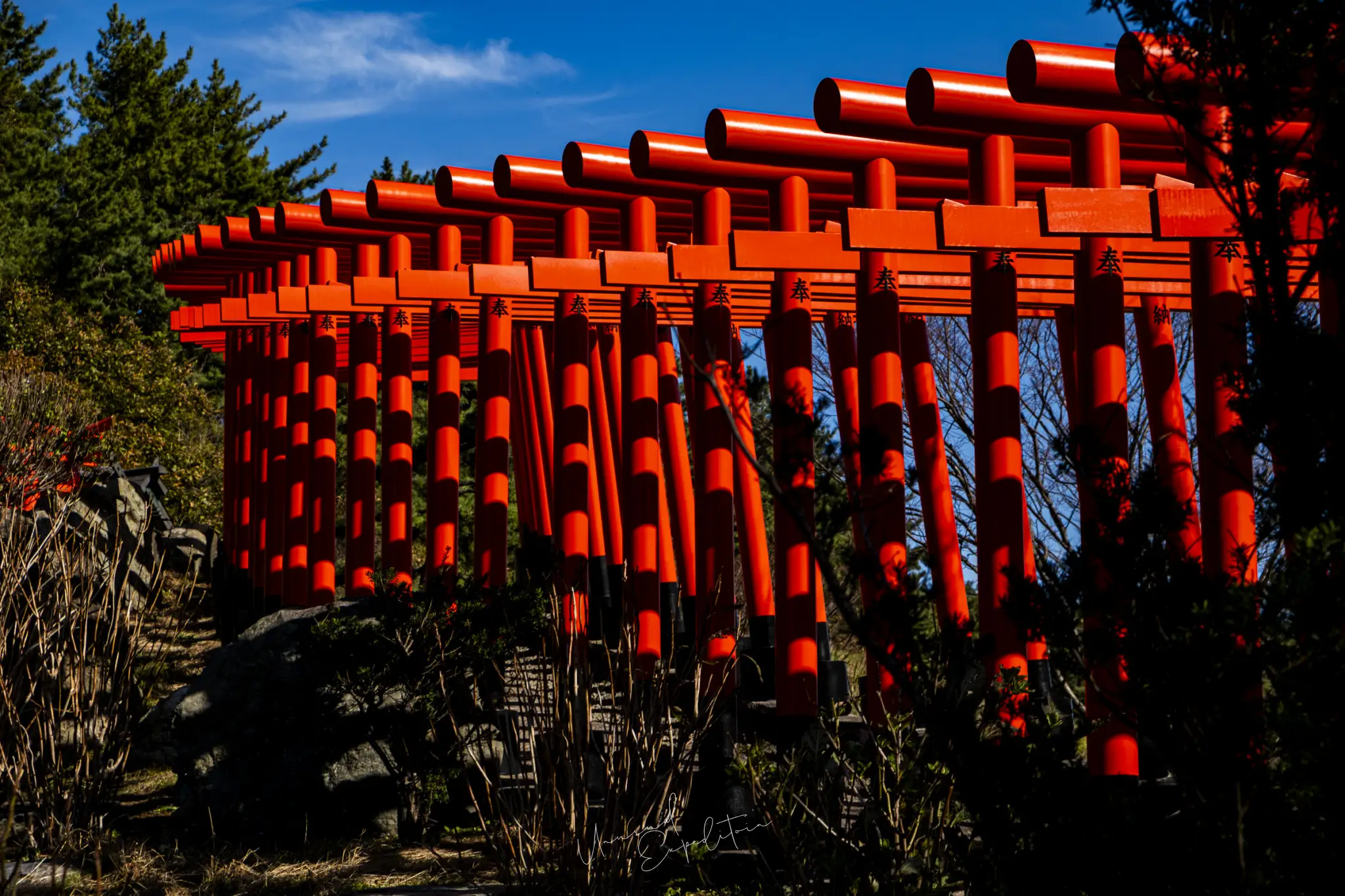
There are three ways to photograph the torii, and each needs different light. The view from above, from the slope and the observation area near the main hall, shows the whole winding line and the ponds; a 24-70mm lens covers it, and a 70-200mm lens picks out curves and the reflections. From the side, at the level of the gates, you can set the red torii against the sky: on a clear day a polariser deepens the blue and makes the vermilion glow. From inside the tunnel, the gates repeat into the distance and the sun through the gaps paints stripes on the path; here a wider lens and a slight upward angle give a strong graphic picture. Visitors walk through the tunnel all day, so wait for gaps or include a person for scale only if they are happy to be photographed.
Light and the best time of day
The torii are vermilion, a colour that turns flat and orange in hard midday sun and deep and rich in low or soft light. In autumn, the sun stays low enough through the day to rake across the gates and throw long stripes of shadow, which is the light in our photographs. Overcast days suit the inside of the tunnel, where the shadows would otherwise be harsh. The shrine is open during the day; one tourism site lists visiting hours, but check them locally before you go, since times can change. Early arrival means fewer people in the tunnel.
Everyone goes to Fushimi Inari, and it is crowded. Takayama Inari is a long way from anywhere, and that is its gift: you can stand above the torii and watch the light move over them with almost nobody else around.
Joseph Mak, tour leader, Unusual Expedition
The large torii and the shrines in the garden
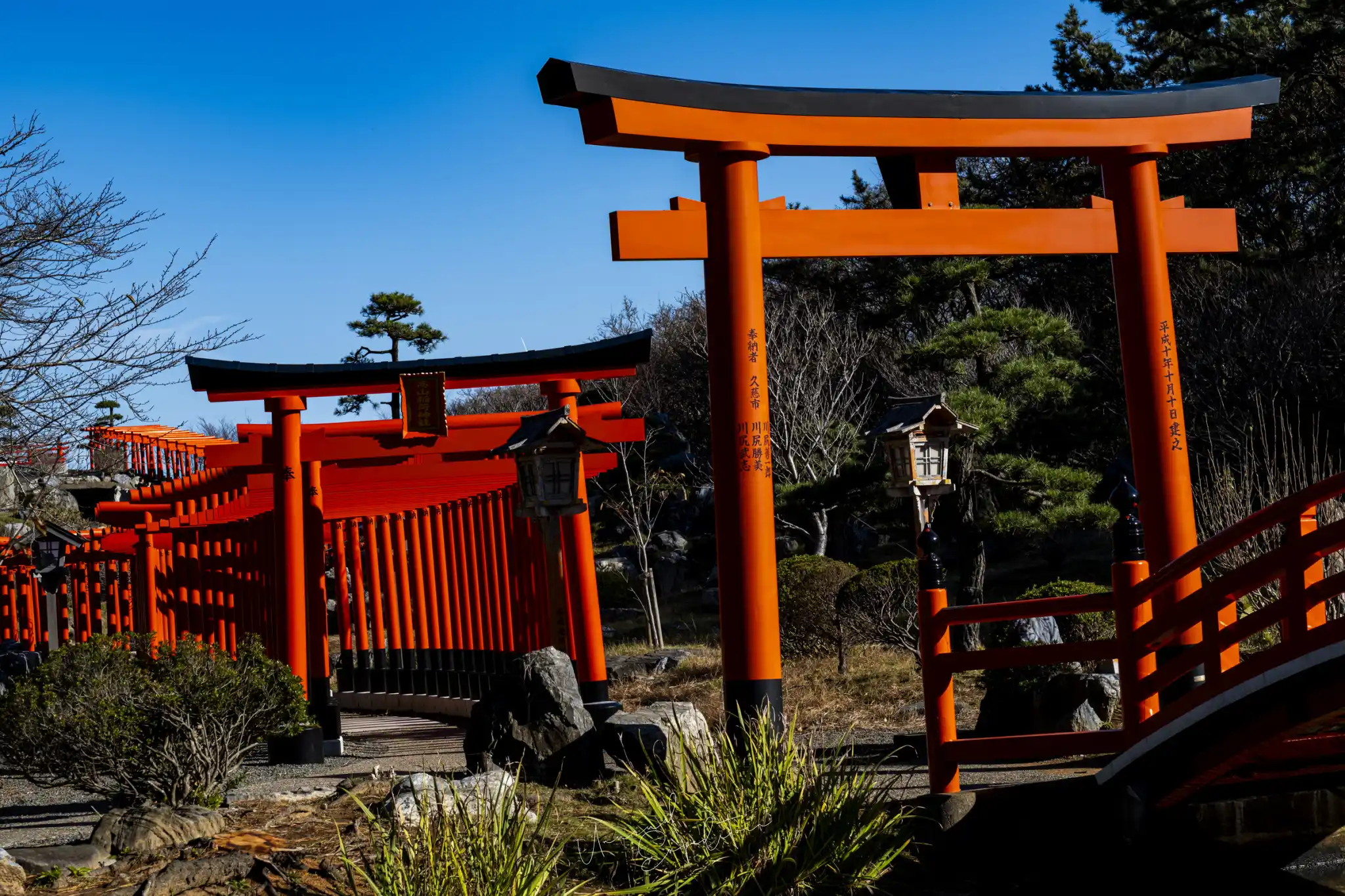
At the edge of the garden, larger torii mark the entrances, and small shrine buildings, stone foxes and lanterns stand along the path. These details are worth slowing down for: a fox statue with a red bib, a row of lanterns catching the sun, or the inscriptions painted on the back of each gate, which record the names of the donors and the date of the gift. Remember that this is a working shrine. Bow at the main gate if you wish, do not climb on statues or step into the ponds, and keep tripods off the narrow path through the torii when others are walking through.
Takayama Inari Shrine winter
Takayama Inari Shrine in winter is a different place. Tsugaru gets heavy snow, and the red torii winding through a white garden make one of the most memorable winter scenes in northern Japan. Access is harder in snow, paths can be icy, and the weather on this coast changes quickly, so a winter visit needs flexibility and good boots. We photographed the shrine in autumn and have not yet seen it in snow, but many photographers come back for exactly that picture.
Takayama Inari Shrine bus and other ways to get there
The shrine is on the western coast of the Tsugaru peninsula, far from the main rail lines. Public transport is limited: guides describe a local bus from the Goshogawara area to a stop near the shrine, followed by a short taxi ride, and schedules are infrequent, so check them carefully before relying on them. Most photographers come by car, which also makes it easy to combine the shrine with the Tsuru no Mai Bridge on the plain below Mount Iwaki. Some sources note that the torii tunnel has been undergoing renovation in recent years, so check the current state of the gates before you travel.
Takayama Inari Shrine at a glance
| Viewpoint | What you get | Best light | Lens |
|---|---|---|---|
| Slope above the garden | The whole winding line and the ponds | Morning or afternoon side light | 24-70mm, 70-200mm |
| Beside the gates | Torii against blue sky | Clear day, polariser | 24-70mm |
| Inside the tunnel | Repeating gates, stripes of shadow | Low sun or overcast | 16-35mm, 24-70mm |
| Garden details | Fox statues, lanterns, inscriptions | Soft light | 70-200mm |
Give the shrine time: the winding gates look different from every corner of the garden.
Takayama Inari with the rest of Tsugaru
The shrine sits well in a day across the Tsugaru plain with the Tsuru no Mai Bridge, and in spring or autumn with Hirosaki, covered in our Hirosaki Castle autumn guide. For when the colour reaches each part of the prefecture, see autumn in Aomori.
Photograph Takayama Inari Shrine with us
We include Takayama Inari Shrine in private trips through Aomori on request, with a driver and every arrangement made for you; a photographer or photography coaching can be added at extra cost. See our private tours and the Japan photography tours page.
Ask us about Takayama Inari Shrine
Join the Aomori photography tour
Kyushu, Shikoku And Setouchi Photography Journey departs 25 Sep 2027 To 05 Oct 2027, led by Joseph Mak. Small group, photography first. All Aomori photography tours.
Explore Aomori in depth
- Aomori Photography Tour Guide: Hirosaki Blossom, Oirase Autumn and the Tsugaru CoastJapan
- Tsuru no Mai Bridge: Photographing Mount Iwaki and Japan's Longest Wooden Arch BridgeJapan
- Oirase Gorge: Photographing the Stream, the Waterfalls and the Autumn ColourJapan
- Hirosaki Cherry Blossom: Photographing the Castle, the Moats and the FestivalJapan
- Hirosaki Castle in Autumn: Maples, the Keep, Saishoin Pagoda and Neputa VillageJapan
- Hachinohe Morning Market: Photographing the Tatehana Wharf on a SundayJapan
- Autumn in Aomori: Lake Towada, Towada Shrine and When the Colour ComesJapan
Upcoming Photo Tours
- Egypt Photo Tour – EgyptEgypt 12 Dec 2026 To 20 Dec 2026
- Inner Mongolia Winter Owl Photo Tour – ChinaChina 01 Jan 2027 To 04 Jan 2027
- Inner Mongolia Winter Photo Tour – ChinaChina 05 Jan 2027 To 11 Jan 2027
- Mekong And Central Highland Vietnam Photo Tour - VietnamVietnam 16 Jan 2027 To 24 Jan 2027