
What to See in Aomori, Japan: Photo Spots From Hirosaki to Oirase
What to see in Aomori Japan with a camera: Hirosaki Park, Oirase, Lake Towada, Takayama Inari, Tsuru-no-Mai and Hachinohe, with light.
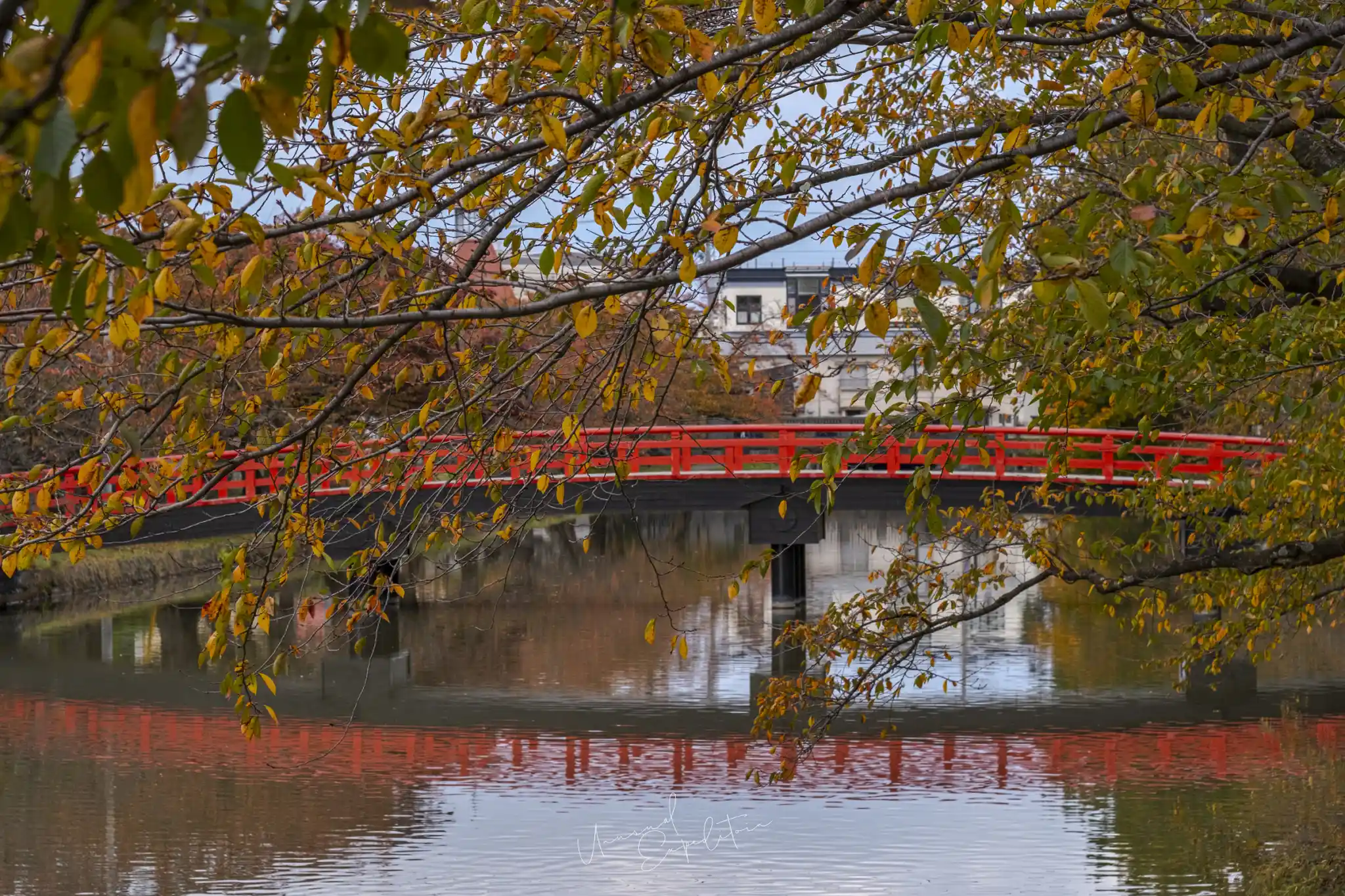
What to see in Aomori Japan, for a photographer, comes down to seven places: Hirosaki Park and its castle moats, Oirase Gorge, Lake Towada and Towada Shrine, the torii of Takayama Inari Shrine, the Tsuru-no-Mai Bridge under Mount Iwaki, the Tsugaru Railway and the wharf morning market at Hachinohe. Blossom and autumn colour are the two big seasons, and each spot has its own hour, from first light at the market to sunset at the bridge.
This guide is part of our Aomori photography tour guide, which covers the prefecture as a whole. The photographs are our own, from our spring and autumn trips in Aomori, and the notes on where to stand come from working these places with a camera. Each spot has a fuller article of its own, linked below.
Aomori Japan tourist attractions for photographers, at a glance
| Spot | What you photograph | Best light | Lens |
|---|---|---|---|
| Hirosaki Park | Castle keep, moats, red bridges, blossom and maples | Early morning, evening light-up | 24-70mm, 70-200mm |
| Oirase Gorge | Stream, mossy boulders, waterfalls | Overcast days | 24-70mm, tripod |
| Lake Towada and Towada Shrine | Lake shore, cedar forest, shrine details | Soft morning light | 24-70mm |
| Takayama Inari Shrine | Winding rows of vermilion torii | Morning, clear blue sky | 24-70mm, 70-200mm |
| Tsuru-no-Mai Bridge | Wooden arches across the lake, Mount Iwaki | Sunset, blue hour | 24-70mm, 70-200mm |
| Hachinohe wharf market | Stalls, cooks, fishing boats | First light | 24-70mm |
The spots sit far apart across the prefecture, so they reward a trip planned by region and season rather than one day.
Hirosaki Park: moats, bridges and the castle
Hirosaki Park surrounds the keep of Hirosaki Castle, the only Edo-period castle tower surviving in the Tohoku region, according to JNTO. Its moats and vermilion bridges are the picture in every season. In spring the park's cherry trees, about 2,600 of them, hang over the water during the festival from late April into early May; in autumn the same moats carry red maples and the old cherries turn gold. Work the bridges from the moat paths in early morning, when the water is still and the paths are empty, and come back for the evening light-up. The keep itself was moved off its base for stone-wall repairs and has begun moving back, so check its current position before planning a castle frame. See our Hirosaki cherry blossom and Hirosaki Castle autumn guides.
Oirase Gorge: the stream
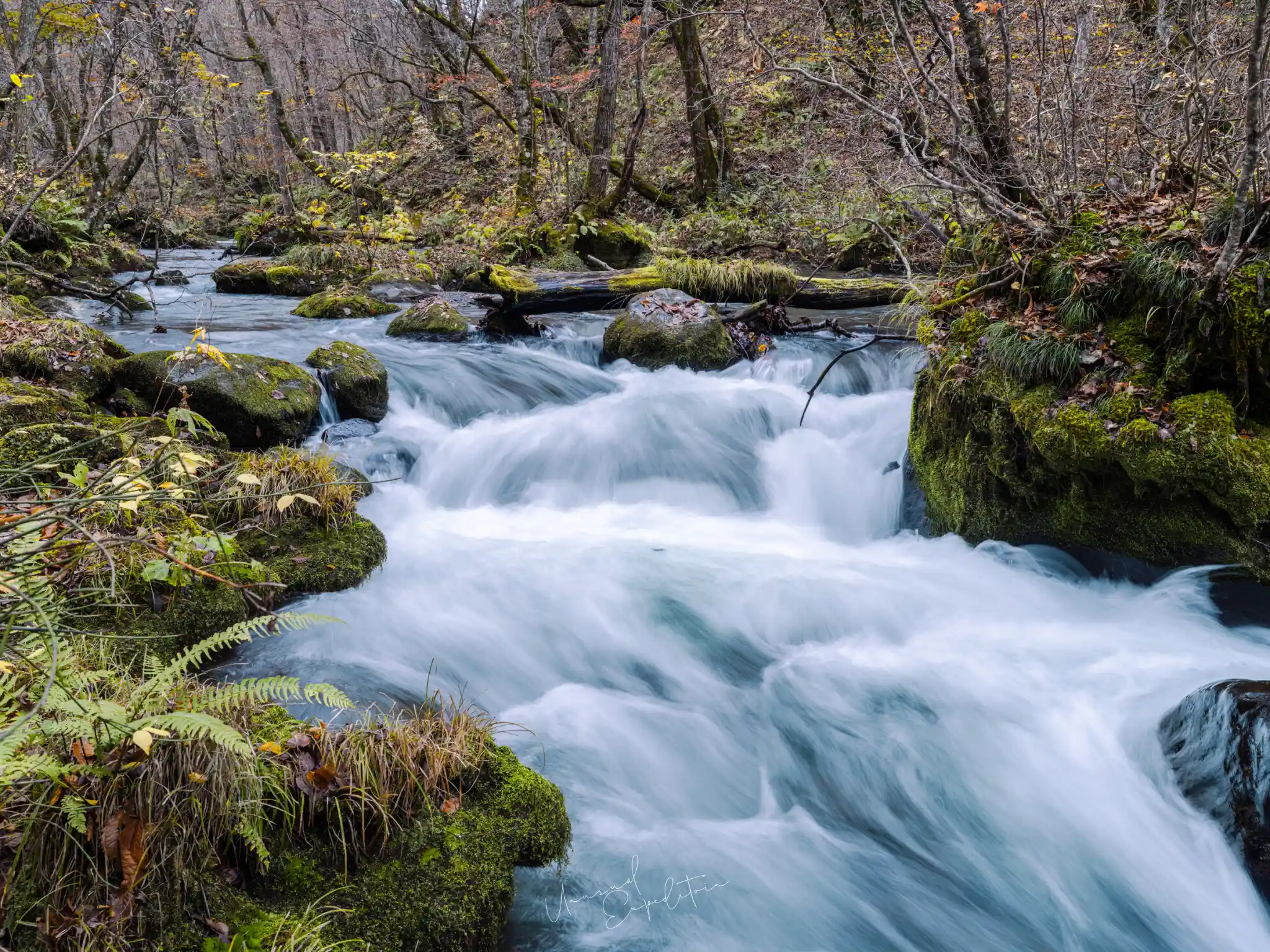
The Oirase stream runs for about 14 km from Nenokuchi on Lake Towada to Yakeyama, the lake's only outlet, and with the lake it is a Special Place of Scenic Beauty and Natural Monument (nippon.com, JNTO). A path follows the water the whole way, which makes it one long photo spot rather than a viewpoint. Look for the places where the current breaks around mossy boulders, the side waterfalls, and fallen leaves caught on the rocks. A tripod and a slow shutter turn the water to silk; overcast light keeps the greens and the colour of the leaves rich. The autumn colour usually peaks from late October into early November, varying by year. Our Oirase Gorge guide goes further.
Lake Towada and Towada Shrine
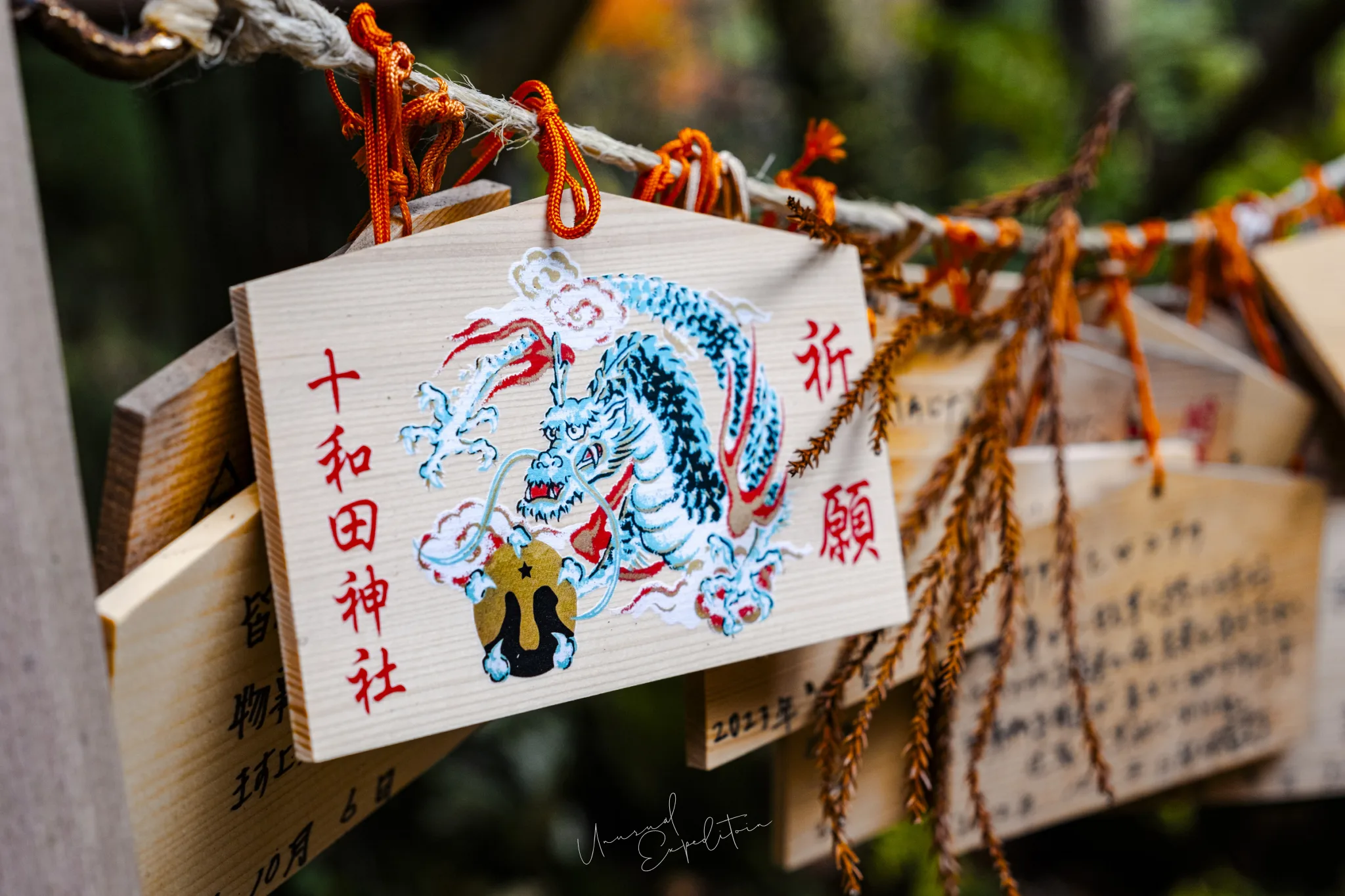
Lake Towada, where the Oirase begins, gives open water after the closed world of the gorge. On its shore at Yasumiya, Towada Shrine stands in the cedar forest, with a small wooden hall, stone guardian lions and racks of painted ema, the wooden prayer plaques visitors hang there. The details are the pictures: an ema with a painted dragon, moss on stone, light falling through the cedars. The shrine is a place of worship, so keep your voice down and do not photograph people at prayer. Our autumn in Aomori article shows more of the shrine in its forest.
Takayama Inari Shrine: the torii garden
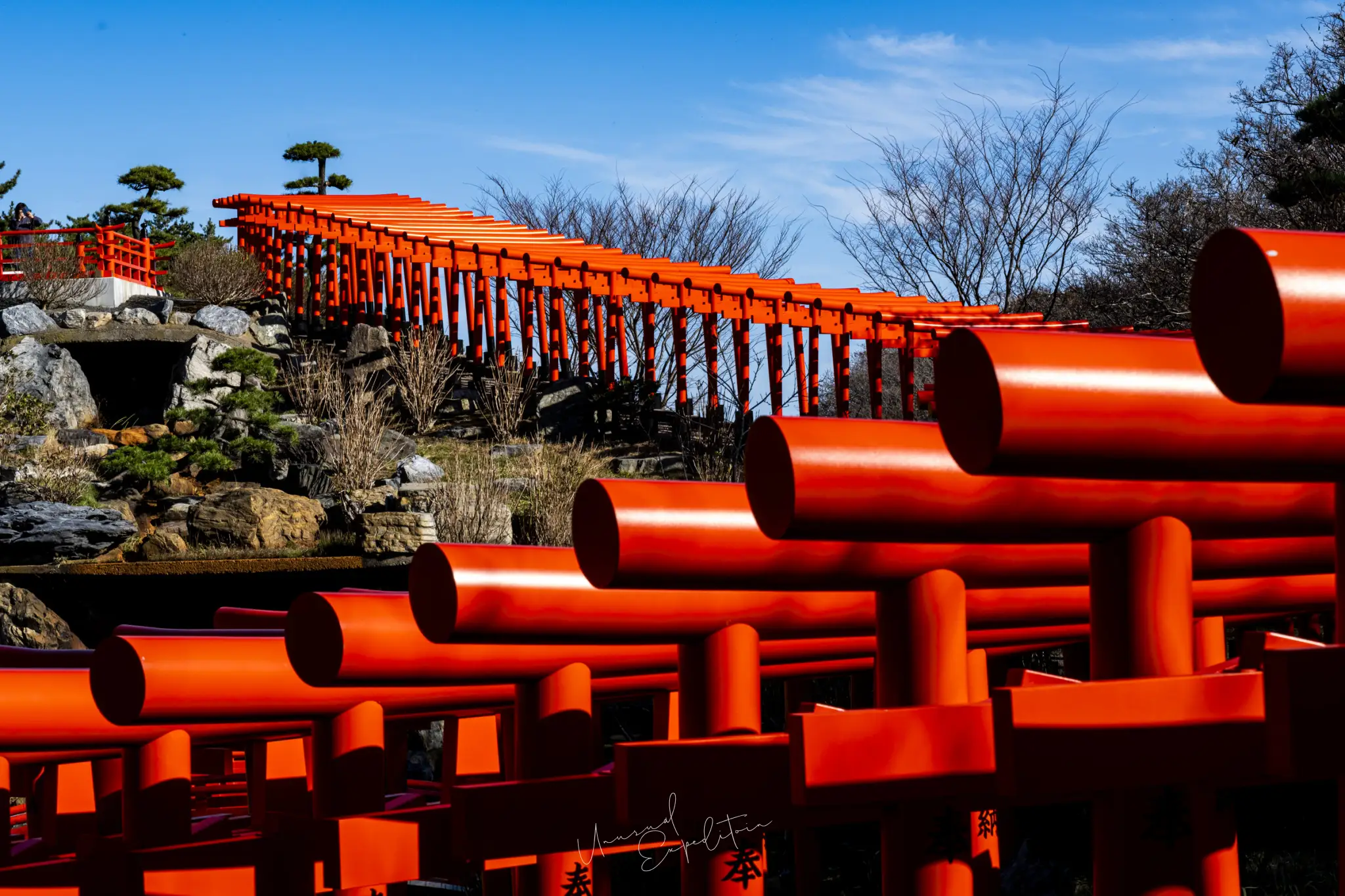
Takayama Inari Shrine in Tsugaru City has just over two hundred vermilion torii winding through a garden of ponds and pines, a line that nippon.com and Aomori Tourism both single out. The classic frame is from the rise above the garden, looking down on the curving rows; at ground level, a longer lens stacks the gates into blocks of colour against the sky. A clear morning gives the strongest red against blue. The shrine is a long way from the railway, so check access before you go. Our Takayama Inari Shrine guide has more.
Tsuru-no-Mai Bridge and Mount Iwaki
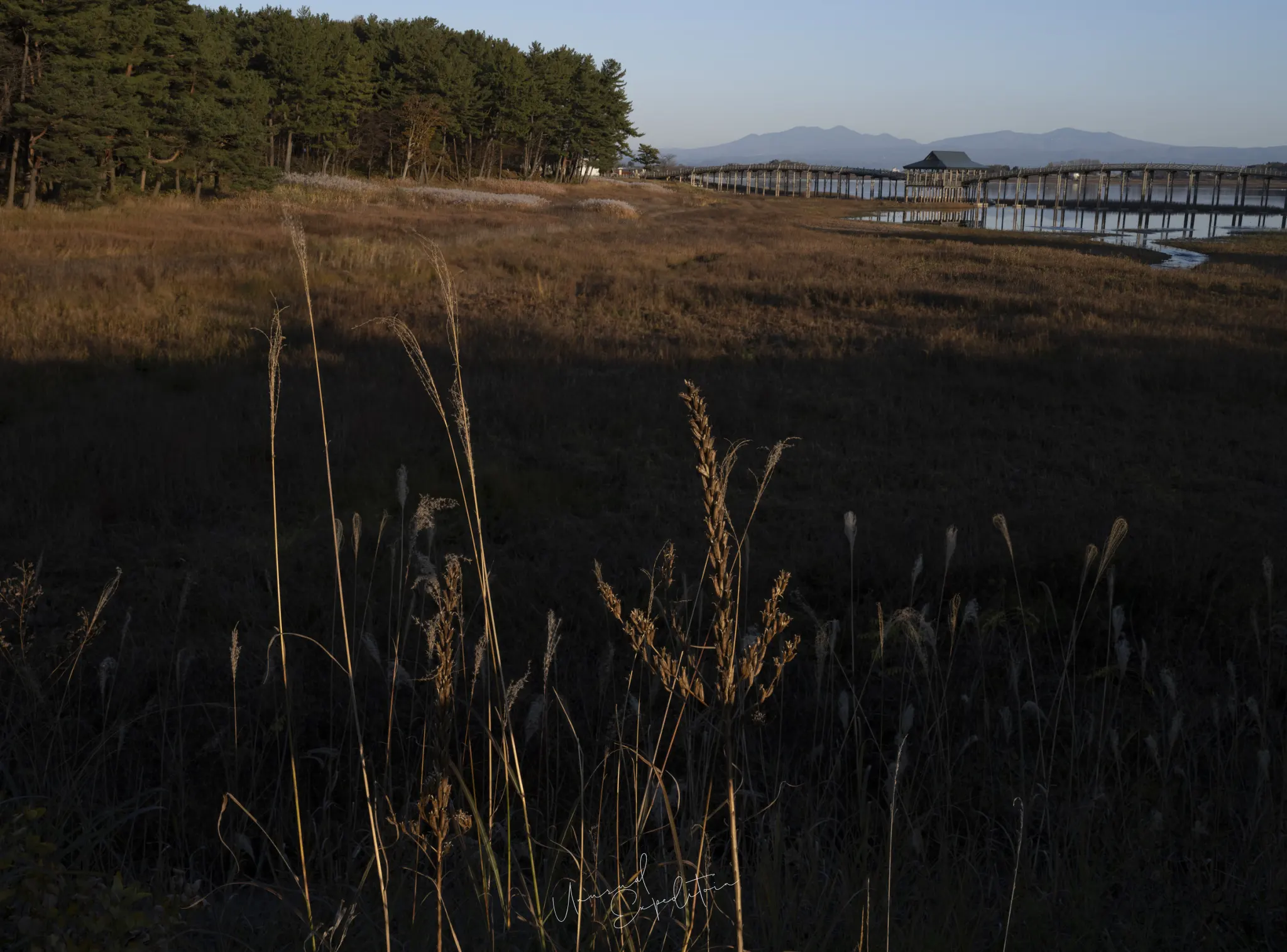
The Tsuru-no-Mai Bridge in Tsuruta, about 300 metres of triple wooden arches in Aomori cypress across Tsugaru Fujimi Lake, is described by Aomori Tourism as Japan's longest triple-arch wooden bridge. Behind it rises Mount Iwaki, the Tsugaru Fuji. Late afternoon into sunset is the time, with the sun dropping near the mountain, and blue hour after it, when the sky and the water go blue together. Walk the shore to the reed beds for a lower, wilder foreground, or put a 70-200mm on the arches. See our Tsuru no Mai Bridge guide.
The Tsugaru Railway and Hachinohe
Two more places round out the set. The Tsugaru Railway's orange diesel trains run through the Tsugaru plain, and in spring Ashino Park on the line has about 1,500 cherry trees and a blossom tunnel over the track, according to the Tohoku tourism board; in autumn the trains pass under coloured trees. At the other end of the prefecture, the Tatehana Wharf Morning Market at Hachinohe runs on Sundays from spring to December, from daybreak, and Aomori Tourism bills it as Japan's largest morning market. Arrive at first light for the stalls, the cooks and the fishing boats beyond them. Our Hachinohe morning market guide explains how to work it.
"Aomori is two different places in spring and autumn. The same moat in Hirosaki is pink in one season and red in the other, and the light in the north stays low and soft for longer."
Joseph Mak, tour leader, Unusual Expedition
Places to visit in Aomori by season
Spring is Hirosaki's season, with the blossom festival from late April into early May and Ashino Park on the Tsugaru Railway at the same time. Autumn brings Oirase and Lake Towada from late October, Hirosaki's maples and the Tsuru-no-Mai Bridge at sunset with swans on the lake. Summer has the Neputa floats in Hirosaki in early August, and winter brings Hirosaki Castle's snow lantern festival. Aomori is reached through Tokyo, by domestic flight or by the Tohoku Shinkansen to Shin-Aomori and Hachinohe; drones need permission in most of these places, and many temples and parks ban them outright.
Photograph Aomori with us
There is no scheduled Aomori departure; we run Aomori as a private trip on request, timed to the blossom or the autumn colour. See our private tours page, and our scheduled Japan departures on the Japan photography tours page.
Ask us about an Aomori photography trip
Join the Aomori photography tour
Kyushu, Shikoku And Setouchi Photography Journey departs 25 Sep 2027 To 05 Oct 2027, led by Joseph Mak. Small group, photography first. All Aomori photography tours.
Explore Aomori in depth
- Aomori Photography Tour Guide: Hirosaki Blossom, Oirase Autumn and the Tsugaru CoastJapan
- 5 Best Restaurants in Aomori, Japan: Seafood, Tsugaru Cooking and RamenJapan
- Tsuru no Mai Bridge: Photographing Mount Iwaki and Japan's Longest Wooden Arch BridgeJapan
- Takayama Inari Shrine, Aomori: Photographing the Winding Torii of TsugaruJapan
- Oirase Gorge: Photographing the Stream, the Waterfalls and the Autumn ColourJapan
- Hirosaki Cherry Blossom: Photographing the Castle, the Moats and the FestivalJapan
- Hirosaki Castle in Autumn: Maples, the Keep, Saishoin Pagoda and Neputa VillageJapan
- Hachinohe Morning Market: Photographing the Tatehana Wharf on a SundayJapan
- Autumn in Aomori: Lake Towada, Towada Shrine and When the Colour ComesJapan
Upcoming Photo Tours
- Egypt Photo Tour – EgyptEgypt 12 Dec 2026 To 20 Dec 2026
- Inner Mongolia Winter Owl Photo Tour – ChinaChina 01 Jan 2027 To 04 Jan 2027
- Inner Mongolia Winter Photo Tour – ChinaChina 05 Jan 2027 To 11 Jan 2027
- Mekong And Central Highland Vietnam Photo Tour - VietnamVietnam 16 Jan 2027 To 24 Jan 2027