
Luxor Photography Tour Guide: Karnak, the West Bank and the Balloons
Luxor, Egypt, for photographers: Karnak, Luxor Temple, the West Bank temples, sunrise balloons, light, rules and gear.
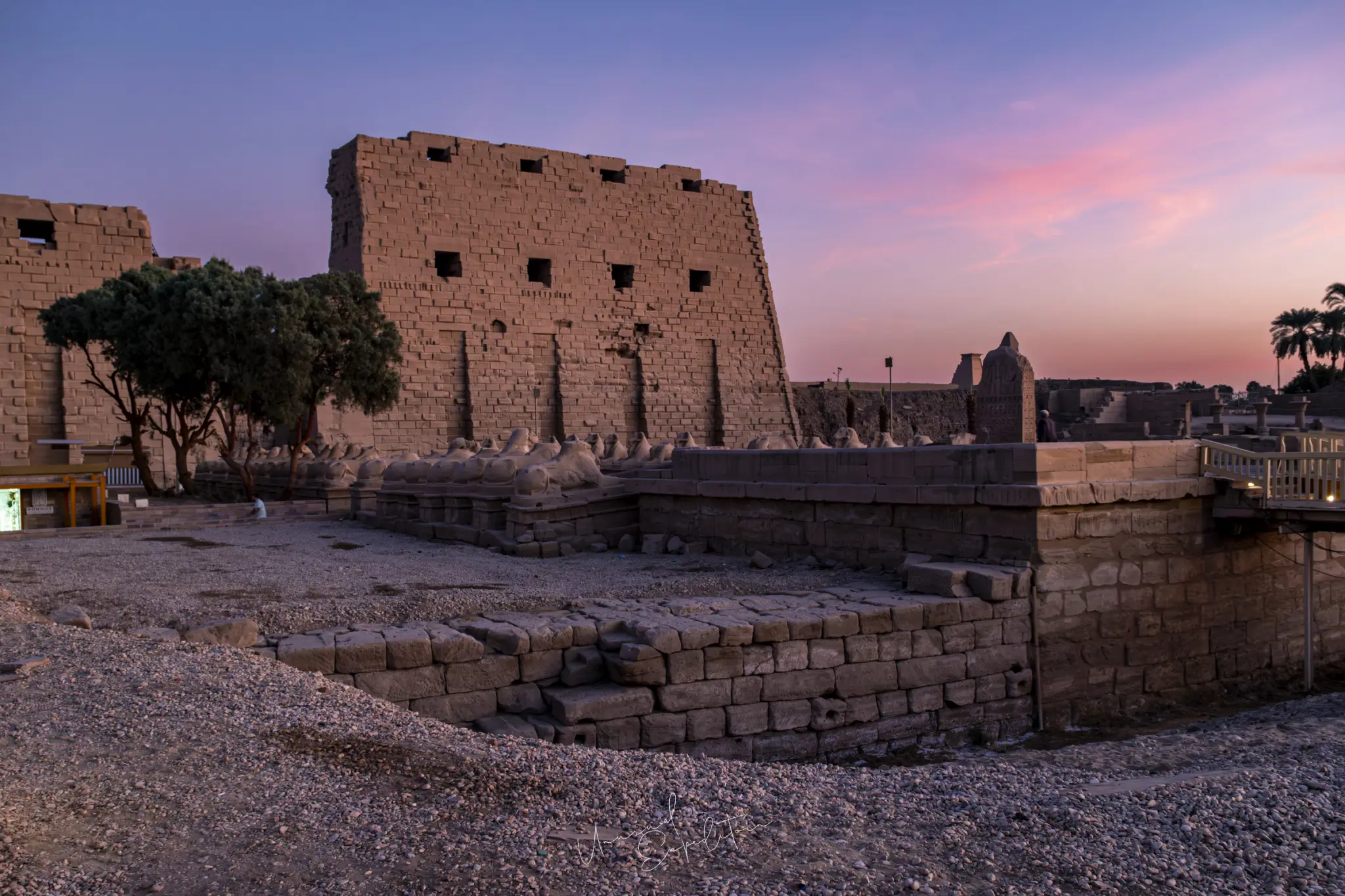
Luxor, Egypt, is the old city of Thebes on the Nile, and for a photographer it is the densest field of temples anywhere: Karnak and Luxor Temple on the East Bank, the mortuary temples of Hatshepsut and Ramesses III under the cliffs of the West Bank, and hot air balloons rising over all of it at sunrise. The work is about light on carved stone, hard sun against deep shade, and the short glow at either end of the day.
This area guide sits inside our Egypt photography tour guide, which covers entry, money, flights and the rest of the country. The photographs in this guide are our own, taken on our trips here; we hold the rights to them, and the notes come from knowing these places first hand. The six destination guides linked below go deeper into each temple and subject.
Luxor, Egypt: why photographers come
Luxor holds more standing monuments in one place than anywhere else in Egypt, and UNESCO lists the whole of ancient Thebes, its temples and its necropolis, as a World Heritage Site. For photography that density matters. In one stay you can work a forest of columns at Karnak, the long colonnades of Luxor Temple, painted reliefs on the West Bank that still hold their blue and red, and a desert edge where green fields stop at a line of bare limestone. The Nile runs between the two banks, so the light on the river and the hills changes the mood of every view. Most of the subjects are architectural, which means the picture depends on where the sun is: a relief that looks flat at midday turns into deep, readable carving when the light rakes across it in the late afternoon.
Karnak and Luxor Temple on the East Bank
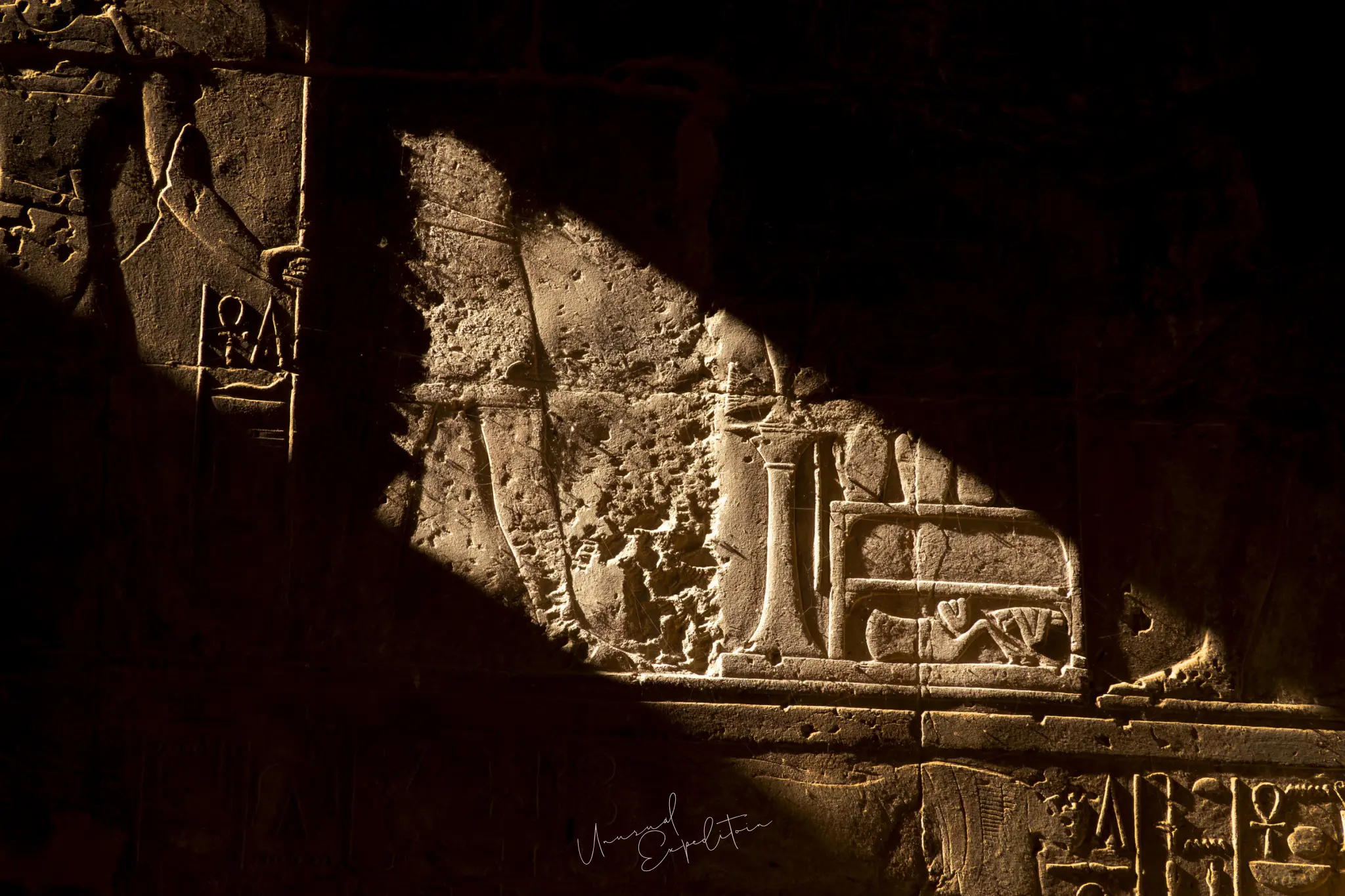
Karnak is the great temple complex of Amun, and its Great Hypostyle Hall is the single most photographed interior in Luxor. The University of Memphis Hypostyle Hall Project counts 134 sandstone columns in 16 rows, the twelve central ones about 20 metres tall. Standing among them, the photograph is usually a look upwards: capitals against blue sky, slices of sun cutting across carved shafts. Our Karnak temple hypostyle hall guide covers where to stand and when the light enters. A short way south along the river, Luxor Temple is smaller, more linear and easier to read in one frame, with papyrus-bundle columns and long walls of relief. The Luxor Temple photos guide compares the two temples and explains why we photograph Luxor Temple in the morning and Karnak late in the day.
The West Bank: Hatshepsut, Medinet Habu and the Valley of the Kings
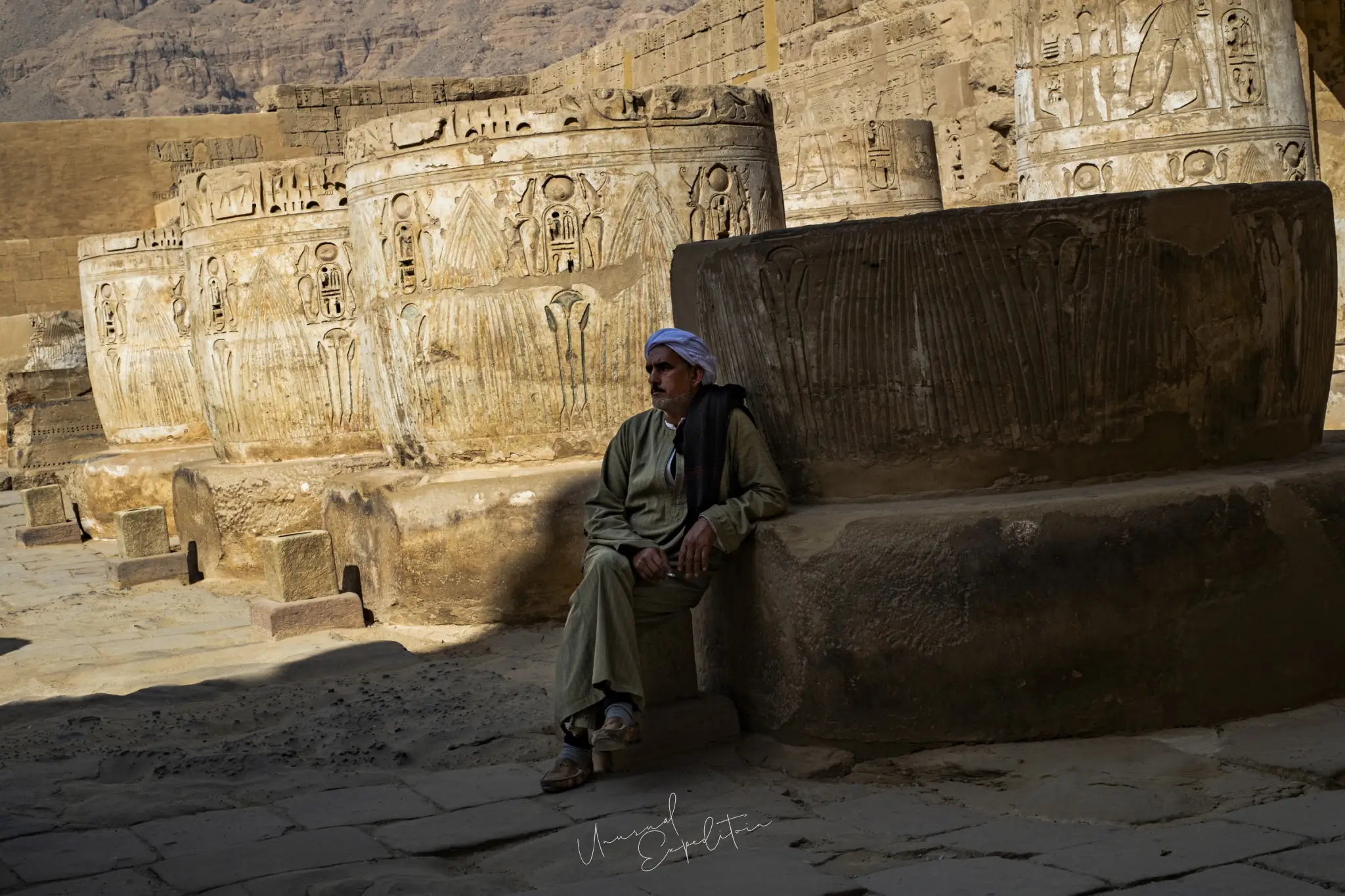
Across the river, the West Bank is where the pharaohs were buried and remembered. Hatshepsut's terraced temple at Deir el-Bahari sits against a wall of cliffs, the Valley of the Kings lies in the hills behind, and Medinet Habu, the mortuary temple of Ramesses III, holds some of the best-preserved painted reliefs in Egypt. Our West Bank of Luxor guide sets out what each site gives a photographer, and Medinet Habu temple has its own guide because it is the place we would send any photographer who loves colour and wants fewer people in the frame.
Balloons at sunrise
The other Luxor picture is from the air. Before sunrise, dozens of hot air balloons inflate on a launch field on the West Bank and drift over the fields, the villages and the temples as the sun comes up behind the eastern hills. The flights are regulated by the Egyptian Civil Aviation Authority and are cancelled when the wind is too strong. Our Luxor hot air balloon guide explains what you can photograph from the basket and from the ground, and how to set the camera before you lift off.
What you photograph around Luxor
| Subject | Where | Best light |
|---|---|---|
| Hypostyle columns and capitals | Karnak, East Bank | Late afternoon, when sun slips between the columns |
| Colonnades and wall reliefs | Luxor Temple, East Bank | Morning, low side light |
| Painted reliefs | Medinet Habu, West Bank | Mid-morning, reflected light in shaded courts |
| Terraced temple under cliffs | Deir el-Bahari, West Bank | Early morning, before the cliff face flattens |
| Balloons over fields and temples | West Bank, from the air | Sunrise |
| Pylons in silhouette | Karnak entrance | Sunset and blue hour |
The East Bank suits the end of the day and the West Bank the start, which is how most photographers split their time.
Photography rules at the temples
Egypt's Supreme Council of Antiquities allows personal photography with phones and cameras, without flash, at the sites and museums run by the Ministry of Tourism and Antiquities; the decision was announced on the ministry's own site. Practice can differ at individual tombs, so check at the gate. The UK Foreign, Commonwealth and Development Office notes that professional photography or film equipment needs a permit, and Singapore's Ministry of Foreign Affairs reminds visitors that drones need prior permission from the Egyptian Civil Aviation Authority and that security personnel and checkpoints must not be photographed. We travel light: a camera, two zooms and no tripod inside the temples.
"Luxor taught me to stop fighting the sun. In the middle of the day I go looking for shade and the light that bounces into it, and I save the open courts for the last hour, when the stone turns gold and every carving stands out."
Joseph Mak, tour leader, Unusual Expedition
Camera gear for Luxor
A 24-70mm handles most of Luxor: courts, colonnades and the river. A wide zoom such as a 16-35mm is the lens for the hypostyle halls, where you stand close to columns far wider than your arms and need to fit them in looking up. A 70-200mm picks out a single capital, a line of hieroglyphs or a balloon over the cliffs. Bring a lens cloth and a blower for the fine dust, and a polariser for the sky behind the pylons. Interiors are dark next to bright doorways, so expect to bracket or to lift shadows later.
Luxor and Aswan together
Most journeys along the Nile join Luxor and Aswan, and the two feel different through a lens. Luxor is monumental and architectural; Aswan is softer, with sails on the river, granite islands and Nubian villages, and it is the base for Abu Simbel. Our Aswan and Abu Simbel photography tour guide covers that stretch, and for the season and the heat, read the best time to visit Luxor. Most journeys start or end in Cairo, covered in our Cairo and Giza photography tour guide.
Explore Luxor in depth
- Karnak temple hypostyle hall: photographing the columns
- Luxor Temple photos and Luxor Temple vs Karnak
- Medinet Habu temple and its painted reliefs
- West Bank of Luxor: Hatshepsut and the Valley of the Kings
- Luxor hot air balloon at sunrise
- Best time to visit Luxor: weather and light
Photograph Luxor with us
Our Egypt Photo Tour covers Cairo and Giza, Aswan, Abu Simbel and Luxor, with Karnak, the West Bank temples and an optional balloon flight in Luxor. Fares are indicatively S$8,800 to S$10,500 per person depending on the room; the current rate and departure are on the Egypt photography tours page. If you would rather travel at your own pace, we also arrange private tours for individuals, couples, families and photographers.
Join the Luxor photography tour
Egypt Photo Tour – Egypt departs 12 Dec 2026 To 20 Dec 2026, led by Joseph Mak. Small group, photography first. All Luxor photography tours.
Explore Luxor in depth
- Medinet Habu Temple: Colour, Reliefs and Quiet on the West BankEgypt
- West Bank of Luxor: Hatshepsut, the Valley of the Kings and Medinet HabuEgypt
- Luxor Temple Photos: Columns, Reliefs and the LightEgypt
- Luxor Hot Air Balloon at Sunrise: A Photographer's GuideEgypt
- Karnak Temple Hypostyle Hall: Photographing the ColumnsEgypt
- Best Time to Visit Luxor for Photography: Weather and LightEgypt
Upcoming Photo Tours
- Egypt Photo Tour – EgyptEgypt 12 Dec 2026 To 20 Dec 2026
- Inner Mongolia Winter Owl Photo Tour – ChinaChina 01 Jan 2027 To 04 Jan 2027
- Inner Mongolia Winter Photo Tour – ChinaChina 05 Jan 2027 To 11 Jan 2027
- Mekong And Central Highland Vietnam Photo Tour - VietnamVietnam 16 Jan 2027 To 24 Jan 2027