
Belo sur Mer, Madagascar: The Photography Tour Guide to the Vezo Dhow Village
Belo sur Mer, Madagascar photography guide: the Vezo dhow yard, lagoon, sunset boat launch, people, getting there from Morondava.
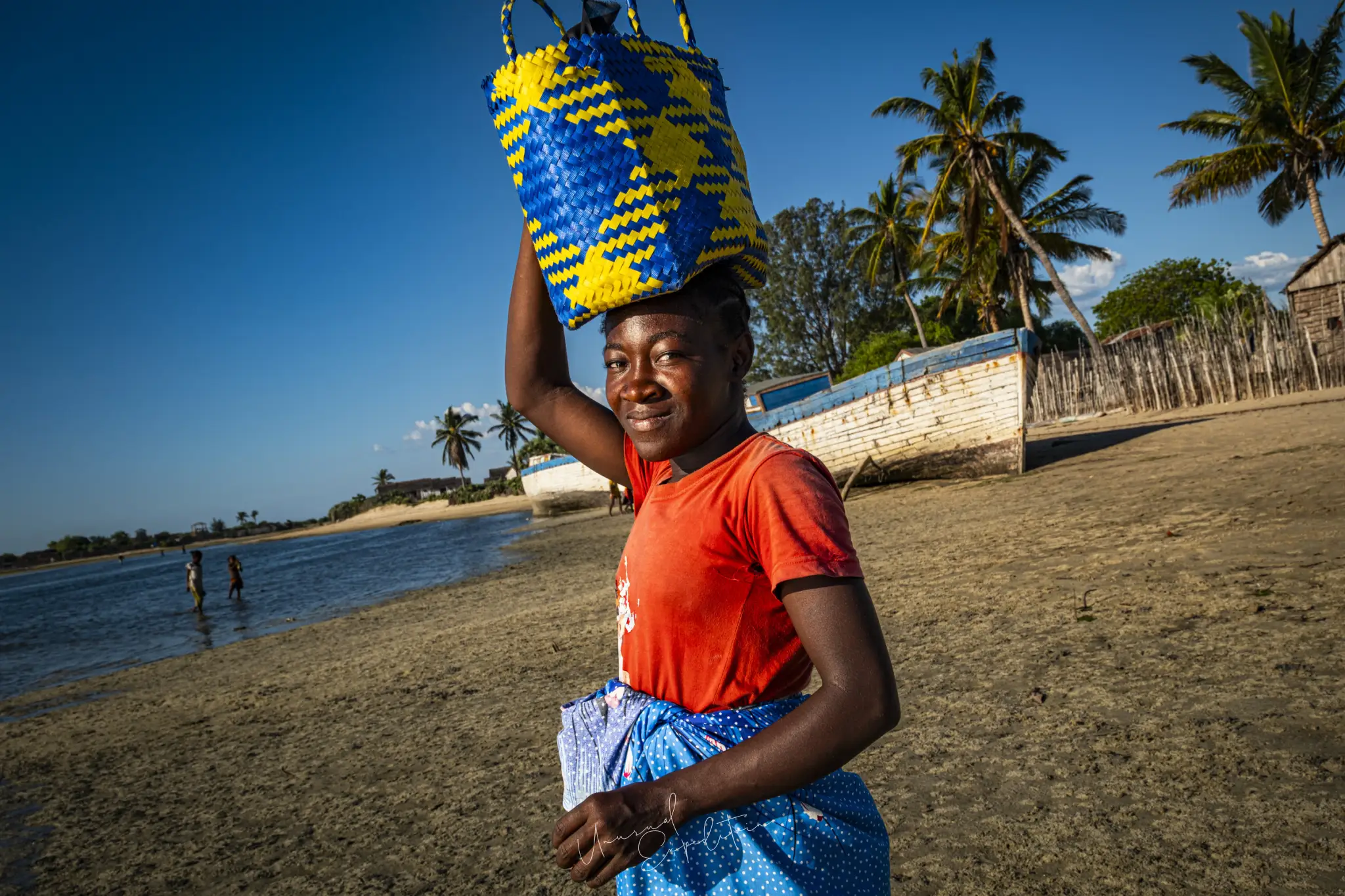
Belo sur Mer, Madagascar, is a Vezo fishing village on the west coast south of Morondava, built on a sand spit between the Mozambique Channel and a shallow lagoon, and it is the best place in the country to photograph wooden sailing dhows being built by hand. A photographer comes for four things: the dhow yard on the beach, the lagoon and its tidal channels, the evening boat launch, and the people of the village. All of them sit within walking distance of each other.
Belo sur Mer is one area of our complete Madagascar photography tour guide, which covers the whole country, the season and getting there. This page is the overview of the village itself, with links to the five Belo sur Mer articles that go deeper.
Belo sur Mer, Madagascar: what kind of place it is
Belo sur Mer is a village of palm-thatch and plank houses among coconut palms, a few simple lodges on the beach, a dhow yard on the lagoon shore and salt pans inland. There is no paved road, no bank and very little phone signal. The people are Vezo, the fishing people of the south-west coast, who live from the sea in outrigger pirogues and in the dhows they build themselves. Life runs on the tide and the light: boats go out and come in with the water, and the village is busiest early and late in the day. That rhythm suits a camera. The middle of the day is harsh and quiet, the edges of the day are soft and full of people, and everything you want to photograph is a short walk from the next thing.
The dhow yard
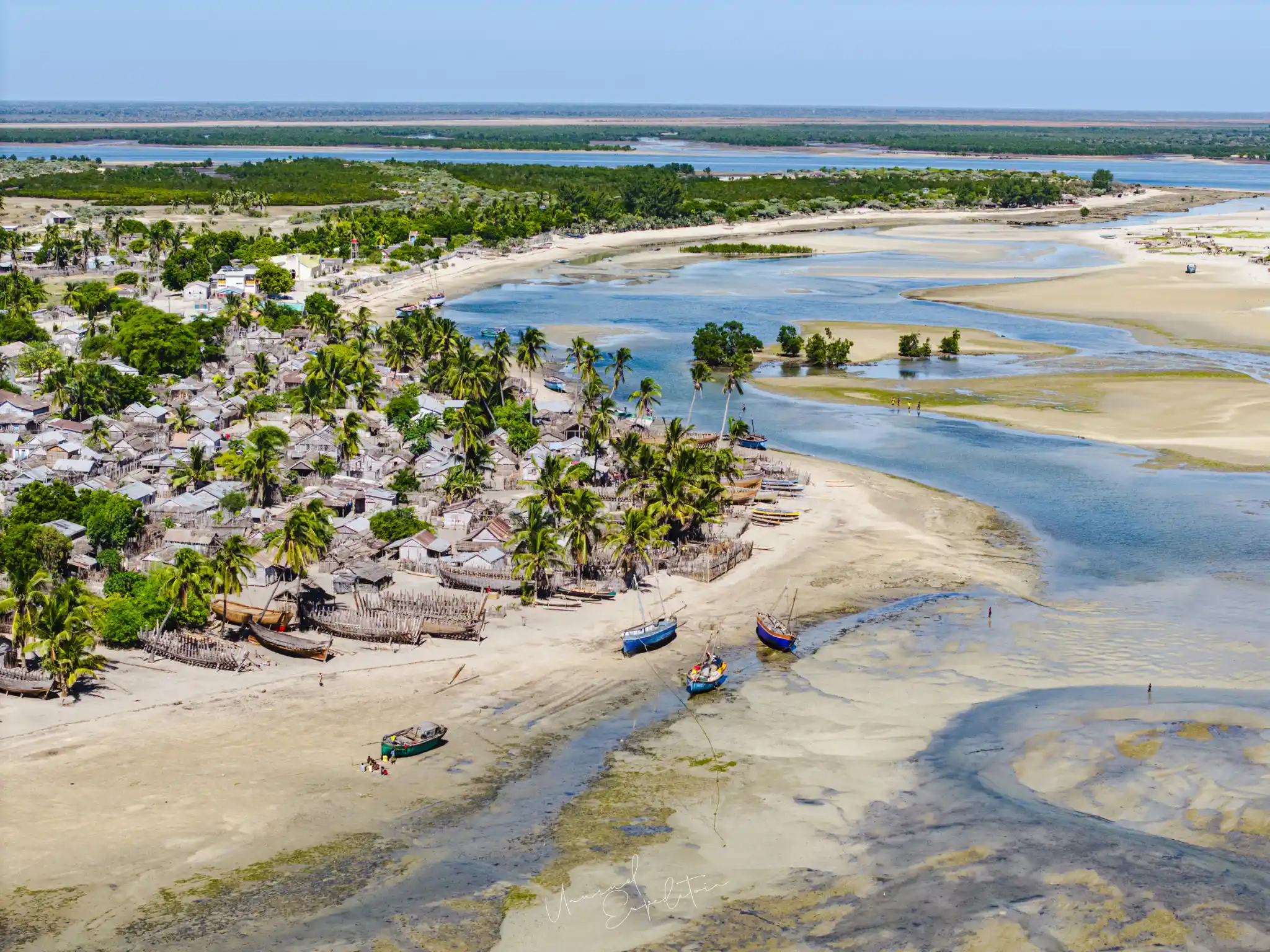
The dhow yard at Belo sur Mer is the reason most photographers come to Belo sur Mer. Vezo builders shape boutres, wooden cargo and fishing dhows, on the sand above the tide line with hand tools: adzes, saws and caulking irons. Several hulls stand at different stages at any one time, so in a single session you can photograph a bare keel, a ribbed frame and a planked hull. The strongest frames come from inside a hull looking up through the ribs, and from low on the sand with a builder working against the light. The full story of the boats and the craft is in Belo sur Mer and the dhow builders, and the yard from above, with the village around it, is in Belo sur Mer beach and lagoon from the air.
The lagoon, the sand bar and the tide
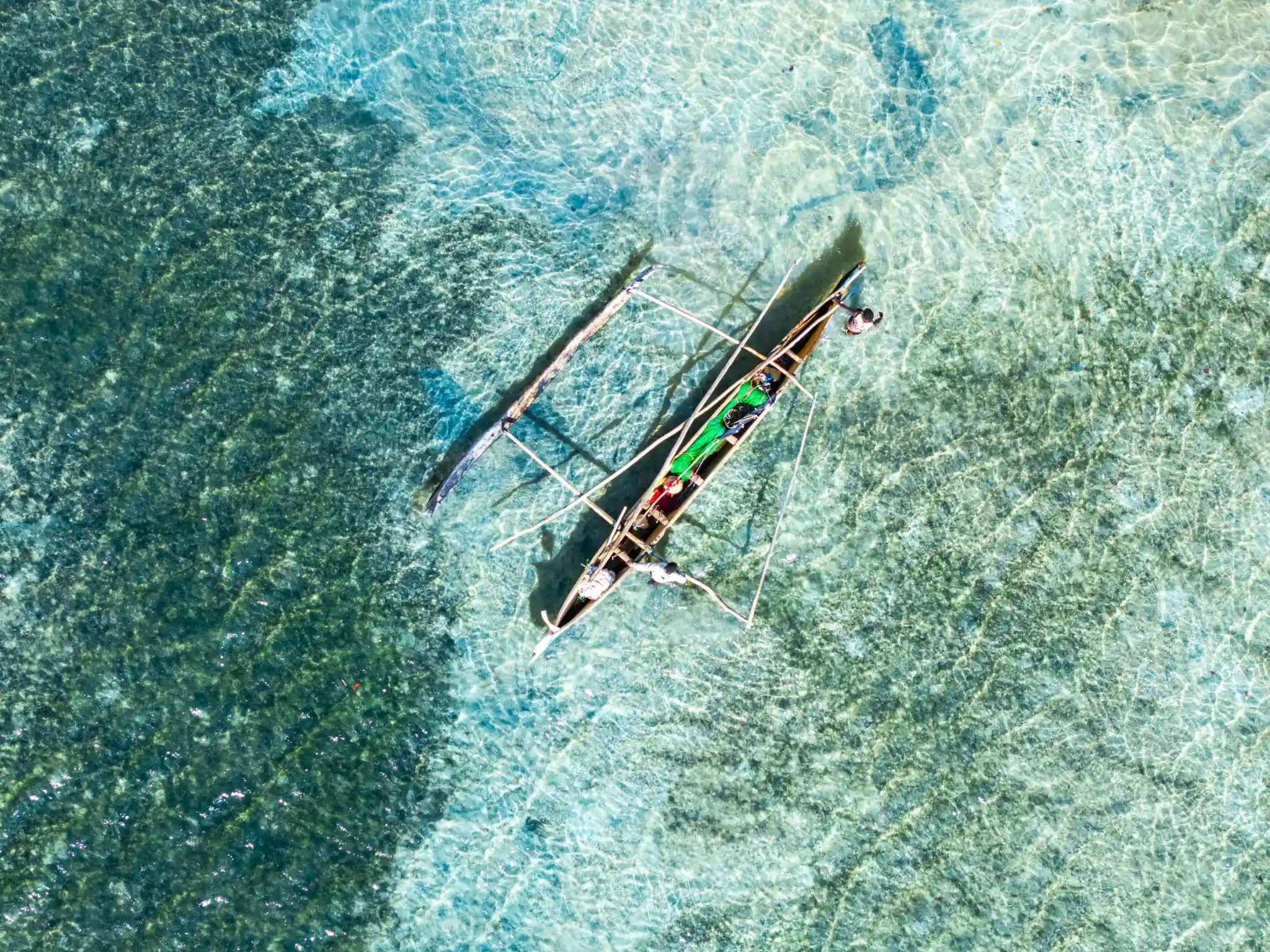
Behind the spit the lagoon fills and empties with the tide. At high water it is a calm sheet with dhows at anchor; at low water it drains to turquoise and green channels across white sand, with pirogues crossing and people walking out to fish. The tide decides what the lagoon looks like far more than the hour does, so the day's tide table is the first thing to check. Seen from the air the channels become bands of colour and texture, which is why we give the drone view an article of its own. On the ground, the lagoon is the place for reflections at first light and for figures walking the flats.
The sunset boat launch
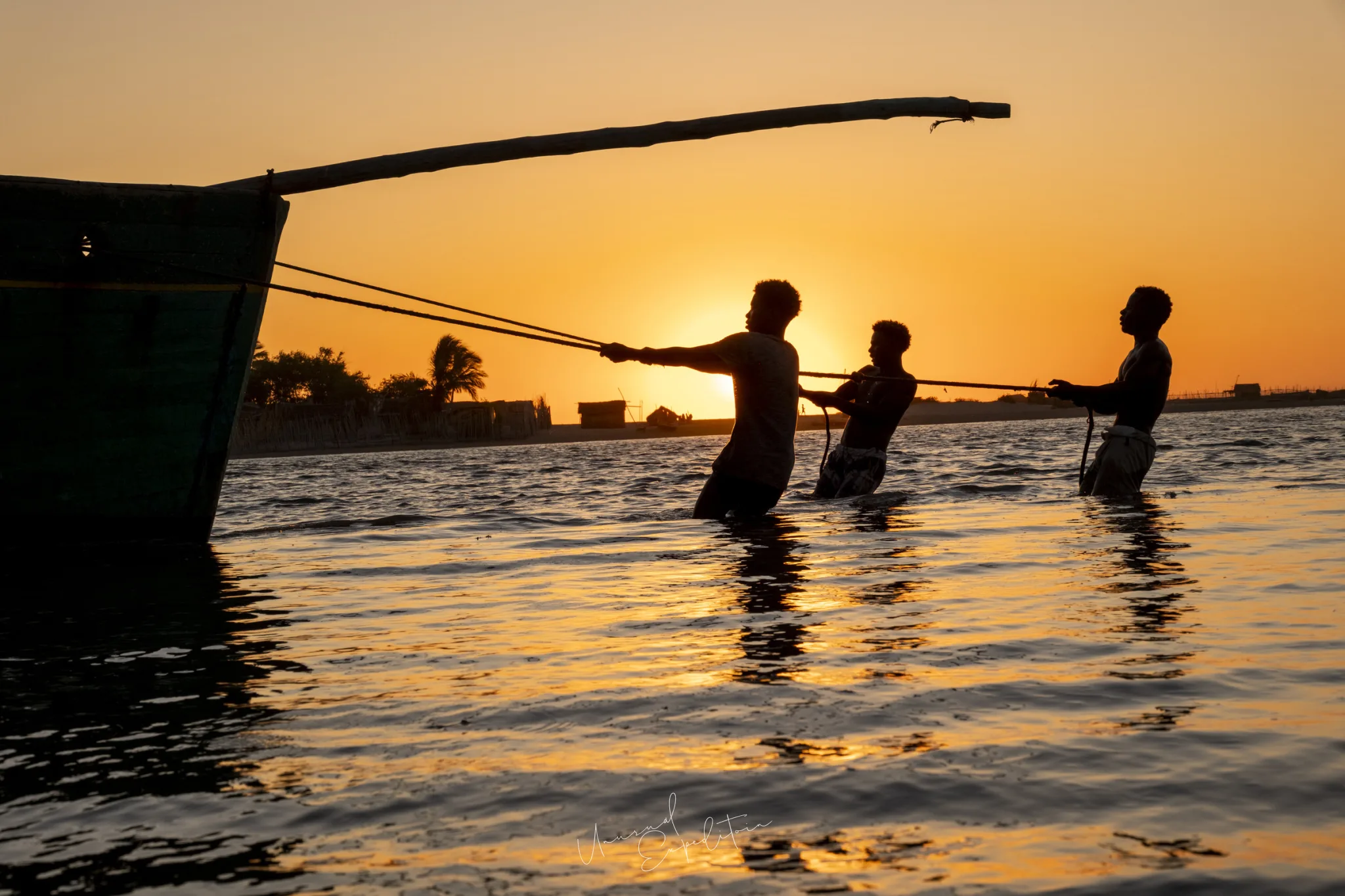
The best evening picture at Belo sur Mer is not the sunset itself but what the village does in it. When the light goes low over the channel, people gather to push a loaded dhow through the shallows or haul it on a line, pirogues come in, and nets are carried up the beach. Stand in the water to the west of the action with the sun behind the boat and the figures turn to silhouettes against orange water. Where exactly to stand, and the other positions around the village, are in Belo sur Mer photos: where to shoot.
The Vezo people of Belo sur Mer
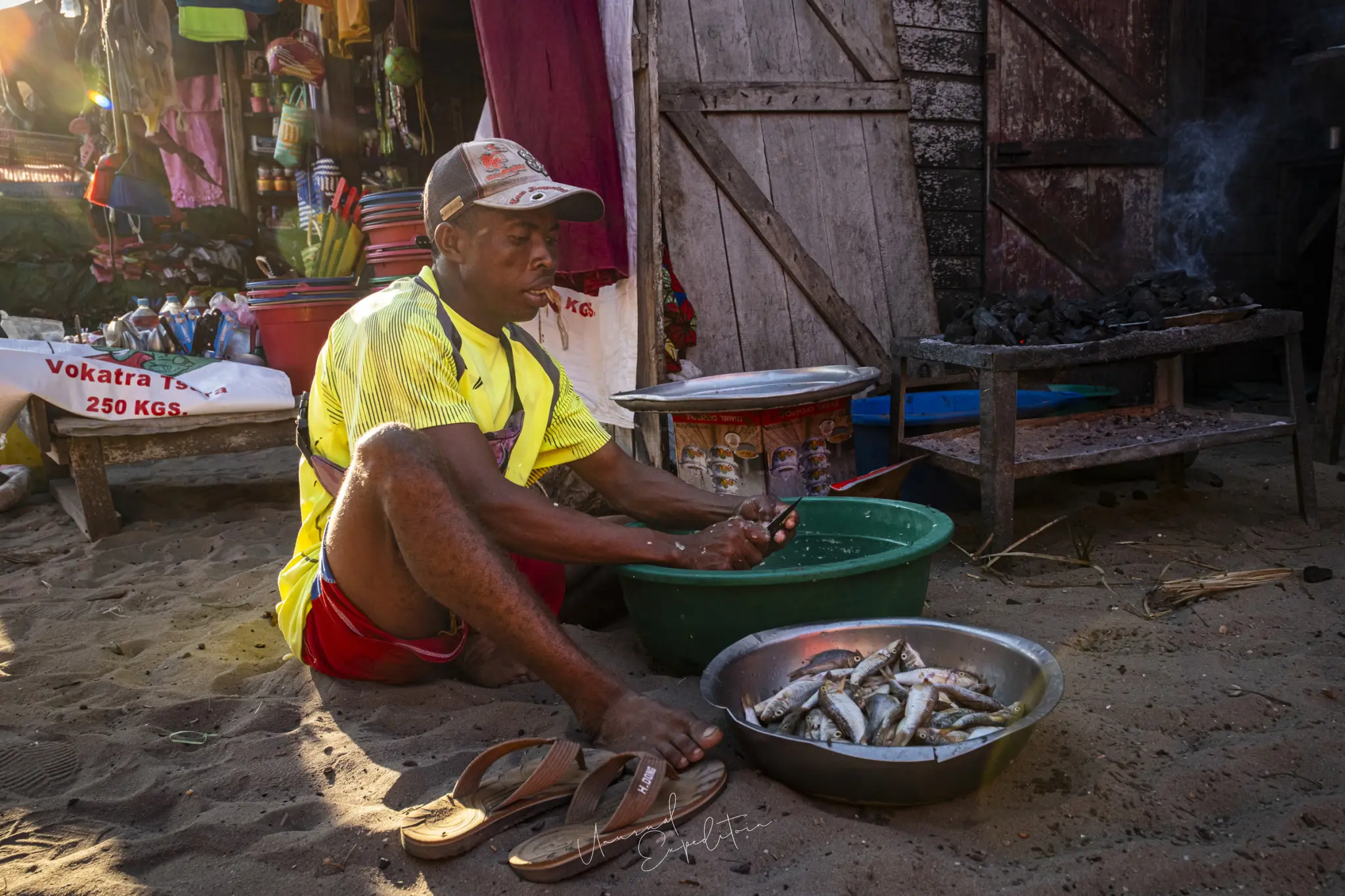
The village is a people story as much as a boat story. Women carry baskets along the beach, men mend nets against the stick fences, the barber works from a painted wooden booth, and fish are cleaned and sold on the sand. The anthropologist Rita Astuti, who lived among the Vezo, described their identity as something people do, fishing, sailing and living by the sea, more than something they are born into. That idea, and how to photograph a working community with respect, is the subject of The Vezo people of Belo sur Mer.
People ask me what lens to bring for Belo sur Mer. Bring time. The first morning I want everyone to walk the beach and the yard with the camera down, say hello, watch the boats. By the second morning nobody is looking at us any more, and that is when the village starts to photograph itself.
Joseph Mak, tour leader, Unusual Expedition
Morondava to Belo sur Mer
Morondava to Belo sur Mer is an overland trip by 4x4 on sand tracks and, when the tide allows, along the beach, through dry forest, past salt flats and the odd baobab. There is no scheduled transport. The track depends on the season: in the rains from December to March parts of it flood, and it reopens as the dry season begins, which is one reason our tour arrives in April. Kirindy Mitea National Park, managed by Madagascar National Parks, lies just south of the village. For Morondava itself, the Avenue of the Baobabs and Betania village, see our Morondava photography tour guide.
Belo sur Mer at a glance for photographers
| Subject | Best light | Lens | Notes |
|---|---|---|---|
| Dhow yard | Early morning, late afternoon | 16-35mm, 24-70mm | Ask before climbing into a hull |
| Lagoon and sand bar | First light, low tide | 24-70mm, drone | Plan around the tide table |
| Boat launch | Sunset | 24-70mm, 70-200mm | Expect to stand in the water |
| Village lanes and people | Morning | 24-70mm | Ask first, accept a no |
| Salt pans | Late afternoon | 24-70mm, 70-200mm | Low angle for the grid |
The table is weighted to the edges of the day because the noon sun on white sand flattens almost everything.
Best time to photograph Belo sur Mer
The south-west is the driest part of Madagascar. From April to October rain is rare and the sky over the channel is usually clear; from December to March the rains make the track unreliable. April has the extra advantage of a green landscape behind the coast. Month-by-month detail for the whole country is in the best time for a Madagascar photography trip.
Practical notes for a photographer
Power in Belo sur Mer comes from generators for part of the evening, so charge everything while it runs and carry a power bank. Sand and salt get into every gap: a blower and a cloth before each lens change, and a rain cover against spray at the launch. Pay nobody for photographs; buy fish, a drink or a carved model dhow instead. Drone flying in Madagascar needs care with the rules of the civil aviation authority, covered in the aerial article.
Explore Belo sur Mer in depth
- Belo sur Mer and the dhow builders of the Vezo coast
- Belo sur Mer photos: where to shoot, the beach and the weather
- Belo sur Mer beach and lagoon from the air
- The Vezo people of Belo sur Mer
Photograph Belo sur Mer with us
Belo sur Mer is part of our Madagascar photo tour with Joseph Mak, together with the Avenue of the Baobabs, Antananarivo and Andasibe. The fare is indicatively S$6,450 to S$7,000 per person depending on the room. Departures, the current fare and the full set of guides are on our Madagascar photography tours page.
Join the Belo sur Mer photography tour
Madagascar Photo Tour – Madagascar departs 11 Apr 2027 To 19 Apr 2027, led by Joseph Mak. Small group, photography first. All Belo sur Mer photography tours.
Explore Belo sur Mer in depth
- The Vezo People of Belo sur Mer: Photographing a Fishing CommunityMadagascar
- Belo sur Mer Beach and Lagoon from the Air: Tides, Sand Bars and Drone RulesMadagascar
- Belo sur Mer Photos: Where to Shoot, the Beach and the WeatherMadagascar
- Belo sur Mer and the Dhow Builders of the Vezo CoastMadagascar
Upcoming Photo Tours
- Egypt Photo Tour – EgyptEgypt 12 Dec 2026 To 20 Dec 2026
- Inner Mongolia Winter Owl Photo Tour – ChinaChina 01 Jan 2027 To 04 Jan 2027
- Inner Mongolia Winter Photo Tour – ChinaChina 05 Jan 2027 To 11 Jan 2027
- Mekong And Central Highland Vietnam Photo Tour - VietnamVietnam 16 Jan 2027 To 24 Jan 2027