
Belo sur Mer Photos: Where to Shoot, the Beach and the Weather
Belo sur Mer photos and where to shoot them: the dhow yard, lagoon, salt pans and sunset launch, with the map, weather and sunrise times.
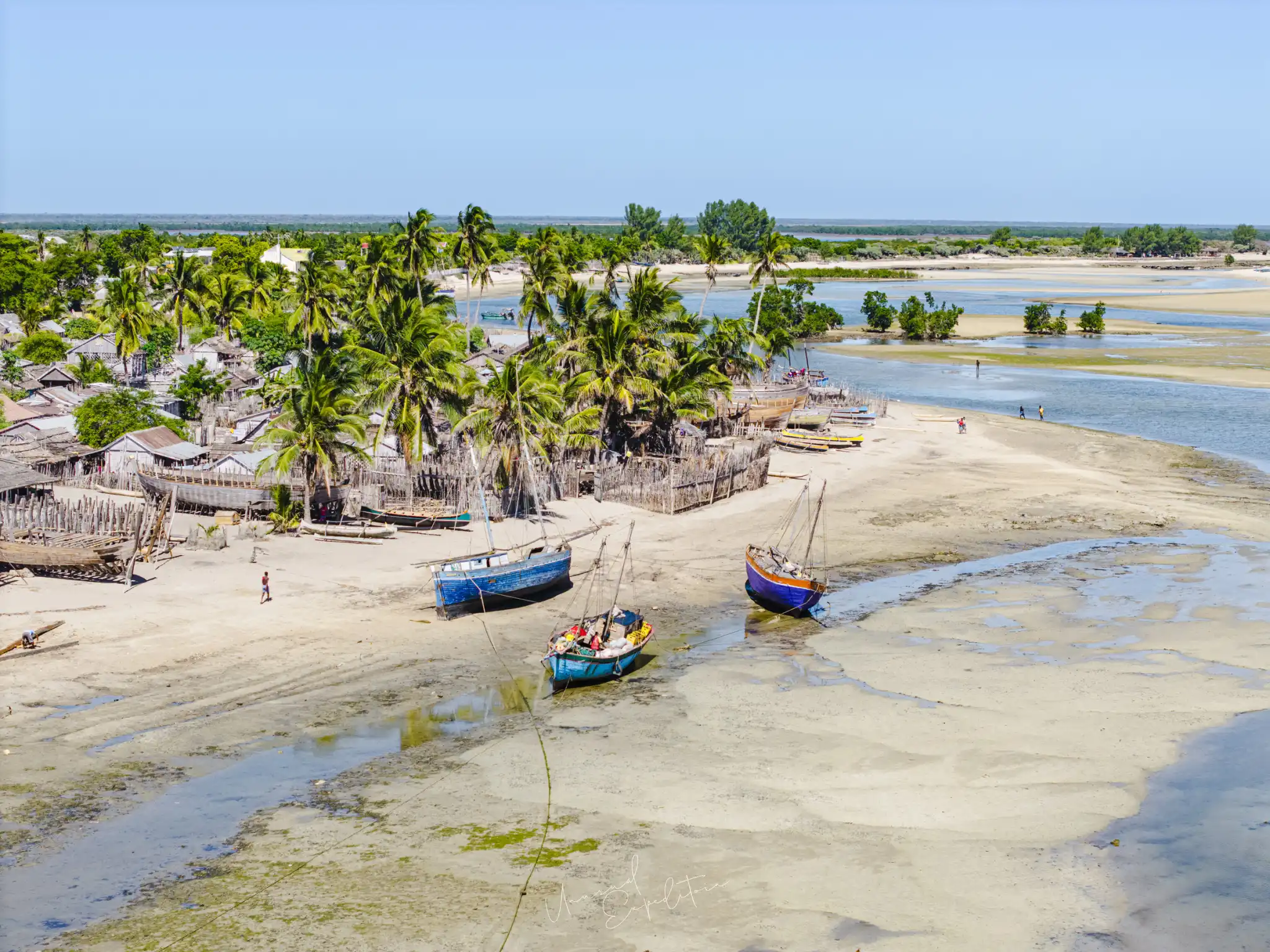
Belo sur Mer photos come from four places within walking distance of each other: the dhow yard on the beach, the lagoon behind the sand bar, the salt pans inland and the village lanes. It is a Vezo fishing village of a few thousand people about 80 kilometres south of Morondava on Madagascar's west coast, with no paved road, a handful of simple lodges and some of the best people photography in the country. Where to stand, what time of day each spot works, the weather and the map follow.
It is the practical companion to Belo sur Mer and the dhow builders, which tells the story of the boats and the people, and it belongs to the complete Madagascar photography tour guide.
Belo sur Mer map: how the village is laid out
Picture a long sand spit running north to south with the open Mozambique Channel on its west side and a shallow lagoon on its east. The village sits on the spit, palm-thatch and plank houses among coconut palms. The dhow yard is on the lagoon shore at the north end of the village, where the finished boats can float out on a spring tide. The salt pans are inland of the lagoon to the east, flat rectangles of evaporating sea water. Mangroves begin to the south. The lodges are strung along the beach. Everything a photographer needs is within a twenty-minute walk, which is unusual in Madagascar, and the walk itself along the beach at low tide is part of the day. From above, the whole arrangement reads at once: hulls, huts, channel and sand bar.
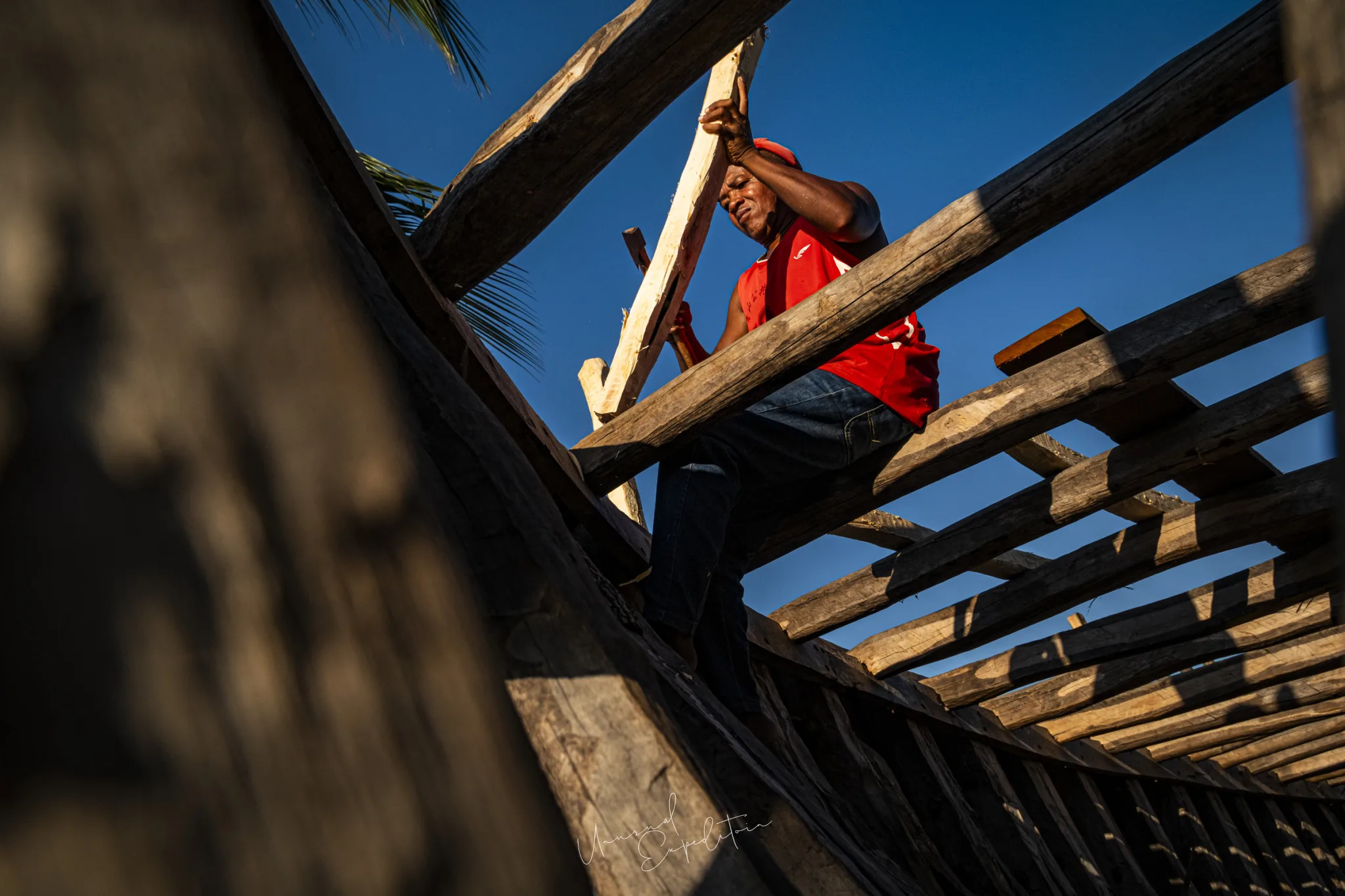
Where to shoot in Belo sur Mer: the dhow yard
The yard is the reason photographers come. The Vezo build wooden sailing dhows, boutres, up to twenty metres long, on the sand above the tide line with hand tools and no plans. At any time there are several at different stages, so you can photograph a bare keel, a ribbed frame and a planked hull in one morning. The best positions are inside the hull looking up through the ribs, where the curved timbers make a vault and the sky comes through the gaps, and low on the sand at the bow with a builder working against the light. Work starts soon after sunrise and stops in the midday heat, then resumes in the middle of the afternoon, so the two sessions line up with the good light. A 24-70mm covers the yard; a 16-35mm gets inside the hulls. Ask before you climb into a boat, and expect a yes.
The lagoon and the sand bar
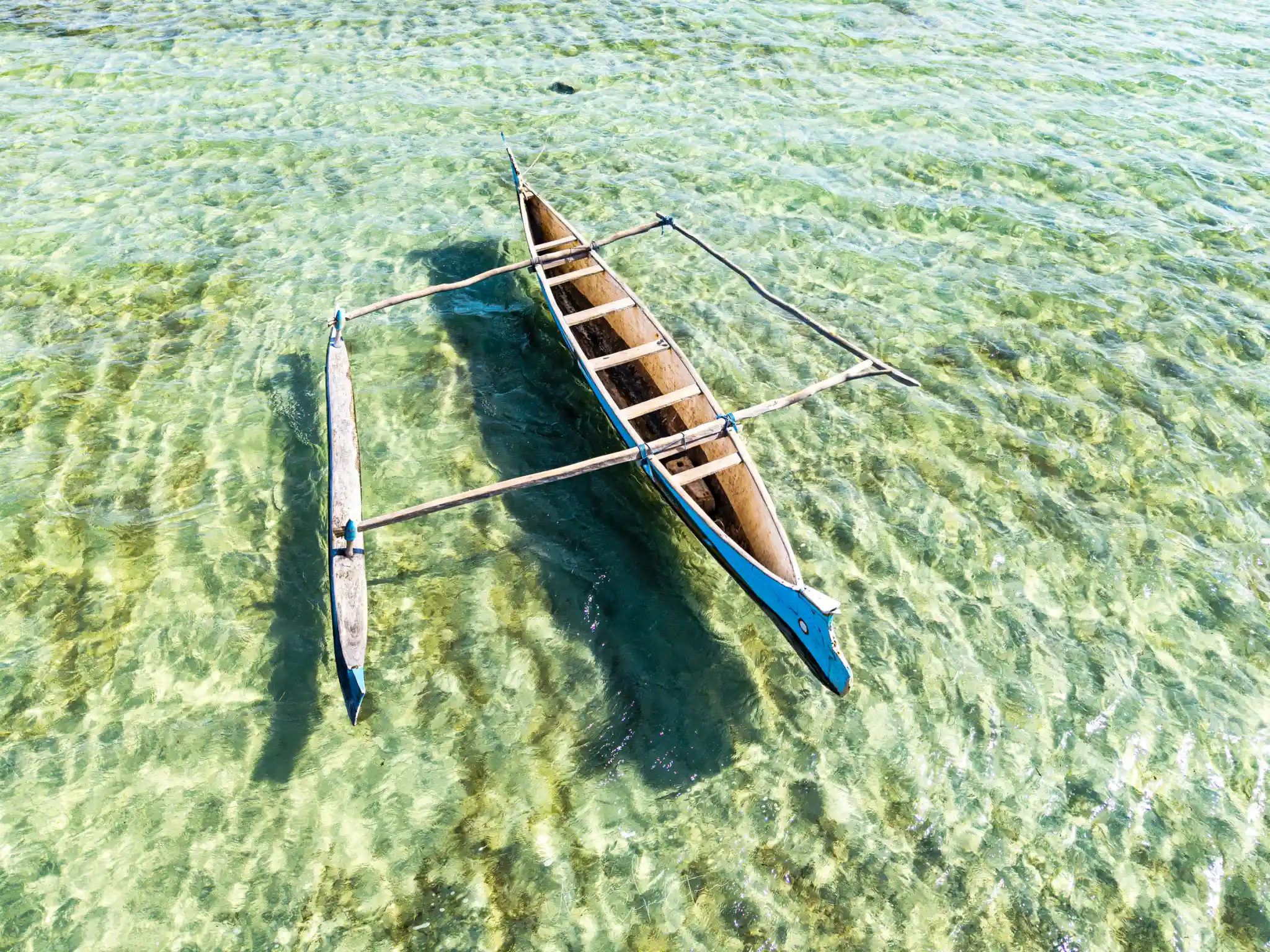
The lagoon is the calm picture. At first light it is flat and the dhows at anchor are doubled in it; at low tide it empties to channels of turquoise and green water between white sand, with pirogues crossing and children fishing in the shallows. The bar is a few minutes along the beach. From ground level the frames are reflections and silhouettes of boats; from above, the channels become abstract bands of colour with a single outrigger for scale, and that is the frame most people have never seen of this coast. The tide matters more than the hour here, so ask at the lodge for the day's low water and plan the lagoon walk around it.
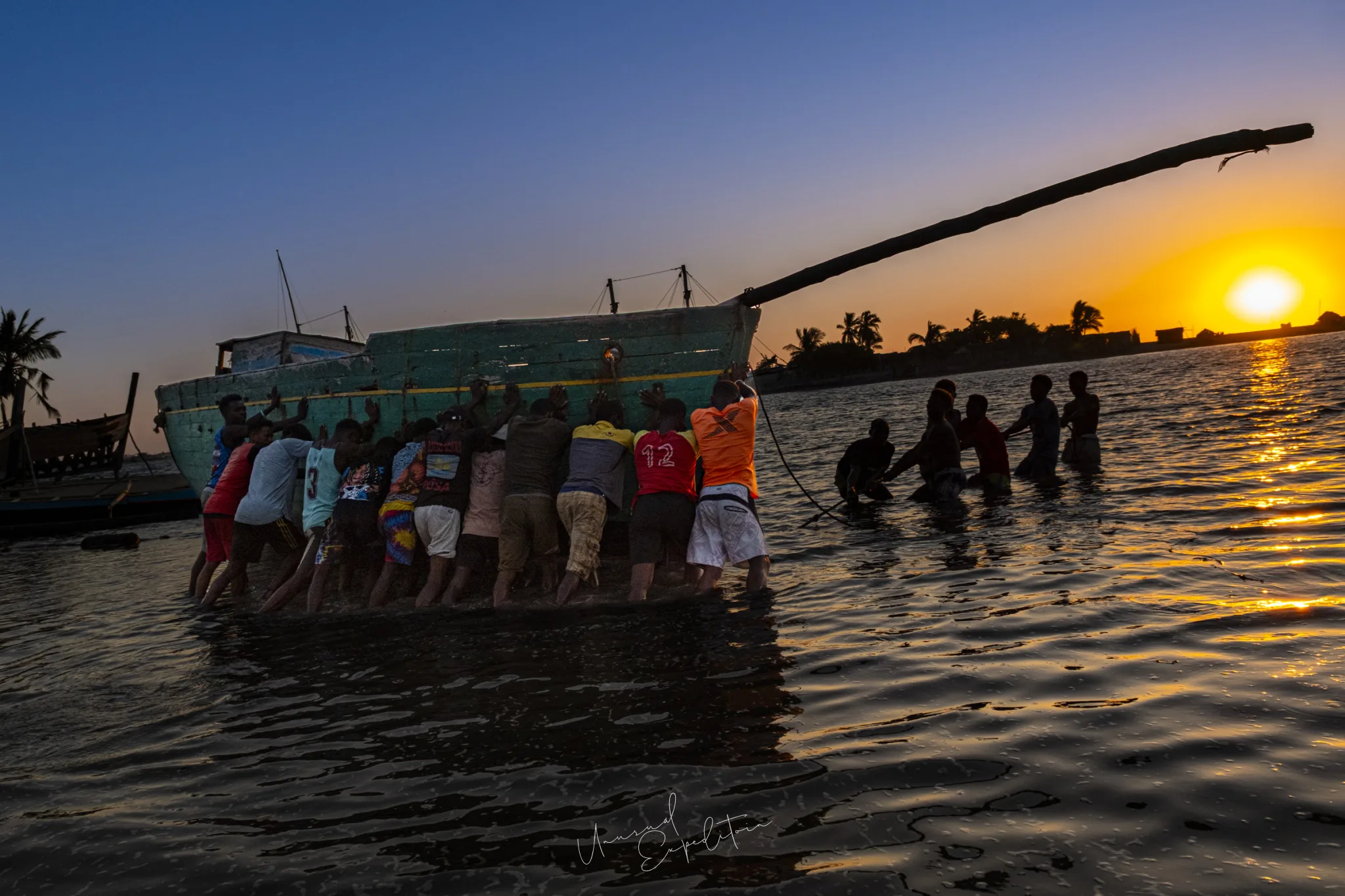
Sunset photo: the boat launch
The strongest sunset frame in Belo sur Mer is not a sunset at all but what happens in it. In the last hour the village meets the boats: pirogues come in, a loaded dhow is pushed through the shallows by a line of people, nets are carried up the beach. Stand in the water to the west of the action with the sun behind the boats and the figures go to silhouette against the orange, with the light on the wet sand in front. A 70-200mm compresses the line of pushers; a wider lens at waist height in the water puts you in it. Wear sandals you do not mind soaking and keep a cloth on the camera strap for spray.
Sunrise time for Belo sur Mer, and the light through the year
Belo sur Mer sits at about 20 degrees south, so the day length does not swing far. The sun rises a little after six for most of the year, closer to half past six in the southern winter around June and July, and nearer half past five in December. Sunset runs from about half past five in June to a little before seven in December. Dawn light comes across the lagoon from the east, so the first pictures are on the lagoon side; the evening light comes off the sea from the west, which is why the launch frames work on the beach. The table gives approximate daylight by month at this latitude; local horizon and haze shift it by minutes, not hours.
| Month | Approximate daylight | Sunrise | Sunset | Season |
|---|---|---|---|---|
| January | About 13 hours | A little after half past five | Around quarter to seven | Wet, track often closed |
| March | About 12 hours | Around six | Around quarter past six | End of the rains |
| April | Just under 12 hours | A little after six | Just before six | Dry season begins, track opens |
| June and July | About 11 hours | Around half past six | Around half past five | Coolest and driest |
| September | About 12 hours | Around six | Around six | Dry, warming, whale season offshore |
| December | Over 13 hours | Before half past five | Just before seven | Hot, rains return |
The practical reading is that the dry months trade an hour of daylight for a track you can actually drive and a sky that stays clear.
Belo sur Mer weather
The south-west is the driest part of Madagascar. From April to October rain is rare, days reach the low thirties and nights in the middle of the dry season drop to the high teens. The wind picks up in the afternoons on this coast and drops at dusk, which is when the lagoon goes glassy. From December to March the rains come, the sand track from Morondava becomes impassable in places, and the village is reached by boat if at all. Our tour comes in April, at the start of the dry season, when the track has just reopened and the paddies inland are still green.
Places to visit in Belo sur Mer beyond the beach
The salt pans, a short walk inland, are graphic from a low angle in late light: white and pink rectangles with workers raking. The village lanes behind the beach, with their plank houses, the barber, the fish sellers and the children's football game, are a street photography session of their own in the morning. The mangroves to the south are reached by pirogue and give herons and egrets at dawn. Kirindy Mitea National Park begins just south of the village, with dry forest, lakes and lemurs; it is a separate day and not part of our itinerary. On the way back to Morondava, the Vezo village of Betania on the spit opposite the town is the busier, closer version of the same coast, photographed in Morondava photos: sunset and the fishing village.
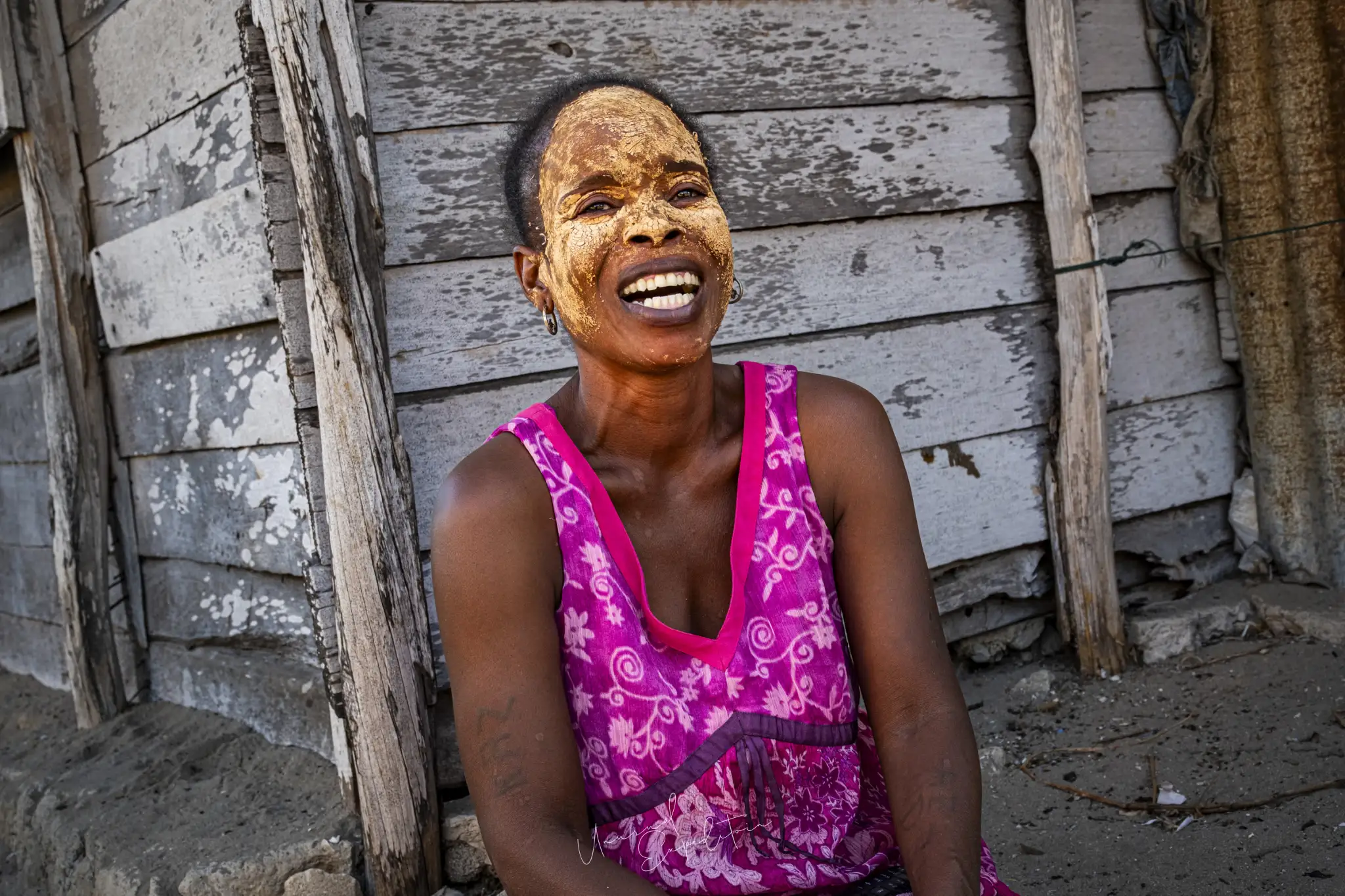
"Belo sur Mer is the one place on the trip where I ask people to leave the long lens in the room for the first morning. Walk the beach, shake hands at the yard, sit down. The pictures come to you here, and they come from a metre away."
Joseph Mak, tour leader, Unusual Expedition
Getting there and staying
There is no scheduled transport. From Morondava it is a 4x4 along sand tracks and, at low tide, the beach itself, most of a day with photo stops, or a boat down the coast when the sea is calm. Lodges are simple bungalows on the beach with generator power for part of the evening; charge batteries while it runs and bring a power bank. There is no bank and little phone signal. The heat is dry, the sand gets into everything, so a blower and a cloth before every lens change. What the whole trip costs, line by line, is in what a Madagascar photo tour costs.
Photograph the coast with us
Belo sur Mer is the people chapter of the Madagascar photography tour, our April departure led by Joseph Mak. If the pictures on this page are the kind you want, this is the place on the trip that makes them.
Join the Madagascar photography tour
Madagascar Photo Tour – Madagascar departs 11 Apr 2027 To 19 Apr 2027, led by Joseph Mak. Small group, photography first. All Madagascar photography tours.
Explore Madagascar in depth
- The Complete Guide to a Madagascar Photography TourMadagascar
- Andasibe: Is It Worth Visiting, How to Get There, Lemurs and the Night WalkMadagascar
- Avenue of the Baobabs Photo Spots: Location and the Best PositionsMadagascar
- Morondava Photos: Sunset, the Fishing Village and the BeachMadagascar
- Madagascar Photos: What the Island Really Looks LikeMadagascar
- What to Pack for a Madagascar Photo TourMadagascar
- The Milky Way over the Baobabs: Night Photography in MadagascarMadagascar
- Madagascar Tour from Singapore: Flights, Visa and What to ExpectMadagascar
- Is Madagascar Safe? Health, Roads and Drones for PhotographersMadagascar
- What a Madagascar Photo Tour Costs, Line by LineMadagascar
- Twelve Questions Before You Book a Madagascar Photo TourMadagascar
- Madagascar or an African Safari for Wildlife Photography?Madagascar
Upcoming Photo Tours
- Egypt Photo Tour – EgyptEgypt 12 Dec 2026 To 20 Dec 2026
- Inner Mongolia Winter Owl Photo Tour – ChinaChina 01 Jan 2027 To 04 Jan 2027
- Inner Mongolia Winter Photo Tour – ChinaChina 05 Jan 2027 To 11 Jan 2027
- Mekong And Central Highland Vietnam Photo Tour - VietnamVietnam 16 Jan 2027 To 24 Jan 2027