
The Vezo People of Belo sur Mer: Photographing a Fishing Community
Vezo people of Belo sur Mer: who the Vezo are, the boutre builders, village life, the sunset launch and how to photograph with respect.
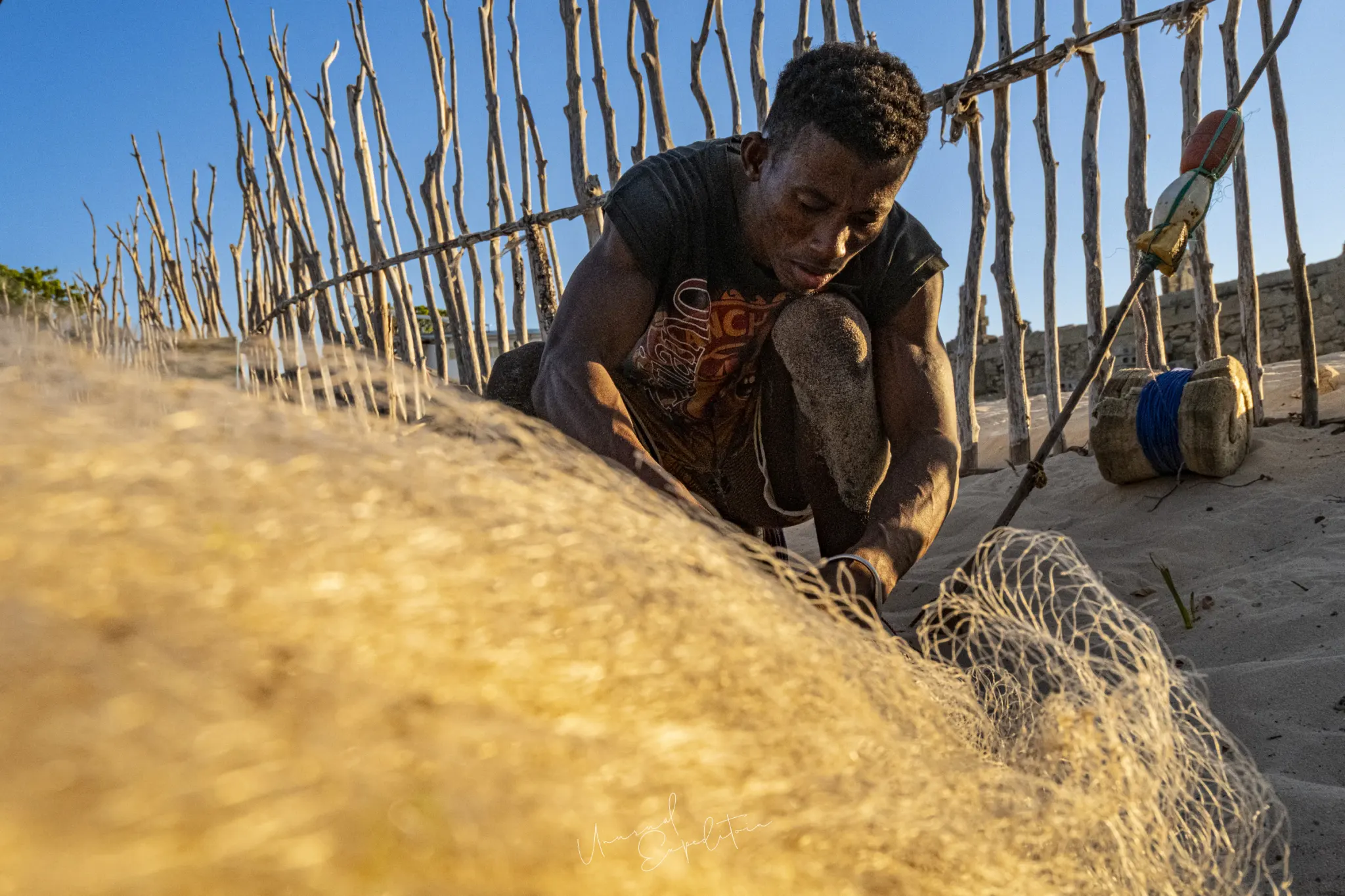
The Vezo people are the fishing and seafaring communities of Madagascar's south-west coast, and Belo sur Mer is one of the best places to photograph them: a village where people still build their own wooden dhows, sail and paddle outrigger pirogues, mend nets on the sand and launch boats through the shallows at sunset. Photographing the Vezo well means working slowly, asking first and treating the boats and the catch as a working economy, not a show.
This article belongs to the Belo sur Mer area of our site; the Belo sur Mer photography tour guide introduces the village, the lagoon and the dhow yard, and the links below go deeper into each.
Vezo people: who they are
The Vezo live along much of the west and south-west coast of Madagascar, in villages on the sand from the Morondava area south towards Toliara and beyond. They fish, sail, trade along the coast and move with the seasons and the fish. The name is usually linked to paddling, and the anthropologist Rita Astuti, who lived in Vezo villages near Morondava and wrote People of the Sea (Cambridge University Press, 1995), argued that being Vezo is something people do more than something they are born into. In her account a person becomes Vezo by living by the sea, fishing, sailing and knowing how to handle a pirogue; someone from inland who learns those skills becomes Vezo too. For a photographer that is a useful way in: the subject is the work and the life on the shore.
Vezo: the boats at the centre of village life
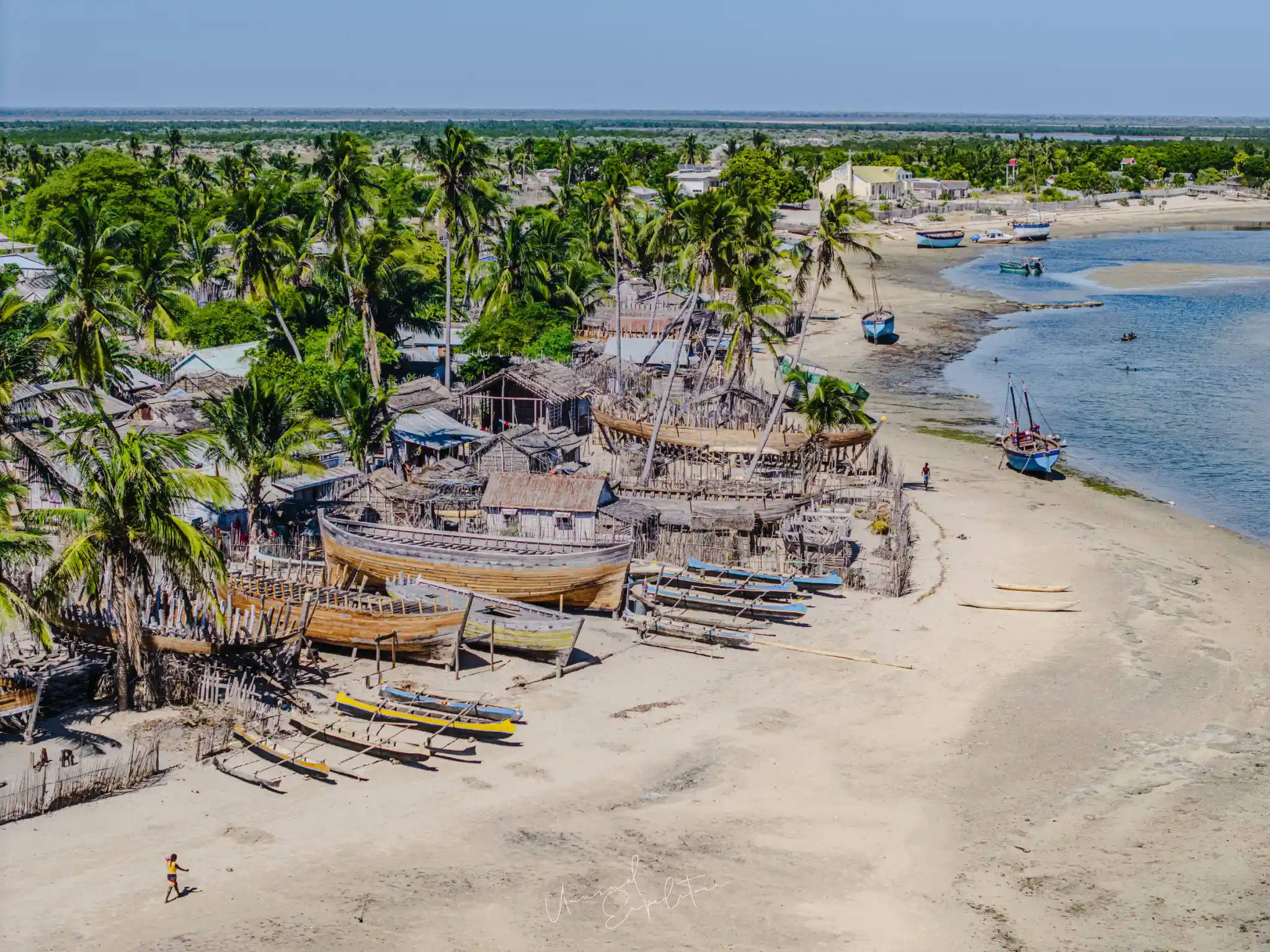
Two kinds of boat shape a Vezo village. The pirogue is a dugout canoe with an outrigger, paddled or sailed, used for daily fishing in the lagoon and along the coast. The boutre is a larger wooden dhow, built from planks on the beach, used for fishing further out and for carrying cargo along the coast. Belo sur Mer is known across Madagascar for its boutre builders. Both kinds of boat give you pictures all day: pirogues crossing the lagoon at first light, boutres lying in the channels at low tide, hulls rising on the sand in the yard.
Boutre Belo sur Mer: the builders
The boutre builders of Belo sur Mer work in the open on the lagoon shore, shaping keels, ribs and planks with adzes and hand saws and caulking the seams by hand. A hull takes a long time to finish, so at any visit several boats stand at different stages. The builders are used to visitors and proud of the work; the respectful approach is to say hello, show interest in the boat and ask before climbing in. The full photographic guide to the yard is Belo sur Mer and the dhow builders, and the yard seen from the air is in Belo sur Mer beach and lagoon from the air.
Everyday life in a Vezo village
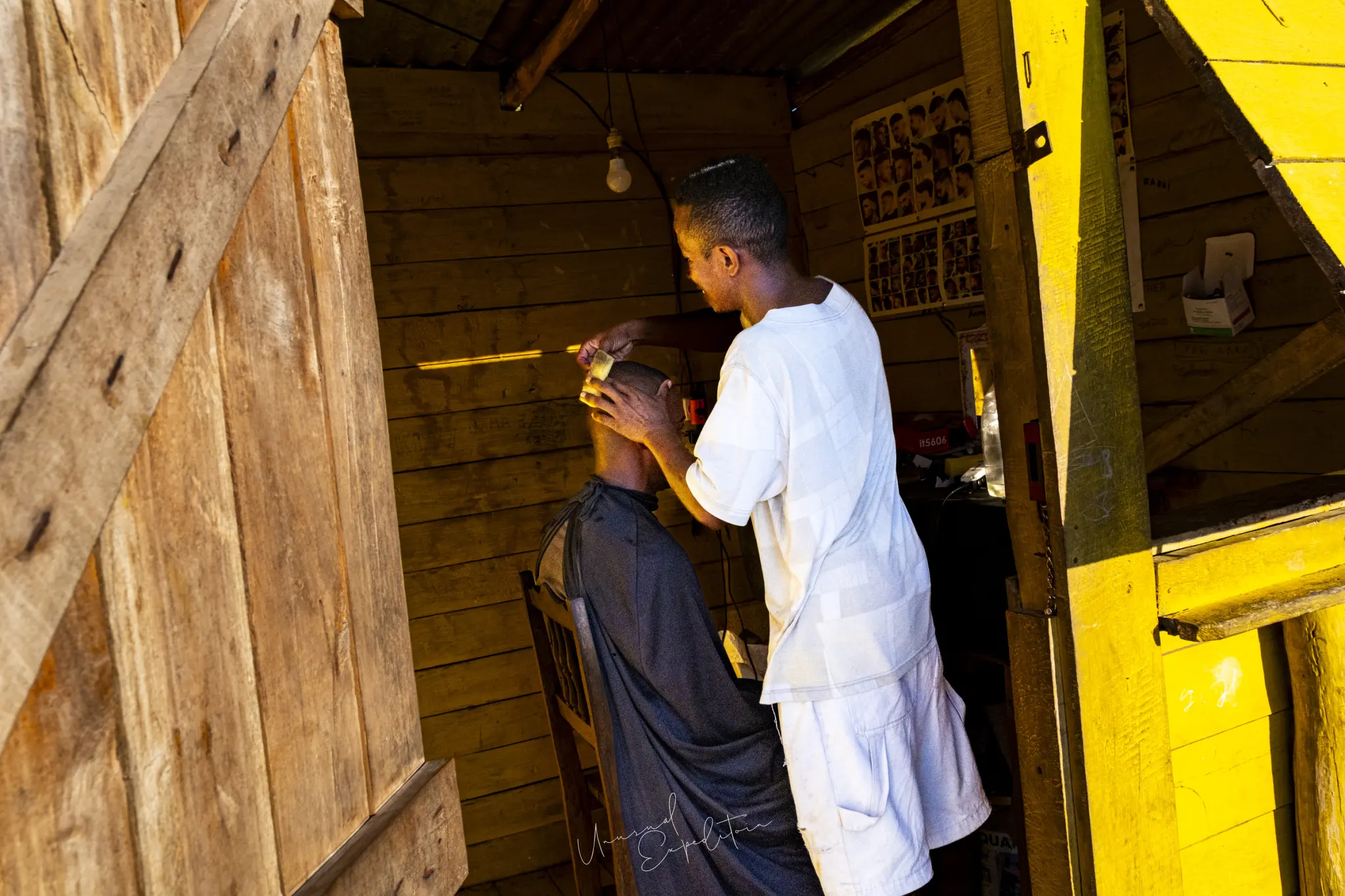
Away from the boats, Belo sur Mer is a village going about its day, and those are the pictures that make a set feel true. Men mend fishing nets in the shade of stick fences. Fish is cleaned in basins and sold on the sand. Women carry baskets and water along the beach. The barber works from a painted wooden booth, children play football in the lanes, and everyone gathers when the boats come in. None of this is staged and none of it should be. The morning is the best time: the light is soft, people are busy, and the heat has not yet sent everyone indoors.
How to photograph the Vezo with respect
Ask first, every time, with a gesture if you share no language; your local guide can translate. Accept a no and move on. Do not pay for photographs, because it changes how the next visitor is received, but do spend money in the village: buy fish, a drink or a carved model dhow. Show people the picture on the screen when they ask. Spend the first part of your visit without lifting the camera at all. Be careful with children: photograph them only with a parent's agreement, and never single out a child for a portrait the family has not welcomed. And remember that some places and ceremonies, including tombs, are private; Astuti's work describes how much the dead matter in Vezo life. If your guide says a place is off limits, it is.
The Vezo do not need us to make their life look interesting. My job is to get the group calm enough that people forget we are there. When a man keeps mending his net while you stand beside him, you have been accepted, and the picture is already better.
Joseph Mak, tour leader, Unusual Expedition
The sunset launch: the Vezo and the sea
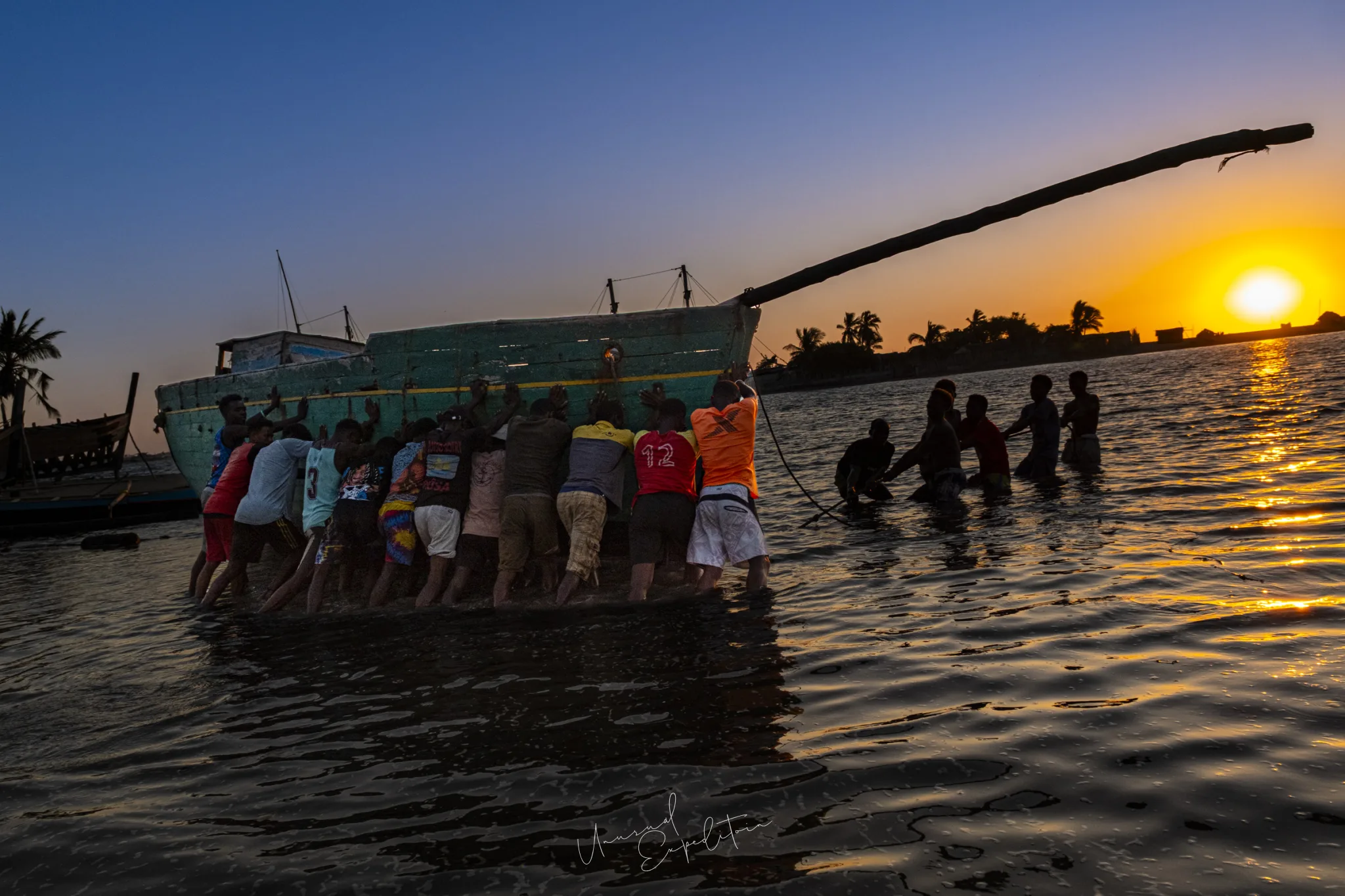
The most memorable Vezo scene at Belo sur Mer comes at the end of the day, when a loaded dhow has to be pushed out through the shallows or hauled on a line and half the village wades in to help. It is hard, shared work done with a lot of noise and laughter. Stand in the water to the side, not in the way, and shoot into the light so the line of pushers becomes a silhouette. Positions and the light are described in Belo sur Mer photos: where to shoot.
Subjects and approach at a glance
| Subject | When | Lens | Approach |
|---|---|---|---|
| Net menders | Morning | 24-70mm | Sit nearby, ask, let them carry on |
| Boutre builders | Morning, late afternoon | 16-35mm, 24-70mm | Ask before entering a hull |
| Fish sellers and cleaners | When the boats come in | 24-70mm | Buy something first |
| Village lanes | Morning | 24-70mm | Walk slowly, greet people |
| Sunset launch | Sunset | 24-70mm, 70-200mm | Stay out of the way of the work |
A standard zoom does almost everything here, because the good pictures are taken close.
Where else to meet the Vezo
Belo sur Mer is the quieter, more traditional Vezo village on our route. Betania, on the spit opposite Morondava, is busier and closer to town, with a beach full of pirogues and people; it is covered in Morondava photos: sunset and the fishing village. Further south, Vezo villages continue along the coast towards Toliara and Ifaty. For the wider country, start with our Madagascar photography tour guide.
Practical notes
A local guide makes the difference between a visit and an intrusion, both for language and for knowing whose permission matters. Dress modestly in the village, do not enter a house or a yard unless invited, and carry small notes in ariary for purchases. Belo sur Mer has no bank, so bring the cash you need from Morondava.
Meet the Vezo coast with us
Belo sur Mer and Betania are both part of our Madagascar photo tour, led by Joseph Mak with local guides. See dates and every guide to the country on our Madagascar photography tours page.
Join the Belo sur Mer photography tour
Madagascar Photo Tour – Madagascar departs 11 Apr 2027 To 19 Apr 2027, led by Joseph Mak. Small group, photography first. All Belo sur Mer photography tours.
Explore Belo sur Mer in depth
- Belo sur Mer, Madagascar: The Photography Tour Guide to the Vezo Dhow VillageMadagascar
- Belo sur Mer Beach and Lagoon from the Air: Tides, Sand Bars and Drone RulesMadagascar
- Belo sur Mer Photos: Where to Shoot, the Beach and the WeatherMadagascar
- Belo sur Mer and the Dhow Builders of the Vezo CoastMadagascar
Upcoming Photo Tours
- Egypt Photo Tour – EgyptEgypt 12 Dec 2026 To 20 Dec 2026
- Inner Mongolia Winter Owl Photo Tour – ChinaChina 01 Jan 2027 To 04 Jan 2027
- Inner Mongolia Winter Photo Tour – ChinaChina 05 Jan 2027 To 11 Jan 2027
- Mekong And Central Highland Vietnam Photo Tour - VietnamVietnam 16 Jan 2027 To 24 Jan 2027