
Best Time to Visit Lofoten: Winter Light, Thaw and Midnight Sun
Best time to visit Lofoten for photography: winter snow and aurora, the thaw, the midnight sun and the weather by month.
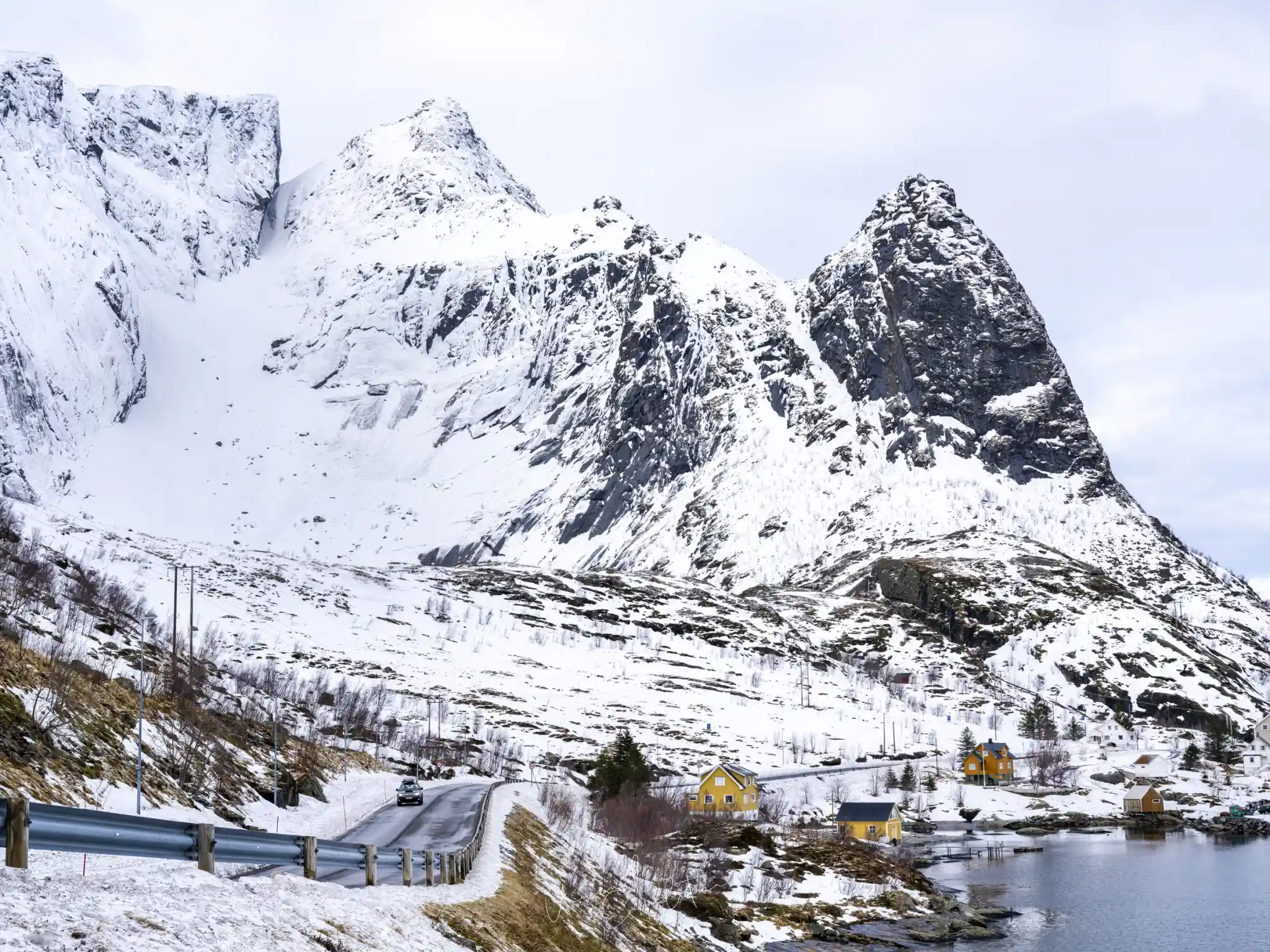
The best time to visit Lofoten for photography depends on the picture you want. Winter, from about January to mid March, gives snow down to the shoreline, blue twilight and the northern lights. Late winter into spring brings the thaw and mirror-calm water. The midnight sun lights the islands from late May to mid July, and the green summer between has light that never fully fades. There is no bad month, only a different subject in each, and the notes below say what to expect.
For the islands as a whole, read the Lofoten photography tour guide. For the aurora and the midnight sun specifically, see Lofoten northern lights and Lofoten midnight sun.
Which Lofoten season should you choose?
If you want one season, choose winter for snow and aurora, or late May to mid July for the midnight sun. Those two have the most distinctive pictures, and they are the two we photographed most. The seasons in between are quieter, which suits photographers who prefer fewer people at the famous viewpoints, but they offer less of the snow-and-lights look or the endless golden evening. Weather can change quickly in any month, so allow spare days for cloud and storm whichever season you pick.
Lofoten winter: snow, short days and blue light
Lofoten winter is the season of snow on the peaks, the roofs and the shoreline. Visit Norway says real winter, with more snow even at low levels, usually runs from January to mid March, and that temperatures often sit between minus 5 and 3 degrees Celsius, milder than most Arctic places because of the Gulf Stream. The days are short but the light is long: the sun stays low, so shadows are soft, and twilight stretches into a blue hour that suits the villages with their lit windows. Winter is also aurora season. Pack warm layers, spare batteries kept inside your jacket, and a tripod that does not mind the wind.
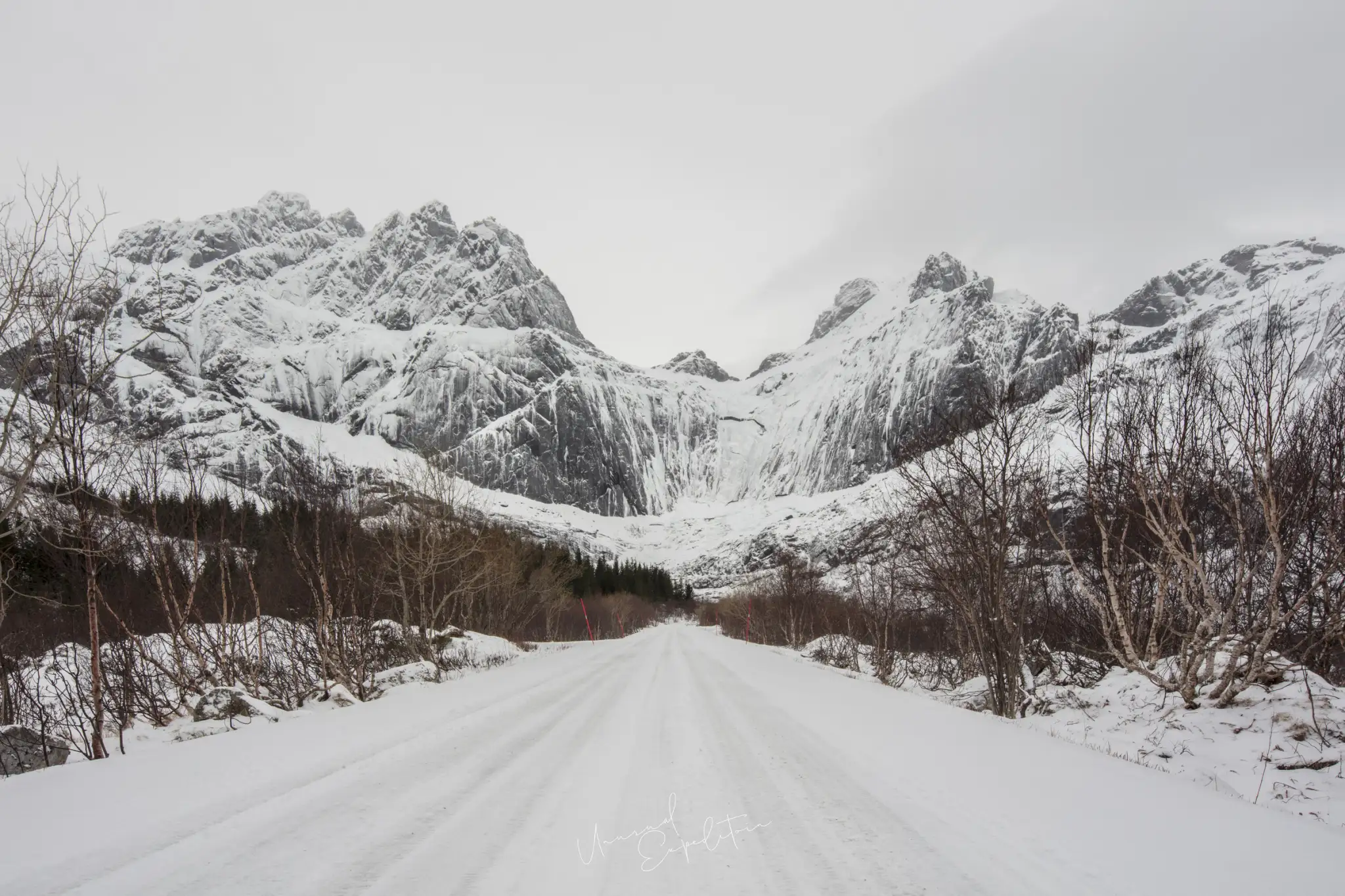
Lofoten in the dark time around the turn of the year
Lofoten has a short polar night. Visit Norway describes the dark time, morketid, as lasting about five to six weeks, from the beginning of December to early January, and says the sun then only dips below and hovers above the horizon; daylight is limited from mid-November to late January. This is a quiet, atmospheric period, good for twilight and lights. It is also the hardest for travel: Visit Norway advises that winter driving needs experience on ice and snow, that storms are frequent, and that you should allow extra time and buy travel insurance.
Spring light and the thaw
By February the days lengthen quickly, and the northern lights season ends in early spring: Visit Norway says that by the start of April the sky is too bright to see the aurora until next season. What replaces it is the thaw. Pools of meltwater lie among the dry grass and last snow, and in the pink light after sunset they hold the colour of the sky. This is a good time for patient, quiet pictures, and for the stockfish racks, which fill in late winter and stand full into spring.
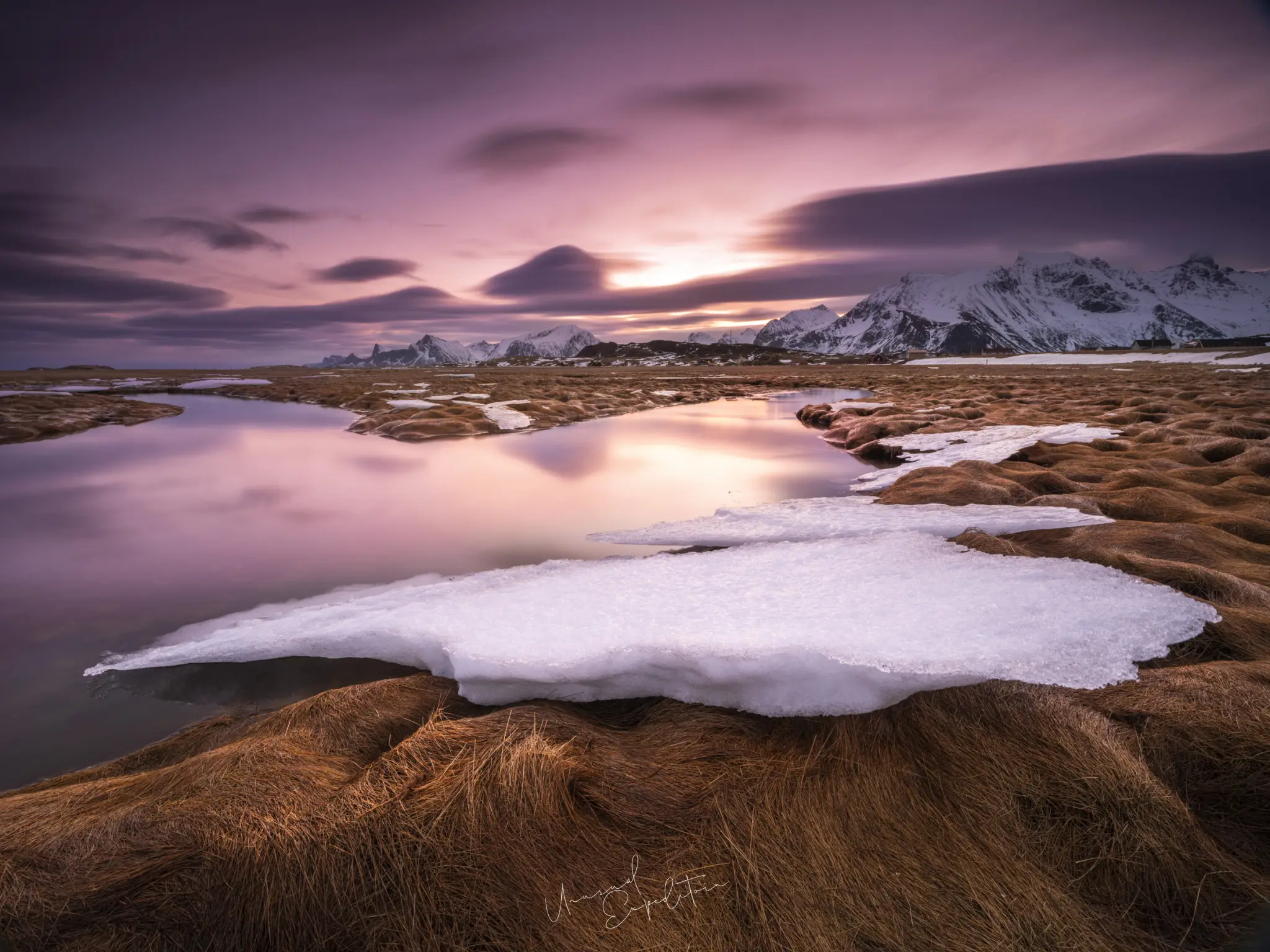
Mirror-calm water between seasons
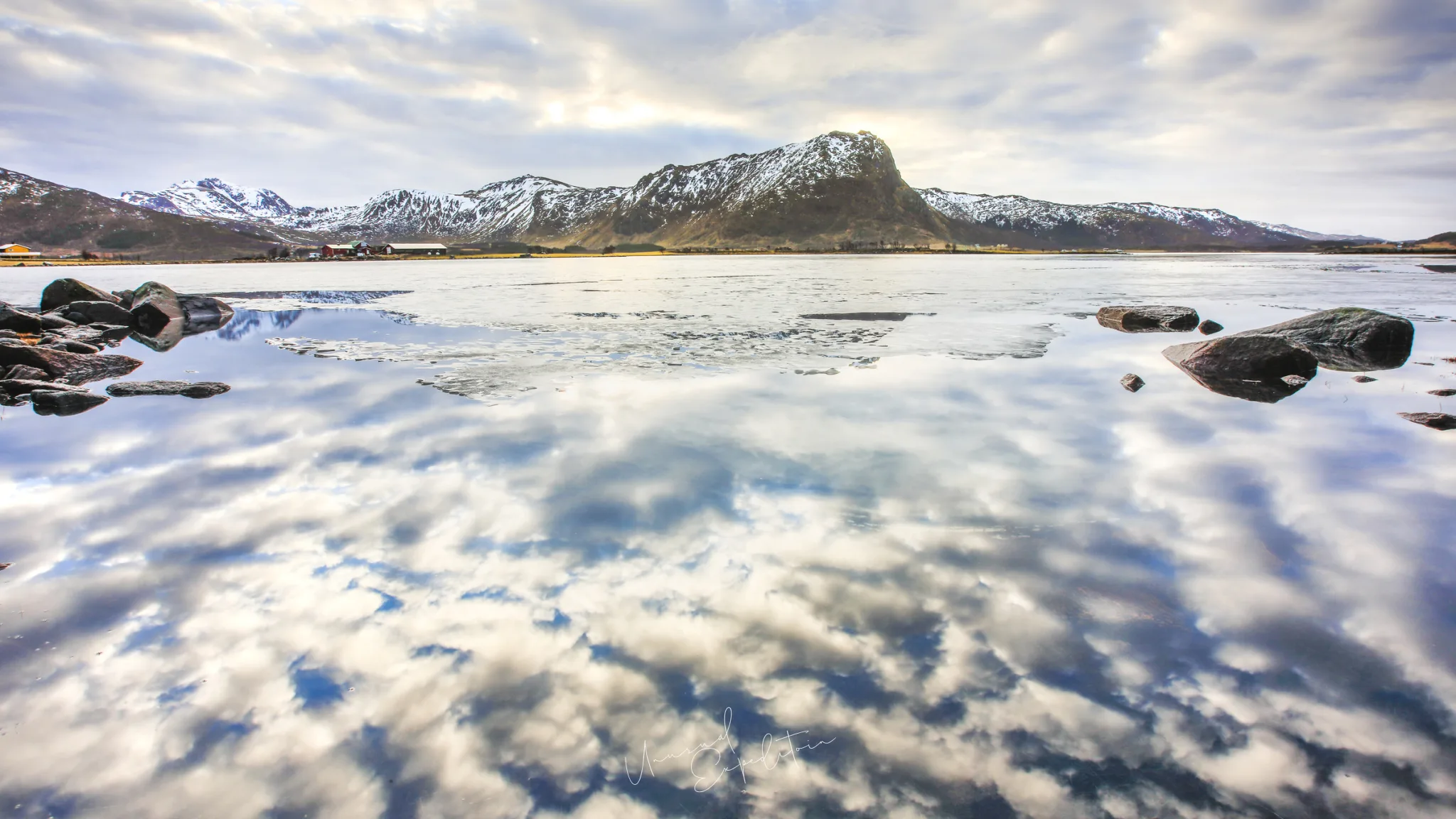
Between winter and summer the bays can go perfectly still, and thin ice can break the reflection of the clouds into patterns. These conditions are not tied to a calendar date. They come on calm mornings after a cold night, which is why we plan early starts and keep the afternoon free. A polarising filter helps cut the glare off the water, and a 16-35mm lens keeps the mountains and their reflection in one frame.
Summer and the midnight sun in Lofoten
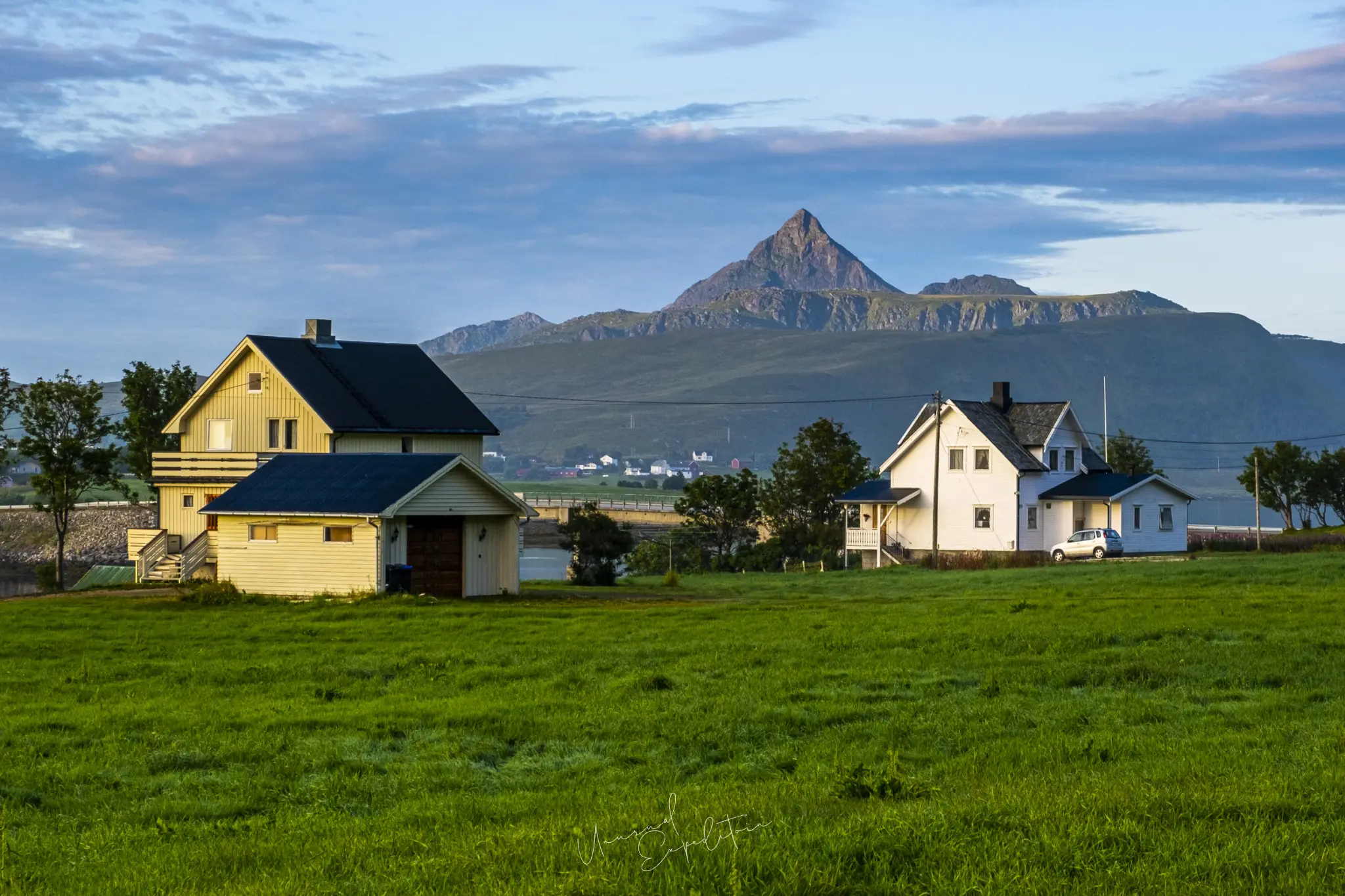
Summer turns the slopes green and removes the night. Visit Lofoten gives the core midnight sun window as roughly 28 May to 14 July, a little longer on the outer coast, and notes that the sun is mostly hidden behind the mountains on the sheltered inner side. The evening light is low and golden for hours, which is ideal for houses, beaches and the harbour towns. Autumn then brings colour on the moorland and a return of dark skies, with the first aurora possible from September, according to Visit Norway.
Lofoten weather by month
| Months | Light | Main subjects | Notes |
|---|---|---|---|
| December and early January | Short dark period, sun near the horizon | Village lights, twilight, aurora | Storms, icy roads |
| Late January to mid March | Days lengthening, low sun | Snow, blue hour, aurora, stockfish racks | Real winter, mild for the Arctic |
| Late March to April | Long twilight, aurora fading | Thaw, reflections, racks | Sky too bright for aurora by April |
| May and early June | Light nights begin | Fresh green, calm bays | Midnight sun starts late in May |
| Late June to mid July | Midnight sun | Golden evenings, beaches, villages | Light all night; outer coast sees the sun best |
| August | Sunsets return | Green slopes, harbours | Nights darken |
| September to November | Dusk and dark skies | Autumn colour, first aurora | Weather changes fast |
Check yr.no from the Norwegian Meteorological Institute for the forecast on the day.
People ask which month is best and I tell them to decide what they want in the frame. The islands do snow and aurora as well as anywhere I know, and they do the midnight sun just as well. You cannot have both on one trip.
Joseph Mak, tour leader, Unusual Expedition
Choose your season with us
We run Lofoten as a private trip on request, so the season, the length and the pace are yours to choose. We arrange all the logistics, a private trip can cost less than a group tour because no tour leader travels, and a photographer or coaching can be added at extra cost. Please ask at least two months ahead. More on private tours, and our guides and departures are on the Norway photography tours page. If you would like to know which subjects each season suits, see Lofoten photo spots.
Ask us about the best time for Lofoten
Lofoten photography tours
The next Lofoten departure is announced on the Lofoten photography tours page, with previous expeditions and all the planning guides.
Explore Lofoten in depth
- Lofoten Photography Tour: Peaks, Red Cabins, Aurora and Midnight SunNorway
- Lofoten Stockfish: Drying Racks and Fishing Villages to PhotographNorway
- Is Lofoten Worth Visiting? Photography Trip FAQNorway
- Lofoten Photo Spots: Beaches, Fjords, Villages and RacksNorway
- Lofoten Northern Lights: When, Where and How to Photograph ThemNorway
- Lofoten Midnight Sun: Dates, Best Places and Photography TipsNorway
- Hamnoy and Reine, Lofoten: Photo Viewpoints, Light and EtiquetteNorway
Upcoming Photo Tours
- Egypt Photo Tour – EgyptEgypt 12 Dec 2026 To 20 Dec 2026
- Inner Mongolia Winter Owl Photo Tour – ChinaChina 01 Jan 2027 To 04 Jan 2027
- Inner Mongolia Winter Photo Tour – ChinaChina 05 Jan 2027 To 11 Jan 2027
- Mekong And Central Highland Vietnam Photo Tour - VietnamVietnam 16 Jan 2027 To 24 Jan 2027