
Lofoten Northern Lights: When, Where and How to Photograph Them
Lofoten northern lights for photographers: the season, places to stand, camera settings, forecasts and staying warm.
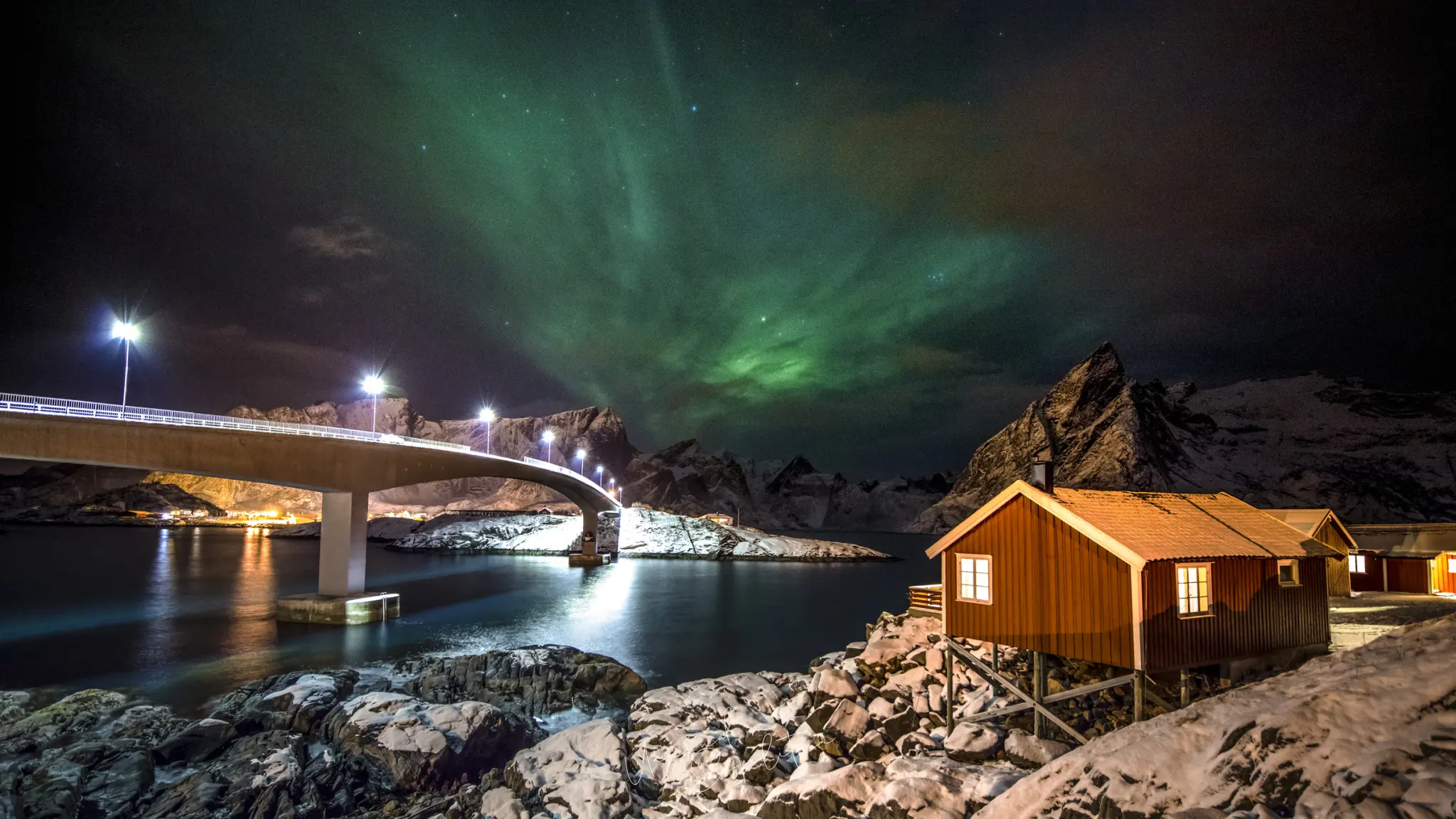
Lofoten northern lights are best seen from about September to March, on clear, dark nights away from streetlights, with a wide lens and a tripod. Visit Norway says the aurora is visible in Lofoten from September to March and that by the start of April the sky is too bright; Visit Lofoten and Hurtigruten give a slightly longer season. The islands are a good place for it because the mountains and fishing villages give the green sky something to stand above. Below: when to look, where to stand and how to expose.
For the whole archipelago, see the Lofoten photography tour guide. For the other season of extreme light, read Lofoten midnight sun.
When is the best time for Lofoten northern lights?
The aurora season runs through the dark half of the year, and the exact window depends on the source. Visit Norway's Lofoten winter page says September to March; Visit Lofoten says the lights first appear in late August and fade in mid April. In practice the dark skies of late autumn and winter give the most chances, with clear nights more important than the calendar. Real winter, from January to mid March, also gives snow in the foreground, which reflects what little light there is and makes the picture easier to expose. Our two aurora frames in this guide were taken on winter trips.
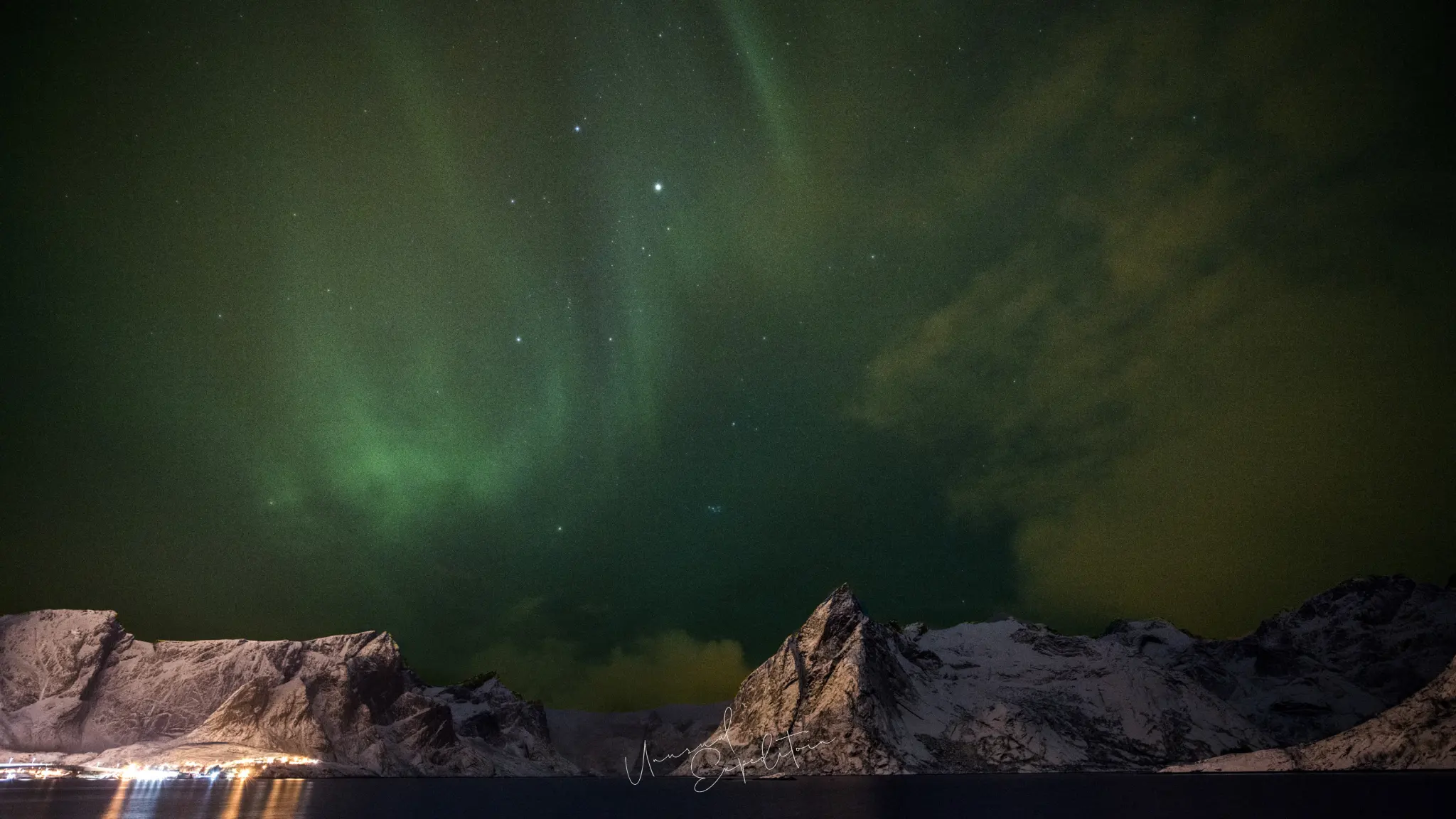
Where to photograph the northern lights in Lofoten
Look for a place with a dark northern sky and something to stand in the foreground: a mountain, a red cabin, a bridge, a fishing rack. Village lights can add colour and help the composition if they are not too bright; a lit bridge and a wooden cabin do that in the picture at the top of this guide. Avoid places where headlights or floodlights point at the sky, and use public ground, not private yards. Because weather on the coast changes quickly, it helps to have more than one option nearby, and to be ready to move when a gap in the cloud opens.
Camera settings for Lofoten aurora photography
Use a wide, fast lens such as a 16-35mm, a tripod, a remote release or the self-timer, and manual focus set to infinity and checked on a bright star. Start with a high ISO and a shutter speed of several seconds, then adjust to the brightness of the display: a fast-moving aurora needs a shorter exposure to keep its shape, and a faint one needs longer. Turn off image stabilisation on the tripod, shoot raw, and keep spare batteries inside your jacket, because cold drains them quickly.
Forecasts and cloud
Two forecasts matter: cloud and solar activity. The Norwegian Meteorological Institute at yr.no gives cloud cover, and the space weather forecasts from the NOAA Space Weather Prediction Center show the likely strength of the aurora. Neither is certain, and the lights can appear on nights the forecast calls quiet. Keep your plans loose, dress for the cold, and treat every clear night as worth a look. Moonlight brightens the landscape and weakens faint aurora, but gives beautiful foregrounds, so a full moon is not a reason to stay indoors.
Blue hour before the sky goes dark
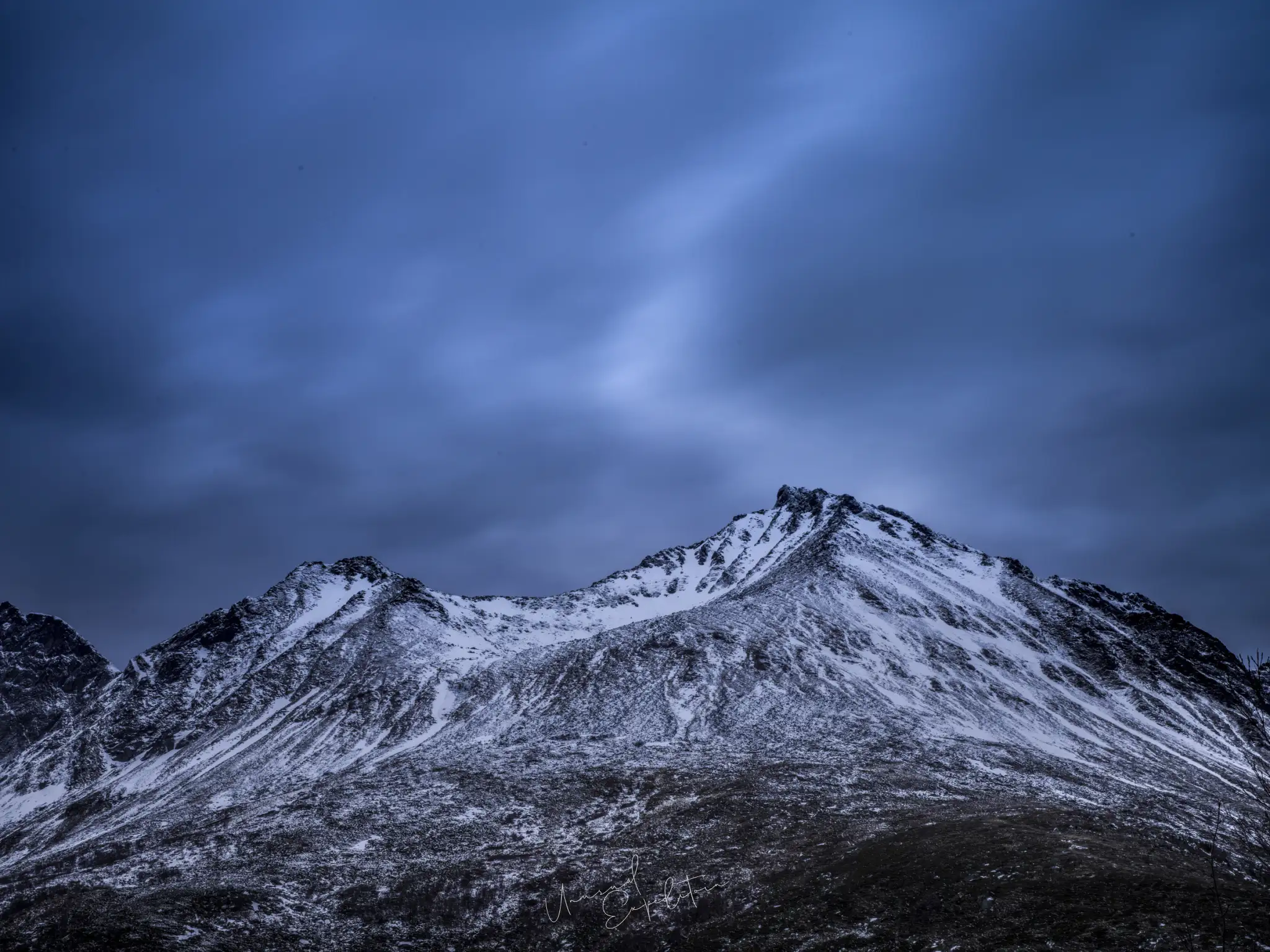
Not every night has aurora, and some of the best pictures from a night out come before the sky is fully dark. In the blue hour at dusk, mountains turn deep blue and clouds streak across them, and a long exposure fills them with movement. We include this kind of frame in our sets because it is reliable when the aurora is not. The picture below shows a dark peak under moving cloud at dusk; there is no aurora in it.
Scouting by day
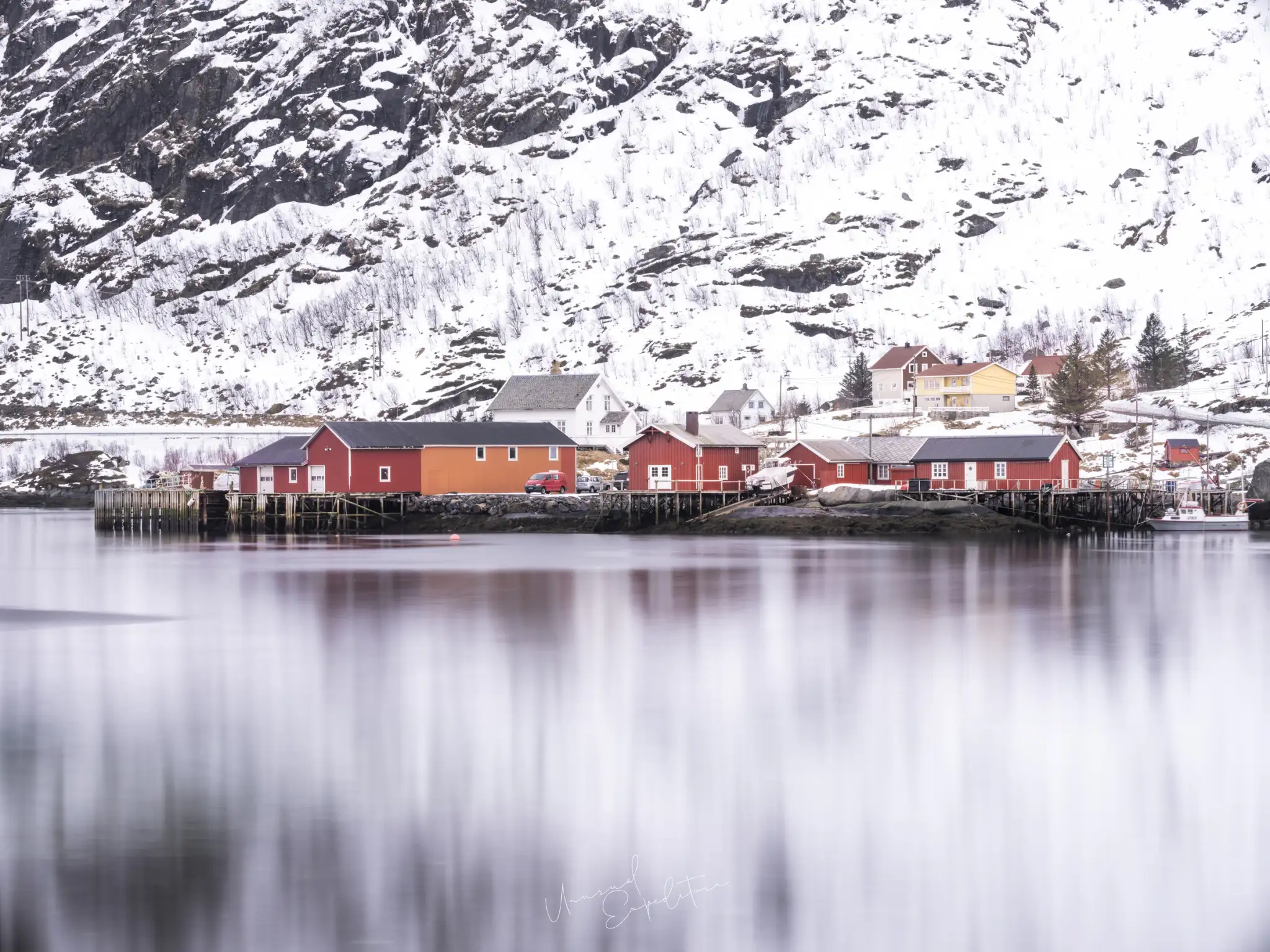
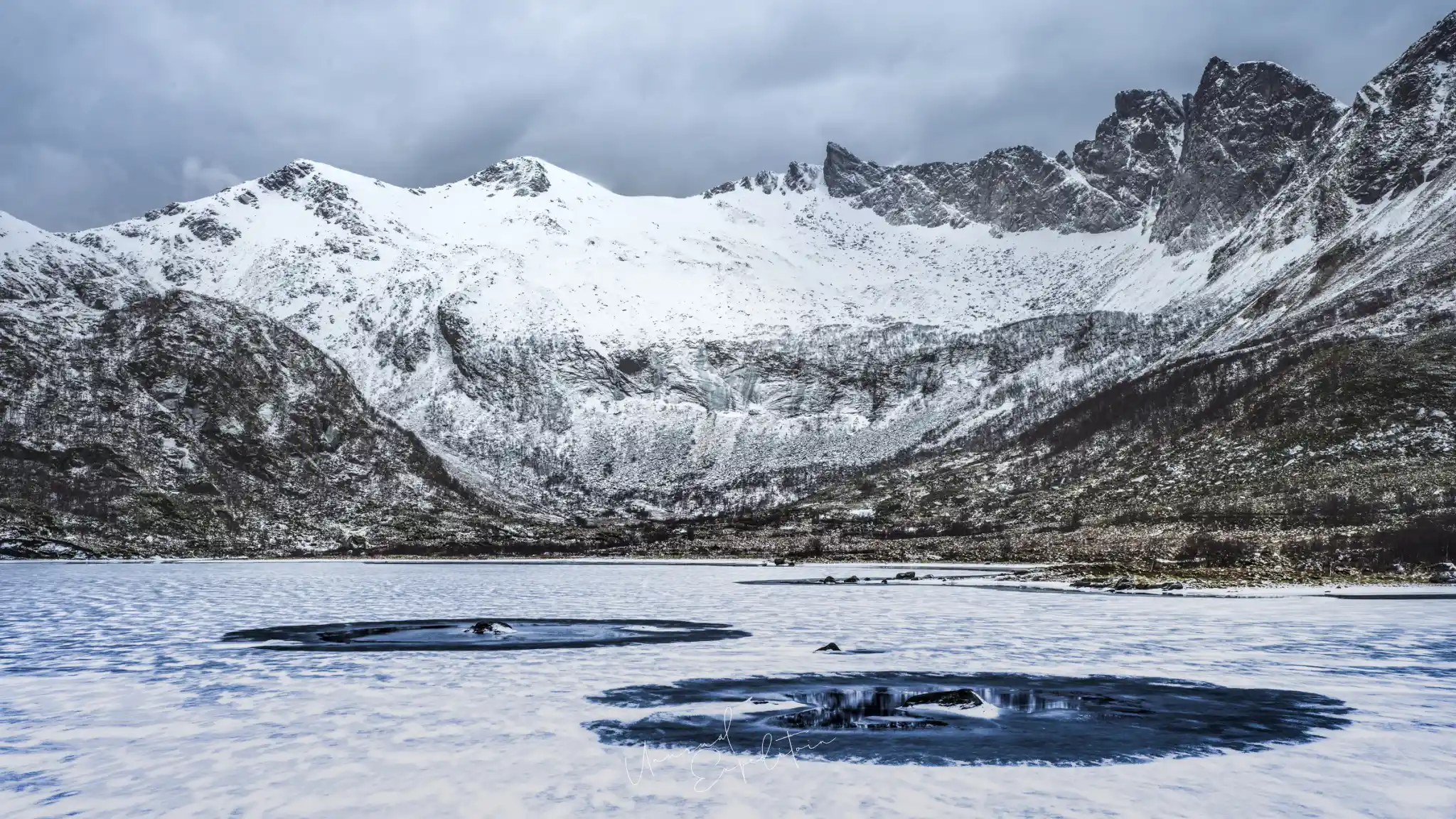
A location that looks plain at night can be much better when you have seen it by day. Spend an afternoon walking or driving to the places you might use after dark, and check where the northern sky opens and which foreground stands out. The bay below is a good example: a frozen inlet below white mountains, which at night makes a pale foreground that holds a faint glow in the sky. Know where you can park legally and safely before you go out in the dark, and remember that Visit Norway advises that winter driving needs experience on ice and snow.
Staying warm, safe and considerate
The nights are cold, and the wind on an exposed shore makes it colder. Wear layers, windproof outer clothing, insulated boots and a hat, and bring a hot drink. Tell someone where you are going, carry a headlamp with a red light option so you do not ruin other people's night vision, and keep the white light off while others are shooting. Leave the place as you found it, and take any litter with you.
Composing with the aurora
The aurora is the subject, but the picture is the landscape. Place a strong foreground, such as a peak, a cabin or a bridge, in the lower third, and let the sky fill the rest of the frame. Check the horizon, and be careful that a lit window or a streetlamp does not burn out in the corner. A little light on the foreground, from snow or the moon, gives depth that a pure silhouette does not. Take a few frames at different exposure lengths, and look at the histogram as well as the screen.
On a good night nobody speaks. The sky starts to move, the shutters click, and you forget the cold for as long as it lasts.
Joseph Mak, tour leader, Unusual Expedition
See the northern lights in Lofoten with us
We run Lofoten as a private trip on request, so you choose the season and the pace, and we arrange all the logistics. A private trip can cost less than a group tour because no tour leader travels, and a photographer or photography coaching can be added at extra cost. Please ask at least two months ahead. More on private tours, our guides and departures are on the Norway photography tours page, and for timing, see best time to visit Lofoten.
Ask us about Lofoten northern lights
Lofoten photography tours
The next Lofoten departure is announced on the Lofoten photography tours page, with previous expeditions and all the planning guides.
Explore Lofoten in depth
- Lofoten Photography Tour: Peaks, Red Cabins, Aurora and Midnight SunNorway
- Lofoten Stockfish: Drying Racks and Fishing Villages to PhotographNorway
- Is Lofoten Worth Visiting? Photography Trip FAQNorway
- Lofoten Photo Spots: Beaches, Fjords, Villages and RacksNorway
- Lofoten Midnight Sun: Dates, Best Places and Photography TipsNorway
- Hamnoy and Reine, Lofoten: Photo Viewpoints, Light and EtiquetteNorway
- Best Time to Visit Lofoten: Winter Light, Thaw and Midnight SunNorway
Upcoming Photo Tours
- Egypt Photo Tour – EgyptEgypt 12 Dec 2026 To 20 Dec 2026
- Inner Mongolia Winter Owl Photo Tour – ChinaChina 01 Jan 2027 To 04 Jan 2027
- Inner Mongolia Winter Photo Tour – ChinaChina 05 Jan 2027 To 11 Jan 2027
- Mekong And Central Highland Vietnam Photo Tour - VietnamVietnam 16 Jan 2027 To 24 Jan 2027