
Lofoten Stockfish: Drying Racks and Fishing Villages to Photograph
Lofoten stockfish explained for photographers: drying racks in snow and summer, cod heads, fishing villages and respect.
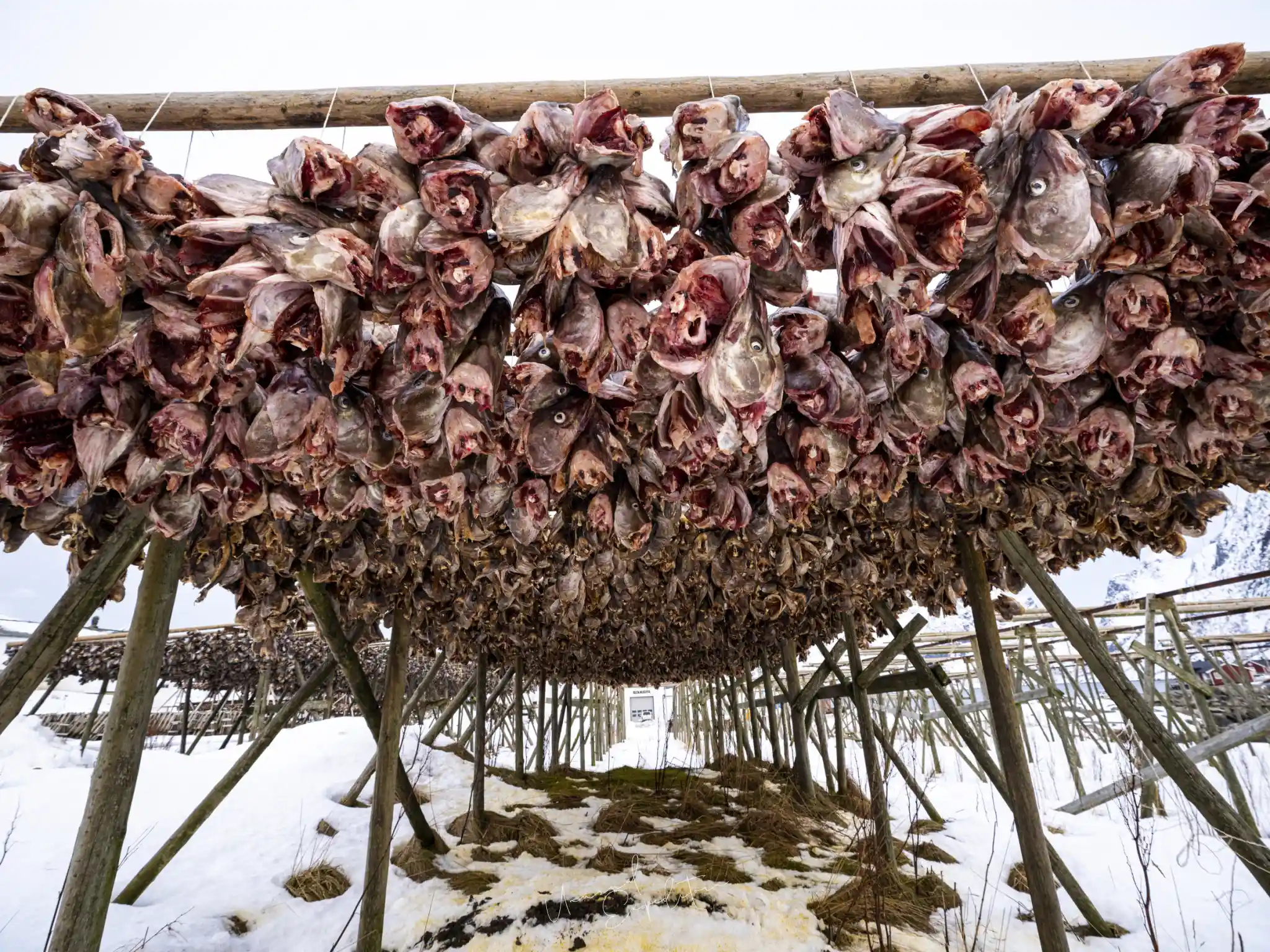
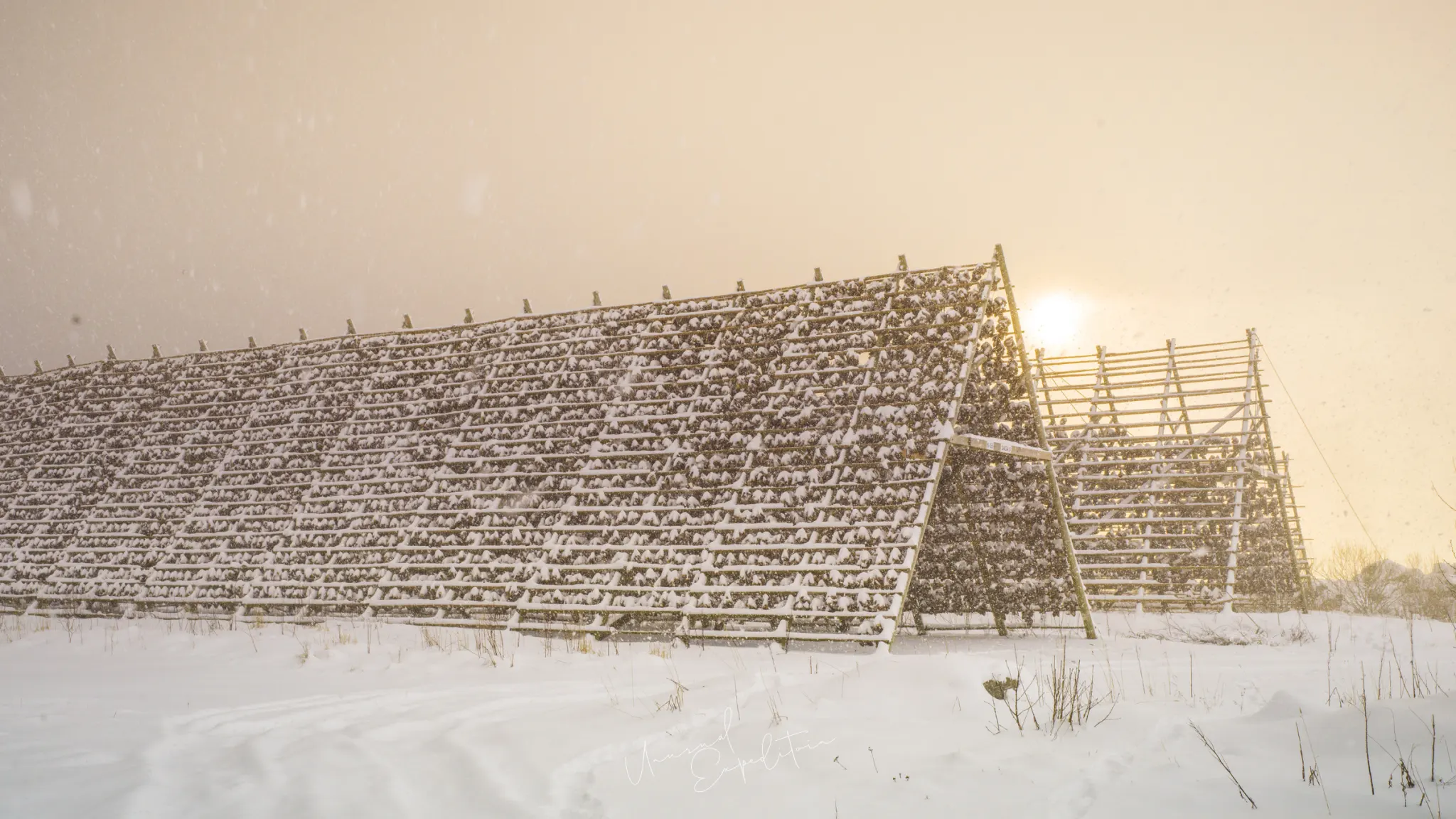
Lofoten stockfish is cod dried in the open air on tall wooden racks, and it is the oldest working scene on the islands. Visit Lofoten describes a drying period of about three months, in which the fish meets snow, rain, sun and wind, until roughly 75 percent of its water has gone. For photographers that means racks heavy with fish from late winter into spring, and empty frames standing against the summer sky. Below: how to photograph the racks and villages around them, respectfully.
The Lofoten photography tour guide shows where this fits among the islands' other subjects. The photographs here are our own, taken on our trips to Lofoten, and we hold the rights to them.
What is Lofoten stockfish?
Stockfish is cod, caught in winter when the skrei, the migrating Arctic cod, arrive off the islands, which Visit Lofoten says happens around Christmas. The fish are hung in pairs, or the heads are threaded onto ropes, on open-air racks placed in breezy spots, with their backs to the southwest rain and bellies to the northern wind. When drying is done they move indoors for sorting and maturing. The racks are called hjell in Norwegian. They are working equipment, owned by families and companies, which is why they deserve the same respect as any other private property.
Photographing stockfish racks in snow
Snow turns the racks into pattern. The A-frame structures rise in diagonals, the fish hang in neat rows, and the white ground cleans up the background. A 24-70mm lens at a low angle gives the strongest sense of scale, with the rack leaning into the frame. Overcast light works well because it keeps the dark fish and bright snow within reach of the same exposure; in low sun the racks glow warm and the shadows give depth. Treat the racks as a subject to be seen from outside: do not climb them, and do not touch the fish.
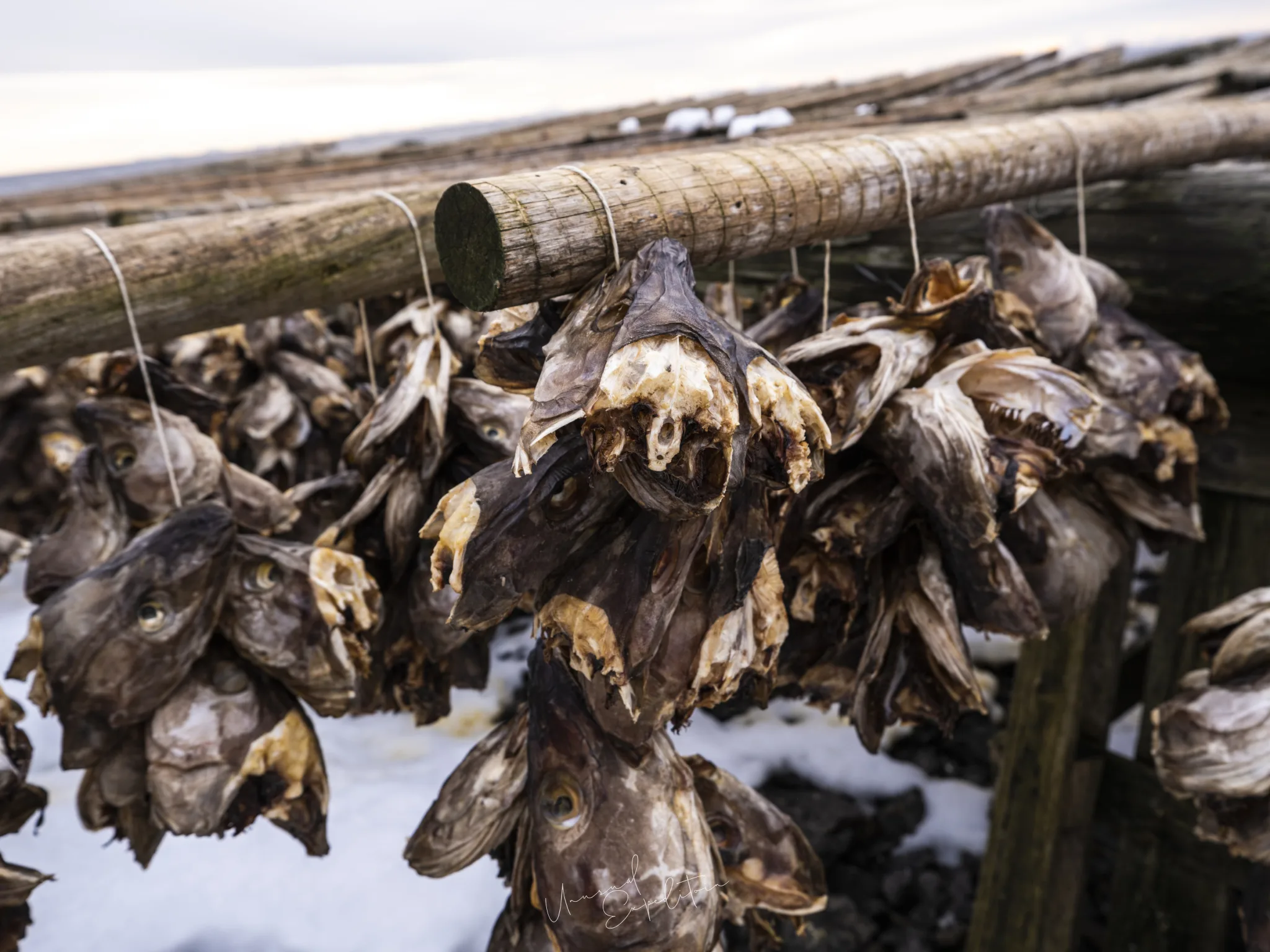
Stockfish heads and details
Close work is where stockfish gets graphic: cod heads in rows, ropes, hooked jaws, the grain of weathered wood. Use a 70-200mm lens or a 24-70mm at close range, and look for the frame where the pattern of heads fills the picture. The smell is strong. Visit Lofoten notes the strong aroma of the heads, which are prized for export, especially to Nigeria, so expect to stay for a short time, not a long one. Snow or overcast sky helps in this kind of picture because it keeps the light even.
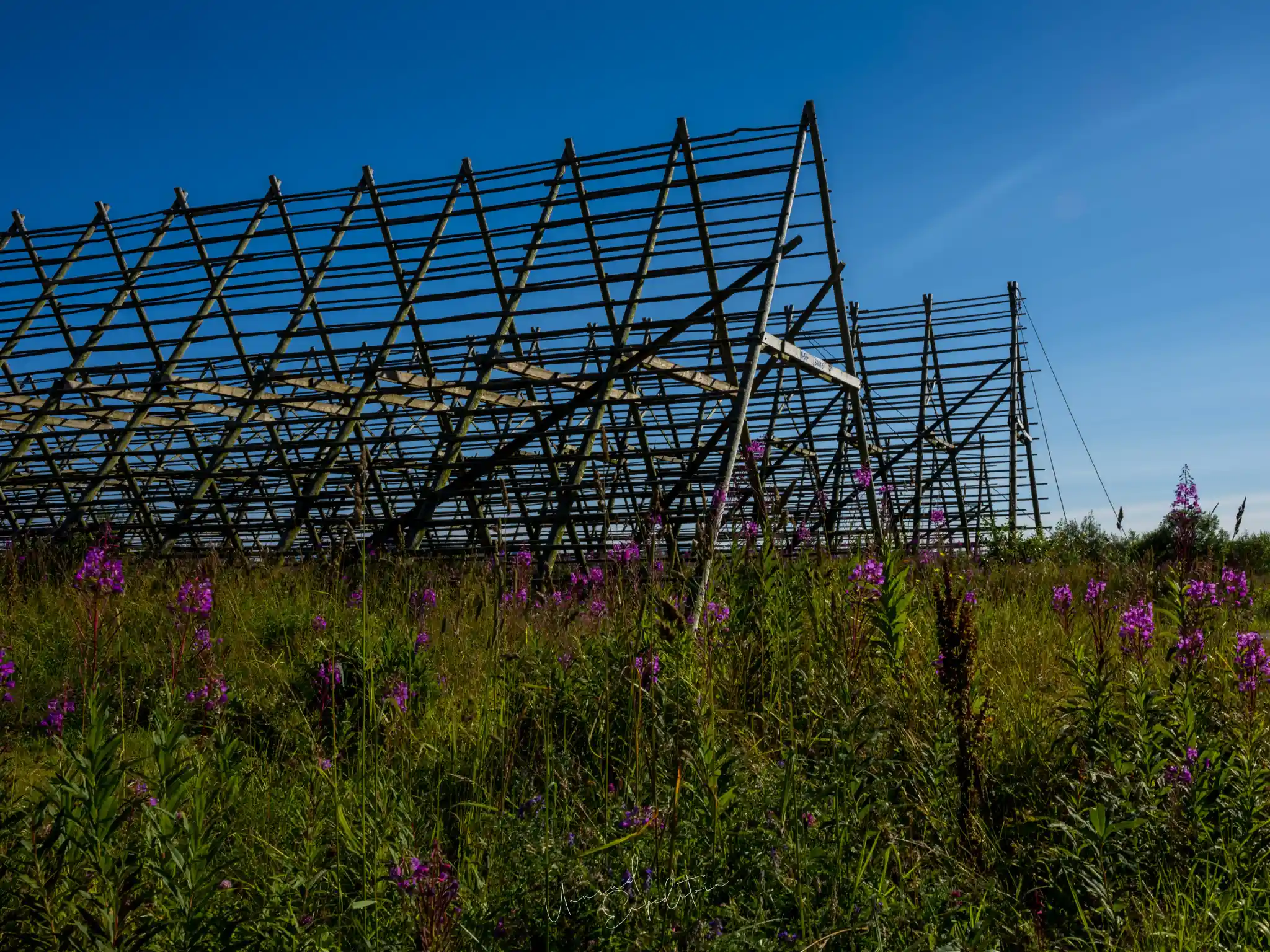
Empty racks in summer
By midsummer the fish are gone, and the racks become a different kind of picture. With no fish, the timber lines stand against a deep blue sky, and the fireweed that grows around the base adds colour. A wide lens close to the ground exaggerates the geometry. The light is soft in the long evenings of the midnight sun season, so you can work with these structures for a long time. See Lofoten midnight sun for how the summer light behaves.
Lofoten fishing villages
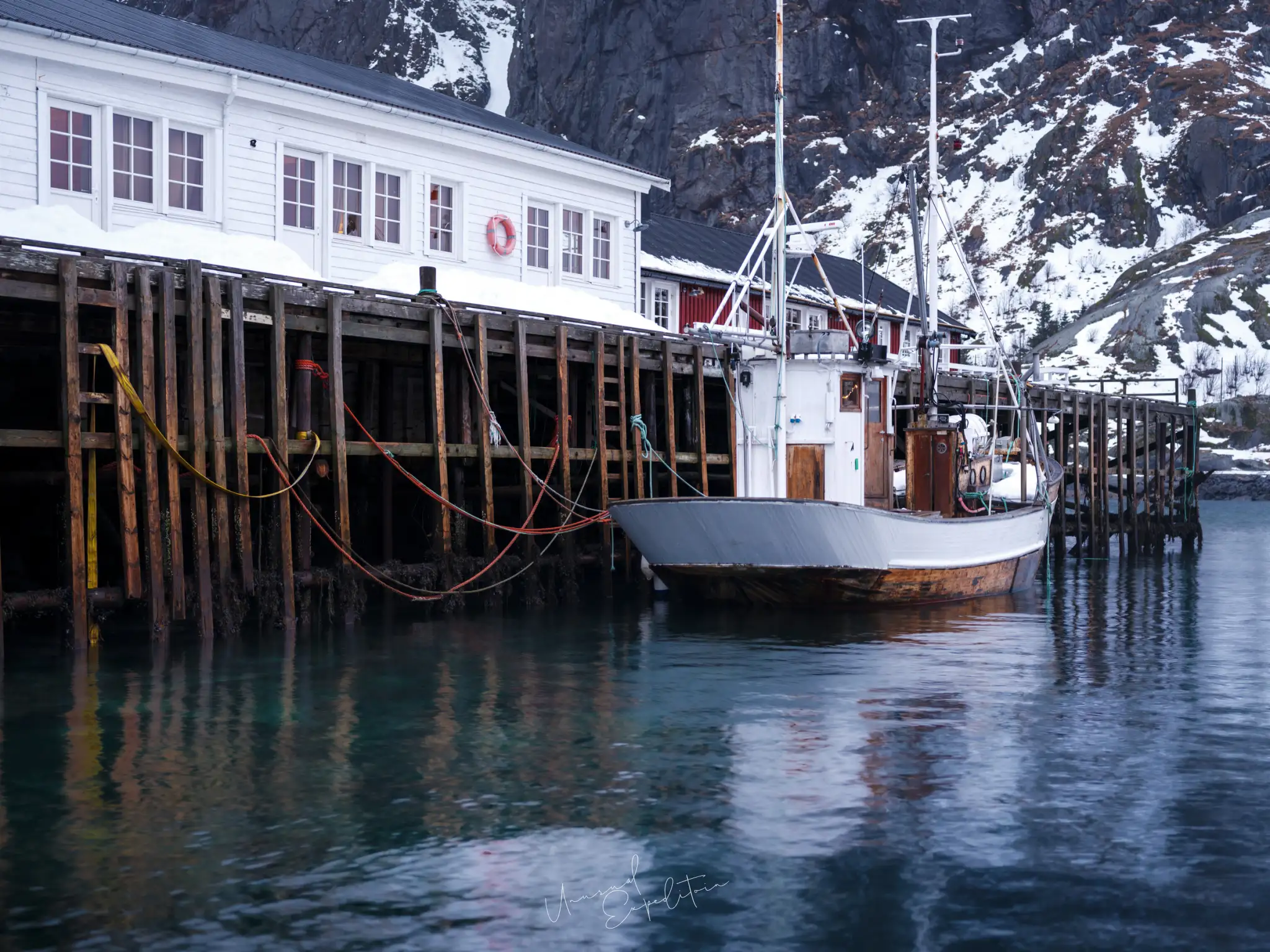
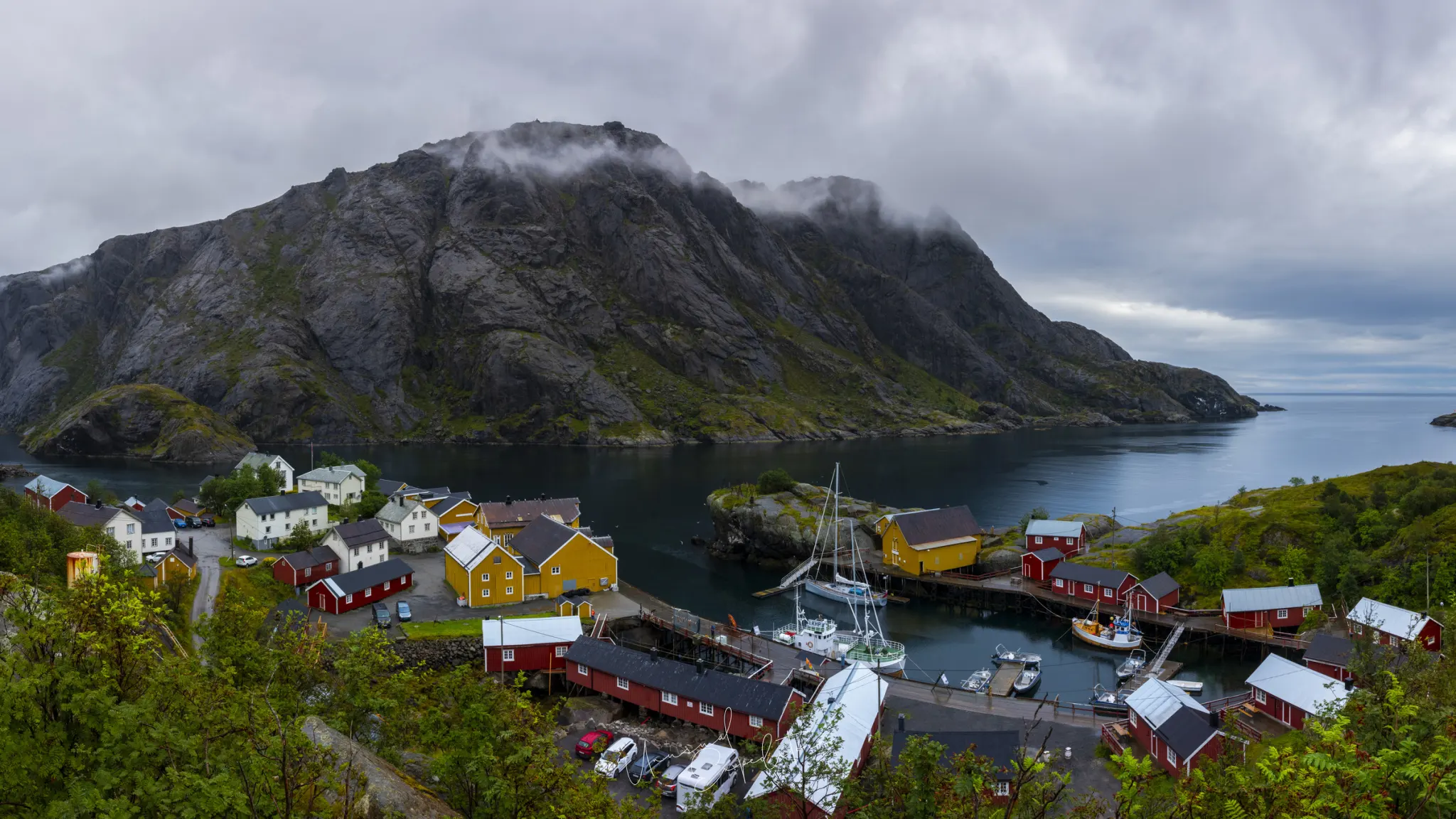
The fishing villages are where the stockfish story ends up. Working boats tie up at quays beside wooden warehouses, and the buildings are painted red, yellow or white. A working fishing boat at a snowy quay is a better subject than a postcard, because it carries the sense of a place that earns its living from the sea. Keep clear of working areas, never block a quay or a vehicle, and ask before you photograph a person at work. Where a harbour opens onto a view, a higher vantage shows how the village hugs the water.
Stockfish season by month
| Season | On the racks | What to photograph |
|---|---|---|
| Around Christmas | Skrei arrive | Boats, quays, working villages |
| Late winter | Racks fill | Snow, rows of heads, A-frames |
| Spring | Racks full, drying continues | Pattern, close details, thaw light |
| Summer | Racks empty | Geometry against sky, fireweed |
Exact timing varies with the weather, which decides how long the fish take to dry, so check with local operators. Weather matters to the fish as much as to you: Visit Lofoten notes that freezing temperatures can damage the meat during drying, and that the weather decides whether fish are dried or salted. A cold, windy spell is good for the racks, and it often brings clear light for the pictures.
Photographing stockfish respectfully
The racks and the fish are someone's livelihood. Do not walk through the racks, take fish, or leave litter, and keep to public roads and paths, because the land beneath the racks is usually private. If you meet people working at the racks or on the quay, a nod and a question go a long way, and many will tell you what they are doing if asked. Take your photographs quickly, thank people, and avoid close portraits unless someone clearly agrees. The strong smell is part of the working landscape, so do not complain about it to those who live with it.
The racks look simple until you stand under one. The wind goes through the fish, the smell hits you, and the structure above you is as tall as a house. That is a picture you cannot get from the road.
Joseph Mak, tour leader, Unusual Expedition
More from the islands
For the villages that sit beside many of these racks, read Hamnoy and Reine, Lofoten, and for coast and beach subjects, Lofoten photo spots.
Photograph Lofoten stockfish with us
We run Lofoten as a private trip on request, at your own pace, with all logistics arranged to your needs. A private trip can cost less than a group tour because no tour leader travels, and a photographer or coaching can be added at extra cost. Please ask at least two months ahead. More on private tours, and our guides and departures are on the Norway photography tours page.
Ask us about Lofoten stockfish photography
Lofoten photography tours
The next Lofoten departure is announced on the Lofoten photography tours page, with previous expeditions and all the planning guides.
Explore Lofoten in depth
- Lofoten Photography Tour: Peaks, Red Cabins, Aurora and Midnight SunNorway
- Is Lofoten Worth Visiting? Photography Trip FAQNorway
- Lofoten Photo Spots: Beaches, Fjords, Villages and RacksNorway
- Lofoten Northern Lights: When, Where and How to Photograph ThemNorway
- Lofoten Midnight Sun: Dates, Best Places and Photography TipsNorway
- Hamnoy and Reine, Lofoten: Photo Viewpoints, Light and EtiquetteNorway
- Best Time to Visit Lofoten: Winter Light, Thaw and Midnight SunNorway
Upcoming Photo Tours
- Egypt Photo Tour – EgyptEgypt 12 Dec 2026 To 20 Dec 2026
- Inner Mongolia Winter Owl Photo Tour – ChinaChina 01 Jan 2027 To 04 Jan 2027
- Inner Mongolia Winter Photo Tour – ChinaChina 05 Jan 2027 To 11 Jan 2027
- Mekong And Central Highland Vietnam Photo Tour - VietnamVietnam 16 Jan 2027 To 24 Jan 2027