
Lofoten Midnight Sun: Dates, Best Places and Photography Tips
Lofoten midnight sun for photographers: dates, the outer coast, how the light behaves, racks, harbours and practical tips.
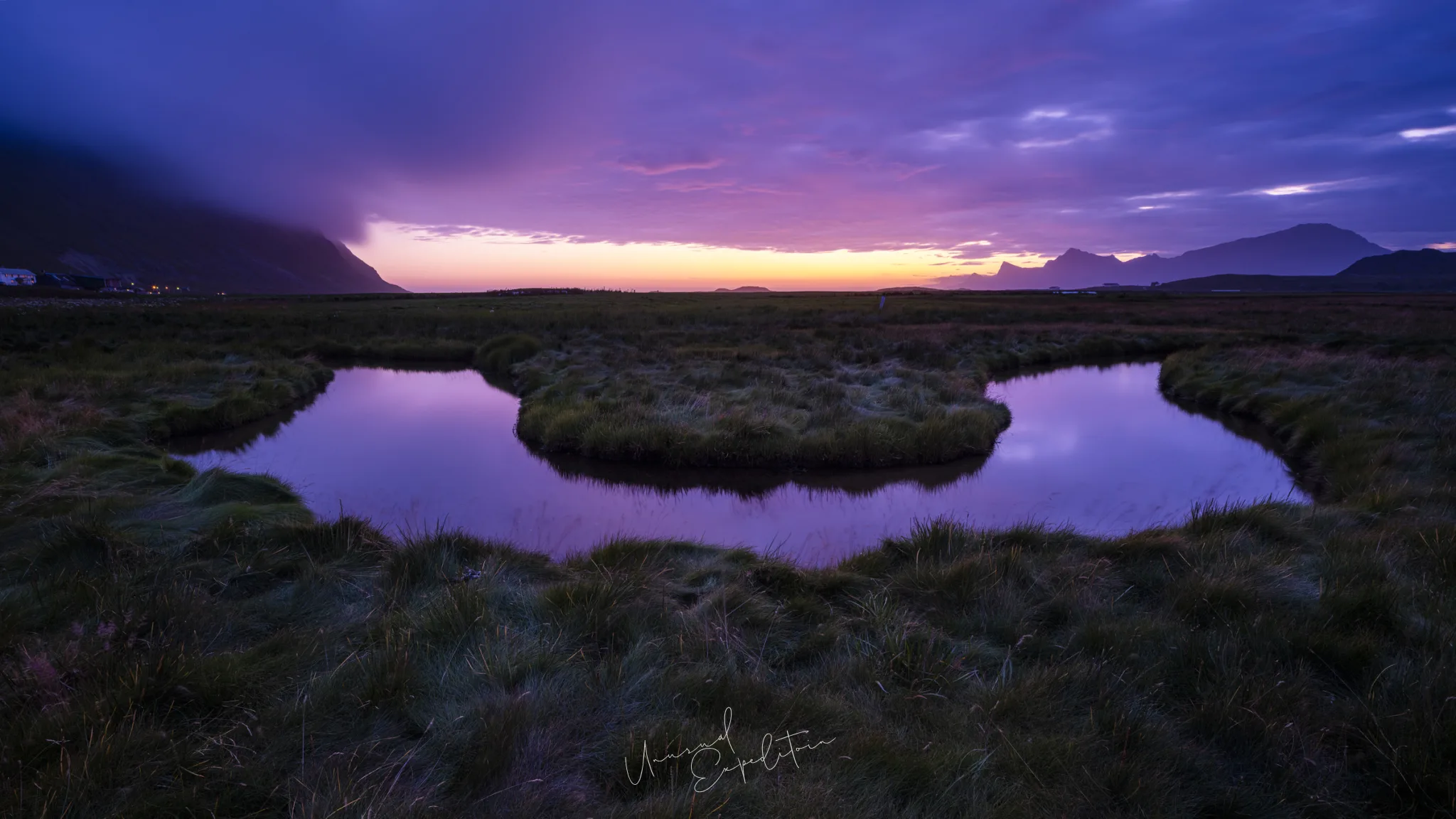
The Lofoten midnight sun lasts from roughly late May to mid July, and it is best seen from the outer, west-facing coast, where nothing blocks the northern horizon. Visit Lofoten gives the core window as about 28 May to 14 July, with Uttakleiv seeing the sun from 25 May to 18 July, and notes that dates vary by a day from year to year. For photographers it means hours of low, warm light that never quite ends.
The Lofoten photography tour guide introduces the islands as a whole. For the opposite end of the year, see Lofoten northern lights.
When is the midnight sun in Lofoten?
The islands lie north of the Arctic Circle, so the sun stays above the horizon around the summer solstice. Nordnorge.com puts the period at Svolvaer from 25 May to 18 July, while Visit Lofoten's own core window is 28 May to 14 July. These are the dates of the sun being above the horizon; the mountains block it from view in many valleys, so a lower number of days is visible from the sheltered inner side. Treat the dates as a guide and check the figures for your own location before you book.
Where to see the midnight sun in Lofoten
Visit Lofoten lists the outer coast as the best place: Laukvika, Hov, Eggum and Uttakleiv. These shores face north and west and have open water to the horizon. On the sheltered inner side the mountains hide the low sun for much of the night, though the glow in the sky can still be beautiful. A map and a sun-position app help you decide where to stand, and local advice will tell you which bays are reachable and legal to park near.
Lofoten midnight sun photography: how the light behaves
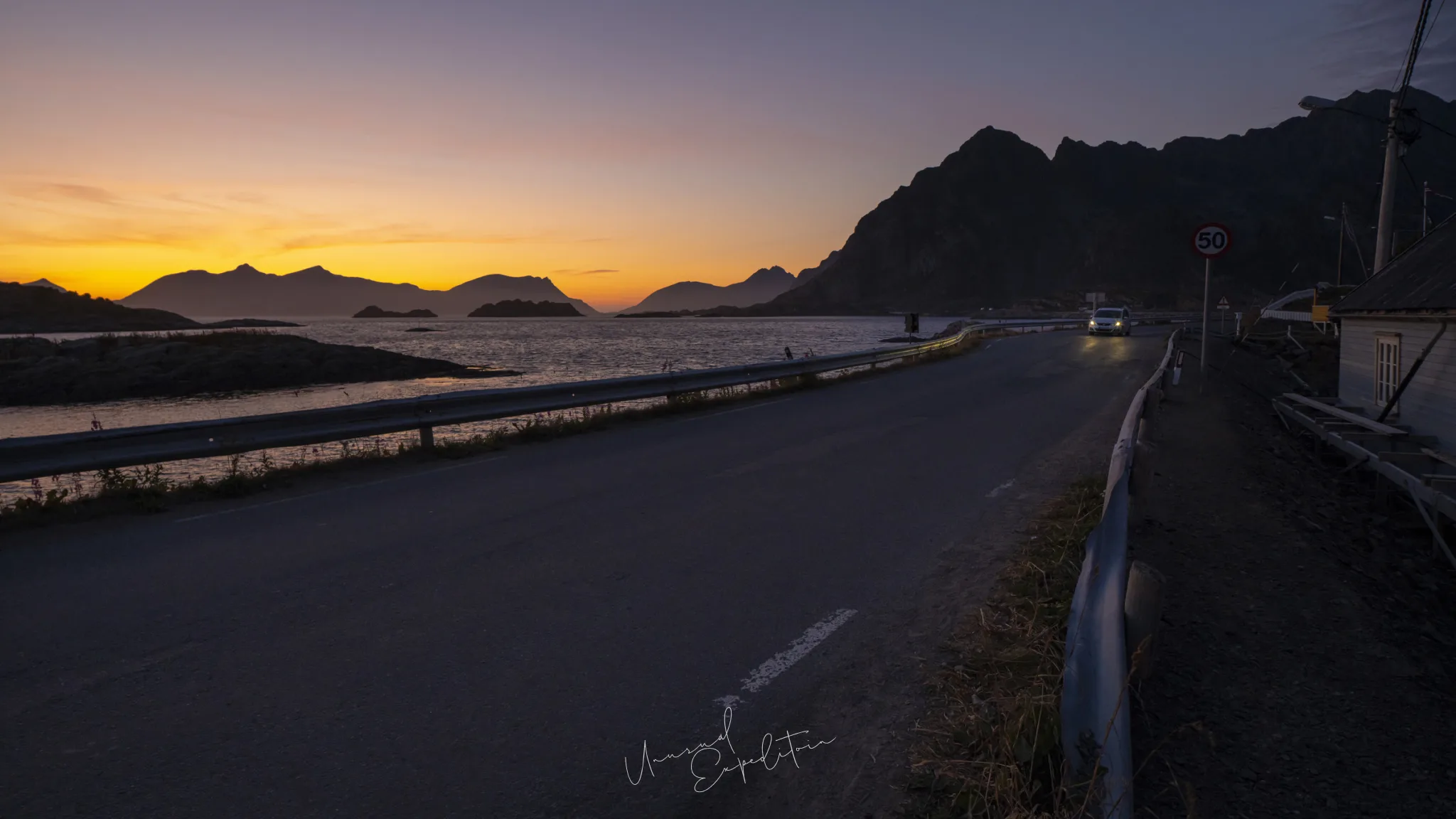
At midsummer the sun does not set; it circles low along the northern horizon. That produces long shadows, warm colour on the mountains and a sky that can go from gold to violet within the same hour. Water is the best partner: a calm bay doubles the colour, and a wet beach acts as a mirror. Because the light is so long, you can work slowly, trying a composition, waiting for the clouds and trying it again. A road along a fjord at low sun, with the headlights of a passing car, makes a picture of its own.
Racks, cabins and villages at midnight
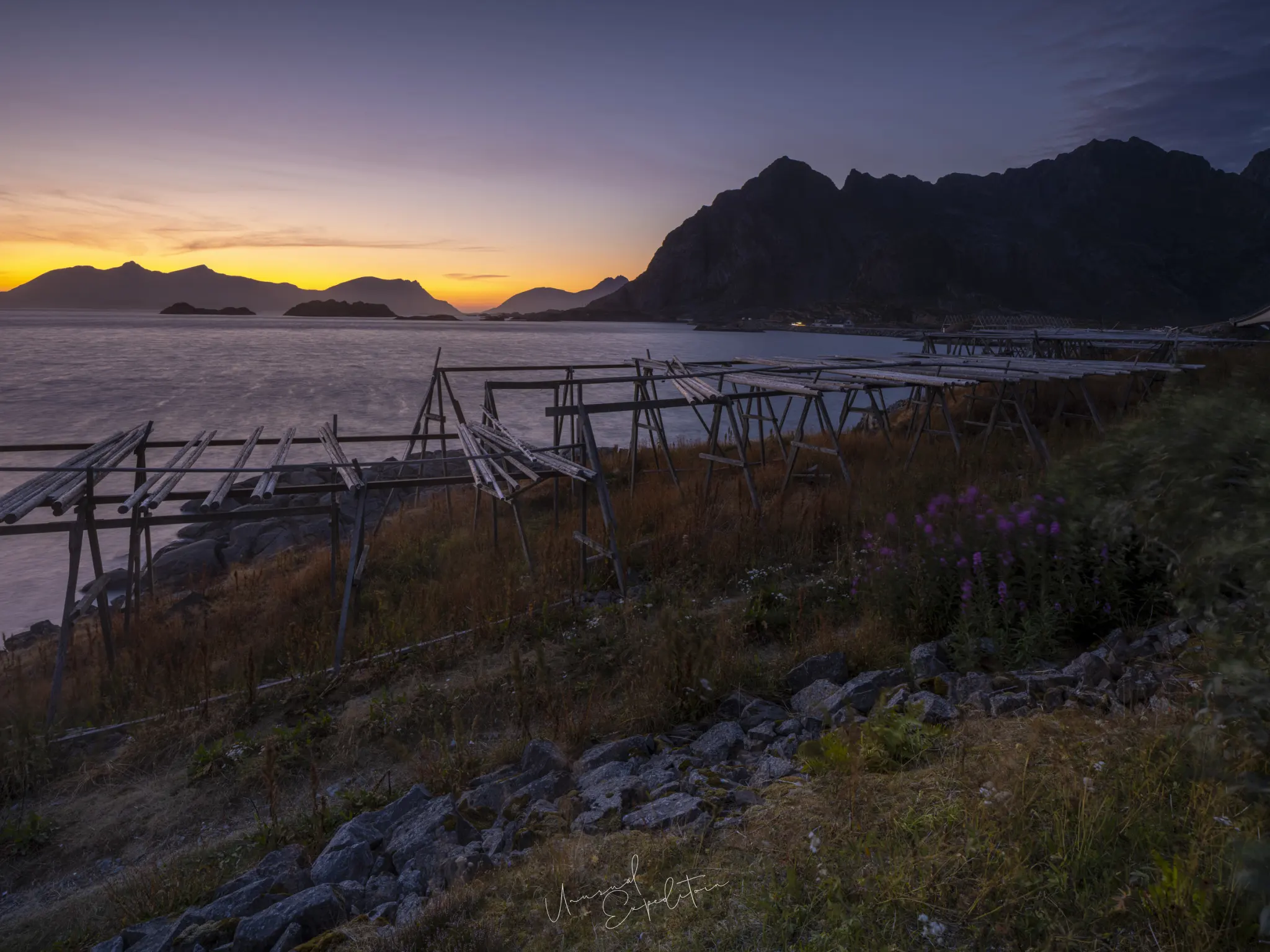
Stockfish racks stand empty in summer, and their skeletons make fine foregrounds against a glowing sea. We shot them with a wide lens from the slope above, so that the timber lines lead to the horizon. Fishing villages work in the same way: lit windows and boats reflect in water that is still bright from the sky. For the stories behind the racks, read Lofoten stockfish and fishing villages.
Harbours in the low light
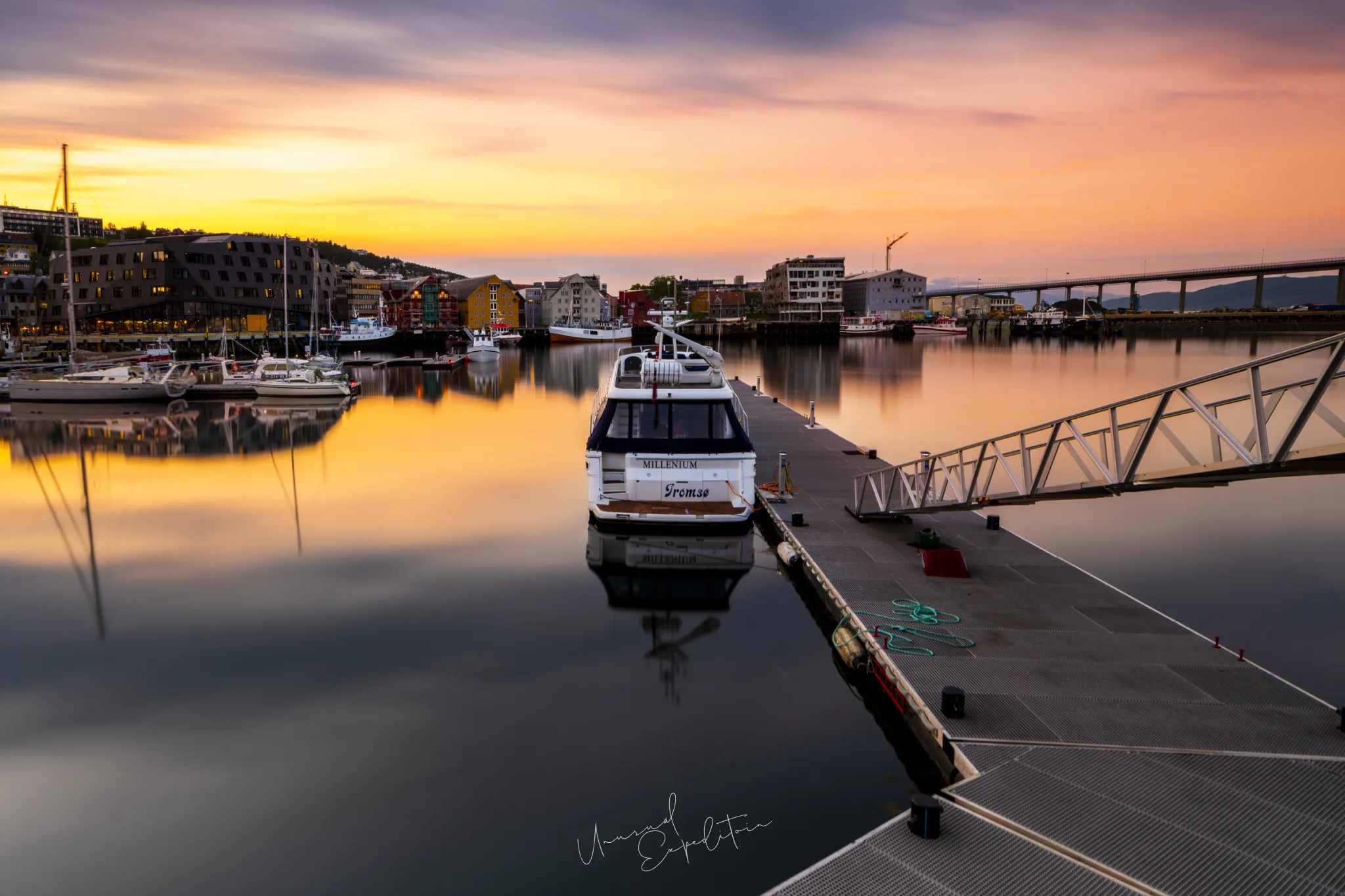
A harbour at midsummer is a good subject because boats and quays give structure, and the water carries the sky's colours. Pastel pinks and oranges reflect in a calm basin, and the town's windows pick up the same warmth. A tripod and a graduated filter or bracketed exposures let you hold detail in both the bright sky and the dark foreground.
Blue hour in a world without darkness
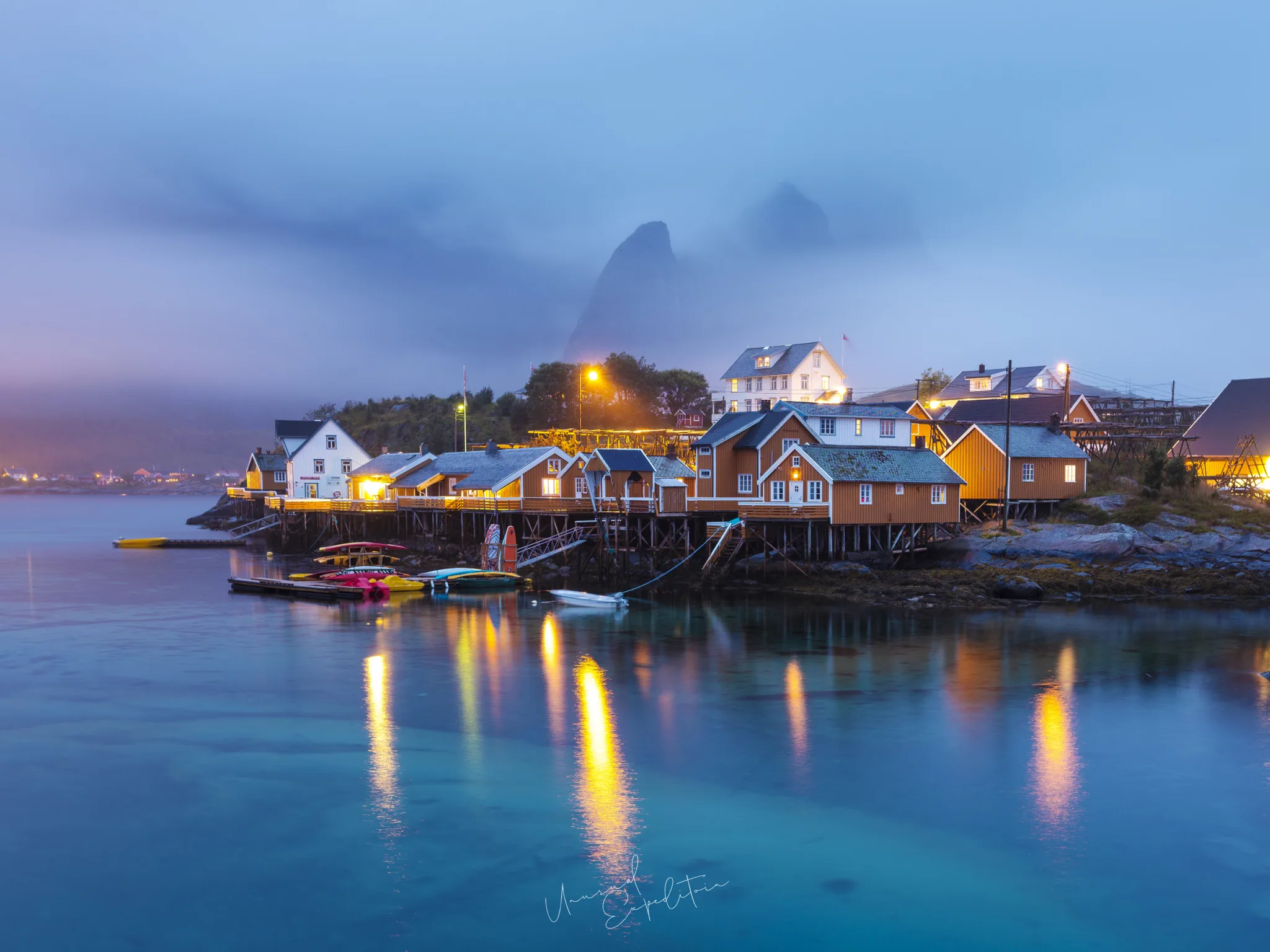
Without true night, the blue hour stretches and softens. Fishing cabins on stilts, with their lights on, sit in front of mist-covered mountains, and their reflections run down the water in long gold lines. A 24-70mm lens gives you the village in its setting, and a longer exposure smooths the surface. Mist and low cloud are common, and a clear sky is not required.
Camera settings for midnight sun light
Light is bright enough in the evening to shoot handheld, but a tripod gives you the freedom to use low ISO and a slow shutter over water. Bracket three exposures when the sun sits in the frame, so you can blend the sky and the foreground later, and use a graduated filter on the sky if you prefer to get it right in the camera. A 16-35mm lens is the workhorse; add a 70-200mm for peaks catching the sun across a bay.
Practical tips for the midnight sun
- Bring an eye mask: rooms are bright all night.
- Plan to rest in the day and shoot in the long evening and early morning.
- Carry layers; the wind off the sea is cool even in summer.
- Use a polarising filter on water, and a neutral density filter for slow shutter speeds.
- Respect private land and the residents' code of conduct reported by News in English: take litter home and keep noise down.
Midnight sun or northern lights?
They are opposite seasons, and the islands cannot give both on one trip. The midnight sun gives long gold evenings, green slopes and open boats; the aurora gives snow, deep blue twilight and a dark sky. If you want to see the islands in every light, plan two visits. Our guide to best time to visit Lofoten sets the two side by side, and the photographs in this guide show only the summer half.
You lose track of the evening. The light looks the same for hours, and then it shifts a little, and you realise you have been standing in the same place with a camera for far longer than you meant to.
Joseph Mak, tour leader, Unusual Expedition
See the Lofoten midnight sun with us
We run Lofoten as a private trip on request, so you choose the season and the pace, and we arrange all the logistics around you. A private trip can cost less than a group tour because no tour leader travels, and a photographer or photography coaching can be added at extra cost. Please ask at least two months ahead. More on private tours, our guides and departures are on the Norway photography tours page, and for the full seasonal picture see best time to visit Lofoten.
Ask us about the Lofoten midnight sun
Lofoten photography tours
The next Lofoten departure is announced on the Lofoten photography tours page, with previous expeditions and all the planning guides.
Explore Lofoten in depth
- Lofoten Photography Tour: Peaks, Red Cabins, Aurora and Midnight SunNorway
- Lofoten Stockfish: Drying Racks and Fishing Villages to PhotographNorway
- Is Lofoten Worth Visiting? Photography Trip FAQNorway
- Lofoten Photo Spots: Beaches, Fjords, Villages and RacksNorway
- Lofoten Northern Lights: When, Where and How to Photograph ThemNorway
- Hamnoy and Reine, Lofoten: Photo Viewpoints, Light and EtiquetteNorway
- Best Time to Visit Lofoten: Winter Light, Thaw and Midnight SunNorway
Upcoming Photo Tours
- Egypt Photo Tour – EgyptEgypt 12 Dec 2026 To 20 Dec 2026
- Inner Mongolia Winter Owl Photo Tour – ChinaChina 01 Jan 2027 To 04 Jan 2027
- Inner Mongolia Winter Photo Tour – ChinaChina 05 Jan 2027 To 11 Jan 2027
- Mekong And Central Highland Vietnam Photo Tour - VietnamVietnam 16 Jan 2027 To 24 Jan 2027