
Machu Picchu Best Time to Visit: Dry Season, Rainy Season and the Best Time of Day
Machu Picchu best time to visit: dry and rainy season light, best time of day, sunrise, weather by month, the February trail closure.
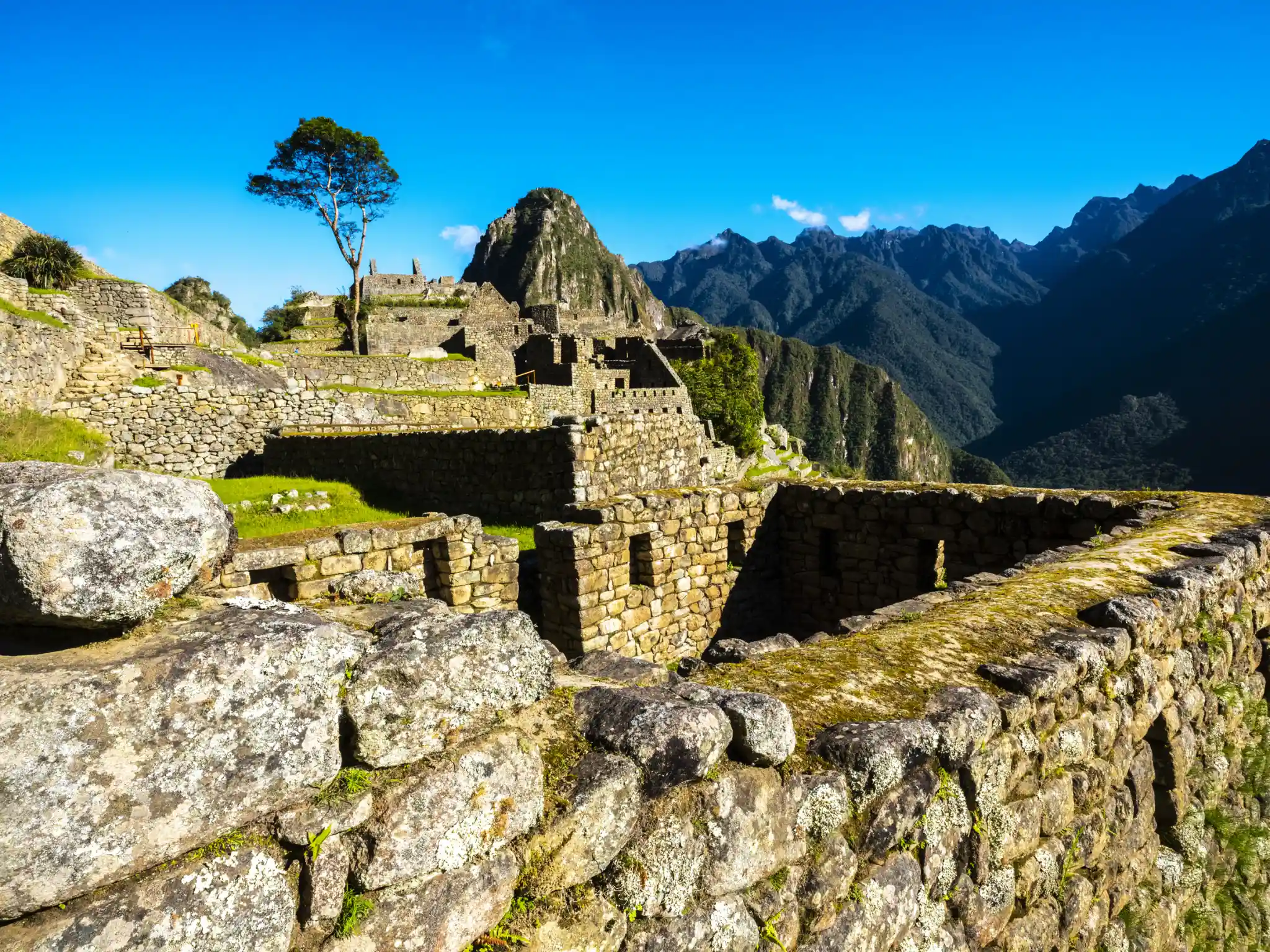
The Machu Picchu best time to visit for photography is the shoulder of the dry season, roughly April and May or September and October, when the views are mostly clear, the terraces are still green and the circuits are less packed than in the peak months. The rainy season, roughly November to March, is wetter and quieter, and its moving cloud gives the most dramatic frames. Within any day, the best time of day is the morning, when cloud lifts off the ridge and side light reaches the stones.
This article belongs to our Machu Picchu photography tour guide, which covers the citadel, Cusco and the Sacred Valley together.
Machu Picchu best time to visit: dry season or rainy season
Machu Picchu sits at about 2,430 metres on the edge of the Amazon slope, according to UNESCO, in what it describes as tropical mountain forest, so it is wetter and cloudier than Cusco. Travel operators and Peru's tourism sources broadly agree on two seasons: a drier one from about April or May to October and a rainy one from about November to March. Rain can still fall in a dry month and a rainy-season day can be bright, so treat the seasons as odds, not promises. For photographers the choice is between reliable views with crowds, and fewer people with weather that comes and goes. Both work; they give different pictures.
Dry season in Machu Picchu
The dry season in Machu Picchu brings the clearest skies and the most predictable mornings, and the classic view over the citadel to Huayna Picchu is usually open by mid-morning. That reliability is why the middle of the year, especially June to August, is the busiest time, with entry slots selling out well ahead and the upper terraces full of people. Peru's state news agency Andina reports that the Ministry of Culture allows more visitors per day on designated peak dates. The light in the dry months is hard by late morning, so the useful hours are the early slots and the late afternoon. The terraces turn browner as the season goes on; in April and May they are still green from the rains.
Machu Picchu rainy season
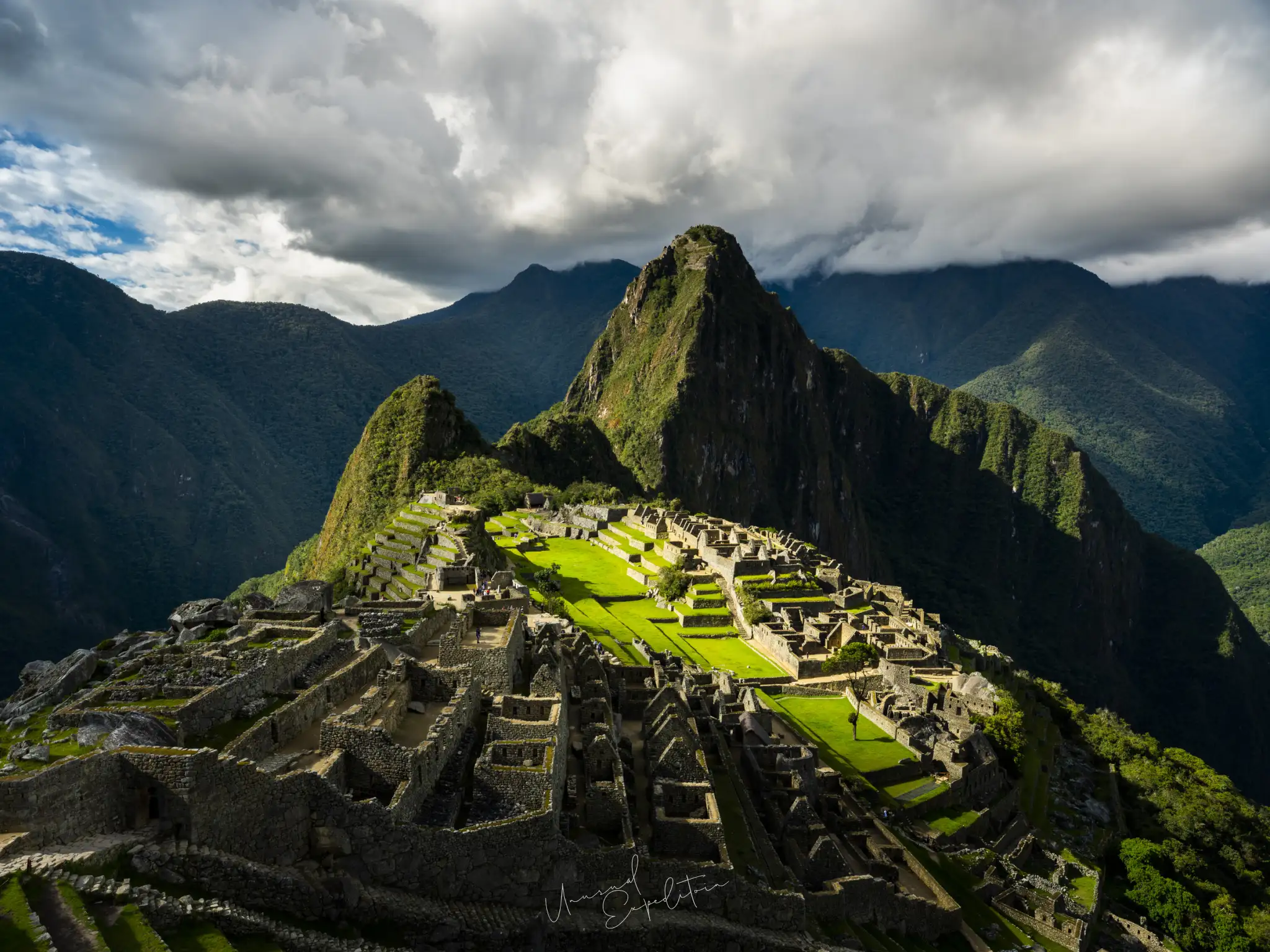
The Machu Picchu rainy season is when we photographed the citadel, and it changed how we think about the place. Mornings often start inside cloud: you stand on the terraces and see nothing but grey. Then the cloud tears, the plaza appears with a shaft of light on it, Huayna Picchu comes out of the mist, and it closes again. Those minutes give pictures a clear day never does. The cost is rain, slippery steps and days when the view never opens. Bring a rain cover, a cloth and patience, and try for two entries on different days to double your chances. The grass is at its greenest and the crowds are thinner.
Machu Picchu best time of day
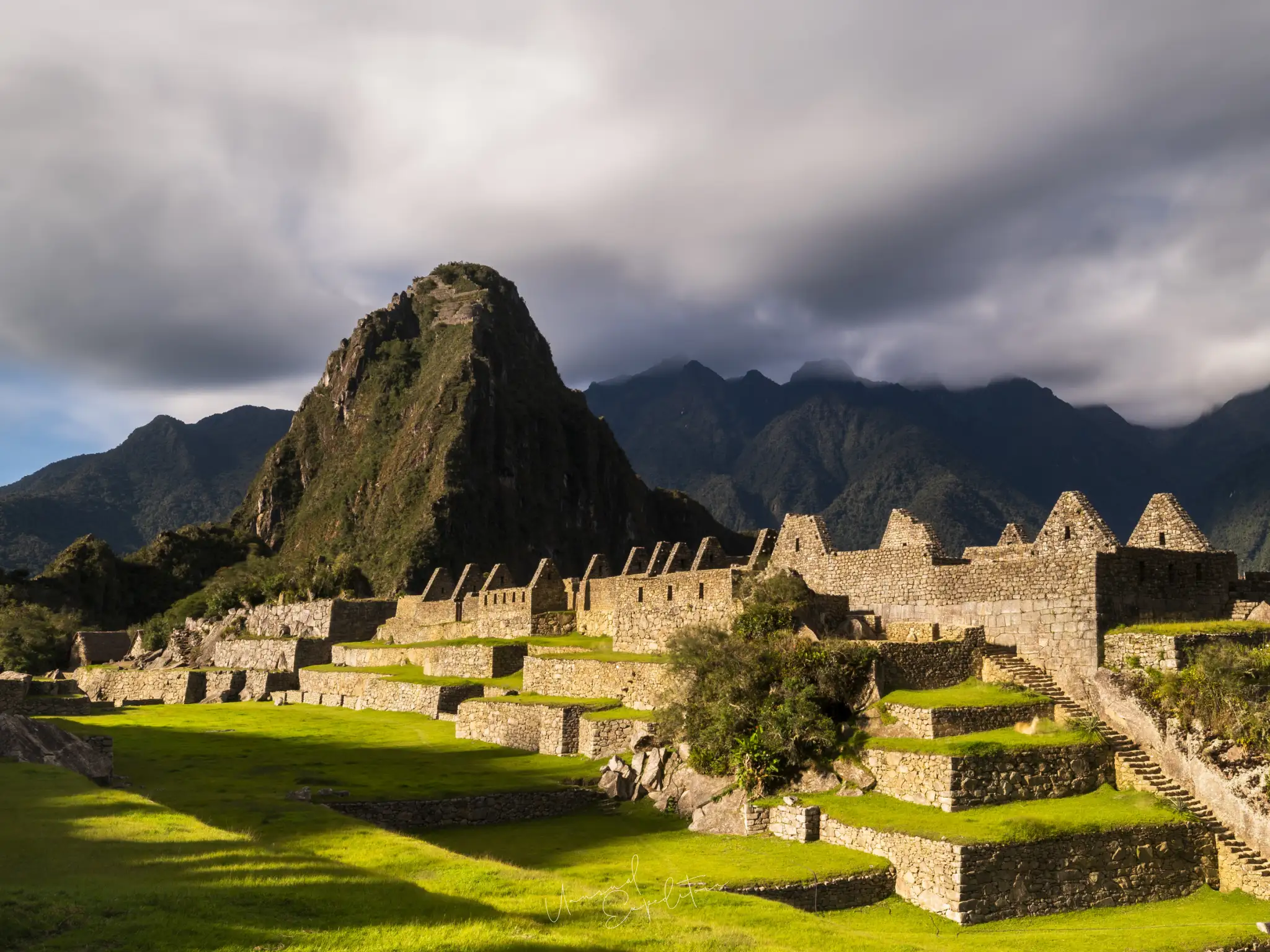
The Machu Picchu best time of day for photography is the morning. Early entry slots put you on the terraces when cloud is lifting out of the Urubamba gorge and the sun is coming over the eastern ridge, lighting the stone houses from the side. By midday the light is flat and overhead and the paths are at their fullest. Late afternoon brings warmer side light again, from the other direction, and the citadel often empties a little before closing. If you only have one ticket, take an early slot. If you have two, take one early and one later in the day, ideally on different circuits, so you see the same walls under two lights.
Machu Picchu sunrise: what to expect
A Machu Picchu sunrise is less of a spectacle than the name suggests. The citadel is surrounded by higher mountains, so the sun clears the ridges some time after the official sunrise, and on many days cloud hides the moment completely. What you do get on an early slot is the blue light before the sun, mist in the valley and the first warm light touching the tops of the peaks, then the terraces. Join the first buses up from Aguas Calientes for the earliest slots and go straight to your circuit's viewpoint; the first visitors to arrive have the terraces almost to themselves for a short while.
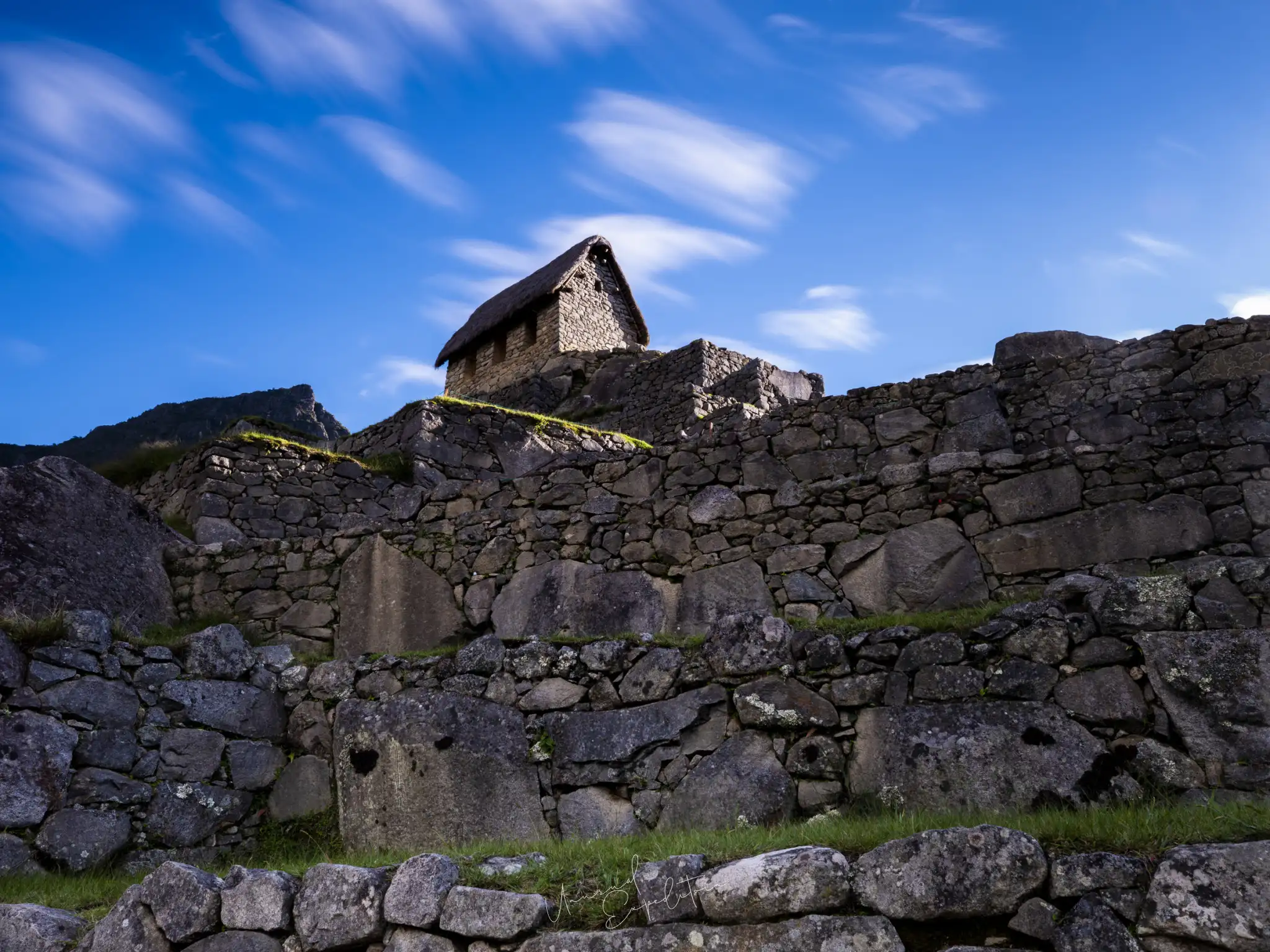
People ask me for the best month for Machu Picchu as if there is one answer. I would rather have the cloud of the wet season than a clear blue sky, but I tell everyone the same thing: get two entries, because one day of weather is a gamble.
Joseph Mak, tour leader, Unusual Expedition
Machu Picchu weather by month
| Months | Season | What the citadel looks like | For photographers |
|---|---|---|---|
| December to March | Rainy | Green terraces, heavy cloud, frequent rain | Dramatic breaks in cloud, fewer people |
| February | Rainy | Heavy rain; Inca Trail closed | Citadel open by train and bus |
| April and May | Start of dry | Still green, clearing skies | A good balance of light and crowds |
| June to August | Dry | Clear, cold mornings, browning grass | Most reliable views, busiest circuits |
| September and October | End of dry | Mostly clear, haze possible | Fewer people than mid-year |
| November | Rains begin | Cloud building through the day | Mornings often the best window |
For most photographers the best balance sits in the months either side of the dry peak.
Machu Picchu in December and January
Machu Picchu in December and January is in the heart of the rainy season, and searches like "is Machu Picchu worth visiting in December" are common. It is worth it if you accept the weather. Expect showers most days, mud on the paths and cloud that can sit on the citadel for long stretches, and expect moments when it clears that you will not forget. Pack a light rain jacket rather than a poncho that flaps in front of the lens, keep a dry cloth in a sealed bag, and give yourself a spare day in Aguas Calientes or Cusco so that one washed-out morning does not end the trip. The Christmas and New Year holidays are busy despite the rain.
The Inca Trail closure in February
The classic Inca Trail to Machu Picchu closes every February for maintenance and conservation, as Andina reports each year, with Sernanp and the Ministry of Culture repairing paths and slopes while the rain is heaviest. The citadel itself stays open, reached by train to Aguas Calientes and the bus up the hill, so a February visit is still possible; only the multi-day trek is off. If you want to walk in on the trail, plan for another month and book permits early, because they are limited. For a photographer the trail adds the view from the Sun Gate, but the train route gives you more time and energy for the citadel itself.
Plan your season with us
For where to stand once you are inside, read our Machu Picchu photo spots guide, and for the train, the bus and whether the trip pays off, see is Machu Picchu worth it. We run Machu Picchu as a private trip on request, timed for the season you want, with the logistics arranged for you. See how private tours work, and every Peru guide on our Peru photography tours page.
Machu Picchu photography tours
The next Machu Picchu departure is announced on the Machu Picchu photography tours page, with previous expeditions and all the planning guides.
Explore Machu Picchu in depth
- Machu Picchu Photography Tour Guide: the Citadel, Cusco and the Sacred ValleyPeru
- Cusco People Photos: Portraits, Markets and Street Life in the AndesPeru
- Sacred Valley Photos: Moray, the High Plain and the Weavers of ChincheroPeru
- Cusco at Night: the Plaza de Armas, the Pachacuti Fountain and the Santa Ana ArchPeru
- Cusco Photo Spots: the Plaza de Armas, the Santa Ana Arch and the Market StreetsPeru
- Is Machu Picchu Worth It? How to Get There from Cusco and What to ExpectPeru
- Machu Picchu Photo Spots: the Classic View, the Terraces and the Stone HousesPeru
Upcoming Photo Tours
- Egypt Photo Tour – EgyptEgypt 12 Dec 2026 To 20 Dec 2026
- Inner Mongolia Winter Owl Photo Tour – ChinaChina 01 Jan 2027 To 04 Jan 2027
- Inner Mongolia Winter Photo Tour – ChinaChina 05 Jan 2027 To 11 Jan 2027
- Mekong And Central Highland Vietnam Photo Tour - VietnamVietnam 16 Jan 2027 To 24 Jan 2027