
Sacred Valley Photos: Moray, the High Plain and the Weavers of Chinchero
Sacred Valley photos: the Moray terraces, the Maras salt pans, the high plain, the weavers of Chinchero, Pisac and Ollantaytambo.
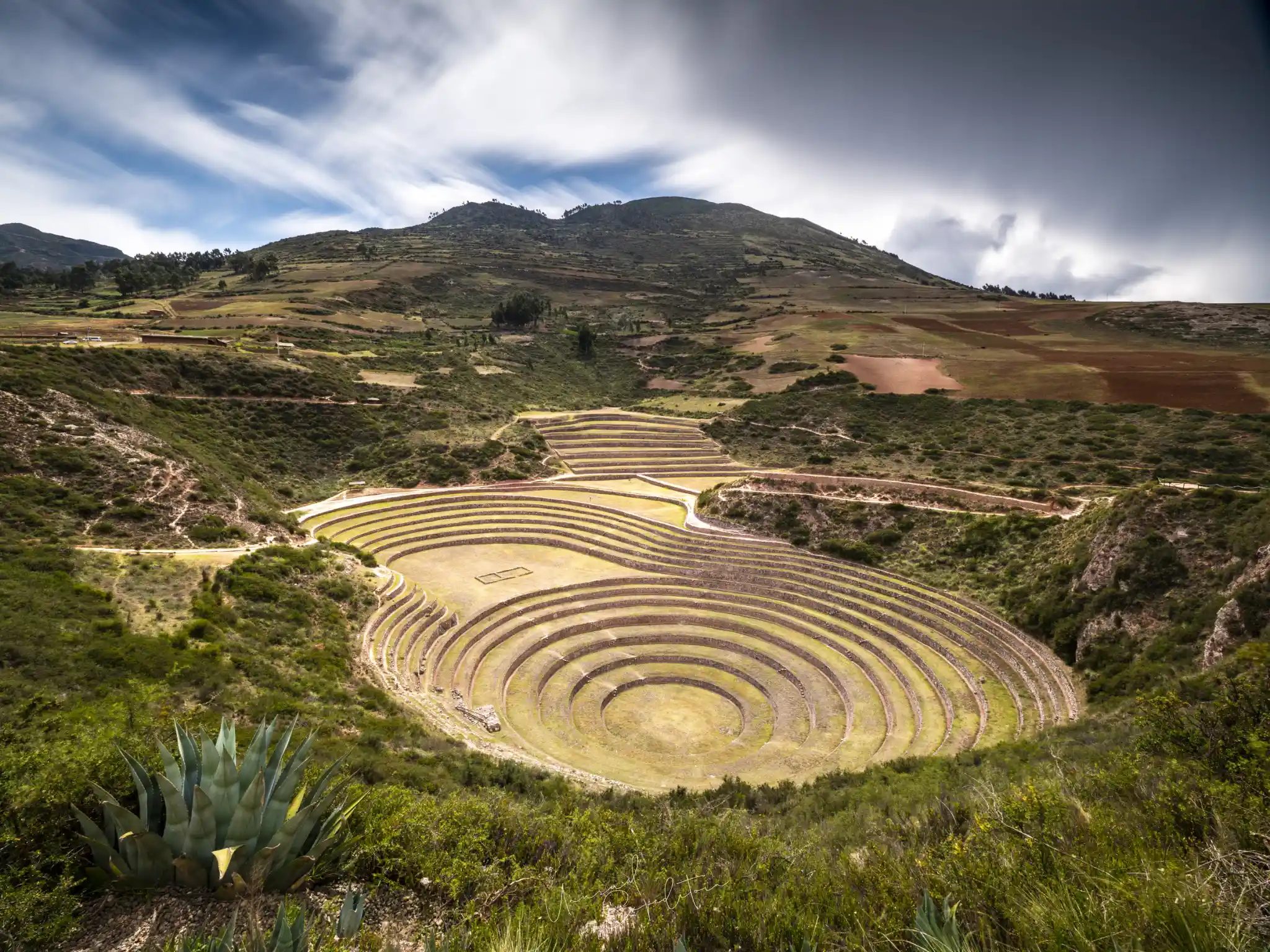
Sacred Valley photos are about three things: Inca sites built into the landscape, such as the circular terraces of Moray and the terraced hillsides above Pisac and Ollantaytambo; the high plain around Chinchero, with its fields, flocks and snow peaks; and the people of the valley's villages, above all the weavers, whose textiles are some of the most colourful subjects in Peru. The valley lies between Cusco and Machu Picchu, and most visitors pass through it in a hurry. Photographers should give it days, not hours.
This guide is part of our Machu Picchu photography tour guide. The photographs here are our own, taken in the Sacred Valley and on the high plain near Cusco; we hold the rights to them, and the notes come from knowing these places first hand.
What is the Sacred Valley in Peru?
The Sacred Valley of the Incas is the valley of the Urubamba River north of Cusco, running past Pisac, Urubamba and Ollantaytambo before the river drops into the gorge towards Machu Picchu. It was farming land for the Inca state, and the hillsides are still lined with terraces. Above the valley floor lies a high, open plain around Chinchero and Maras, where potatoes, barley and quinoa grow and the snow peaks of the Cordillera Urubamba stand along the horizon on clear days. "Is Machu Picchu in the Sacred Valley" is a common question; strictly the citadel lies further down the river, but the trains to it leave from Ollantaytambo, so the two are visited together.
Moray terraces: the Sacred Valley's most graphic site
The Moray terraces are a set of circular Inca terraces stepped down into natural hollows on the plain near Maras. Seen from the rim, the largest bowl is a set of perfect green rings, each wall casting a curved shadow on the next. Many researchers think Moray was an agricultural site where the Incas used the difference in temperature between the top and bottom rings to grow crops in different conditions; a study in the journal Heritage measured a clear temperature gradient between the levels, though the exact purpose is still debated. For photographs, walk the rim and shoot down with a 16-35mm, using a figure on the lower terraces for scale. Broken cloud gives patches of light on the rings.
Moray terraces and the Maras salt pans
Moray is usually visited together with the salt pans of Maras nearby, a hillside of small evaporation ponds stepped one below another, each a slightly different shade of white or ochre. We have not illustrated Maras here, but it is the other graphic subject of the plain, and one of the few places in the area where the afternoon light, catching the pans from the side, is the best light of the day. Moray, Chinchero, Pisac and Ollantaytambo are covered by Cusco's tourist ticket, the boleto turístico, according to the Cusco tourism portals; the salt pans are not on it and charge their own entry. Check the current coverage and prices when you buy.
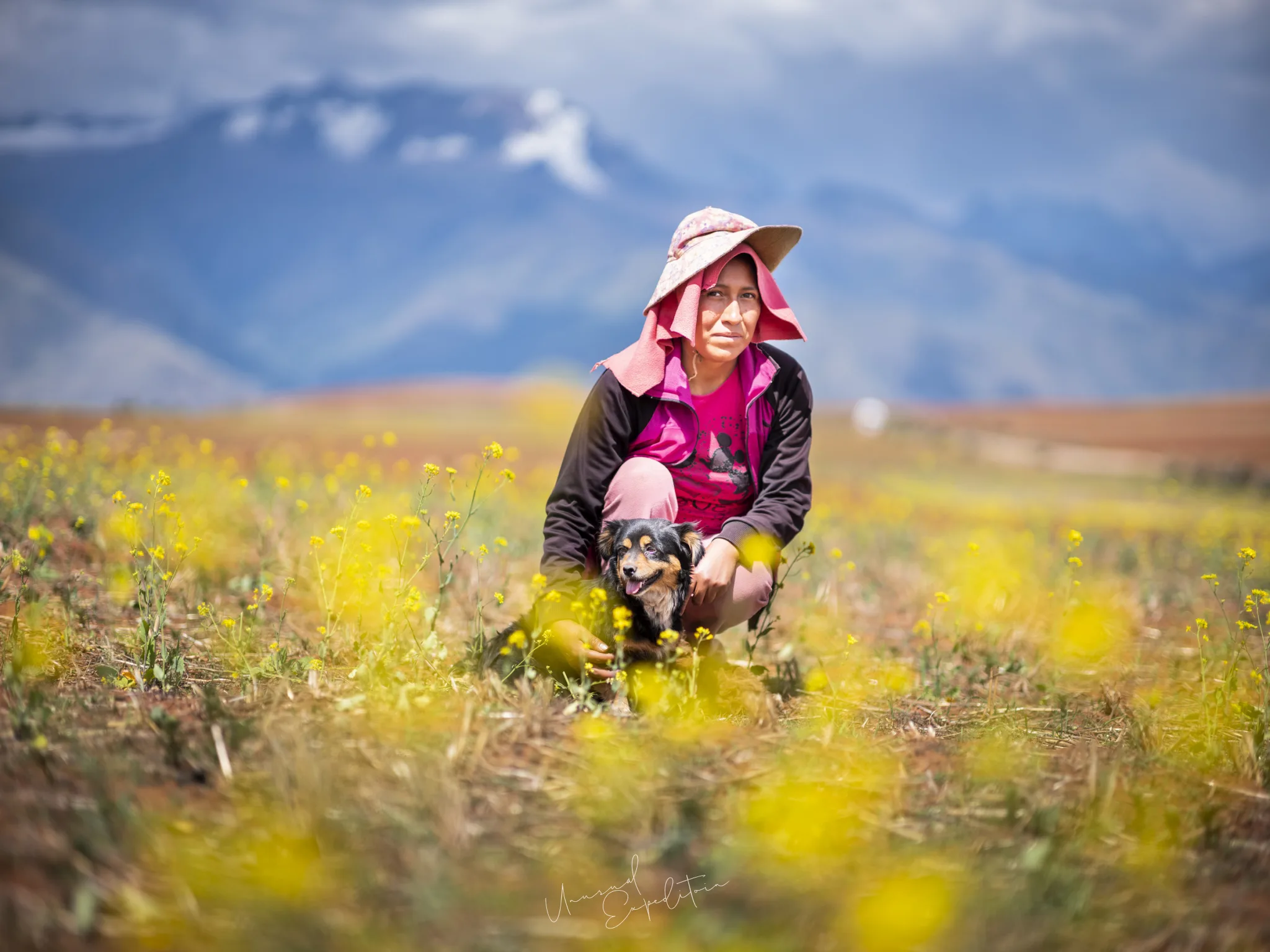
Sacred Valley Peru photos: the high plain
The plain above the Sacred Valley is the landscape most people only see from a bus window. Fields of yellow wildflowers, stone walls, adobe farmhouses, shepherds with small flocks of sheep and the white peaks of the Cordillera Urubamba behind make wide, quiet pictures with people in them. Ask before you photograph someone working in the fields; many are happy to pose, and a tip is expected. A 70-200mm compresses the fields against the mountains; an 85mm with a wide aperture separates a person from a background of flowers. The light at this altitude is hard at midday, so morning and late afternoon are best, and storm clouds building over the peaks add drama.
Chinchero: weavers and the market
Chinchero, on the plain between Cusco and the valley, is known for its weavers. The Center for Traditional Textiles of Cusco, founded by the Chinchero weaver Nilda Callañaupa Alvarez, grew out of a revival of backstrap weaving in the village, and weaving cooperatives in the area show visitors how wool is spun, dyed with plants and woven. Women wear the red, flat-brimmed montera hats of their community, and the demonstrations are an easy way to make portraits with permission, close up and in good light. The village also has a Sunday market, a colonial church built on Inca foundations, and Inca terraces below the square.
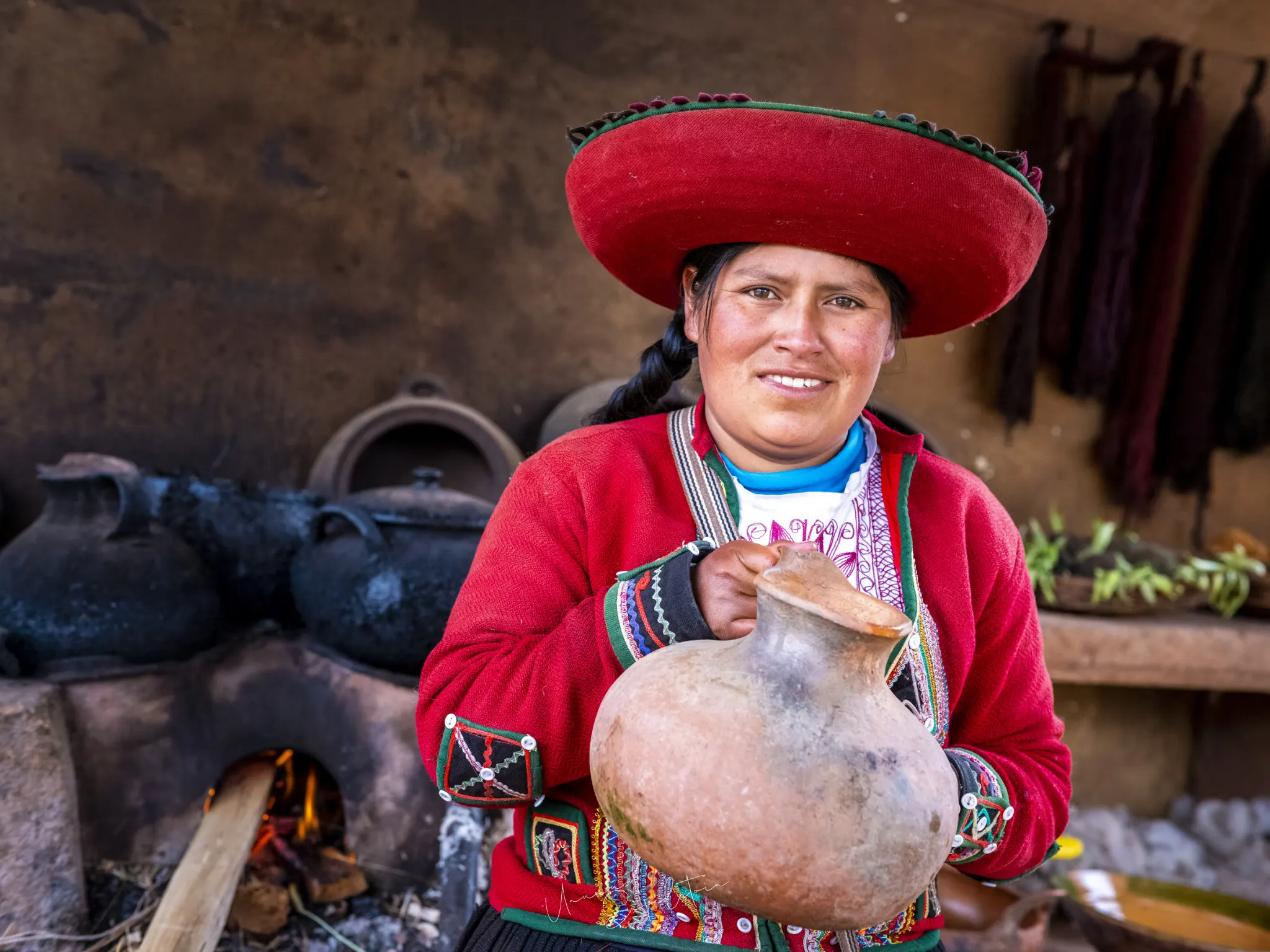
Most people see the Sacred Valley through a bus window on the way to the train. The plain above it, with the flowers, the sheep and the peaks, gave me some of my favourite pictures of the whole trip.
Joseph Mak, tour leader, Unusual Expedition
Pisac and Ollantaytambo
Pisac and Ollantaytambo bracket the Sacred Valley. Above Pisac, the Inca terraces sweep around the hillside in great curves, best from the ruins on the ridge looking down. Ollantaytambo is a living Inca town, with stone channels of running water along its lanes, a terraced temple complex on the hill above, and the railway station for Machu Picchu. Both are on the boleto turístico. Neither is illustrated in this article, but they belong on any photographer's list for the valley. For how the train to the citadel works from Ollantaytambo, see our is Machu Picchu worth it guide.
| Place | Subject | Light | Lens |
|---|---|---|---|
| Moray | Circular terraces | Broken cloud, side light | 16-35mm |
| Maras salt pans | Stepped white ponds | Afternoon | 24-70mm, 70-200mm |
| Chinchero | Weavers, market, church | Open shade | 35mm, 85mm |
| High plain | Fields, flocks, peaks | Morning, storm light | 70-200mm |
| Pisac and Ollantaytambo | Terraces, Inca town | Morning | 16-35mm, 24-70mm |
Moray and the plain reward a slow pace more than any other part of the area.
Sacred Valley weather and altitude
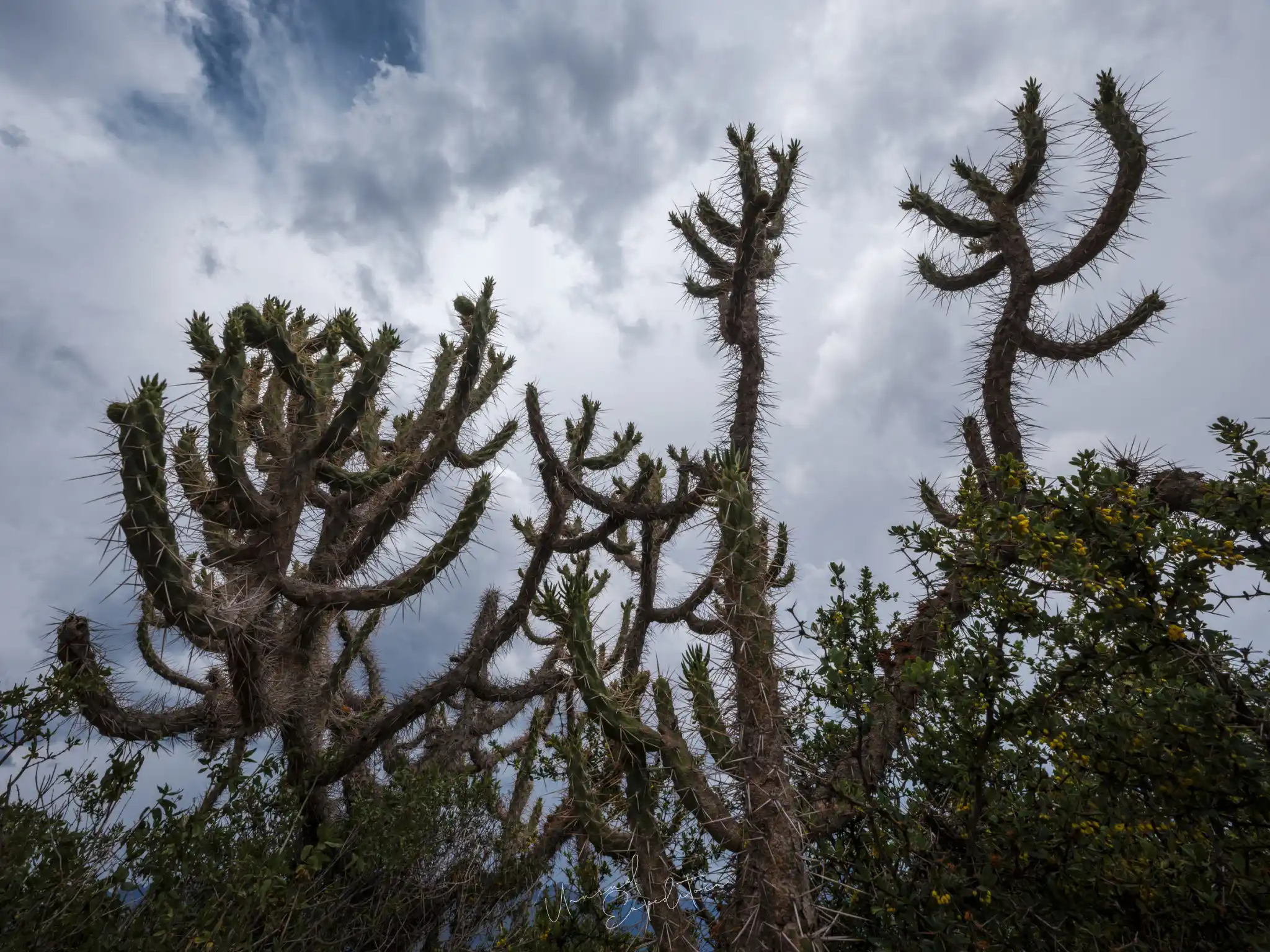
The Sacred Valley floor is lower and milder than Cusco, which is why many travellers spend their first nights there, while the plain around Chinchero and Moray is higher and colder. The seasons follow the rest of the region: drier from about April or May to October, wetter from about November to March, when the fields are greenest and storms build over the peaks in the afternoon. The wet season gave us our best skies on the plain. Bring sun protection whatever the month; at this altitude the sun burns quickly even on cool days. For the seasons in detail, see our best time to visit Machu Picchu guide, and for the villagers and markets, Cusco people photos.
Take the slow road through the Sacred Valley with us
We run the Sacred Valley, Cusco and Machu Picchu as a private trip on request, with time on the plain and at Moray rather than a quick stop, and with the logistics arranged for you; a photographer or coaching can be added at extra cost. See how private tours work, and every Peru destination guide on our Peru photography tours page.
Ask us about the Sacred Valley
Machu Picchu photography tours
The next Machu Picchu departure is announced on the Machu Picchu photography tours page, with previous expeditions and all the planning guides.
Explore Machu Picchu in depth
- Machu Picchu Photography Tour Guide: the Citadel, Cusco and the Sacred ValleyPeru
- Cusco People Photos: Portraits, Markets and Street Life in the AndesPeru
- Cusco at Night: the Plaza de Armas, the Pachacuti Fountain and the Santa Ana ArchPeru
- Cusco Photo Spots: the Plaza de Armas, the Santa Ana Arch and the Market StreetsPeru
- Is Machu Picchu Worth It? How to Get There from Cusco and What to ExpectPeru
- Machu Picchu Best Time to Visit: Dry Season, Rainy Season and the Best Time of DayPeru
- Machu Picchu Photo Spots: the Classic View, the Terraces and the Stone HousesPeru
Upcoming Photo Tours
- Egypt Photo Tour – EgyptEgypt 12 Dec 2026 To 20 Dec 2026
- Inner Mongolia Winter Owl Photo Tour – ChinaChina 01 Jan 2027 To 04 Jan 2027
- Inner Mongolia Winter Photo Tour – ChinaChina 05 Jan 2027 To 11 Jan 2027
- Mekong And Central Highland Vietnam Photo Tour - VietnamVietnam 16 Jan 2027 To 24 Jan 2027