
Machu Picchu Photo Spots: the Classic View, the Terraces and the Stone Houses
Machu Picchu photo spots: the classic view, the lower terraces, the stone houses and outcrops, with circuits, lenses and rules.
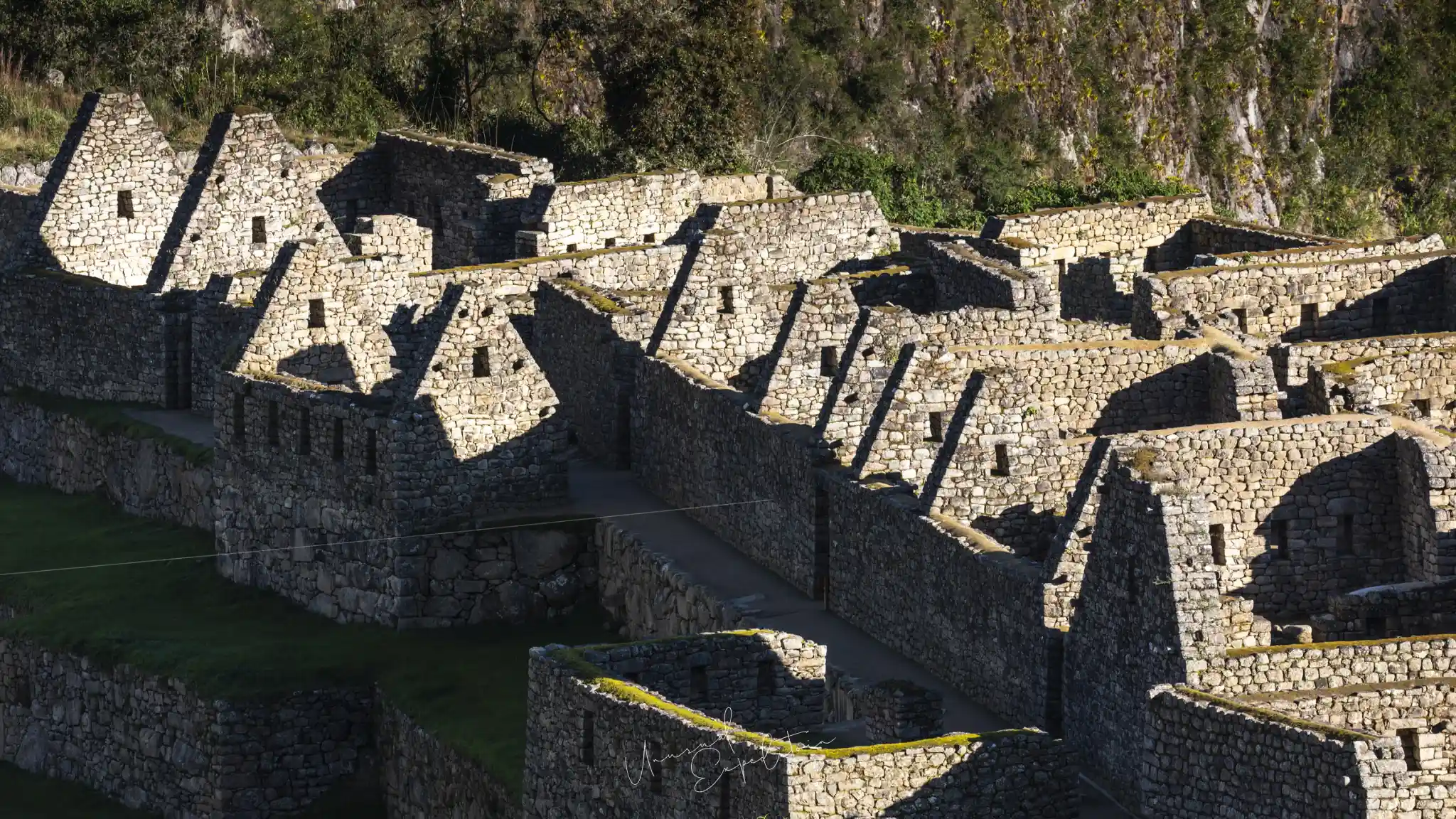
The best Machu Picchu photo spots are the upper terraces near the guardhouse for the classic view over the citadel to Huayna Picchu; the lower agricultural terraces, where the peak rises behind green steps; the rows of gabled stone houses in the urban sector; and the outcrops and stairways where Inca walls meet bare rock. Which of them you reach depends on the circuit printed on your ticket, so choose the circuit for the spots, not the other way round.
This guide is part of our Machu Picchu photography tour guide. The photographs here are our own, taken on our Machu Picchu trip; we hold the rights to them, and the notes come from walking these terraces with a camera ourselves.
Machu Picchu photo spots and the circuits
Machu Picchu is visited on fixed circuits set by Peru's Ministry of Culture, and each ticket on tuboleto.cultura.pe names one circuit and one entry slot. The routes run one way, so you cannot walk back to a viewpoint you passed in flat light. Before you buy, open the circuit maps on the official site and mark the spots below: the upper terraces for the panorama, the lower terraces, the houses of the urban sector and the temples. If the classic view matters most, make sure your circuit climbs to it; if the stonework matters more, a lower route spends longer among the buildings. Two tickets on two circuits, on different days, is the way serious photographers cover the citadel.
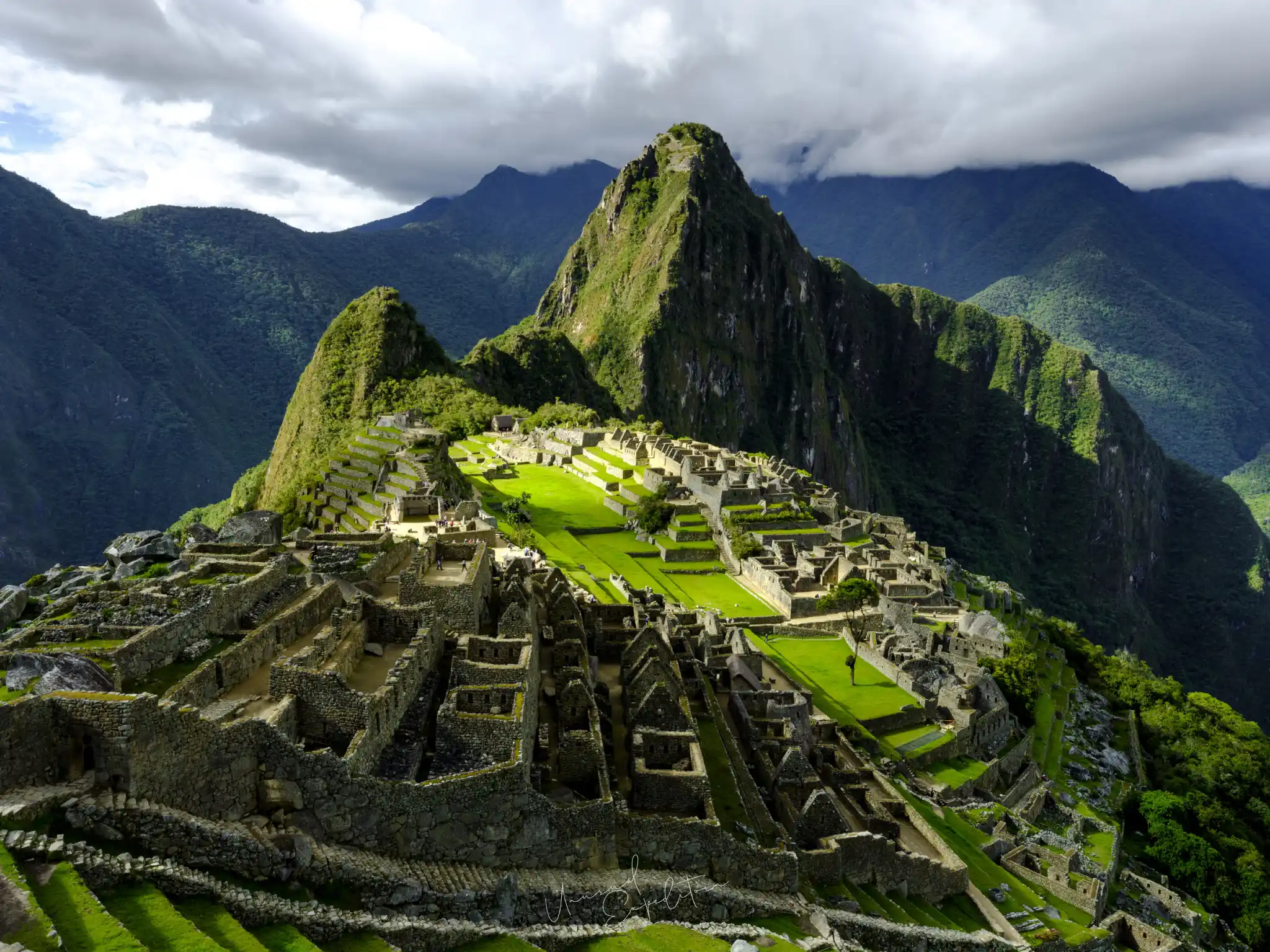
Machu Picchu picture spot: the classic view from the upper terraces
The Machu Picchu picture spot everyone knows is on the upper agricultural terraces near the guardhouse, above the citadel to the south. From there the stone town fills the saddle, the terraces fall away on both sides and Huayna Picchu rises behind like a green tooth. A 24-70mm at the wide end takes in the whole scene; at the long end it isolates the peak with cloud wrapping it. Stand a few terraces apart from the crowd at the front edge and use the stone walls as a foreground line. When cloud covers the citadel, wait: it moves fast, and the frame where light breaks through onto the plaza is better than any clear-sky version.
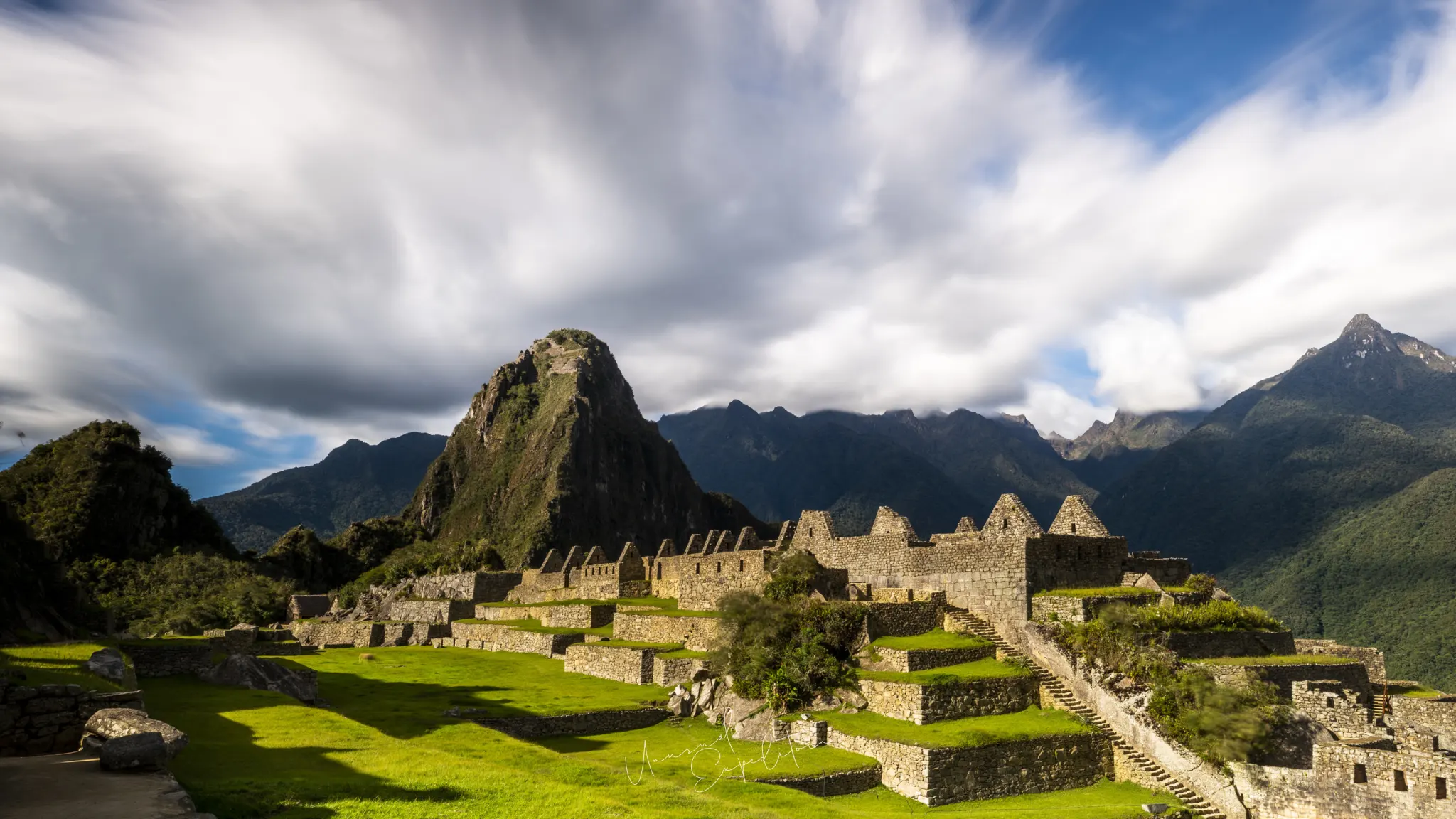
The lower terraces and Huayna Picchu
Lower down, the broad agricultural terraces of Machu Picchu step towards the main plaza, and from their edge Huayna Picchu stands behind the ruins at a lower, steeper angle than in the classic view. The grass of the terraces is bright green in the wet season and the drystone walls draw strong lines towards the peak. This is the spot for a 16-35mm, low to the ground, with a terrace wall leading the eye in. Morning sun comes over the eastern ridge and lights the terraces from the side, which brings out the texture of the stone. A polariser helps with the grass and the sky, but turn it gently or the clouds go flat.
Machu Picchu photos inside: the stone houses
The urban sector of Machu Picchu is a town of gabled stone houses without their roofs, packed along terraces and narrow lanes. From the paths above, the gables make a pattern of triangles, and when the sun is low they throw hard shadows across each other. Use a 70-200mm or the long end of a 24-70mm to compress the rows into a block of stone. Closer in, a single gable against moving cloud, with Huayna Picchu small in the distance, makes a strong frame on its own. The feature image of this guide shows the houses in side light; look for that angle from the upper paths as the morning sun clears the ridge.
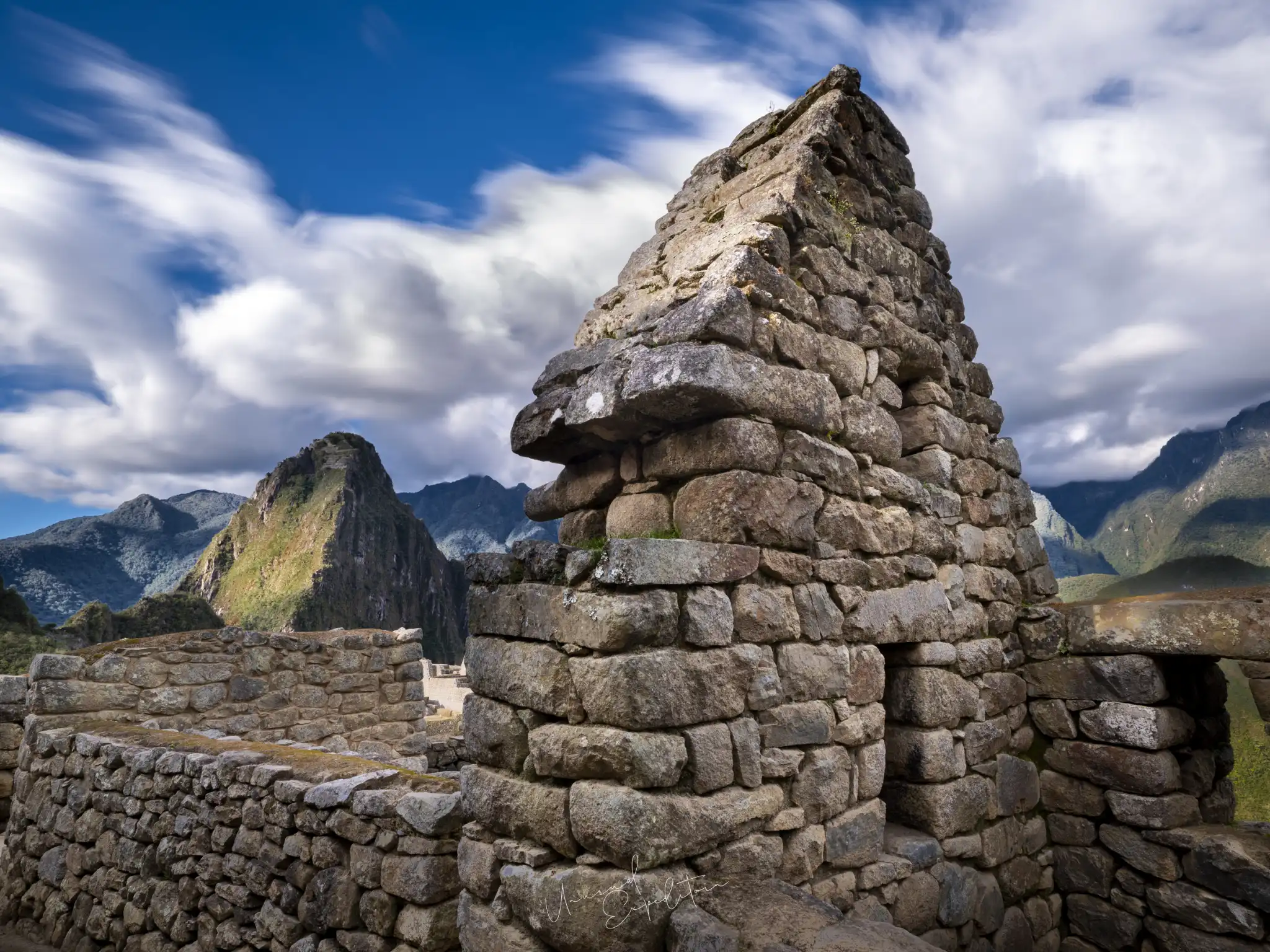
Outcrops, stairways and the fine walls
Machu Picchu was built onto the mountain rather than on a cleared site, and some of its best details are where the walls meet the living rock. Stone platforms sit on top of outcrops, stairways are cut into the granite, and the finest masonry, with blocks fitted without mortar, lines the temples and the royal areas. These are subjects for a longer lens and a patient eye: wait for a guard or a visitor to stand at the right point for scale, or for sun to light one platform while the forest behind stays in shade. Keep to the marked path; the rules forbid climbing on the walls, and guards enforce them.
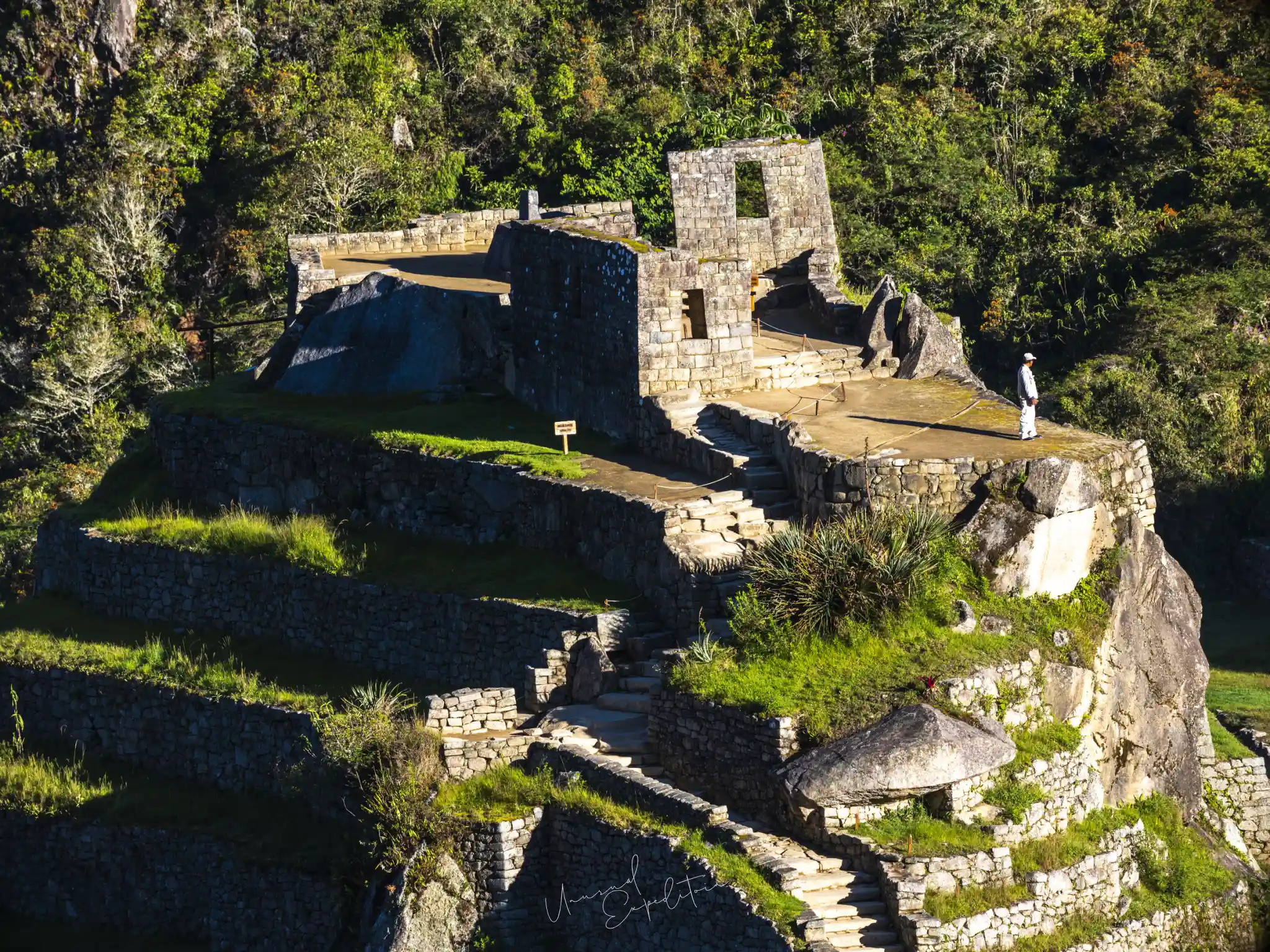
At Machu Picchu I spend more time watching the cloud than shooting. When it opens on the plaza for half a minute, you want to be standing at the right terrace already, with the camera set.
Joseph Mak, tour leader, Unusual Expedition
Machu Picchu photography rules for photographers
The Machu Picchu code of conduct, published on machupicchu.gob.pe, does not allow tripods, drones, selfie sticks or professional filming equipment without prior authorisation, and bags above a set size have to go into the lockers at the entrance. Personal cameras and phones are fine. For photographers that means one body, one or two lenses, image stabilisation switched on and a higher ISO than you would choose at home. Bracket the classic view if the sky is bright, because you cannot blend from a tripod. Rules on guides and circuits have changed several times; check them on the official site when you book.
| Spot | What you get | Lens | Light |
|---|---|---|---|
| Upper terraces near the guardhouse | Classic view over the citadel to Huayna Picchu | 24-70mm | Morning, breaks in cloud |
| Lower agricultural terraces | Terraces leading to the peak | 16-35mm | Morning side light |
| Paths above the urban sector | Rows of stone gables | 70-200mm | Low sun, hard shadow |
| Outcrops and stairways | Walls on living rock, scale | 24-70mm, 70-200mm | Patches of sun |
One lens change, from the 24-70mm to the 70-200mm, covers almost every spot on the list.
Machu Picchu photo ideas beyond the postcard
Once the classic frame is in the bag, Machu Picchu has plenty of quieter photo ideas. The llamas that graze the terraces walk into frames on their own; get low and let one fill the foreground with the ruins behind. Doorways and trapezoid windows frame the mountains. Cloud filling the valley below the citadel makes the ridge look like an island. The lines of terrace walls, seen from above, turn into an abstract of green and grey. For the timing of light and weather by season, read our best time to visit Machu Picchu guide, and for the train, the bus and whether the trip pays off, see is Machu Picchu worth it.
Come and find these spots with us
We run Machu Picchu as a private trip on request, with the circuits and entry slots chosen for the spots you want and all the logistics arranged for you. A photographer or coaching can be added at extra cost. Read how private tours work, or see every Peru destination guide on our Peru photography tours page.
Machu Picchu photography tours
The next Machu Picchu departure is announced on the Machu Picchu photography tours page, with previous expeditions and all the planning guides.
Explore Machu Picchu in depth
- Machu Picchu Photography Tour Guide: the Citadel, Cusco and the Sacred ValleyPeru
- Cusco People Photos: Portraits, Markets and Street Life in the AndesPeru
- Sacred Valley Photos: Moray, the High Plain and the Weavers of ChincheroPeru
- Cusco at Night: the Plaza de Armas, the Pachacuti Fountain and the Santa Ana ArchPeru
- Cusco Photo Spots: the Plaza de Armas, the Santa Ana Arch and the Market StreetsPeru
- Is Machu Picchu Worth It? How to Get There from Cusco and What to ExpectPeru
- Machu Picchu Best Time to Visit: Dry Season, Rainy Season and the Best Time of DayPeru
Upcoming Photo Tours
- Egypt Photo Tour – EgyptEgypt 12 Dec 2026 To 20 Dec 2026
- Inner Mongolia Winter Owl Photo Tour – ChinaChina 01 Jan 2027 To 04 Jan 2027
- Inner Mongolia Winter Photo Tour – ChinaChina 05 Jan 2027 To 11 Jan 2027
- Mekong And Central Highland Vietnam Photo Tour - VietnamVietnam 16 Jan 2027 To 24 Jan 2027