
Birds of South Africa: Rollers, Bee-eaters, Kingfishers and Vultures
Birds of South Africa pictures and birding in South Africa: rollers, bee-eaters, kingfishers and vultures, with settings.
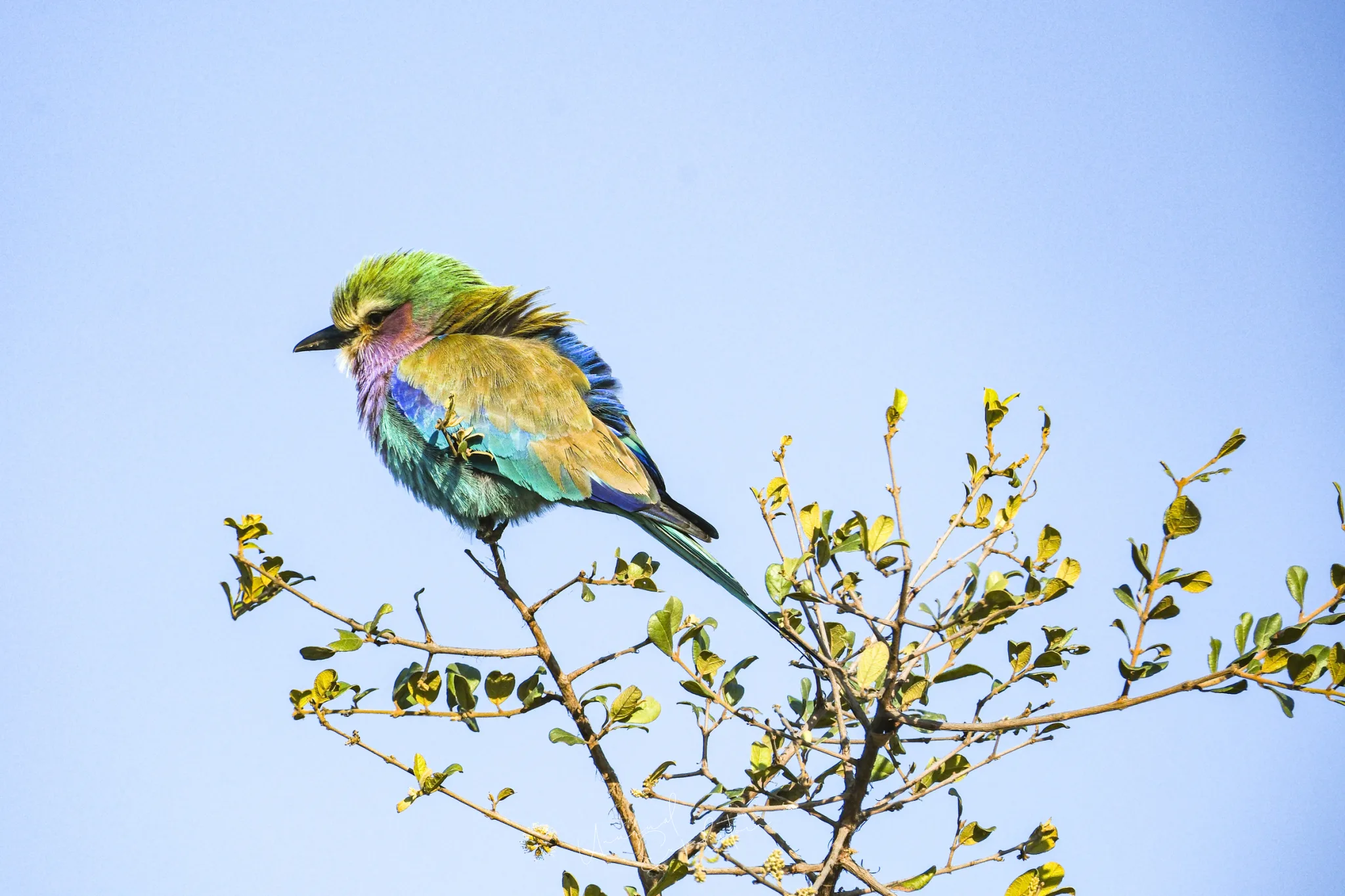
Birds of South Africa pictures start with colour: the lilac-breasted roller, the bee-eaters, the pied kingfishers, and the dark, patient shapes of vultures on a dead tree. Birding in South Africa is rewarding for a photographer because many birds perch in the open, sit still for long periods and return to the same branch. Below are the species we photographed in a South African game reserve and how to work with a long lens from a vehicle.
Birds are a big part of our South Africa safari photography guide and the wider South Africa photography tour guide. The big mammals are in leopard photography in South Africa and elephants, buffalo and hippos.
Birding in South Africa: what can you photograph?
South Africa has a very long bird list, and BirdLife South Africa, the country's main bird conservation body, is the reference for it. In one reserve we found rollers, bee-eaters, kingfishers, a crested bird, hornbills, owls, a heron, a spoonbill and several vultures. For a photographer the useful groups are the perchers (rollers, bee-eaters, hornbills), the water birds (herons, spoonbills, kingfishers) and the large raptors and scavengers. Each needs a slightly different approach.
Lilac-breasted roller photography
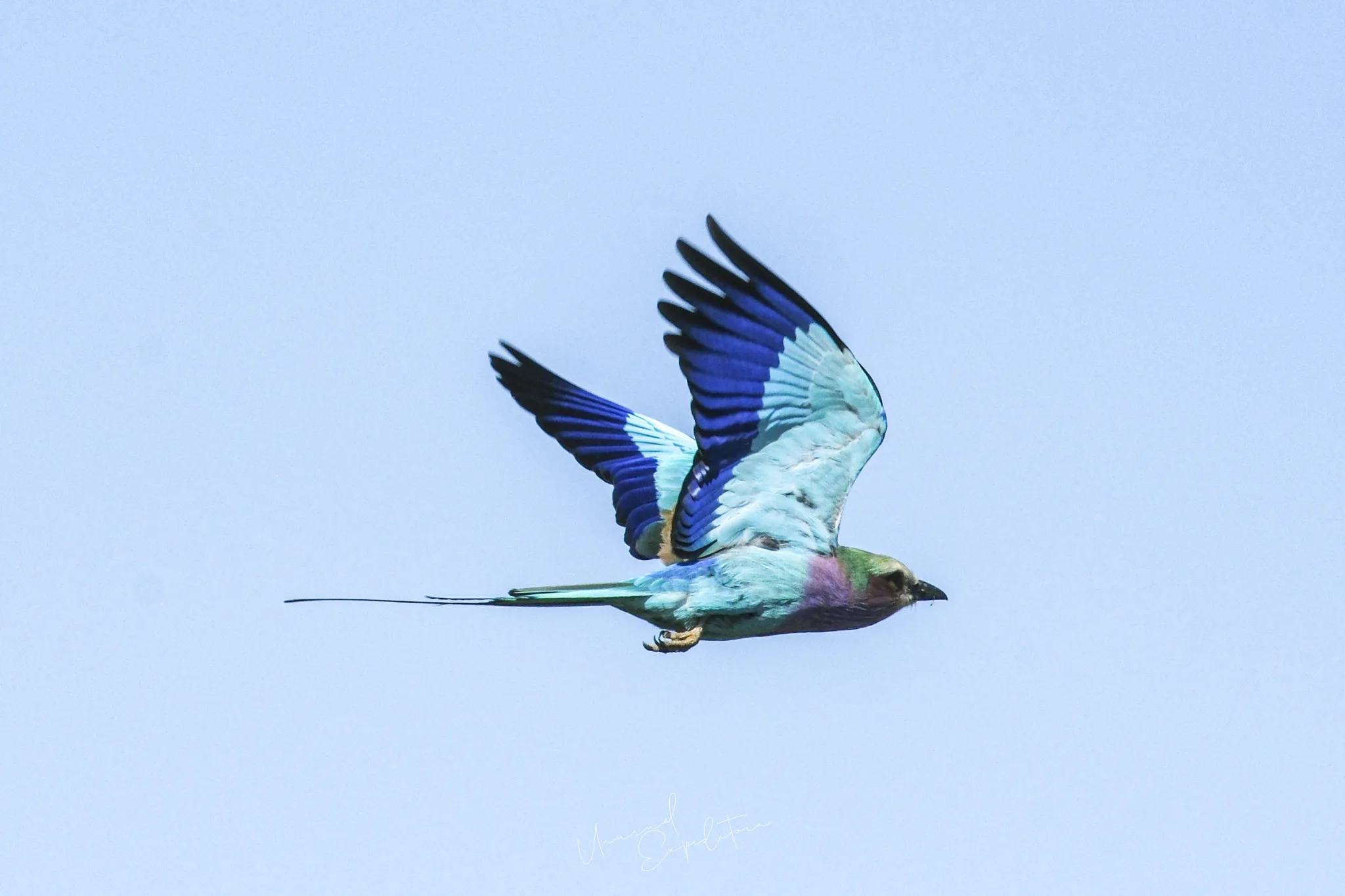
The lilac-breasted roller is the bird that most visitors remember, and the reason is plain: it perches in the open on a bare branch, and its feathers show blue, green, lilac and turquoise in a single frame. It sits for long enough to focus, and often turns its head for you. Look for it on the tops of thorn trees along the road. A long lens and a clear sky as the background give the best result, and a flight shot is possible if you wait for the bird to drop and fan its wings, as ours did.
Bee-eaters, kingfishers and the quick birds
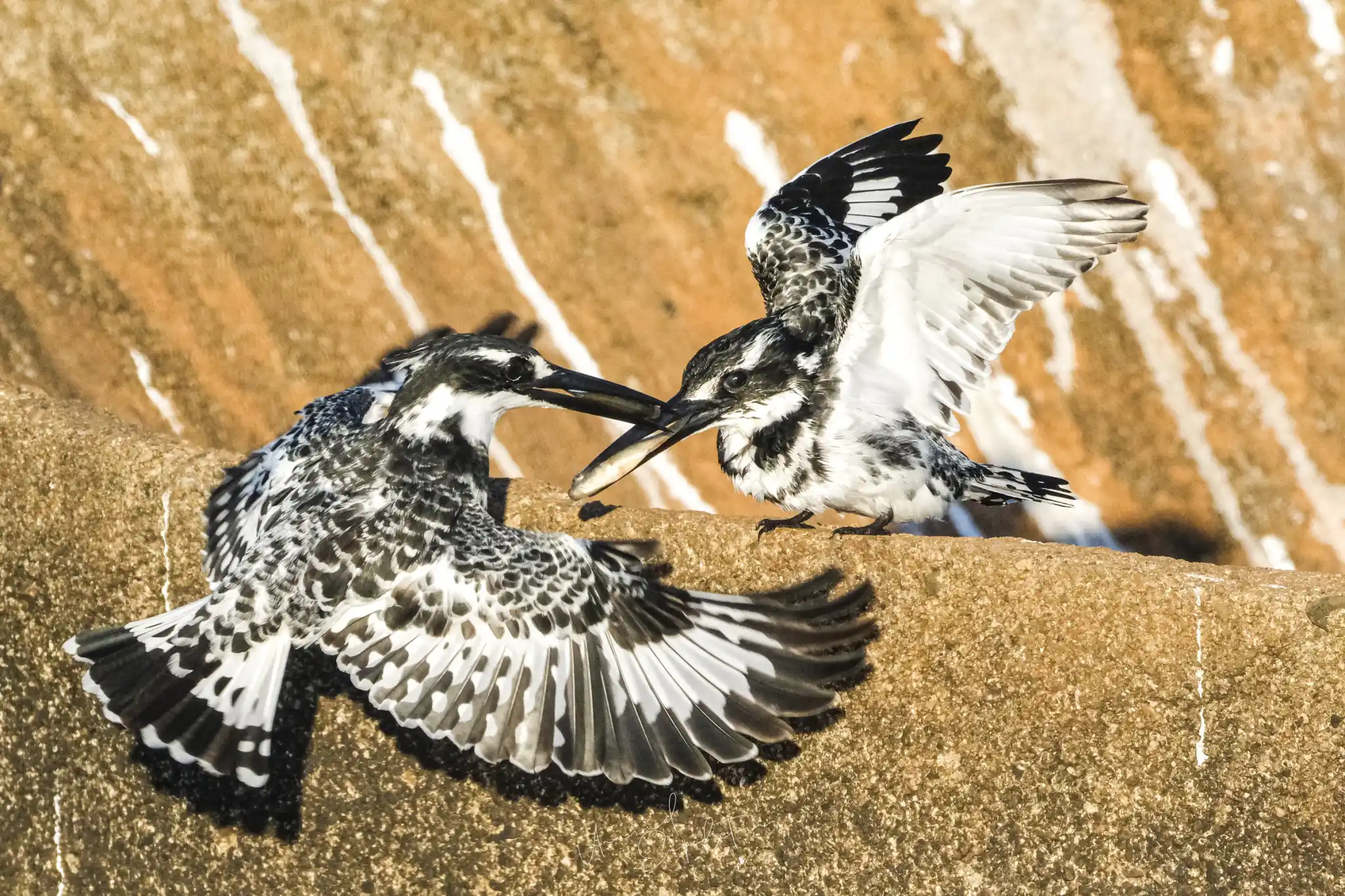
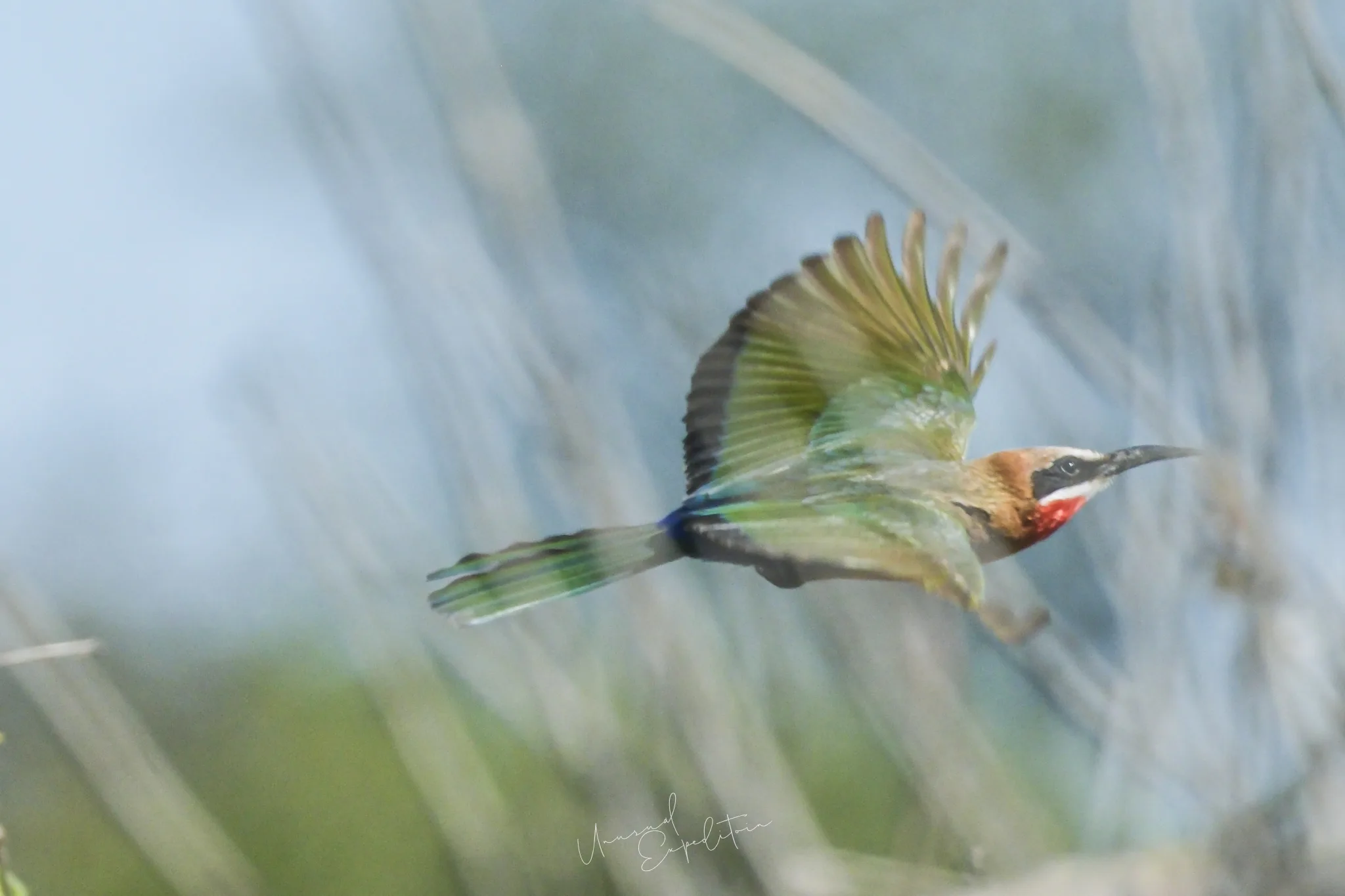
Bee-eaters and kingfishers move fast. A bee-eater launches from a twig, snatches an insect and returns to the same perch, which gives you a predictable flight path. Pre-focus on the perch, use a shutter speed of 1/2000 second or faster, and shoot a burst as it leaves. The white-fronted bee-eater, with its red throat, was one of our favourites. Kingfishers are less predictable, but they often fight or display on rocks, and those moments have the most movement and drama.
Perched birds and clean backgrounds
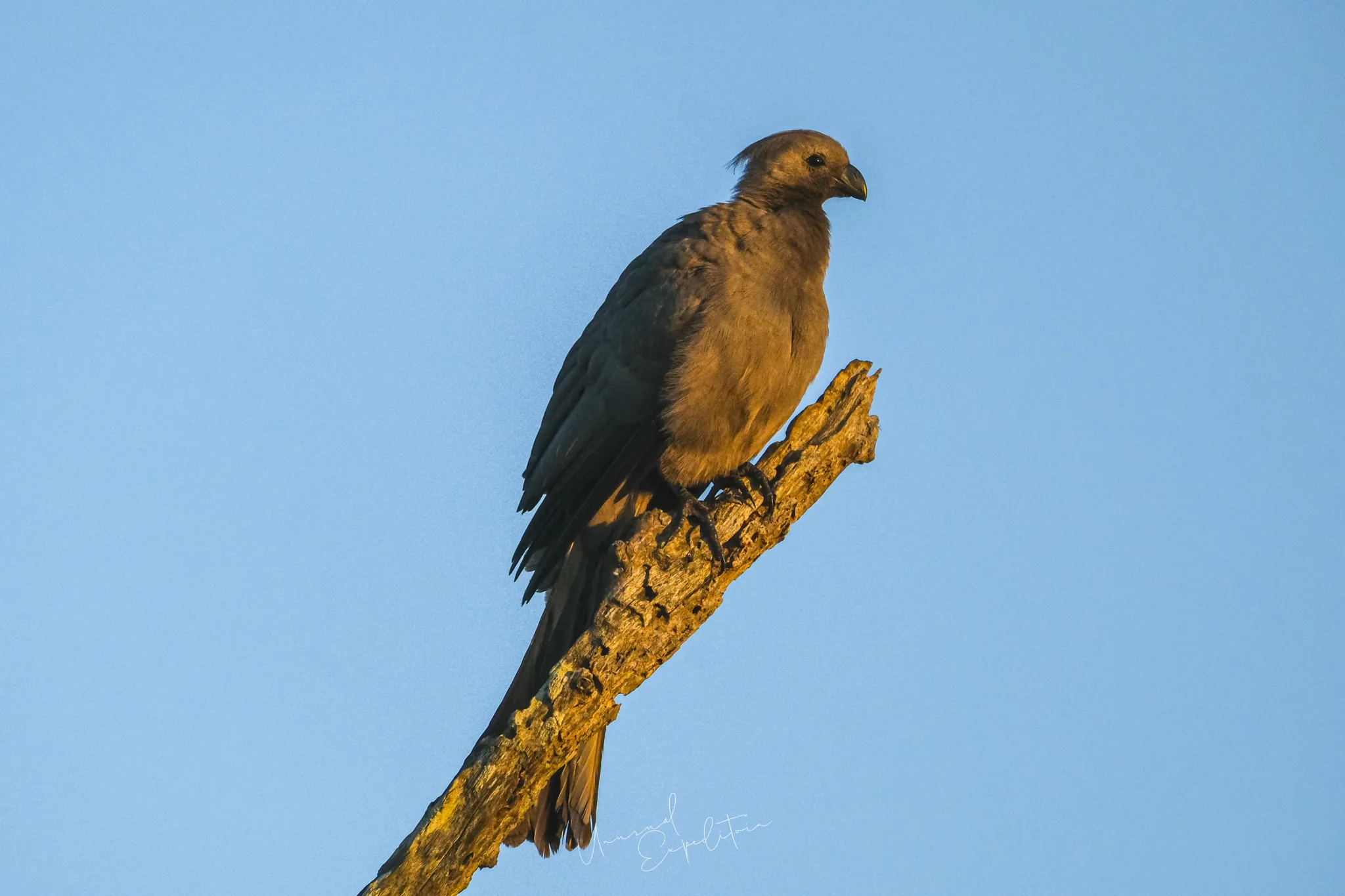
A perched bird against a plain sky is a simple, elegant picture. Choose a viewpoint where the background is clean, and use a wide aperture, such as f/6.3 to f/8 on a long zoom, to keep the bird sharp and soften what lies behind it. A dead branch or stump gives you a graphic shape, and the right side light brings out the plumage. We found one crested bird sitting on a bare branch against a deep blue sky, and the golden light on its feathers made the picture on its own.
Vultures: photographing a big bird up close
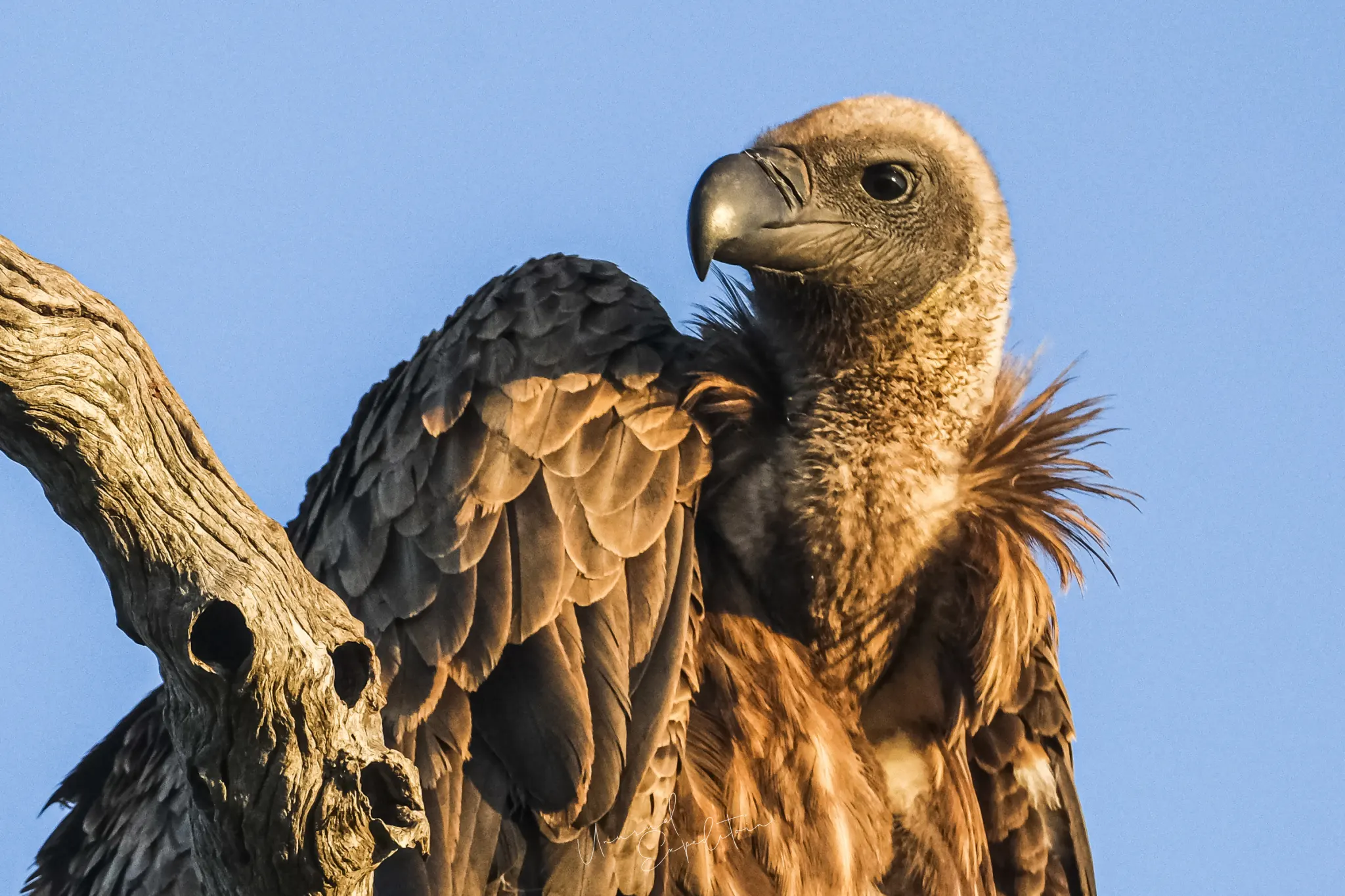
Vultures sit on dead trees for long periods and are among the easiest large birds to photograph. A close crop of the head and shoulders, with the wing folded, gives a character portrait. Vultures are under pressure across Africa, so a picture of one is also a picture of a bird that conservation groups worry about; BirdLife South Africa is the place to check the current picture. Use a long lens, a clean blue sky and the warm light of the early day, and be patient, as they move very little.
Camera settings for birds in South Africa
| Bird type | Shutter speed | Lens | Tip |
|---|---|---|---|
| Perched roller or hornbill | 1/1000 second | 150-600mm | Clean sky behind |
| Bee-eater in flight | 1/2000 second or faster | 150-600mm | Pre-focus on the perch |
| Kingfishers | 1/2000 second | 400mm or longer | Watch the rock ledges |
| Vulture portrait | 1/1000 second | 150-600mm | Warm early light |
Set continuous autofocus with bird-eye detection if your body has it.
Herons, spoonbills and other water birds
Water birds are a gift to a photographer, because they stand still and the water makes a clean background. A grey heron on a calm lake, a spoonbill sweeping its bill through shallows and hippos or kingfishers nearby all gave us quiet frames. Work with the colour of the water: blue under a clear sky, green and brown under cloud. Keep a low angle where the vehicle or hide allows it, so the bird stands against water, not reeds, and wait for the bird to move, since a bird in mid-step reads better than one frozen in a pose.
How to work with light on colourful birds
Colour is the whole point of birds like the roller and the bee-eater, so protect it. Side light in the early or late part of the day lifts the plumage, while hard overhead sun flattens it and burns the pale areas. With the sun behind you the colours are strongest but the light is flat; with the sun to one side you get texture and a hint of shadow. Underexpose by a third of a stop against a bright sky to keep the blues rich, and recover the bird in processing.
Our photographs of birds in South Africa
The photographs in this guide are our own, taken in a South African game reserve on our trip; we hold the rights to them, and the notes come from knowing these birds first hand.
The roller always makes me smile. You wait for a leopard for hours and the roller sits down and poses in ten minutes. It reminds you that a good safari picture is not always the big animal.
Joseph Mak, tour leader, Unusual Expedition
Photograph South African birds with us
We run South Africa as a private trip on request, with no scheduled departure at the moment, for individuals, couples, families or photographers who want their own pace and every piece of logistics arranged around them. It can cost less than a group tour because no tour leader travels, and a photographer or coach can be added at extra cost. Ask at least two months ahead; last-minute requests can often be arranged. See private tours and the South Africa photography tours page.
Ask us about birding in South Africa
South Africa Safari photography tours
The next South Africa Safari departure is announced on the South Africa Safari photography tours page, with previous expeditions and all the planning guides.
Explore South Africa Safari in depth
- South Africa Safari Photography: Leopards, Giraffes, Elephants and BirdsSouth Africa
- Leopard in South Africa: How to Photograph It, Settings and LightSouth Africa
- Giraffe Photography in South Africa: Light, Composition and LensesSouth Africa
- Elephants, Buffalo and Hippos in South Africa: Photography GuideSouth Africa
Upcoming Photo Tours
- Egypt Photo Tour – EgyptEgypt 12 Dec 2026 To 20 Dec 2026
- Inner Mongolia Winter Owl Photo Tour – ChinaChina 01 Jan 2027 To 04 Jan 2027
- Inner Mongolia Winter Photo Tour – ChinaChina 05 Jan 2027 To 11 Jan 2027
- Mekong And Central Highland Vietnam Photo Tour - VietnamVietnam 16 Jan 2027 To 24 Jan 2027