
South Africa Safari Photography: Leopards, Giraffes, Elephants and Birds
South Africa safari photography guide: leopards, giraffes, elephants, buffalo and birds, with lenses, season and vehicle tips.
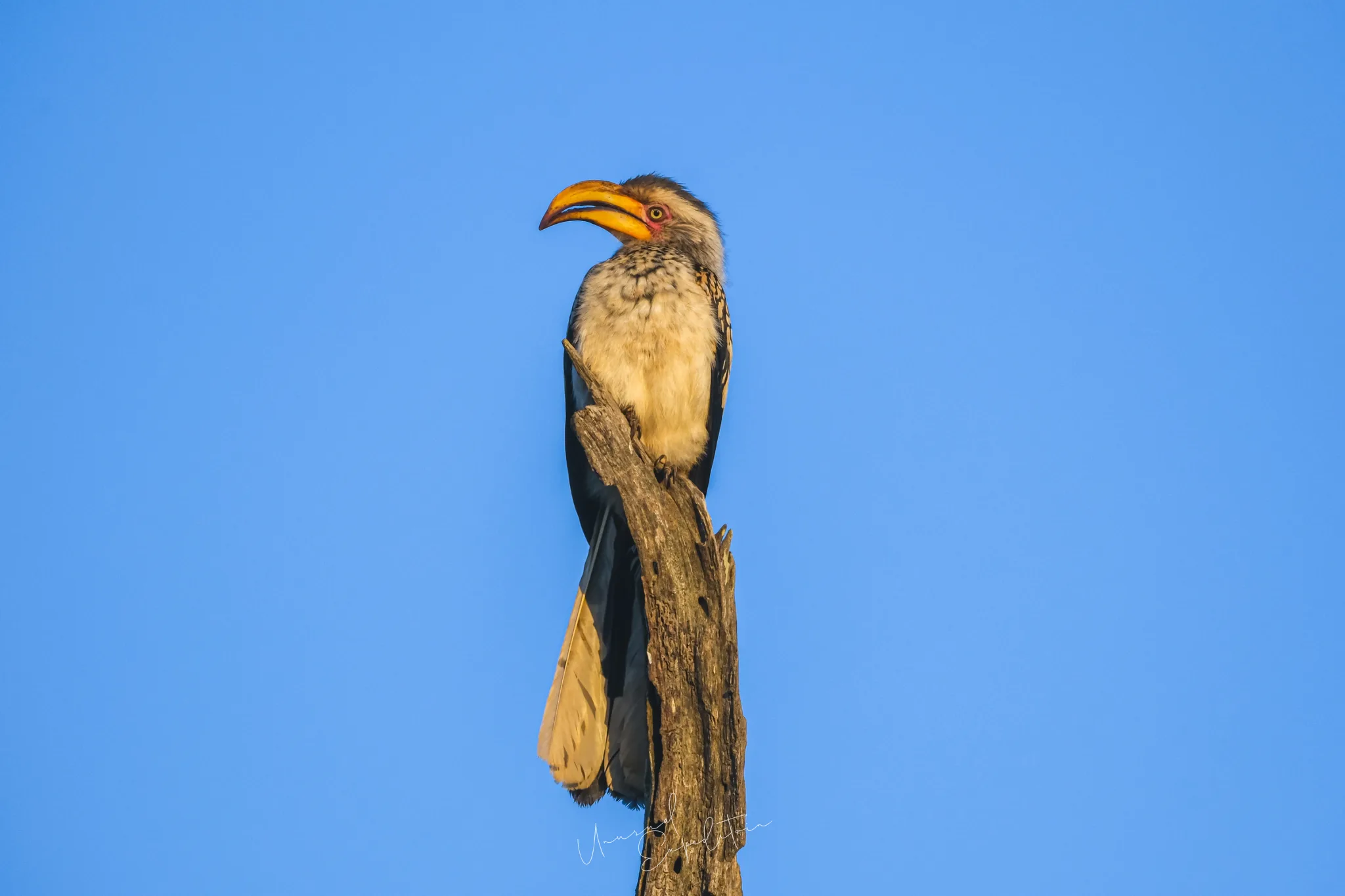
South Africa safari photography means long hours on an open vehicle in a game reserve, a long lens in your lap and the patience to wait for a leopard, a giraffe or a bird to give you a frame. In the dry winter months the bush is thinner and animals are easier to see, so a winter trip can be a good choice for a photographer who accepts cold early starts. Below: what we photographed, what to carry and how to work from a vehicle.
It belongs to our South Africa photography tour guide, which also covers Cape Town and the penguin colony. For the species guides, start with leopard photography in South Africa and birds of South Africa.
What can you photograph on a South Africa safari?
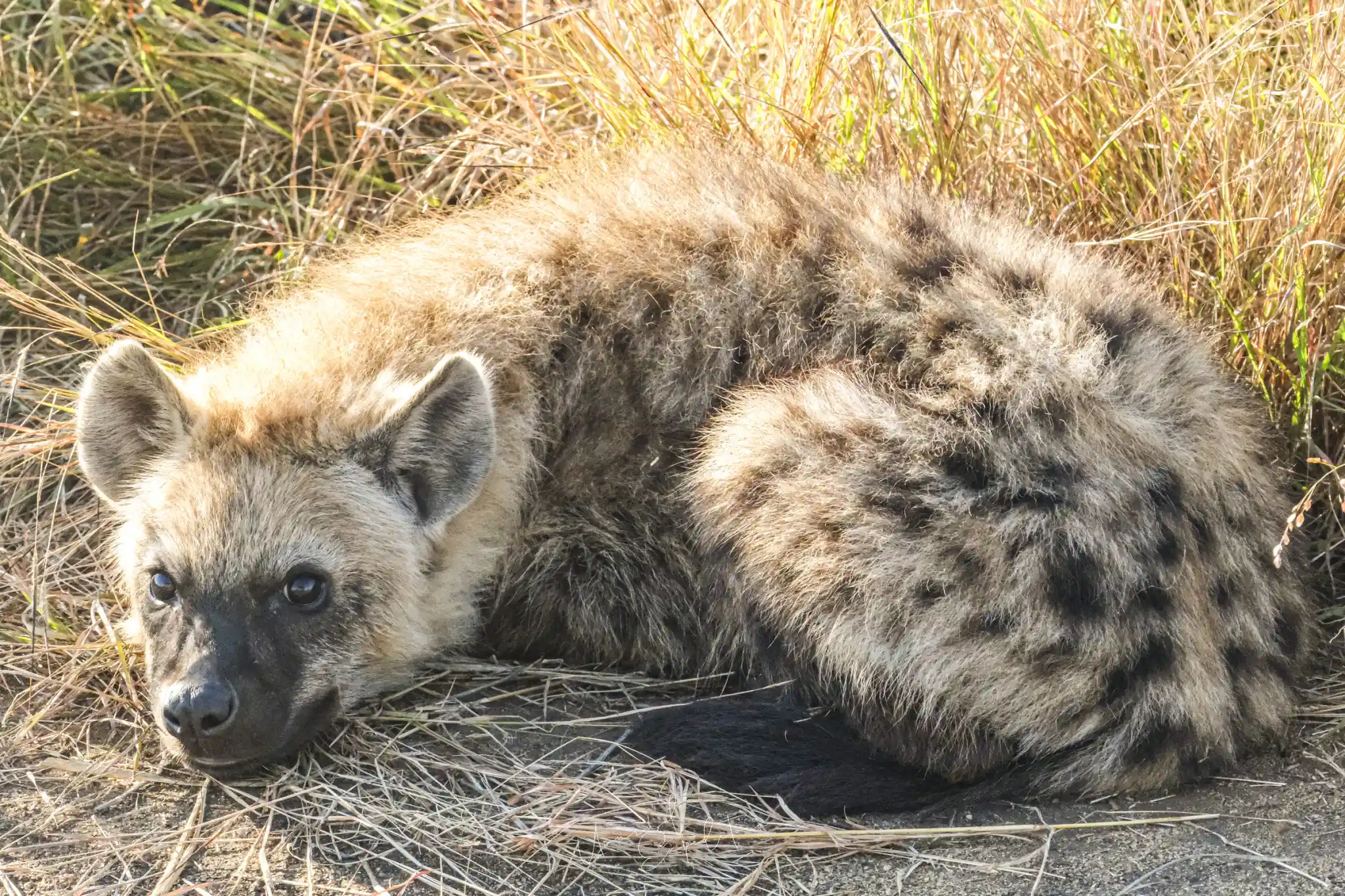
On our trip, in a South African game reserve, the list was long. Leopards were the highlight, with giraffes, elephants with calves, buffalo, hippo, spotted hyena and baboons beside them, and above them rollers, bee-eaters, kingfishers, hornbills, vultures and owls. The reserve is a mix of open grass, thick bush and water, so a single morning can give you a big animal in a wide frame and a small bird in a tight one. That variety is what makes South Africa a good first safari for a photographer: you are rarely waiting for a single subject.
South Africa safari: best time to go
For game viewing, sources such as SafariBookings and Wilderness Destinations describe May to September as the best window in the north and east of the country, because it is the dry season: vegetation thins and animals gather near water. The trade-off is cold. Early starts in an open vehicle can be properly chilly, so bring layers and gloves. The Western Cape, where Cape Town is, is the exception, with winter rain. The best time to photograph South Africa article lays the regions side by side.
South Africa safari in June
June is the start of the dry winter. Skies in the bush are often clear and the light is clean, and the thinner grass gives you more open sightlines than the green season does. We worked in winter, and the pictures show it: the grass is dry and gold, the air is clear, and the blue sky behind a perched bird is the colour behind the hornbill on this guide's card. Check the current conditions with your operator before you book, because every year is different.
Lenses and settings for safari photography in South Africa
A 150-600mm or a 100-400mm is the main lens. Some of our frames on this trip were made with a 150-600mm zoom, and a 24-70mm or 70-200mm is useful for animals close to the vehicle. Set the shutter speed to at least 1/1000 second for anything that moves, and higher for birds in flight. Use a beanbag or the vehicle's rest, because a tripod gets in the way. Keep batteries and cards in an inside pocket on cold mornings.
How do you work from a safari vehicle?
You stay in the vehicle in most reserves, and the ranger or driver positions it. Ask for the sun behind you and the animal side-on, and be ready to switch off the engine, which stops vibration. Keep your movements slow, never ask the ranger to get closer than they judge safe, and follow the reserve's rules, which exist for the animals as much as for you. Shooting from a vehicle limits your angles, so think about the background: a clean blue sky or soft green behind an animal does more for a picture than a tighter crop.
Birds and the small things
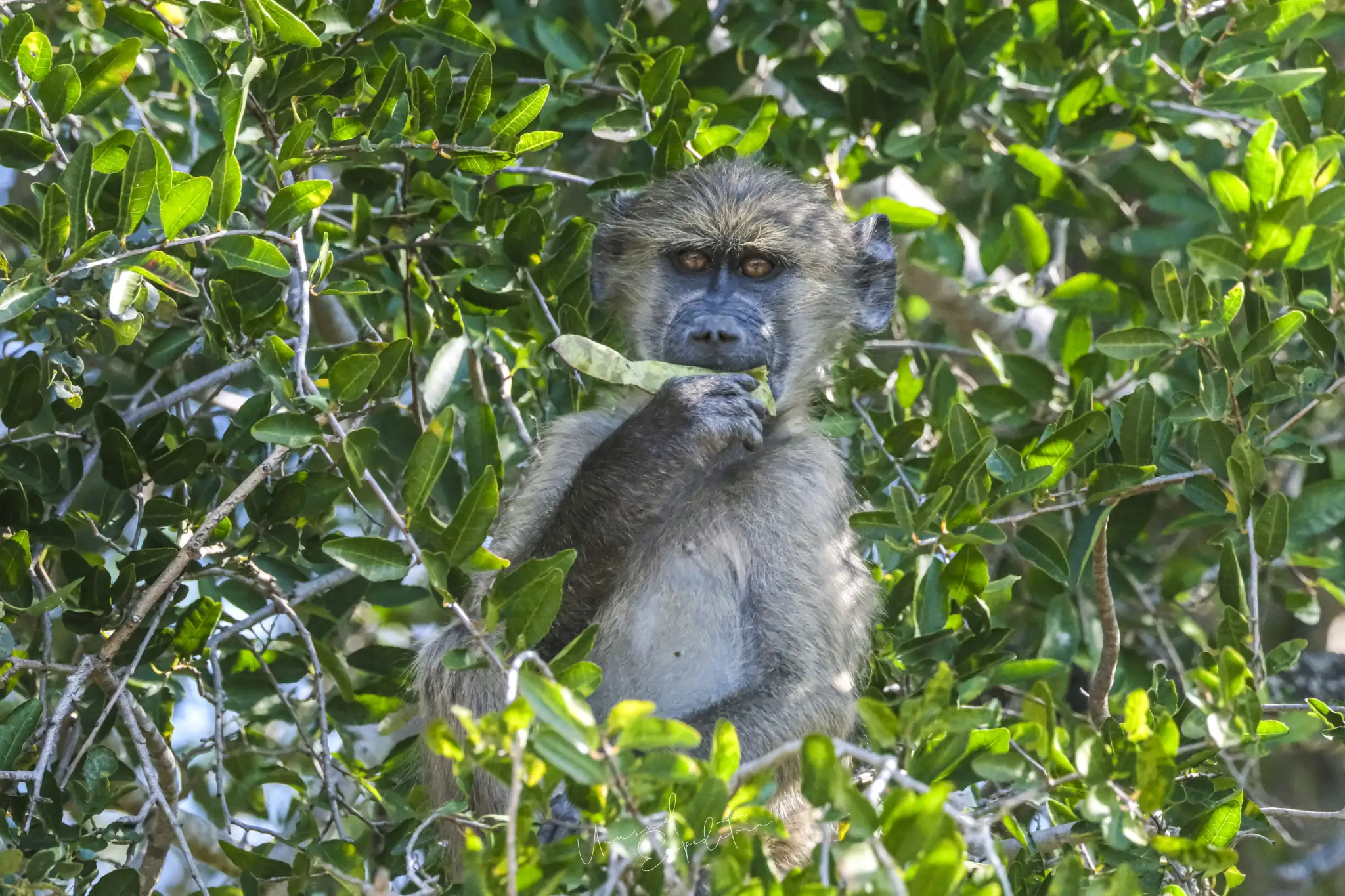
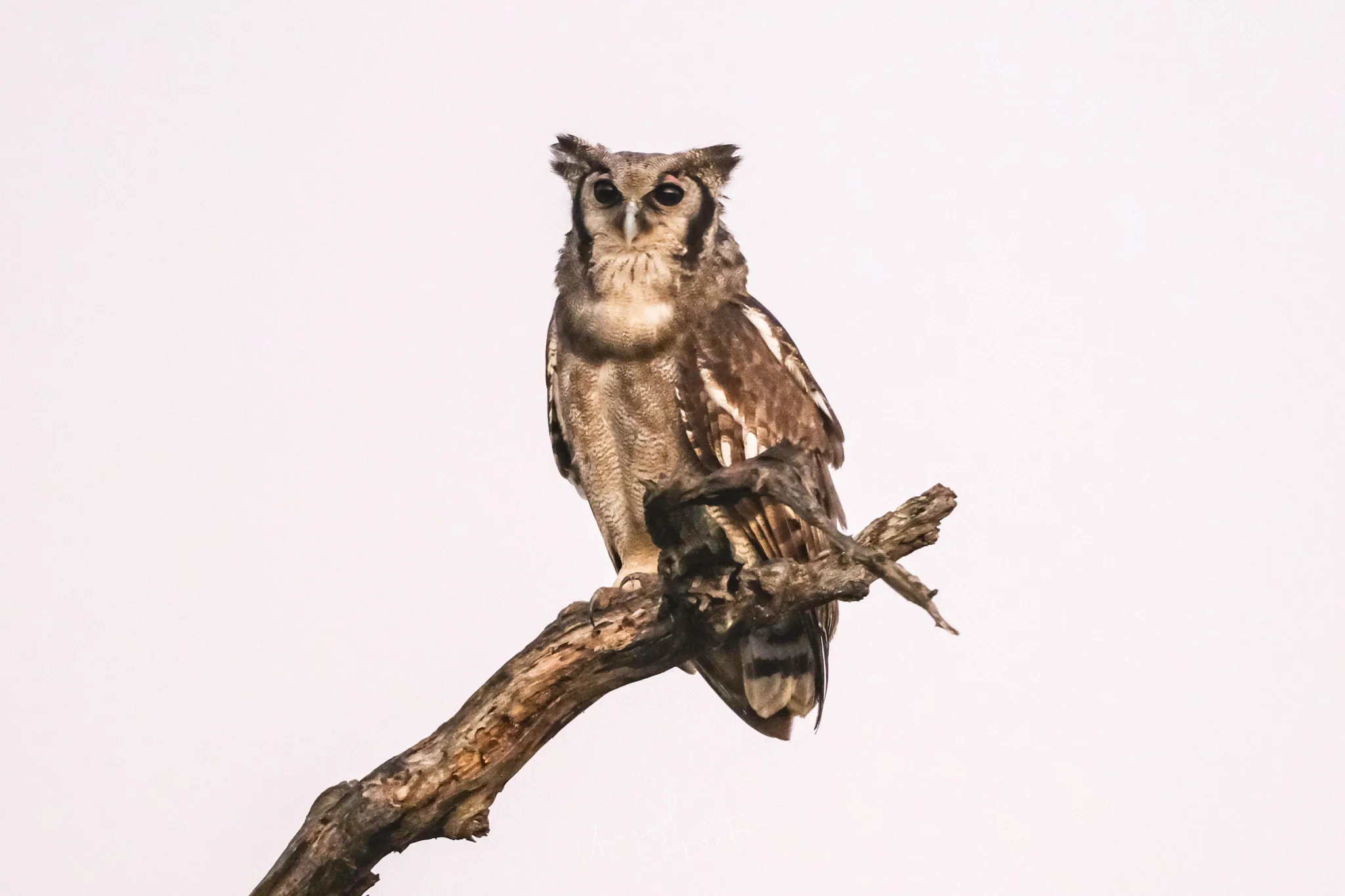
Do not skip the small subjects. The animals that do not run away are the ones that give you detail: a baboon holding a leaf, an owl on a bare branch, a hornbill on a stump. A lot of birds will sit and let you work. Our birds guide goes through them one by one, and the giraffe piece covers the tall subject.
Explore South African safari photography in depth
- Leopard photography in South Africa
- Giraffe photography in South Africa
- Birds of South Africa: photography notes
- Elephants, buffalo and hippos in South Africa
What should you carry on a winter game drive?
Dress in layers, because the morning is cold and the day warms up. Carry gloves thin enough to work the camera, a hat, a scarf and a rain cover, and keep a second battery in an inside pocket where it stays warm. Bring a beanbag, a blower and a lens cloth, because dust and cold both affect gear. Take a small bag that fits on your lap and avoid loose straps that catch on the vehicle. Water and sun protection matter as much as lenses, so pack for the weather, not only for the camera.
Our photographs of the South Africa safari
The photographs in this guide are our own, taken in a South African game reserve on our trip; we hold the rights to them, and the notes come from knowing the place first hand. Which reserve is not named in the frames, so we do not name it here.
Safari is mostly waiting. You sit for an hour, you think nothing is going to happen, and then a leopard walks out of the grass and everything changes in a few seconds. Be ready before that moment.
Joseph Mak, tour leader, Unusual Expedition
Go on safari with us
We have no scheduled South Africa departure at the moment, so we run it as a private trip on request, for individuals, couples, families or photographers who want their own pace, with every piece of logistics arranged around you. A private trip can cost less than a group tour because no tour leader travels, and a photographer or coach can be added at extra cost. Ask at least two months ahead; last-minute requests can often be arranged. See private tours and the South Africa photography tours page.
Ask us about a South Africa safari
South Africa Safari photography tours
The next South Africa Safari departure is announced on the South Africa Safari photography tours page, with previous expeditions and all the planning guides.
Explore South Africa Safari in depth
- Leopard in South Africa: How to Photograph It, Settings and LightSouth Africa
- Giraffe Photography in South Africa: Light, Composition and LensesSouth Africa
- Elephants, Buffalo and Hippos in South Africa: Photography GuideSouth Africa
- Birds of South Africa: Rollers, Bee-eaters, Kingfishers and VulturesSouth Africa
Upcoming Photo Tours
- Egypt Photo Tour – EgyptEgypt 12 Dec 2026 To 20 Dec 2026
- Inner Mongolia Winter Owl Photo Tour – ChinaChina 01 Jan 2027 To 04 Jan 2027
- Inner Mongolia Winter Photo Tour – ChinaChina 05 Jan 2027 To 11 Jan 2027
- Mekong And Central Highland Vietnam Photo Tour - VietnamVietnam 16 Jan 2027 To 24 Jan 2027