
Giraffe Photography in South Africa: Light, Composition and Lenses
Giraffe photography in South Africa: dusk silhouettes, browsing pairs and walking animals, with composition and lens advice.
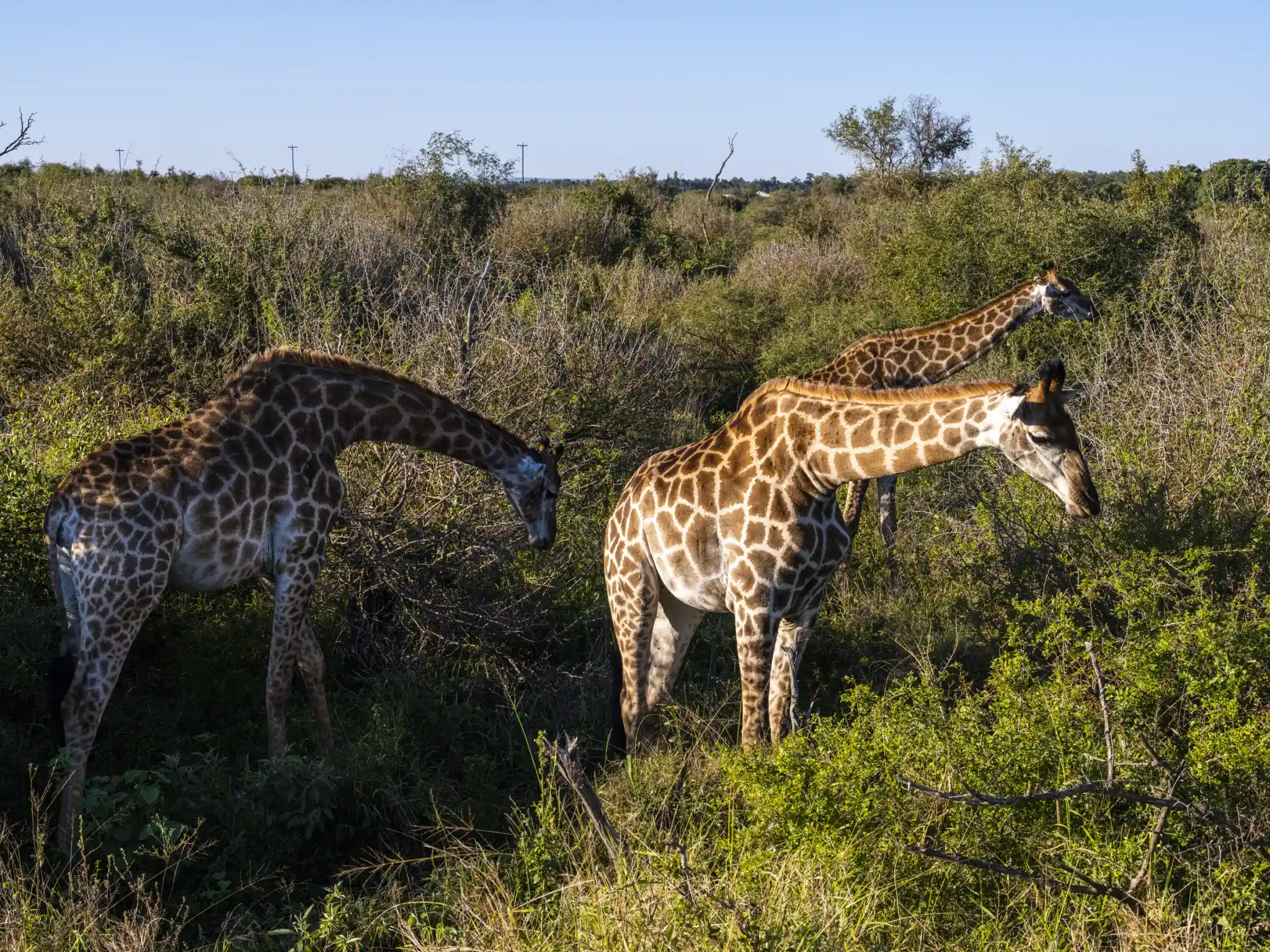
Giraffe photography in South Africa works best when you use the animal's height against the bush: a tall silhouette at dusk, a head above the treetops, a pair browsing side by side. Giraffes are common in South African game reserves, calm around vehicles and easy to find, which makes them a good first subject for a photographer still learning to work from a safari vehicle. Composition, light and the right lens follow.
Giraffes belong to our South Africa safari photography guide and to the wider South Africa photography tour guide. For the cats, see leopard photography in South Africa.
Where can you photograph giraffes in South Africa?
Giraffes live in many of the country's reserves, wherever acacia and other browse trees grow. We photographed ours in a South African game reserve, where they were among the most reliable animals of the trip. The IUCN lists the giraffe as Vulnerable, and it has been since 2016, which is a reminder that even common animals are under pressure. In the reserve, they usually stand at the edge of thicker bush, so look along the tree line rather than in the open.
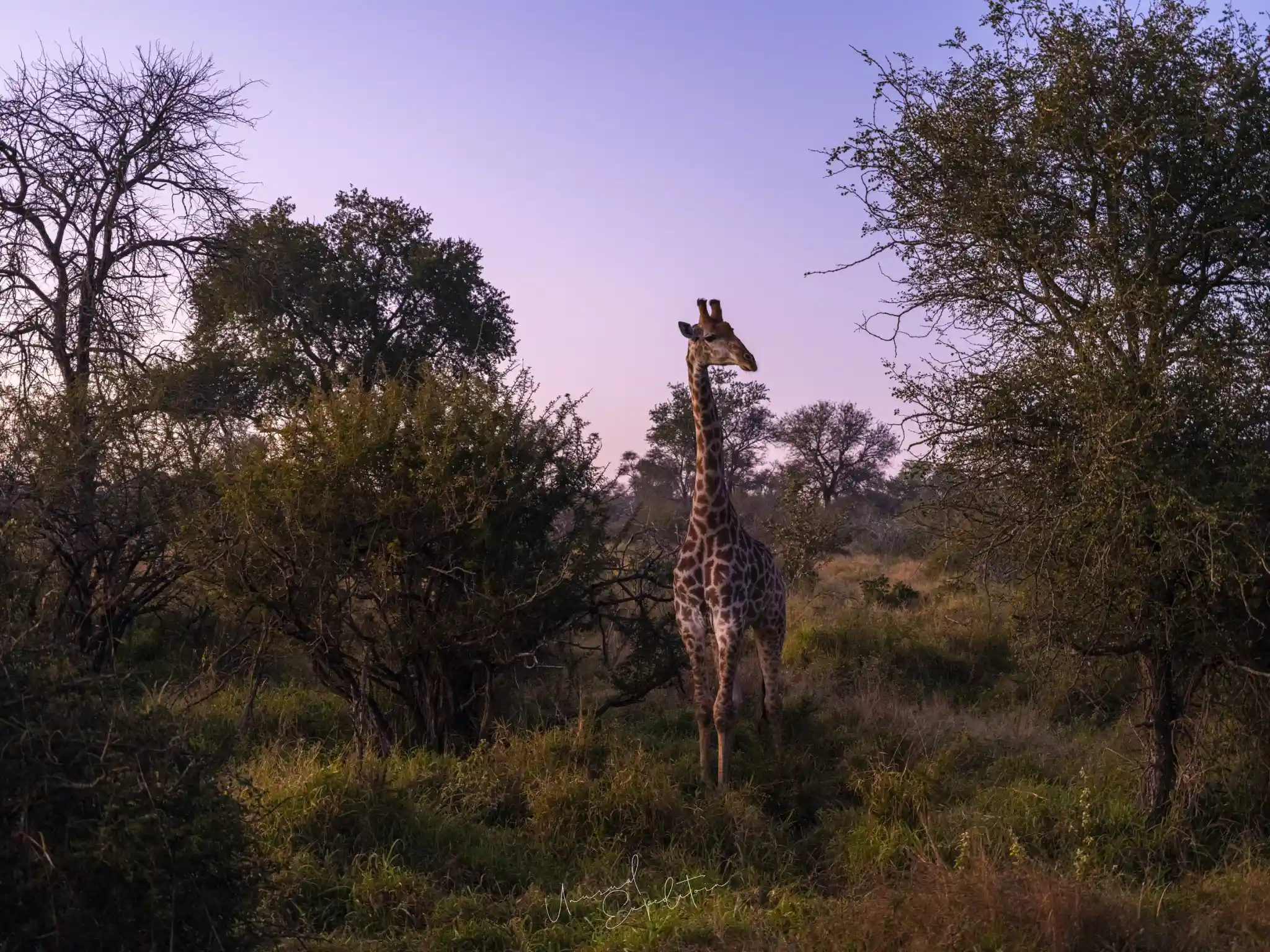
How to photograph a giraffe at dusk
A giraffe at dusk is the quietest picture on the safari. The light is soft, the sky turns pink and violet, and a single tall animal reads clearly against it. Use a wide or standard lens and leave space around the animal, so the habitat is part of the picture. Raise the ISO as the light drops, but keep the shutter speed high enough for a head that moves. If the sky is the point, expose for it and let the animal go dark. The result is a silhouette, which is often stronger than a detailed frame.
Giraffe photography: composition ideas
Because a giraffe is tall, many photographers crop tight and lose the neck. Try the opposite: step back and use the vertical shape. A giraffe's head above a tree line gives you a layered frame, and two animals side by side give you a rhythm of necks and patterns. Watch the background, since a clump of bright sky behind a head can burn out, and keep the horizon level. Our frame of a giraffe browsing in strong sun shows a simple arrangement: the head and neck rise out of the bush, which fills the rest of the frame.
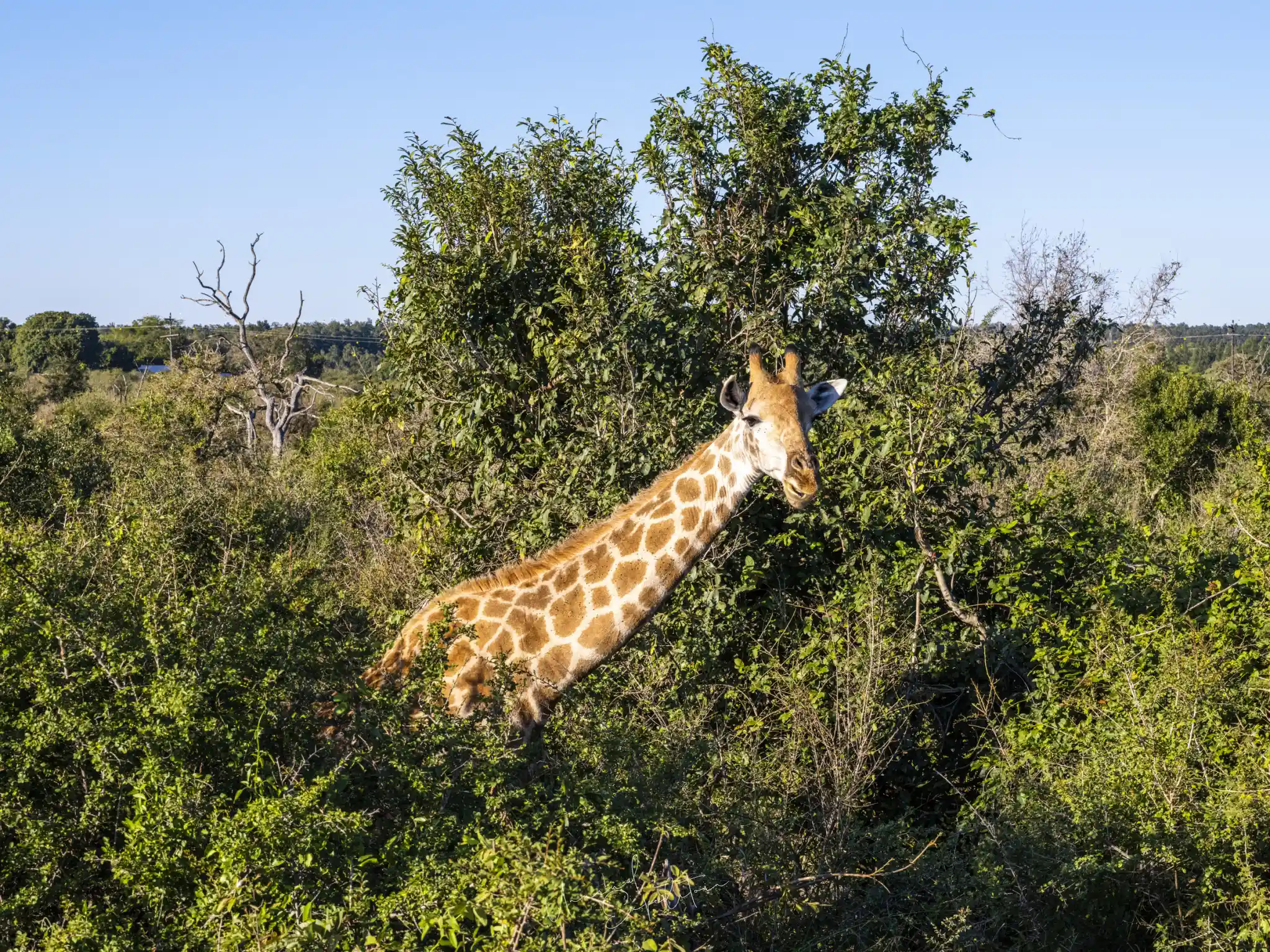
Giraffe photography: lens and settings
A 70-200mm, 100-400mm or 150-600mm zoom covers almost everything. A longer lens isolates a head against the sky; a shorter one keeps the whole animal and its surroundings. Use a shutter speed of at least 1/800 second, aperture around f/6.3 to f/8, and expose for the bright side of the animal, because the giraffe's pattern holds detail well. Back-button focus on the eye keeps the sharpest part where you want it. The table below gives the quick version.
| Subject | Light | Lens |
|---|---|---|
| Single giraffe in habitat | Dusk or low sun | 24-70mm, 70-200mm |
| Head against sky | Side light | 100-400mm |
| Browsing pair | Morning or afternoon sun | 70-200mm |
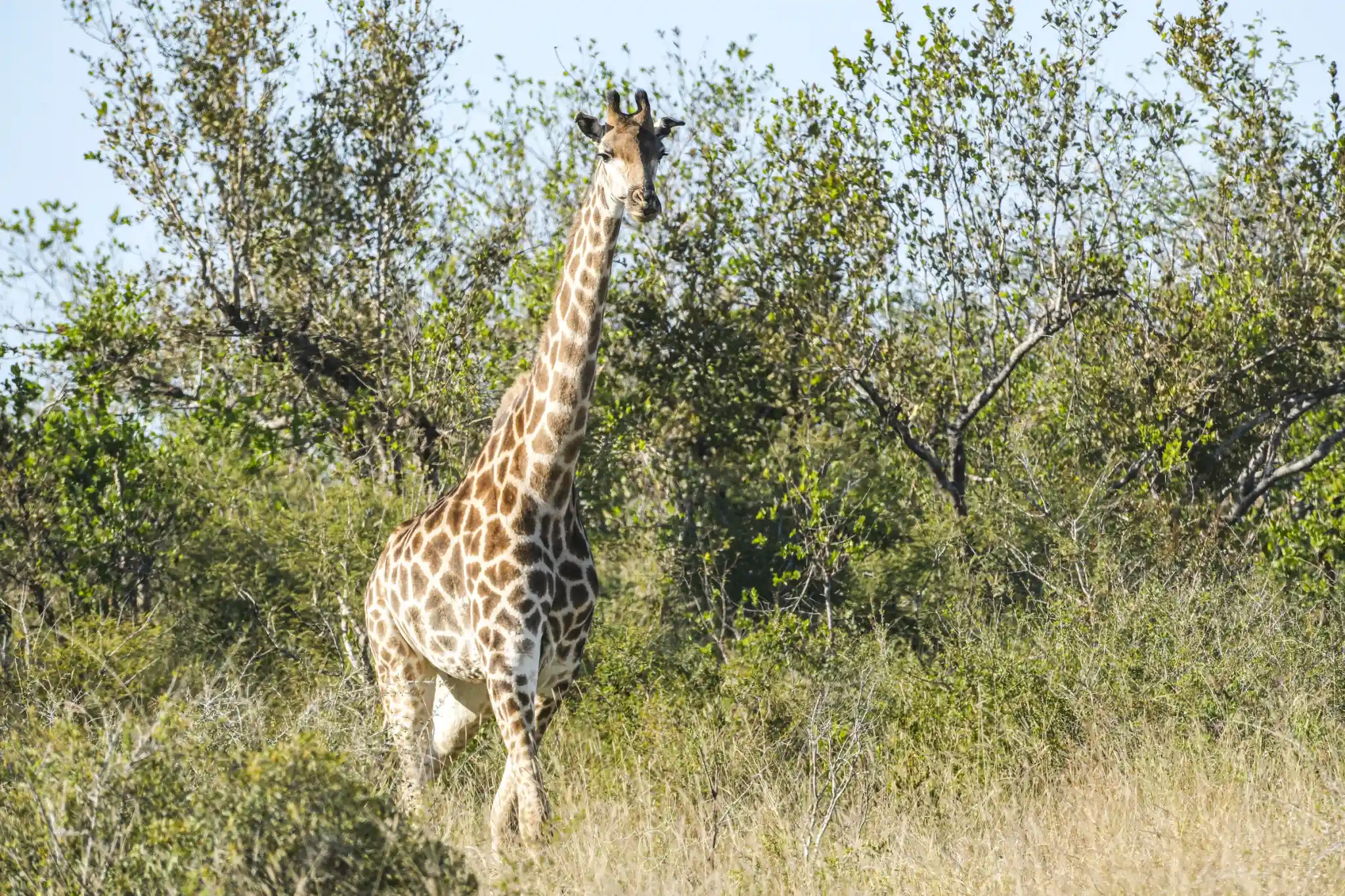
| Walking giraffe | Clear light, open grass | 150-600mm |
A mid-range zoom is enough for most giraffes, because they tolerate vehicles well.
How close can you get to a giraffe?
You stay in the vehicle, and the ranger decides how close it goes. Giraffes are usually relaxed around a quiet vehicle, but a sudden movement can send them off, and a walking animal changes direction without warning. Switch off the engine when told, keep your lens low and let the animal walk past if it wants to. Patience works better than speed: one of our best frames of a walking giraffe came from waiting while it crossed open grass.
What else should you photograph around giraffes?
Giraffes often share the bush with other animals and with birds, and a giraffe frame is stronger when you include context. Look for birds perching on a branch near a feeding giraffe, or other browsers in the same trees. Our birds of South Africa guide covers the small subjects, and elephants, buffalo and hippos the large ones.
Giraffes and the background
The background matters more than the animal's pattern. A giraffe against a clean sky is easy; a giraffe in front of branches is a puzzle. Move the vehicle a few metres if the ranger allows it, change the angle until a branch no longer grows out of the head, and use a wide aperture to soften what is left. Look at the edges of the frame before you press, because a stray twig near the neck is the commonest flaw in giraffe pictures. If nothing helps, shoot tighter on the head and neck, where the background shrinks.
Time of day helps here too. A giraffe in the low sun of the early or late hours takes on a warm colour that makes the pattern glow, and a standing animal gives you time to adjust. Walking animals are harder, so give them space, keep the shutter speed up and shoot a short burst as the legs cross.
Our photographs of giraffes in South Africa
The photographs in this guide are our own, taken in a South African game reserve on our trip; we hold the rights to them, and the notes come from knowing these animals first hand.
A giraffe makes the bush look bigger. Put one small figure under a big sky and the whole landscape suddenly has a scale.
Joseph Mak, tour leader, Unusual Expedition
Photograph giraffes with us
We have no scheduled South Africa departure at the moment, so we run it as a private trip on request, for individuals, couples, families or photographers who want their own pace, with the logistics arranged around you. A private trip can cost less than a group tour because no tour leader travels, and a photographer or coach can be added at extra cost. Ask at least two months ahead; last-minute requests can often be arranged. See private tours and the South Africa photography tours page.
Ask us about giraffes in South Africa
South Africa Safari photography tours
The next South Africa Safari departure is announced on the South Africa Safari photography tours page, with previous expeditions and all the planning guides.
Explore South Africa Safari in depth
- South Africa Safari Photography: Leopards, Giraffes, Elephants and BirdsSouth Africa
- Leopard in South Africa: How to Photograph It, Settings and LightSouth Africa
- Elephants, Buffalo and Hippos in South Africa: Photography GuideSouth Africa
- Birds of South Africa: Rollers, Bee-eaters, Kingfishers and VulturesSouth Africa
Upcoming Photo Tours
- Egypt Photo Tour – EgyptEgypt 12 Dec 2026 To 20 Dec 2026
- Inner Mongolia Winter Owl Photo Tour – ChinaChina 01 Jan 2027 To 04 Jan 2027
- Inner Mongolia Winter Photo Tour – ChinaChina 05 Jan 2027 To 11 Jan 2027
- Mekong And Central Highland Vietnam Photo Tour - VietnamVietnam 16 Jan 2027 To 24 Jan 2027