
Camera Gear for Greenland Photography
What to pack for a Greenland photography cruise: bodies, lenses, aurora prime, tripod, salt spray and cold battery tips, drone rules.
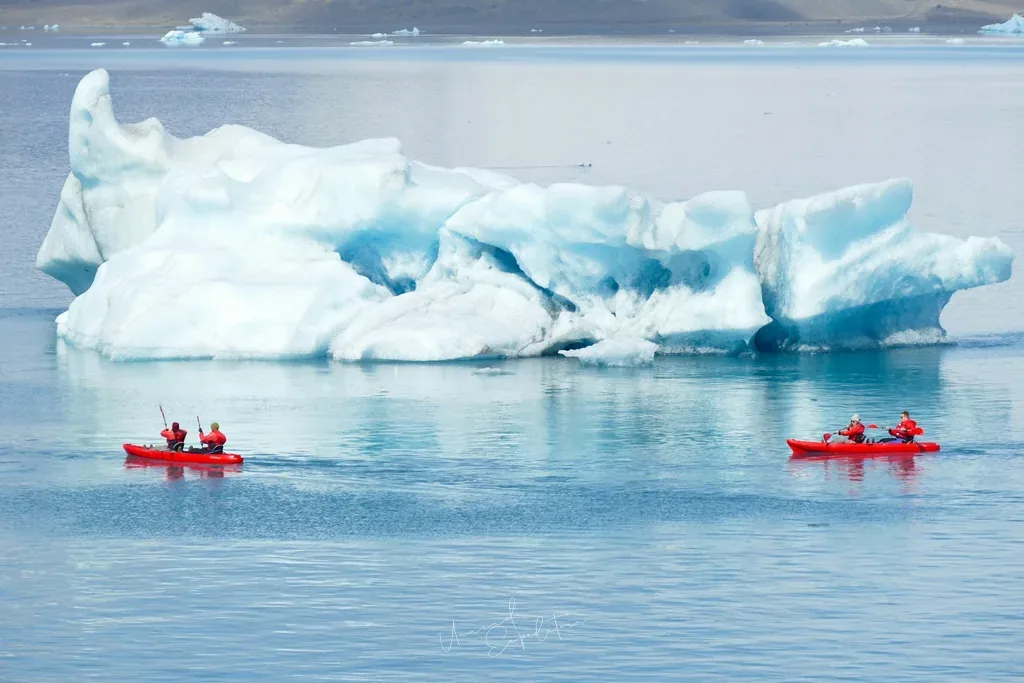
Camera gear for Greenland photography comes down to two bodies, three zooms, one fast wide prime and a plan for salt, cold and condensation. On an East Greenland expedition cruise into Scoresby Sund you shoot from a ship's deck, from a Zodiac at water level and from the tundra on foot, and the kit has to survive all three. This is the list we give every guest before the Greenland photography tour, with the reason behind each item.
If you are still deciding whether the trip is for you, start with the complete Greenland photography tour guide, then come back here for the packing decisions. The timing questions, including why early September gives you both icebergs and aurora, are covered in the best time to visit Greenland for photography.
Two bodies, because swapping lenses in a Zodiac is a bad idea
Take two camera bodies to Greenland if you own two. In a Zodiac in Scoresby Sund, East Greenland, the boat is moving, the spray is salt water and your hands are in gloves. Changing a lens in those conditions invites a drop or a wet sensor. With a wide zoom on one body and a long zoom on the other, you can go from a close iceberg to a seal on a floe without opening either camera. The second body is also insurance: an expedition ship is eleven days from the nearest camera shop, and a single body that fails on Day 4 means seven days of phone photographs. The bodies do not need to match. A full-frame main camera and a crop-sensor backup work well, and the crop body gives the long lens extra reach for wildlife in the Denmark Strait.
The three zooms that cover Scoresby Sund
A wide zoom of roughly 16 to 35 millimetres handles icebergs from the Zodiac, where the ice fills the frame at close range, and the tundra landings where the foreground colour of dwarf birch and bilberry leads into the mountains. A standard zoom of 24 to 70 or 24 to 105 millimetres stays on the camera most of the day on deck; it frames the Rode Fjord sandstone walls and the ship-to-shore scale shots. A long zoom of 100 to 400 or 100 to 500 millimetres does two jobs in East Greenland: wildlife, which is sparse and distant, and compression, where stacked icebergs or a distant glacier front become one layered picture. The long lens earns its weight on a handful of occasions over the trip, but those occasions, a musk ox on Jameson Land or a humpback in the Denmark Strait, are the ones people remember. Our Greenland Arctic wildlife photography guide explains how often each species actually appears.
One fast wide prime for the Northern Lights
Photographing the Northern Lights from a ship in Scoresby Sund, East Greenland, is not the same as photographing them from a tripod in Iceland. The ship moves, so exposures longer than one or two seconds smear the stars and soften the aurora. The answer is a fast wide prime, a 20 or 24 millimetre lens at f/1.4 to f/1.8, used at ISO 3200 to 6400 with exposures of half a second to two seconds. A wide zoom at f/2.8 works at anchor on a still night, but the prime gives you two stops of margin when the ship is under way. Manual focus set to infinity before dark and taped in place saves fumbling on deck. The full method, including moon phase for the 5 September 2027 departure, is in photographing the Northern Lights in Greenland.

Tripod: yes on shore, yes at anchor, no under way
A tripod is worth its weight in Greenland for exactly two situations. On shore landings in Scoresby Sund, East Greenland, it lets you work slowly with the wide zoom, bracket exposures against a bright sky and keep the horizon level across a fjord. At anchor on a calm night it steadies the aurora camera. Under way it is useless: the ship's engine vibration travels straight up the legs and the deck is moving in three axes. A compact carbon tripod with a ball head is enough; leave the heavy video legs at home. A small beanbag for the deck rail is a cheap addition that stabilises the long lens for whales and seabirds better than a monopod does on a moving ship.
Salt spray, splash and cold hands in the Zodiac
The Zodiac cruises in Scoresby Sund, East Greenland, are where cameras get hurt. Salt spray comes over the bow when the driver crosses wind chop, and wet landings mean stepping into shin-deep water. Pack a roll-top dry bag large enough for the camera with the lens attached, a rain cover you can fit with gloves on, and at least four microfibre cloths because a salty cloth smears rather than cleans. For hands, thin liner gloves under warm mitts let you work the dials without exposing skin to a wind at 0 to 5 degrees Celsius. Poseidon Expeditions issues a parka and loans rubber boots on M/V Sea Spirit, so bring the gloves and leave the boots. A lens hood stays on all day; it stops more spray than any filter.
"The gear failures I see in Greenland are never the camera. It is a flat battery in a chest pocket that was supposed to be warm, a salty cloth smearing the front element, and a fogged lens from walking into the lounge with the camera uncovered. Fix those three habits and any modern camera will do the job."
Joseph Mak, tour leader, Unusual Expedition
Batteries, condensation and memory
Near 0 degrees Celsius expect camera batteries to deliver 30 to 50 percent less than their rated capacity, with older nickel-based packs faring worst and lithium holding best. Carry at least three batteries per body for Greenland and keep the spares inside the jacket against your body, rotating a cold one in and a warm one out. Condensation is the second trap: an ice-cold camera brought into the warm ship lounge fogs inside and out within a minute. Seal it in a zip bag or the dry bag before you go through the door and let it warm for twenty minutes. For memory, shoot more than you think: an eleven-day Greenland photography tour with aurora and wildlife bursts runs to several hundred gigabytes for most guests, so take cards to match and a portable drive for a nightly copy.
Filters, drones and binoculars
A circular polarising filter is the one filter that matters in Greenland. It cuts the glare off the water so the blue underwater mass of an iceberg in Scoresby Sund, East Greenland, shows through, and it deepens a pale Arctic sky. Neutral density filters are rarely useful because long exposures need a tripod on still ground, which you have only on landings. Leave the drone at home: Greenland requires permits for drone flight, and most expedition operators, Poseidon Expeditions among them, do not allow drones aboard or on landings under their operating rules and AECO guidelines. Binoculars of 8x or 10x magnification are not optional; the expedition team spots wildlife long before a camera lens can, and you will want to see what they see before deciding whether to raise the long lens.
The Greenland kit list in one table
| Item | Why it earns its place in Greenland |
|---|---|
| Two camera bodies | No lens changes in a wet, moving Zodiac; insurance eleven days from a shop |
| Wide zoom, 16 to 35 mm | Icebergs at close range, tundra foregrounds on landings |
| Standard zoom, 24 to 70 or 24 to 105 mm | All-day deck lens for fjord walls and ship-to-shore scale |
| Long zoom, 100 to 400 or 100 to 500 mm | Sparse wildlife and compressing stacked icebergs |
| Fast wide prime, 20 or 24 mm f/1.4 to f/1.8 | Aurora from a moving ship with one-second exposures |
| Compact carbon tripod and beanbag | Shore landings and anchorages; beanbag for the deck rail |
| Dry bag, rain cover, four microfibre cloths | Salt spray and wet landings |
| Liner gloves under mitts | Dial control at 0 to 5 degrees Celsius |
| Three or more batteries per body | Cold cuts capacity by 30 to 50 percent |
| Zip bags | Stops condensation when coming inside |
| Circular polariser | Shows the blue ice below the waterline |
| Cards for several hundred gigabytes plus a drive | Aurora and wildlife bursts fill cards fast |
| Binoculars, 8x or 10x | Find the wildlife before you raise the lens |
Read as a list, the Greenland camera kit is two bodies, a wide zoom, a standard zoom, a long zoom and a fast wide prime; a compact tripod and a beanbag; a dry bag, rain cover and cloths against salt; liner gloves; three batteries per body kept warm; zip bags against condensation; a polariser; generous memory; and binoculars. Everything else, including the drone, stays at home. The remaining practical questions about the trip itself, from visas to seasickness, are answered in the Greenland photography trip FAQ.
Come and photograph it with us
If you would like to put this kit to work on icebergs, tundra and the aurora with a working photographer beside you, the next departure is the Greenland Arctic Sights and Northern Lights photography tour, 5 to 15 September 2027, sailing from Reykjavik aboard M/V Sea Spirit. Send us your current kit list and we will tell you what to add and what to leave behind.
Join the Greenland photography tour
Greenland Arctic Sights and Northern Lights 5 Sep 2027 departs 05 Sep 2027 To 15 Sep 2027, led by Joseph Mak. Small group, photography first.
Explore Greenland in depth
- The Ultimate Guide to a Greenland Photography TourGreenland
- Greenland Tour from Singapore: How to Get There and What to ExpectGreenland
- Greenland Photography Trip FAQGreenland
- The Best Time to Visit Greenland for PhotographyGreenland
- Greenland Photography Season, Month by MonthGreenland
- Greenland Arctic Wildlife Photography: What You Will Really SeeGreenland
- East Greenland vs West Greenland for PhotographyGreenland
- Photographing Ittoqqortoormiit, East Greenland's Loneliest TownGreenland
- Photographing the Northern Lights in GreenlandGreenland
- Photographing Scoresby Sund, East GreenlandGreenland
Upcoming Photo Tours
- Egypt Photo Tour – EgyptEgypt 12 Dec 2026 To 20 Dec 2026
- Inner Mongolia Winter Owl Photo Tour – ChinaChina 01 Jan 2027 To 04 Jan 2027
- Inner Mongolia Winter Photo Tour – ChinaChina 05 Jan 2027 To 11 Jan 2027
- Mekong And Central Highland Vietnam Photo Tour - VietnamVietnam 16 Jan 2027 To 24 Jan 2027