
Greenland Photography Season, Month by Month
Light, ship access, aurora, colour and wildlife for every month in East Greenland, from polar night to midnight sun to the September window.
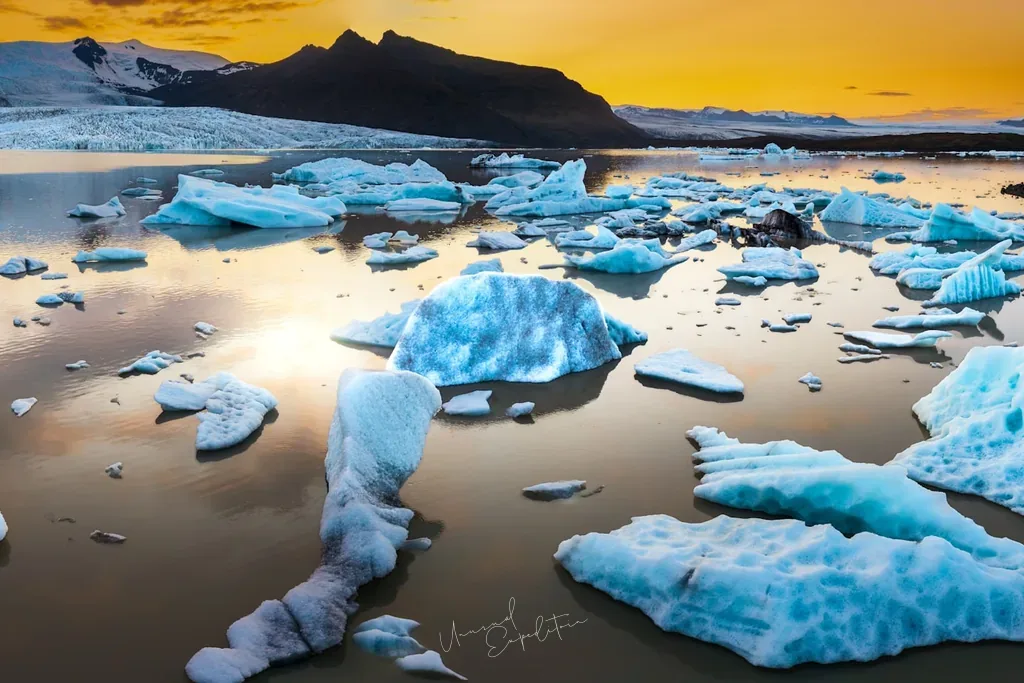
Greenland's photography season runs on light and ice, and in East Greenland only about ten weeks of the year are open to a visitor arriving by ship. This month by month guide sets out, for every month, how much light there is, whether an expedition ship can reach Scoresby Sund, whether the Northern Lights are photographable, what the landscape looks like and which wildlife is realistic.
It is a companion to our complete Greenland photography tour guide. If you only want the short answer on timing, read the best time to visit Greenland for photography; this page is for anyone weighing one month against another.
The year at a glance for East Greenland photography
The table below is written for Scoresby Sund and Ittoqqortoormiit, East Greenland, at roughly 70 degrees north. Ship access refers to expedition cruises such as the one Unusual Expedition runs from Reykjavik. Aurora means the sky is dark enough to photograph the Northern Lights, which are present year round but invisible under the midnight sun.
| Month | Light | Ship access to East Greenland | Aurora | Colour and conditions | Wildlife |
|---|---|---|---|---|---|
| January | Polar night, twilight only | None, fjord frozen | Excellent dark skies | Deep cold, sea ice, blue twilight | Arctic fox, ravens, occasional polar bear on ice |
| February | Sun returns, short days | None | Excellent | Very cold, pink low light on snow | Arctic fox, Arctic hare |
| March | Rapidly lengthening days | None, dog sled only | Good | Cold, firm sea ice, sled season | Musk ox, seals at breathing holes |
| April | Long days | None, dog sled only | Fading | Sea ice, spring light | Musk ox, seals, returning birds |
| May | Midnight sun from late May | None | None | Thaw begins, ice breaking at edges | Seabirds arrive |
| June | Midnight sun | None, pack ice offshore | None | Snowmelt, first flowers | Seabird colonies, seals |
| July | Midnight sun until late July | Opens in the last week | None | Green tundra, flowers, long days | Whales in the Strait, musk ox |
| August | Sun sets again, dark from mid month | Open | Begins second half | Green turning, mild | Whales, musk ox, seals |
| September | About 14 hours, falling fast | Open, best access | Good to excellent | Red tundra, fresh snow on peaks | Musk ox, Arctic hare, fox, seals, whales |
| October | Under 10 hours by mid month | Closing, new ice forming | Excellent | Storms, first sea ice | Fox, seals |
| November | Polar night begins | None | Excellent | Dark, freezing fjord | Fox, ravens |
| December | Polar night | None | Excellent | Dark, deep cold | Fox, ravens |
November to January: polar night at Ittoqqortoormiit
From November to January, Ittoqqortoormiit in East Greenland sits in polar night. The sun does not rise, and the day is a few hours of blue twilight around noon. The sea in Scoresby Sund freezes, so no ship can enter, and the only way in is an occasional flight to the Nerlerit Inaat airstrip followed by a helicopter. The Northern Lights are at their most photographable, with dark skies for twenty hours a day, and the settlement's coloured houses under snow and aurora make strong pictures. Wildlife is reduced to Arctic fox, ravens and, on the sea ice, the occasional polar bear. This is a specialist winter trip with real cold, often below minus 20 degrees Celsius, and it is not what an expedition cruise offers.
February to April: the sled season
The sun returns to Scoresby Sund, East Greenland, in February, and by March the days lengthen quickly. The fjord is still frozen, which is the point: March and April are the dog sled months, when local hunters and a handful of guided groups travel across the sea ice. Light is long and pink, musk ox are visible on the tundra, and seals haul out at breathing holes. The aurora is still good in March and fades through April as the nights shorten. Ships cannot reach the coast until the summer, so this season is land based and small scale.
May to July: midnight sun, no ship, no aurora
From late May to late July the sun never sets over East Greenland. There is no darkness and therefore no aurora photography at all. Through May and June the pack ice along the coast is still too heavy for ships, and the thaw turns the tundra from white to brown to green. Seabirds return to the cliffs and seals rest on the floes. Expedition ships begin entering Scoresby Sund in the last week of July, once the ice clears, and the first summer sailings offer green tundra, wildflowers and whales in the Denmark Strait under continuous daylight. For a landscape photographer who does not need night skies, late July is a legitimate choice.

August: the season opens properly
August is the first full month of ship access to Scoresby Sund, East Greenland. The weather is at its mildest, landings are long because the days are long, and whales are regularly seen on the Denmark Strait crossing. The sun sets again from the start of the month, but the sky only becomes dark enough for the Northern Lights in the second half, and even then only for an hour or two around midnight. The tundra is green and beginning to turn. August suits photographers whose priority is wildlife and daylight landscape; it is a compromise for anyone who also wants aurora.
September: when everything overlaps
September is the month our Greenland photography tour is built around. In the first week, Scoresby Sund, East Greenland, has about 14 hours of daylight and loses roughly seven minutes a day, which leaves long golden hours and a dark night from around 22:00. The fjords are at their most open, so the ship can reach the inner arms such as Rode Fjord with its red sandstone walls. The tundra turns red and orange, fresh snow sits on the peaks, and the icebergs of the summer are still in the bays. Musk ox, Arctic hare, Arctic fox, seals and whales are all realistic. Our departure on 5 September 2027 sails four days after new moon, which keeps the first week of nights dark; the moon is full around 15 September, the day we disembark. Daytime temperatures run from 0 to 5 degrees Celsius.
"I have been asked to run this in August for the warmer weather and in October for the longer nights. I keep saying no. Early September is the only slot where the ship, the colour and the dark sky are all on the same page, and I would rather do one trip properly."
Joseph Mak, tour leader, Unusual Expedition
October: long nights, closing ice
By mid October the day in Scoresby Sund, East Greenland, is under ten hours and the Northern Lights can be outstanding. The problem is access. New sea ice forms in the inner fjords, autumn storms cross the Denmark Strait more often, and expedition operators move their ships south. A few early October sailings exist and can be rewarding for a photographer willing to accept cancelled landings. By the end of the month the season is over until the following July. What to take for any of these months is covered in Camera gear for Greenland photography.
Come and photograph it with us
If September is your month, join the Greenland Arctic Sights and Northern Lights photography tour, 5 to 15 September 2027, sailing from Reykjavik aboard M/V Sea Spirit with Joseph Mak leading the photography programme.
Join the Greenland photography tour
Greenland Arctic Sights and Northern Lights 5 Sep 2027 departs 05 Sep 2027 To 15 Sep 2027, led by Joseph Mak. Small group, photography first.
Explore Greenland in depth
- The Ultimate Guide to a Greenland Photography TourGreenland
- Greenland Tour from Singapore: How to Get There and What to ExpectGreenland
- Greenland Photography Trip FAQGreenland
- The Best Time to Visit Greenland for PhotographyGreenland
- Greenland Arctic Wildlife Photography: What You Will Really SeeGreenland
- Camera Gear for Greenland PhotographyGreenland
- East Greenland vs West Greenland for PhotographyGreenland
- Photographing Ittoqqortoormiit, East Greenland's Loneliest TownGreenland
- Photographing the Northern Lights in GreenlandGreenland
- Photographing Scoresby Sund, East GreenlandGreenland
Upcoming Photo Tours
- Egypt Photo Tour – EgyptEgypt 12 Dec 2026 To 20 Dec 2026
- Inner Mongolia Winter Owl Photo Tour – ChinaChina 01 Jan 2027 To 04 Jan 2027
- Inner Mongolia Winter Photo Tour – ChinaChina 05 Jan 2027 To 11 Jan 2027
- Mekong And Central Highland Vietnam Photo Tour - VietnamVietnam 16 Jan 2027 To 24 Jan 2027