
Greenland Arctic Wildlife Photography: What You Will Really See
Species by species for Scoresby Sund in September: musk ox, Arctic hare and fox, seals, whales, seabirds, polar bear odds, and settings.
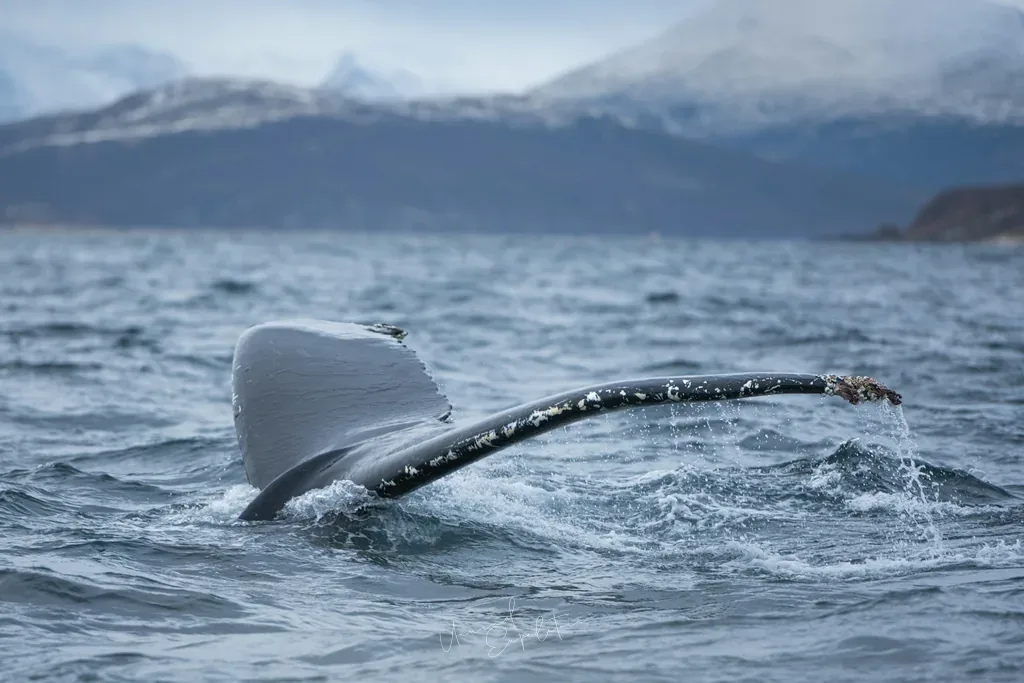
Greenland Arctic wildlife photography in Scoresby Sund in September realistically means musk ox, Arctic hare, Arctic fox, seals on the ice, humpback and minke whales in the Denmark Strait, and seabirds, with a polar bear possible but never promised. Greenland is not a safari. The animals are real but sparse, and this guide tells you species by species what you are likely to see and how to photograph each one.
Wildlife is one strand of the trip rather than the whole of it; the ice, the light and the settlement of Ittoqqortoormiit are covered in the complete Greenland photography tour guide. For the lenses this article assumes, see camera gear for Greenland photography.
Musk ox on the tundra of Jameson Land
Musk ox are the land mammal most likely to be photographed in Scoresby Sund, East Greenland. They graze the tundra of Jameson Land on the northern side of the fjord system, and a September landing there with the expedition team often finds a small herd within reach of a long lens. They look slow and are not: keep the distance the expedition team sets, never walk between an animal and its group, and work from a low angle so the shaggy coat and curved horns sit against the red autumn tundra rather than against grey sky. A 400 or 500 millimetre lens frames one animal; a 100 to 200 millimetre lens frames a herd in its landscape, which is often the better picture. Expect two or three chances over the trip, not daily encounters.
Arctic hare and Arctic fox
The Arctic hare of East Greenland is large and white all year, and on the tundra of Scoresby Sund it is one of the more approachable animals, often sitting upright and watching rather than running. Early light on a landing gives it shape; midday flattens a white animal into a white blob. Expose for the hare, not the dark ground, or the fur burns out. The Arctic fox is harder. In September it is moulting from its summer brown to its winter white, which gives a patchy coat that photographs with more character than either pure phase. Foxes move fast and low; set continuous autofocus, a shutter speed of at least 1/1000 of a second and let the ISO rise. Both species are seen on perhaps one landing in three, and only by those who walk quietly and look away from the icebergs.
Seals on the ice floes
Ringed seals and bearded seals haul out on ice floes throughout Scoresby Sund, East Greenland, and are usually photographed from a Zodiac. The expedition driver will slow and approach obliquely; sudden direct approaches put the seal in the water. Ringed seals are small and shy, bearded seals larger with long pale whiskers that catch the light. Harp seals appear in open water near the fjord mouth and in the Denmark Strait, often in groups, heads up and curious. From a moving Zodiac use a shutter speed of 1/1600 of a second or faster, continuous autofocus on the eye, and keep the lens hood on against spray. The polarising filter helps here too, cutting glare so the seal's eye reads against the ice. Seals are the wildlife you can count on seeing, if not always close.

Whales in the Denmark Strait and at the fjord mouth
The crossings of the Denmark Strait on Days 3 and 9 of the Greenland photography tour, and the waters off the mouth of Scoresby Sund, East Greenland, are where whales appear. Humpbacks are the most photogenic because they fluke, lifting the tail clear of the water before a deep dive. The sequence is predictable: the back arches higher than usual, the dorsal fin passes, then the fluke rises. Have the long lens up before the arch, shutter at 1/2000 of a second, and shoot a burst through the lift. Minke whales are smaller and show only a back and fin. Fin whales, the second largest animal on earth, are possible in the strait and show a tall blow and a long back. The ship's bridge announces sightings; a beanbag on the deck rail steadies the lens better than a monopod on a moving ship.
Seabirds, from fulmar to eider
Seabirds are the most constant wildlife on an East Greenland expedition cruise. Northern fulmars follow the ship across the Denmark Strait, gliding stiff-winged along the wake at eye level from the stern, which makes them the best flight-photography practice of the trip. Black-legged kittiwakes nest on cliffs in Scoresby Sund, East Greenland. Little auks pass in low fast flocks. Glaucous gulls, large and pale, patrol the shore, and common eider rafts sit in sheltered bays near Ittoqqortoormiit. For birds in flight use continuous autofocus with a wide focus zone, 1/2500 of a second, and expose a third of a stop over the camera's reading so white plumage against dark water does not go grey. A 400 millimetre lens is enough from the stern; the fulmars come closer than any other wildlife on the trip.
Polar bear: possible, rare, and only from the ship
Polar bears live along the East Greenland coast and are seen on some Scoresby Sund voyages, usually on sea ice or a shoreline, and always from the ship or a Zodiac. They are never approached on foot. The expedition team scouts every landing site before guests go ashore and carries rifles under AECO guidelines, the Association of Arctic Expedition Cruise Operators' rules that Poseidon Expeditions operates under; if a bear is present the landing is cancelled, and the photograph is made from the deck. Treat a bear as a bonus, not an expectation. If one appears, the long lens on the crop-sensor body gives the most reach, and a shutter speed of 1/1000 of a second handles a walking bear. Narwhal are also present in the region but very rarely seen; do not plan around them.
"Guests sometimes arrive expecting a polar bear every morning. What I promise is seals, fulmars and a real chance at musk ox and whales, and that the long lens will come out maybe four or five times in eleven days. When the bear does turn up, it is the ship's whole day. I would rather you were surprised than disappointed."
Joseph Mak, tour leader, Unusual Expedition
What you will not see, and the rules that keep it this way
Two corrections save disappointment. There are no penguins in Greenland or anywhere in the Arctic; penguins live in the southern hemisphere, and Greenland's black-and-white seabirds are auks and guillemots. Reindeer, which do live in parts of West Greenland, are absent from the Scoresby Sund region, so do not expect them on the eastern tundra. The rules that protect the wildlife that is here are simple: no feeding, no chasing, no calling to animals, keep the distances the expedition team sets, and stay with the group on every landing. These follow AECO guidelines and the instructions of the Poseidon Expeditions team, and the photographer who respects them gets better pictures, because a calm animal stays in the frame longer than a frightened one. The days when the wildlife does not appear are the days for icebergs, tundra colour and, after dark, the aurora described in photographing the Northern Lights in Greenland.
Settings for grey Arctic light
Most wildlife photography in Scoresby Sund, East Greenland, happens under flat grey light with a moving platform under your feet. Start with shutter priority or manual with auto ISO: 1/1000 of a second for musk ox, hare and seals, 1/2000 for whales, 1/2500 for birds in flight. Let the ISO climb to 3200 or 6400; a sharp noisy frame beats a clean blurred one. Use continuous autofocus with eye or animal detection if the camera offers it, and a burst rate of at least eight frames a second. Check the histogram on white animals and white ice and add exposure compensation until the whites sit just short of clipping. Shoot in raw, because grey-light files have little contrast and need room in processing.
Come and photograph it with us
If musk ox on red tundra, a humpback's fluke in the Denmark Strait and the outside chance of a bear from the deck sound like the right kind of wildlife trip, the next departure is the Greenland Arctic Sights and Northern Lights photography tour, 5 to 15 September 2027, aboard M/V Sea Spirit from Reykjavik with Joseph Mak leading the photography. Ask us which lens to bring; the answer depends on what you already own.
Join the Greenland photography tour
Greenland Arctic Sights and Northern Lights 5 Sep 2027 departs 05 Sep 2027 To 15 Sep 2027, led by Joseph Mak. Small group, photography first.
Explore Greenland in depth
- The Ultimate Guide to a Greenland Photography TourGreenland
- Greenland Tour from Singapore: How to Get There and What to ExpectGreenland
- Greenland Photography Trip FAQGreenland
- The Best Time to Visit Greenland for PhotographyGreenland
- Greenland Photography Season, Month by MonthGreenland
- Camera Gear for Greenland PhotographyGreenland
- East Greenland vs West Greenland for PhotographyGreenland
- Photographing Ittoqqortoormiit, East Greenland's Loneliest TownGreenland
- Photographing the Northern Lights in GreenlandGreenland
- Photographing Scoresby Sund, East GreenlandGreenland
Upcoming Photo Tours
- Egypt Photo Tour – EgyptEgypt 12 Dec 2026 To 20 Dec 2026
- Inner Mongolia Winter Owl Photo Tour – ChinaChina 01 Jan 2027 To 04 Jan 2027
- Inner Mongolia Winter Photo Tour – ChinaChina 05 Jan 2027 To 11 Jan 2027
- Mekong And Central Highland Vietnam Photo Tour - VietnamVietnam 16 Jan 2027 To 24 Jan 2027