
Fushimi Inari Photography: The Torii Gates at Dawn, Dusk and After Dark
Fushimi Inari torii gates: the best tunnels, sunrise and night, the hike and the rules, from photographing the shrine ourselves.
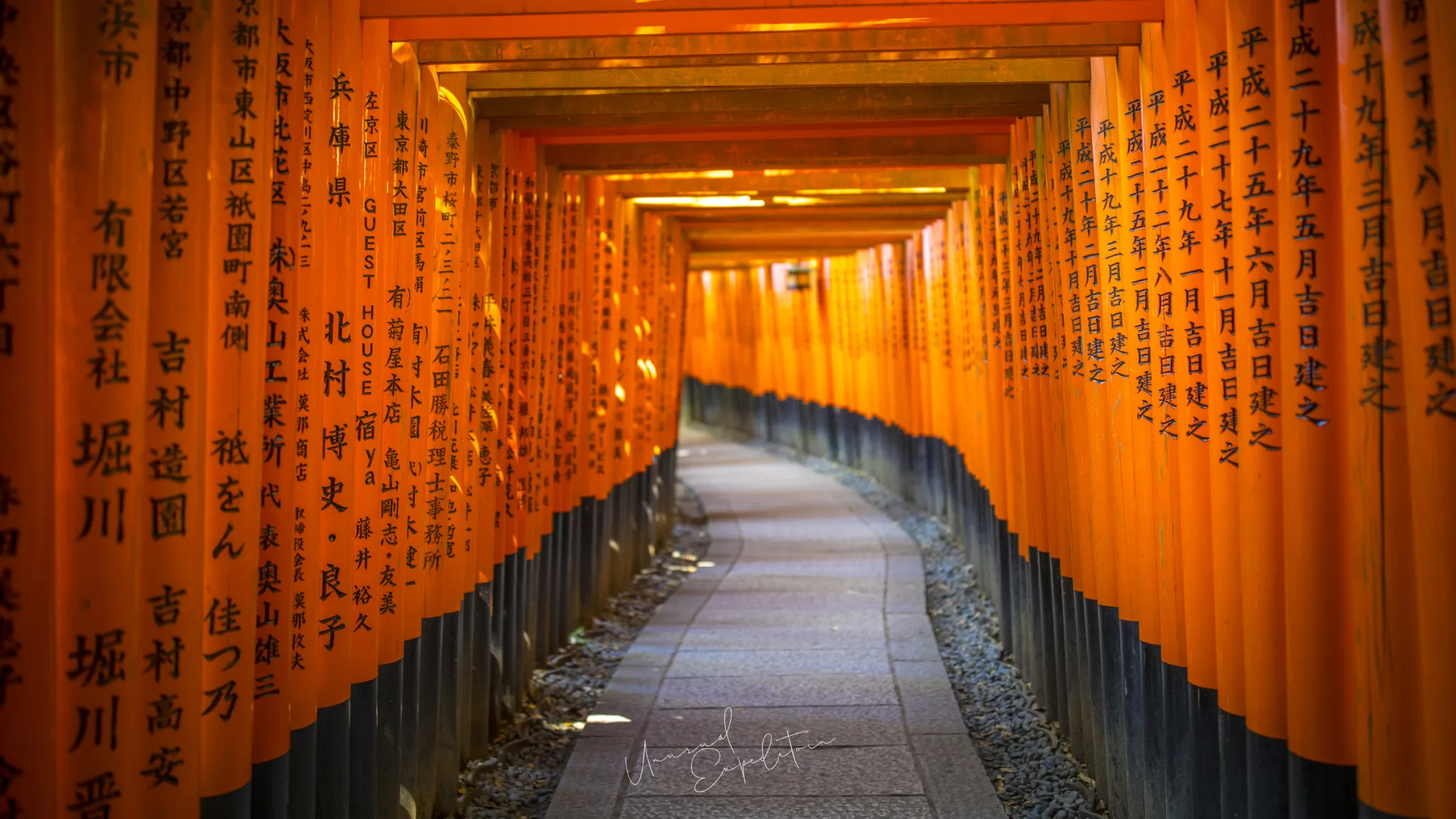
The Fushimi Inari torii gates are best photographed at dawn or after dark, when the tunnels of vermilion gates are empty and the light is soft. The shrine never closes and charges nothing to enter, so you can be there before the first train brings the crowds. The famous double row of gates at the bottom is the busiest part; climb higher up Mount Inari and the tunnels thin out, the inscriptions become easier to frame and you will often have a whole stretch of gates to yourself.
Fushimi Inari is one of the key places in our Kyoto and Osaka photography tour guide, and the shrine that most visitors to Kyoto put first on their list. These notes come from photographing it ourselves, in rain and in sun.
What is Fushimi Inari Taisha?
Fushimi Inari Taisha, in the south of Kyoto, is the head shrine of Inari, the deity of rice, harvests and prosperity in business. Its fame comes from the thousands of torii gates that line the paths up the wooded mountain behind the main halls. Each gate is a gift: individuals and companies whose wishes were granted donate a gate, and the donor's name and the date are painted in black on the back, as the Government of Japan's Highlighting Japan magazine describes. Stone foxes, the messengers of Inari, guard the halls and the smaller shrines along the way, often with a key or a scroll in their mouths. For a photographer, that makes three subjects in one place: the tunnels, the calligraphy and the foxes.
Fushimi Inari torii gates: where the best tunnels are
The double row of gates just above the main shrine, called Senbon Torii, is the image everyone knows. Two narrow tunnels run side by side, and with the gates set close together they read as a single orange corridor. It is also where the crowds bunch. Above it the path climbs past smaller shrines, ponds and stone altars hung with miniature gates, and the tunnels open, curve and climb in steps. The curved sections are the best for photography: a bend hides the people ahead of you and lets the gates recede into shadow. A 24-70mm covers almost every frame here; at the long end it compresses the gates into a solid wall of colour.
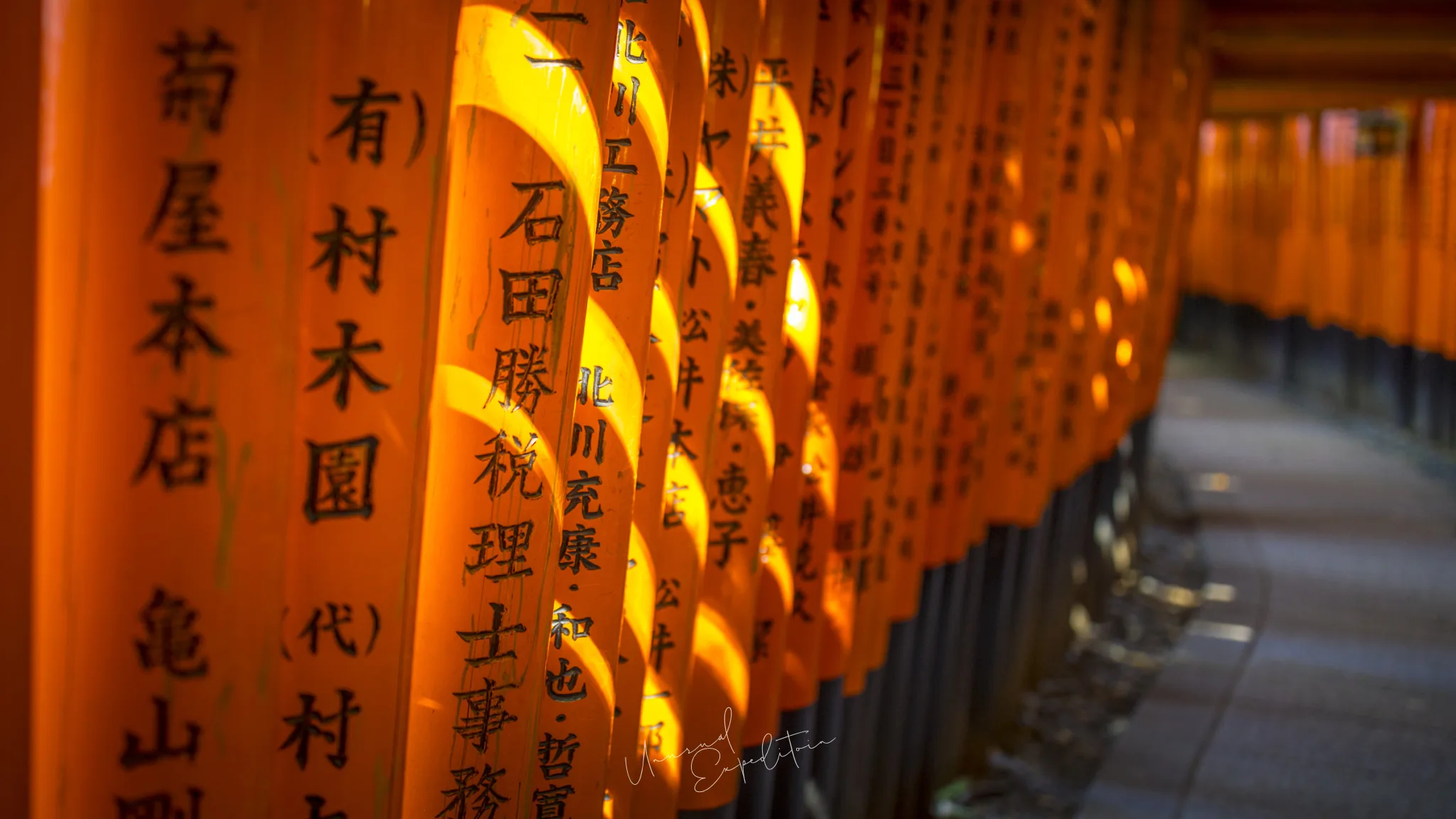
Photos of Fushimi Inari: details worth looking for
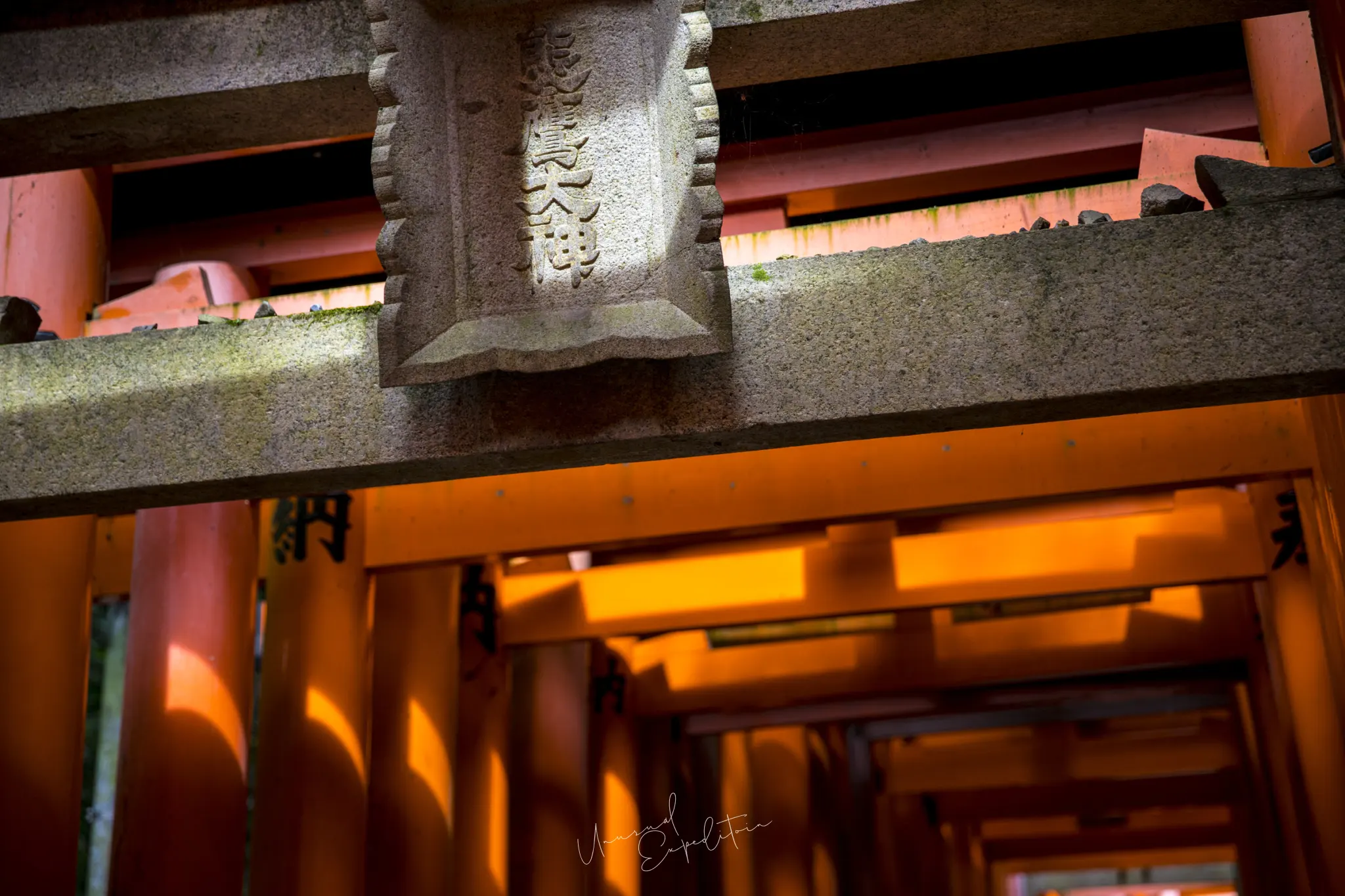
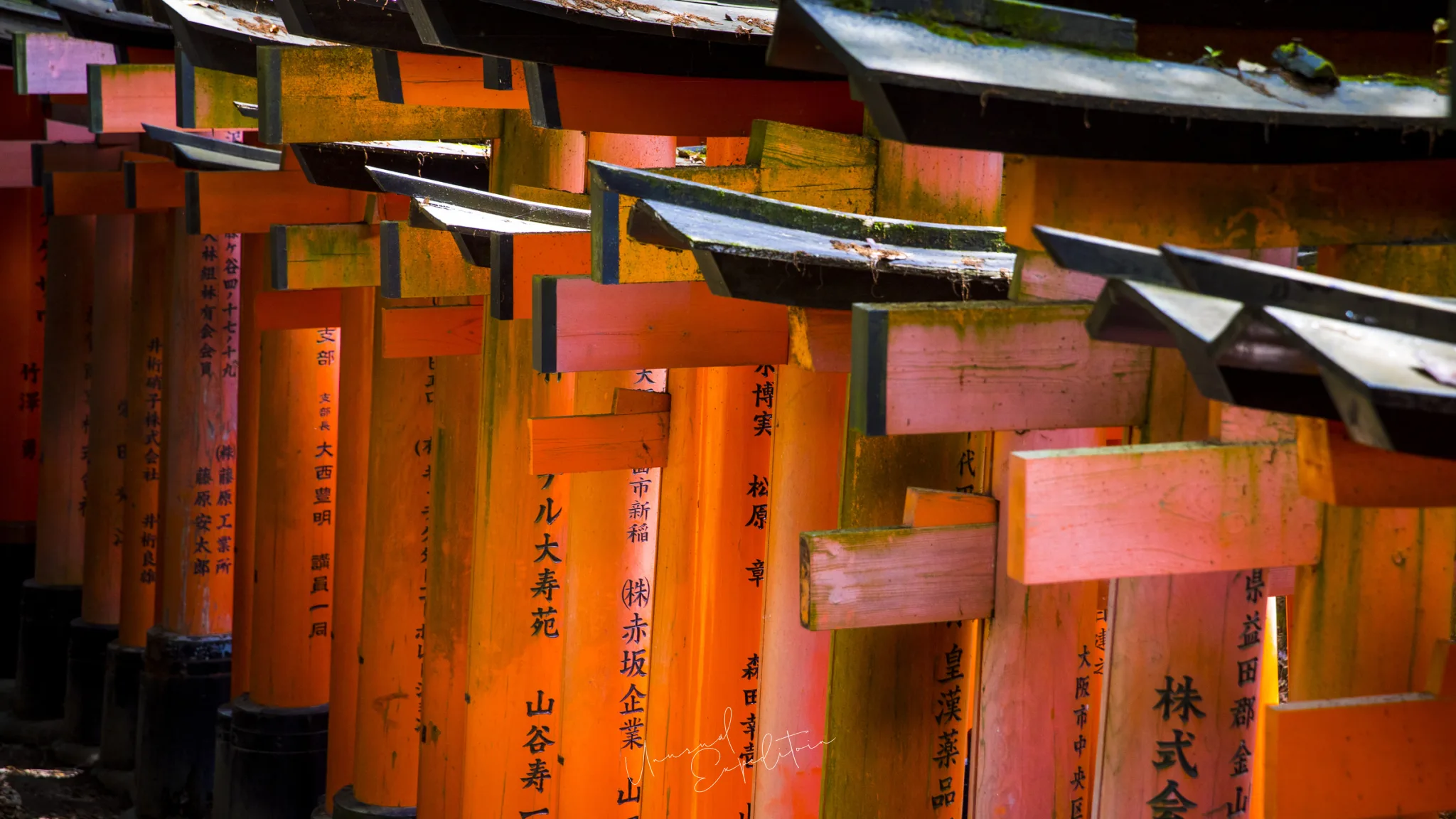
Most photos of Fushimi Inari are taken looking down a tunnel. Turn around, though, and the backs of the gates carry the calligraphy, which makes a strong frame at an angle, the characters stacked down each post. Look up, and the black-capped crossbeams form a rhythm against the green of the forest. Some gates are old and weathered, the paint flaking to show the wood; others are freshly painted and almost glow. Stone torii and lanterns, moss-covered and darker, give a change of colour between the vermilion sections. The foxes deserve their own time, especially those at the smaller shrines higher up, where you can get close without anyone stepping into the frame.
Fushimi Inari at sunrise and the best time to visit
The best time to visit Fushimi Inari shrine is first light. Since the grounds are open around the clock, according to Lonely Planet, you can walk in before sunrise and have the lower tunnels to yourself for a while; the soft blue light of dawn is ideal for the vermilion, which turns harsh and contrasty in direct sun. Overcast days and light rain are even better, because the colour stays even and the wet stone shines. By mid morning, from spring to autumn, the lower tunnels are crowded until late afternoon. If you can only come at a busy hour, keep climbing: the crowds fall away with every bend.
| When | What you get | Crowds |
|---|---|---|
| Dawn | Soft, even light; empty tunnels | Very few |
| Overcast or light rain | Saturated vermilion, shining stone | Fewer than on sunny days |
| Midday sun | Hard stripes of light and shade | Heavy in the lower tunnels |
| Dusk and after dark | Lanterns lit, deep shadows | Thin, quieter higher up |
If dawn is impossible, dusk is the next best choice, and the later you go, the quieter it becomes.
Fushimi Inari at night
Fushimi Inari at night is a different place. Lanterns and lamps light parts of the path, the gates glow where the light falls and fade into darkness beyond, and the forest is quiet. It is a place for a fast lens and high ISO, since a tripod in a narrow tunnel blocks the way for everyone else. Go with someone, take a small torch for the unlit stretches and stay on the main path, which is steep and uneven in places. The upper mountain is very dark; the lit lower sections give most of the pictures.
"Everyone queues for the same frame at the bottom. Walk a little higher and the gates are just as beautiful and you have them alone. The best pictures I have from Fushimi Inari are from bends nobody stopped at."
Joseph Mak, tour leader, Unusual Expedition
Fushimi Inari hike: how far to go
The full loop to the summit of Mount Inari and back is a proper walk on steps, and few visitors complete it. For photography you do not need to. The best balance of empty tunnels and good gates is between the main shrine and the Yotsutsuji intersection about halfway up, where the path splits into the summit loop and a terrace looks out across southern Kyoto. Above it the gates continue, but the views close in. Wear shoes with grip, since the steps are slippery when wet, and carry water in summer, when the humidity on the mountain is heavy.
Fushimi Inari entrance fee, rules and etiquette
There is no entrance fee for Fushimi Inari Taisha. It is an active shrine, so treat the halls as places of worship: no photography where signs forbid it, no climbing on gates or statues, and step aside on the narrow paths so others can pass. Tripods are tolerated on quiet stretches at quiet hours, never in the crowded lower tunnels. Kimono-clad visitors make lovely frames, but ask before you photograph anyone closely. For the rest of Kyoto's sights, see the best time to visit Kyoto and Osaka, and for a contrast after the shrine, Dotonbori and Shinsekai at night is an easy evening away.
Photograph Fushimi Inari with us
We run Kyoto and Osaka as a private trip on request, timed around the dawn and dusk light that Fushimi Inari needs. See private tours and our Japan photography tours page.
Join the Kyoto and Osaka photography tour
Kyushu, Shikoku And Setouchi Photography Journey departs 25 Sep 2027 To 05 Oct 2027, led by Joseph Mak. Small group, photography first. All Kyoto and Osaka photography tours.
Explore Kyoto and Osaka in depth
- Kyoto and Osaka Photography Tour Guide: Temples, Torii, Deer and NeonJapan
- Osaka Photo Spots: Dotonbori, Shinsekai, Osaka Castle and UmedaJapan
- Nara Deer Park: Photographing the Deer of NaraJapan
- Nara Day Trip from Kyoto and Osaka: Todai-ji, the Deer and Kasuga TaishaJapan
- Is Osaka Worth Visiting? A Photographer's Case for the CityJapan
- Dotonbori Night and Shinsekai at Night: Photographing Osaka's NeonJapan
- Best Time to Visit Kyoto and Osaka for Photography: Blossom, Maples and RainJapan
Upcoming Photo Tours
- Egypt Photo Tour – EgyptEgypt 12 Dec 2026 To 20 Dec 2026
- Inner Mongolia Winter Owl Photo Tour – ChinaChina 01 Jan 2027 To 04 Jan 2027
- Inner Mongolia Winter Photo Tour – ChinaChina 05 Jan 2027 To 11 Jan 2027
- Mekong And Central Highland Vietnam Photo Tour - VietnamVietnam 16 Jan 2027 To 24 Jan 2027