
Osaka Photo Spots: Dotonbori, Shinsekai, Osaka Castle and Umeda
Osaka photo spots: the Glico sign at Dotonbori, Shinsekai and Tsutenkaku, the Osaka Castle photo spot and Umeda, with light and lenses.
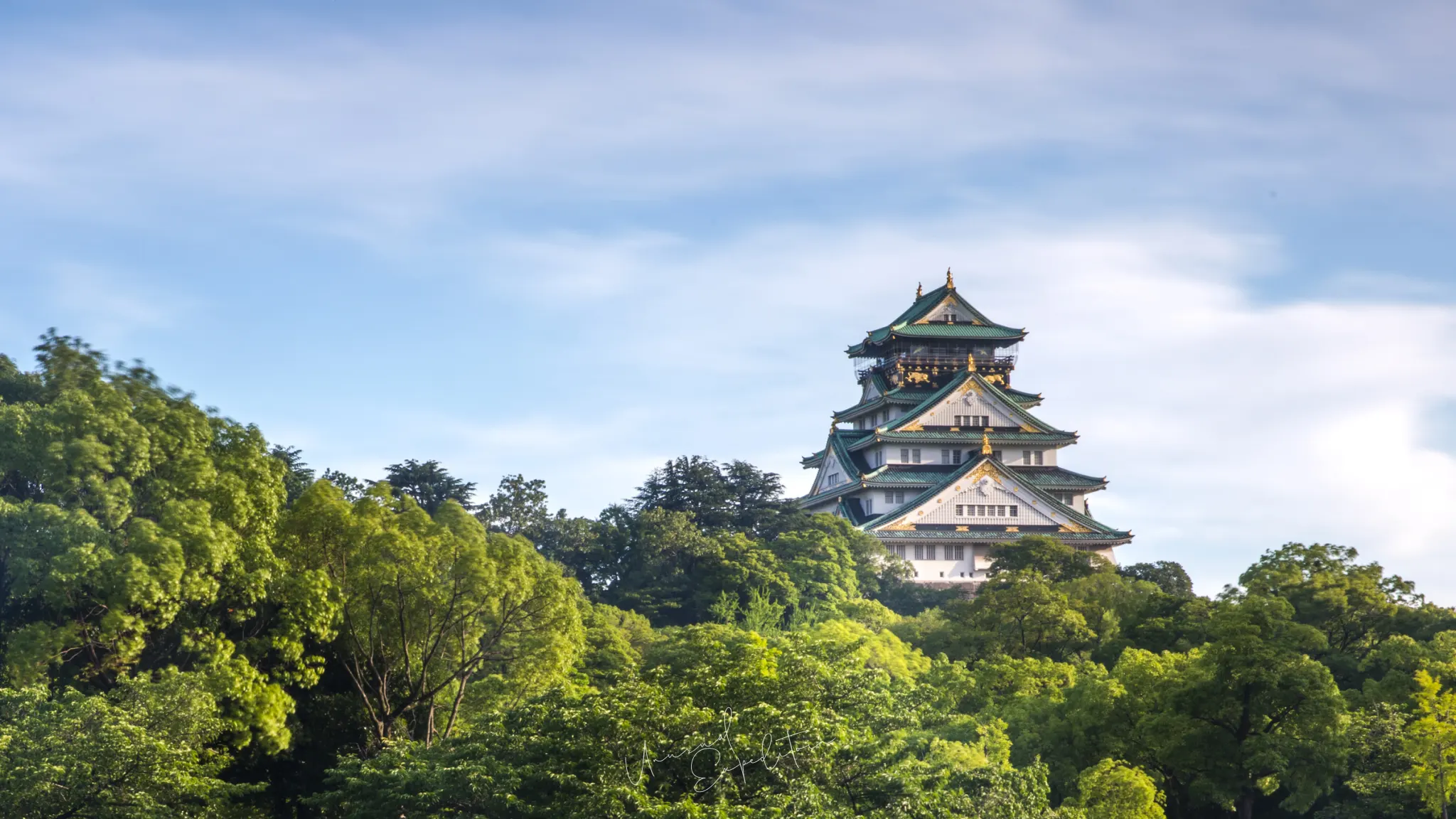
The best Osaka photo spots are Dotonbori along its canal, the lantern-hung streets of Shinsekai under Tsutenkaku tower, Osaka Castle above its moat and stone walls, and the crowds and crossings of Umeda around Osaka Station. Dotonbori and Shinsekai are strongest at dusk and after dark, the castle in soft morning or late afternoon light, and Umeda at rush hour or in the rain. All of them sit within easy reach of each other on the city's subway and rail lines.
These spots are part of our Kyoto and Osaka photography tour guide. The photographs in this article are our own, taken on our trip to Osaka; we hold the rights to them, and the notes come from knowing these places first hand.
Osaka photo spots at a glance
| Spot | What you photograph | Best light | Lens |
|---|---|---|---|
| Dotonbori and Ebisu Bridge | Canal, giant signs, the Glico running man | Blue hour, night | 16-35mm, 24-70mm |
| Shinsekai | Lanterns, painted signs, Tsutenkaku tower | Blue hour | 16-35mm |
| Osaka Castle and park | Keep, moat, stone walls, bridges | Morning, late afternoon | 24-70mm, 70-200mm |
| Umeda and Osaka Station | Crowds, crossings, rain | Rush hour, rainy days | 24-70mm |
Dotonbori and Shinsekai need the evening, so put the castle and Umeda in the day around them.
Dotonbori: the Glico sign and the canal
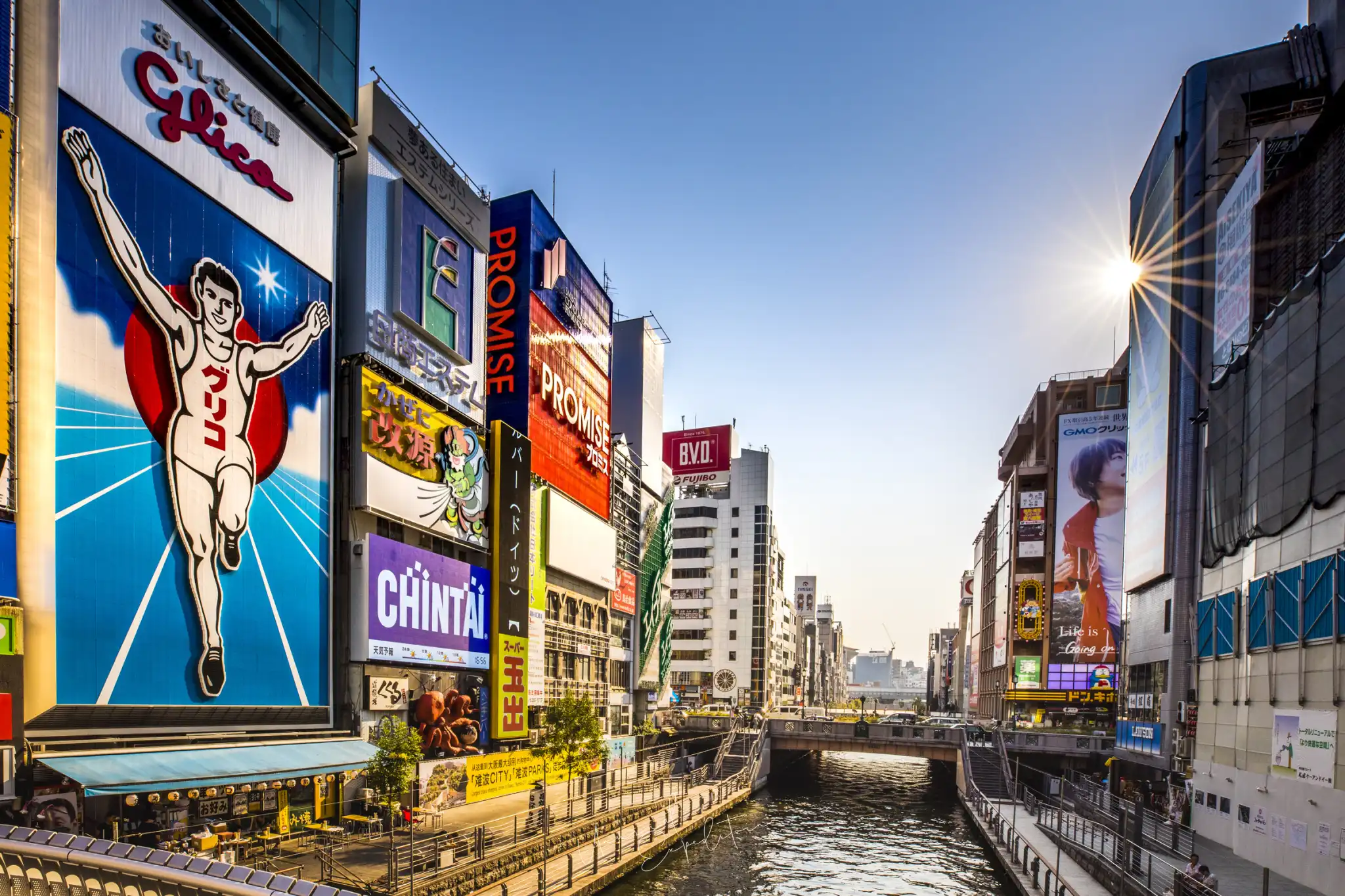
Dotonbori is the Osaka of postcards: a short stretch of canal lined on both banks by restaurants whose fronts are covered in giant signs, mechanical crabs and puffer fish. The Glico running man, an athlete crossing a finishing line, has stood above the canal by Ebisu Bridge in one version or another for decades and is the city's best-known sign. By day, the bridge gives a view down the canal with the signs stacked along it; the reflections are best on a still morning. The real show starts at dusk, covered in our Dotonbori and Shinsekai at night guide. Stand to the side of the bridge: it is one of the busiest pedestrian spots in the city.
Shinsekai and Tsutenkaku tower
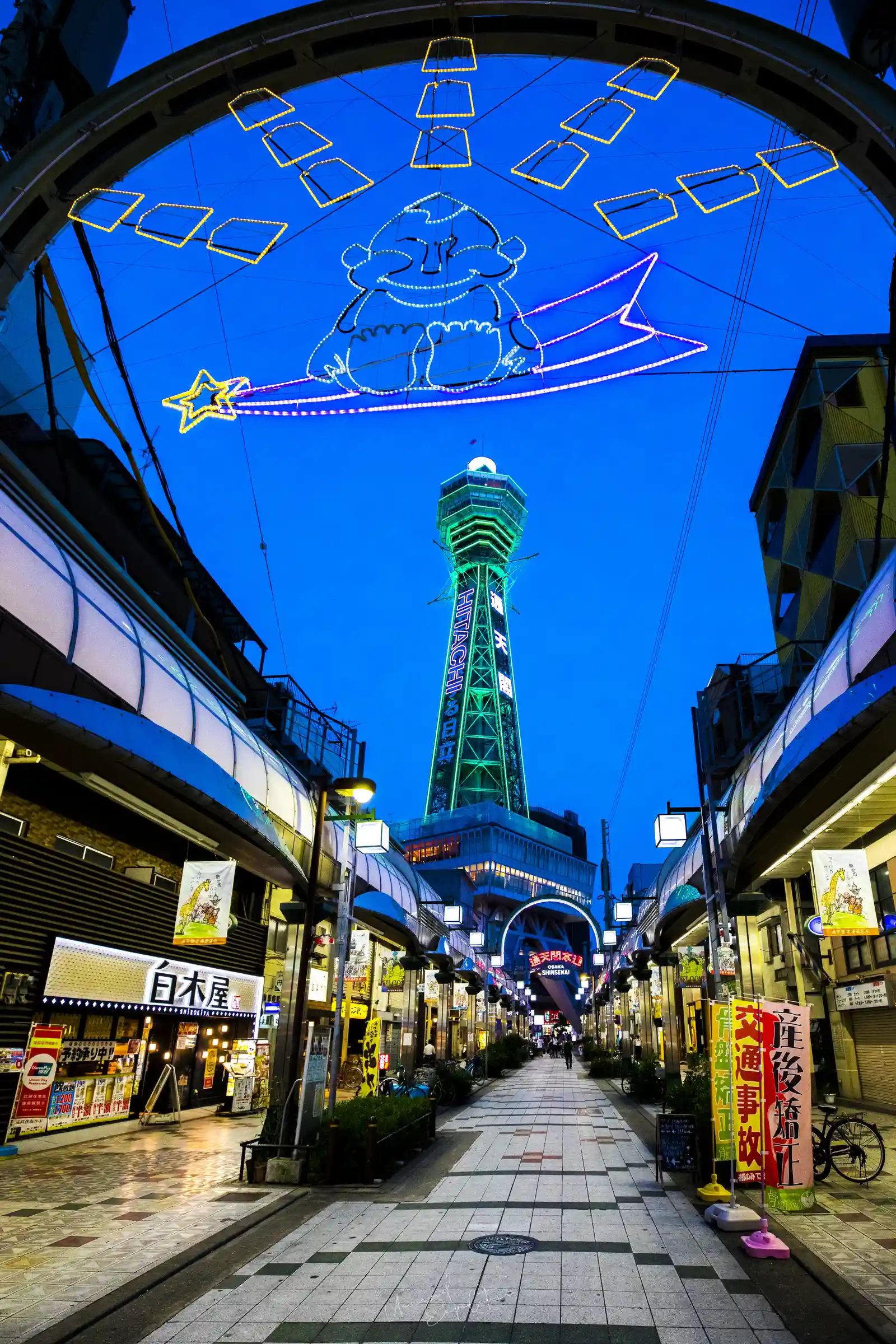
Shinsekai, the "new world", was laid out more than a century ago as a modern amusement quarter, and its centrepiece, Tsutenkaku tower, was rebuilt in its present form in the 1950s. Today the district is older, scruffier and more local than Dotonbori, full of skewer restaurants, retro game halls and hand-painted signs. Two pictures matter here. The covered shopping arcade frames the tower at its end, a strong vertical composition by day; and the main street with its lanterns and the lit tower above it is the classic blue-hour shot. Shinsekai is busy with visitors and locals alike into the evening; ask before photographing anyone closely.
Osaka Castle photo spot: where to stand
Osaka Castle's keep is a 1931 reconstruction in concrete, now a museum, standing on the original massive stone walls; Japan's Ministry of Land, Infrastructure, Transport and Tourism notes it was paid for by public donations. The keep photographs best from outside, where the walls, moats and trees give it scale. Three positions work well. From the outer moat, with a bridge or the stone walls in the foreground, the keep rises above the trees. From the park lawns to the east, a longer lens isolates the keep over a mass of green. And close to the walls, the giant stones themselves, some covered in moss and ferns, make strong detail pictures. Morning light from the east and late afternoon light from the west both work; midday flattens the white walls.
Is Osaka Castle worth visiting?
For photographers, Osaka Castle is worth visiting more for its grounds than its interior, which is a modern museum. The park is large, the moats and walls are impressive, and in spring the cherry trees around the keep make it one of the city's blossom spots, with autumn colour later in the year. It also fills a morning when Dotonbori and Shinsekai are waiting for the dark. The best time to visit Osaka Castle for photography is early morning, when the park belongs to joggers and the light is low.
"Osaka is the city I leave for last on a Kansai trip, because it needs nothing from you except energy. Give the castle a morning, then wait for the blue hour in Shinsekai. Those two pictures tell you more about Osaka than a dozen sights."
Joseph Mak, tour leader, Unusual Expedition
Umeda and Osaka Station
Umeda, around Osaka Station, is the business heart of the city and its best street photography ground. Wide crossings under the railway viaducts fill with commuters as the lights change, footbridges give views straight down onto the crowds, and in rain the area becomes a sea of umbrellas. It is a place for black and white, for slow shutter speeds that blur the walkers, and for patience at one good corner. Our is Osaka worth visiting article covers Umeda and the case for Osaka against Kyoto.
Best time to visit Dotonbori
The best time to visit Dotonbori for photography is the blue hour, the short period after sunset when the sky is still deep blue and the signs are already lit. That balance of sky and neon lasts only a little while, so arrive in daylight, choose your bridge or corner and wait. After full dark the signs carry the picture on their own and the district stays busy late into the night. Mornings are the opposite: shutters down, signs off, delivery vans and a few cleaners, which makes its own quiet picture of a street that is usually anything but. Weekends and holidays bring the heaviest crowds; weekday evenings are easier for setting up on the bridges.
Tourist spots in Osaka that photographers skip
Some of the tourist spots in Osaka are less rewarding for the camera. Large shopping streets are crowded and hard to frame, aquarium and theme-park interiors suit snapshots more than considered pictures, and observation decks behind glass fight reflections at night. If you go up one, bring a rubber lens hood to press against the glass. Time is better spent returning to Dotonbori or Shinsekai at a second blue hour, or taking the train to Nara for the deer, covered in the Nara day trip from Kyoto and Osaka.
Photograph Osaka with us
We run Osaka with Kyoto and Nara as a private trip on request, at your own pace and with every arrangement made for you. See private tours and our Japan photography tours page.
Join the Kyoto and Osaka photography tour
Kyushu, Shikoku And Setouchi Photography Journey departs 25 Sep 2027 To 05 Oct 2027, led by Joseph Mak. Small group, photography first. All Kyoto and Osaka photography tours.
Explore Kyoto and Osaka in depth
- Kyoto and Osaka Photography Tour Guide: Temples, Torii, Deer and NeonJapan
- Nara Deer Park: Photographing the Deer of NaraJapan
- Nara Day Trip from Kyoto and Osaka: Todai-ji, the Deer and Kasuga TaishaJapan
- Is Osaka Worth Visiting? A Photographer's Case for the CityJapan
- Fushimi Inari Photography: The Torii Gates at Dawn, Dusk and After DarkJapan
- Dotonbori Night and Shinsekai at Night: Photographing Osaka's NeonJapan
- Best Time to Visit Kyoto and Osaka for Photography: Blossom, Maples and RainJapan
Upcoming Photo Tours
- Egypt Photo Tour – EgyptEgypt 12 Dec 2026 To 20 Dec 2026
- Inner Mongolia Winter Owl Photo Tour – ChinaChina 01 Jan 2027 To 04 Jan 2027
- Inner Mongolia Winter Photo Tour – ChinaChina 05 Jan 2027 To 11 Jan 2027
- Mekong And Central Highland Vietnam Photo Tour - VietnamVietnam 16 Jan 2027 To 24 Jan 2027