
Nara Deer Park: Photographing the Deer of Nara
Nara deer park for photographers: how many deer, where they are, the best time of day, why they bow and how to photograph them.
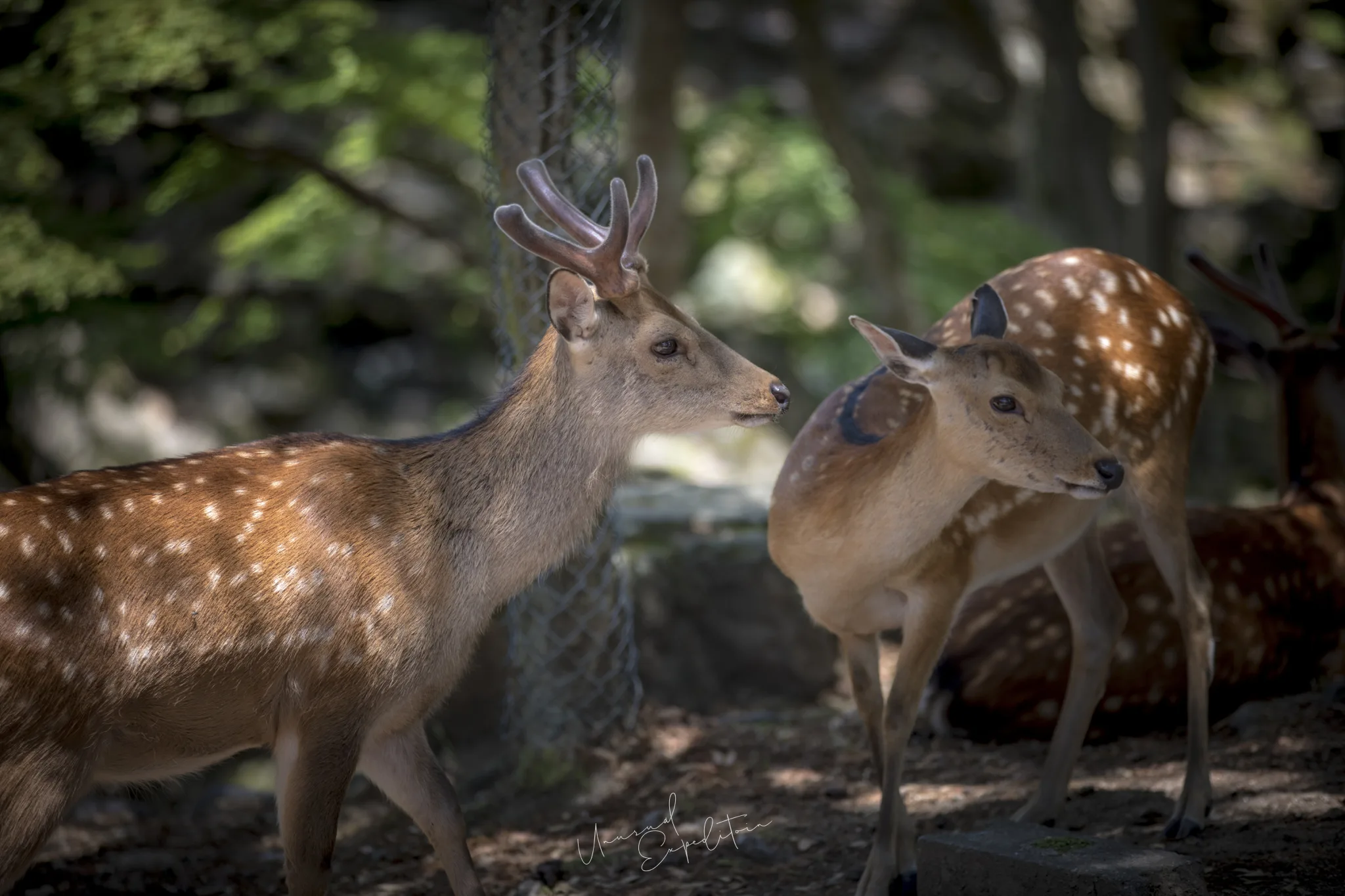
Nara deer park is the open parkland around Nara's great temples where well over a thousand sika deer roam freely among visitors, and it is one of the easiest places in Japan to photograph wild animals up close. The best pictures come early in the morning or late in the afternoon, away from the cracker stalls, where deer rest under old trees, drink from streams and walk through temple gates. Nara is an easy day out from either Kyoto or Osaka.
Nara and its deer are part of our Kyoto and Osaka photography tour guide. The photographs here are our own, taken in Nara Park in early summer; we hold the rights to them, and the notes come from knowing the park first hand.
How many deer are in Nara?
The Nara Deer Preservation Foundation counts the park's deer every summer, and its latest survey, reported by Nippon.com, recorded 1,465, a record. The deer are sika deer, regarded for centuries as messengers of the gods of Kasuga Taisha, the shrine on the park's eastern edge, and they are protected as a natural monument. They are wild: nobody owns them, they come and go as they please, and they share the lawns, forests and temple precincts with visitors from dawn to dusk. That freedom is what makes them such good subjects. You are photographing animals in their own habitat, which happens to include a thousand years of temple architecture.
Where are the deer in Nara?
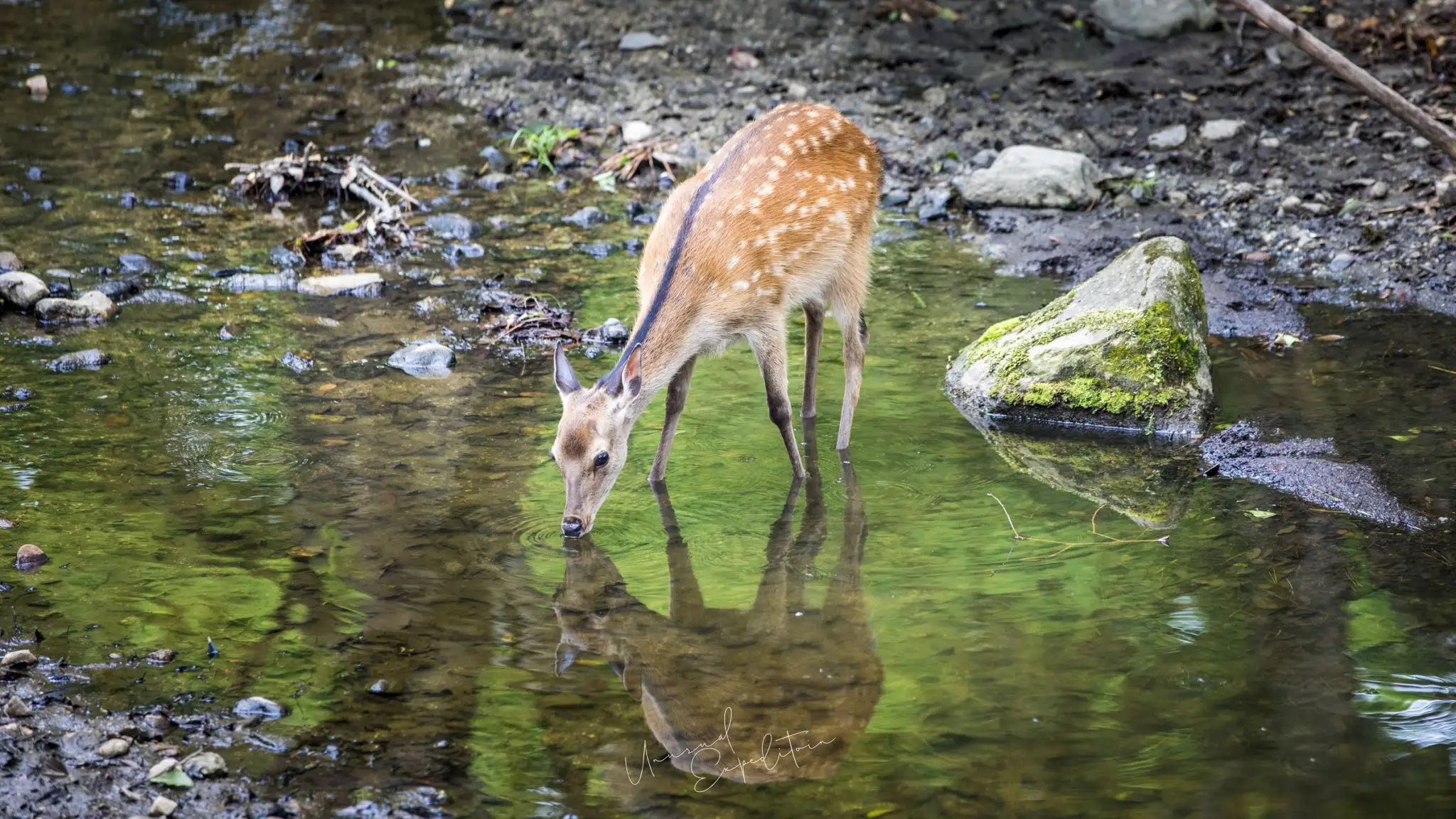
Deer are everywhere in Nara Park, but they gather where the food is. The densest crowds of deer, and of people, are along the main approach to Todai-ji and around the stalls selling shika senbei, the deer crackers. For photography, walk away from those. The lawns and woods towards Kasuga Taisha, the forest paths up the slopes of the hills and the quieter corners behind the temples have deer resting, grazing and moving through dappled light, without crowds in the background. Stags with antlers in velvet, does with spotted summer coats and young deer at the streams are all within a short walk of the busy centre.
Best time of day to go to Nara deer park
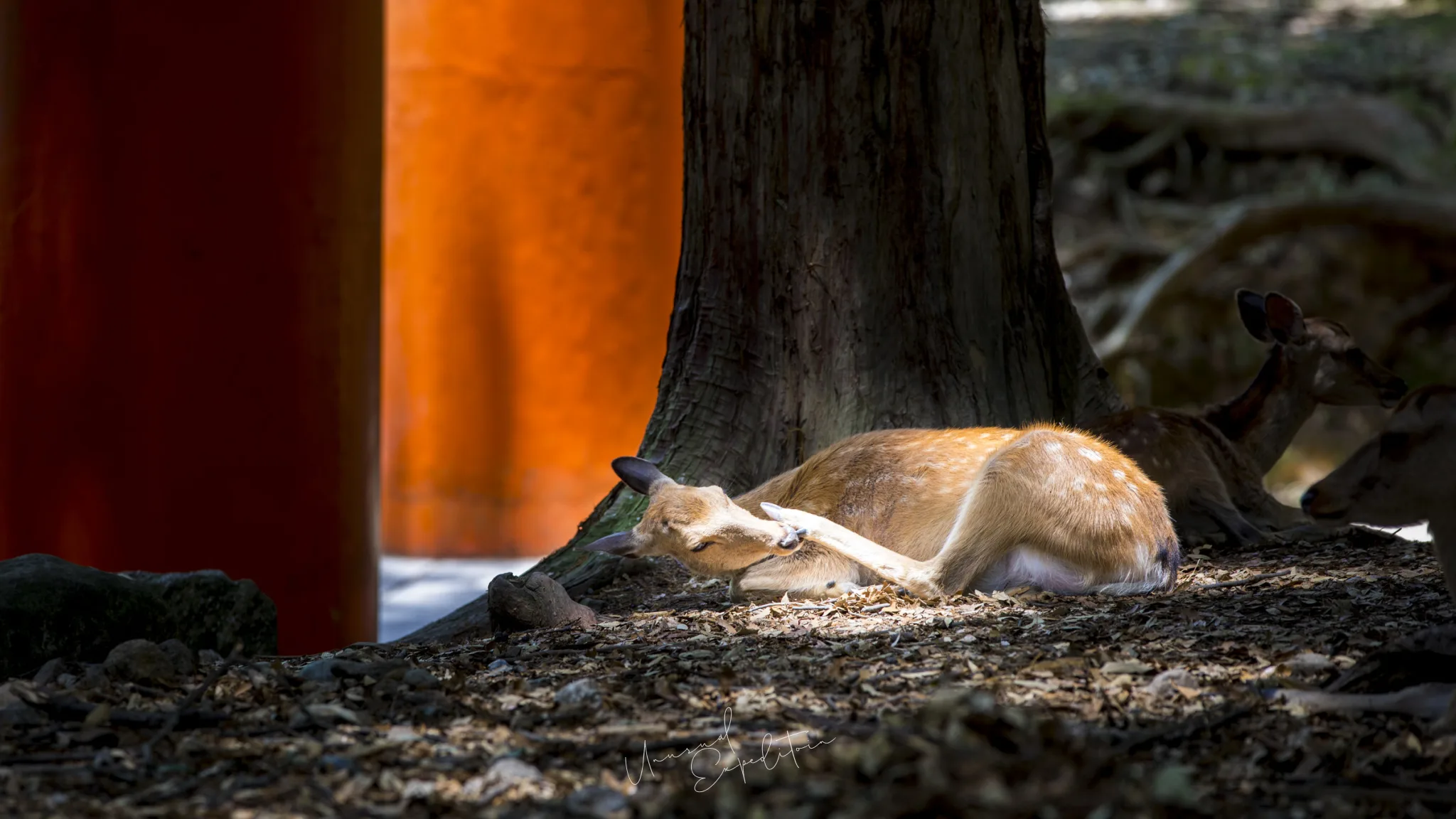
The best time of day to go to Nara deer park for photography is early morning, before the day visitors arrive, or late afternoon, when the light turns warm and the tour groups have gone. At both times the deer are calmer and more spread out, and the low light rakes through the trees and lights their coats. In the middle of the day in summer they retreat to shade, lying in groups under the big trees, which gives quieter, softer pictures. Through the year, autumn brings the rut, when stags call and spar, and early summer brings the fawns.
| Time | Deer behaviour | Pictures |
|---|---|---|
| Early morning | Grazing, moving through the woods | Backlit coats, empty paths |
| Midday | Resting in shade, crowding the cracker stalls | Sleeping deer, close portraits |
| Late afternoon | Active again, drinking at streams | Warm light, reflections |
Whatever the hour, the quieter edges of the park give better pictures than the centre.
Why do the Nara deer bow?
Many Nara deer bob their heads when a visitor holds up a cracker, and it looks like a bow. It is learned behaviour: the deer have found that a nod gets food, and visitors bow back. For a photograph, the bow is fleeting and best caught with a fast shutter speed and a companion holding the cracker. Do not tease a deer by holding food out of reach for the picture. Park signs warn that the deer are wild animals that can bite, butt, kick and knock people over, especially when they are teased or crowded, and shika senbei are the only food they should be given.
How to photograph the deer of Nara
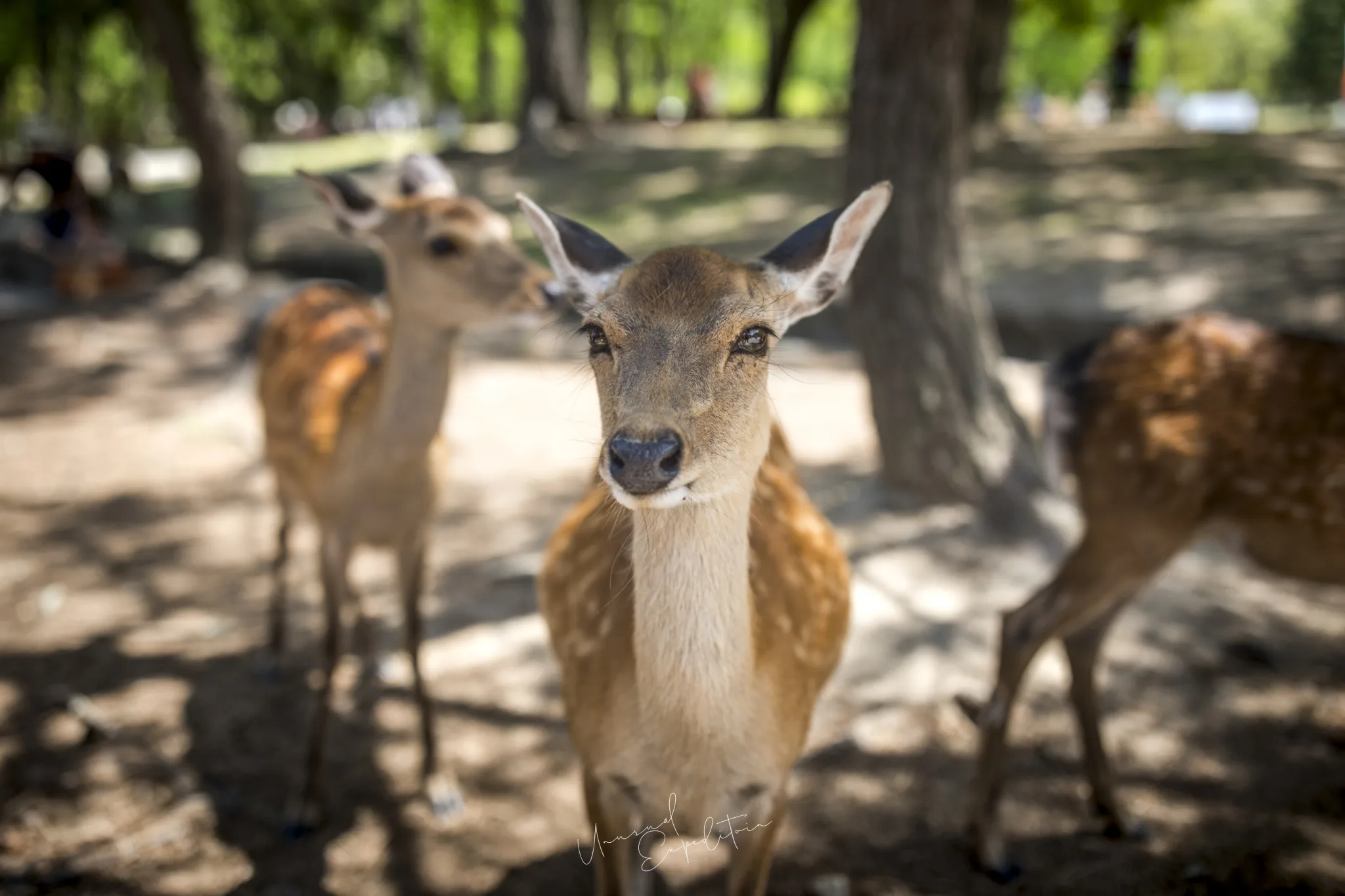
A 70-200mm is the most useful lens in Nara Park. It lets you stay back, so the deer behave naturally, and it blurs the busy backgrounds of other visitors. Get down to the deer's eye level: a deer photographed from standing height looks like a pet, from its own height it looks like a wild animal. Look for context too, a deer passing a vermilion shrine pillar, lying at the foot of a cedar, reflected in a stream. A 24-70mm covers those wider scenes. Shade is your friend at midday; dappled light on a spotted coat is the signature Nara look. Keep your bag closed, since deer will nose into anything that smells of crackers.
"The deer near the cracker stalls are beggars, and that is all you will photograph if you stay there. Walk a little way into the trees and you find a different animal, quiet and wary, and that is the picture worth taking home."
Joseph Mak, tour leader, Unusual Expedition
Is Nara deer park worth it?
For photographers, Nara deer park is worth it, with one condition: give it more than a quick walk from the station to Todai-ji and back. The crowded centre can feel like a petting zoo; the wider park is a beautiful mix of old forest, lawns and temples with wild animals moving through it. Combine the deer with Todai-ji and Kasuga Taisha and you have a full day of very different pictures. The park is open land and free to enter; the temples charge their own admission. Our Nara day trip from Kyoto and Osaka covers the temples and getting there, and the best time to visit Kyoto and Osaka covers the seasons.
Is Nara deer park open in winter?
Yes. Nara Park is open land, so there are no opening hours for the park itself, and the deer are there all year. Winter has fewer visitors and clear, low light, and the deer grow darker, thicker coats that photograph well against frost or the rare snowfall. Temple halls keep their own hours, so check them if you plan to go inside.
Photograph Nara's deer with us
We run Nara with Kyoto and Osaka as a private trip on request, timed for the early and late light the deer need. See private tours and our Japan photography tours page.
Join the Kyoto and Osaka photography tour
Kyushu, Shikoku And Setouchi Photography Journey departs 25 Sep 2027 To 05 Oct 2027, led by Joseph Mak. Small group, photography first. All Kyoto and Osaka photography tours.
Explore Kyoto and Osaka in depth
- Kyoto and Osaka Photography Tour Guide: Temples, Torii, Deer and NeonJapan
- Osaka Photo Spots: Dotonbori, Shinsekai, Osaka Castle and UmedaJapan
- Nara Day Trip from Kyoto and Osaka: Todai-ji, the Deer and Kasuga TaishaJapan
- Is Osaka Worth Visiting? A Photographer's Case for the CityJapan
- Fushimi Inari Photography: The Torii Gates at Dawn, Dusk and After DarkJapan
- Dotonbori Night and Shinsekai at Night: Photographing Osaka's NeonJapan
- Best Time to Visit Kyoto and Osaka for Photography: Blossom, Maples and RainJapan
Upcoming Photo Tours
- Egypt Photo Tour – EgyptEgypt 12 Dec 2026 To 20 Dec 2026
- Inner Mongolia Winter Owl Photo Tour – ChinaChina 01 Jan 2027 To 04 Jan 2027
- Inner Mongolia Winter Photo Tour – ChinaChina 05 Jan 2027 To 11 Jan 2027
- Mekong And Central Highland Vietnam Photo Tour - VietnamVietnam 16 Jan 2027 To 24 Jan 2027