
Hoi An Photos: What the Ancient Town Really Looks Like
Our own Hoi An photos: the yellow old town from above, the river in daylight, blue hour lanes, the fishing fleet and the craft villages.
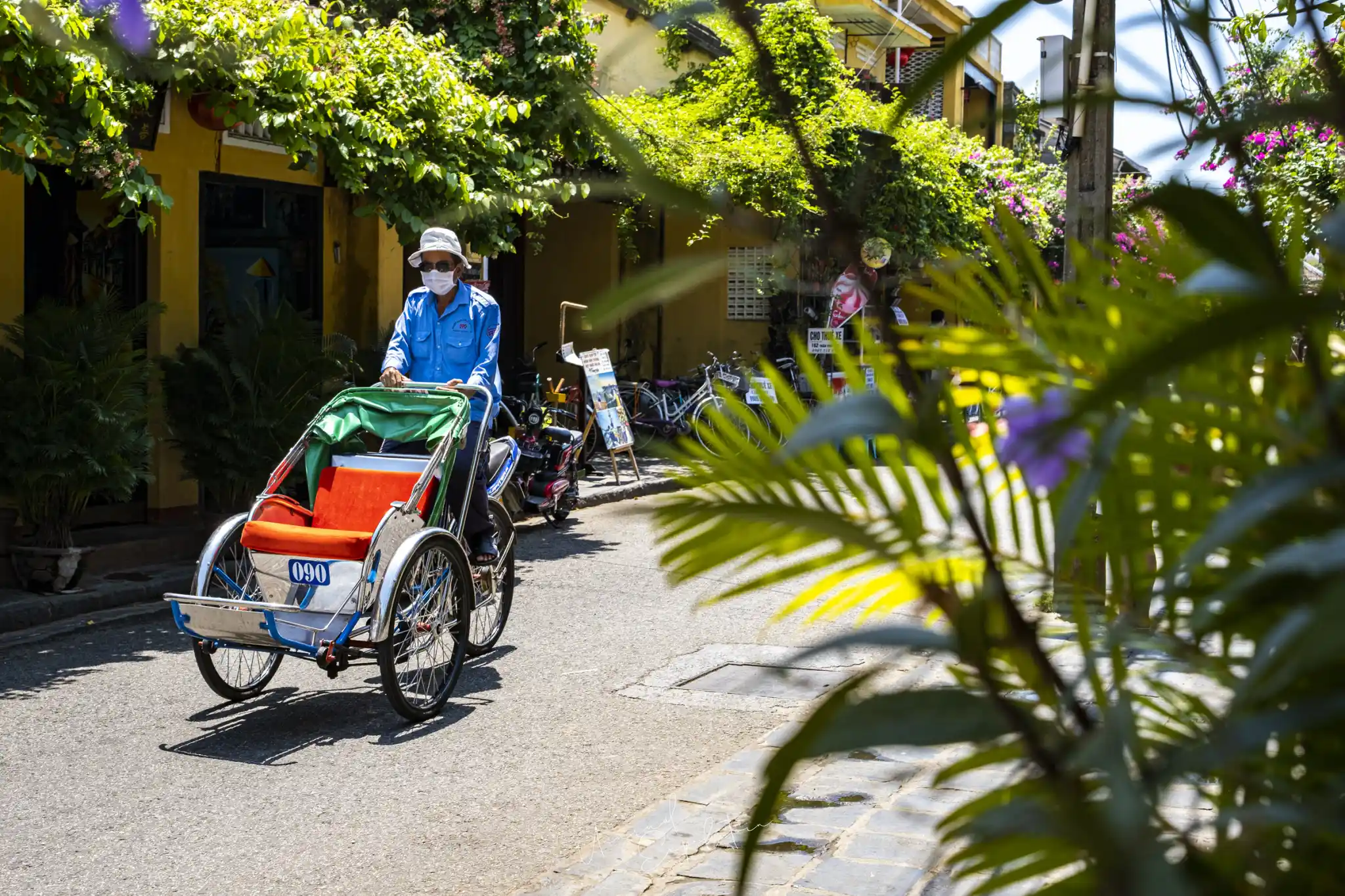
Hoi An photos tend to show one thing: lanterns over black water at night. The town is that, for about two hours a day. The rest of the time it is a working river port with yellow walls that change colour every hour, a fishing fleet at the river mouth, vegetable gardens that look like woven cloth from the air, and lanes where the crowd arrives at ten and leaves at dusk. These are our own frames from several visits, gathered here so you can see what the Hoi An ancient town really looks like before you plan the Vietnam photography tour around it.
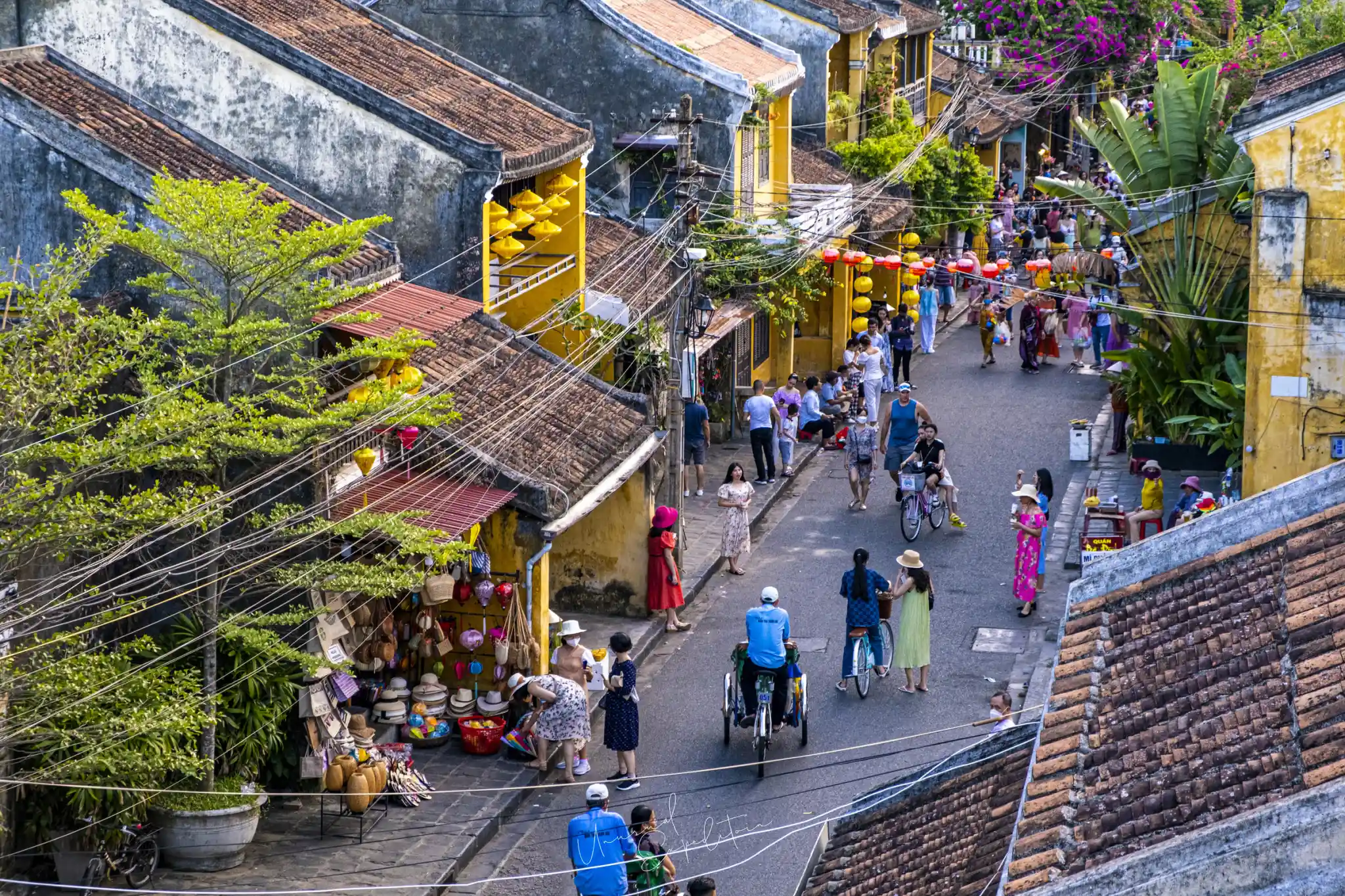
Hoi An ancient town photos: the yellow town from above
Seen from a rooftop, the old town is a grid of tiled roofs and ochre walls with a few trees pushing through. Tran Phu, Nguyen Thai Hoc and Bach Dang run parallel to the river; the lanes between them are short and shaded. The yellow is lime wash, repainted every few years, and it photographs differently through the day: pale and flat under noon sun, warm and saturated in the last hour before sunset, almost orange under the street lamps. The roofs are the detail most people miss. From the river they look brown; from above they are moss green, grey and terracotta in patches, because every house was re-tiled at a different time.
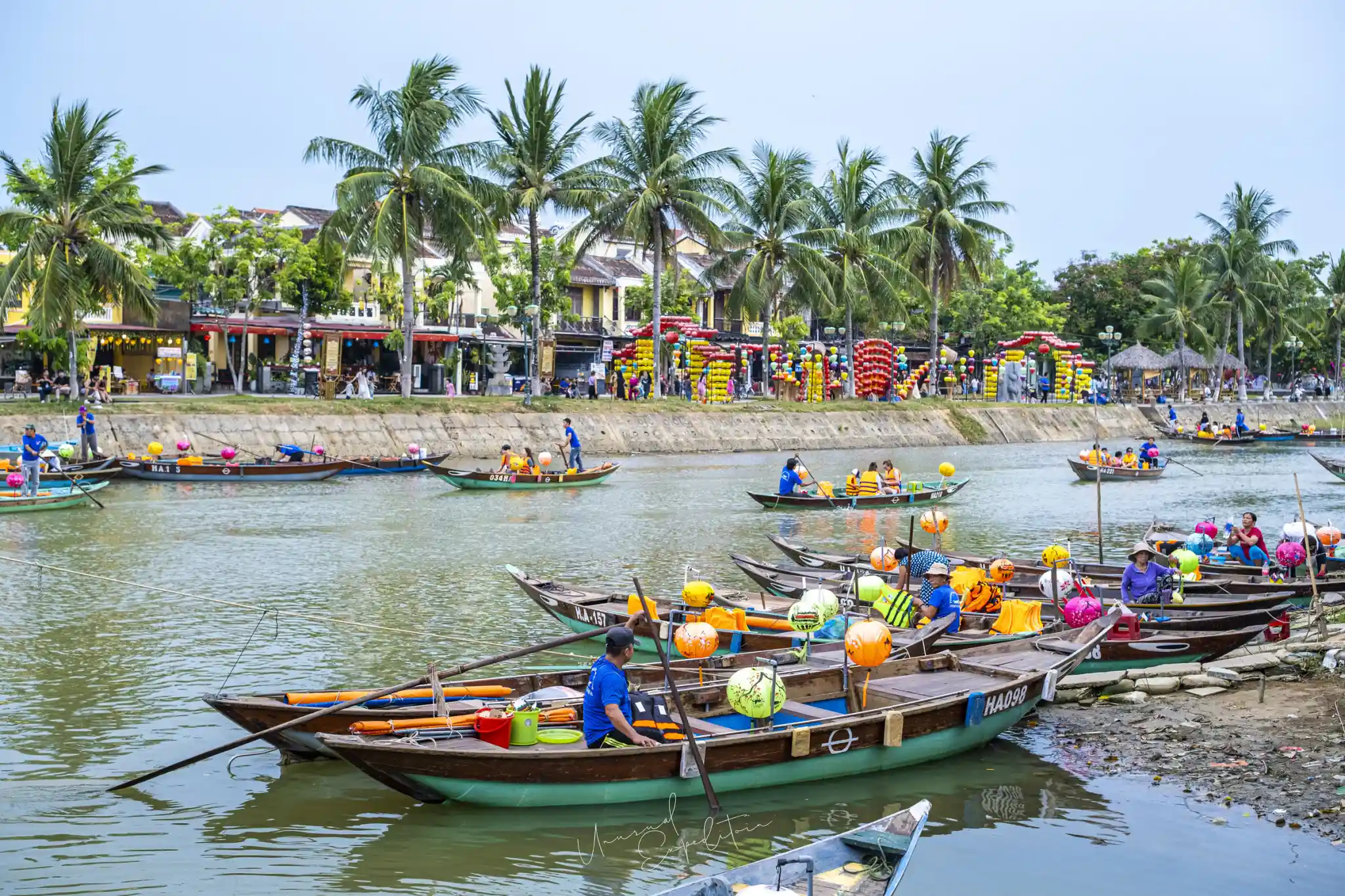
What the river looks like in daylight
The Thu Bon runs along the south side of the old town, and the lantern boats that fill it after dark are tied up along the Bach Dang quay all day. In daylight they are plain wooden sampans with a few paper lanterns and a boatman waiting for evening, which is a better picture than the night version if you want colour without crowds. Across the water is An Hoi, the island with the night market and the bars, joined to the town by a low bridge. The palms along the far bank give you a foreground, and in the late afternoon the light comes down the river from the west so the boats are lit from the side. It is also the quietest hour on the quay.
Hoi An best photos are made in the first hour of light
If you only shoot one morning in Hoi An, make it the one before the day trippers arrive from Da Nang. The lanes are swept, the shutters are still closed, and the only people about are women carrying baskets to the Central Market and the first cyclo drivers setting up. The light is soft because the sun has to clear the roofs, so the walls hold their colour instead of blowing out. This is when the Japanese Covered Bridge can be photographed without a queue on it, and when the market on Tran Phu is at its most photogenic, with fish being sold off the back of motorbikes and herbs laid out on the kerb. By mid morning the town belongs to the tour groups until the light goes.
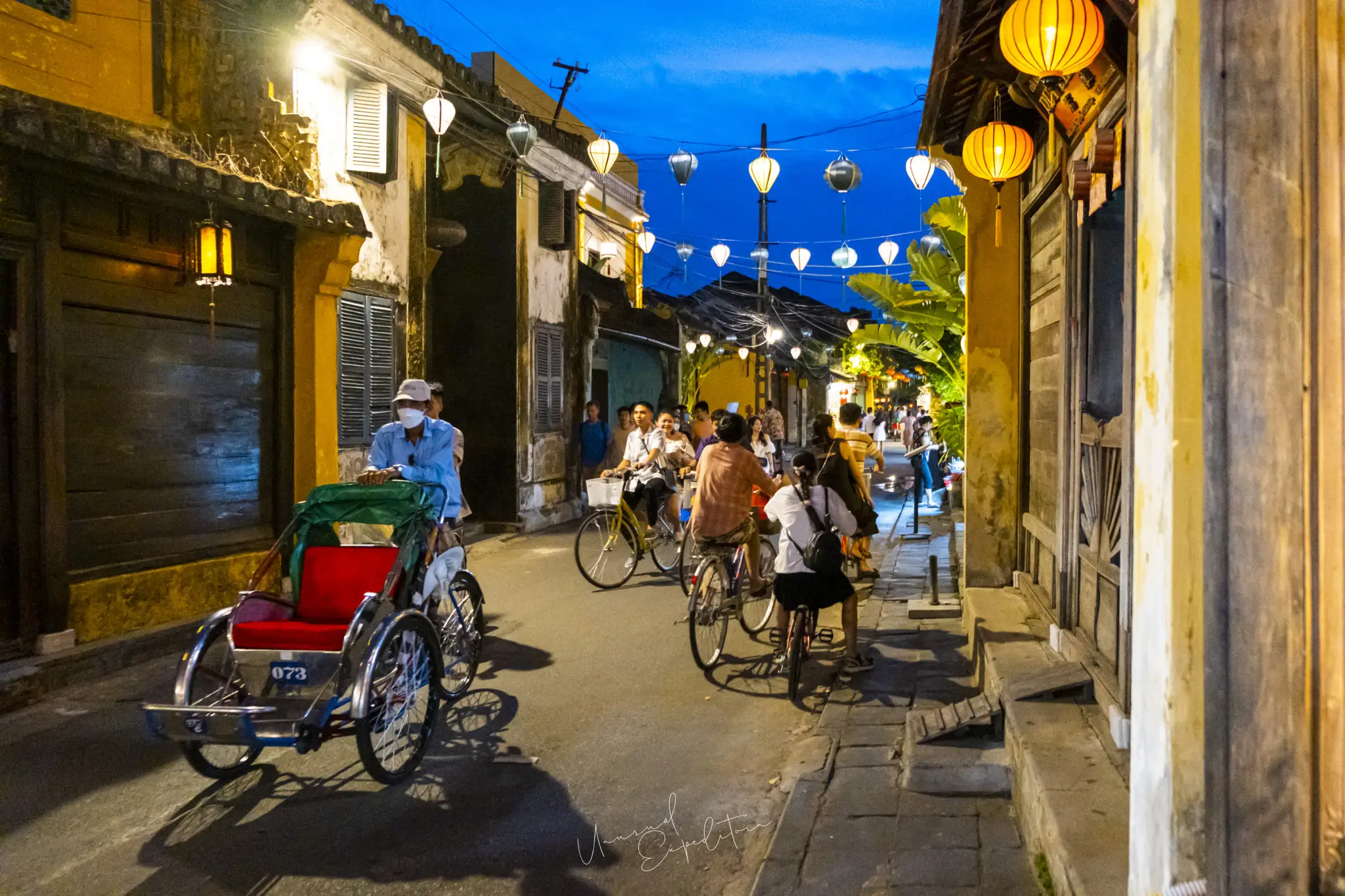
Blue hour in the lanes
The second best time is the twenty minutes after sunset, before the sky goes fully black. The lanterns are lit, the sky is still deep blue, and the balance between the two is what makes the colour in a Hoi An photo work. Once the sky is black the lanterns burn out to white blobs in most exposures and the walls go muddy. In this window a cyclo passing through a lane on Nguyen Thai Hoc gives you a moving figure against the lit shopfronts; stand at the end of the lane and wait, because they come through every few minutes. A 24-70mm at a wide aperture is enough; no tripod, because the people would blur anyway.
Hoi An in pictures: the fishing fleet nobody photographs
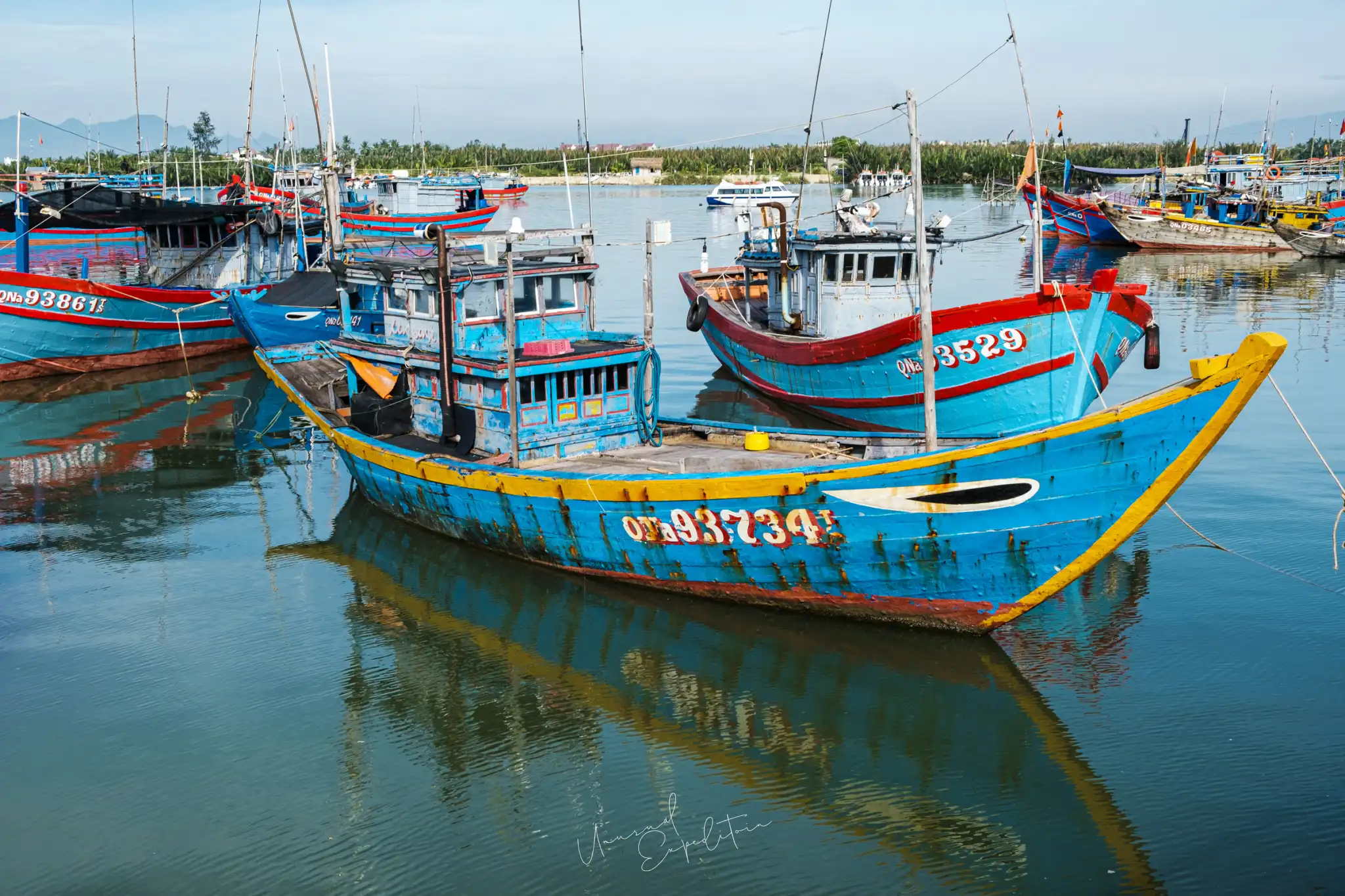
A short way downstream, where the Thu Bon widens towards the sea at Cua Dai, the river is lined with blue and red fishing boats that supply the town's seafood. The paintwork is the attraction: every hull is turquoise, red or yellow, with eyes painted on the bow in the old way. In the mornings the boats unload and the quay is loud; by the afternoon they sit on their reflections with nobody aboard. The harbour is the picture that tells you Hoi An is still a port and not a museum, and it is one most visitors never see because it is outside the ticketed old town. We cover the working coast in where we shoot on a Hoi An photo tour.
The craft villages around the town
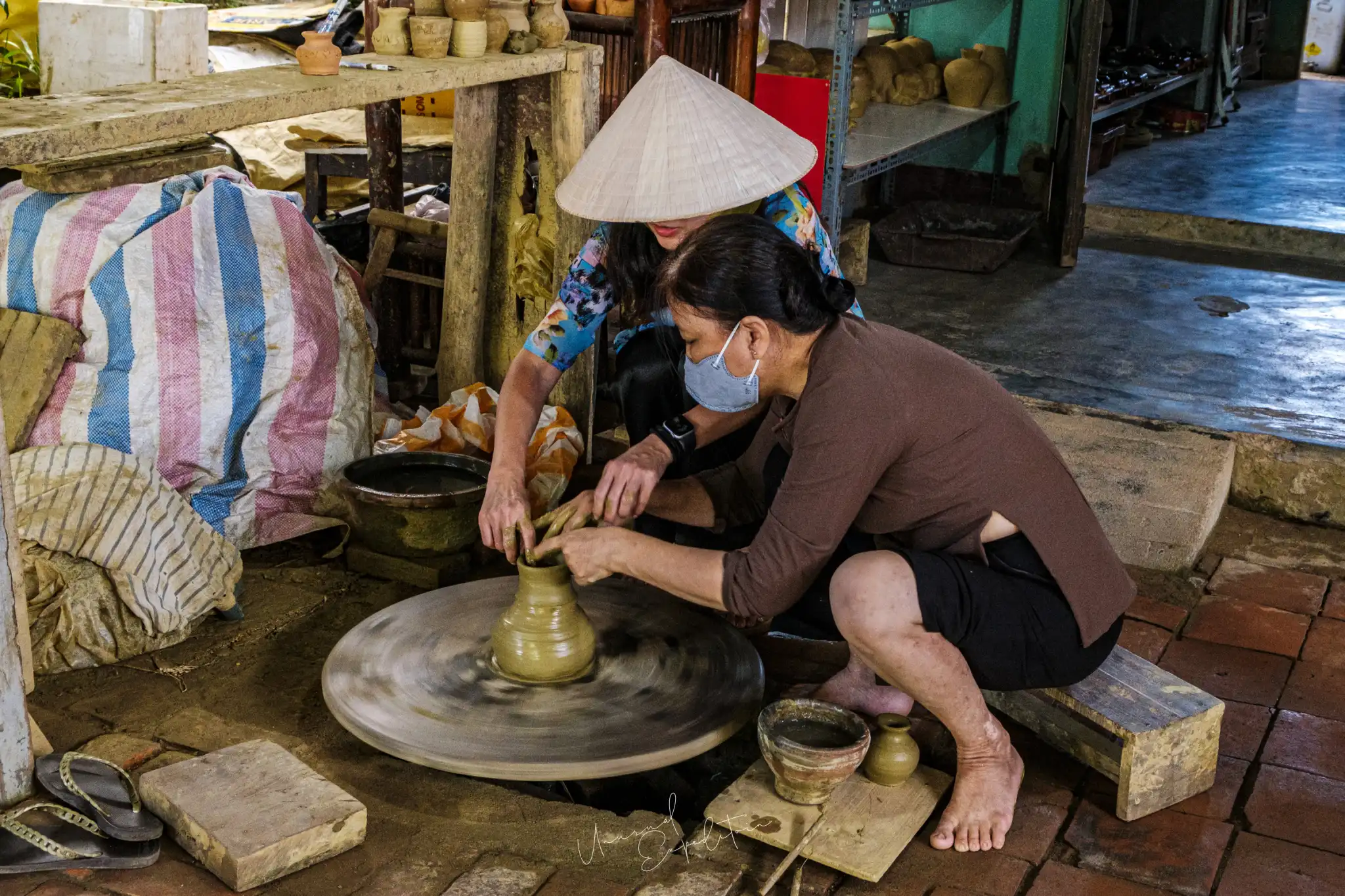
Hoi An's old money came from trade, and the villages that supplied it are still working. Thanh Ha, upriver, makes pottery on kick wheels in open sheds; Kim Bong, across the water, builds boats and furniture; Tra Que, towards the beach, grows herbs in beds so neat they read as pattern from the air; and mat weavers in the villages to the south still work on floor looms. All of them welcome photographers if you ask first and buy something after, and all of them give you people working with their hands in good window light, which is the kind of picture that outlasts a lantern. A 24-70mm covers the sheds; take a 70-200mm only if you want the hands alone.
| Subject | Where | Light that works | Lens |
|---|---|---|---|
| Yellow walls and lanes | Tran Phu, Nguyen Thai Hoc, the side lanes | First hour of day, blue hour | 24-70mm |
| Lanterns and boats | Bach Dang quay, An Hoi bridge | Twenty minutes after sunset | 24-70mm, wide open |
| Fishing fleet | Lower Thu Bon towards Cua Dai | Afternoon side light | 24-70mm, 70-200mm |
| Crafts | Thanh Ha, Kim Bong, mat weavers | Window light any time | 24-70mm |
| Vegetable beds and coconut forest | Tra Que, Cam Thanh | Mid morning from the air | Drone, with a permit |
The pattern is the same as most towns: the postcard subject is the smallest part of the day, and the working edges give the pictures with people in them.
"Everyone comes to Hoi An for the lanterns and goes home with the same photo as everyone else. The frames I keep from Hoi An are a potter's hands, a blue boat on the river at four in the afternoon, and the roofs from above. The lanterns are the dessert."
Joseph Mak, tour leader, Unusual Expedition
Weavers, markets and the people of the town
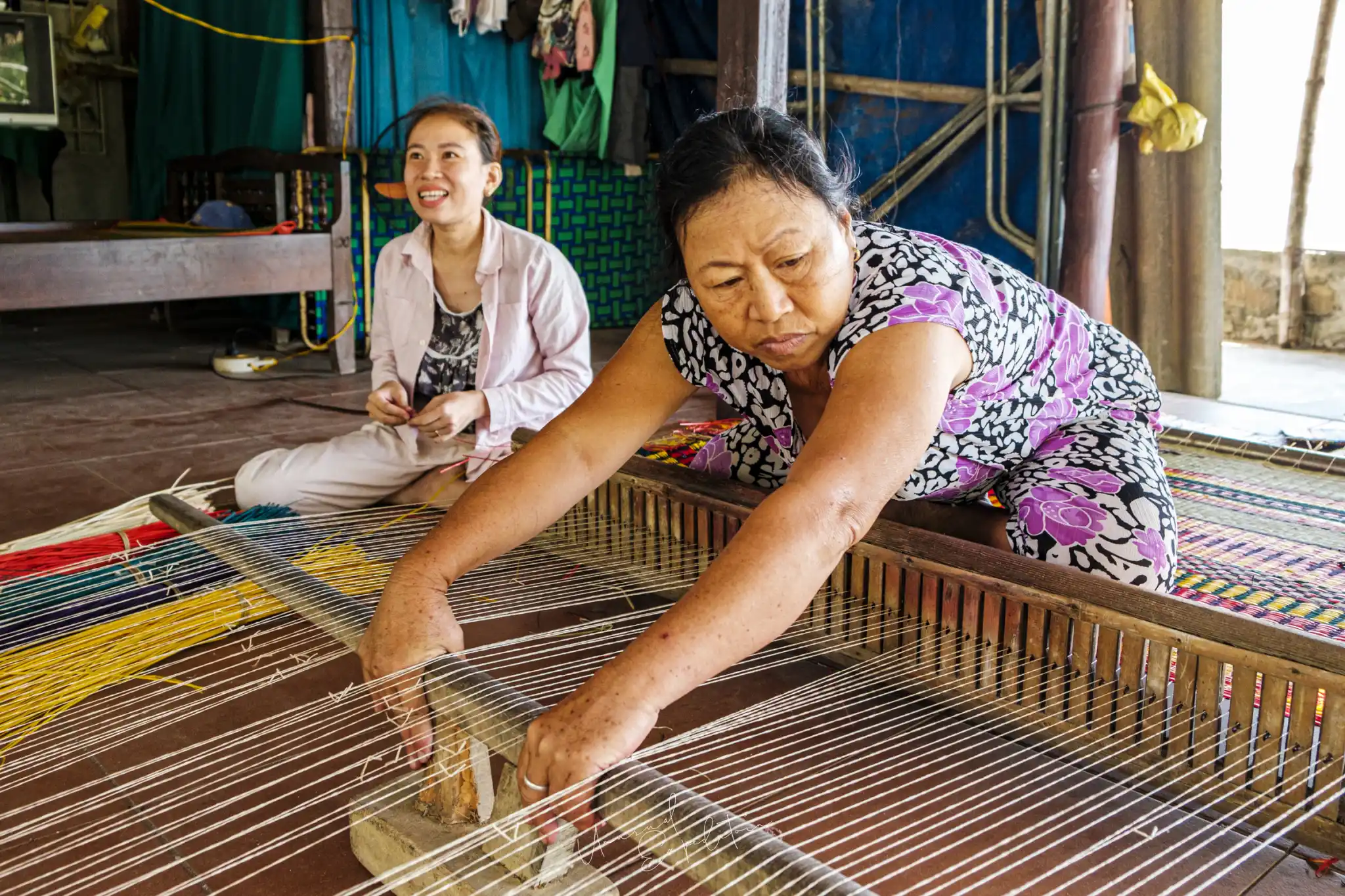
The mat weavers work in pairs on a floor loom, one feeding the rush and one beating it down, and they are used to visitors because the craft tours bring people through. The market women on Tran Phu are less used to cameras at close range, so a 70-200mm from across the lane is kinder than a wide lens in the face. Ask before a portrait, show the picture afterwards, and buy the mango. These are the same manners we ask of guests on the lantern evenings, where the boat women have had a long day by the time the light is right.
Is Hoi An worth photographing after all the Instagram pictures?
Yes, with the same rule that applies to Venice: get up early, stay out late, and walk past the parts that are performing for you. The old town is small enough to cover on foot in a morning, the river and the villages are a short ride away, and the light on the central coast is dependable from late winter through to the end of summer. UNESCO listed the town in 1999, the Japanese Covered Bridge was restored in 2024, and the lantern evenings now run most nights of the week, so the town is well looked after and well managed. What it needs from a photographer is patience and a willingness to leave the lanterns behind for the harbour and the villages.
Photograph Hoi An with us
Hoi An is the heart of the Central Vietnam photo tour, which runs north from Saigon along the coast and spends several days around the town, its villages and the lagoons beyond. The Vietnam photography tour page has the current departure. For a quieter version with a partner, see the older piece on a Hoi An private tour for couples.
Join the Vietnam photography tour
Mekong And Central Highland Vietnam Photo Tour - Vietnam departs 16 Jan 2027 To 24 Jan 2027, led by Joseph Mak. Small group, photography first. All Vietnam photography tours.
Explore Vietnam in depth
- Vietnam Photography Tour: The Complete GuideVietnam
- Vietnam Photography Trip FAQVietnam
- The Best Time to Visit Vietnam for Photography, Region by RegionVietnam
- Vietnam Tour from Singapore: Flights, Visa and What to ExpectVietnam
- Sapa, Mu Cang Chai or Ha Giang: Which Northern Mountains to PhotographVietnam
- Mu Cang Chai Rice Terraces: Photography, Best Time and How to Get ThereVietnam
- Ninh Binh Photos: Is It Worth Visiting and How to Get There from HanoiVietnam
- Hue Photo Tour: the Citadel, the Tombs and the LagoonVietnam
- Dalat and the Central Highlands: Photos of Mist, Farms and the Elephant VillagesVietnam
- Vietnam Salt Fields and Fishing Villages: Photos from the South Central CoastVietnam
- Mekong Delta Photography Tour: the Can Tho Floating Market and the WaterwaysVietnam
- Saigon Photos: Markets, the River and the City at NightVietnam
Upcoming Photo Tours
- Egypt Photo Tour – EgyptEgypt 12 Dec 2026 To 20 Dec 2026
- Inner Mongolia Winter Owl Photo Tour – ChinaChina 01 Jan 2027 To 04 Jan 2027
- Inner Mongolia Winter Photo Tour – ChinaChina 05 Jan 2027 To 11 Jan 2027
- Mekong And Central Highland Vietnam Photo Tour - VietnamVietnam 16 Jan 2027 To 24 Jan 2027