
Huangling Village Photos: Shaiqiu Drying Racks and Lanes, Wuyuan
Huangling village photos and tips: shaiqiu drying racks, the view down the slope, old lanes and the best season to go in Wuyuan.
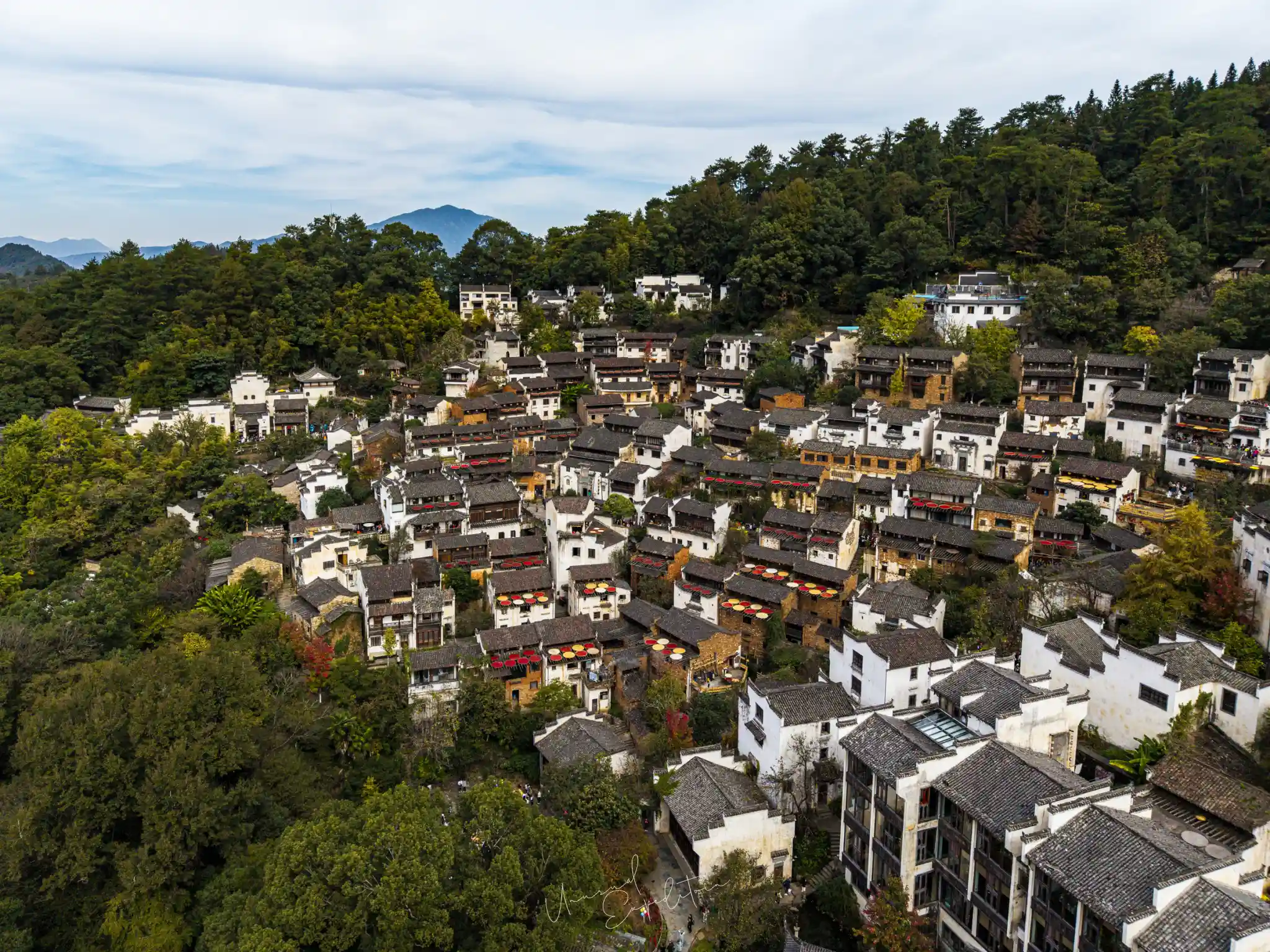
Huangling village is a terraced Huizhou village on a hillside in Wuyuan county, Jiangxi, and it is best known for shaiqiu: in autumn the villagers spread chillies, maize, chrysanthemum and beans in round bamboo trays on racks and rooftops to dry. Seen from above, the whole slope turns into a pattern of red, yellow and white circles against black tiles. For photographers, Huangling is two subjects in one place: the drying trays up close, and the village as a shape on the hill.
Huangling is one stop in our Wuyuan and Huangshan photography tour guide, which covers the wider region, the seasons and Huangshan itself.
Where is Huangling village in Wuyuan?
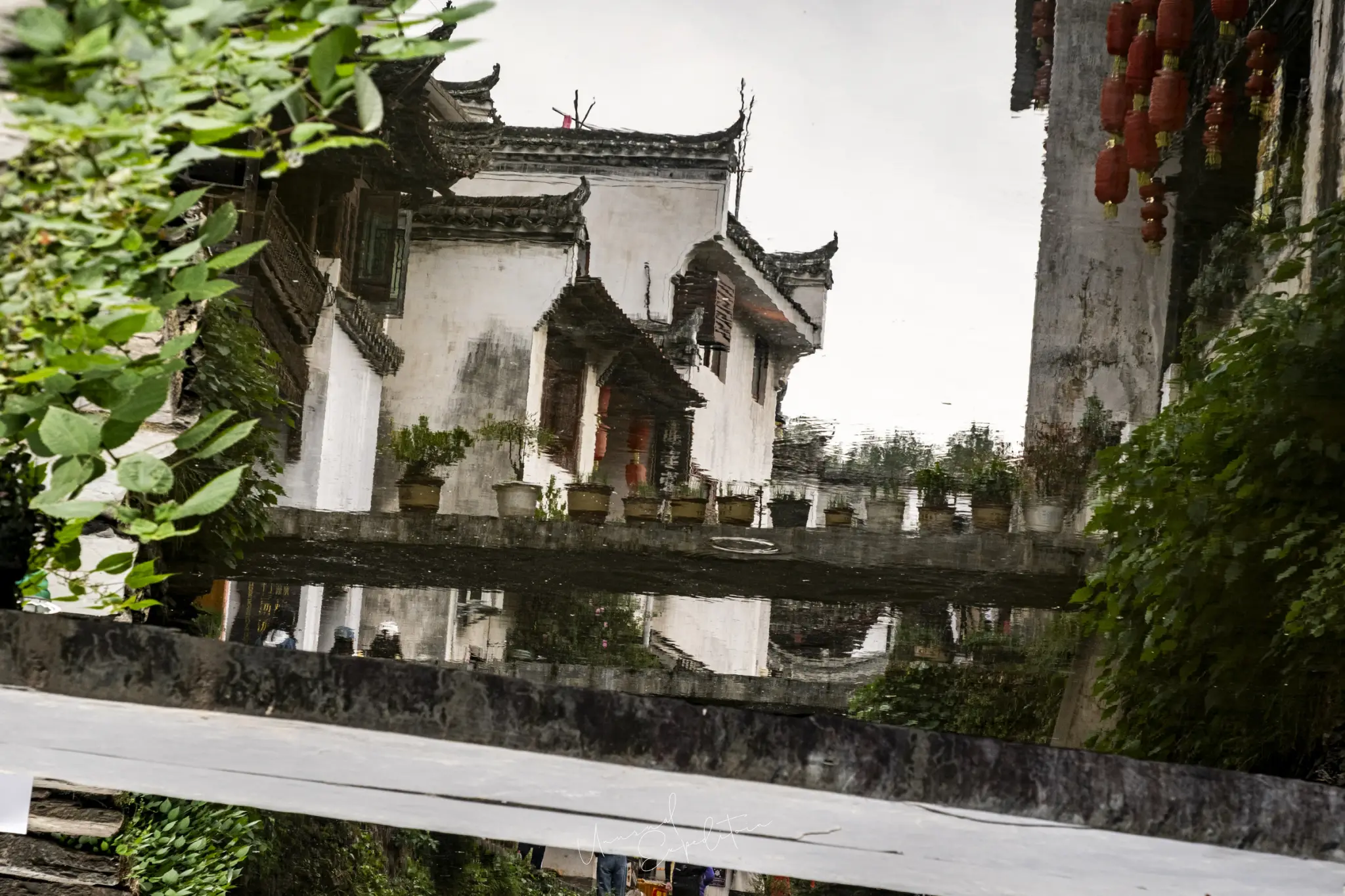
Huangling sits in the hills of Wuyuan county in north-east Jiangxi, close to the Anhui border, in the same Huizhou cultural area as Hongcun and Xidi, the two villages UNESCO lists as World Heritage.Huangling village houses climb the slope in steps: white walls, black tiles and horse-head gables, with narrow lanes running across the hill and stone steps between them. Most visitors reach the upper village by cable car from the scenic area entrance, and a road and footpaths also link the lower and upper parts. People's Daily, reporting on the village in 2024, described shaiqiu as a farming custom that has become a draw for visitors from all over China. The village is now a managed scenic area with a ticket, so check the current arrangements before you go.
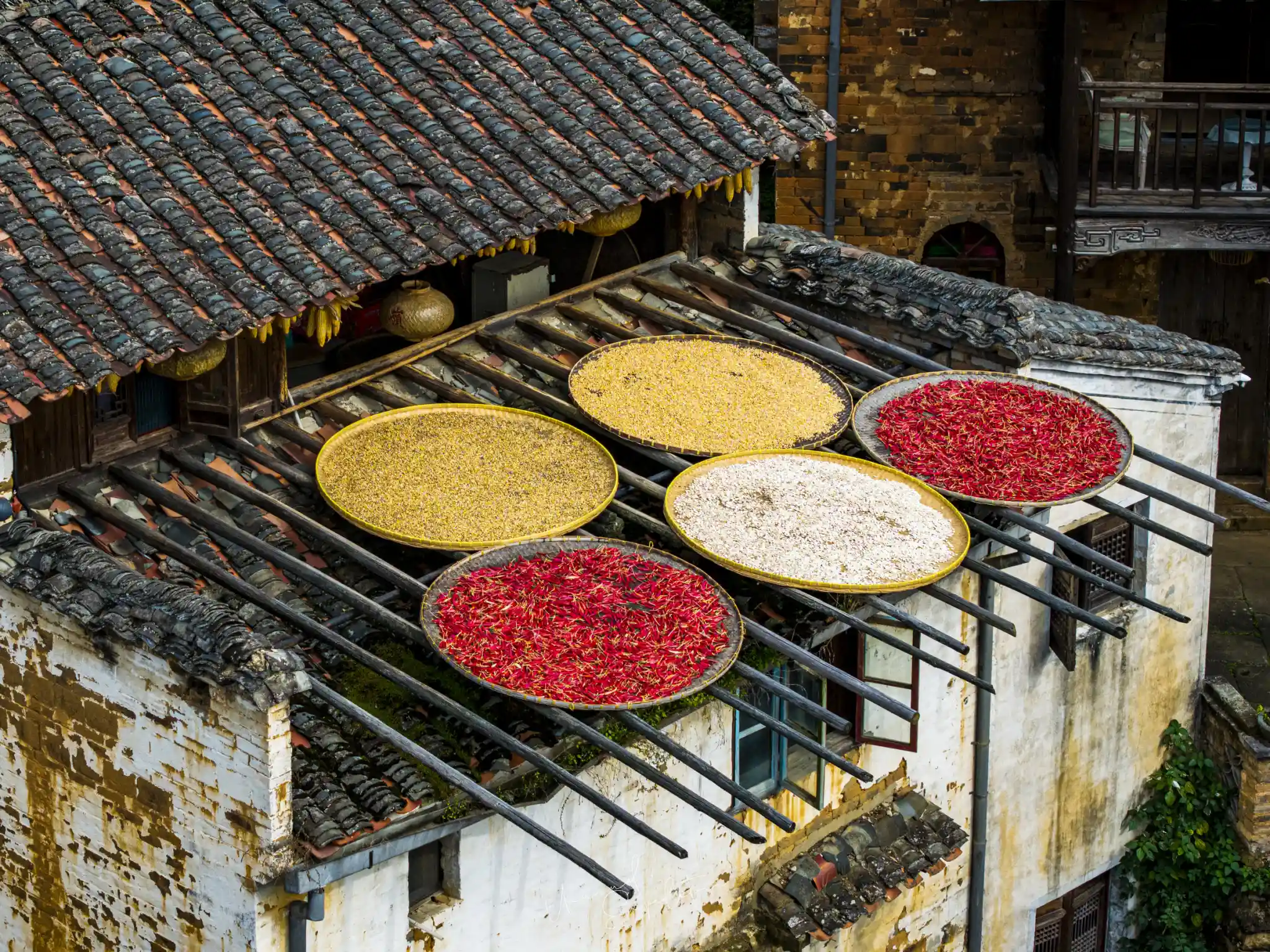
Huangling shaiqiu: what you are photographing
Shaiqiu (晒秋) means drying the autumn harvest in the sun. Huangling shaiqiu is a real farming habit before it is a show: houses on a steep slope have little flat ground, so families built wooden frames out from the upper windows and laid their crops on them in flat bamboo trays. Red chillies, golden maize, yellow chrysanthemum and pale beans sit side by side. In the main lanes the trays are now arranged with an eye for colour, because visitors come for exactly that, but the drying is still real. The best Huangling village photos treat the trays as graphic shapes: circles in rows, a red tray against a black roof, a hand turning chillies. Shoot both the overall pattern and the details, and keep people in a few frames so the place does not look like a set.
Huangling ancient village from above
Much of Huangling's fame comes from the view down the slope, where the drying racks and rooftops stack up like terraces. A viewing area above the village gives the classic angle across the houses, and the upper lanes let you look straight down onto the racks of the houses below. Huangling ancient village works best from above in soft side light, when the black tiles keep some texture and the red trays do not burn out. A 24-70mm covers most of it; a longer lens picks out single racks across the slope. Drone rules in the scenic area are controlled, so do not assume you can fly: ask the scenic area first, and follow what they say.
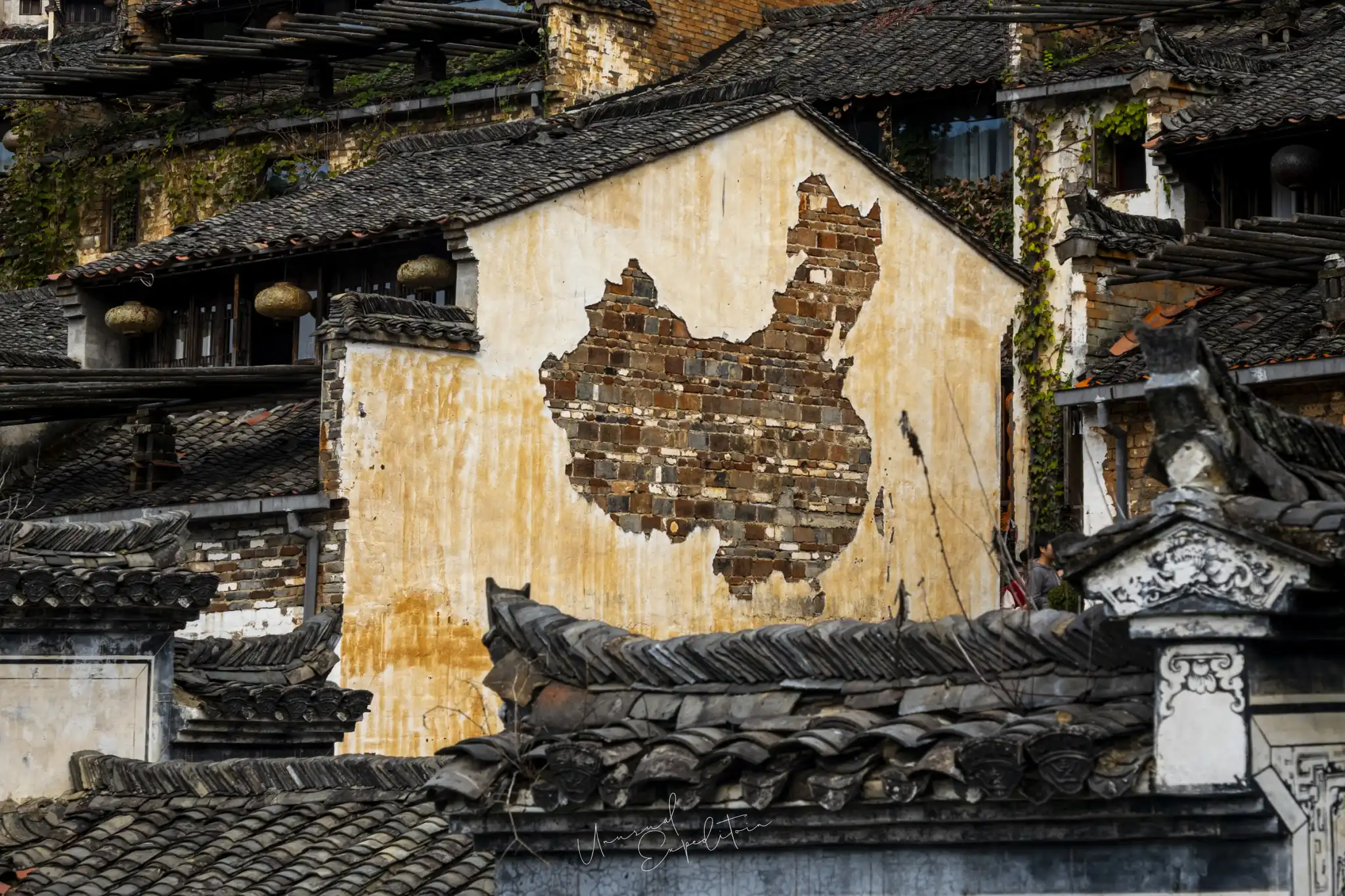
Walls, lanes and doorways
Away from the drying racks, Huangling rewards slow walking. Old plaster walls have flaked into shapes that people stop to point at, wooden doors carry faded couplets, and the lanes turn corners every few metres. Huangling lanes are narrow, so light reaches them only for part of the day: when the sun is high, work in the shade and look for reflected light off the white walls. A fast prime or the 24-70mm at its wide end is enough. Respect the homes: many houses are still lived in, and an open door is not an invitation to walk in.
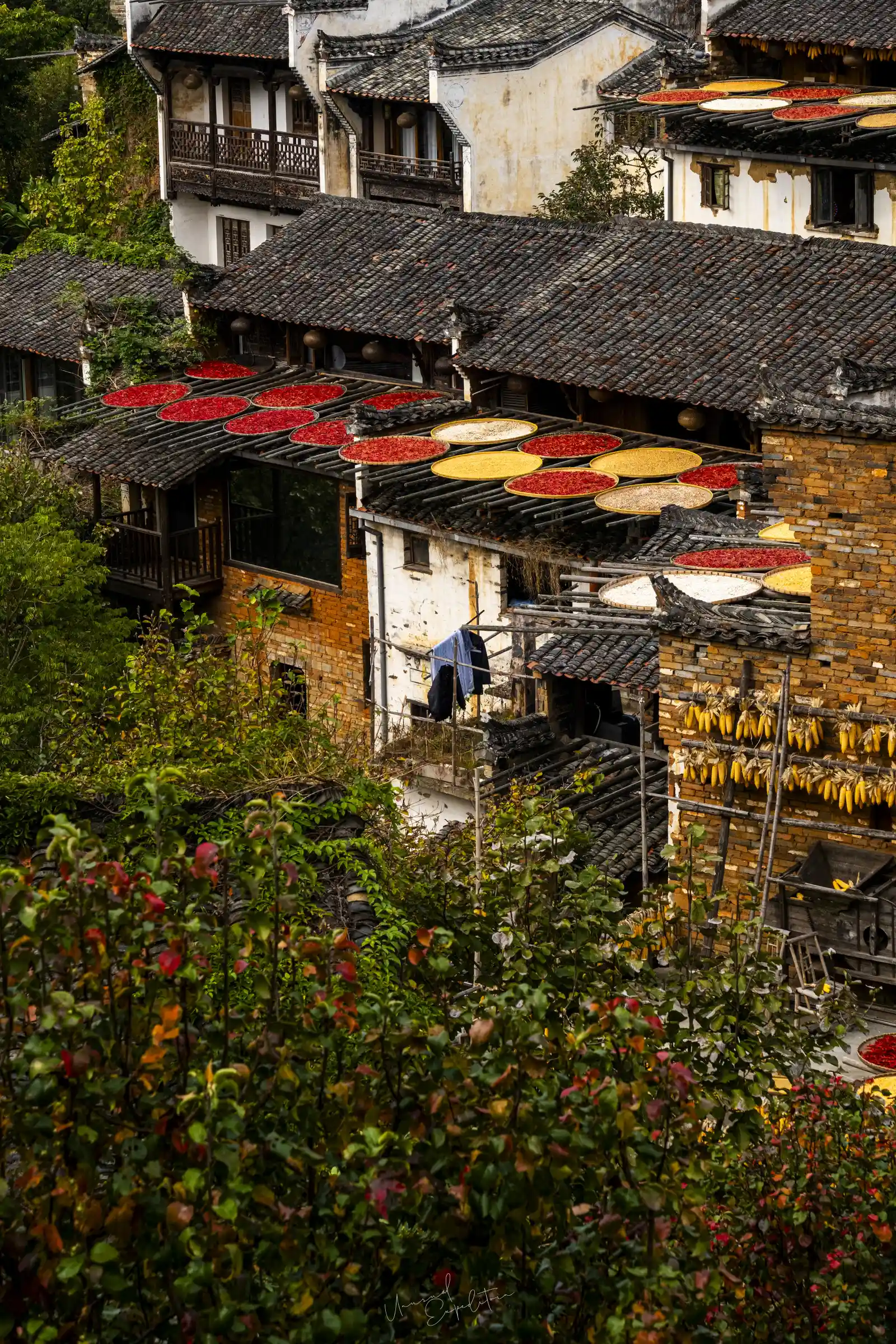
Best time to photograph Huangling
Huangling changes with the farming year. Autumn is the season for shaiqiu, and our own frames come from a November trip, when the trays were full and the maples around Wuyuan were turning. Spring brings rapeseed below the village, which makes a different picture: yellow fields under white walls. Light matters more than season for the drying racks. Morning and late afternoon give side light across the trays; the middle of the day flattens everything. The table gives a simple guide.
| Season | What you see at Huangling | Best light |
|---|---|---|
| Spring | Rapeseed terraces below the village | Morning, soft haze |
| Summer | Green hills, fewer drying trays | Early and late, avoid midday |
| Autumn | Shaiqiu at its fullest, autumn colour | Side light, morning and late afternoon |
| Winter | Quiet lanes, occasional frost | Low sun all day |
For the full picture of Wuyuan's seasons, see best time to visit Wuyuan.
Everyone photographs the red trays from the platform and leaves. Walk the upper lanes instead. You find the women turning the chillies by hand, the trays half empty, a cat asleep on a rack. That is the village, and the colour is still there.
Joseph Mak, tour leader, Unusual Expedition
Huangling village photography tips
Huangling is busy on weekends and national holidays, and the main lanes fill quickly once the cable car is running. Arrive early, photograph the overall views first, then work the lanes as the light moves. Shoot raw: the reds of the chillies clip easily, so expose for the brightest tray. A polariser can cut glare on the tiles, but take it off in the shade. Ask before you photograph anyone at work, and accept a no with a smile. Buying a bag of dried chillies or chrysanthemum tea is a fair way to say thank you.
Huangling and the rest of Wuyuan
Huangling pairs naturally with the river villages and stone bridges elsewhere in Wuyuan, which you can see in Wuyuan photos, and with the granite peaks of Huangshan across the border in Anhui. Most people coming from Singapore fly to Shanghai or Hangzhou and continue by high-speed rail to Wuyuan; our guide on how to get to Huangshan from Singapore covers the options without the guesswork.
Photograph Huangling with us
We run Wuyuan and Huangshan as private photography trips for small groups, timed for shaiqiu and autumn colour or for spring rapeseed. Ask us about dates, and see scheduled departures on our China photography tours page.
Join the Wuyuan and Huangshan photography tour
Inner Mongolia Winter Owl Photo Tour – China departs 01 Jan 2027 To 04 Jan 2027, led by Joseph Mak. Small group, photography first. All Wuyuan and Huangshan photography tours.
Explore Wuyuan and Huangshan in depth
- Wuyuan and Huangshan Photography Tour GuideChina
- Iron Flower Show in China: What It Is and How to Photograph ItChina
- Huangshan Pine Trees: The Welcoming Pine, Rime and How to Shoot ThemChina
- Wuyuan Photos: Huangling, Jiangling and the River VillagesChina
- Huangshan Sunrise: Photo Spots, Sea of Clouds and Winter RimeChina
- How to Get to Huangshan and Wuyuan from SingaporeChina
- Wuyuan Best Time to Visit: Rapeseed in March or Shaiqiu in NovemberChina
Upcoming Photo Tours
- Egypt Photo Tour – EgyptEgypt 12 Dec 2026 To 20 Dec 2026
- Inner Mongolia Winter Owl Photo Tour – ChinaChina 01 Jan 2027 To 04 Jan 2027
- Inner Mongolia Winter Photo Tour – ChinaChina 05 Jan 2027 To 11 Jan 2027
- Mekong And Central Highland Vietnam Photo Tour - VietnamVietnam 16 Jan 2027 To 24 Jan 2027