
Iron Flower Show in China: What It Is and How to Photograph It
The iron flower show in China, da tie hua: molten iron struck into sparks at night. What it is, when it runs and camera settings.
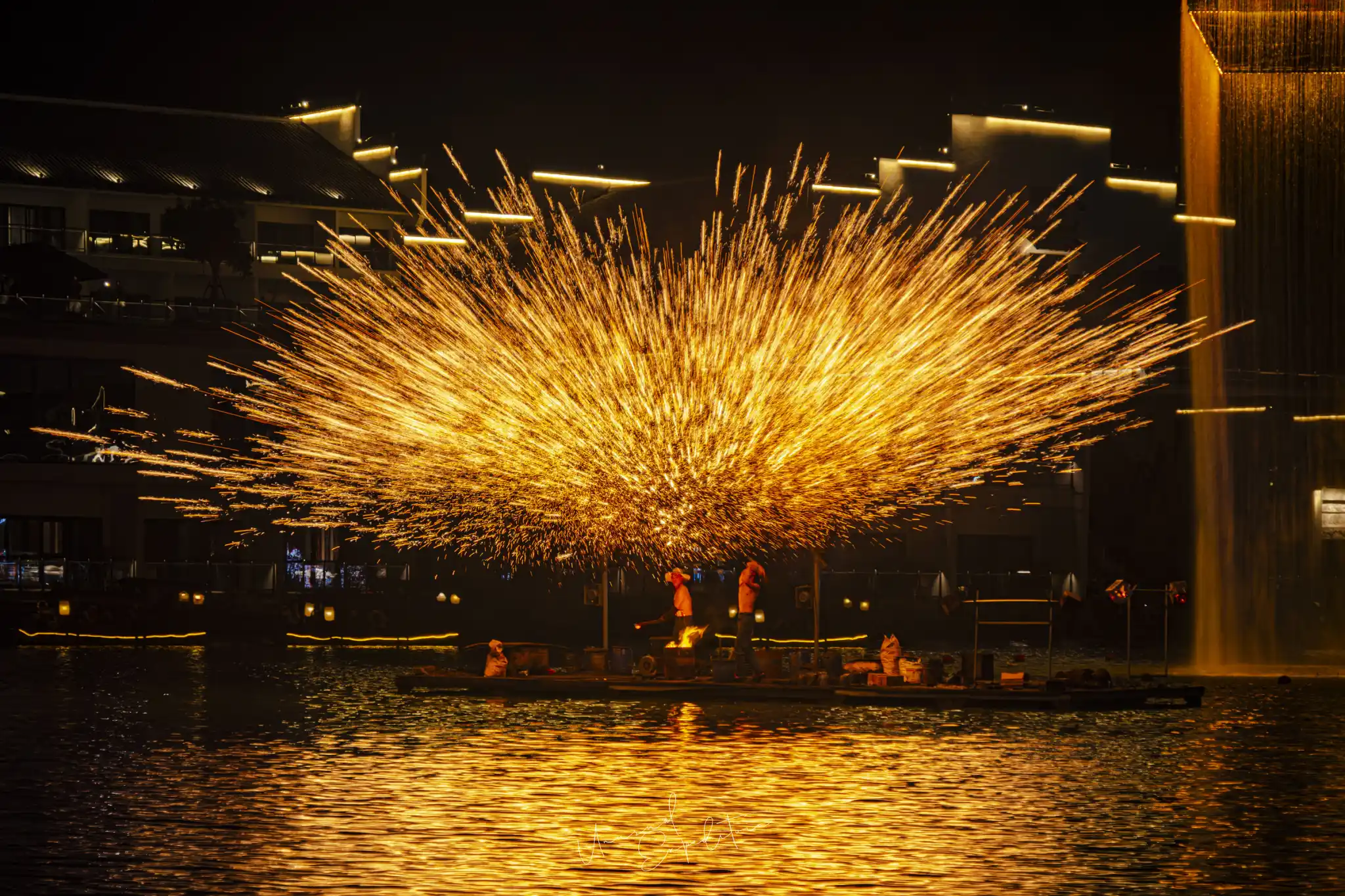
An iron flower show in China, da tie hua (打铁花), is a night performance in which molten iron is flung into the air and struck with a wooden bat, so it bursts into a shower of sparks that looks like a giant firework. The iron flower of Queshan in Henan was placed on China's national list of intangible cultural heritage in 2008. Today shows run at festivals and in scenic areas across the country, and we photographed one over water on the first evening of our Wuyuan and Huangshan trip.
The iron flower show is a night session within our Wuyuan and Huangshan photography tour guide; for the daytime side of the region, start there.
What is an iron flower show?
An iron flower show begins with a small furnace. Performers melt scrap iron until it runs like water, ladle it out, and throw it upward, where a second performer strikes it hard with a bat or a board. The molten metal breaks into thousands of droplets that glow orange as they fly and fade as they cool. Wikipedia's entry on the craft gives the metal temperature as about 1,600 degrees Celsius, which is why the performers wear protective clothing or broad straw hats, and why spectators are kept well back. Shows are often staged beside water or under a frame of branches, so the sparks bounce, spread and reflect. The tradition is centuries old and belongs to festival nights, when towns and temple fairs put on their biggest shows.
Iron flower festival in China: where and when
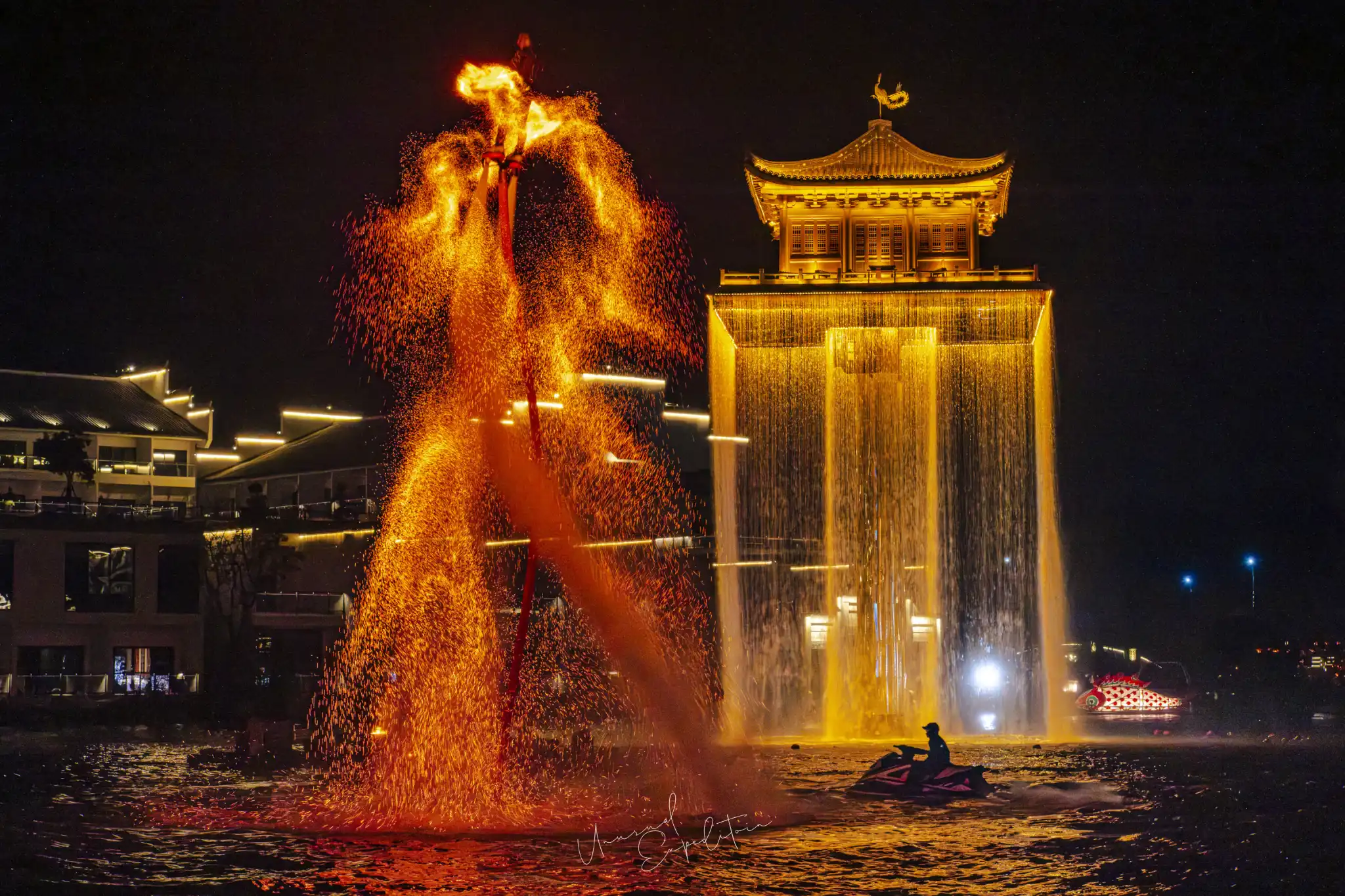
Iron flower shows in China are traditionally tied to the Spring Festival and the Lantern Festival, when temple fairs and towns put on performances. Henan's Queshan and the Dashuhua of Nuanquan in Hebei are the best-known traditions, and their shows draw large crowds. Outside festival time, many scenic areas and ancient towns now stage iron flower shows on set evenings for visitors, often with music and lighting, as the one we saw was. Schedules change by season and are announced locally, so check with the venue or your guide on the day rather than relying on a fixed calendar. Arrive early: the best places along the front fill well before the first strike.
How to photograph an iron flower show
An iron flower show is a fast, bright, unrepeatable subject, and the exposure is simpler than it looks. Set up on a tripod facing the performance area, frame wide enough to allow for sparks spreading further than you expect, and focus manually on the spot where the iron is struck. Then choose your shutter speed by the look you want: a short exposure freezes individual sparks as points, while a longer one draws them into lines and arcs. Keep ISO low and the aperture moderate, because the sparks are much brighter than the scene around them.
| Look | Shutter | Notes |
|---|---|---|
| Frozen sparks | Fast, a fraction of a second | Higher ISO, shows the performer |
| Spark trails and arcs | One to two seconds | Tripod, low ISO |
| Layered bursts | Several seconds | Builds up several strikes in one frame |
| Reflection in water | One to four seconds | Include the waterline, level horizon |
Use a remote release or the self-timer, shoot continuously through each strike, and check the highlights on the screen: if the brightest sparks are pure white with no orange, close down a stop.
Lenses and position
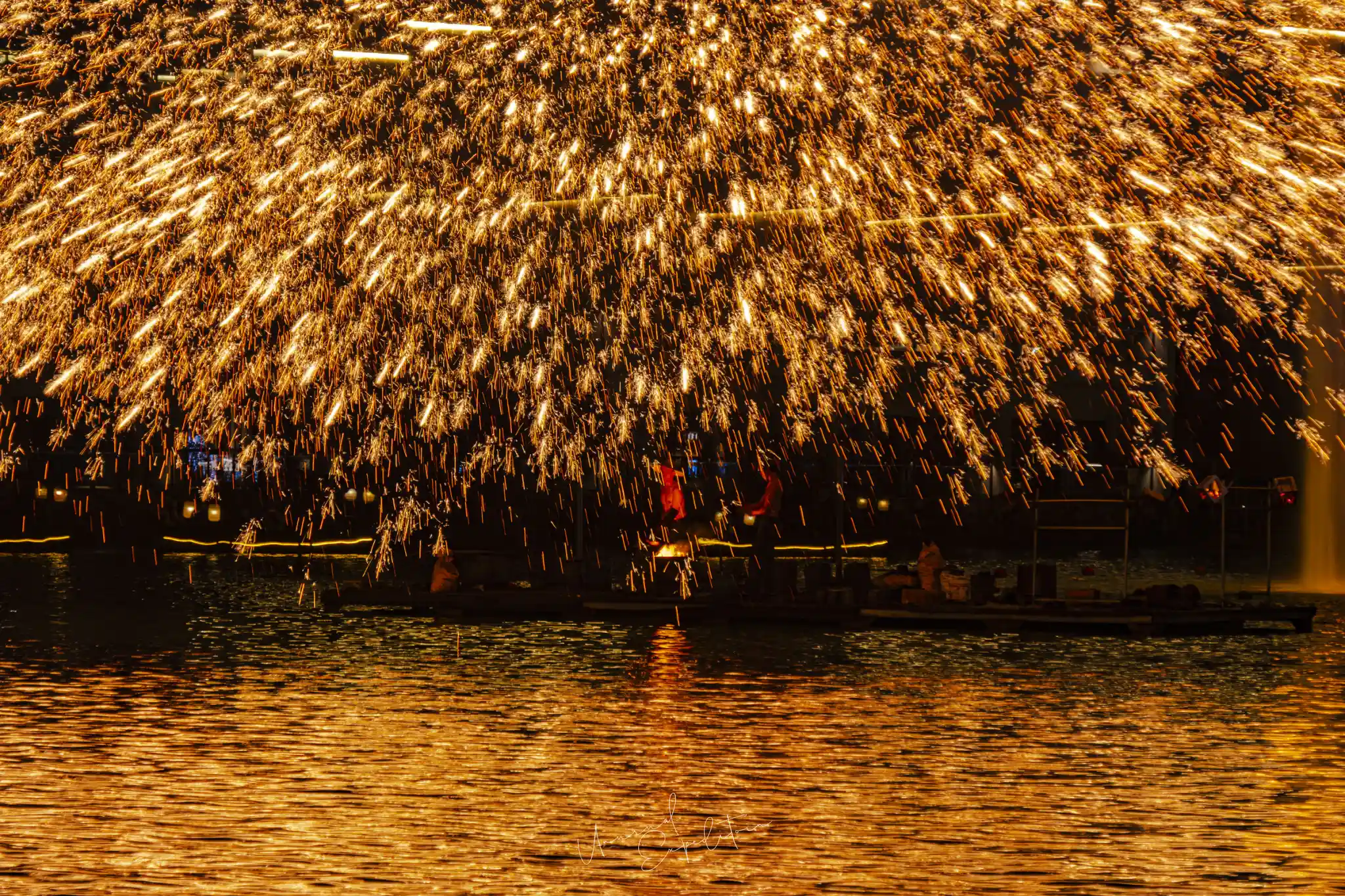
A 24-70mm covers most iron flower shows: wide for the full spray and the setting, tighter for the performer and one burst. A telephoto helps if you are stuck at the back. Position matters more than kit. Stand where the sparks will be backed by darkness rather than by floodlights, and slightly to one side, so the arcs cross the frame instead of coming straight at you. If the show is over water, get low to include the reflection. Wind changes everything: the sparks drift downwind, so stand upwind for safety and shoot across the drift.
The first strike always catches people out. They have the exposure for the lit tower, and then the whole frame turns to light. Take one test frame on the first burst, fix it, and then stop looking at the screen. There are only so many throws.
Joseph Mak, tour leader, Unusual Expedition
Safety and etiquette at the show
Molten iron is dangerous, and the barriers at an iron flower show are there for your skin and your camera. Stay behind them even if the crowd pushes. Synthetic jackets can melt if a spark lands, so cotton or wool is safer near the front, and a cap protects your hair. Keep a lens hood on to shield the front element. Do not use flash: it ruins other people's photographs and adds nothing to yours. Tripods take space, so set up early, keep the legs tight, and give way to families who want to watch.
Adding an iron flower show to a trip
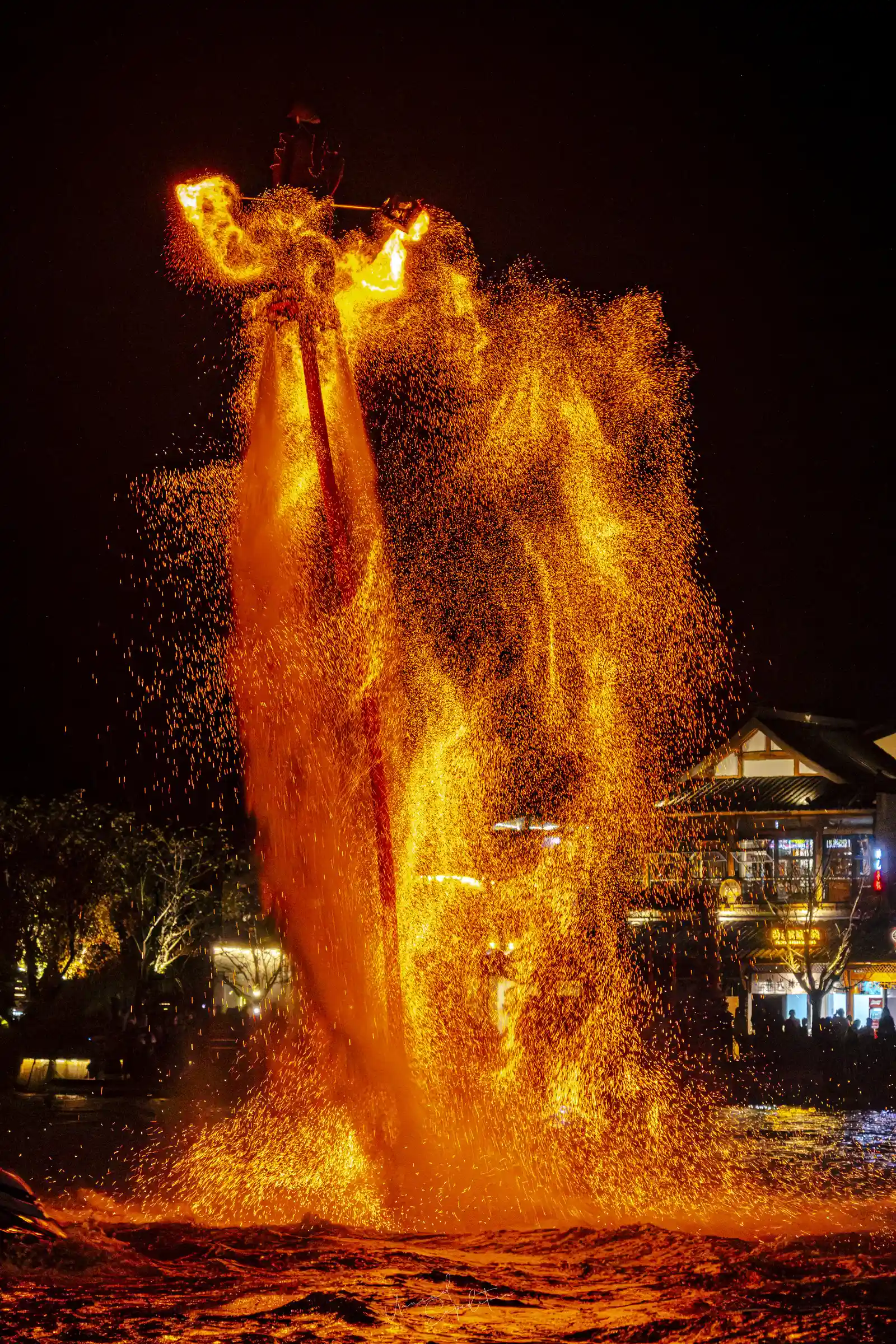
An iron flower show fits easily into a photography trip, because it happens after the light has gone and costs no daytime shooting. On our trip it opened the week before the villages of Wuyuan and the peaks of Huangshan at sunrise. If you plan your own, ask locally which evenings have a show, check the weather, because rain or strong wind can cancel it, and keep the next morning gentle: the show finishes late.
Iron flower show photos: what to aim for
The strongest iron flower show photos have a shape, a person and a place. A shape, because a good strike opens into a fan, a dome or a rain of light, and that form is what the eye reads first. A person, because a small silhouette of the performer under the sparks gives the scale and the danger. A place, because a lit gate, a bridge or a reflection in water tells the viewer where this happened. You rarely get all three in one frame, so work through the show: wide frames first, then tighter ones once you know where the bursts land.
See an iron flower show with us
We include night sessions like this one in private China photography trips where the timing allows. Ask us about dates, and see scheduled departures on our China photography tours page.
Join the Wuyuan and Huangshan photography tour
Inner Mongolia Winter Owl Photo Tour – China departs 01 Jan 2027 To 04 Jan 2027, led by Joseph Mak. Small group, photography first. All Wuyuan and Huangshan photography tours.
Explore Wuyuan and Huangshan in depth
- Wuyuan and Huangshan Photography Tour GuideChina
- Huangshan Pine Trees: The Welcoming Pine, Rime and How to Shoot ThemChina
- Huangling Village Photos: Shaiqiu Drying Racks and Lanes, WuyuanChina
- Wuyuan Photos: Huangling, Jiangling and the River VillagesChina
- Huangshan Sunrise: Photo Spots, Sea of Clouds and Winter RimeChina
- How to Get to Huangshan and Wuyuan from SingaporeChina
- Wuyuan Best Time to Visit: Rapeseed in March or Shaiqiu in NovemberChina
Upcoming Photo Tours
- Egypt Photo Tour – EgyptEgypt 12 Dec 2026 To 20 Dec 2026
- Inner Mongolia Winter Owl Photo Tour – ChinaChina 01 Jan 2027 To 04 Jan 2027
- Inner Mongolia Winter Photo Tour – ChinaChina 05 Jan 2027 To 11 Jan 2027
- Mekong And Central Highland Vietnam Photo Tour - VietnamVietnam 16 Jan 2027 To 24 Jan 2027