
Huangshan Pine Trees: The Welcoming Pine, Rime and How to Shoot Them
The Huangshan pine tree: the Welcoming Guest Pine, winter rime on the pines, where to find them and how to photograph them.
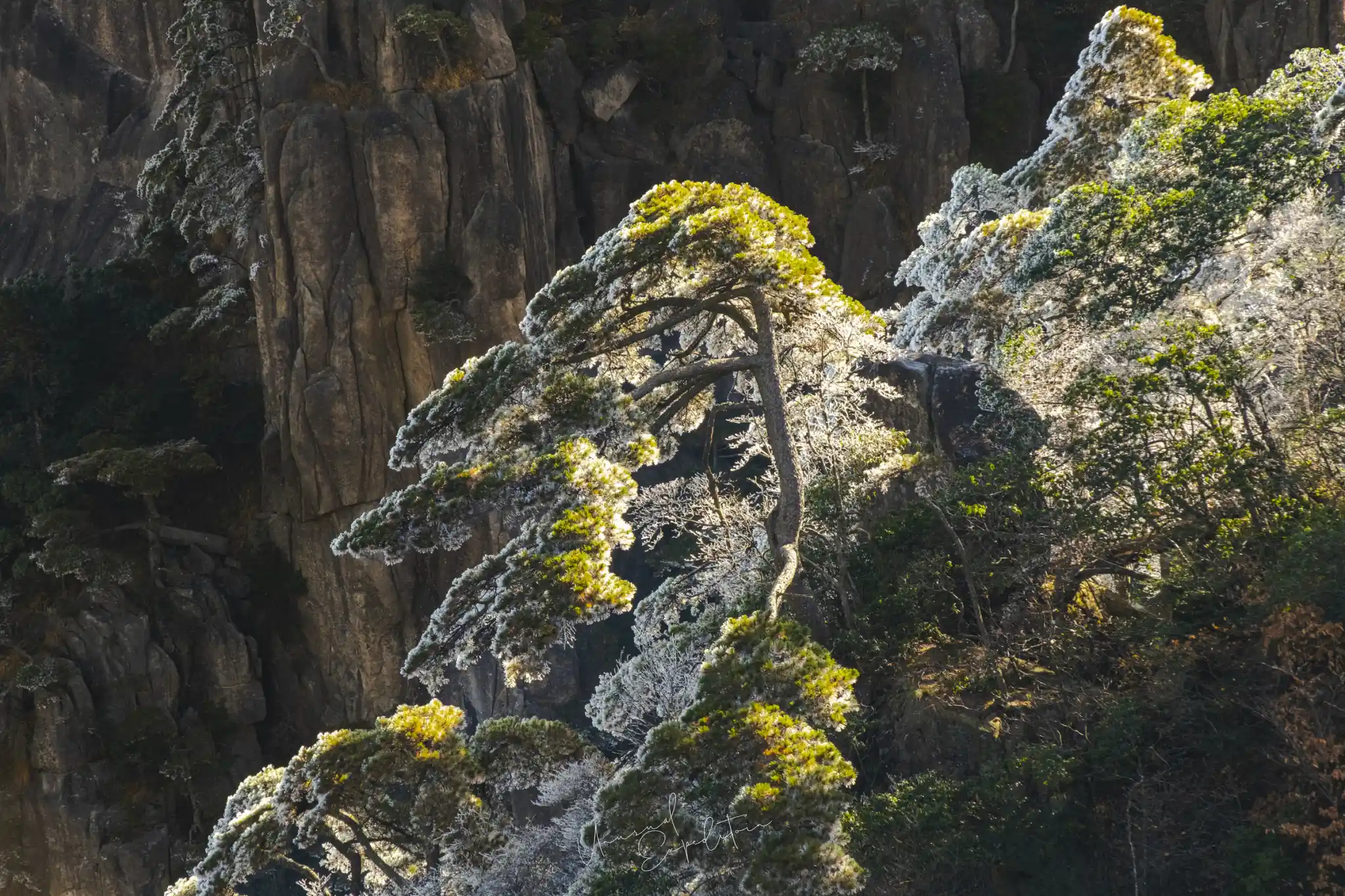
The Huangshan pine tree is the signature of Huangshan, the Yellow Mountain in Anhui: a flat-topped, wind-shaped pine that grows straight out of bare granite cliffs, often with no visible soil at all. China Daily lists the pines first among the mountain's four wonders, with the strange rocks, the sea of clouds and the hot springs. For photographers the pines are the subject that ties every Huangshan picture together, and in cold weather, when rime coats every needle in white, they become the picture on their own.
This guide sits under our Wuyuan and Huangshan photography tour guide, and it pairs with Huangshan sunrise photography for the peaks and clouds.
What makes the Huangshan pine special
The Huangshan pine is a species of its own, adapted to life on steep granite above the clouds. Huangshan pines root into cracks in the rock, grow slowly and spread sideways, so the oldest trees look like they were shaped by hand. UNESCO, in its listing of Huangshan as a mixed cultural and natural World Heritage site in 1990, describes the mountain as celebrated through Chinese art and literature for its granite peaks and its pines rising out of a sea of clouds. Many individual trees have names and stories, and painters have drawn them for centuries. That history is why Chinese visitors queue to photograph single trees, and why a well-framed pine still reads as Huangshan to anyone who sees it.
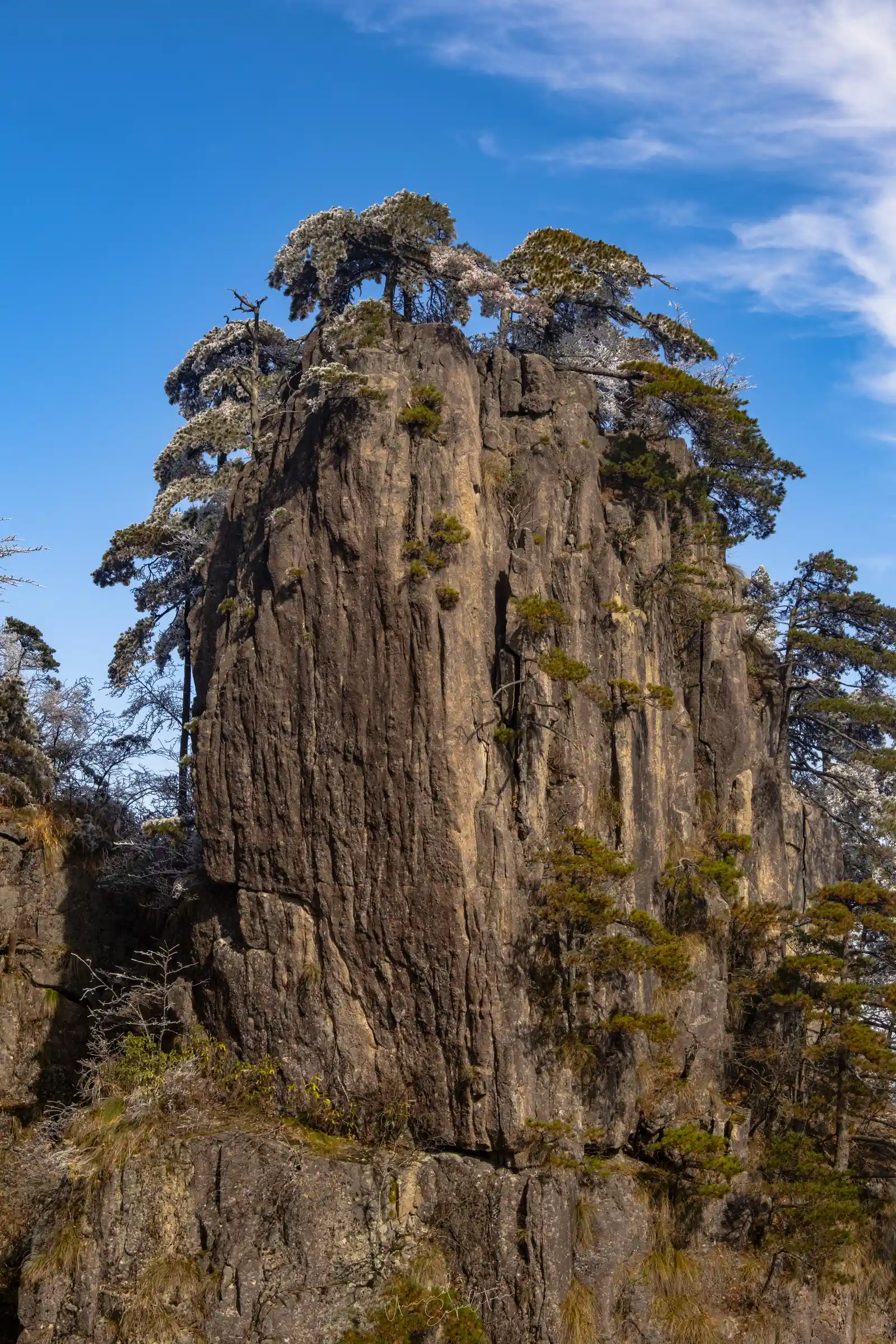
Huangshan welcoming pine
The Welcoming Guest Pine, beside Yuping Tower on the front side of the mountain, is the most famous single tree in China, with one long branch held out like an arm in greeting. China Daily puts its age at about a thousand years; other sources give different figures, so treat any exact number with care. The Huangshan welcoming pine is under constant protection, with its own caretakers, and the viewing area in front of it is small and crowded. Go early, accept that you share the view, and use a 24-70mm to show the tree with the rock and the drop around it rather than the tree alone. The lesser-known pines along the trails often make the better photograph, simply because you can stand where you want.
Huangshan in winter: rime on the pines
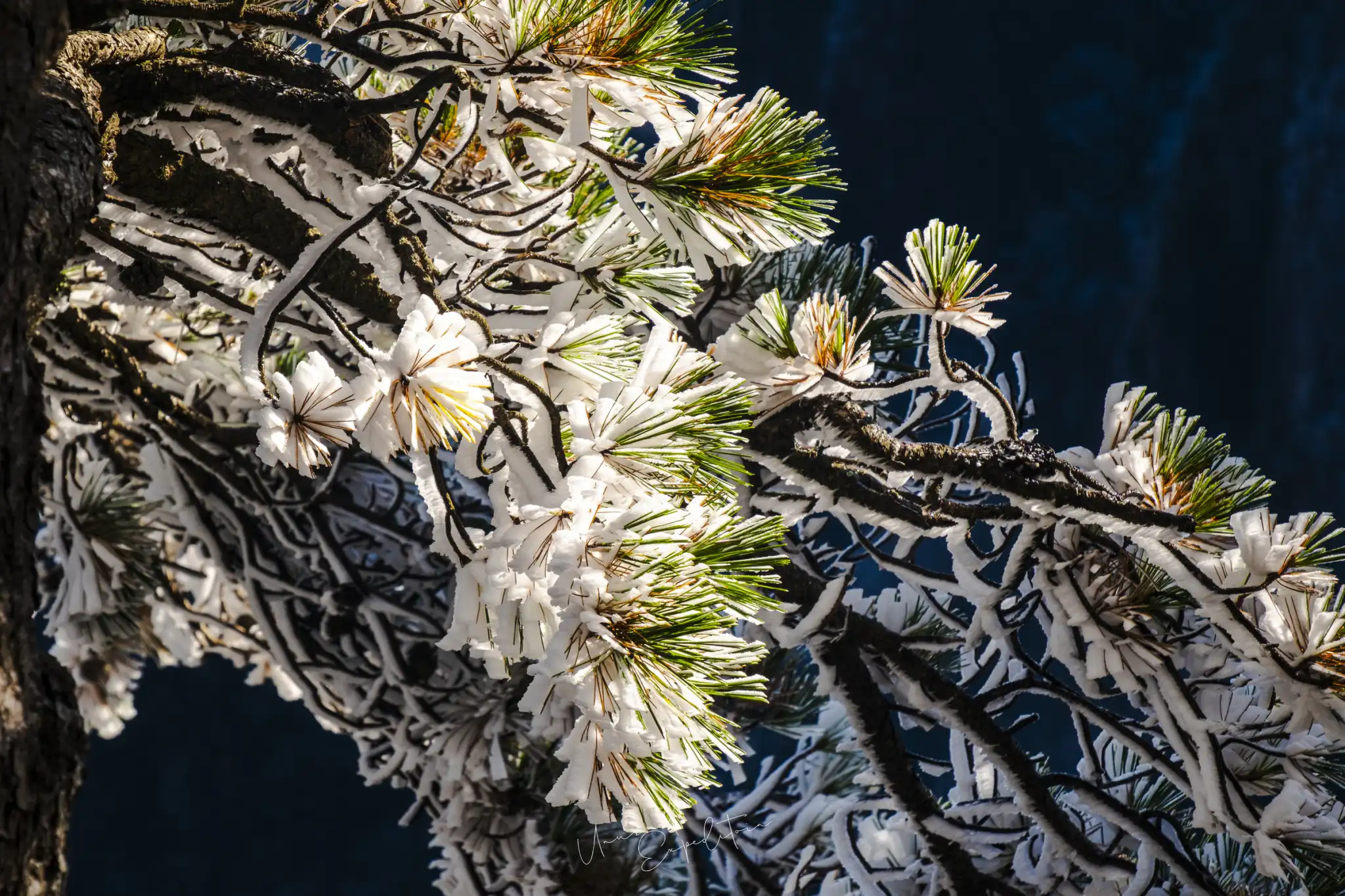
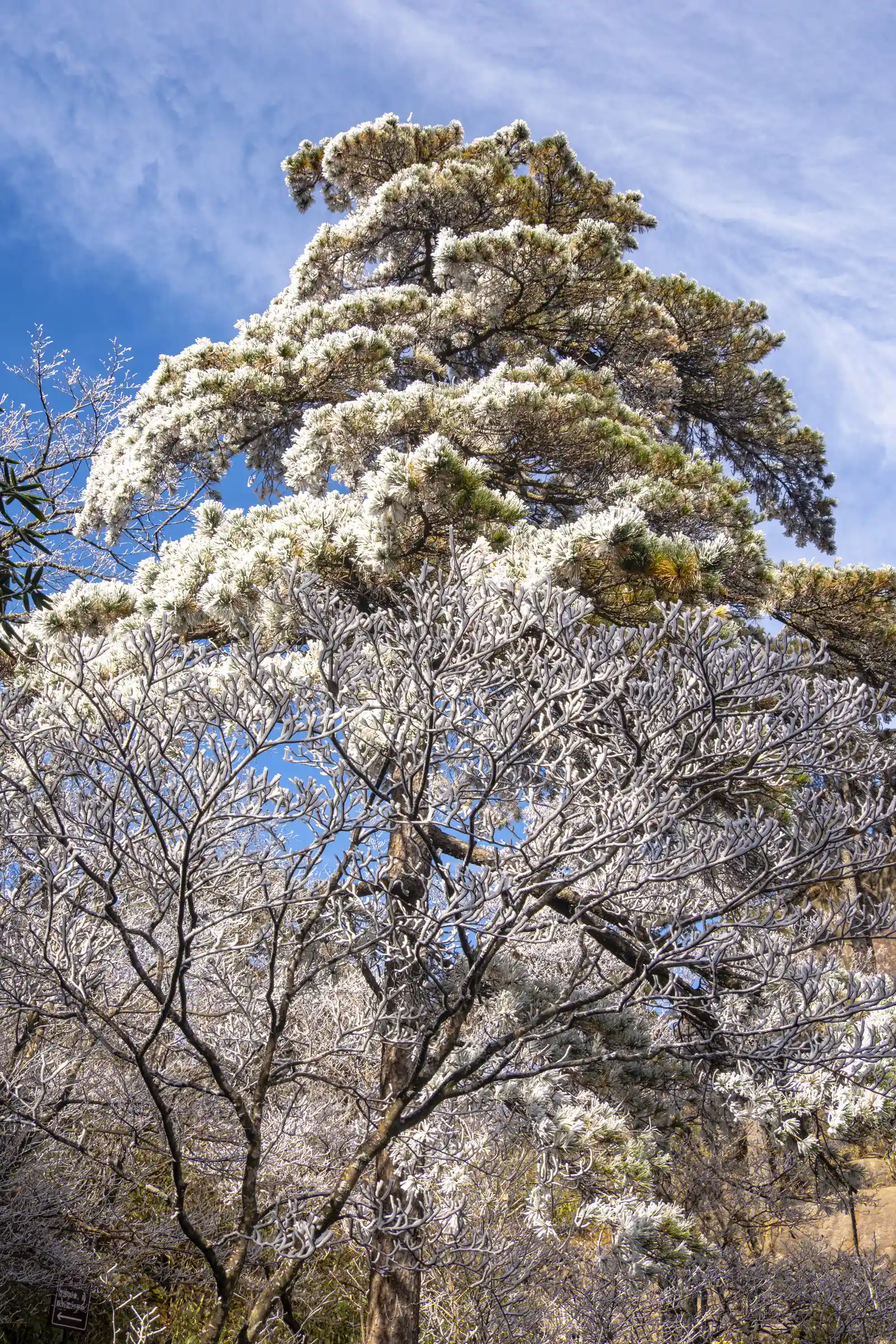
Rime, wusong in Chinese, forms when freezing fog meets the trees and builds white crystals on every needle and branch. Huangshan in winter, and in the first cold snaps of late autumn, can wake up to whole slopes of white pines against blue sky once the fog clears. Our frames here come from a November visit, when a cold front left the summit area covered in rime one morning and clear by the next. Rime is unpredictable: it needs cold, moisture and wind together, and it can melt within hours of sunshine. If you see fog in the evening forecast and freezing temperatures overnight, get out early the next morning.
How to photograph Huangshan pines
Huangshan pines are graphic subjects: a dark trunk, a flat crown and a lot of empty space. Simplify. Place the tree against sky, cloud or a shaded cliff, so the outline reads cleanly, and leave room on the side the branches reach toward. Backlight turns rime into glowing white and makes the needles sparkle; side light shows the texture of the bark and the rock. A longer lens isolates one tree on a distant ridge and compresses layers of peaks behind it. The table sums up what works.
| Situation | Lens | Approach |
|---|---|---|
| Single pine on a ridge | 70-200mm | Isolate against sky or cloud |
| Pine with peaks and drop | 24-70mm | Include the rock it grows from |
| Rime close-up | 24-70mm or macro | Backlight, dark background |
| Sea of clouds with pines | 16-35mm | Pine as foreground frame |
Expose for the white: rime and snow fool the meter into grey, so add exposure compensation and check the histogram.
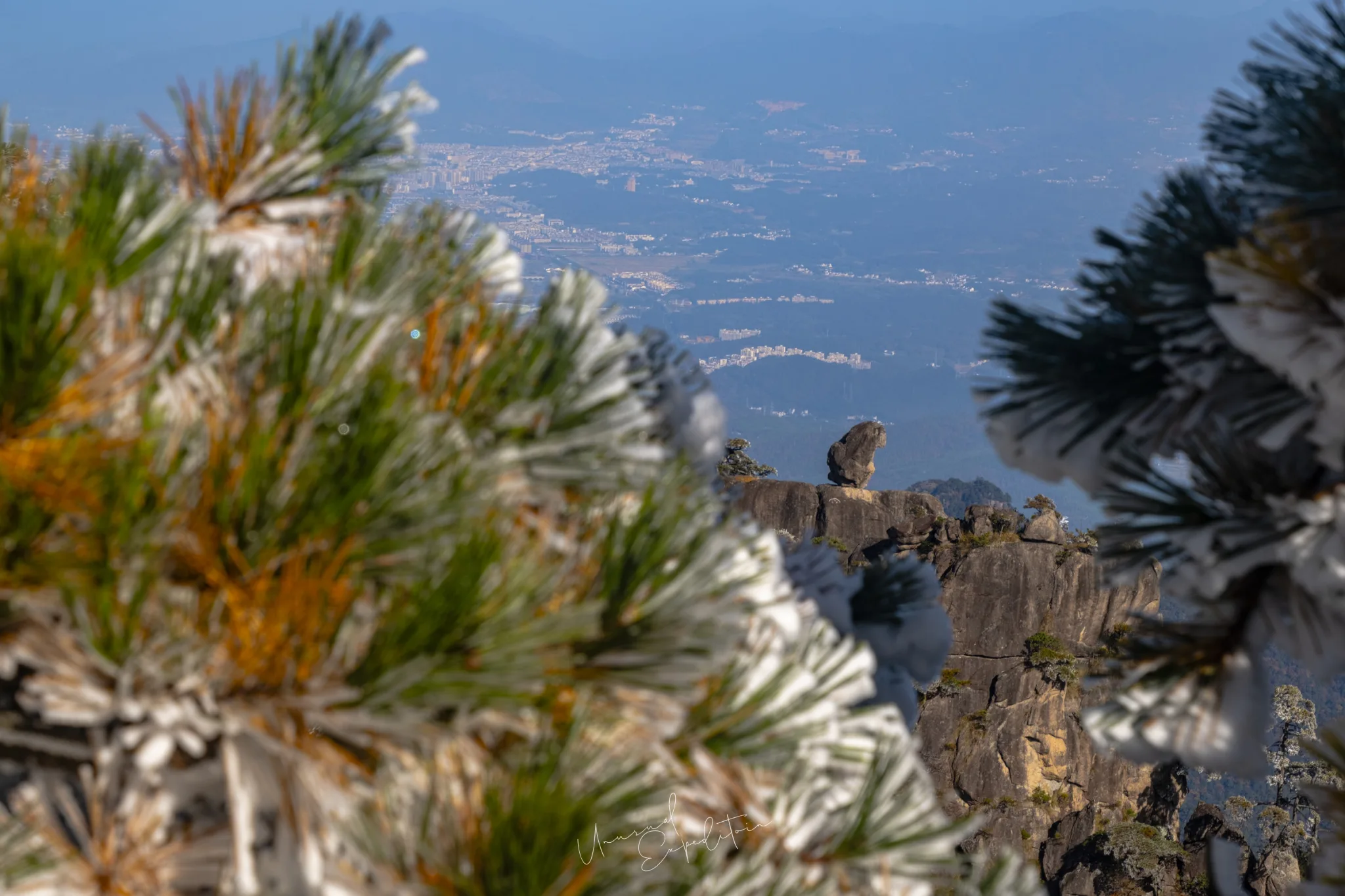
On the rime morning nobody talked. The trail was white, every pine was white, and the sky behind was that hard blue you only get after a cold front. By lunch it was dripping and gone. You cannot plan that morning. You can only be on the mountain when it happens.
Joseph Mak, tour leader, Unusual Expedition
Where to find the best pines
The Huangshan pine grows everywhere above the forest line, but some areas give more open views. The front side near Yuping Tower has the Welcoming Guest Pine and the classic cliffs. The northern summit area around Beihai, Shixin Feng and the trails toward the western canyon has many twisted pines on lookouts with space to set up. Stay on the marked paths: the drop beside many viewpoints is sheer, and the railings are there for a reason. The Huangshan Scenic Area administration closes trails in ice or high wind, so check the notices each morning.
Planning a Huangshan pine trip
Huangshan pines photograph best from the summit area at the ends of the day, which means staying on the mountain overnight rather than coming up for a few hours. Cable cars run from three sides, but timetables change with weather and season, so check the scenic area's notices. Pack layers: the summit can be far colder than the valley, and rime mornings are freezing. Combine Huangshan with Wuyuan's villages for a trip that moves from granite to farmland; best time to visit Wuyuan explains how the seasons line up.
Huangshan pines through the seasons
Huangshan pines change less than the light around them, which is why they work in every season. In spring and early summer the mountain is often wrapped in cloud, and a pine half lost in mist makes the classic ink-painting picture. Summer brings storms and the most frequent seas of cloud, with green needles and wet, dark rock. Autumn adds red and gold in the lower forest and the first frosts on the summit. Winter is the season for rime and snow, and for the sharpest air after a front has passed. Pick the season for the mood you want, then let the weather decide the day.
Photograph Huangshan with us
We run Wuyuan and Huangshan as private photography trips for small groups, with time on the summit for sunrise, sunset and the pines. Ask us about dates, and see scheduled departures on our China photography tours page.
Join the Wuyuan and Huangshan photography tour
Inner Mongolia Winter Owl Photo Tour – China departs 01 Jan 2027 To 04 Jan 2027, led by Joseph Mak. Small group, photography first. All Wuyuan and Huangshan photography tours.
Explore Wuyuan and Huangshan in depth
- Wuyuan and Huangshan Photography Tour GuideChina
- Iron Flower Show in China: What It Is and How to Photograph ItChina
- Huangling Village Photos: Shaiqiu Drying Racks and Lanes, WuyuanChina
- Wuyuan Photos: Huangling, Jiangling and the River VillagesChina
- Huangshan Sunrise: Photo Spots, Sea of Clouds and Winter RimeChina
- How to Get to Huangshan and Wuyuan from SingaporeChina
- Wuyuan Best Time to Visit: Rapeseed in March or Shaiqiu in NovemberChina
Upcoming Photo Tours
- Egypt Photo Tour – EgyptEgypt 12 Dec 2026 To 20 Dec 2026
- Inner Mongolia Winter Owl Photo Tour – ChinaChina 01 Jan 2027 To 04 Jan 2027
- Inner Mongolia Winter Photo Tour – ChinaChina 05 Jan 2027 To 11 Jan 2027
- Mekong And Central Highland Vietnam Photo Tour - VietnamVietnam 16 Jan 2027 To 24 Jan 2027