
Inner Mongolia Winter: Snow, Frost, Camels and Dusk on the Grassland
Inner Mongolia winter photography: does Inner Mongolia snow, winter weather, frost, sheep, camels, dusk and working in the cold.
Inner Mongolia in winter is snow-covered grassland, frosted birch and larch forest, very dry cold air and low sun all day, and it is one of the best winter photography destinations in northern China. From December to February the grassland around Ulan Butong carries snow, the herding families keep horses, sheep and camels close to home, and the light stays soft and golden for hours. Here is what you photograph in an Inner Mongolia winter, what the weather is like and how to work in the cold.
Winter is one of the two seasons in our Inner Mongolia photography tour guide, and this article is about everything in that season beyond the horse runs.
Does Inner Mongolia snow
Inner Mongolia does snow, though not as heavily as people imagine. The region is dry, and winter snowfall on the grassland is usually light to moderate; what makes it look deep is that the cold keeps every fall on the ground for weeks. China Daily and CGTN have both carried pictures of snow and rime on the Ulan Butong grassland in January. Some winters bring an early, heavy fall in November and a white landscape right through to March; others are thin, with brown grass showing on wind-swept ridges. That is why we plan winter trips for January, the month when snow cover is most reliable, and why it pays to keep a flexible day in hand for fresh snow.
Inner Mongolia winter weather
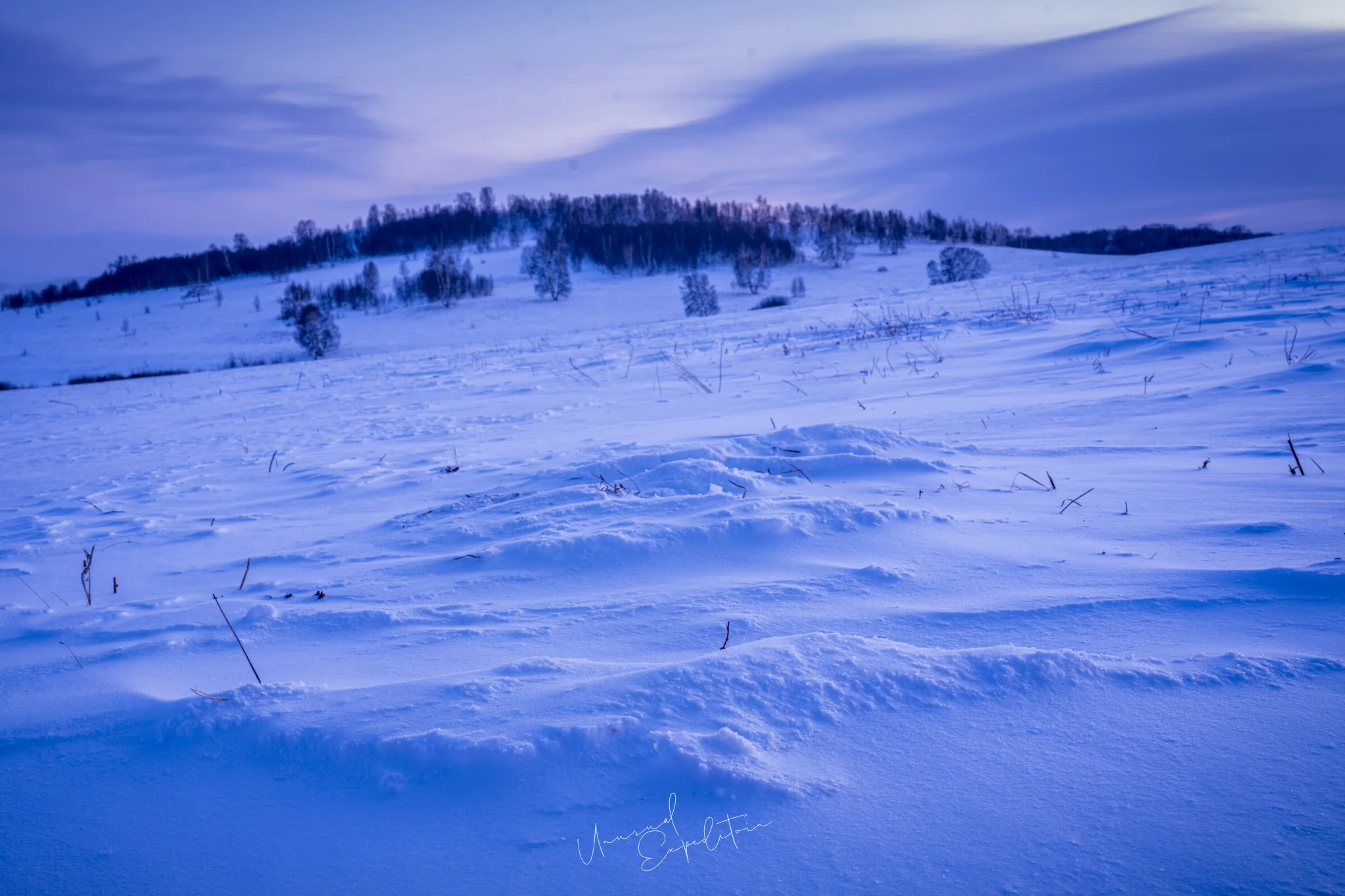
Inner Mongolia winter weather is cold, dry and mostly clear. On the plateau around Ulan Butong it can fall below minus 20 degrees Celsius on the coldest mornings, and further north in Hulunbuir it is colder still. Days are short but the sun stays low, so the light is warm and directional from morning to late afternoon. Wind is the real enemy: still cold feels manageable, while wind on an exposed ridge cuts through layers quickly. Clear evenings turn the snow pink, then blue, and cold nights bring hoarfrost to trees by the streams. Our best time to visit Inner Mongolia guide gives the month-by-month picture and a clothing list.
Frost and rime on the forest
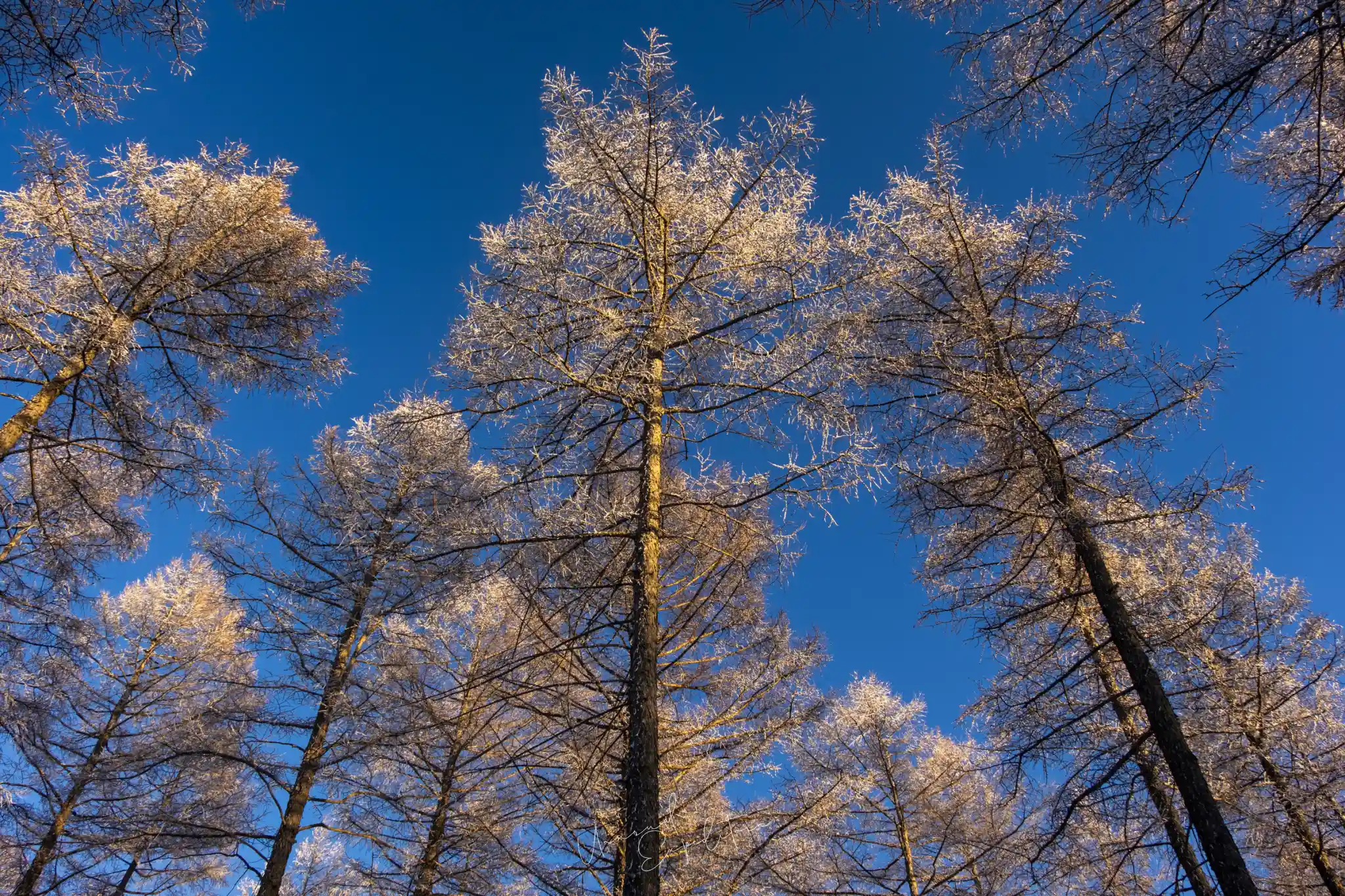
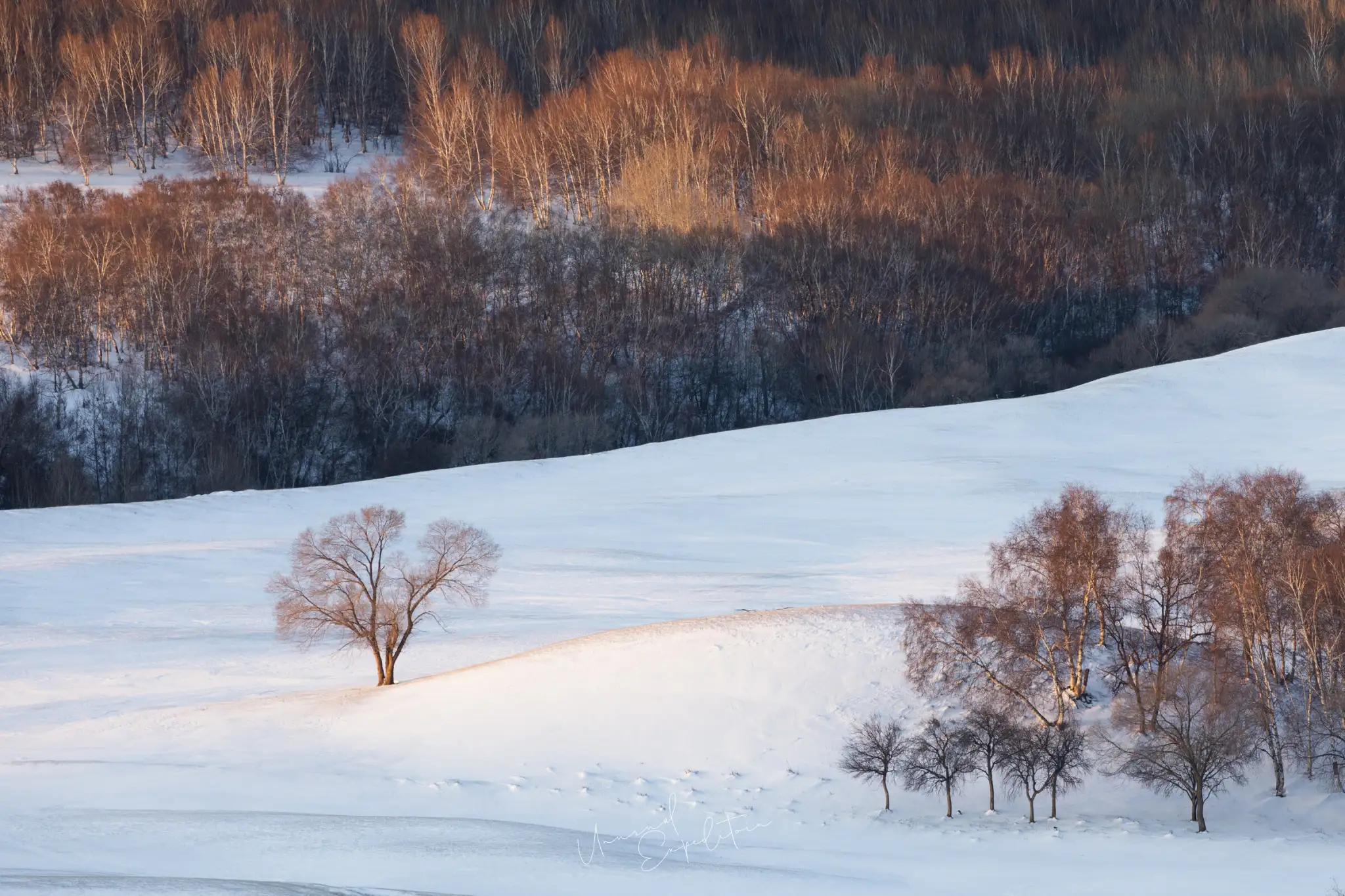
Frost and rime turn the birch and larch woods into one of the quieter Inner Mongolia winter subjects. On still, cold mornings ice crystals form on every twig, and the trees glitter against a deep blue sky. Look up through a larch stand with a wide lens for a frame of white crowns against blue, or walk along a stream bank where the frost is heaviest. The effect lasts only until the sun warms the branches or the wind rises, so frost work happens early. Birch groves on the snow slopes, lit gold by the late sun, give a softer picture in the afternoon.
Sheep, camels and herders in the snow
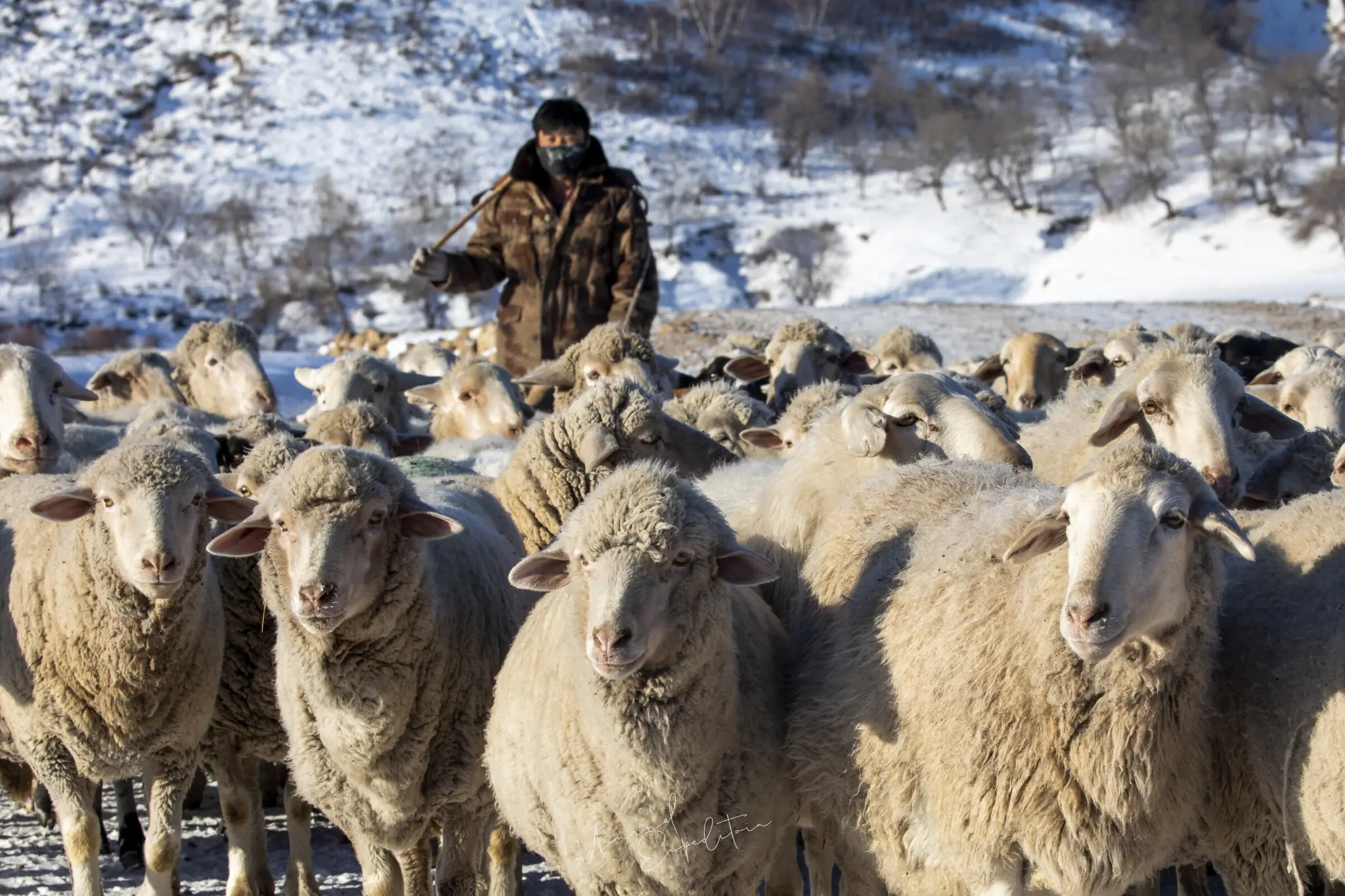
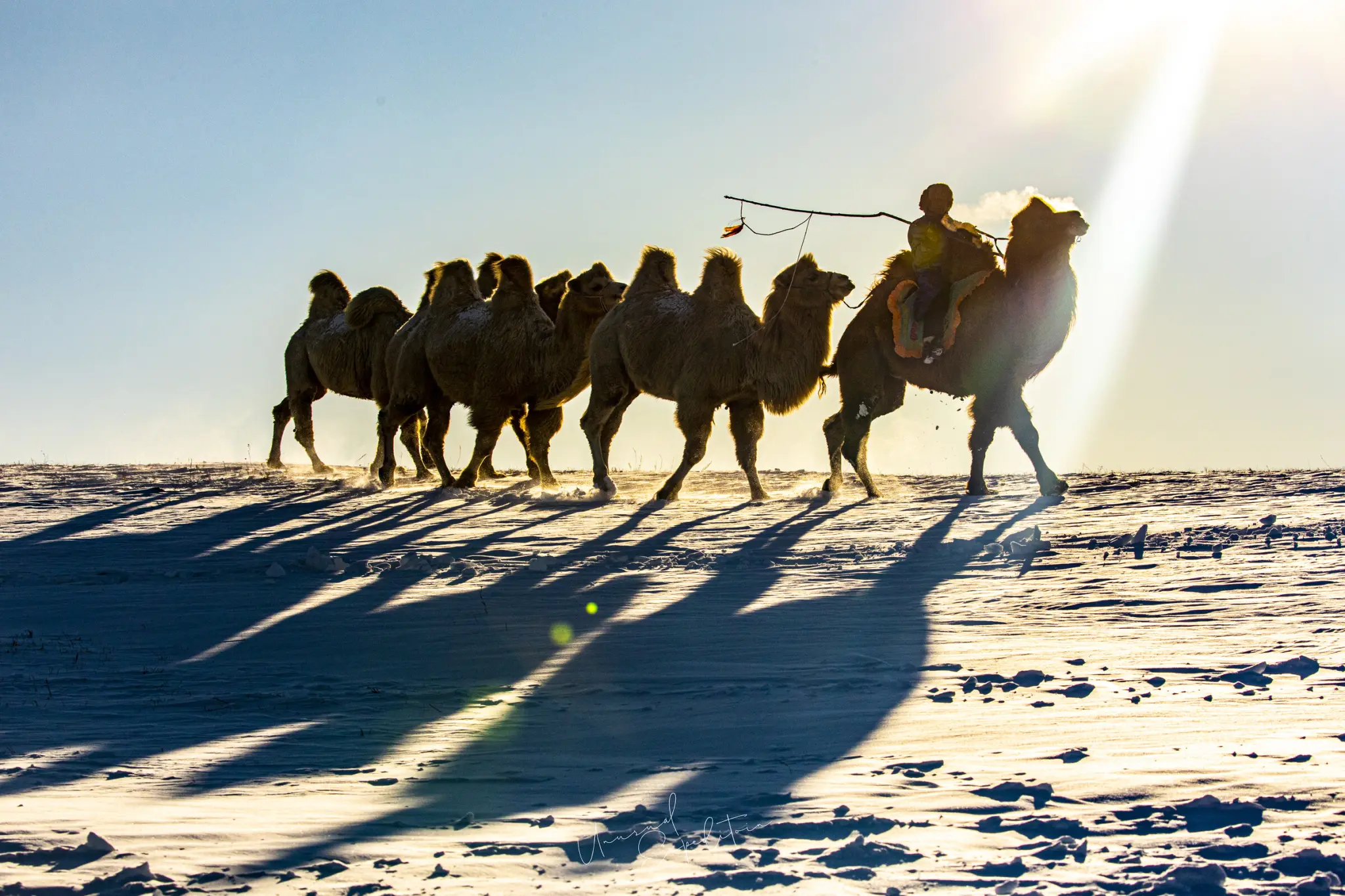
Sheep, camels and herders give the calmer frames of an Inner Mongolia winter. Flocks of sheep move slowly along the valley tracks with a herder in a long coat, and a low position among the flock gives woolly faces in the foreground and the herder behind. Bactrian camels, the two-humped camels of northern China and Mongolia, are walked in caravans across open snow, and against the low sun they throw long shadows that make strong silhouettes. Herders in fur hats and traditional dress are part of every scene; ask before a close portrait and share the picture with them.
Inner Mongolia winter activities for photographers
| Subject | Best time of day | Lens |
|---|---|---|
| Horse runs in powder snow | Early morning and late afternoon, backlit | 70-200mm or 100-400mm |
| Frost and rime on birch and larch | Early morning on still days | 16-35mm or 24-70mm |
| Sheep flocks and herders | Morning and mid-afternoon | 24-70mm |
| Camel caravans in silhouette | Low sun, shooting toward it | 70-200mm |
| Minimal trees and pink dusk | After sunset | 70-200mm, tripod |
Most Inner Mongolia winter activities sold to visitors, such as sledding and snow festivals, are at tourist camps; the subjects above are what a photography trip spends its time on. The horse runs have their own guide: Inner Mongolia horse photography.
Working with cameras in the cold
Cold is hard on cameras and harder on people, and a few habits make the difference. Batteries lose charge fast below freezing, so carry three or four and keep the spares in an inside pocket. Bring the camera indoors inside a sealed bag and let it warm up before opening it, or condensation forms inside the lens. Thin liner gloves under mittens let you work the buttons without exposing skin. Breathe away from the viewfinder or it frosts over. Snow fools the meter, so add one to one and a half stops of exposure compensation and check the histogram rather than the screen.
On my first winter trip I watched a guest lose a whole morning to a frozen battery and a fogged lens. Now the first thing we do on the grassland is a five-minute talk about warm pockets and plastic bags, and nobody misses the horses.
Joseph Mak, tour leader, Unusual Expedition
Dusk and night in an Inner Mongolia winter
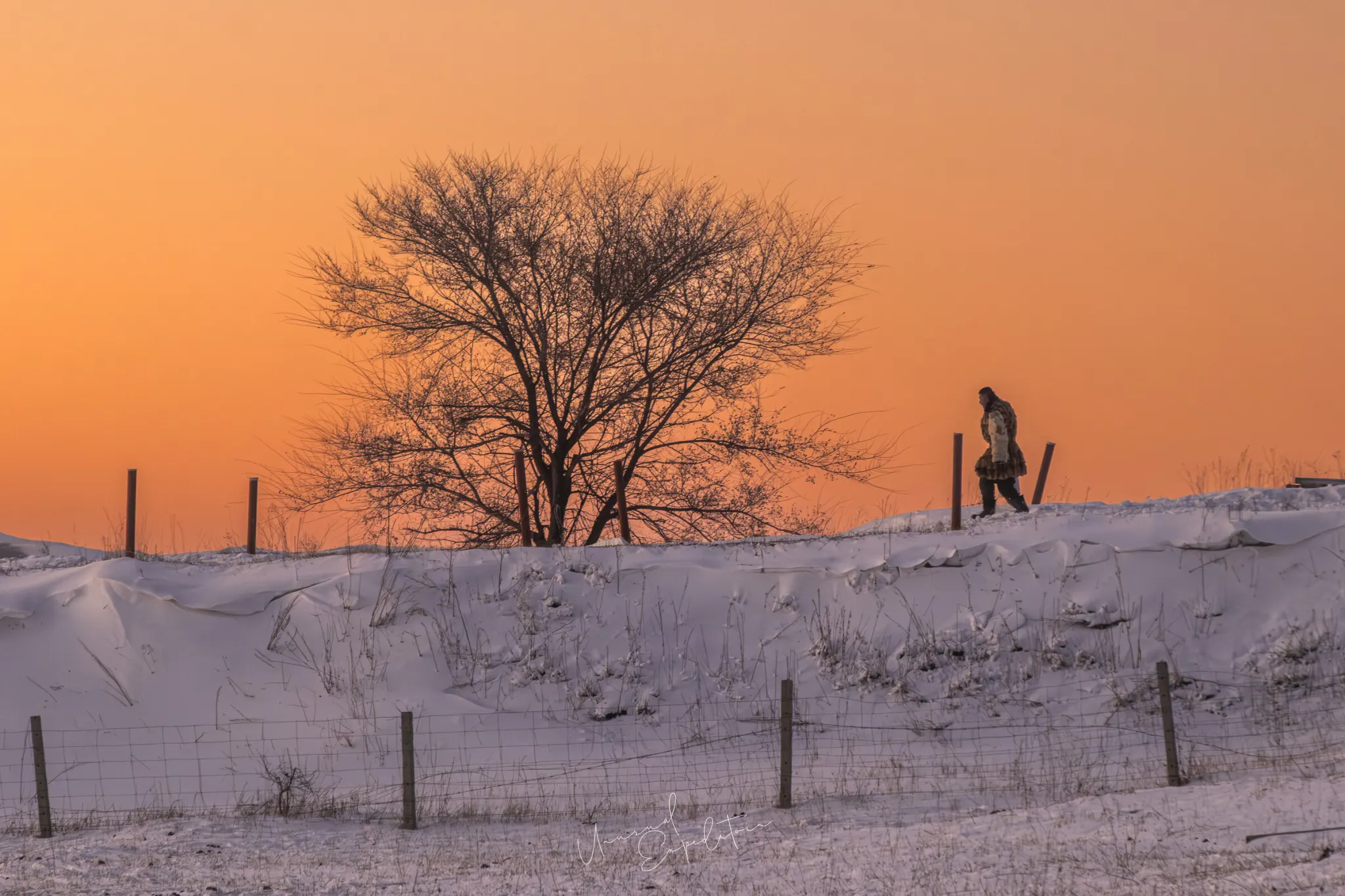
Dusk in an Inner Mongolia winter is short and very beautiful. After the sun drops, the snow turns pink and then deep blue, and a single tree or a fence line on a ridge becomes a clean silhouette against the afterglow. Bring a tripod, use a 70-200mm to isolate one tree, and expose for the sky. Night skies on the grassland are dark and clear, but the cold makes long night sessions hard; a short session near the vehicle is enough. Our Ulan Butong grassland article shows where the best ridges and groves are.
Join our Inner Mongolia winter trip
Our January winter trip is on the Ulan Butong grassland and is indicatively S$2,400 to S$2,600 per person depending on the room; a short owl trip in Hulunbuir can come before it. Dates and details are on our China photography tours page.
Join the Inner Mongolia photography tour
Inner Mongolia Winter Owl Photo Tour – China departs 01 Jan 2027 To 04 Jan 2027, led by Joseph Mak. Small group, photography first. All Inner Mongolia photography tours.
Explore Inner Mongolia in depth
- Inner Mongolia Photography Tour: The Complete GuideChina
- Inner Mongolia Horses: How to Photograph Mongolian Horses in Water and SnowChina
- Ulan Butong Grassland: Photographing Wulan Butong in Autumn and WinterChina
- Inner Mongolia Tour from Singapore: Flights, Visa, Cold and What to WearChina
- Inner Mongolia Photos: What the Grassland Looks Like Through the YearChina
- Inner Mongolia Owl Photography: Great Grey Owls and Snowy Owls in HulunbuirChina
- Best Time to Visit Inner Mongolia for Photography: Autumn or WinterChina
Upcoming Photo Tours
- Egypt Photo Tour – EgyptEgypt 12 Dec 2026 To 20 Dec 2026
- Inner Mongolia Winter Owl Photo Tour – ChinaChina 01 Jan 2027 To 04 Jan 2027
- Inner Mongolia Winter Photo Tour – ChinaChina 05 Jan 2027 To 11 Jan 2027
- Mekong And Central Highland Vietnam Photo Tour - VietnamVietnam 16 Jan 2027 To 24 Jan 2027