
Ulan Butong Grassland: Photographing Wulan Butong in Autumn and Winter
Ulan Butong grassland on the Bashang: where it is, Beijing to Ulan Butong, autumn gold, winter snow, weather and where to stand.
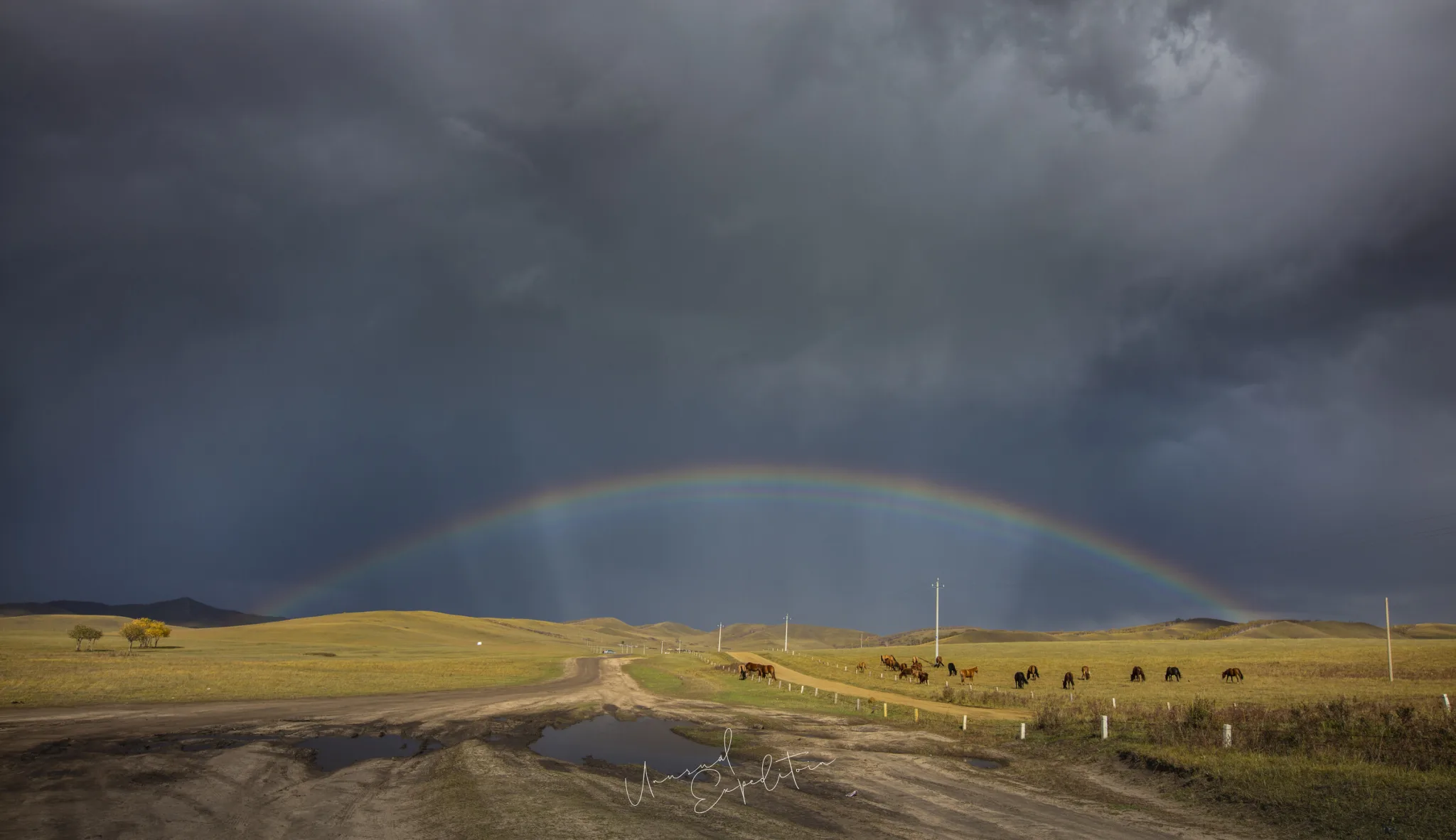
The Ulan Butong grassland is a rolling stretch of the Bashang plateau in Hexigten Banner, Chifeng, at the southern edge of Inner Mongolia, and it is the grassland most photographers mean when they talk about Inner Mongolia. In late September the birch and poplar groves turn gold and storms roll across open hills; in January the same hills lie under snow, with lone trees, frosted birches and horse herds. Ulan Butong is a place to photograph landscape and light as much as animals.
Ulan Butong is the base of both trips in our Inner Mongolia photography tour guide, and this article looks at the grassland itself: what it looks like, where the light falls and how the place changes between autumn and winter.
Where is the Ulan Butong grassland
The Ulan Butong grassland, also written Wulan Butong grassland, sits on the Bashang, the high plateau edge where the North China plain climbs into Inner Mongolia. China Daily and Tour Beijing both place it at the southern tip of Hexigten Banner in Chifeng, between the Greater Khingan range and the Yinshan mountains. Hexigten as a whole is a UNESCO Global Geopark, known for granite formations and old glacial landforms further north. Around Ulan Butong the land is softer: long grassy ridges, shallow valleys with streams and small lakes, groves of white birch and poplar, and herding families with horses, sheep and camels. Because the plateau is high and open, weather moves fast, and the light can change completely within a few minutes.
Beijing to Ulan Butong
Getting from Beijing to Ulan Butong means driving north out of the capital, climbing onto the plateau through Hebei, and there is no airport on the grassland itself. On our trips the group meets in Beijing and travels up together in our own vehicle with a local driver who knows the plateau roads in snow. The route crosses the Bashang edge, so the first view of open grassland arrives quite suddenly after farmland and hills. Travellers from Singapore fly to Beijing first; our Inner Mongolia tour from Singapore article covers the flights, entry and what to pack. Once on the grassland, distances between viewpoints are short, which is why Ulan Butong works so well for photography: you can follow the light rather than chase it.
Ulan Butong in autumn
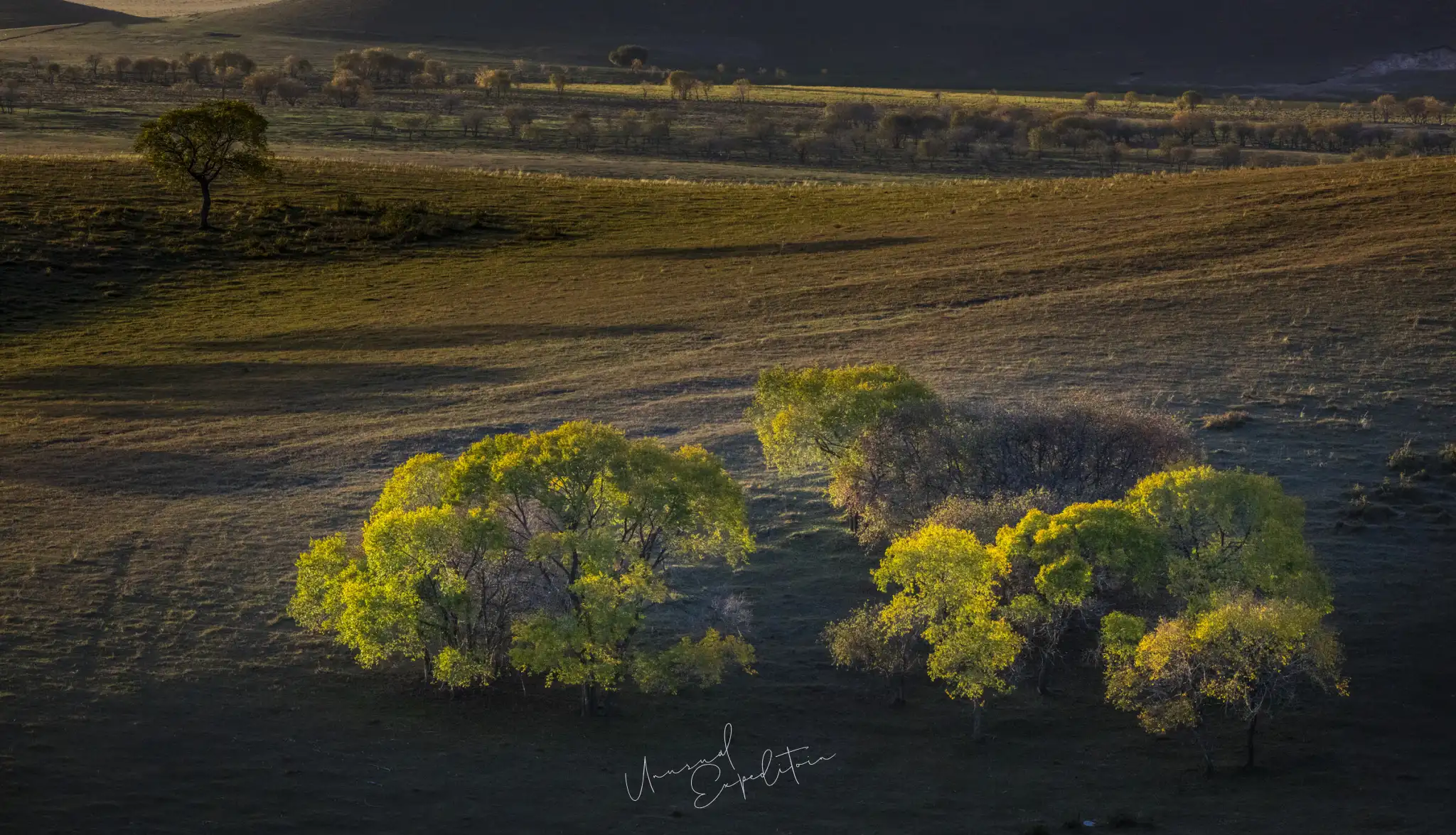
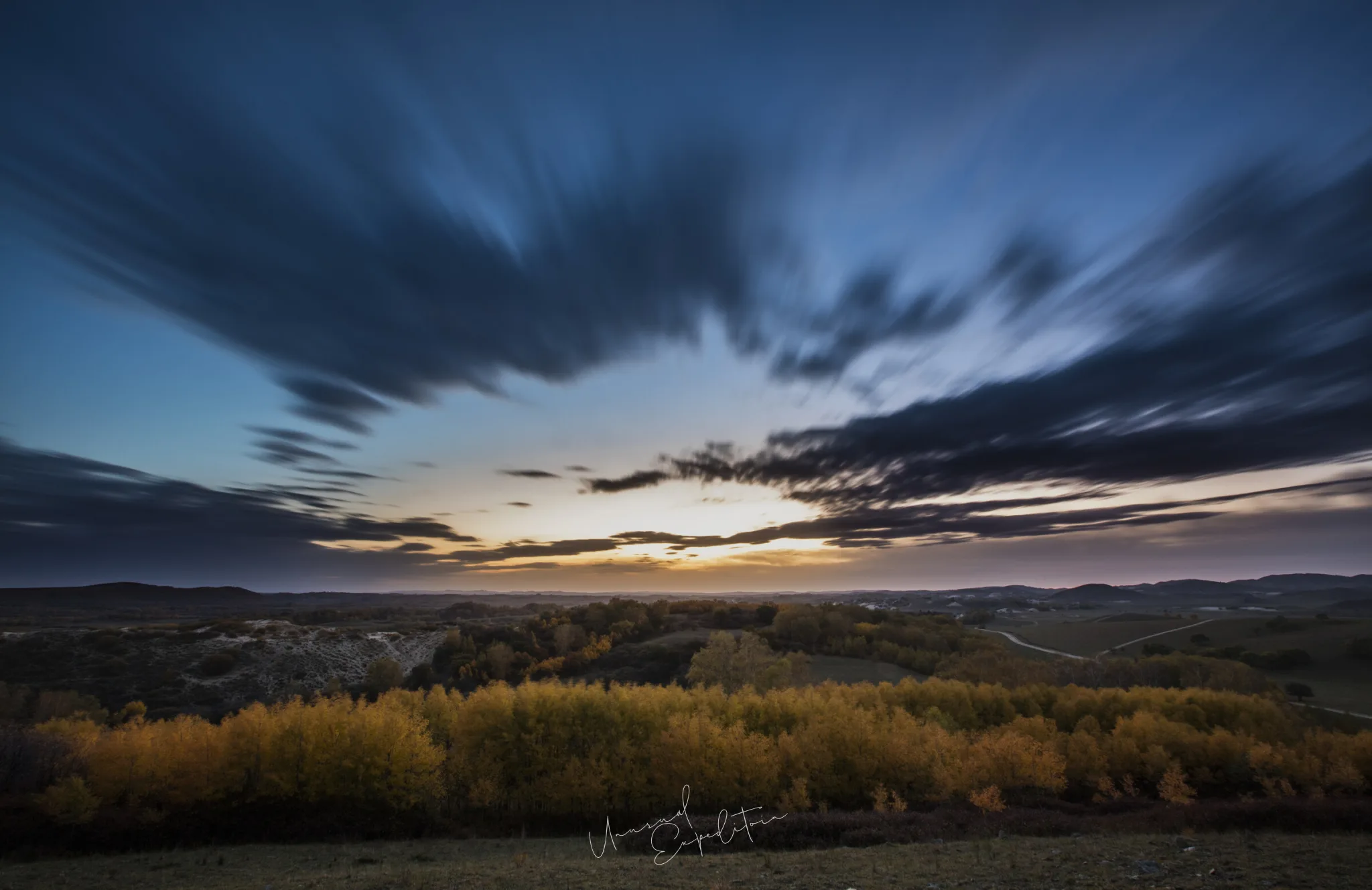
Ulan Butong in autumn is about colour and weather. The birch and poplar groves turn yellow and gold from about the middle of September, the grass goes from green to tawny, and low shrubs on the slopes turn orange and red. Storm systems cross the plateau often at this time of year, so dark skies behind sunlit hills are common, and rainbows appear after a passing shower. Mornings bring mist in the valleys; evenings bring long side light that picks out every ridge. The colour window is short and moves a little each year, which our best time to visit Inner Mongolia guide explains month by month.
Ulan Butong in winter
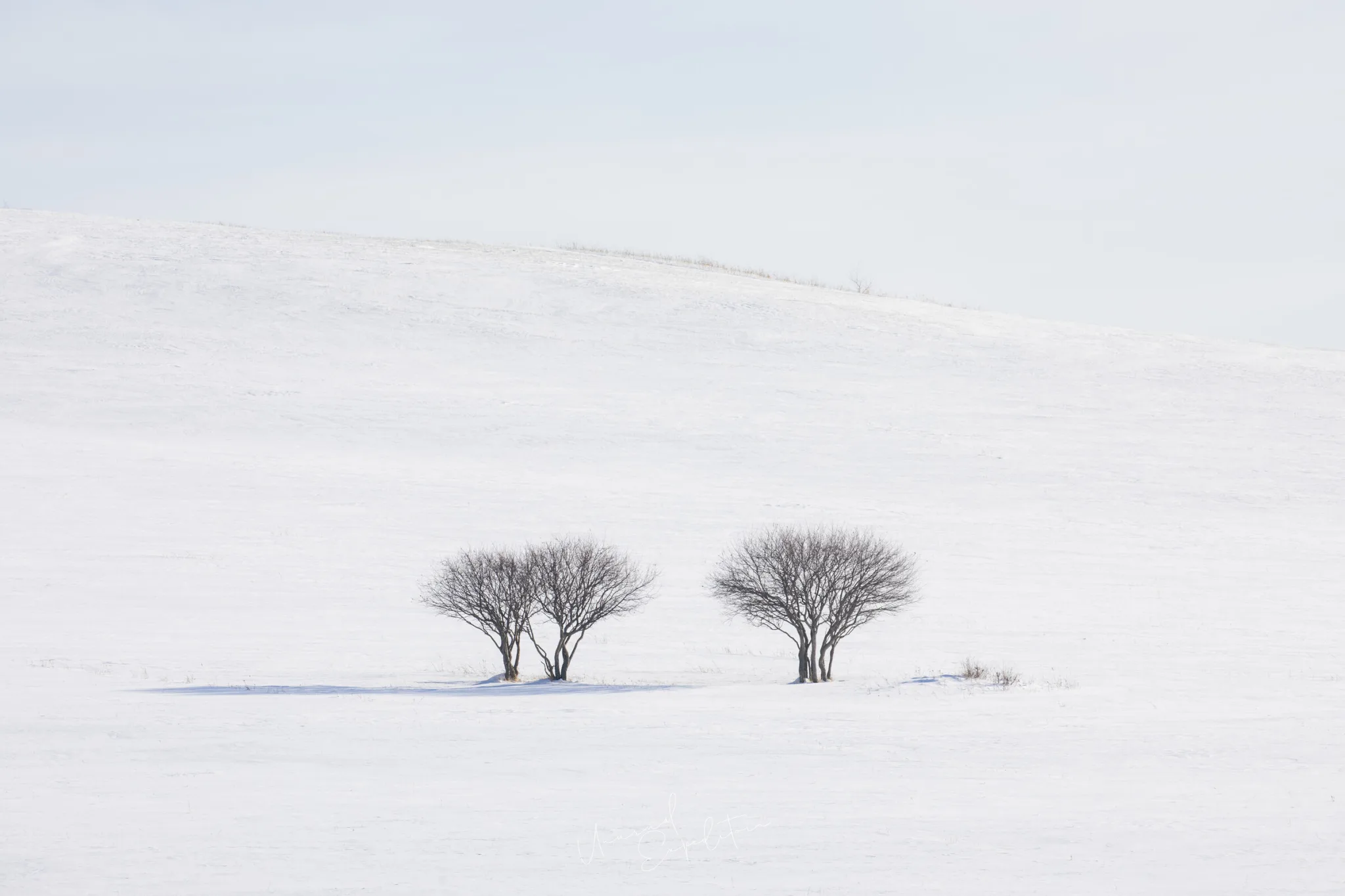
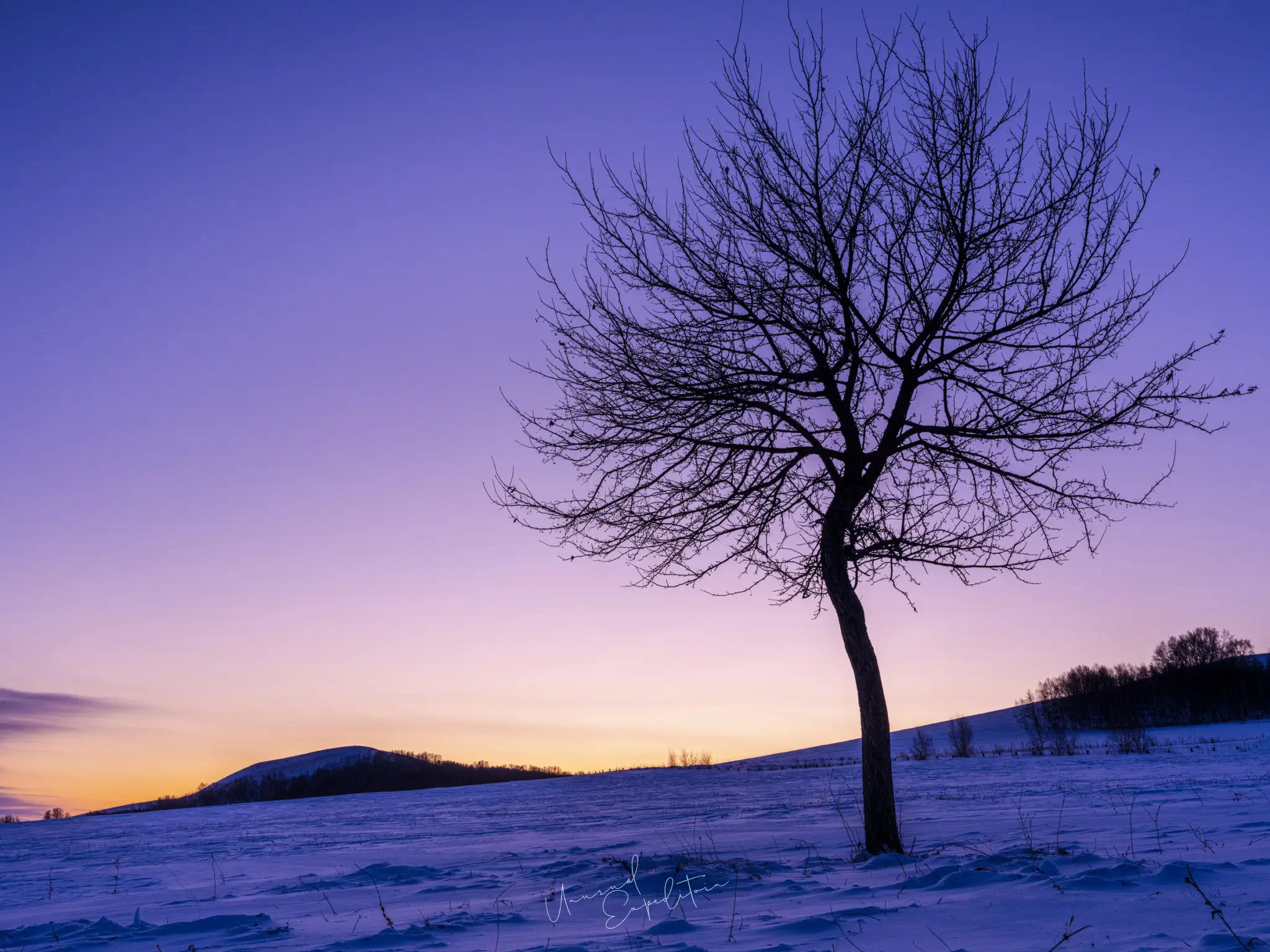
Ulan Butong in winter is a different place. Snow smooths the ridges into simple white curves, so the grassland becomes a study in line and space: two small trees on a bare slope, a fence running over a hill, a single horse against white. Frosted birches stand along the stream valleys, and on clear evenings the snow turns pink and blue after sunset. The cold is serious, and it can fall below minus 20 degrees Celsius on the coldest mornings, but the dry air keeps the light clean. Winter is also when the herding families bring their horses close, and CGTN has reported the Ulan Butung Horse Culture Festival held on the grassland in January.
Ulan Butong weather by season
| Season | What the grassland looks like | What to photograph |
|---|---|---|
| Late spring | Grass still brown, then greening; windy | Herds on open hills, big skies |
| Summer | Green hills, wildflowers, busy with visitors | Flowers, clouds, evening light |
| Late September to early October | Gold birch and poplar, red shrubs, mist | Groves, storm light, rainbows, horses in streams |
| December to February | Snow, frosted trees, very cold, dry air | Minimal trees, horses in snow, sheep, camels, pink dusk |
Ulan Butong weather on any single day can swing between bright sun and storm, so pack for both and keep a rain cover on the camera in autumn.
Where to stand: ridges, groves and lakes
The best Ulan Butong viewpoints are not marked; local drivers and herders know them. Three kinds of place give most of the good frames. Ridge tops give the long views, with layered hills fading into haze at sunrise and sunset; use a 70-200mm to compress the layers. Birch groves on the valley sides give colour in autumn and frost in winter; walk in with a 24-70mm and look for one clean trunk against the light. Small lakes and streams in the valley floors give reflections at dawn and dusk, and in autumn they are where horses are driven through water. The Inner Mongolia photos collection shows more of what each kind of place gives.
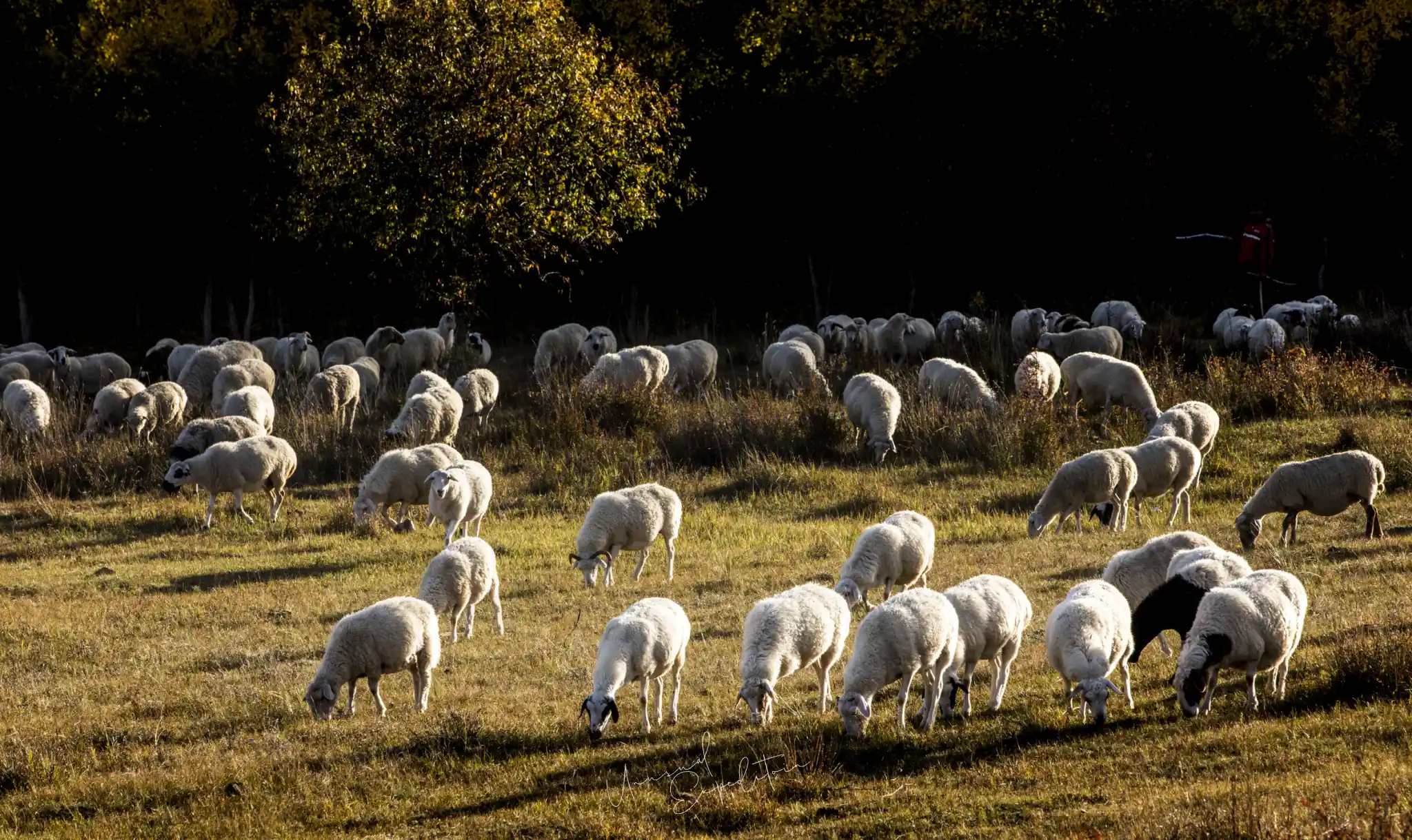
The first time I drove onto Ulan Butong in autumn a storm was sitting over the hills and the sun came under it for maybe five minutes. Everyone jumped out, nobody spoke, and we got a rainbow over the road. I have been back many times and the grassland still does that to you.
Joseph Mak, tour leader, Unusual Expedition
Is the Ulan Butong grassland worth visiting
The Ulan Butong grassland is worth visiting if you want open landscape with working animals in it, and if you are willing to be out at the edges of the day. Midday light on the grassland is flat in both seasons, and the summer weeks are busy with domestic tourists, horse rides and camp grounds. In autumn and winter, early and late, the place is quiet and the light is the reason to come. Photographers who only want horses can stay with the herds; those who like landscape will find the minimal winter slopes and the autumn storm light just as rewarding.
Photograph Ulan Butong with us
We run Ulan Butong in late September for autumn colour and in January for snow and horses, and the January trip is indicatively S$2,400 to S$2,600 per person depending on the room. Dates and what each trip includes are on our China photography tours page.
Join the Inner Mongolia photography tour
Inner Mongolia Winter Owl Photo Tour – China departs 01 Jan 2027 To 04 Jan 2027, led by Joseph Mak. Small group, photography first. All Inner Mongolia photography tours.
Explore Inner Mongolia in depth
- Inner Mongolia Photography Tour: The Complete GuideChina
- Inner Mongolia Winter: Snow, Frost, Camels and Dusk on the GrasslandChina
- Inner Mongolia Horses: How to Photograph Mongolian Horses in Water and SnowChina
- Inner Mongolia Tour from Singapore: Flights, Visa, Cold and What to WearChina
- Inner Mongolia Photos: What the Grassland Looks Like Through the YearChina
- Inner Mongolia Owl Photography: Great Grey Owls and Snowy Owls in HulunbuirChina
- Best Time to Visit Inner Mongolia for Photography: Autumn or WinterChina
Upcoming Photo Tours
- Egypt Photo Tour – EgyptEgypt 12 Dec 2026 To 20 Dec 2026
- Inner Mongolia Winter Owl Photo Tour – ChinaChina 01 Jan 2027 To 04 Jan 2027
- Inner Mongolia Winter Photo Tour – ChinaChina 05 Jan 2027 To 11 Jan 2027
- Mekong And Central Highland Vietnam Photo Tour - VietnamVietnam 16 Jan 2027 To 24 Jan 2027