
Jerusalem Old City Market: Photographing the Souks and Their People
Jerusalem Old City market: David Street, Khan el-Zeit, ka'ak sellers, juice stands, barbers, the light in the souks and etiquette.
The Jerusalem Old City market is a web of covered and open lanes, mainly David Street from Jaffa Gate and Souq Khan el-Zeit from Damascus Gate, where traders sell bread, spices, juice, sweets, textiles and souvenirs from tiny shopfronts. For photography it is the best place in the city for people: ka'ak bread sellers, juice pressers, barbers, women selling herbs on the steps. Come in the morning, ask before close portraits, and buy something from the people you photograph.
The souks run between the holy sites, so read our Jerusalem photography tour guide for the map of the city around them.
Where the Jerusalem Old City market is
There is no single market building in the Old City; the market is the streets themselves. David Street runs downhill from Jaffa Gate toward the Temple Mount, lined with souvenir, ceramic and spice shops. Souq Khan el-Zeit runs south from Damascus Gate through the Muslim Quarter, the busiest food street, with bakeries, sweet shops and juice stands. Where they meet, three parallel covered lanes, the old butchers', spice and goldsmiths' markets, run side by side under stone vaults. Further east, the street toward the Chain Gate and the lanes off the Via Dolorosa have quieter workshops and coffee sellers. Shops open and shut by quarter and by faith: in the Jewish Quarter they close for Shabbat, and some shops in the Muslim Quarter close around Friday midday prayers.
The traders: bread, juice and herbs
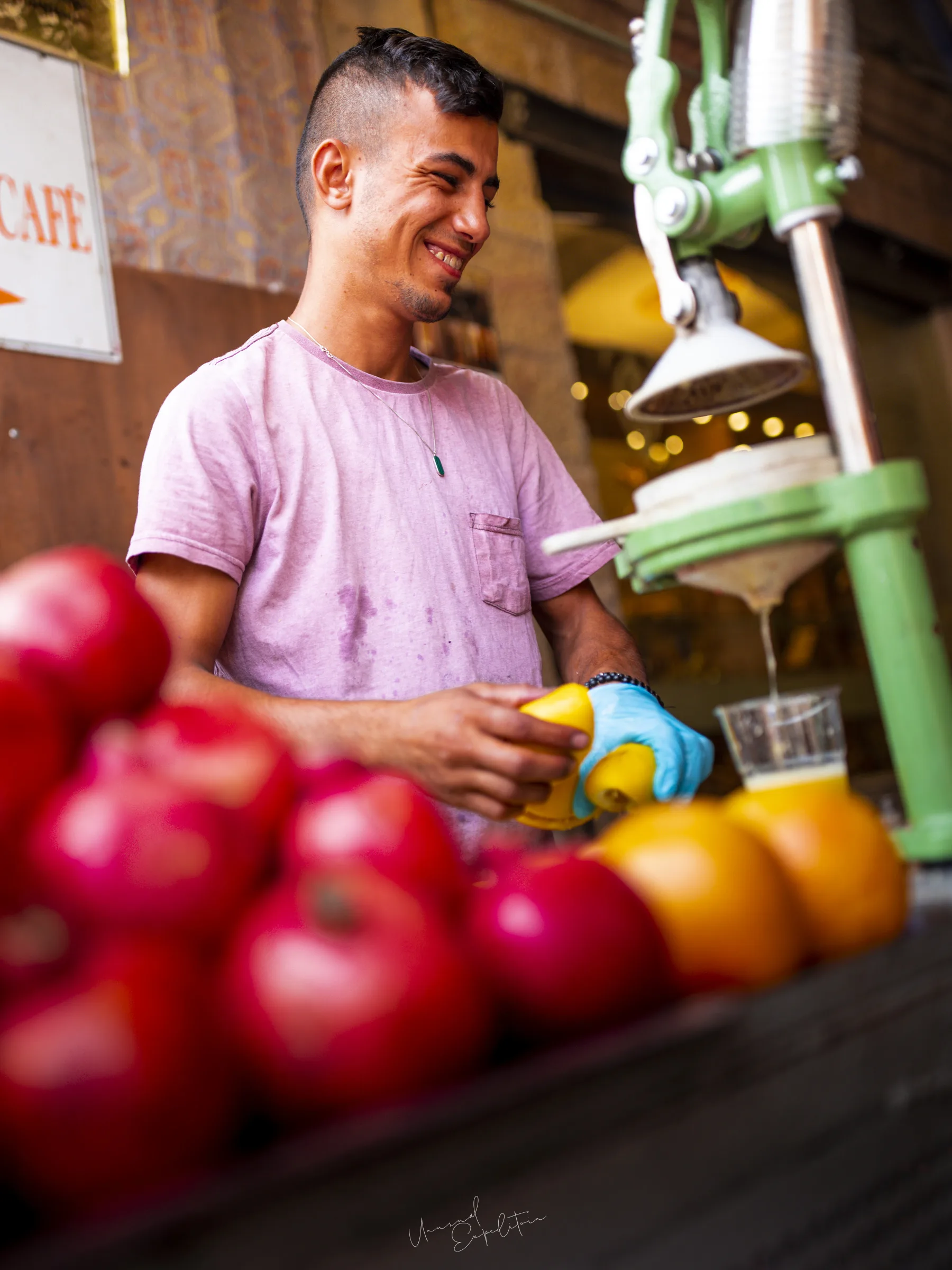
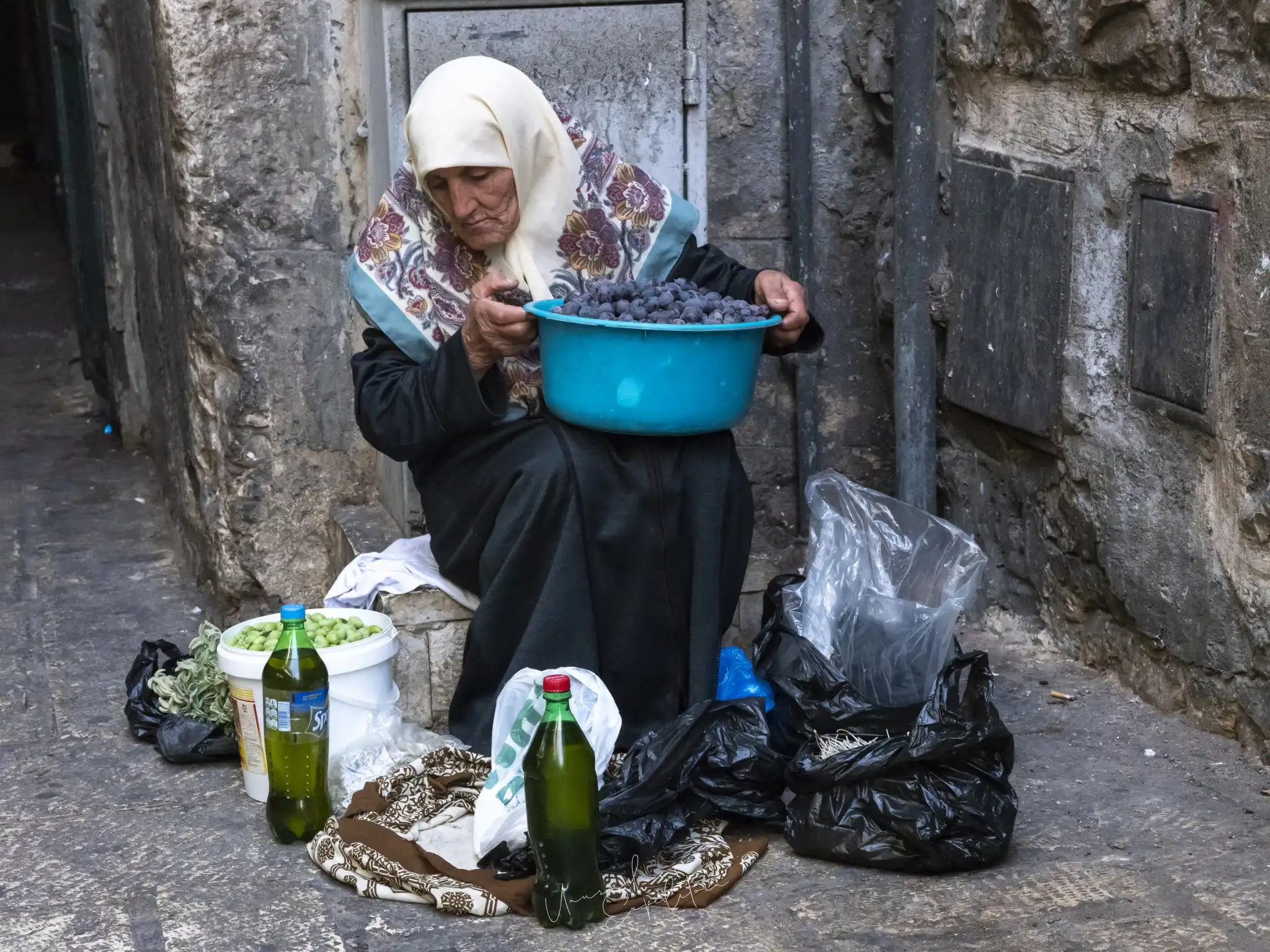
Ka'ak, the long oval sesame bread of Jerusalem, is the Old City's signature, and the sellers who stack it on carts and trays near the gates are some of the most patient subjects you will find. Juice stands squeeze pomegranates, oranges and carrots to order in heavy iron presses, a good subject for colour and movement: ask, order a glass, and the seller will usually carry on working while you shoot. On the steps and corners near Damascus Gate, older women from the villages around the city sit with bowls of grapes, figs, olives and bunches of herbs. They are often less keen on cameras than the shopkeepers, so buy first, ask by gesture, and accept a shake of the head. A 35mm or the middle of a 24-70mm keeps you close enough to talk.
Barbers, coffee and the back lanes
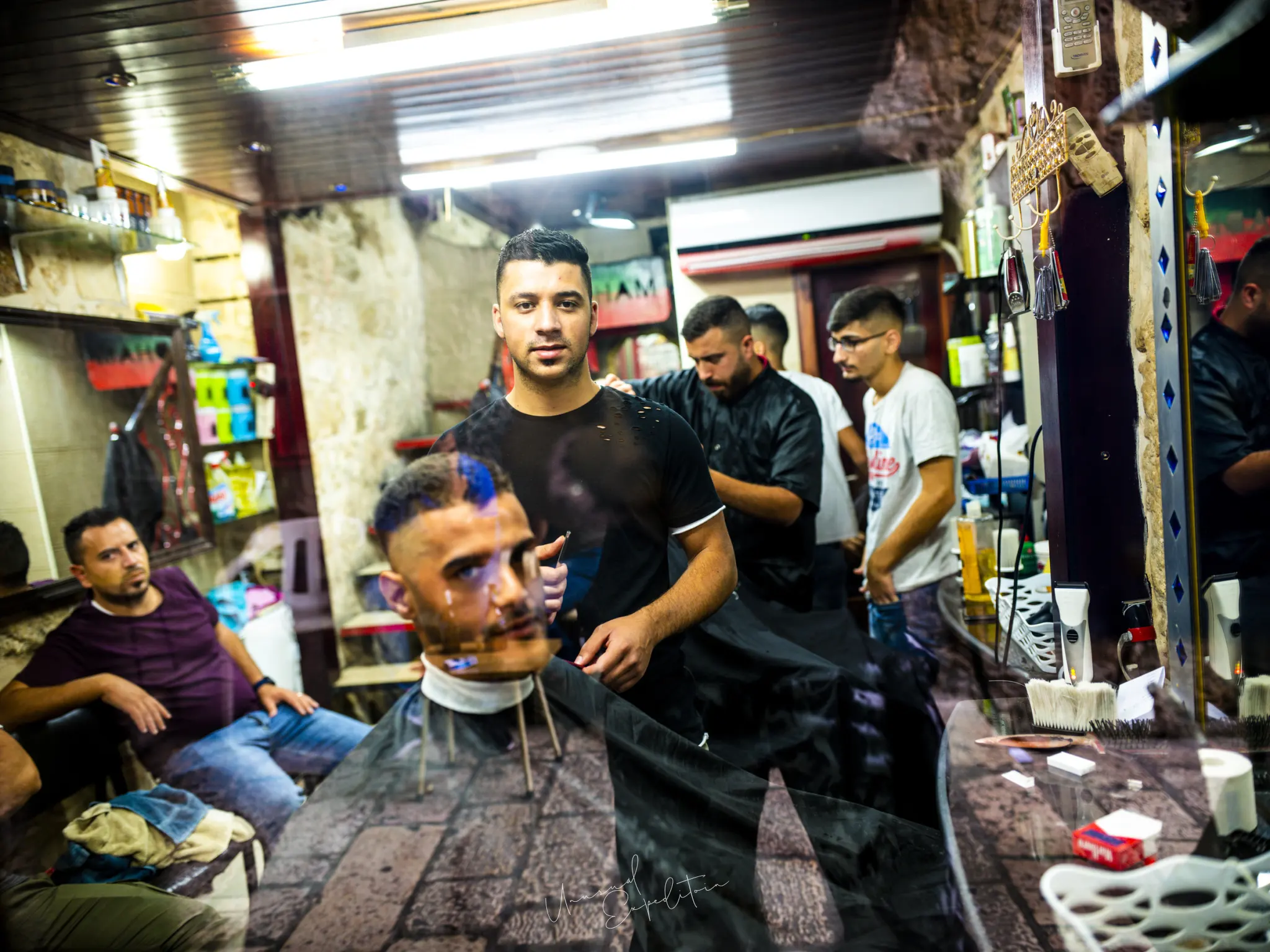
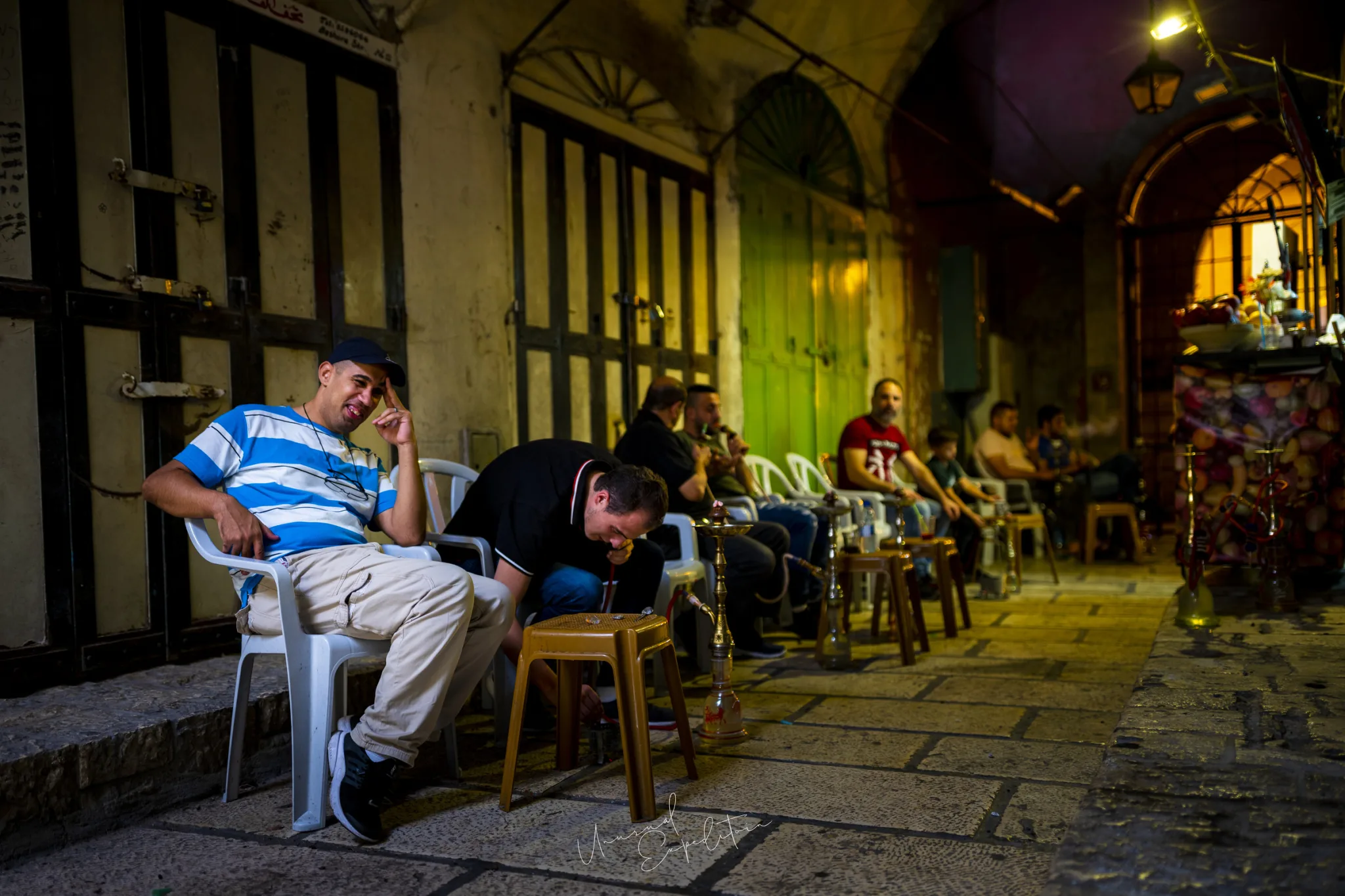
Step off the main streets and the Old City market becomes a neighbourhood. Barbers work under strip lights in shops barely wider than the chair, often with friends waiting and talking on a bench; the strong, mixed light and the mirrors make dramatic frames, and most are happy to be photographed if you ask. Coffee sellers grind cardamom coffee in old machines, and in the late afternoon men gather on plastic chairs in the alleys to talk and play backgammon. These scenes need a wider lens, a high ISO and a slow approach: sit, order something, and pictures follow.
Jerusalem market photos: light in the souks
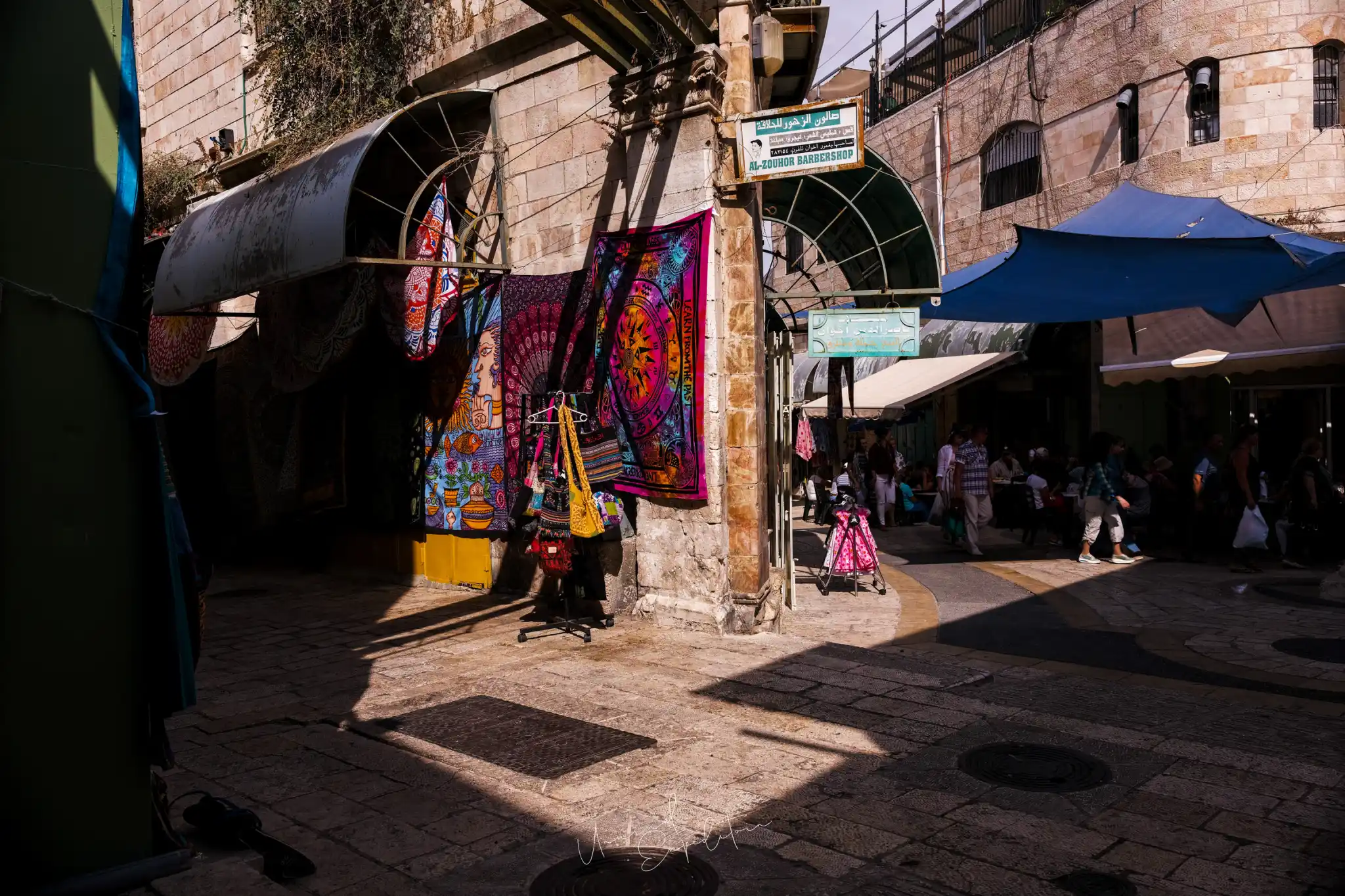
The covered lanes are dim, lit by shop bulbs and by the daylight that falls through openings in the vaults, which makes shafts of sun across the crowd in the middle of the day. Open streets like David Street get hard sun overhead and deep shade under the awnings, so expose for the highlights and let the shade fall dark, or move into the shade and expose for faces. Textiles and carpets hung outside shops reflect colour onto the stone. In the late afternoon the light goes warm and low along the east and west running lanes, the best time for the open streets. Mixed light everywhere means you should shoot raw and fix colour later.
Jerusalem Old City market at a glance
| Lane | Subjects | Light | Note |
|---|---|---|---|
| David Street | Ceramics, spices, souvenirs | Hard sun, deep awnings | Busy with visitors |
| Souq Khan el-Zeit | Bakeries, sweets, juice, crowds | Covered, shafts of sun | Busiest food street |
| Covered markets | Spices, butchers, goldsmiths | Dim, vaulted | High ISO |
| Damascus Gate steps | Herb sellers, crowds | Open, afternoon sun | Ask before portraits |
| Back lanes | Barbers, coffee, residents | Mixed, strip lights | Go slowly |
The busier the lane, the faster you need to work; the quieter the lane, the more you need to ask.
In the souk I buy before I shoot. A glass of juice or a bag of ka'ak costs very little, and the man who sold it to you will let you stand there as long as you like.
Joseph Mak, tour leader, Unusual Expedition
Photographing people in the market respectfully
Jerusalem's residents are photographed every day by thousands of visitors, and many are tired of it. A few habits make the difference. Ask, even if only by raising the camera and waiting for a nod. Do not photograph women who cover their faces or turn away, Orthodox Jews who wave you off, or anyone at prayer. Keep children out of close portraits. Never photograph soldiers or police up close or at checkpoints. On Shabbat, avoid photographing in the Jewish Quarter altogether; the Western Wall Heritage Foundation asks the same at the wall. And if someone asks to see the picture, show them.
When to photograph the Old City market
Morning is the best time: deliveries arrive on small tractors and handcarts, bakers stack fresh ka'ak and the lanes are busy with residents rather than tour groups. From late morning the main streets fill with visitors, and the Via Dolorosa processions pass through, especially on Friday afternoons when the Custody of the Holy Land leads its weekly walk. Friday midday is crowded around the routes to the Temple Mount as worshippers go to Al-Aqsa. Saturday is quiet in the Jewish Quarter and normal in the Muslim and Christian quarters. Late afternoon, when the light turns warm and residents sit out, is a second good window.
More people and places nearby
The market lanes lead straight to the Christian holy places, covered in our Via Dolorosa and Holy Sepulchre guide, and to the gates and viewpoints in Jerusalem Old City photos. Mahane Yehuda, the big food market in the modern city west of the walls, is another good people subject, though not one we cover here.
Photograph the souks with us
When the travel advice allows, we run Jerusalem as a private trip on request, with time in the markets at the hours the traders are at work. Find every guide on our Israel photography tours page.
Jerusalem photography tours
The next Jerusalem departure is announced on the Jerusalem photography tours page, with previous expeditions and all the planning guides.
Explore Jerusalem in depth
- Jerusalem Photography Tour Guide: The Old City, Its Walls and Its LightIsrael
- Western Wall and Dome of the Rock Photos: The Plaza, the Mount and the RulesIsrael
- Via Dolorosa and the Church of the Holy Sepulchre: A Photographer's GuideIsrael
- Mount of Olives Sunset: The Classic View of Jerusalem and How to Shoot ItIsrael
- Jerusalem Photography FAQ: Days, Visa, Safety, Dress and BethlehemIsrael
- Jerusalem Old City Photos: The Best Spots, Walls and ViewpointsIsrael
- City of David, Jerusalem: Is It Worth Visiting for Photographers?Israel
Upcoming Photo Tours
- Egypt Photo Tour – EgyptEgypt 12 Dec 2026 To 20 Dec 2026
- Inner Mongolia Winter Owl Photo Tour – ChinaChina 01 Jan 2027 To 04 Jan 2027
- Inner Mongolia Winter Photo Tour – ChinaChina 05 Jan 2027 To 11 Jan 2027
- Mekong And Central Highland Vietnam Photo Tour - VietnamVietnam 16 Jan 2027 To 24 Jan 2027