
Via Dolorosa and the Church of the Holy Sepulchre: A Photographer's Guide
Via Dolorosa and the Church of the Holy Sepulchre: the stations, the Friday procession, Calvary, the Rotunda and photographing pilgrims.
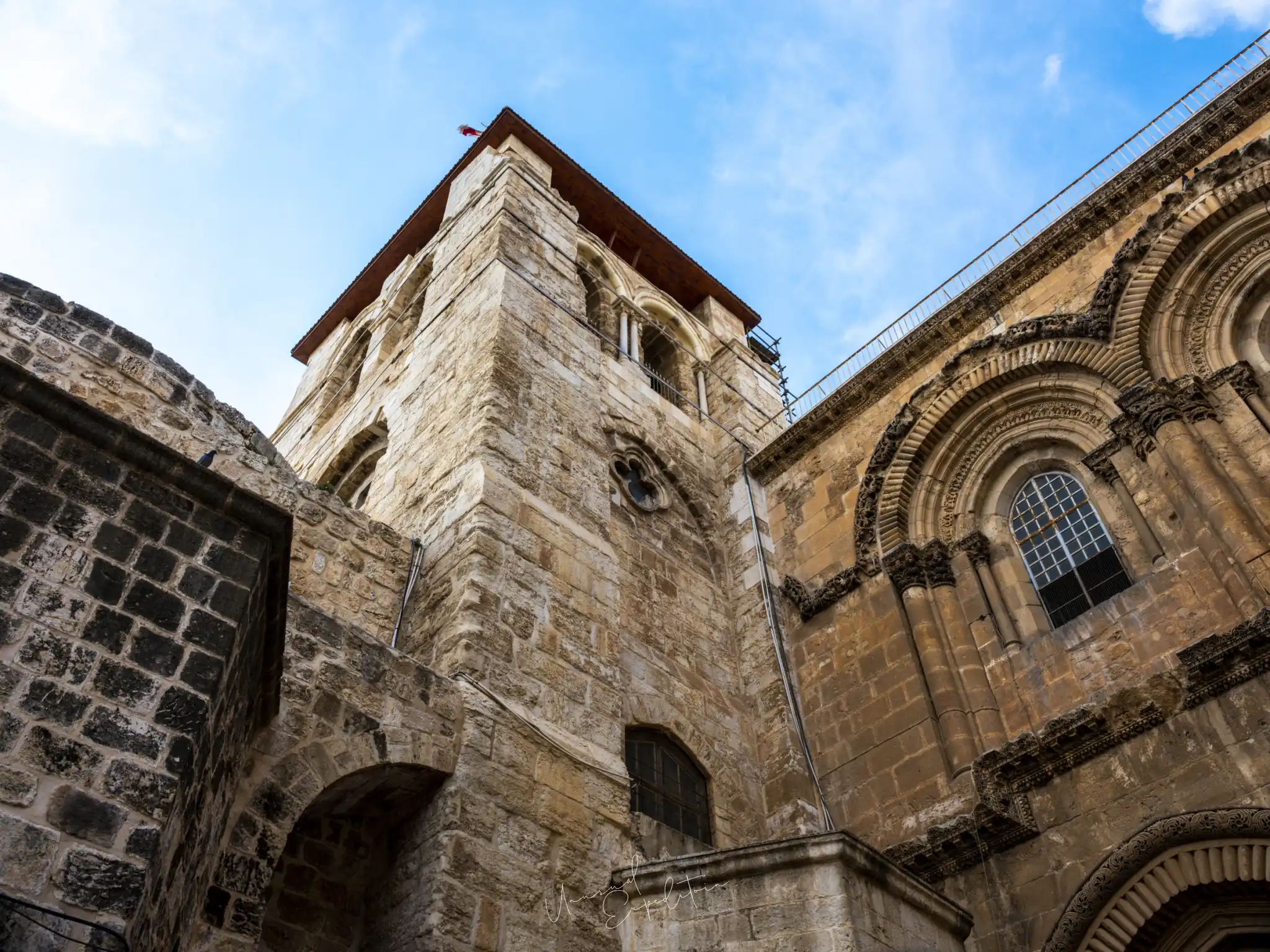
The Via Dolorosa is the route through Jerusalem's Old City that Christian tradition marks as the path Jesus walked to his crucifixion, with fourteen Stations of the Cross from near Lions' Gate to the Church of the Holy Sepulchre, where the last five stations stand. For photographers it is a street of pilgrims, wooden crosses, small chapels and candlelight, ending in one of the darkest and most atmospheric churches in the world. Go early, work quietly, and expect crowds.
For how this fits with the rest of the city, see our Jerusalem photography tour guide.
The Via Dolorosa stations
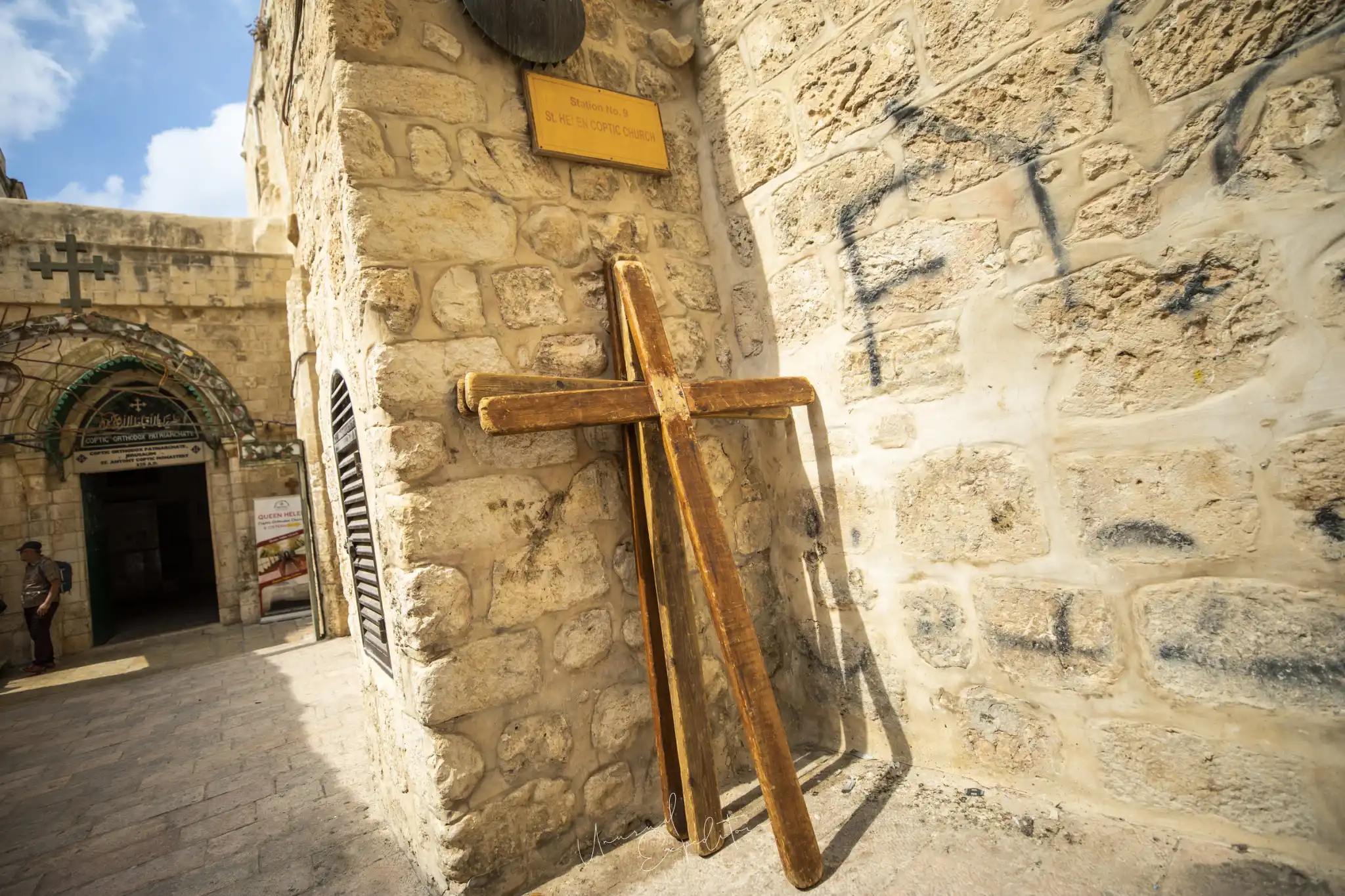
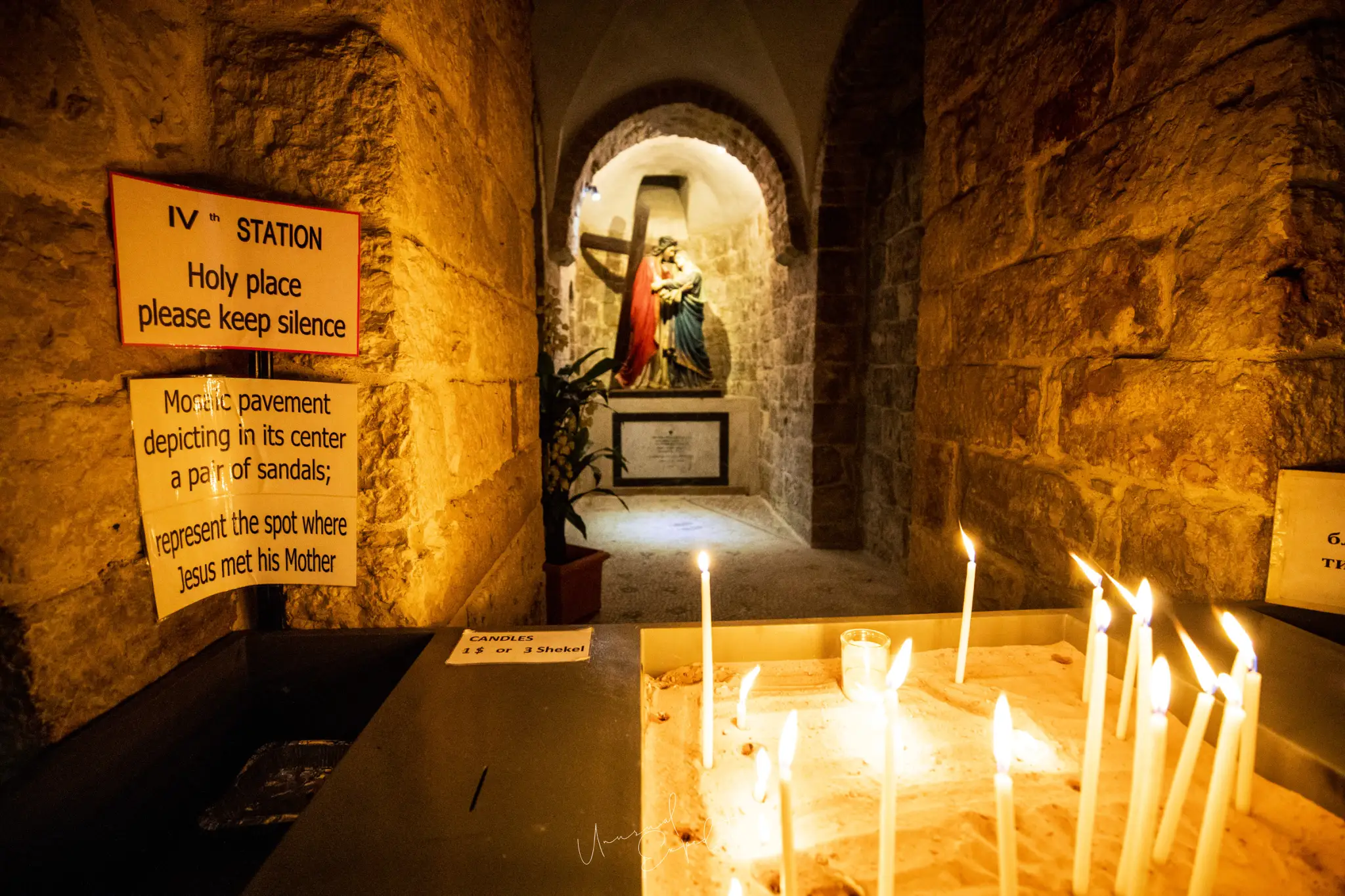
The Via Dolorosa begins in the Muslim Quarter, near the Lions' Gate, close to the Franciscan Monastery of the Flagellation, and winds west through busy market lanes into the Christian Quarter. Each station is marked by a round plaque with a Roman numeral set into the wall, sometimes beside a doorway to a small chapel. Between them, the route is an ordinary Old City street, with shops, delivery carts and residents going about their day, and that contrast is the best of it: a group of pilgrims singing behind a cross while a baker pushes his cart past. The lanes are narrow and the walls tall, so a 16-35mm or a 24-70mm at its wide end works best, and the light is soft and bounced for most of the day except where a shaft of sun cuts across an alley.
Via Dolorosa on Friday: the Franciscan procession
Every Friday afternoon, the Franciscan friars of the Custody of the Holy Land lead a public Way of the Cross along the Via Dolorosa, stopping to pray at each of the fourteen stations. The custom goes back to the late nineteenth century, and pilgrims from many countries join in. It is the most photogenic moment on the route, with brown habits, prayer books and a crowd moving through the lanes, and also the most crowded. Walk ahead of the procession rather than pushing through it, find a step or a doorway at a station, and let it come to you. Friday is also the main day of Muslim prayer, so the lanes near the Temple Mount gates are very full around midday. Check the Custody's own site for the current Friday arrangements before you go.
Photographing pilgrims respectfully
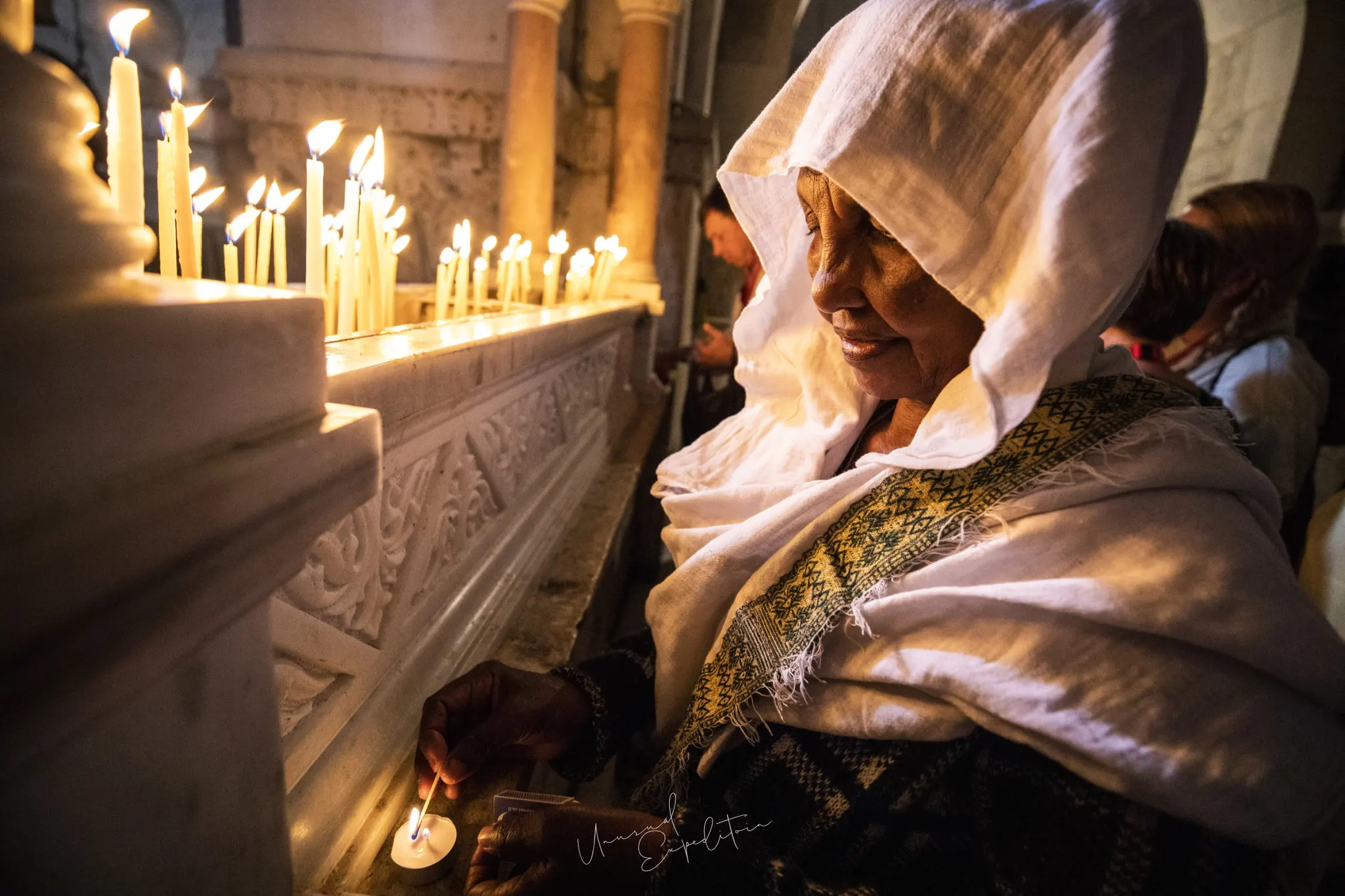
On the Via Dolorosa you will see people carrying crosses, kneeling at the stations, touching the walls with their hands and weeping. For many it is the most important moment of their lives. Hands on stone, a prayer book against a wall, a cross leaning in a corner, the back of a procession moving uphill: these say as much as a face and intrude less. If a group is using a station, wait until they move on before you photograph the chapel. Ask before close portraits, and accept refusals. Guides often carry the group's cross; stepping in front of a group to get the shot is the fastest way to be unwelcome.
The Church of the Holy Sepulchre
The Church of the Holy Sepulchre stands over the places Christian tradition identifies as Golgotha, where Jesus was crucified, and the tomb where he was buried. It is shared by several churches, chiefly the Greek Orthodox, the Roman Catholic, through the Franciscans, and the Armenian Apostolic, with smaller Coptic, Ethiopian and Syriac communities, under an arrangement known as the Status Quo that governs who uses which part and when. The result is a building of many chapels, staircases and styles, lit mostly by oil lamps and candles. Its plain stone courtyard and Crusader-era facade, with the bell tower above, are best photographed in the morning before the courtyard fills.
Inside the Holy Sepulchre: Calvary, the Stone and the Rotunda
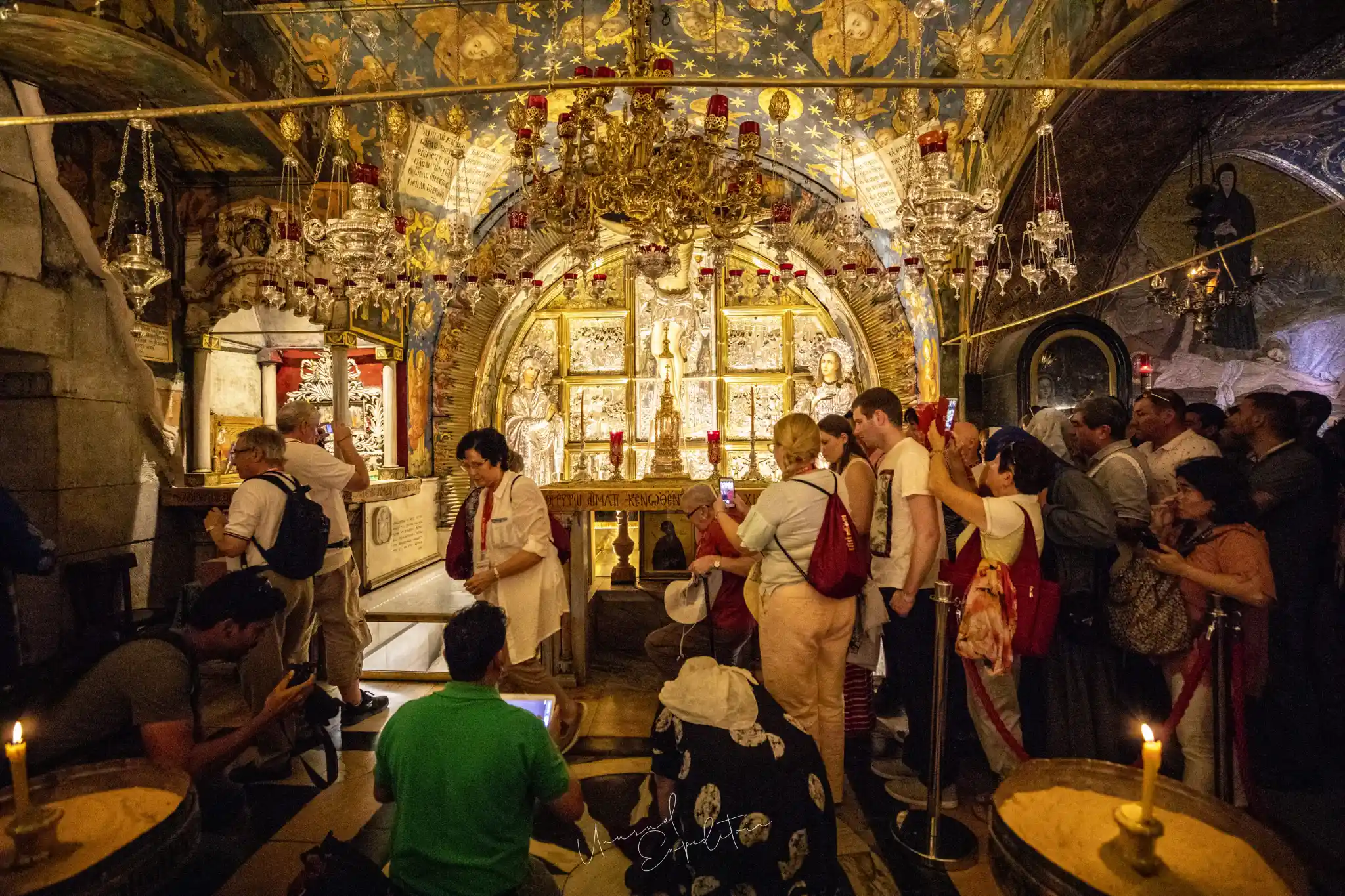
Inside, three places draw the crowds. Up a steep stair to the right of the entrance is Calvary, two chapels glittering with gold, icons and hanging lamps, where pilgrims queue to touch the rock beneath the altar. At the foot of the stairs, the Stone of Anointing lies flat on the floor, and people kneel to touch and kiss it. Beyond is the Rotunda, where the Edicule, the shrine over the tomb, stands under a great dome with an open oculus. The light is very low everywhere except under the oculus, so raise the ISO, use a fast 24-70mm or a 35mm prime, and brace against a pillar; tripods are not practical in the crowd. Candle flames and lamps blow out easily in exposure, so expose for them and let the shadows go dark.
Via Dolorosa and Holy Sepulchre at a glance
| Place | What you photograph | Light | Lens and tip |
|---|---|---|---|
| First stations, Muslim Quarter | Station plaques, chapels, street life | Bounced, soft | 16-35mm, go early |
| Middle stations | Pilgrims, crosses, market lanes | Shafts of sun | 24-70mm, wait for groups to pass |
| Holy Sepulchre courtyard | Facade, bell tower | Morning sun | 16-35mm looking up |
| Calvary | Gold, icons, lamps | Very low | Fast lens, high ISO |
| Rotunda and Edicule | Dome, oculus, candles | Low, light from above | Wide lens, brace on a pillar |
The street rewards a wide lens and patience; the church rewards a fast lens and a steady hand.
In the Holy Sepulchre I put the camera on silent and stand still for a while. The lamps, the incense and the singing do more for the picture than any setting.
Joseph Mak, tour leader, Unusual Expedition
When to go: the quiet hours and the feast days
The Church of the Holy Sepulchre opens early and is at its calmest in the first hours of the morning, before tour groups arrive; check the day's hours locally, because they vary with the season and the services. Afternoons are busiest. Holy Week, from Palm Sunday to Easter, brings huge crowds for both the Western and the Orthodox calendars, and on the Orthodox Holy Saturday the Ceremony of the Holy Fire fills the church and the lanes around it, with access controlled by the police. These are extraordinary days to witness, and very hard ones to photograph. Christmas belongs to Bethlehem more than Jerusalem, a question we answer in the Jerusalem photography FAQ.
Beyond the Via Dolorosa
The Christian Quarter around the church is full of smaller subjects: the Muristan with the Lutheran tower, monastery doors, icon shops and the lanes toward Jaffa Gate, all in our Jerusalem Old City photos guide. The Via Dolorosa itself runs through the souks, and for the people and stalls along the way, read our Old City market guide.
Walk the Via Dolorosa with us
We run Jerusalem as a private trip on request, when the travel advice allows, with the Via Dolorosa and the Holy Sepulchre timed for the quiet hours. See every guide on our Israel photography tours page.
Jerusalem photography tours
The next Jerusalem departure is announced on the Jerusalem photography tours page, with previous expeditions and all the planning guides.
Explore Jerusalem in depth
- Jerusalem Photography Tour Guide: The Old City, Its Walls and Its LightIsrael
- Western Wall and Dome of the Rock Photos: The Plaza, the Mount and the RulesIsrael
- Mount of Olives Sunset: The Classic View of Jerusalem and How to Shoot ItIsrael
- Jerusalem Photography FAQ: Days, Visa, Safety, Dress and BethlehemIsrael
- Jerusalem Old City Photos: The Best Spots, Walls and ViewpointsIsrael
- Jerusalem Old City Market: Photographing the Souks and Their PeopleIsrael
- City of David, Jerusalem: Is It Worth Visiting for Photographers?Israel
Upcoming Photo Tours
- Egypt Photo Tour – EgyptEgypt 12 Dec 2026 To 20 Dec 2026
- Inner Mongolia Winter Owl Photo Tour – ChinaChina 01 Jan 2027 To 04 Jan 2027
- Inner Mongolia Winter Photo Tour – ChinaChina 05 Jan 2027 To 11 Jan 2027
- Mekong And Central Highland Vietnam Photo Tour - VietnamVietnam 16 Jan 2027 To 24 Jan 2027